Operating a large manufacturing company requires balancing complex production demands with evolving industry challenges, technological innovation, and strategic partnerships. From maintaining equipment uptime to navigating supply chain disruptions, manufacturers face mounting pressure to optimize every aspect of their operations while remaining competitive in an increasingly digital marketplace. Success depends not only on internal capabilities but also on establishing relationships with specialized service providers who can deliver precision welding, fabrication, and machining support exactly when and where it's needed.
Understanding the Modern Manufacturing Landscape
A large manufacturing company in 2026 operates in an environment dramatically different from even a decade ago. Digital transformation, workforce evolution, and sustainability demands have reshaped how facilities approach production, maintenance, and strategic planning. The integration of advanced technologies alongside traditional manufacturing expertise has become essential for maintaining competitive advantage.
The challenges facing the manufacturing industry extend beyond simple operational efficiency. Supply chain volatility, skilled labor shortages, and rising material costs create a complex web of issues that require proactive solutions. Companies must simultaneously invest in automation while retaining the human expertise necessary for specialized tasks that machines cannot replicate.
Core Operational Challenges
Manufacturing operations face distinct hurdles that impact profitability and growth potential:
- Equipment downtime reducing production capacity and revenue
- Quality control maintaining consistency across high-volume output
- Regulatory compliance navigating environmental and safety standards
- Supply chain disruptions affecting material availability and timelines
- Energy costs impacting operational budgets and sustainability goals
These challenges demand comprehensive strategies that address both immediate operational needs and long-term strategic positioning. A large manufacturing company must develop resilient systems that can adapt to market fluctuations while maintaining production quality and efficiency.
Strategic Maintenance and Fabrication Solutions
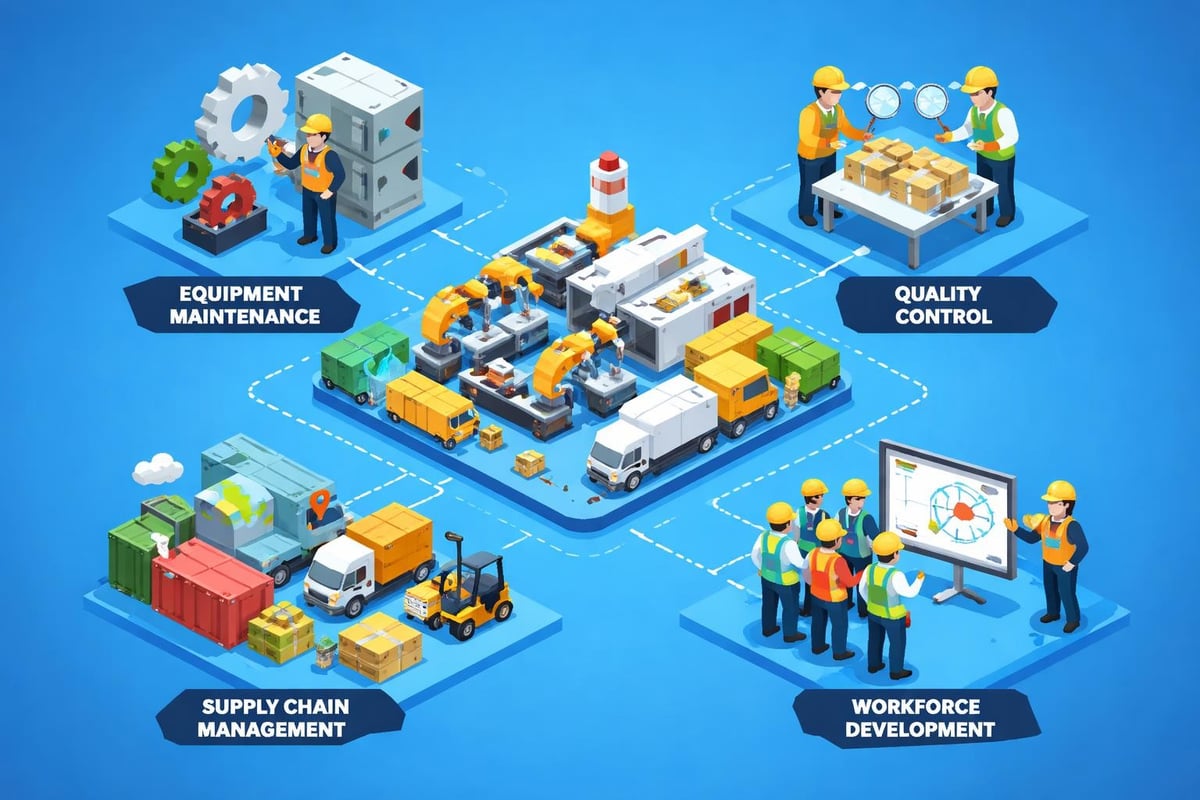
Equipment reliability forms the foundation of manufacturing success. When critical machinery fails, production lines halt, deadlines slip, and costs escalate rapidly. This reality makes preventive maintenance and rapid repair capabilities essential components of operational strategy.
Specialized services like welding and fabrication provide the technical expertise necessary to keep complex industrial equipment operational. A large manufacturing company benefits significantly from partnerships with providers who understand the unique demands of industrial environments and can respond quickly to both scheduled maintenance and emergency repairs.
Field Service Capabilities
On-site service delivery offers distinct advantages for manufacturers operating large facilities or multiple locations:
| Service Type | Primary Benefit | Application Example |
|---|---|---|
| Mobile Welding | Eliminates transport downtime | Repairing conveyor systems in place |
| On-site Machining | Precision work at the equipment | Hydraulic cylinder repairs |
| Emergency Response | Minimizes production interruption | Critical equipment failure recovery |
| Preventive Maintenance | Reduces unexpected failures | Scheduled inspection and repair |
The ability to bring specialized capabilities directly to manufacturing facilities transforms maintenance from a disruptive necessity into a strategic advantage. Companies can schedule work during planned downtime, avoid the costs and risks of transporting heavy equipment, and maintain tighter control over production schedules.
Field mechanics and welders who serve industrial and manufacturing sectors understand the urgency of production environments. They arrive prepared with the tools, materials, and expertise to complete repairs efficiently, minimizing impact on operations.
Leveraging Specialized Manufacturing Services
Not every large manufacturing company maintains in-house capabilities for all necessary fabrication and machining tasks. Economic efficiency often favors outsourcing specialized work to dedicated providers who can deliver superior quality at competitive costs.
Custom fabrication services enable manufacturers to access capabilities that would be cost-prohibitive to maintain internally. Whether designing custom components for unique applications or producing small-batch specialty parts, specialized fabrication shops offer flexibility that complements large-scale production operations.
CNC Machining and Precision Work
Modern manufacturing increasingly demands tight tolerances and complex geometries that only advanced machining can achieve. CNC machining capabilities provide manufacturers with access to precision manufacturing without the capital investment in equipment and training.
Consider a recycling facility needing custom shredder blades or an aggregate operation requiring specialized wear components. These applications demand both material expertise and machining precision that general manufacturing equipment cannot reliably deliver.
The manufacturing industry trends driving change in 2025 highlight the increasing importance of digital integration and supply chain optimization. These trends reinforce the value of strategic partnerships with specialized service providers who can seamlessly integrate into existing operations.
Industry-Specific Manufacturing Considerations
Different manufacturing sectors face unique operational demands that require specialized knowledge and capabilities. A large manufacturing company in oil and gas confronts vastly different challenges than one in aggregate processing or recycling operations.
Oil and Gas Manufacturing
Energy sector manufacturers deal with extreme operating conditions, stringent safety requirements, and 24/7 operational demands. Equipment must withstand high pressures, corrosive environments, and temperature extremes while maintaining absolute reliability.
Specialized industrial metal fabrication for oil and gas applications requires understanding of material properties, welding procedures for critical service, and compliance with industry-specific codes and standards. Downtime in energy production carries enormous costs, making repair speed and reliability paramount.
Aggregate and Mining Operations
Rock crushing, screening, and processing equipment endures constant abrasion and impact forces. Wear components require frequent replacement, and structural repairs must withstand harsh operating environments.
A large manufacturing company in aggregate processing benefits from heavy equipment welding expertise that understands how to select appropriate materials, welding processes, and design modifications that extend equipment life and reduce maintenance frequency.
Recycling Industry Demands
Recycling facilities process diverse materials that create unpredictable wear patterns and equipment stress. Shredders, balers, and sorting equipment must handle everything from soft plastics to hardened metals, creating unique maintenance challenges.
Optimizing Production Through Strategic Partnerships
Success in modern manufacturing extends beyond internal capabilities. The most efficient operations leverage strategic relationships that provide access to specialized skills, equipment, and responsiveness that complement core competencies.
Working with providers who serve commercial and industrial manufacturing sectors across wide geographic areas offers several advantages:
- Consistent quality standards across multiple facility locations
- Scalable capacity to handle varying workload demands
- Emergency response capabilities when unexpected failures occur
- Technical expertise in specialized applications and materials
- Cost predictability through established service relationships
These partnerships transform variable maintenance and fabrication needs into manageable operational components. Rather than maintaining excess internal capacity for peak demands, manufacturers can flex resources up or down as requirements change.
Quality Control and Documentation
A large manufacturing company must maintain rigorous quality standards across all aspects of production and maintenance. Service providers who understand these requirements bring documented procedures, certified welders, and quality verification processes that integrate seamlessly with existing systems.
Proper documentation of repairs, modifications, and preventive maintenance creates the audit trail necessary for compliance, warranty protection, and continuous improvement initiatives. Manufacturing projects require this level of detail to ensure accountability and traceability.
Addressing Workforce and Skills Challenges
The IT challenges faced by manufacturing companies include significant workforce issues that impact operational capability. Skilled tradespeople remain in short supply, making it difficult for manufacturers to maintain internal capabilities across all necessary disciplines.
Recruiting and retaining qualified welders, machinists, and fabricators requires competitive compensation, ongoing training, and career development opportunities. Many large manufacturing companies find it more effective to maintain core production staff while outsourcing specialized work to established service providers with deep talent pools.
Training and Certification Requirements
Modern welding and fabrication work often requires specific certifications for different materials, processes, and applications. Maintaining these credentials across an internal workforce represents significant investment in time and resources.
Skilled welders working for specialized service providers maintain current certifications as part of their core business model. They invest in ongoing training and equipment updates that keep pace with evolving industry standards and technological advances.
Technology Integration in Manufacturing Services
Digital transformation has reached every corner of manufacturing, including maintenance and repair services. Modern service providers employ technologies that enhance quality, reduce costs, and improve communication with manufacturing clients.
Advanced diagnostic tools identify problems before they cause failures. Digital work order systems provide real-time status updates and complete documentation. Precision measurement equipment verifies that repairs and fabrications meet exact specifications.
A large manufacturing company benefits from these technological investments without bearing the direct costs. Service providers amortize equipment and software investments across their entire customer base, making advanced capabilities accessible at reasonable costs.
Data-Driven Maintenance Strategies
Quick Response Manufacturing principles emphasize reducing lead times and increasing responsiveness throughout production systems. These same principles apply to maintenance and repair operations.
By tracking equipment history, failure patterns, and maintenance costs, manufacturers can develop predictive maintenance strategies that prevent failures rather than simply reacting to them. Service providers who maintain detailed records contribute valuable data to these improvement initiatives.
Regional Service Considerations for Western Operations
Manufacturers operating across the Western United States face unique geographic challenges. Facilities may be located in remote areas far from major population centers, making access to specialized services more difficult.
A large manufacturing company with operations spanning multiple states requires service providers capable of covering extensive territories while maintaining consistent quality and responsiveness. Companies offering manufacturing services throughout the Western region provide the geographic coverage necessary to support distributed operations.
Multi-Site Coordination
Managing maintenance and fabrication services across multiple facilities requires careful coordination. Standardizing on service providers who can work at any location simplifies procurement, ensures consistent quality standards, and creates economies of scale.
When the same team handles work at different facilities, they develop familiarity with specific equipment, operating procedures, and site requirements that improves efficiency and reduces errors. This institutional knowledge becomes increasingly valuable over time.
Cost Management and Budget Optimization
Financial pressures facing large manufacturing companies demand careful attention to every expense category. Maintenance and repair costs represent significant portions of operating budgets, making them prime targets for optimization initiatives.
The challenges and strategies in manufacturing include managing costs while maintaining quality and reliability. Strategic outsourcing of specialized work often provides better value than maintaining internal capabilities that see inconsistent utilization.
Variable vs. Fixed Cost Structures
Internal maintenance departments represent fixed costs that continue regardless of workload fluctuations. During production slowdowns, these resources may be underutilized. During peak periods, internal capacity may prove insufficient.
Outsourcing creates variable cost structures that scale with actual needs. A large manufacturing company pays only for services consumed, avoiding the burden of maintaining excess capacity during slow periods while ensuring access to additional resources when demands increase.
| Cost Category | Internal Department | Outsourced Services |
|---|---|---|
| Labor | Fixed salaries + benefits | Variable based on usage |
| Equipment | Capital investment + maintenance | Included in service rates |
| Training | Ongoing certification costs | Provider responsibility |
| Capacity | Limited by headcount | Scalable to demand |
| Expertise | Generalized skills | Specialized capabilities |
This flexibility becomes particularly valuable in cyclical industries where production volumes fluctuate significantly based on market conditions.
Hydraulic Systems and Critical Equipment
Many manufacturing operations depend heavily on hydraulic systems for material handling, processing equipment, and specialized machinery. Hydraulic cylinder repair capabilities become essential when these systems fail or require scheduled maintenance.
A large manufacturing company cannot afford extended downtime waiting for hydraulic components to be shipped to distant repair facilities. On-site repair capabilities or rapid turnaround from nearby service providers minimize production interruptions and maintain operational continuity.
Preventive Maintenance Programs
Systematic inspection and maintenance of hydraulic systems prevents catastrophic failures that halt production and potentially damage expensive equipment. Regular seal replacement, contamination control, and performance testing extend component life and improve reliability.
Service providers who understand industrial hydraulic applications bring diagnostic expertise that identifies potential problems before they cause failures. This proactive approach reduces emergency repair costs and unplanned downtime.
Custom Solutions for Unique Applications
Standard components and off-the-shelf solutions cannot address every manufacturing challenge. Many operations require custom welding services that design and fabricate unique components tailored to specific applications.
Whether modifying existing equipment to accommodate process changes or creating entirely new systems for specialized production needs, custom fabrication capabilities provide the flexibility that manufacturers require to remain competitive and responsive to market demands.
Design Collaboration
The best custom fabrication projects begin with close collaboration between manufacturing engineers and fabrication specialists. Understanding operational requirements, constraints, and performance objectives ensures that finished components meet or exceed expectations.
A large manufacturing company benefits from working with fabricators who ask detailed questions, offer design suggestions based on manufacturing and maintenance considerations, and deliver solutions that work reliably in demanding production environments.
Material Selection and Specification
Choosing appropriate materials for fabrication and repair work significantly impacts component performance, longevity, and cost-effectiveness. Different applications demand different material properties ranging from corrosion resistance to wear characteristics to strength at elevated temperatures.
Metal fabrication specialists understand how to match materials to applications, considering factors like operating environment, stress loads, temperature ranges, and required service life. This expertise prevents premature failures and ensures that components perform as intended.
Wear-Resistant Applications
Equipment processing abrasive materials requires components that can withstand constant erosion without excessive wear. Selecting appropriate wear-resistant steels or applying hard-facing overlays extends component life significantly compared to standard materials.
The initial cost premium for superior materials often proves economical when measured against replacement frequency and downtime costs. A large manufacturing company achieves lower total cost of ownership through strategic material selection.
Safety and Compliance Requirements
Manufacturing operations face extensive regulatory requirements covering workplace safety, environmental protection, and quality standards. Service providers working in industrial environments must comply with OSHA regulations, environmental rules, and industry-specific safety protocols.
Welding businesses serving large manufacturers maintain safety programs, provide properly trained personnel, and follow established procedures that protect workers and comply with all applicable regulations. This compliance represents another fixed cost that manufacturers avoid through strategic outsourcing.
Hot Work Permits and Site Safety
Welding and cutting operations in active manufacturing facilities require careful coordination with plant safety programs. Hot work permits, fire watch procedures, and confined space protocols ensure that maintenance activities do not create hazards for plant personnel or ongoing operations.
Experienced service providers understand these requirements and integrate seamlessly with client safety systems, reducing administrative burden on plant staff while maintaining safety standards.
Successfully operating a large manufacturing company requires strategic decisions about which capabilities to maintain internally versus sourcing from specialized partners. By leveraging expert welding, fabrication, and machining services, manufacturers can focus resources on core production activities while ensuring access to specialized expertise exactly when needed. LTJ Industrial Services provides comprehensive shop and field services throughout the Western United States, delivering the rapid response, technical expertise, and quality workmanship that keep manufacturing operations running efficiently and profitably.