The industrial metal fabrication sector is on the brink of dramatic change as 2026 approaches. Rapid advancements in technology and shifting market demands are reshaping how industries operate and compete.
Companies in manufacturing, oil & gas, and recycling now require fabrication solutions that deliver greater efficiency, precision, and adaptability. Staying ahead means understanding how industrial metal fabrication processes continue to evolve.
To help you navigate this landscape, this guide explores essential fabrication processes, the latest technologies, and the trends shaping the future. Gain expert insights to make informed decisions and ensure your operations remain competitive.
Understanding Industrial Metal Fabrication
Industrial metal fabrication forms the backbone of modern industry, connecting raw materials to finished products that drive economies. As we look toward 2026, understanding the scope, materials, processes, and industry reliance on these solutions is essential for any business aiming to stay competitive.
What is Industrial Metal Fabrication?
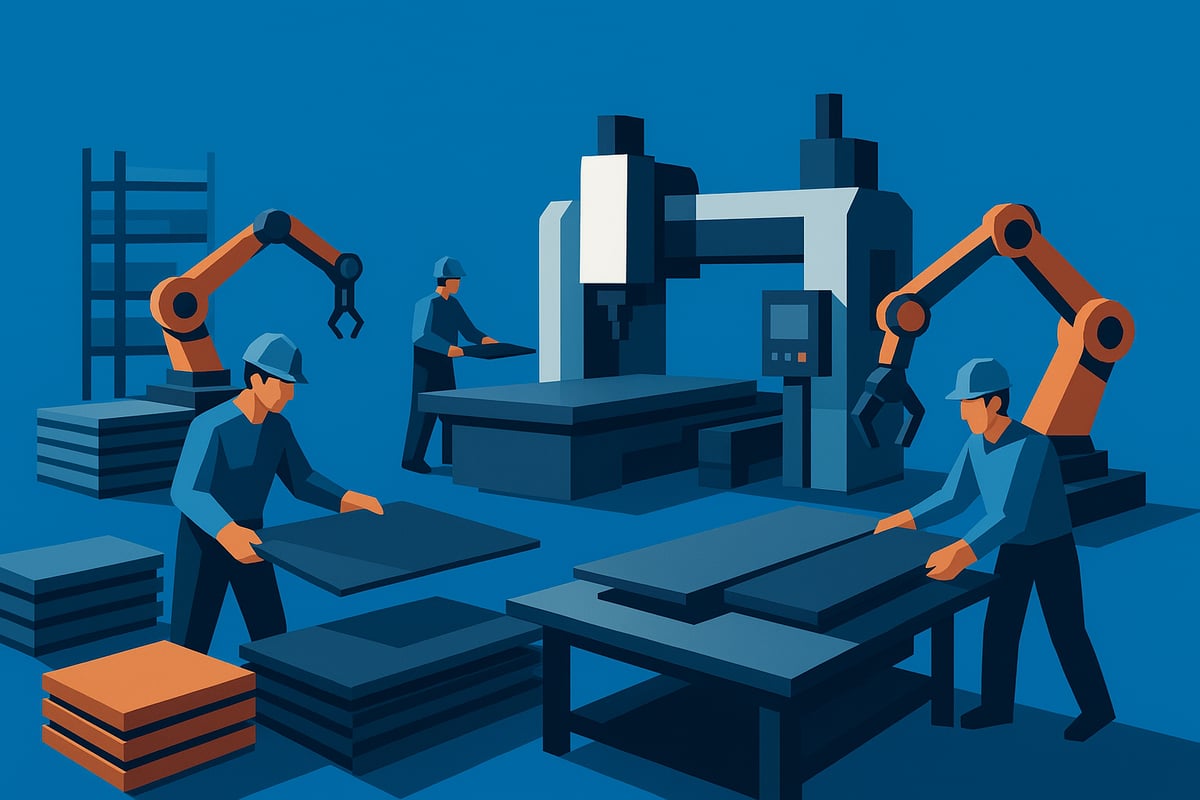
Industrial metal fabrication refers to the comprehensive process of transforming raw metal into usable components for large-scale industries. Unlike commercial fabrication, which often focuses on smaller or consumer-oriented projects, industrial metal fabrication is specialized for heavy-duty applications and high-volume demands.
The core objectives are shaping, assembling, and finishing metal parts to meet strict specifications. Examples include structural steelwork for bridges, heavy equipment frames, and custom assemblies for manufacturing plants.
This process is vital in sectors like manufacturing, recycling, and oil and gas, where precision and durability are paramount. Industrial metal fabrication ensures that critical infrastructure, machinery, and systems function reliably under demanding conditions.
Common Metals Used in Industrial Fabrication
A range of metals is essential in industrial metal fabrication. Steel remains the dominant material, accounting for over 70 percent of all fabricated metal products worldwide. Its strength, versatility, and cost-effectiveness make it ideal for structural and mechanical components.
Stainless steel is preferred in environments requiring corrosion resistance, while aluminum offers a lightweight alternative for applications where reducing weight is crucial. Copper, known for its electrical conductivity, is used in power systems and heat exchangers. Specialty alloys address unique challenges such as extreme temperatures or aggressive chemicals.
For a detailed overview of the metals and their properties used in industrial fabrication, explore Fabrication Materials for Industry.
Trends like lightweighting and improved corrosion resistance are shaping material selection as industries demand higher performance and sustainability.
The Role of Metal Fabrication in Industrial Supply Chains
Industrial metal fabrication is a critical link between raw material suppliers and end-product manufacturers. It directly influences production timelines, product quality, and the ability to respond to urgent operational needs.
For example, custom fabrication can accelerate plant maintenance by quickly delivering replacement parts tailored to exact requirements. This agility helps minimize downtime and supports continuous improvement initiatives across manufacturing and processing facilities.
Quality assurance at each fabrication stage ensures that the final components meet tight tolerances and safety standards. By bridging the gap between design and finished product, industrial metal fabrication adds measurable value to the entire supply chain.
Key Industry Sectors Relying on Fabrication
Several major sectors depend on industrial metal fabrication to maintain and expand their operations. Manufacturing industries, such as automotive, aerospace, and heavy equipment, rely on custom and high-volume metal parts.
The energy sector, including oil and gas as well as renewables, uses fabricated metal for pipelines, support structures, and equipment housings. Construction and infrastructure projects require fabricated steel beams, frames, and reinforcements for buildings and bridges.
Finally, recycling and waste management facilities depend on robust, custom-fabricated systems for material handling and processing. Industrial metal fabrication is indispensable to these sectors, supporting innovation and operational efficiency.
Core Metal Fabrication Processes: Step-by-Step
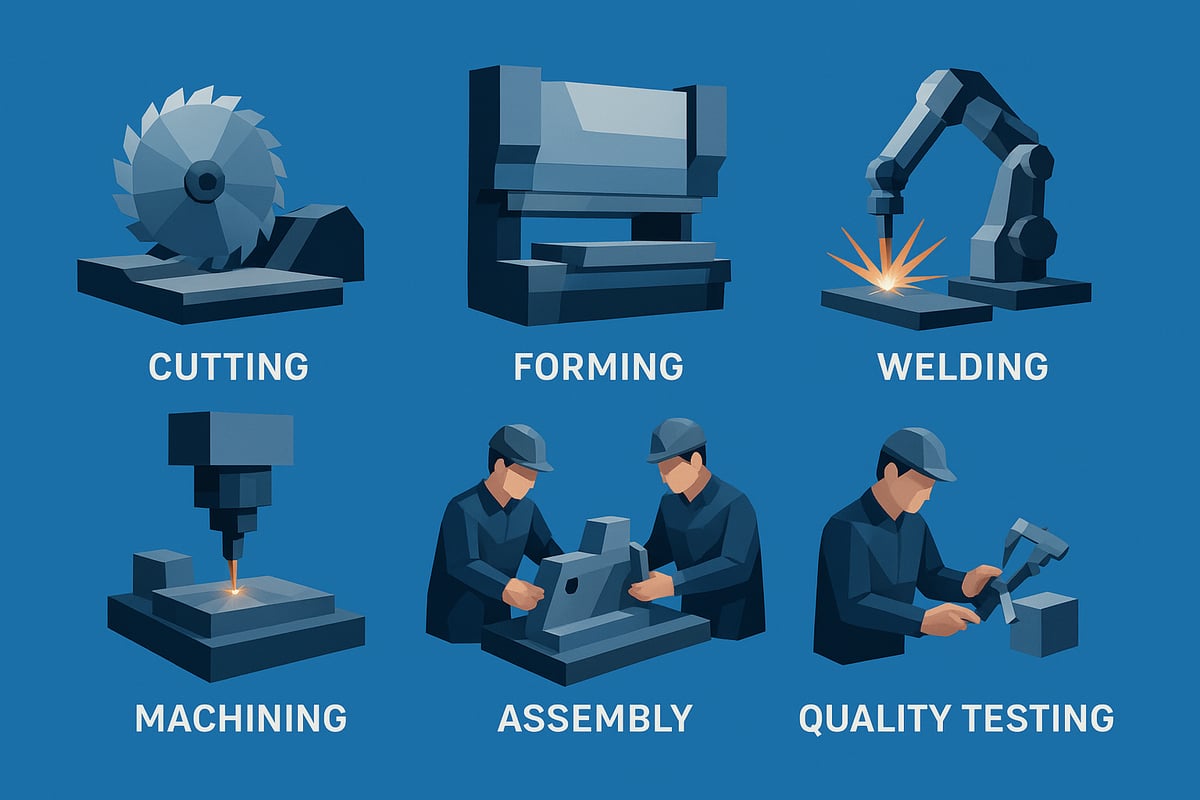
Industrial metal fabrication relies on a series of interconnected processes, each contributing to the creation of durable, precise, and reliable metal components. Understanding how these steps work together is essential for businesses aiming to optimize quality and efficiency.
1. Cutting and Material Preparation
Cutting and prepping raw materials is the first crucial step in industrial metal fabrication. Fabricators use various methods such as shearing, sawing, laser cutting, waterjet cutting, and plasma cutting to achieve exact dimensions.
- Shearing: Ideal for straight cuts in sheet metal.
- Sawing: Used for bars, tubes, and profiles.
- Laser Cutting: Delivers high precision on complex shapes.
- Waterjet Cutting: Perfect for heat-sensitive materials.
- Plasma Cutting: Efficient for thick metal plates.
Precision in this phase ensures downstream processes run smoothly. For deeper insight into these techniques and their role in fabrication, explore Industrial Metal Fabrication and Welding. Proper material preparation minimizes waste and supports high-quality results in industrial metal fabrication projects.
2. Forming and Shaping
Once materials are cut, forming and shaping transform flat or raw stock into functional forms. This stage in industrial metal fabrication includes:
- Bending: Using press brakes to create angles and curves.
- Rolling: Shaping cylindrical or conical sections.
- Stamping: Mass-producing parts with custom dies.
- Forging: Producing robust components under high pressure.
CNC press brakes have revolutionized forming by enabling complex geometries and repeatability. Consistent forming is vital for large-scale production, ensuring each component maintains the required specifications.
3. Welding and Joining
Welding and joining processes unite metal parts into assemblies, a cornerstone of industrial metal fabrication. The main welding methods are:
- MIG Welding: Fast and versatile for various metals.
- TIG Welding: Precise, ideal for thin or specialty alloys.
- Stick Welding: Suited for outdoor or heavy-duty work.
- Robotic Welding: Delivers consistent, high-volume output.
Alternatives include bolting, riveting, and industrial adhesives. Maintaining weld integrity is critical, so non-destructive testing (NDT) and thorough inspections are standard in industrial metal fabrication.
4. Machining and Finishing
Machining and finishing give industrial metal fabrication its final precision and surface quality. Key processes include:
- CNC Milling: Accurate shaping of complex parts.
- Turning: Creating round profiles or threads.
- Drilling: Producing holes with tight tolerances.
- Grinding: Achieving smooth, flat surfaces.
Surface finishing, such as deburring, polishing, and powder coating, enhances durability and appearance. For high-tolerance assemblies, machined components must meet strict industrial metal fabrication standards.
5. Assembly and Integration
After fabrication, components are assembled and integrated into complete systems. In industrial metal fabrication, this often means:
- Modular Assembly Lines: Speed up equipment production.
- Integration: Connecting hydraulics, pneumatics, and electronics.
- Turnkey Solutions: Providing ready-to-use, fully tested systems.
Effective assembly reduces time-to-market and allows for customization, supporting a wide range of industrial metal fabrication needs.
6. Quality Assurance and Testing
Quality assurance safeguards the integrity of every industrial metal fabrication project. Robust inspection protocols include:
- Dimensional Checks: Ensuring parts fit exact specifications.
- Material Verification: Confirming correct alloys and treatments.
- Stress Testing: Validating structural performance.
Certifications such as ISO, ASME, and AWS demonstrate commitment to industry standards. Today, 98% of fabricators use digital QA systems to improve accuracy and traceability, making quality a top priority in industrial metal fabrication.
Technological Innovations Shaping Metal Fabrication in 2026
The landscape of industrial metal fabrication is advancing at an unprecedented pace as we approach 2026. Companies are adopting next-generation technologies to deliver higher precision, faster turnaround, and enhanced sustainability. From automation to smart factories, these innovations are redefining what’s possible in fabrication.
Automation and Robotics
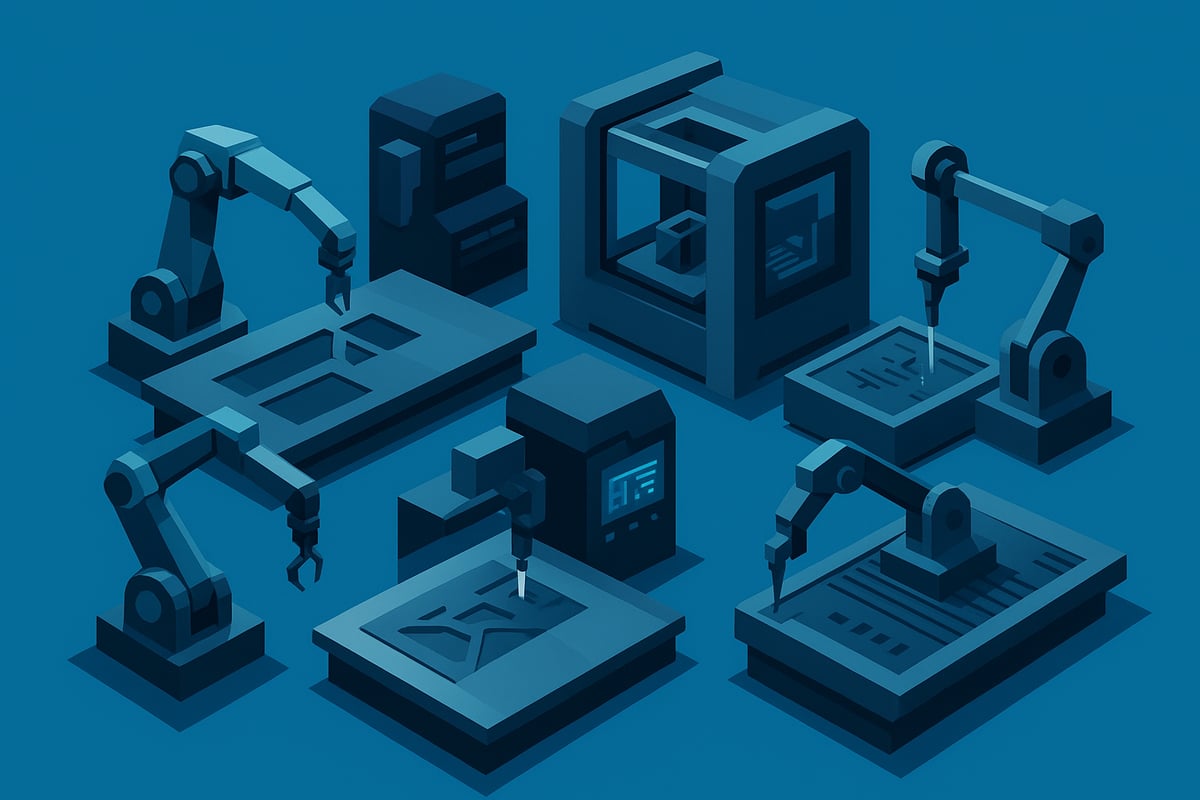
Automation is transforming industrial metal fabrication, making processes faster, safer, and more reliable. Robotic arms handle complex welding, automated cutting, and precise material movement, reducing manual labor and improving consistency. In automotive manufacturing, automated welding cells have become standard for producing high volumes with minimal defects.
The integration of robotics also enhances worker safety by minimizing exposure to hazardous tasks. According to the Metal Manufacturing Robot Market Size & Forecast, demand for metal fabrication robots is set to rise sharply through 2026, reflecting a shift toward smarter, more efficient production environments.
CNC and Digital Manufacturing
CNC technology remains at the core of industrial metal fabrication, delivering unmatched accuracy and repeatability. Recent advancements include 5-axis machining and real-time monitoring, which enable the production of intricate geometries and reduce errors. Digital twins and simulation tools are now used in fabrication planning, allowing engineers to visualize and optimize processes before work begins.
CNC-enabled shops report up to 30 percent reductions in lead times, giving manufacturers a competitive edge. Real-time data collection also improves traceability and helps identify bottlenecks, supporting continuous improvement in industrial metal fabrication workflows.
Additive Manufacturing (3D Printing) in Metal Fabrication
Additive manufacturing is gaining traction in industrial metal fabrication, especially for prototyping and low-volume custom parts. Metal 3D printing allows for rapid iteration and the creation of complex shapes that traditional methods cannot achieve. Hybrid manufacturing, which combines additive and subtractive processes, is emerging as a powerful approach for both speed and precision.
Industries like aerospace and medical devices are leading adopters, using metal 3D printing to produce lightweight, high-strength components. This trend is expected to accelerate, offering more flexibility and innovation within industrial metal fabrication.
Advanced Materials and Coatings
The introduction of high-strength alloys, composites, and nano-coatings is pushing the boundaries of industrial metal fabrication. These materials offer benefits like improved durability, enhanced corrosion resistance, and significant weight savings. For example, powder coating is now widely used to protect fabricated components in extreme industrial settings.
Material innovation also supports sustainability goals by extending product life cycles and reducing maintenance needs. Selecting the right material and coating is critical for meeting the rigorous demands of modern industrial metal fabrication projects.
Smart Factories and Industry 4.0 Integration
Smart factories are redefining industrial metal fabrication by connecting equipment, sensors, and systems through the Industrial Internet of Things (IoT). Real-time data analytics enable predictive maintenance, minimize downtime, and optimize production schedules. Connected machinery can self-adjust to maintain quality and efficiency.
A smart fabrication facility recently reported a 25 percent reduction in downtime after implementing Industry 4.0 solutions. These advancements position industrial metal fabrication shops to respond swiftly to changing market demands and maintain operational excellence.
Sustainability and Green Fabrication
Sustainability is now a core focus for industrial metal fabrication. Energy-efficient equipment, waste reduction initiatives, and the use of recycled metals are becoming standard practices. Eco-friendly coatings are being developed to minimize environmental impact without sacrificing performance.
Recent surveys show that 40 percent of fabricators plan to invest in green technologies by 2026. Sustainable practices not only help meet regulatory requirements but also appeal to customers seeking responsible partners in industrial metal fabrication.
Trends and Market Outlook for 2026
The industrial metal fabrication landscape is evolving rapidly as we head toward 2026. Shifts in market demand, technology adoption, and regulatory frameworks are redefining how businesses approach fabrication. Understanding these trends is essential for companies aiming to maximize efficiency and maintain a competitive edge in the industrial metal fabrication sector.
Market Growth and Demand Drivers
The global industrial metal fabrication market is projected to reach new heights by 2026, driven by expansion in renewable energy, infrastructure, and electric vehicle sectors. Infrastructure spending, especially from government stimulus and development bills, is fueling significant demand for fabricated steel and specialty components.
A growing emphasis on sustainable energy solutions and next-generation transportation is also increasing the need for high-performance fabrication. For a deeper dive into sector-specific trends, see the Top 5 Fabrication Trends to Watch in 2026. As these industries continue to grow, industrial metal fabrication will remain a cornerstone of modern development.
Workforce and Skills Evolution
As industrial metal fabrication becomes more technologically advanced, the demand for skilled technicians is rising. Companies now seek professionals proficient in robotics, digital fabrication tools, and advanced welding techniques.
Recent data shows that 60 percent of fabrication shops report shortages in advanced skill sets. Training programs are evolving to focus on digital literacy, automation, and safety, helping bridge the gap. Investment in workforce development ensures that fabrication teams can adapt to new equipment and processes, keeping productivity high.
| Skill Needed | % of Shops Reporting Shortage |
|---|---|
| CNC Programming | 62% |
| Robotic Welding | 58% |
| Advanced Inspection | 55% |
Customization and Rapid Prototyping
Customization is reshaping industrial metal fabrication as clients demand specialized, on-demand solutions. Rapid prototyping and flexible production systems enable manufacturers to reduce time-to-market and decrease inventory costs.
Shops equipped with advanced CNC machines and additive manufacturing tools can deliver custom assemblies for industrial automation and equipment upgrades. This shift from mass production to tailored solutions not only enhances customer satisfaction but also drives innovation across fabrication projects.
Supply Chain Challenges and Solutions
Global supply chains for industrial metal fabrication face ongoing challenges, including material shortages, fluctuating lead times, and logistics disruptions. These issues have prompted manufacturers to adopt new strategies such as local sourcing and digital supply chain management.
Reshoring fabrication operations is gaining traction, with 45 percent of manufacturers now moving projects closer to home to mitigate risk. Partnerships with reliable vendors and the adoption of digital inventory systems help companies maintain operational continuity and respond quickly to market changes.
Regulatory and Safety Considerations
Regulatory compliance is a critical concern in industrial metal fabrication. Updates to OSHA and international safety standards require enhanced workplace protocols and documentation. Environmental regulations are also becoming more stringent, emphasizing sustainable practices and transparent reporting.
Fabricators must stay informed about evolving requirements to avoid penalties and maintain certifications. Proactive investment in safety measures and compliance not only protects workers but also strengthens a company's reputation in competitive markets.
Choosing an Industrial Metal Fabrication Partner
Selecting the right partner for industrial metal fabrication is a pivotal decision for any business. Your choice can impact project timelines, product quality, and long-term operational efficiency. By following a structured evaluation process, you can ensure your fabrication partner meets your technical and business needs.
Key Criteria for Selecting a Fabricator
When assessing industrial metal fabrication partners, prioritize technical expertise, industry certifications, and proven project experience. Look for fabricators with a deep understanding of your sector, whether it is manufacturing, energy, or infrastructure.
Capacity is another essential factor. Can the shop handle both large-scale projects and specialized custom work? Review their portfolio for similar projects. Strong references and a history of on-time delivery indicate reliability in industrial metal fabrication.
Evaluating Capabilities and Technologies
Modern industrial metal fabrication relies on advanced machinery and skilled teams. Investigate the fabricator’s equipment inventory. Do they offer CNC machining, robotics, or waterjet cutting? In-house engineering and design support are critical for complex projects.
For large infrastructure or construction needs, examine their ability to scale. You can see examples of robust capabilities in Large-Scale Metal Fabrication for Construction. Quality assurance, including ISO or AWS certifications, should be standard for any top-tier provider.
Project Management and Communication
Effective communication keeps industrial metal fabrication projects on track. Clear timelines, milestones, and regular updates are vital. Choose a partner with a dedicated project manager who ensures your requirements are understood and met.
Collaboration during design and prototyping phases reduces costly changes. Integrated teams can help streamline production, resulting in fewer delays and improved outcomes for industrial metal fabrication projects.
Cost, Value, and Long-Term Support
Cost transparency is essential when budgeting for industrial metal fabrication. Request detailed quotes outlining labor, materials, and additional services. Value-added offerings such as maintenance, upgrades, and emergency repairs can provide long-term savings.
A reliable partner should offer ongoing support, ensuring your equipment continues to operate efficiently. This commitment helps minimize downtime and supports your business as it grows and evolves.
[LTJ Industrial Services: Your Trusted Fabrication & Machining Partner] (https://ltjindustrial.com)
LTJ Industrial Services stands out as a leader in industrial metal fabrication, serving clients across Rifle, CO, and the Western United States. With a reputation built on precision, reliability, and technical expertise, LTJ delivers tailored fabrication and machining solutions for demanding industrial environments.
LTJ’s comprehensive service offering covers every stage of industrial metal fabrication. Their skilled team handles custom welding, CNC machining, waterjet cutting, hydraulic system repairs, and powder coating, all under one roof. This full-spectrum approach ensures clients receive consistent quality and rapid turnaround, whether the job involves a single prototype or a large-scale production run.
Industries that rely on LTJ Industrial Services include manufacturing, recycling, aggregate, and oil & gas. The company’s field and shop teams are equipped for both on-site projects and in-house fabrication, allowing for unmatched flexibility and responsiveness to urgent industrial needs.
A key differentiator is LTJ’s investment in advanced fabrication technologies. For example, their Precision CNC Plasma Cutting Service enables intricate cuts on a wide range of metals, supporting high-volume and custom projects alike. This commitment to innovation positions LTJ at the forefront of industrial metal fabrication.
Clients benefit from a streamlined process, transparent communication, and a focus on solving complex industrial challenges. LTJ’s experienced technicians work closely with customers to ensure each project meets strict specifications, safety standards, and timeline requirements.
Notable projects include custom fabrication for recycling plants, hydraulic repairs for oil & gas equipment, and turnkey solutions for heavy machinery upgrades. The company’s ability to deliver both standard and highly specialized services makes them a trusted partner for organizations seeking operational excellence.
Ready to elevate your operations? Contact LTJ Industrial Services today to request a quote or schedule a consultation for your next industrial metal fabrication or machining project. Their team is prepared to deliver the expertise and support your business needs to stay ahead in a competitive market.
Future-Proofing Your Operations: Best Practices for 2026 and Beyond
Staying ahead in industrial metal fabrication requires a proactive approach as 2026 approaches. Companies need to embrace new strategies and technologies to secure lasting competitiveness. By focusing on digital transformation, workforce development, supply chain resilience, and regulatory awareness, you can position your operations for long-term success.
Embracing Digital Transformation
Digital transformation is revolutionizing industrial metal fabrication. Implementing smart software, connected equipment, and real-time analytics can streamline every stage of the fabrication process. These changes bring better traceability, higher efficiency, and predictive maintenance, which reduce downtime and costs.
Recent advancements, such as automation and AI, are reshaping fabrication workflows. For further insight, review The Future of the Metal Stamping Industry in 2026, which highlights how digital tools are transforming production. By digitizing your shop floor, you gain a competitive edge in industrial metal fabrication.
Investing in Workforce Development
The future of industrial metal fabrication depends on a skilled workforce that can operate advanced technologies. Upskilling technicians in robotics, automation, and digital tools is essential. Collaborating with technical schools or industry associations can help bridge skill gaps and foster continuous learning.
Consider launching regular training programs or certification courses for your team. This approach not only improves productivity but also boosts morale and retention. A future-ready workforce ensures your industrial metal fabrication business adapts quickly to technological change.
Building Resilient and Sustainable Supply Chains
Building robust supply chains is critical for industrial metal fabrication. Diversifying suppliers and localizing production help reduce risk from material shortages or logistics delays. Many fabrication shops are adopting circular economy principles, such as closed-loop recycling of scrap metal, to enhance sustainability.
A resilient supply chain supports uninterrupted operations and improves your environmental footprint. Embracing these strategies helps you meet both market demands and regulatory requirements in industrial metal fabrication.
Staying Ahead of Regulatory and Market Changes
The regulatory landscape for industrial metal fabrication is constantly evolving. Staying informed about OSHA updates, environmental standards, and international compliance rules is vital. Engaging in industry forums and continuous improvement programs can help you anticipate and adapt to new requirements.
By monitoring these changes and adjusting your processes, you reduce the risk of non-compliance and costly disruptions. Proactive compliance ensures your industrial metal fabrication operations remain efficient and future-proof.
As you look ahead to 2026, understanding the latest metal fabrication processes and trends is essential for keeping your business competitive and resilient. Whether you're planning for new industrial projects or seeking ways to optimize your current operations, having the right fabrication partner makes all the difference. At LTJ Industrial Services, we combine technical expertise, advanced technologies, and a commitment to quality to help you achieve your goals—on time and on budget. If you're ready to take the next step or want to discuss your unique fabrication needs, you can easily Request a Quote today.