The modern industrial landscape demands professionals who can seamlessly blend mechanical repair expertise with advanced welding capabilities. A welding mechanic represents this crucial intersection, providing essential services that keep manufacturing, oil and gas, aggregate, and recycling operations running efficiently. These skilled professionals combine the diagnostic abilities of a mechanic with the precision craftsmanship of a welder, making them invaluable assets in commercial and industrial settings. As industries throughout the Western United States continue to evolve, the demand for qualified welding mechanics has grown substantially, particularly in regions supporting heavy manufacturing and resource extraction.
The Dual Expertise of a Welding Mechanic
A welding mechanic brings together two distinct skill sets that complement each other perfectly in industrial environments. This combination allows professionals to not only identify mechanical failures but also fabricate and repair the components needed to restore equipment to operational status.
Mechanical Competencies
The mechanical side of this profession requires comprehensive knowledge of industrial equipment systems. Understanding hydraulics, pneumatics, electrical systems, and power transmission forms the foundation of effective troubleshooting. A proficient welding mechanic can diagnose problems in conveyor systems, processing equipment, heavy machinery, and production line components.
Core mechanical skills include:
- Reading and interpreting technical blueprints and schematics
- Diagnosing equipment failures through systematic analysis
- Understanding material properties and stress factors
- Performing preventive maintenance procedures
- Working with precision measurement tools
These capabilities ensure that repairs address root causes rather than just symptoms, reducing downtime and extending equipment lifespan.
Welding Proficiencies
The welding aspect demands mastery of multiple processes and techniques. Modern industrial applications require versatility across various welding methods, each suited to specific materials and situations. ASME code welding services for pressure piping and other critical applications demand certified expertise and strict adherence to industry standards.
| Welding Process | Primary Applications | Key Advantages |
|---|---|---|
| SMAW (Stick) | Field repairs, structural work | Versatile, works in adverse conditions |
| GMAW (MIG) | Production welding, sheet metal | Fast, clean, easy to learn |
| GTAW (TIG) | Precision work, exotic metals | Superior quality, excellent control |
| FCAW (Flux-Core) | Heavy fabrication, outdoor work | High deposition rate, wind-resistant |
Training and Certification Pathways
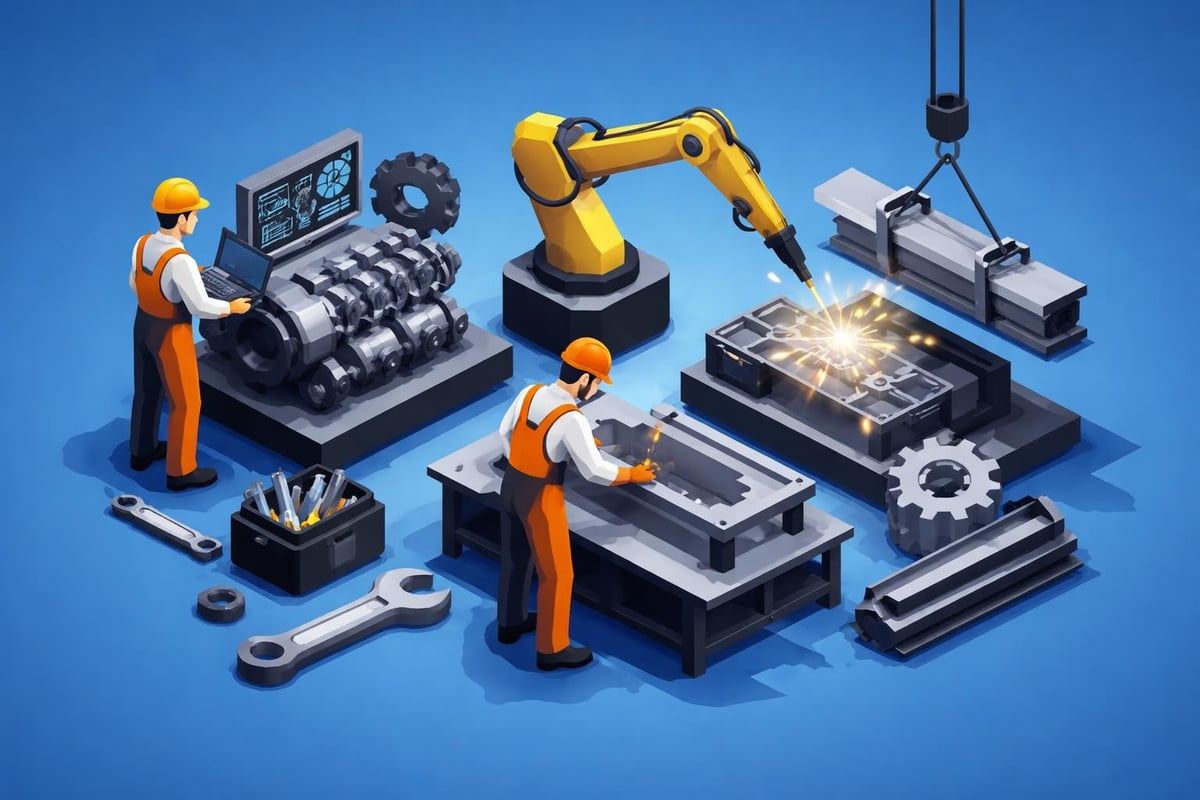
Becoming a qualified welding mechanic requires structured education and hands-on experience. The Welding Resource Center provides comprehensive guidance on career development in this field, emphasizing both technical competency and safety practices.
Educational Requirements
Most welding mechanics begin with formal technical training through community colleges, trade schools, or apprenticeship programs. These programs typically combine classroom instruction with extensive shop practice.
A robust training program covers:
- Blueprint reading and technical drawing interpretation
- Metallurgy and material science fundamentals
- Multiple welding process techniques
- Mechanical systems and troubleshooting
- Safety protocols and hazard recognition
- Quality control and inspection methods
Many professionals enhance their qualifications through specialized courses in welding and metal fabrication, which provide authoritative technical knowledge essential for advanced applications.
Professional Certifications
Industry certifications validate skills and open doors to higher-level positions. The American Welding Society offers numerous certification programs that have become industry standards for welding professionals.
Essential certifications include:
- AWS Certified Welder (various processes and positions)
- ASME Section IX certification for pressure vessel work
- API 1104 for pipeline welding
- Millwright or industrial mechanic certifications
- OSHA safety training credentials
These credentials demonstrate competency to employers and clients, particularly in industries where code compliance and quality assurance are non-negotiable.
Industrial Applications and Work Environments
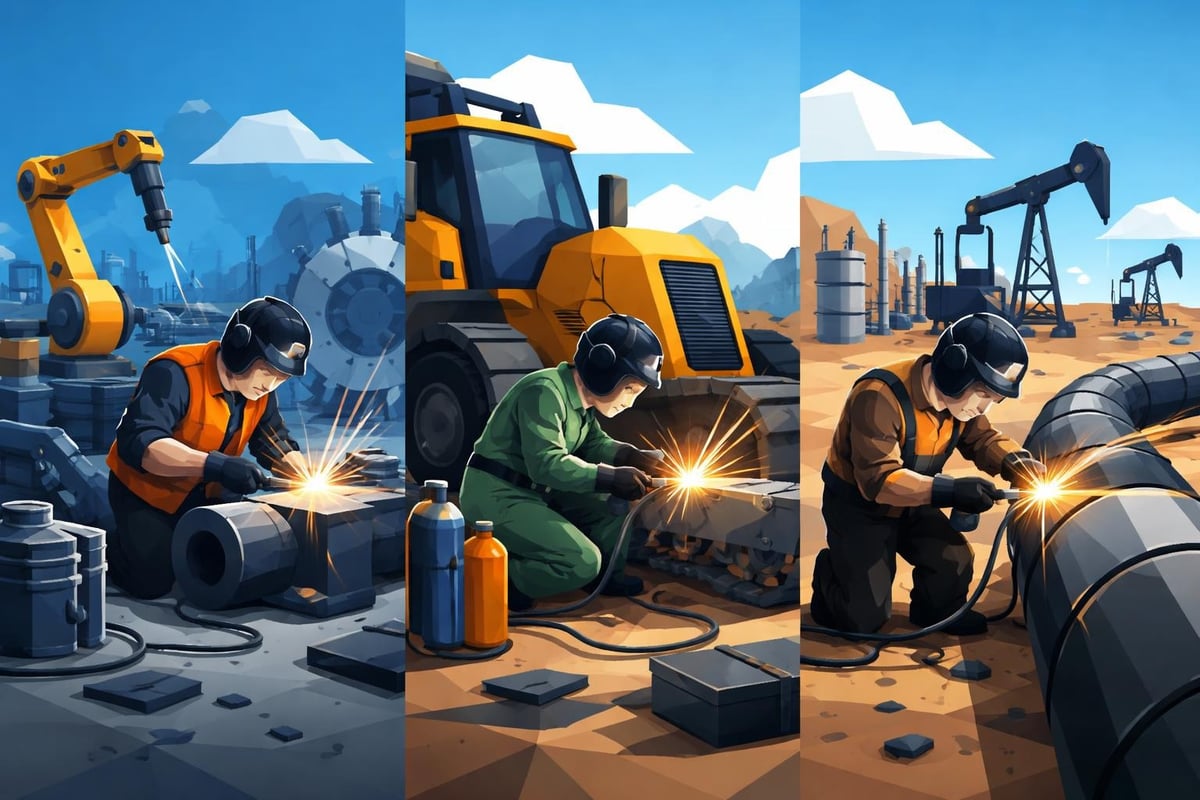
The versatility of a welding mechanic makes them valuable across numerous industrial sectors. From manufacturing facilities to remote field locations, these professionals adapt their skills to diverse challenges.
Manufacturing and Fabrication Facilities
In production environments, welding mechanics maintain the equipment that keeps operations flowing. They respond to breakdowns, perform scheduled maintenance, and often contribute to custom fabrication services that support production needs.
These facilities require professionals who can work efficiently under pressure, coordinating repairs to minimize production interruptions. Understanding the broader manufacturing process helps welding mechanics prioritize repairs and anticipate potential failures.
Oil and Gas Operations
The energy sector presents unique challenges that demand both technical excellence and adaptability. Equipment operates in harsh conditions, and failures can result in significant financial losses or safety hazards.
Welding mechanics in this sector often work on:
- Pipeline repair and maintenance
- Wellhead and production equipment
- Storage tank fabrication and repair
- Processing facility infrastructure
- Hydraulic systems for drilling equipment
Field work in remote locations requires self-sufficiency and the ability to improvise solutions with limited resources.
Aggregate and Recycling Industries
These sectors subject equipment to extreme wear, creating constant demand for repair and reinforcement. Crushers, screens, conveyors, and sorting equipment require regular attention from skilled welding mechanics who understand abrasion, impact, and fatigue failures.
Heavy equipment welding in these industries often involves building up worn surfaces, reinforcing high-stress areas, and fabricating replacement components that can withstand punishing conditions.
Advanced Technologies and Modern Practices
The welding mechanic profession continues to evolve with technological advancement. Modern practitioners integrate traditional skills with cutting-edge tools and methodologies.
Digital Diagnostic Tools
Contemporary equipment diagnosis relies heavily on digital technology. Welding mechanics now use:
- Vibration analysis equipment to detect bearing failures
- Thermal imaging cameras for electrical troubleshooting
- Ultrasonic testing for weld quality verification
- Computer-based diagnostic systems for complex machinery
- 3D scanning for reverse engineering replacement parts
Research into welding machine condition monitoring systems demonstrates how advanced technology enhances quality control and preventive maintenance capabilities.
Precision Machining Integration
Many welding mechanics expand their capabilities to include CNC machining for heavy industry parts. This combination allows complete component fabrication and repair cycles without outsourcing.
| Traditional Approach | Integrated Approach | Benefit |
|---|---|---|
| Weld repair only | Weld + machine to specification | Proper fit and function |
| Send out for machining | In-house machining capability | Faster turnaround |
| Approximate dimensions | Precision measurement and cutting | Higher quality results |
| Multiple vendors | Single-source solution | Simplified coordination |
Automation and Robotics
While automation handles repetitive production welding, welding mechanics increasingly work alongside robotic systems, maintaining and programming them. Understanding robotic welding systems adds significant value to a professional's skill set.
Safety Standards and Best Practices
Safety remains paramount in welding and mechanical work. Professional welding mechanics adhere to rigorous safety protocols that protect themselves, coworkers, and facilities.
Personal Protective Equipment
Proper PPE prevents the majority of workplace injuries. Comprehensive protection includes:
- Auto-darkening welding helmets with appropriate shade ratings
- Fire-resistant clothing and leather protective gear
- Respiratory protection for confined spaces and hazardous fumes
- Steel-toed boots with metatarsal guards
- Cut-resistant gloves appropriate for specific tasks
- Hearing protection in high-noise environments
Workplace Hazard Management
Effective welding mechanics continuously assess their work environment for potential dangers. Hot work permits, ventilation requirements, fire watch procedures, and lockout/tagout protocols form essential safety frameworks.
Understanding confined space entry procedures, fall protection systems, and chemical hazard communication ensures comprehensive risk management across various work scenarios.
Career Growth and Specialization Opportunities
The welding mechanic career path offers numerous advancement opportunities for motivated professionals. Specialization in specific industries or techniques can significantly increase earning potential and job satisfaction.
Industry Specialization
Focusing expertise on particular sectors allows professionals to command premium rates. Specialists in pressure vessel repair, pipeline construction, or aerospace fabrication develop deep knowledge that makes them indispensable to specialized operations.
Welding specialists who understand industry-specific codes, materials, and procedures often transition into supervisory roles or open their own shops serving niche markets.
Technical Leadership Roles
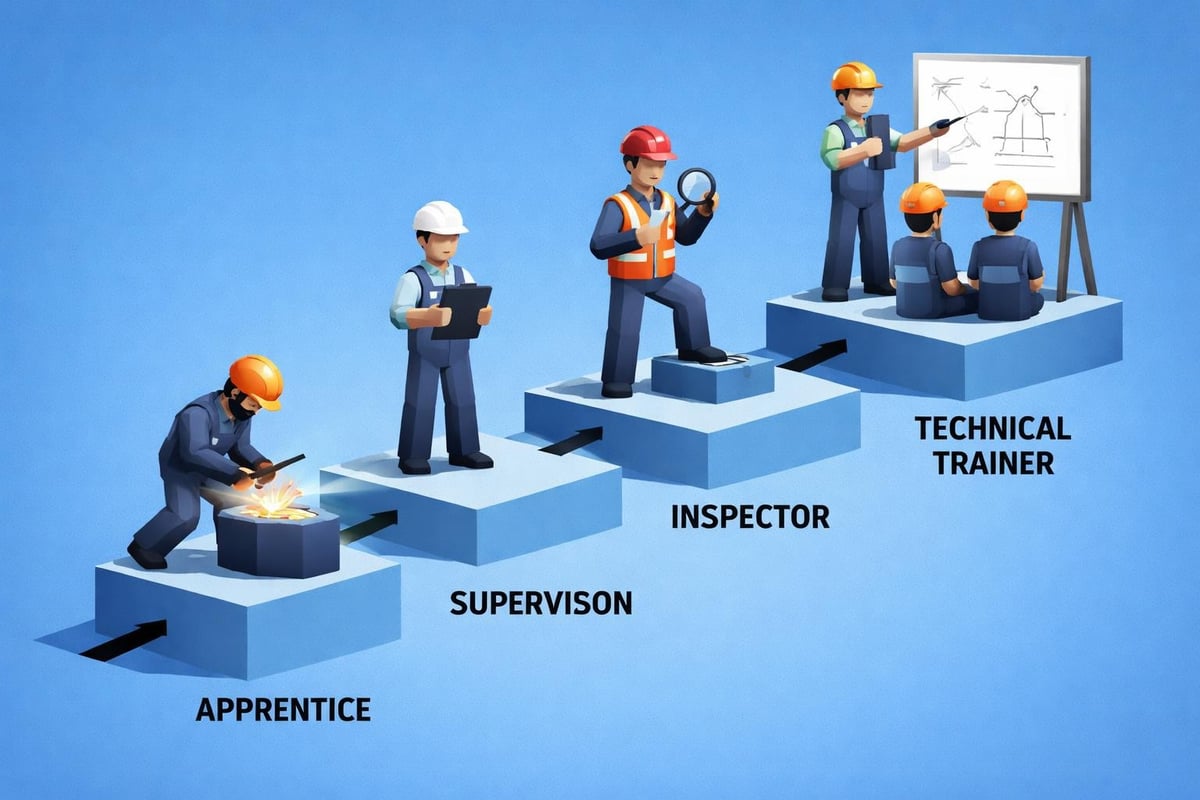
Experienced welding mechanics frequently advance to:
- Welding supervisors overseeing repair teams
- Quality control inspectors and welding inspectors
- Shop foremen coordinating maintenance operations
- Project managers for fabrication and installation projects
- Technical trainers developing the next generation of professionals
These positions leverage field experience while reducing physical demands, extending career longevity.
Material Selection and Repair Strategies
Effective repairs require matching welding techniques and filler materials to base metal properties. A knowledgeable welding mechanic considers service conditions, stress patterns, and compatibility when planning repairs.
Common Industrial Materials
Different materials present unique challenges and require specific approaches:
Carbon steel remains the most common material in industrial applications. It welds easily with most processes and responds well to standard repair procedures.
Stainless steel demands cleaner welding practices and appropriate filler selection to maintain corrosion resistance. Contamination prevention and proper heat management preserve material properties.
Cast iron requires specialized techniques including preheating, controlled cooling, and sometimes nickel-based fillers to prevent cracking during repair.
Aluminum presents challenges with heat dissipation and oxide formation, requiring TIG or specialized MIG techniques for quality results.
Failure Analysis and Repair Planning
Before beginning repairs, skilled welding mechanics analyze why components failed. Understanding whether failure resulted from fatigue, overload, corrosion, or improper installation guides repair strategies that prevent recurrence.
This analytical approach, combined with knowledge from resources like the welding handbooks and guides, ensures repairs address underlying problems rather than temporarily patching symptoms.
Field Service Versus Shop Work
Welding mechanics work in two primary environments, each with distinct advantages and challenges. Many professionals develop competency in both settings to maximize employment opportunities.
Shop-Based Operations
Working in a controlled environment offers significant advantages. Proper lighting, climate control, access to full equipment inventories, and overhead cranes facilitate efficient, high-quality work. Fabrication shop environments allow for complex projects that would be impossible in field conditions.
Shop work typically involves:
- Custom fabrication projects with tight tolerances
- Complete equipment rebuilds requiring extensive disassembly
- Batch repairs of similar components
- Quality-controlled environments for code-required work
- Collaboration with other tradespeople and engineers
Mobile Field Service
Field work demands adaptability and resourcefulness. Welding mechanics must bring necessary tools and equipment to job sites, often working in challenging conditions to return equipment to service quickly.
Field service advantages include:
- Higher billing rates reflecting travel and difficulty
- Variety in work locations and challenges
- Direct client interaction and relationship building
- Reduced competition from shops without mobile capabilities
- Immediate problem-solving satisfaction
The ability to perform both shop and field work maximizes a welding mechanic's value to employers and clients throughout the Western United States.
Quality Control and Inspection Methods
Ensuring repair quality protects equipment reliability and worker safety. Professional welding mechanics employ various inspection techniques to verify their work meets specifications.
Visual Inspection Fundamentals
The first quality check involves careful visual examination. Trained eyes detect porosity, undercut, incomplete fusion, cracks, and dimensional inaccuracies. Proper lighting, magnification when necessary, and systematic examination patterns ensure thorough assessment.
Non-Destructive Testing
Advanced quality verification uses specialized equipment:
| Method | Application | What It Detects |
|---|---|---|
| Dye Penetrant | Surface crack detection | Open surface discontinuities |
| Magnetic Particle | Ferrous material inspection | Surface and near-surface flaws |
| Ultrasonic | Internal weld quality | Internal porosity, lack of fusion |
| Radiographic | Critical structural welds | Internal defects, incomplete penetration |
The AWS Standards eLibrary provides comprehensive guidelines for inspection criteria and acceptance standards across various applications.
Business Considerations for Independent Professionals
Many experienced welding mechanics eventually establish independent businesses, leveraging their technical skills and industry relationships. Understanding business fundamentals separates successful ventures from struggling operations.
Equipment Investment Strategy
Starting a welding and fabrication shop requires significant capital investment. Prioritizing versatile, reliable equipment over specialized machines allows broader service capabilities with limited initial investment.
Essential startup equipment includes:
- Multi-process welding machines with field portability
- Basic machining tools (drill press, grinder, bandsaw)
- Measurement and layout instruments
- Material handling equipment appropriate to shop size
- Safety equipment and ventilation systems
Client Development and Retention
Building a sustainable client base requires consistent quality, reliability, and professional communication. Many successful independent welding mechanics focus on maintenance contracts with industrial clients, providing predictable revenue while establishing deep relationships.
Specializing in services like custom welding services for specific industries creates expertise that differentiates your business from general competitors.
Environmental and Sustainability Considerations
Modern welding mechanics increasingly incorporate environmental awareness into their practices. Waste reduction, proper disposal, and energy efficiency benefit both the environment and business profitability.
Waste Management Practices
Responsible professionals minimize waste through:
- Accurate material estimation to reduce excess
- Scrap metal recycling programs
- Proper disposal of consumables and contaminated materials
- Containment and recycling of cutting fluids and coolants
- Battery and electronic waste management for power tools
Energy Efficiency
Modern welding equipment offers improved energy efficiency compared to older technology. Inverter-based power sources reduce electricity consumption while providing superior arc characteristics. This efficiency translates directly to reduced operating costs and environmental impact.
Integration of Artificial Intelligence and Machine Learning
Emerging technologies are beginning to influence the welding mechanic profession. Research into deep learning-based quality prediction systems for welding processes showcases how AI assists with quality control and process optimization.
While these technologies won't replace skilled welding mechanics, they provide powerful tools for:
- Predictive maintenance scheduling based on equipment condition monitoring
- Weld quality analysis and real-time parameter adjustment
- Optimal repair procedure selection based on failure mode databases
- Training simulation for complex or dangerous procedures
Forward-thinking professionals who embrace these tools position themselves at the forefront of industry evolution.
Continuing Education and Professional Development
The welding mechanic profession demands lifelong learning. Materials, processes, codes, and technologies evolve continuously, requiring professionals to maintain current knowledge.
Industry Resources
Numerous organizations support ongoing professional development. The contributions of pioneers like Omer Blodgett in structural welding continue influencing modern practice, demonstrating how foundational knowledge remains relevant even as technology advances.
Open access welding technology resources provide cost-effective learning opportunities for professionals committed to expanding their capabilities.
Skill Expansion Opportunities
Successful welding mechanics continuously add capabilities that increase their value. Learning hydraulic cylinder repair, water jetting techniques, or advanced machining operations creates additional revenue streams while making you indispensable to clients with diverse needs.
The welding mechanic profession combines technical expertise, problem-solving abilities, and hands-on craftsmanship to deliver essential services across industrial sectors. Whether maintaining critical infrastructure in oil and gas operations, keeping aggregate processing equipment running, or fabricating custom solutions for manufacturing challenges, these professionals provide the backbone of industrial reliability. When your operation needs experienced welding mechanics who bring both shop precision and field adaptability, LTJ Industrial Services delivers comprehensive solutions throughout the Western United States, combining welding, fabrication, and machining expertise to keep your business focused on its goals.