The manufacturing landscape across the Western United States demands specialized solutions that standard production methods simply cannot deliver. Welding custom fabrication represents the intersection of advanced metallurgy, precision engineering, and skilled craftsmanship, creating unique components tailored to specific industrial requirements. For businesses in recycling, aggregate, oil and gas, and heavy manufacturing sectors, understanding the nuances of custom fabrication processes can mean the difference between operational success and costly downtime. This comprehensive guide explores the essential elements of welding custom fabrication, from material selection and process optimization to quality control and industry compliance.
Understanding Welding Custom Fabrication Fundamentals
Welding custom fabrication encompasses far more than simply joining metal pieces together. This specialized field combines multiple disciplines including design engineering, material science, and advanced welding techniques to create one-of-a-kind solutions for complex industrial challenges.
The Core Components of Custom Fabrication
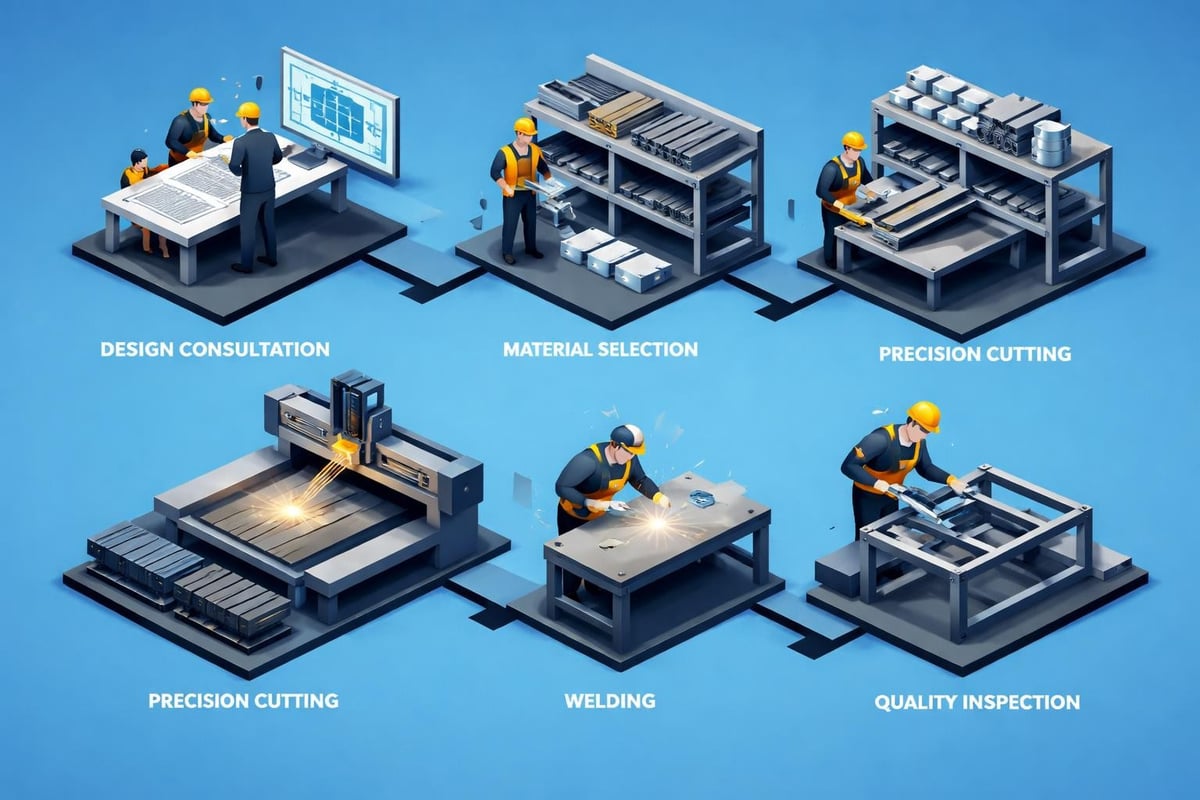
At its foundation, welding custom fabrication involves several interconnected processes that work together seamlessly. The journey begins with detailed engineering specifications and progresses through material preparation, precision cutting, forming, welding, and final finishing. Each stage requires careful attention to tolerances, material properties, and intended application requirements.
Manufacturing facilities throughout Colorado and the Western region rely on custom metal fabrication capabilities to address unique operational needs. Unlike mass production, custom work demands flexibility in approach and expertise across multiple welding processes including MIG, TIG, stick, and flux-core methods.
Key elements that define successful custom fabrication projects:
- Comprehensive design consultation and engineering support
- Material selection based on environmental conditions and load requirements
- Process optimization for cost efficiency without compromising quality
- Skilled craftsmen with certifications in multiple welding disciplines
- Advanced equipment capable of handling diverse materials and thicknesses
The complexity of modern industrial operations means that standard components often fall short of performance requirements. Custom fabrication fills this critical gap by delivering engineered solutions that integrate perfectly with existing systems and processes.
Material Selection and Engineering Considerations
Choosing the right materials forms the cornerstone of any successful welding custom fabrication project. The decision impacts everything from structural integrity and corrosion resistance to long-term maintenance costs and overall project feasibility.
Common Materials in Industrial Fabrication
| Material Type | Primary Applications | Key Advantages | Welding Considerations |
|---|---|---|---|
| Carbon Steel | Structural components, tanks, frames | Cost-effective, high strength | Excellent weldability across all processes |
| Stainless Steel | Food processing, chemical equipment | Corrosion resistance, hygiene | Requires specific filler materials, heat control |
| Aluminum | Transportation, aerospace components | Lightweight, corrosion-resistant | Demands clean environment, TIG expertise |
| High-Strength Alloys | Mining equipment, pressure vessels | Superior durability, extreme conditions | Specialized procedures, preheat requirements |
Material properties directly influence welding parameters and techniques. Carbon steel offers excellent weldability and remains the workhorse material for most industrial applications. However, specialized environments may require stainless steel for chemical resistance or aluminum for weight reduction in mobile equipment.
Manufacturing and machining operations must also consider factors like thermal expansion coefficients, hardness values, and post-weld heat treatment requirements. These technical specifications guide welding procedure development and ensure final products meet rigorous performance standards.
Engineers evaluate multiple factors when specifying materials for welding custom fabrication projects. Operating temperature ranges, exposure to corrosive substances, dynamic loading conditions, and regulatory compliance all play crucial roles in material selection decisions.
Environmental and Application-Specific Requirements
The harsh conditions prevalent in oil and gas, mining, and aggregate industries demand materials that withstand extreme temperatures, abrasive particles, and corrosive chemicals. Modern custom fabrication services provide expertise in matching materials to these demanding applications through comprehensive analysis and testing.
Advanced Welding Processes and Techniques
The technical sophistication of welding custom fabrication continues to evolve with emerging technologies and refined methodologies. Today's fabrication shops employ multiple welding processes, each optimized for specific materials, positions, and quality requirements.
Process Selection for Optimal Results
MIG (Metal Inert Gas) welding dominates production environments where speed and efficiency matter most. This semi-automatic process excels at welding carbon steel in flat and horizontal positions, making it ideal for structural fabrication and equipment frames.
TIG (Tungsten Inert Gas) welding delivers the precision and aesthetic quality demanded by critical applications. Stainless steel piping systems, aluminum components, and thin-gauge materials benefit from TIG's superior control and clean, spatter-free welds. The process requires significant operator skill but produces consistently high-quality results.
Advantages of various welding methods in custom fabrication:
- Stick Welding (SMAW): Versatility in outdoor and field conditions, effectiveness on rusty or painted surfaces
- Flux-Core Arc Welding (FCAW): High deposition rates, deep penetration for thick materials
- Submerged Arc Welding (SAW): Automated precision for long, straight seams
- Laser and Plasma Cutting: Computer-controlled accuracy for complex geometries
Modern Welding Company provides insights into custom fabrication services, demonstrating how advanced welding procedures and testing methods ensure compliance with industry standards. These technical capabilities separate professional fabrication operations from basic welding shops.
Field applications present unique challenges that demand adaptable welding techniques. Heavy equipment welding in remote locations requires portable equipment, environmental awareness, and the ability to execute quality welds in less-than-ideal conditions.
Quality Control and Certification Standards
Quality assurance represents a non-negotiable aspect of professional welding custom fabrication. Industrial clients depend on fabricated components performing flawlessly under demanding conditions, making rigorous inspection protocols essential.
Inspection Methods and Testing Procedures
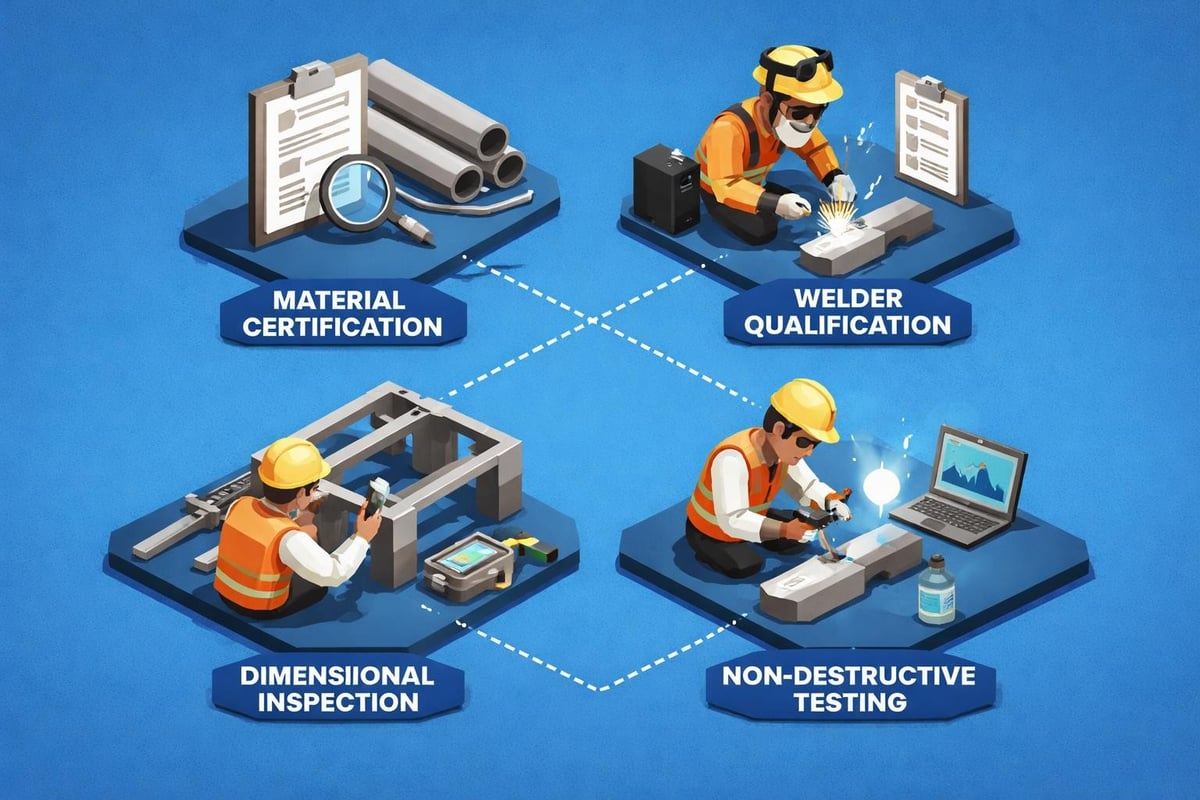
Non-destructive testing (NDT) methods verify weld integrity without damaging finished components. Visual inspection catches obvious defects, while advanced techniques like ultrasonic testing, radiographic examination, and magnetic particle inspection reveal subsurface flaws that could compromise structural integrity.
All-Type Welding and Fabrication highlights their fabrication testing services, emphasizing how certified welding inspectors ensure quality at every project stage. This systematic approach prevents costly failures and protects both equipment and personnel.
Quality control extends beyond final inspection to encompass the entire fabrication process. In-process monitoring catches potential issues early, when corrections cost less and cause minimal delays. LS Manufacturing emphasizes metal welding quality control processes including in-process and final inspections that guarantee high-quality welded assemblies.
Critical quality checkpoints in custom fabrication:
- Material certification and traceability documentation
- Welder qualification records and procedure specifications
- Dimensional verification against engineering drawings
- Surface preparation and cleanliness standards
- Post-weld heat treatment verification when required
- Final inspection reports with photographic documentation
Compliance with Industry Standards
Professional welding custom fabrication operations maintain certifications from recognized industry bodies. AWS (American Welding Society), ASME (American Society of Mechanical Engineers), and API (American Petroleum Institute) standards govern welding procedures, welder qualifications, and quality systems across different industries.
ASME code welding services for pressure piping require strict adherence to specifications that ensure safety in high-pressure applications. These standards protect equipment investments and meet regulatory requirements for industrial operations.
Design Engineering and Project Planning
Successful welding custom fabrication projects begin with thorough engineering analysis and collaborative planning. The design phase establishes project parameters, identifies potential challenges, and creates detailed specifications that guide fabrication activities.
Collaborative Design Development
Modern fabrication shops partner with clients during the design phase, offering value engineering insights that optimize manufacturability while maintaining performance requirements. This collaborative approach often reveals cost-saving opportunities or design improvements that benefit the final product.
Computer-aided design (CAD) software enables precise modeling of complex assemblies before cutting the first piece of metal. Three-dimensional visualization helps identify interference issues, optimize material usage, and plan welding sequences for maximum efficiency. Leading Edge Manufacturing discusses their approach to custom fabrication, emphasizing precision and problem-solving throughout the design and fabrication process.
Detailed fabrication drawings specify dimensions, tolerances, weld symbols, material grades, and finish requirements. These documents serve as the authoritative reference throughout production, ensuring all team members work from identical specifications.
Material Optimization and Cost Management
Strategic material selection balances performance requirements against budget constraints. Sometimes, upgrading to a higher-grade material in critical areas while using standard materials elsewhere delivers the best overall value. Experienced fabricators understand these trade-offs and guide clients toward optimal solutions.
Nesting software maximizes material utilization by arranging cut patterns to minimize waste. On large projects involving expensive alloys or specialty materials, this optimization can significantly reduce material costs. Custom Engineering outlines their metal fabrication capabilities, showcasing how comprehensive services from design through delivery create value for industrial clients.
Specialized Applications Across Industries
Welding custom fabrication serves diverse industrial sectors, each with unique requirements and performance expectations. Understanding industry-specific needs enables fabricators to deliver solutions that exceed standard specifications.
Oil and Gas Industry Requirements
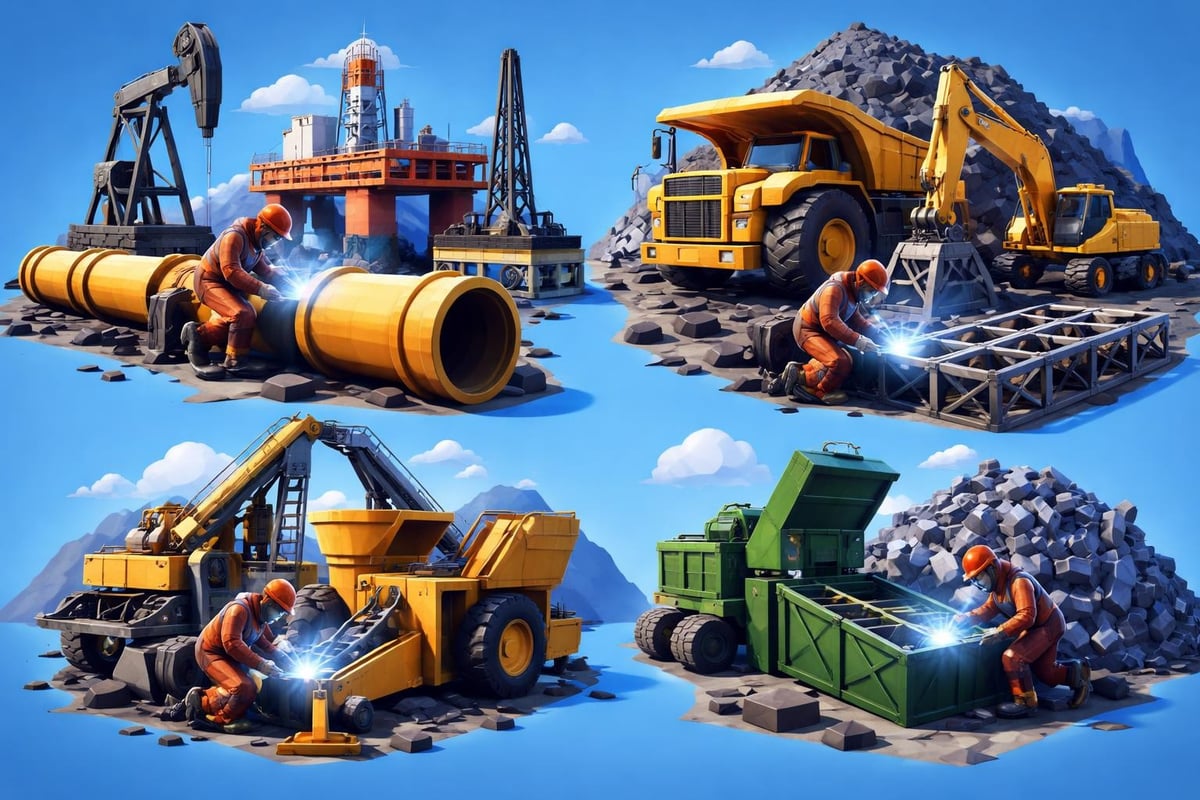
Exploration and production operations demand equipment capable of withstanding extreme pressures, corrosive fluids, and harsh environmental conditions. Oil and gas fabrication projects often involve pressure vessels, wellhead components, and processing equipment that must meet stringent safety standards.
Materials selection for petroleum applications considers hydrogen sulfide exposure, high temperatures, and regulatory compliance. Fabricators working in this sector maintain specialized certifications and follow industry-specific welding procedures.
Mining and Aggregate Equipment
Heavy equipment supporting mining operations endures constant vibration, impact loading, and abrasive materials. Welding custom fabrication for this sector prioritizes durability and ease of maintenance. Structural steel fabrication for mining equipment requires understanding of fatigue resistance and wear characteristics.
Crushers, conveyors, screens, and material handling systems all benefit from custom fabrication approaches that address specific operational challenges. Wear plates, reinforcement structures, and replacement components extend equipment life and maintain productivity.
Recycling and Material Processing
Modern recycling facilities process diverse material streams requiring specialized equipment. Custom fabrication supports conveyor systems, sorting mechanisms, containment structures, and material handling equipment designed for specific recyclable materials.
The recycling industry presents unique challenges including mixed material streams, variable input quality, and the need for adaptable processing systems. Welding custom fabrication delivers the flexibility these operations require.
Field Services and On-Site Fabrication
While shop-based fabrication offers controlled environments and optimal equipment access, many projects require on-site welding and fabrication capabilities. Field services extend fabrication expertise directly to client facilities, minimizing downtime and transportation challenges.
Mobile Fabrication Capabilities
Modern field service teams bring comprehensive capabilities to remote locations. Portable welding equipment, cutting tools, and material handling systems enable quality fabrication work at client sites. Field machining services complement welding capabilities by delivering precision work without equipment disassembly or removal.
Emergency repairs, equipment modifications, and installation support all benefit from mobile fabrication services. Industrial operations throughout the Western United States rely on these capabilities to maintain productivity and address unexpected challenges.
Advantages of field fabrication services:
- Eliminates equipment transportation costs and risks
- Reduces operational downtime through on-site solutions
- Enables fabrication on components too large for shop facilities
- Provides immediate response to emergency situations
- Facilitates precise fit-up with existing structures and equipment
Safety and Environmental Considerations
Field welding operations demand heightened safety awareness. Confined spaces, elevated work areas, and active production environments require comprehensive safety protocols and specialized training. Professional fabrication companies maintain robust safety programs that protect workers and client operations.
Environmental conditions including wind, temperature extremes, and precipitation influence welding procedures and quality outcomes. Experienced field welders adapt techniques to maintain quality standards despite challenging conditions.
Equipment and Technology Advancements
The welding custom fabrication industry continues evolving through technological innovation. Advanced equipment, automated processes, and digital tools enhance precision, efficiency, and quality outcomes.
Automation and Robotic Welding
Robotic welding systems deliver consistent, high-quality welds for repetitive production runs. While custom fabrication typically involves smaller quantities than mass production, certain components benefit from automated welding processes that ensure uniformity across multiple units.
Computer numerical control (CNC) cutting equipment translates digital designs directly into precisely cut components. Plasma, laser, and waterjet cutting systems handle various materials and thicknesses with accuracy measured in thousandths of an inch. Research on WireBend-kit showcases advancements in fabrication technology, demonstrating how computational design tools continue pushing fabrication capabilities forward.
Digital Documentation and Project Management
Modern fabrication shops utilize project management software that tracks progress, manages material procurement, and coordinates scheduling across multiple projects. Digital photography documents fabrication stages, providing clients with visual verification of quality and progress.
Barcode tracking systems maintain material traceability from raw stock through finished components. This documentation proves essential for projects requiring material certifications and compliance with industry standards.
| Technology | Application | Benefits |
|---|---|---|
| CNC Cutting | Precision component fabrication | Repeatable accuracy, complex geometries |
| 3D Scanning | Reverse engineering, fit verification | Captures exact dimensions of existing equipment |
| Welding Information Management | Quality documentation, procedure control | Ensures compliance, streamlines certification |
| Digital Measuring Tools | Dimensional inspection | Real-time verification, reduced errors |
Maintenance and Lifecycle Support
Welding custom fabrication extends beyond initial manufacturing to encompass ongoing maintenance, repair, and equipment refurbishment services. Industrial machinery refurbishment and maintenance preserves capital investments and extends operational lifespans of critical equipment.
Preventive Maintenance Strategies
Regular inspection identifies wear patterns, crack development, and corrosion before failures occur. Custom fabrication capabilities enable repair strategies that address root causes rather than applying temporary fixes. Weld overlay, hardfacing, and structural reinforcement techniques restore equipment to like-new condition.
Predictive maintenance programs leverage vibration analysis, thermal imaging, and ultrasonic testing to schedule repairs during planned downtime. This proactive approach minimizes unexpected failures that disrupt production schedules.
Reverse Engineering and Replacement Parts
Obsolete equipment often requires replacement components no longer available from original manufacturers. Welding custom fabrication shops provide reverse engineering services that recreate parts from existing samples or measurements. This capability keeps legacy equipment operational and avoids costly premature replacement.
Three-dimensional scanning captures complex geometries with precision that traditional measurement methods cannot match. Combined with modern machining and fabrication capabilities, these technologies deliver exact replacements for worn or damaged components.
Project Execution and Delivery
Translating engineering concepts into finished fabrications requires careful coordination, skilled execution, and attention to detail throughout the production cycle. Professional fabrication operations follow systematic approaches that ensure on-time delivery and budget compliance.
Production Planning and Scheduling
Material procurement timelines, shop capacity, and delivery requirements all factor into production scheduling. Manufacturing projects benefit from experienced project management that anticipates challenges and maintains communication throughout fabrication cycles.
Critical path analysis identifies tasks that drive overall project duration. Focusing resources on these activities keeps projects moving forward efficiently. Meanwhile, parallel processing of non-dependent tasks maximizes throughput and reduces total cycle time.
Installation and Commissioning Support
Successful project completion often requires installation assistance and startup support. Fabrication teams provide technical guidance during equipment installation, ensuring proper fit-up and alignment. This hands-on support prevents installation errors that could compromise performance or safety.
Commissioning services verify that fabricated equipment operates according to specifications. Performance testing, adjustment, and operator training complete the project delivery cycle and ensure client satisfaction.
Project delivery best practices:
- Detailed project kick-off meetings establishing expectations and communication protocols
- Regular progress updates with photographic documentation
- Quality hold points for client inspection and approval
- Coordinated logistics for packaging, transportation, and delivery
- Post-delivery support including installation assistance and warranty service
Pennsylvania College of Technology offers guides and handbooks on welding and metal fabrication, providing valuable reference materials that support continuous improvement in fabrication practices.
Regional Capabilities and Service Areas
Welding custom fabrication services throughout the Western United States must address unique regional considerations including environmental conditions, industry concentrations, and logistical challenges. Colorado industrial operations benefit from fabrication partners who understand local requirements and maintain established regional supply chains.
Western Region Industrial Landscape
The geography spanning from Colorado through neighboring Western states encompasses diverse industries from energy extraction and mineral processing to agriculture and manufacturing. Each sector demands specialized fabrication expertise tailored to specific operational requirements.
Mountain environments present challenges including extreme temperature variations, high altitude effects on welding processes, and difficult access to remote locations. Fabrication companies serving this region develop capabilities addressing these unique conditions.
Welding and fabrication shops positioned strategically throughout the Western region provide responsive service and understand local industry needs. This regional expertise translates into better solutions and faster response times for industrial clients.
Welding custom fabrication represents a critical capability for industrial operations requiring specialized solutions that standard components cannot provide. From material selection and process optimization through quality control and lifecycle support, professional fabrication delivers engineered solutions tailored to demanding applications. LTJ Industrial Services brings comprehensive welding, fabrication, and machining expertise to commercial and industrial clients throughout the Western United States, combining shop capabilities with field service flexibility to keep your operations running efficiently. Whether you need precision components, emergency repairs, or complete system fabrication, our experienced team delivers quality solutions that meet your timeline and budget requirements.