The united states industrial sector remains a cornerstone of economic strength, driving innovation, employment, and global competitiveness. As we navigate through 2026, understanding the dynamics of industrial production, manufacturing trends, and specialized services becomes crucial for businesses seeking to maintain operational excellence. From the oil and gas fields of the Western United States to aggregate processing and recycling operations, industrial facilities depend on reliable fabrication, welding, and machining support to keep production lines running smoothly and efficiently.
Current State of United States Industrial Production
The united states industrial landscape continues to evolve with changing economic conditions and technological advancements. Industrial production statistics reveal fluctuating patterns that reflect both challenges and opportunities across various sectors. Manufacturing output, mining operations, and utilities collectively shape the industrial index, which serves as a critical barometer for economic health.
Recent data shows that industrial production faces headwinds from various factors, including supply chain adjustments and shifting global trade dynamics. Manufacturing represents approximately 11% of GDP while supporting millions of jobs directly and indirectly across the nation. The Western United States, in particular, hosts substantial industrial activity in energy extraction, mineral processing, and specialized manufacturing operations.
Regional Industrial Concentrations
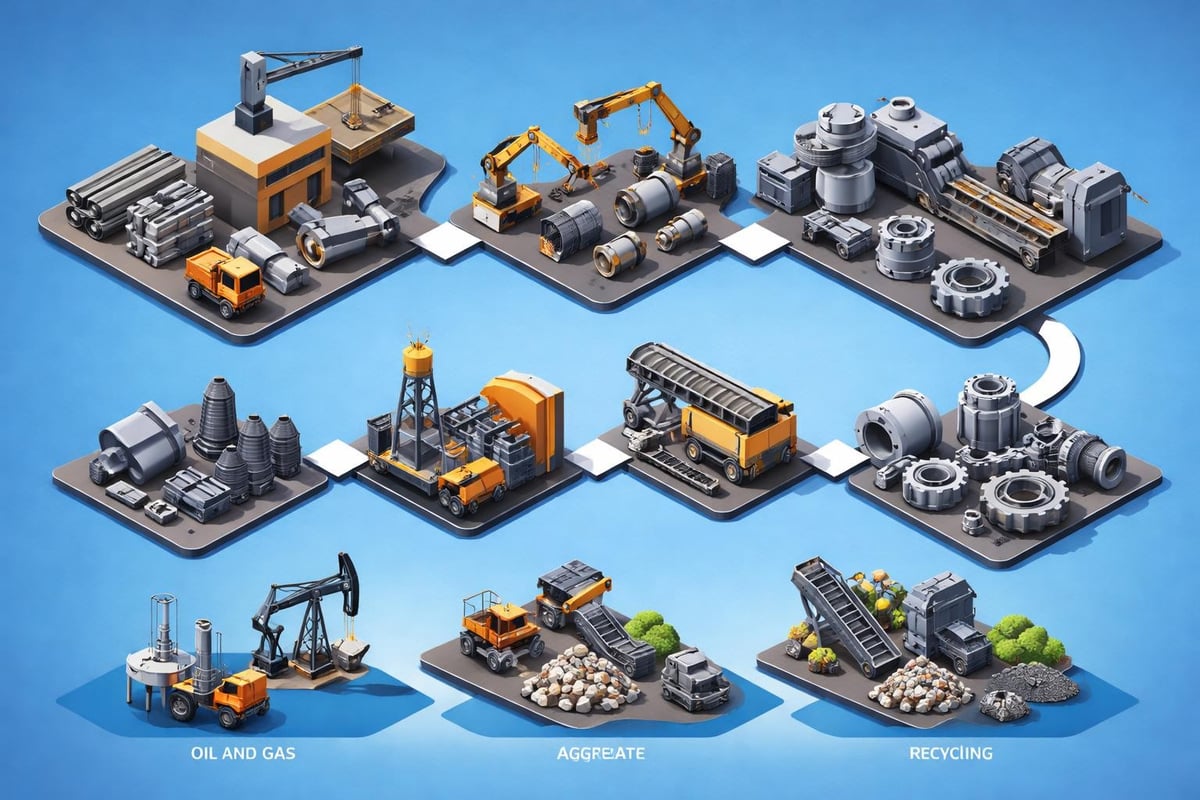
Different regions across the country specialize in distinct industrial activities. The Western states host significant concentrations of:
- Energy sector operations including oil and gas extraction and processing
- Mining and aggregate production for construction materials
- Recycling facilities processing metals and industrial waste
- Agricultural equipment manufacturing supporting food production
- Water treatment infrastructure serving industrial and municipal needs
These regional specializations create unique demands for support services. Industrial metal fabrication capabilities must adapt to serve diverse clientele, from small-scale operations to major industrial complexes requiring custom solutions and rapid turnaround times.
Manufacturing Sector Performance and Outlook
Manufacturing in the United States encompasses a broad spectrum of industries, each with distinct requirements for maintenance, fabrication, and equipment repair. The sector generated $2.3 trillion in value added according to recent economic analyses, demonstrating its continued importance despite challenges from global competition and automation trends.
Key manufacturing statistics for 2026 reveal important insights about sector health and trajectory:
| Metric | Value | Significance |
|---|---|---|
| Manufacturing GDP Contribution | 11.0% | Stable core economic driver |
| Direct Employment | 12.1 million | Substantial workforce support |
| Exports | $1.4 trillion | Global competitiveness indicator |
| Capacity Utilization | 78.2% | Room for growth exists |
The National Association of Manufacturers provides additional context showing that manufacturers contribute significantly to research and development spending, driving innovation across multiple sectors. This innovation requires sophisticated fabrication and machining capabilities to transform concepts into functional prototypes and production equipment.
Challenges Facing Modern Manufacturers
United states industrial facilities confront several persistent challenges that impact operations and profitability. Understanding these challenges helps service providers align their offerings with genuine market needs.
Cost pressures remain paramount. Analysis indicates that potential tariff impacts could increase operating costs by up to 4.5%, squeezing already thin margins. These pressures make efficient maintenance and repair services essential, as unexpected equipment failures compound financial stress.
Skilled labor shortages continue plaguing industrial operations. Finding qualified welders, machinists, and fabricators who understand both traditional techniques and modern processes presents ongoing difficulties. Companies increasingly rely on specialized welding and fabrication services to bridge internal capability gaps and manage peak workload periods.
Equipment aging creates maintenance demands across industries. Many facilities operate machinery decades old, requiring custom parts fabrication and specialized repair expertise that in-house teams may lack. This reality drives demand for mobile field services capable of addressing breakdowns at remote locations.
Critical Support Services for Industrial Operations
The united states industrial sector depends on a network of specialized service providers delivering fabrication, welding, and machining expertise. These services form the backbone of operational continuity, enabling facilities to minimize downtime and maintain production schedules.
Metal Fabrication Capabilities
Custom metal fabrication addresses countless industrial needs, from structural components to specialized equipment housings. Modern fabrication shops combine traditional craftsmanship with advanced equipment to deliver precision results.
Essential fabrication services include:
- Structural steel fabrication for facility modifications and expansions
- Custom tank and vessel construction meeting industry specifications
- Conveyor system components for material handling operations
- Protective guards and safety equipment ensuring workplace compliance
- Replacement parts manufacturing extending equipment lifespan
Manufacturing and machining operations require tight tolerances and material certifications, particularly in regulated industries like oil and gas. Quality fabrication shops maintain documentation trails and adhere to industry standards such as ASME codes for pressure vessels and piping systems.
Specialized Welding Services
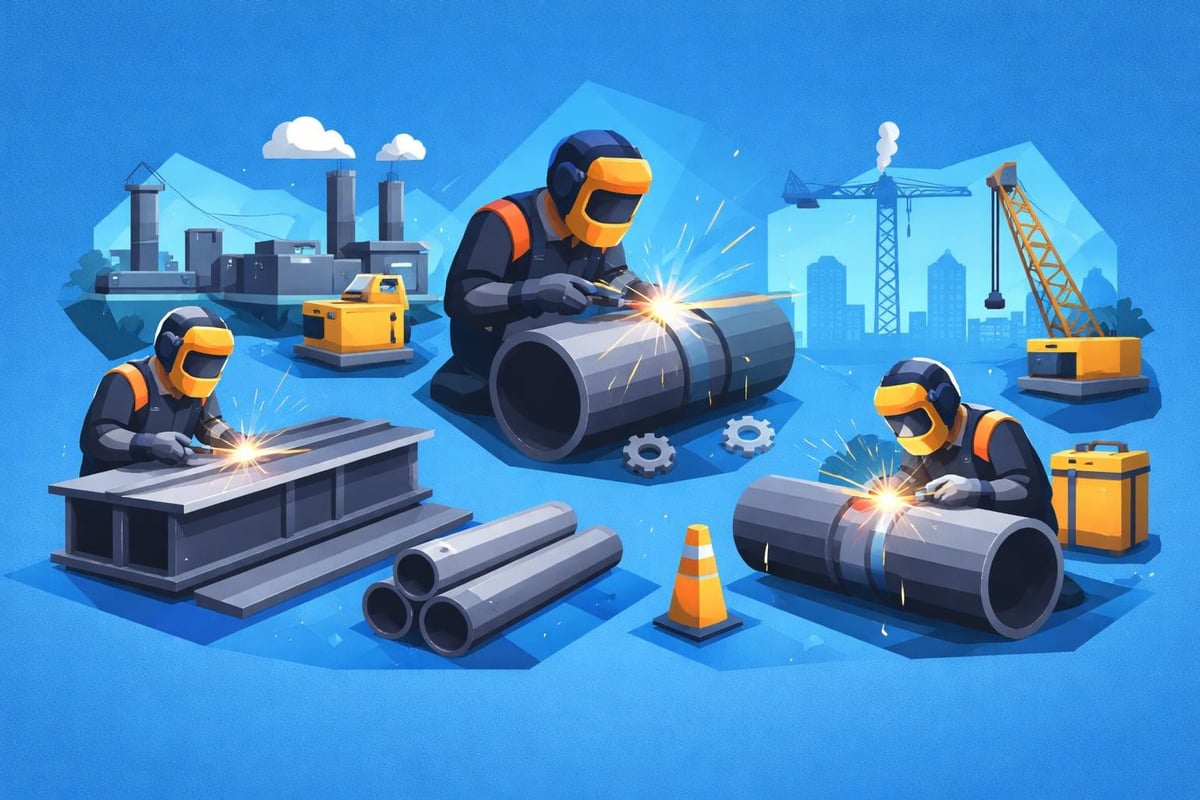
Welding expertise remains irreplaceable in industrial settings, where joint integrity directly impacts safety and performance. The united states industrial sector requires welders proficient in multiple processes and materials.
ASME code welding stands out as particularly critical for pressure piping and vessel applications. Certified welding services for pressure piping ensure compliance with stringent safety standards governing oil and gas infrastructure, chemical processing equipment, and high-pressure steam systems.
Field welding capabilities extend shop services to operational sites, enabling repairs without equipment removal. This mobility proves invaluable for aggregate operations, recycling facilities, and remote energy installations where transportation costs and downtime penalties make on-site service economically advantageous.
| Welding Process | Primary Applications | Key Advantages |
|---|---|---|
| SMAW (Stick) | Field repair, structural | Versatile, wind-resistant |
| GMAW (MIG) | Production welding, thin materials | High speed, clean welds |
| GTAW (TIG) | Precision work, exotic metals | Superior quality, control |
| FCAW (Flux-core) | Heavy fabrication, outdoor | Deep penetration, portability |
Precision Machining and CNC Operations
Machining services transform raw materials into precision components that keep industrial equipment operating. CNC machining capabilities enable reproduction of obsolete parts, custom component manufacturing, and tolerance-critical work that manual machining cannot achieve consistently.
Heavy industry parts often require substantial material removal and specialized fixturing. Job shops serving industrial clients must accommodate large workpieces and provide material flexibility, working with everything from standard carbon steels to exotic alloys used in corrosive or high-temperature environments.
Hydraulic system repair represents a specialized machining application crucial for industrial operations. Hydraulic cylinders power countless industrial processes, and their failure halts production. Hydraulic cylinder repair services encompass machining worn components, fabricating replacement parts, and rebuilding assemblies to original specifications.
Environmental and Sustainability Initiatives
The united states industrial sector faces increasing pressure to reduce environmental impacts while maintaining productivity. Recent federal initiatives demonstrate commitment to industrial decarbonization and cleaner production methods.
The Biden administration’s $6 billion investment targets emissions reduction in heavy industries like steel and cement manufacturing. These efforts aim to develop and deploy cleaner production technologies without sacrificing competitiveness or forcing facility closures.
For industrial service providers, sustainability initiatives create opportunities and challenges:
- Material efficiency becomes paramount, minimizing waste during fabrication processes
- Energy-efficient equipment reduces operational costs while supporting environmental goals
- Recycling and remanufacturing extend component lifecycles and reduce raw material consumption
- Mobile services decrease transportation impacts by bringing capabilities to client sites
Companies serving the recycling industry itself occupy a unique position, supporting operations that divert materials from landfills while processing them into valuable inputs for manufacturing. These facilities require specialized equipment maintenance and custom fabrication to handle diverse material streams efficiently.
Industry-Specific Service Requirements
Different industrial sectors present distinct service needs based on their operational characteristics, regulatory environments, and equipment profiles. Understanding these nuances enables service providers to deliver targeted solutions.
Oil and Gas Sector Demands
Energy operations require service providers who understand industry-specific standards and operating conditions. Equipment operates in harsh environments with significant temperature variations, corrosive substances, and high pressures that stress materials and components.
Custom welding services must accommodate emergency response requirements, as unplanned shutdowns cost thousands per hour in lost production. Maintaining pre-qualified welder rosters and mobile equipment ensures rapid deployment when failures occur.
Pressure piping systems demand particular attention to welding procedures, inspection requirements, and documentation. Code compliance isn’t optional in oil and gas applications where failures endanger personnel and the environment.
Aggregate and Mining Operations
Aggregate producers and mining operations subject equipment to extreme abrasive wear. Crushers, screens, conveyors, and material handling equipment require frequent repair and component replacement to maintain throughput.
Wear-resistant fabrication extends equipment life in these demanding applications. Understanding material selection-when to specify hardened steels, wear plates, or specialized alloys-separates competent fabricators from exceptional ones.
Mobile service capabilities prove especially valuable for aggregate operations, which often occupy remote locations far from major metropolitan areas. Heavy equipment welding performed on-site eliminates transportation delays and keeps materials flowing to customers.
Recycling Industry Challenges
The recycling sector processes diverse materials through specialized sorting, shredding, and processing equipment. This variety creates unique maintenance challenges as facilities handle everything from ferrous metals to electronics waste.
Custom fabrication frequently addresses specialized needs like containment systems, material separation equipment, and safety barriers. Industrial fabrication services supporting recycling operations must adapt to evolving processing technologies and regulatory requirements governing material handling and worker protection.
Economic Pressures and Industry Consolidation
Not all industrial sectors experience equal growth trajectories. Analysis of declining industries reveals that certain sectors face structural challenges requiring operational adjustments and cost management focus.
Declining sectors often intensify demand for cost-effective repair and refurbishment services as capital budgets tighten. Rather than purchasing new equipment, facilities extend existing asset lifecycles through strategic maintenance and component replacement. This environment favors service providers offering:
- Reverse engineering capabilities to recreate obsolete components
- Flexible scheduling accommodating limited maintenance windows
- Transparent pricing enabling accurate budget planning
- Quality documentation supporting regulatory compliance and internal procedures
The united states industrial landscape demonstrates ongoing consolidation as companies seek scale advantages and operational efficiencies. Consolidation creates opportunities for service providers who can establish relationships with corporate decision-makers and deliver consistent quality across multiple facilities.
Technology Integration and Modern Fabrication
Advanced technologies increasingly influence industrial fabrication and machining operations. While traditional skills remain foundational, modern shops integrate digital tools enhancing precision, efficiency, and documentation.
CAD/CAM integration streamlines the transition from design concepts to finished components. Computer-aided design allows rapid iteration and client collaboration, while computer-aided manufacturing programs CNC equipment directly from design files, eliminating manual programming errors.
Portable measuring systems bring quality control to the field, verifying component dimensions and tolerances at remote job sites. This capability ensures compliance with specifications before installation, preventing costly rework cycles.
Documentation systems track certifications, material test reports, welding procedures, and inspection records digitally. These systems support regulatory compliance while providing clients with comprehensive project documentation for their internal records and future reference.
Regional Focus: Western United States Industrial Landscape
The Western states present particular industrial characteristics shaped by natural resource abundance, geographic challenges, and economic diversity. Colorado industrial operations exemplify regional patterns while demonstrating unique local factors.
Energy sector dominance shapes industrial service demands across Colorado, Wyoming, Utah, and neighboring states. Oil and gas infrastructure requires ongoing maintenance, with field service capabilities essential given the geographic dispersion of production facilities.
Mountain terrain and remote locations complicate logistics for industrial operations and their service providers. Companies succeeding in this environment maintain:
- Mobile equipment capable of reaching isolated sites
- Regional facilities minimizing travel distances
- Local expertise understanding area-specific challenges
- Weather adaptability working through seasonal extremes
Agricultural operations throughout the region create additional service demands for equipment fabrication and repair. Irrigation systems, material handling equipment, and processing facilities require specialized expertise combining industrial capabilities with agricultural knowledge.
Quality Standards and Certification Requirements
The united states industrial sector operates under extensive regulatory oversight ensuring safety, environmental protection, and product quality. Service providers must navigate these requirements while delivering timely, cost-effective solutions.
ASME certification represents the gold standard for pressure vessel and piping work. Maintaining ASME code shop status requires substantial investment in equipment, training, and quality systems, but opens doors to high-value industrial projects where code compliance is mandatory.
AWS certification validates welder qualifications and organizational capabilities in welding processes. The American Welding Society standards provide recognized benchmarks for welder skill assessment and procedure qualification.
ISO registration demonstrates systematic quality management applicable across diverse industrial applications. While not universally required, ISO certification signals organizational maturity and process discipline valued by major industrial clients.
Material traceability requirements in critical applications demand careful documentation linking finished components to raw material certifications. Heat numbers, mill test reports, and material certificates flow through fabrication processes, ultimately delivered to clients as part of project closeout packages.
Workforce Development and Skills Gap
Skilled labor shortages represent perhaps the most significant long-term challenge facing the united states industrial sector. Baby boomer retirements accelerate knowledge loss while younger generations show less interest in industrial trades careers.
Educational partnerships between industry and technical colleges attempt to build pipelines of qualified workers. Apprenticeship programs combine classroom instruction with hands-on experience, developing competent craftspeople over multi-year periods.
For service companies, workforce challenges create both obstacles and opportunities:
- Competitive compensation attracts and retains skilled personnel
- Training investments develop capabilities matching client needs
- Career advancement paths reduce turnover and build institutional knowledge
- Safety culture protects workers while demonstrating operational maturity
- Modern equipment appeals to technologically-oriented younger workers
Companies successfully navigating workforce challenges position themselves advantageously as competitors struggle with staffing limitations. Skilled welders and experienced machinists command premium compensation, justifying their cost through productivity, quality, and versatility.
Future Outlook for Industrial Services
Looking ahead through 2026 and beyond, the united states industrial sector faces continued evolution driven by technology, economics, and policy. Several trends appear likely to shape service provider strategies:
Reshoring initiatives may reverse decades of manufacturing migration, creating domestic capacity expansion opportunities. Federal incentives supporting domestic production could stimulate facility construction and equipment installation requiring fabrication and installation services.
Infrastructure investments promised through recent legislation will eventually flow to projects requiring industrial support services. Bridge construction, water system upgrades, and energy infrastructure all demand welding, fabrication, and machining expertise.
Automation adoption proceeds unevenly across industries, with some sectors embracing robotics while others rely on traditional methods. Service providers must balance automation benefits against flexibility requirements and project economics.
Sustainability requirements will intensify, pushing industrial operations toward cleaner processes and circular economy principles. This evolution creates opportunities for innovative service providers who help clients achieve environmental goals cost-effectively.
The fundamental need for skilled fabrication, welding, and machining services remains constant despite technological changes. Equipment breaks, facilities expand, and custom solutions will always require human expertise translating requirements into functional hardware.
The united states industrial sector continues evolving with economic shifts, technological advances, and changing regulatory environments, but the fundamental need for expert fabrication, welding, and machining services remains constant across all industrial operations. Whether your facility operates in oil and gas, aggregate processing, recycling, or manufacturing, maintaining equipment reliability and operational efficiency requires partnerships with capable service providers who understand your unique challenges. LTJ Industrial Services delivers comprehensive shop and field capabilities throughout the Western United States, providing the welding, fabrication, and machining expertise that keeps industrial operations running smoothly and profitably.