The manufacturing landscape has transformed dramatically over the past decade, with services in manufacturing becoming as critical as the products themselves. Companies across commercial and industrial sectors now recognize that comprehensive support services, from welding and fabrication to machining and field mechanics, drive operational efficiency and competitive advantage. This shift reflects a broader understanding that manufacturing success depends not just on production capabilities but on the ecosystem of specialized services that keep equipment running, products flowing, and operations optimized.
The Evolution of Manufacturing Support Services
Services in manufacturing have evolved from simple maintenance activities to sophisticated, integrated solutions that address complex operational challenges. Modern industrial operations require partners who understand the interplay between production demands, equipment reliability, and safety standards.
The traditional view of manufacturing focused exclusively on production output. Today's reality demands a more holistic approach where service-based business models complement manufacturing operations. Companies serving industries like aggregate, recycling, and oil & gas need specialized services that can respond to unique operational environments and challenging conditions.
Critical Service Categories
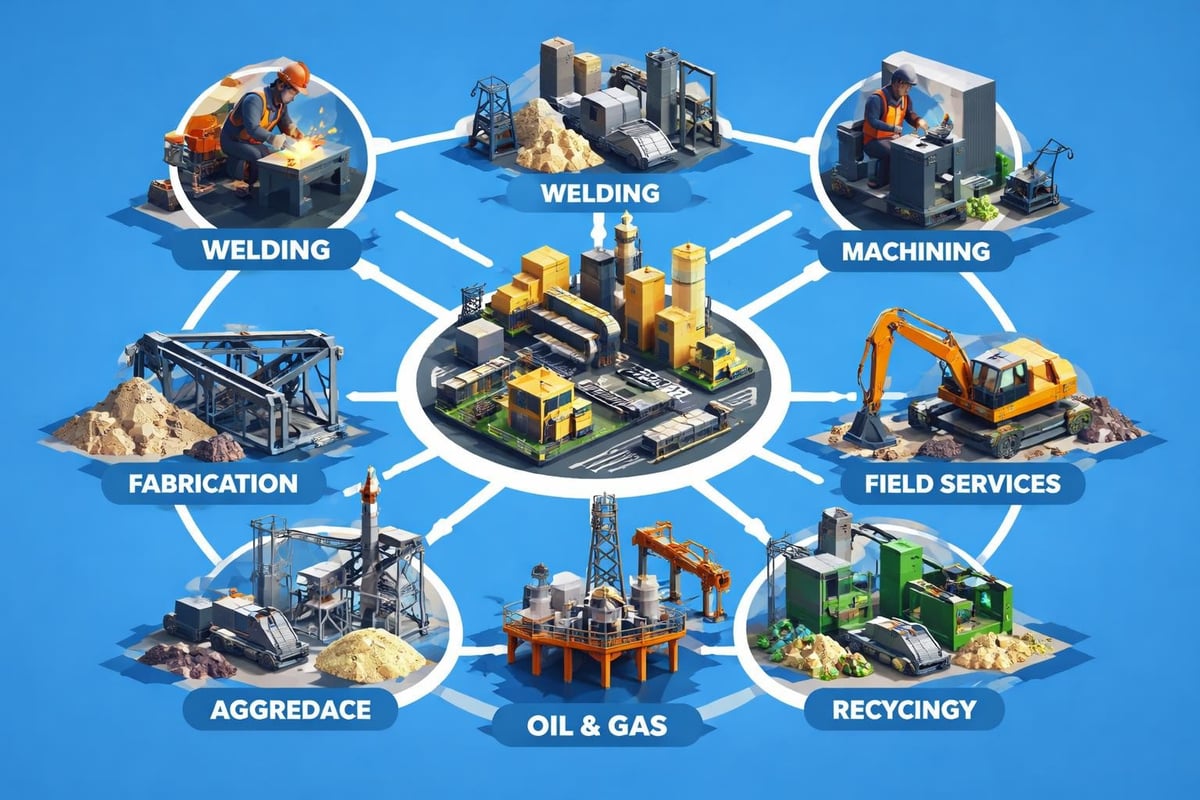
Manufacturing support encompasses several distinct yet interconnected service categories:
- Metal fabrication and custom welding
- Precision machining and equipment refurbishment
- Hydraulic system repair and maintenance
- Field mechanic services and on-site support
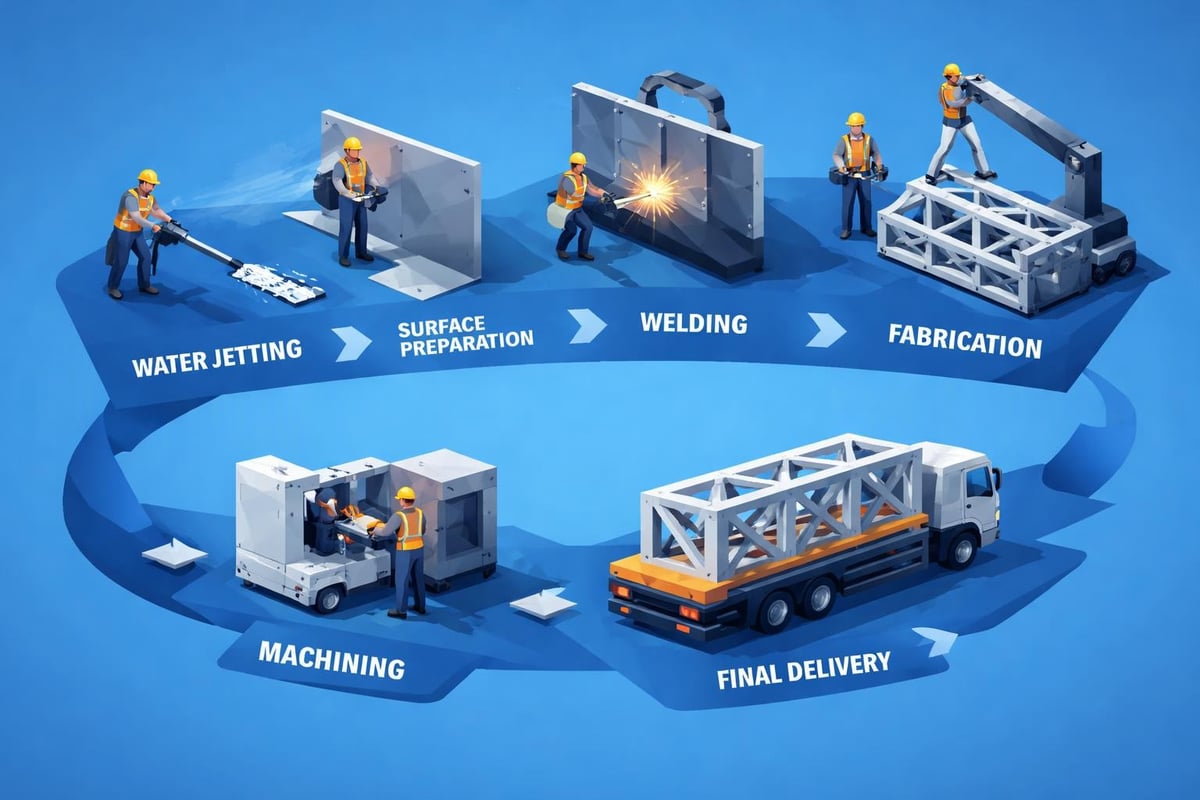
- Water jetting and surface preparation
- Emergency repair and rapid response services
Each category addresses specific operational needs while contributing to overall manufacturing effectiveness. Custom metal fabrication, for instance, enables manufacturers to create specialized components that standard suppliers cannot provide, while field mechanic services ensure minimal downtime when equipment issues arise.
Welding Services as Manufacturing Cornerstones
Welding represents one of the most essential services in manufacturing environments, particularly for heavy industrial applications. The quality and reliability of welded connections directly impact equipment safety, structural integrity, and operational continuity.
Specialized Welding Applications
Different manufacturing sectors require specific welding expertise. Oil & gas operations demand ASME code welding services for pressure piping systems where failure could result in catastrophic consequences. Aggregate operations need durable welds that withstand constant abrasion and impact forces.
| Industry Sector | Primary Welding Needs | Critical Standards |
|---|---|---|
| Oil & Gas | Pressure piping, tanks, structural | ASME, API, AWS |
| Aggregate | Conveyor systems, chutes, screens | Abrasion resistance, AWS |
| Recycling | Sorting equipment, shredders, hoppers | Impact resistance, structural integrity |
| Construction | Structural steel, heavy equipment | AWS D1.1, project specifications |
The industrial and manufacturing sectors throughout the Western United States face unique challenges related to environmental conditions, material specifications, and accessibility constraints. Field welding services become essential when equipment cannot be transported to shop facilities or when repairs must occur with minimal production disruption.
Mobile Welding Capabilities
Mobile welding units extend manufacturing support directly to operational sites. This capability proves particularly valuable for:
- Emergency repairs on critical production equipment
- Large-scale structures that cannot be moved
- Remote locations without nearby fabrication facilities
- Time-sensitive projects with tight deadlines
Companies operating in regions like western Colorado, where LTJ Industrial Services maintains its base in Rifle, understand that geographic challenges demand flexible service delivery models. The ability to dispatch qualified welding mechanics to remote sites differentiates effective service providers from those limited to shop-only operations.
Machining Services for Precision Manufacturing
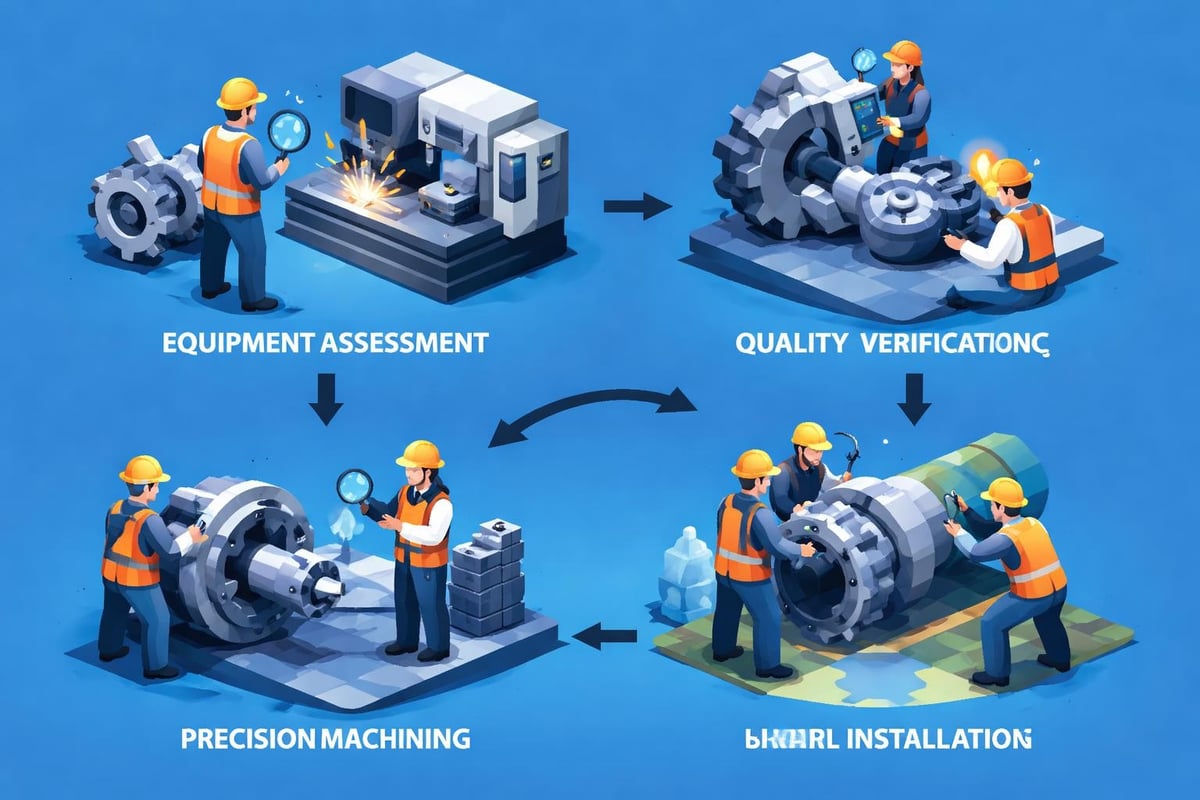
Machining services represent another fundamental pillar of services in manufacturing. Precision machining enables manufacturers to maintain equipment, produce custom components, and restore worn parts to original specifications.
Shop and Field Machining Solutions
Modern machining services extend beyond traditional shop environments. While shop-based manufacturing and machining provides controlled conditions ideal for precision work, field machining addresses urgent needs where equipment downtime costs thousands per hour.
Shop machining advantages:
- Climate-controlled environment ensures dimensional accuracy
- Access to full range of equipment and tooling
- Optimal setup for complex multi-operation projects
- Quality control verification throughout production
Field machining benefits:
- Eliminates transportation costs and logistics
- Reduces downtime for critical equipment
- Enables repair of components too large to move
- Provides immediate response to urgent needs
The integration of both capabilities creates comprehensive manufacturing support. A recycling facility experiencing bearing failure on a primary shredder, for example, benefits from on-site machining that restores bearing journals without removing the entire assembly.
Fabrication Services Driving Manufacturing Flexibility
Metal fabrication services provide manufacturers with the flexibility to adapt equipment, create custom solutions, and respond to changing production requirements. Large-scale metal fabrication capabilities enable projects ranging from structural steel components to specialized industrial equipment.
Custom Fabrication Applications
Custom fabrication addresses challenges that off-the-shelf products cannot solve. Manufacturing operations frequently require:
- Modifications to existing equipment for improved efficiency or capacity
- Replacement components for obsolete or failed equipment
- Integration structures connecting new equipment to existing systems
- Specialized handling equipment for unique materials or processes
- Protective enclosures and guards meeting specific safety requirements
The fabrication in welding integration demonstrates how complementary services enhance overall capabilities. A fabricated structural frame requires quality welds to achieve design strength, while welded assemblies may need machined mounting surfaces for proper alignment.
Material Selection and Expertise
Services in manufacturing must address diverse material requirements based on application demands. Materials welding expertise ensures proper filler metal selection, heat treatment requirements, and post-weld inspection protocols.
| Material Type | Common Applications | Key Considerations |
|---|---|---|
| Carbon Steel | Structural, general fabrication | Cost-effective, readily weldable |
| Stainless Steel | Food processing, corrosive environments | Corrosion resistance, specialized filler metals |
| Hardened Steel | Wear plates, crushing equipment | Preheat requirements, crack prevention |
| Aluminum | Weight-sensitive applications | Oxide removal, specialized equipment |
Understanding material behavior under various conditions separates competent service providers from exceptional ones. An aggregate operation might require AR400 wear-resistant steel for hopper liners, while an oil & gas application demands specific alloy steels meeting NACE corrosion resistance standards.
Hydraulic Services Supporting Industrial Operations
Hydraulic systems power critical functions across manufacturing environments. Services in manufacturing must include hydraulic expertise to maintain mobile equipment, production machinery, and material handling systems.
Hydraulic service capabilities encompass:
- System troubleshooting and diagnosis
- Component repair and replacement
- Hose fabrication and installation
- Contamination control and fluid analysis
- Preventive maintenance programs
- System design and modification
Equipment downtime often traces to hydraulic system failures. A welding fabrication shop serving manufacturing clients must maintain hydraulic service capabilities to address brake systems, cylinders, pumps, and control valves across diverse equipment types.
Water Jetting for Surface Preparation and Maintenance
Water jetting technology provides critical support for manufacturing operations requiring surface preparation, coating removal, or equipment cleaning. High-pressure water systems remove rust, paint, concrete, and contaminants without damaging base materials.
Industrial Water Jetting Applications
Water jetting serves multiple functions in industrial manufacturing environments:
- Preparing surfaces for welding or coating application
- Removing failed coatings before reapplication
- Cleaning heat exchangers and process equipment
- Cutting concrete or removing refractory materials
- Descaling metal surfaces before fabrication
This service integrates with other manufacturing support functions. Surface preparation through water jetting enables successful coating application that protects fabricated structures from corrosion, extending service life and reducing replacement costs.
Strategic Benefits of Comprehensive Service Partnerships
Manufacturers increasingly recognize advantages in consolidating services through comprehensive providers rather than managing multiple specialized vendors. This approach streamlines coordination, improves accountability, and often reduces total project costs.
Operational Efficiency Gains
Single-source service providers deliver measurable efficiency improvements:
Project coordination benefits:
- Unified project management reduces communication overhead
- Integrated scheduling minimizes delays between service phases
- Single point of contact simplifies problem resolution
- Consistent quality standards across all service elements
Cost optimization advantages:
- Reduced mobilization and logistics expenses
- Bulk purchasing power for materials and consumables
- Efficient resource utilization across multiple projects
- Lower administrative burden managing fewer vendors
Companies like LTJ Industrial Services demonstrate how integrated service offerings support manufacturing clients throughout the Western United States. The ability to provide welding, machining, fabrication, and hydraulic services through one organization eliminates coordination challenges that complicate multi-vendor projects.
Technology Integration in Manufacturing Services
Digital transformation influences services in manufacturing just as it impacts production operations. Cloud manufacturing concepts and virtual manufacturing technologies change how service providers interact with manufacturing clients.
Modern service providers leverage technology for:
- Remote diagnostics reducing response time for equipment issues
- Digital documentation providing complete service records
- 3D scanning and modeling for reverse engineering obsolete components
- Predictive maintenance analytics identifying potential failures before they occur
- Project collaboration platforms enabling real-time communication
These technological capabilities enhance traditional craftsmanship in welding, machining, and fabrication. A skilled welder using advanced welding equipment with digital controls achieves superior results compared to outdated equipment, while maintaining the expertise that ensures quality outcomes.
Quality Standards and Compliance Requirements
Services in manufacturing must meet rigorous quality and compliance standards. Different industries impose specific requirements that service providers must understand and implement.
Industry-Specific Compliance
| Industry | Primary Standards | Compliance Focus |
|---|---|---|
| Oil & Gas | ASME, API, NACE | Pressure equipment, corrosion control |
| Food Processing | FDA, USDA, 3-A | Sanitary design, material specifications |
| Construction | AWS D1.1, AISC | Structural integrity, building codes |
| Mining | MSHA, state regulations | Safety equipment, emergency response |
ASME code welding services exemplify how specialized compliance knowledge creates value for manufacturing clients. Pressure piping systems require qualified welders, documented procedures, and rigorous inspection protocols. Service providers lacking this expertise cannot support clients in regulated industries.
Quality assurance extends beyond regulatory compliance to encompass:
- Material traceability and certification
- Welder qualification and documentation
- Non-destructive examination procedures
- Heat treatment verification when required
- Dimensional inspection and tolerance verification
These quality measures protect both service providers and manufacturing clients from failures that could cause injuries, environmental incidents, or costly production disruptions.
Geographic Considerations in Service Delivery
Location significantly impacts service delivery for manufacturing support. The Western United States presents unique challenges including vast distances, remote operation sites, and variable environmental conditions.
Service providers operating across multiple states must understand:
- Regional material availability and supply chains
- Local permitting and regulatory requirements
- Environmental conditions affecting work scheduling
- Transportation logistics for equipment and personnel
- Emergency response capabilities across service territories
A company based in Rifle, Colorado, serving clients throughout the Western United States needs strategic positioning that balances central location benefits with ability to reach remote sites efficiently. This geographic expertise becomes particularly valuable for structural steel fabrication projects requiring both shop fabrication and field installation support.
Workforce Development and Technical Expertise
The quality of services in manufacturing ultimately depends on skilled technicians, welders, machinists, and mechanics. Workforce development represents a critical challenge and competitive differentiator for service providers.
Essential technical competencies include:
- Advanced welding certifications across multiple processes
- CNC machining programming and operation
- Hydraulic system troubleshooting and repair
- Blueprint reading and geometric dimensioning
- Material properties and application knowledge
Manufacturing and Services industry reports consistently identify skilled labor shortages as a primary constraint on manufacturing growth. Service companies investing in workforce development, apprenticeship programs, and continuing education create sustainable competitive advantages while supporting industry needs.
The combination of experienced craftspeople and modern technology produces optimal results. A journeyman machinist with decades of experience brings judgment and problem-solving capabilities that complement CNC equipment precision, creating outcomes superior to either element alone.
Emergency Response and Rapid Service Capabilities
Manufacturing operations cannot always schedule service needs in advance. Equipment failures, accident damage, and unexpected production changes demand rapid response capabilities from service providers.
Effective emergency response requires:
- 24/7 availability for critical situations
- Mobile equipment ready for immediate deployment
- Inventory of common repair parts eliminating delay
- Cross-trained technicians capable of diagnosing diverse problems
- Established relationships enabling quick material procurement
The cost of production downtime in industries like aggregate processing or recycling can reach thousands of dollars per hour. Service providers offering guaranteed response times and emergency service capabilities deliver quantifiable value beyond standard pricing considerations.
Future Trends Shaping Manufacturing Services
Services in manufacturing continue evolving as technology advances and industry requirements change. Several trends will significantly impact service delivery in coming years.
Automation and Service Integration
Manufacturing automation does not eliminate service needs but transforms them. Automated systems require:
- Specialized programming and troubleshooting expertise
- Integration services connecting new automation to existing equipment
- Preventive maintenance addressing sophisticated control systems
- Emergency response when automation failures stop production
Service providers must evolve capabilities alongside client technology adoption. IT services for manufacturing increasingly intersect with traditional mechanical services as industrial IoT and predictive analytics become standard.
Sustainability and Environmental Considerations
Environmental regulations and sustainability commitments influence manufacturing service requirements. Service providers must address:
- Waste reduction in fabrication and machining processes
- Energy-efficient equipment and process optimization
- Environmentally responsible disposal of consumables
- Extension of equipment service life through refurbishment
- Material selection supporting circular economy principles
These considerations already impact decision-making for industrial machinery refurbishment projects where rebuilding existing equipment often proves more sustainable than purchasing new replacements.
Customization and Flexible Manufacturing Support
Mass customization trends in manufacturing create demand for flexible service support. Service providers must accommodate:
- Short-run custom fabrication projects
- Rapid prototyping and design iteration
- Just-in-time machining supporting lean manufacturing
- Agile project scheduling adapting to changing priorities
The ability to scale service delivery up or down based on client needs while maintaining quality and responsiveness separates adaptable service organizations from rigid traditional shops.
Risk Management Through Service Partnerships
Strategic service partnerships help manufacturers manage operational risks that could impact production continuity, safety performance, or financial results.
Key risk mitigation benefits:
- Equipment failure prevention through regular inspection and maintenance
- Regulatory compliance assurance via certified processes and documentation
- Safety improvement through proper repair and modification procedures
- Cost predictability replacing emergency repairs with planned maintenance
Manufacturing and distribution industry challenges including supply chain disruptions emphasize the value of reliable service partnerships. When equipment parts become unavailable, service providers with fabrication and machining capabilities can manufacture replacement components, avoiding extended downtimes.
Insurance and liability considerations also favor working with established service providers maintaining proper coverage, safety programs, and quality management systems. These operational safeguards protect both parties while demonstrating professionalism that supports long-term business relationships.
Services in manufacturing have evolved from simple support functions to strategic capabilities that determine operational success across commercial and industrial sectors. The integration of welding, fabrication, machining, hydraulic services, and field support creates comprehensive solutions addressing complex manufacturing challenges. Whether you operate in aggregate, recycling, oil & gas, or related industries throughout the Western United States, partnering with experienced service providers ensures access to the specialized expertise your operations demand. LTJ Industrial Services delivers the comprehensive shop and field capabilities that keep your manufacturing operations running efficiently, combining decades of technical expertise with responsive service across the region.