As 2026 approaches, industrial manufacturing is evolving at an unprecedented pace, with global competition and technological advancements reshaping the landscape. Manufacturers face mounting pressure to innovate, streamline operations, and respond quickly to market shifts.
This guide provides practical strategies to help organizations not just adapt, but excel. Explore the latest trends, proven operational best practices, digital transformation insights, workforce optimization techniques, supply chain innovations, and sustainability strategies. Equip your business with the tools needed to thrive and lead in industrial manufacturing’s new era.
The Evolving Landscape of Industrial Manufacturing in 2026
The industrial manufacturing sector is experiencing a significant transformation as 2026 approaches. Global trends are reshaping how manufacturers operate, compete, and deliver value. Companies are now navigating a landscape where agility, innovation, and resilience are essential.
Global Growth and Emerging Trends
The outlook for industrial manufacturing in 2026 points to steady growth, driven by investments in advanced technologies and shifting market demands. According to recent analyses, manufacturers are increasingly focused on digital transformation, supply chain resilience, and sustainability. For more on these trends, see 6 Defining Manufacturing Trends Of 2026.
Supply Chain Evolution: Reshoring and Nearshoring
Supply chains are undergoing a major transformation. Many industrial manufacturing leaders are shifting toward reshoring and nearshoring strategies. This approach reduces logistical risks, shortens lead times, and improves supply chain visibility. By diversifying supplier bases and leveraging local resources, companies are better prepared for global disruptions.
Automation, Robotics, and Industry 4.0
Advanced automation, robotics, and artificial intelligence are rapidly becoming standard in industrial manufacturing. Smart factories, powered by Industry 4.0 integration, are enabling real-time monitoring, predictive analytics, and seamless machine-to-machine communication. These advancements drive productivity and help manufacturers respond quickly to changing market needs.
Customization, Data Analytics, and Compliance
Customers now expect greater customization and flexibility from industrial manufacturing providers. Flexible production lines and modular systems make it possible to deliver tailored products efficiently. Data analytics plays a vital role in optimizing operations, informing decisions, and ensuring quality. Meanwhile, evolving regulatory requirements are increasing the need for compliance and robust reporting systems.
Real-World Example: Predictive Maintenance
A leading automotive manufacturer recently implemented AI-driven predictive maintenance in its production lines. By analyzing equipment data in real time, the company could anticipate failures, schedule maintenance proactively, and minimize unplanned downtime. This approach is now being adopted across the electronics sector, demonstrating how digital solutions are revolutionizing industrial manufacturing processes.
Operational Excellence: Process Optimization & Quality Control
Operational excellence is the foundation of sustained success in industrial manufacturing. As the sector faces rising customer expectations and margin pressures, optimizing processes and ensuring quality control are vital for staying competitive.
Lean Manufacturing and Continuous Improvement
Lean manufacturing has become a cornerstone of efficiency in industrial manufacturing. By focusing on value creation and eliminating waste, manufacturers can streamline workflows, reduce costs, and improve delivery times. Common lean principles include value stream mapping, standardized work, and just-in-time inventory management.
Continuous improvement is embedded in methods like Kaizen and Six Sigma. Kaizen encourages small, incremental changes by engaging all employees, while Six Sigma uses statistical tools to minimize process variation and defects. Together, these approaches foster a culture where teams proactively identify inefficiencies and resolve root causes.
For those seeking in-depth insights, a Process Optimization Through Lean Manufacturing Techniques case study demonstrates how combining lean and Six Sigma methodologies can lead to measurable gains in operational efficiency and quality control within industrial manufacturing environments.
Key steps for successful process optimization include:
- Mapping current workflows and identifying bottlenecks
- Setting measurable improvement goals
- Training teams in lean and Six Sigma tools
- Monitoring progress with real-time data
Adopting these best practices helps organizations drive continuous improvement and adapt to the dynamic demands of industrial manufacturing.
Quality Control and Assurance
Quality control is essential for maintaining consistency and building trust in industrial manufacturing. International standards such as ISO 9001 provide a framework for robust quality management systems, while statistical process control (SPC) enables real-time monitoring of production variables.
Advanced weighing, inspection, and calibration tools ensure products meet tight specifications. Automation plays a growing role, reducing the risk of human error and providing accurate, repeatable measurements. Quality assurance teams use data analytics to identify trends, correct deviations quickly, and document compliance for regulatory audits.
Effective quality control not only prevents costly recalls but also enhances brand reputation and customer satisfaction. By combining technology with proven methodologies, manufacturers can achieve higher yields and fewer defects.
Real-World Example: Process Improvements in Metal Fabrication
Consider a metal fabrication plant aiming to reduce unplanned downtime. By implementing lean workflows and automated inspection systems, the facility identified inefficiencies in material handling and machine setup. After retraining employees and investing in real-time monitoring, downtime dropped by 30 percent, boosting throughput and profitability.
This example illustrates how operational excellence strategies in industrial manufacturing translate directly into increased productivity and lower operational risk. When process optimization and quality control work hand in hand, manufacturers can deliver superior products while maintaining cost effectiveness.
Digital Transformation: Smart Manufacturing and Industry 4.0
Digital transformation is redefining industrial manufacturing as we approach 2026. Adopting smart manufacturing and Industry 4.0 strategies is no longer optional; it is essential for companies aiming to stay competitive. The convergence of digital technologies, automation, and data-driven decision-making is reshaping how products are designed, produced, and delivered.
Integrating Digital Technologies
Industry 4.0 marks a new era in industrial manufacturing, blending physical operations with digital intelligence. The landscape is shaped by interconnected systems, smart devices, and real-time data flow across the production floor.
One of the foundations of smart manufacturing is the use of IoT-enabled devices. These sensors and actuators allow seamless machine-to-machine communication, providing instant feedback and enabling predictive maintenance. For example, in food and beverage manufacturing, smart sensors monitor temperature and humidity, ensuring product quality while minimizing waste.
Cloud computing has become crucial for managing the vast amounts of data generated throughout industrial manufacturing. By leveraging scalable cloud platforms, manufacturers can store, analyze, and visualize production metrics from anywhere. This enables quick responses to changing market demands and supports remote operations.
Cybersecurity is a top concern for connected factories. As more devices come online, protecting sensitive data from cyber threats is vital. Implementing robust encryption, regular audits, and employee training helps safeguard operations and maintain trust.
Digital twins are transforming process simulation and optimization. By creating virtual replicas of equipment and workflows, manufacturers can test changes, predict bottlenecks, and identify cost-saving opportunities before making real-world adjustments.
Artificial intelligence and machine learning are driving predictive maintenance. These technologies analyze equipment data to forecast failures, reducing downtime and cutting maintenance costs. According to 6 Trends to Reshape Manufacturing Industry in 2026: Deloitte, smart manufacturing investments are accelerating, with companies prioritizing automation and advanced analytics to meet evolving customer needs.
In summary, integrating these digital technologies empowers industrial manufacturing to become more agile, efficient, and resilient.
Overcoming Implementation Challenges
Despite the benefits, digital transformation in industrial manufacturing brings its own set of challenges. Common barriers include legacy equipment, high upfront costs, and resistance to change among staff.
Workforce upskilling is critical. As operations become more digitized, employees need training in data analytics, automation tools, and cybersecurity best practices. Change management programs, including clear communication and ongoing support, help teams adapt to new workflows.
Measuring the return on investment is essential for justifying digital initiatives. Manufacturers should track key performance indicators such as production efficiency, defect rates, and downtime reduction. Comparing these metrics before and after implementation highlights the business impact of smart manufacturing.
Selecting the right technology partners and platforms can make or break digital projects. Look for vendors with proven experience in industrial manufacturing, robust support services, and scalable solutions that can evolve with your business needs.
To overcome obstacles, companies should start small, pilot new technologies in select areas, and scale up as they gain confidence. This phased approach allows for iterative learning and risk management, ensuring transformation efforts deliver lasting value.
By addressing these challenges head-on, industrial manufacturing organizations can unlock the full potential of smart manufacturing and Industry 4.0, securing a strong position in the marketplace.
Workforce Strategies: Skills Development and Talent Retention
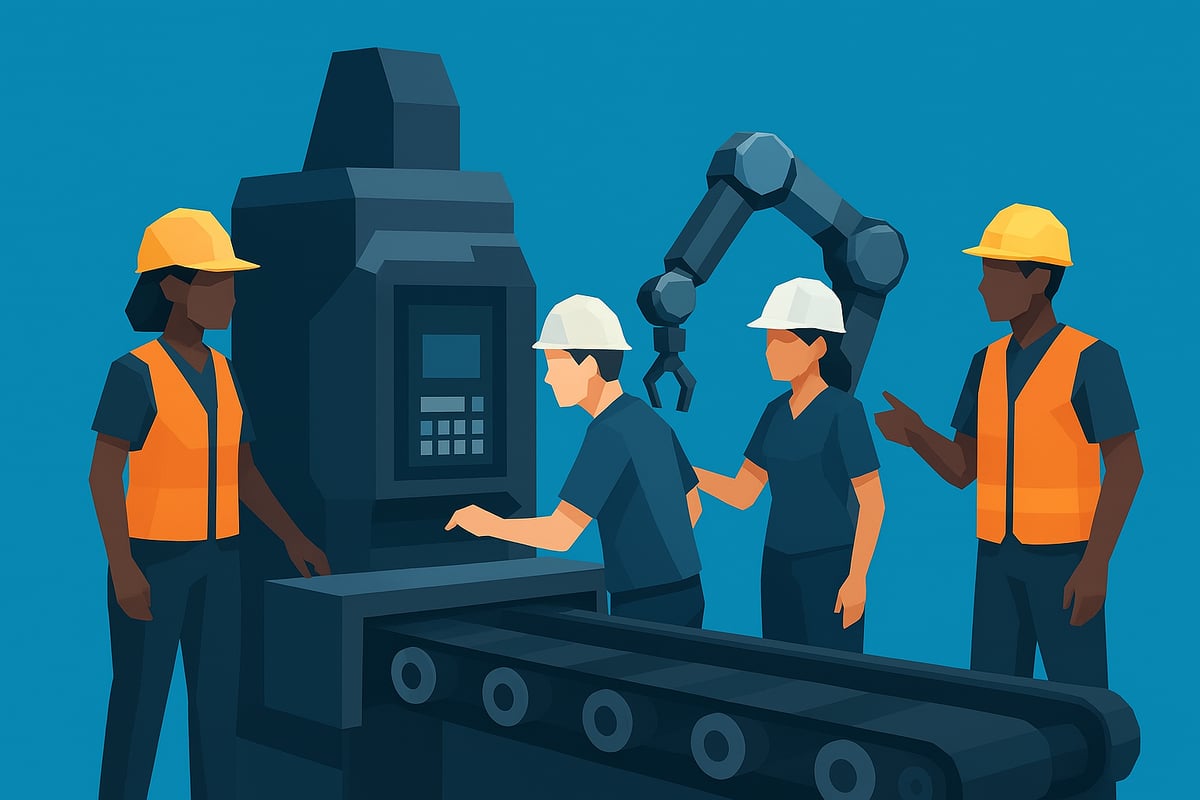
The future of industrial manufacturing hinges on a skilled, adaptable workforce. As technology rapidly transforms production environments, manufacturers face an urgent need to bridge the skills gap. Strategic workforce development is now essential for businesses aiming to remain competitive in industrial manufacturing.
Skills Gap and Upskilling
Industrial manufacturing is experiencing a significant skills gap due to rapid advancements in automation and digital technologies. Many traditional roles now require new technical competencies, making upskilling and reskilling a top priority.
Leading manufacturers are investing in targeted training programs. These initiatives often focus on digital literacy, robotics operation, and precision machining. For instance, companies may introduce hands-on workshops or simulation labs to accelerate employee learning. When exploring technical training, partnering with providers that specialize in machining solutions for industry can help ensure your team masters the precision skills required for modern industrial manufacturing.
Continuous development not only prepares employees for evolving roles but also boosts morale by demonstrating a commitment to their long-term growth.
Partnerships and Diversity for Innovation
To address workforce shortages, industrial manufacturing firms are forging partnerships with technical schools, universities, and industry associations. Apprenticeship programs, in particular, provide a pipeline of fresh talent equipped with both theoretical knowledge and practical experience.
Diversity and inclusion are critical for driving innovation. Companies that actively seek a variety of backgrounds and perspectives often outperform their peers in problem-solving and creativity. Encouraging gender, age, and cultural diversity within teams leads to new ideas and improved operational outcomes in industrial manufacturing.
Collaboration with external partners and a focus on inclusive hiring practices create a robust talent pool, ready to meet the demands of a rapidly changing sector.
Automation’s Role and Employee Engagement
Automation and robotics are transforming industrial manufacturing, but their greatest value lies in augmenting, not replacing, human workers. By taking over repetitive or hazardous tasks, collaborative robots—cobots—allow employees to focus on higher-value activities.
Employee engagement and retention strategies are more important than ever. Regular feedback, clear career progression, and recognition programs help retain top talent. In addition, integrating automation with a human-centric approach can enhance job satisfaction and safety. For example, the introduction of collaborative robotics in assembly lines has led to fewer workplace injuries and increased productivity in industrial manufacturing.
By prioritizing ongoing skills development and fostering an inclusive, engaging environment, manufacturers can build a resilient workforce prepared for the challenges of 2026 and beyond.
Supply Chain Resilience and Innovation
Building resilient and innovative supply chains has become a top priority in industrial manufacturing. Recent years have highlighted the risks of relying on single sources and inflexible logistics networks. Companies must now anticipate and respond to disruptions with agility and foresight.
Global Disruptions: Lessons Learned
Events such as pandemics and geopolitical tensions have exposed vulnerabilities in global supply chains. For industrial manufacturing, these disruptions led to material shortages, shipping delays, and unpredictable costs. The lesson is clear: a reactive approach is no longer sufficient.
Manufacturers are now investing in scenario planning and proactive risk management. By mapping out potential threats and establishing contingency plans, businesses can respond faster when challenges arise.
Strategies for Resilient Supply Chains
Diversifying the supplier base is essential for risk mitigation. Relying on a single region or vendor increases exposure to unforeseen events. Leading industrial manufacturing firms are expanding their networks, balancing local and international sources, and fostering stronger supplier relationships.
Utilizing real-time visibility tools has become a game changer. Digital platforms offer end-to-end tracking, allowing manufacturers to monitor shipments, inventory levels, and supplier performance at every stage. This transparency enables quick responses to disruptions and supports data-driven decision-making.
The Role of Technology in Supply Chain Innovation
Blockchain technology is transforming traceability and transparency in industrial manufacturing. By recording every transaction in a secure, immutable ledger, blockchain ensures accountability and reduces the risk of fraud or error. Electronics manufacturers, for example, are using blockchain to verify the origin and movement of components, building trust with customers and regulators alike.
For those seeking in-depth insights into the latest trends and innovations shaping resilient supply chains, the Commercial fabrication guide for 2026 offers expert perspectives tailored for industrial manufacturing leaders.
Sustainability and Future-Proofing
Sustainable sourcing and circular economy models are now integral to supply chain strategy. Companies are prioritizing suppliers who uphold environmental and ethical standards. Initiatives like recycling, upcycling, and closed-loop systems reduce waste and improve resource efficiency.
Modern inventory management practices, such as just-in-time (JIT), Kanban, and advanced digital tracking, help minimize excess stock and reduce lead times. By embracing these approaches, industrial manufacturing businesses can enhance both resilience and competitiveness.
In summary, a resilient and innovative supply chain is the backbone of successful industrial manufacturing. By leveraging technology, diversifying suppliers, and committing to sustainability, manufacturers are well-positioned to navigate future uncertainties and drive long-term growth.
Sustainability and Environmental Responsibility in Manufacturing
Sustainability is now a defining aspect of industrial manufacturing. As companies face stricter regulations and evolving market demands, embracing responsible practices is no longer optional. The drive for sustainable growth is shaping every layer of the industrial manufacturing landscape.
Regulatory Landscape and Compliance
Industrial manufacturing faces increasing scrutiny regarding emissions, waste, and environmental reporting. Governments are introducing tighter controls on pollutants, mandating transparent tracking of resource usage and waste disposal. Companies must implement systems that ensure compliance while supporting sustainable operations. These efforts protect brand reputation and reduce the risk of costly penalties.
Energy Efficiency and Renewable Power
Improving energy efficiency is a top priority across industrial manufacturing. Many organizations are investing in energy audits and upgrading to high-efficiency equipment. Integrating renewable energy sources, such as solar and wind, helps to lower operational costs and carbon footprints. These initiatives are crucial for meeting both regulatory requirements and consumer expectations.
Reducing Waste: Recycling and Upcycling
Minimizing material waste is central to sustainable industrial manufacturing. Recycling and upcycling programs convert scrap and byproducts into valuable resources, reducing the need for raw material extraction. Facilities are adopting circular economy principles by designing processes that enable continuous material reuse. Sustainable process optimization, supported by fabrication services for manufacturers, can further reduce waste and enhance operational efficiency.
Eco-Friendly Product Design and Water Conservation
Eco-friendly product design considers the entire lifecycle, from material sourcing to end-of-life disposal. Using recyclable or biodegradable packaging and selecting non-toxic materials contribute to a greener footprint. Water conservation strategies, such as closed-loop systems and advanced filtration, reduce consumption and limit environmental impact. These steps help industrial manufacturing align with global sustainability goals.
Measuring Sustainability and Industry Example
Tracking and reporting sustainability metrics is essential for continuous improvement. Key indicators include energy consumption, waste diversion rates, and water usage. Many industrial manufacturing leaders are adopting digital tools to monitor and optimize these metrics. For example, plastics manufacturers are deploying closed-loop recycling systems, turning post-consumer waste into new products and setting industry benchmarks for environmental responsibility.
Sustainability is a journey that requires ongoing investment and innovation. By proactively addressing environmental challenges, industrial manufacturing companies can secure long-term competitiveness, comply with regulations, and build trust with stakeholders. The future belongs to businesses that put responsibility at the heart of their operations.
Future-Proofing Your Manufacturing Business: Strategic Planning for 2026 and Beyond
Anticipating change is the foundation of resilience in industrial manufacturing. As 2026 approaches, future-proofing your business requires a blend of vision, adaptability, and concrete action. Leaders must balance innovation with risk management to ensure long-term competitiveness.
Scenario Planning and Risk Assessment
Proactive scenario planning is essential for industrial manufacturing organizations. By mapping out potential market shifts, regulatory changes, or supply chain disruptions, manufacturers can prepare for uncertainty. Create a risk matrix to identify vulnerabilities and prioritize mitigation efforts. Regularly update these plans, involving cross-functional teams for a comprehensive perspective.
| Scenario Type | Potential Impact | Mitigation Strategy |
|---|---|---|
| Supply Chain Disrupt | High | Diversify Suppliers |
| Regulatory Change | Medium | Compliance Audit |
| Market Demand Shift | High | Flexible Production |
Investing in R&D and Innovation Hubs
Continuous investment in research and development drives progress in industrial manufacturing. Allocate resources toward exploring new materials, automation technologies, and sustainability solutions. Establish innovation hubs to foster collaboration and rapid prototyping. This proactive approach positions your business to capitalize on emerging trends before competitors.
Strategic Partnerships and Mergers/Acquisitions
Forming alliances and considering mergers or acquisitions can accelerate growth. Strategic partnerships with technology providers, suppliers, or service specialists expand your capabilities. For example, collaborating with welding expertise in manufacturing providers ensures access to custom equipment solutions, supporting adaptability as production requirements evolve.
Monitoring Market Trends and Competitor Activity
Stay ahead by consistently tracking market trends and competitor strategies. Use data analytics to interpret shifts in customer demands, pricing, and technology adoption. Attend industry conferences, subscribe to sector reports, and foster open communication with your sales and procurement teams for real-time insights.
Building a Culture of Agility and Continuous Learning
Agility is a competitive advantage in industrial manufacturing. Encourage employees to embrace change and pursue professional development. Develop training programs focused on digital skills, lean practices, and cross-functional collaboration. Recognize and reward experimentation, learning from both successes and setbacks.
Leveraging Government Incentives and Grants
Government incentives can offset the costs of modernization. Investigate local and national grants for digital transformation, energy efficiency, and workforce development. Submit timely applications and maintain compliance to maximize funding opportunities.
Example: Strategic Pivot to Emerging Markets and Technologies
Consider the example of a mid-sized manufacturer that pivoted to electric vehicle components as demand shifted. By investing in automation, forming new partnerships, and leveraging government grants, they entered a high-growth market and secured their position for the future. This approach demonstrates the value of adaptability and strategic foresight in industrial manufacturing.
A forward-thinking strategy not only protects against disruption but also unlocks new opportunities. By integrating scenario planning, innovation, partnerships, market intelligence, and a learning culture, your industrial manufacturing business will be well-positioned to thrive in 2026 and beyond.
As you look ahead to the opportunities and challenges that 2026 brings, having reliable partners for your manufacturing needs is essential. Whether you are navigating digital transformation, optimizing processes, or building a resilient supply chain, expert support in welding, fabrication, and machining can make all the difference. At LTJ Industrial Services, we are committed to helping businesses like yours stay adaptable and focused on growth. If you are ready to strengthen your operations with high quality, customized solutions, let us know how we can support your goals.
Request a Quote