The energy sector continues to demand exceptional precision and reliability in every component, system, and structure deployed in extraction, processing, and transportation operations. Oil and gas fabrication stands as a critical cornerstone of this industry, combining advanced welding techniques, precision machining, and rigorous quality standards to create the infrastructure that powers global energy production. From subsea structures to processing modules, fabrication shops across the Western United States support operations that require zero tolerance for failure in some of the harshest operating environments on the planet.
Understanding the Scope of Oil and Gas Fabrication
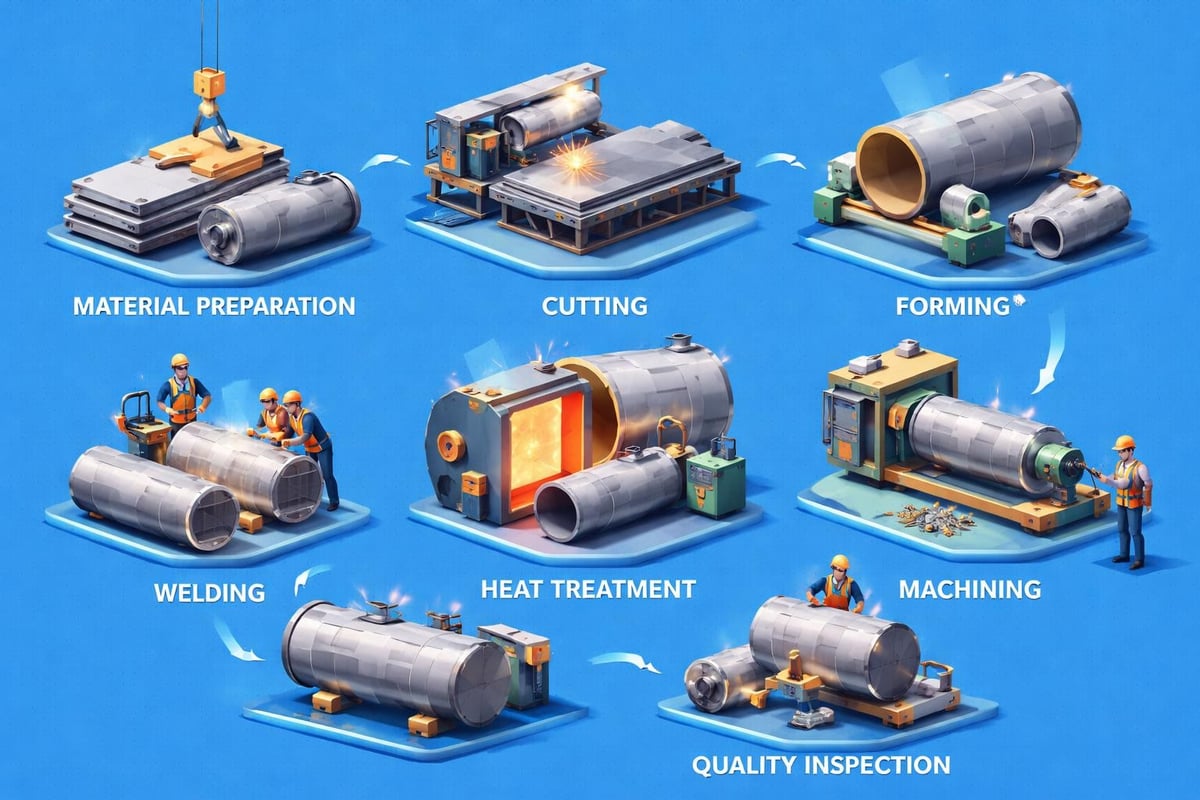
Oil and gas fabrication encompasses the complete process of designing, cutting, forming, welding, and assembling metal components that serve critical functions in energy operations. This specialized manufacturing discipline produces everything from pressure vessels and heat exchangers to complex modular facilities and subsea frameworks.
Core Fabrication Processes
The foundation of quality fabrication work rests on several essential processes that work together seamlessly. Precision cutting initiates most projects, utilizing plasma, laser, or waterjet technologies to prepare materials according to exact specifications. Forming operations shape these materials into required configurations, whether through press brakes, rolling equipment, or specialized bending machinery.
Welding expertise becomes paramount when joining these components, particularly in applications involving high-pressure systems or extreme temperatures. Certified welders must demonstrate proficiency in multiple processes including TIG, MIG, stick welding, and specialized techniques for exotic materials commonly found in energy applications.
Material preparation requires meticulous attention to surface conditions, joint configurations, and pre-heat requirements. Following welding operations, post-weld heat treatment often becomes necessary to relieve residual stresses and restore material properties compromised during the welding process.
The complexity increases when considering the range of materials encountered in this field:
- Carbon steel for general structural applications
- Stainless steel alloys for corrosion resistance
- Duplex and super-duplex grades for severe service conditions
- Nickel alloys for extreme temperature environments
- Chrome-moly steels for high-pressure, high-temperature systems
Critical Components in Energy Infrastructure
Oil and gas fabrication produces an extensive range of components that support every phase of energy operations. Understanding these critical elements helps illustrate the breadth of capabilities required from fabrication partners.
Pressure Vessels and Processing Equipment
Pressure vessels represent one of the most demanding fabrication challenges in the energy sector. These engineered containers must withstand extreme pressures while maintaining absolute integrity over decades of service. ASME-certified fabrication standards govern their construction, requiring documented procedures, qualified welders, and rigorous inspection protocols.
Separators divide production streams into gas, oil, and water components. Heat exchangers transfer thermal energy between process streams. Scrubbers remove contaminants from gas streams. Each component demands precision fabrication to meet performance specifications while adhering to safety codes.
| Component Type | Typical Materials | Critical Requirements |
|---|---|---|
| Pressure Vessels | Carbon Steel, Stainless | ASME Code compliance, NDE testing |
| Heat Exchangers | Duplex, Titanium | Tube-to-tubesheet integrity, thermal cycling |
| Separators | Carbon Steel, Coated | Internal coating compatibility, level control |
| Scrubbers | Stainless, FRP | Corrosion resistance, demister effectiveness |
Structural Fabrication for Platforms and Facilities
Large-scale structural assemblies provide the framework for production facilities both onshore and offshore. Module fabrication projects demonstrate the scale and complexity possible when fabrication expertise combines with project management capabilities.
These structures must resist hurricane-force winds, seismic events, and corrosive marine environments while supporting heavy equipment loads. Fabricators employ advanced techniques including:
- Three-dimensional modeling and clash detection during design
- Pre-assembly and fit-up verification in controlled shop environments
- Transportation analysis to ensure components can reach remote sites
- Modular construction strategies that minimize field installation time
- Comprehensive coating systems applied before shipment
Machining Precision for Critical Applications
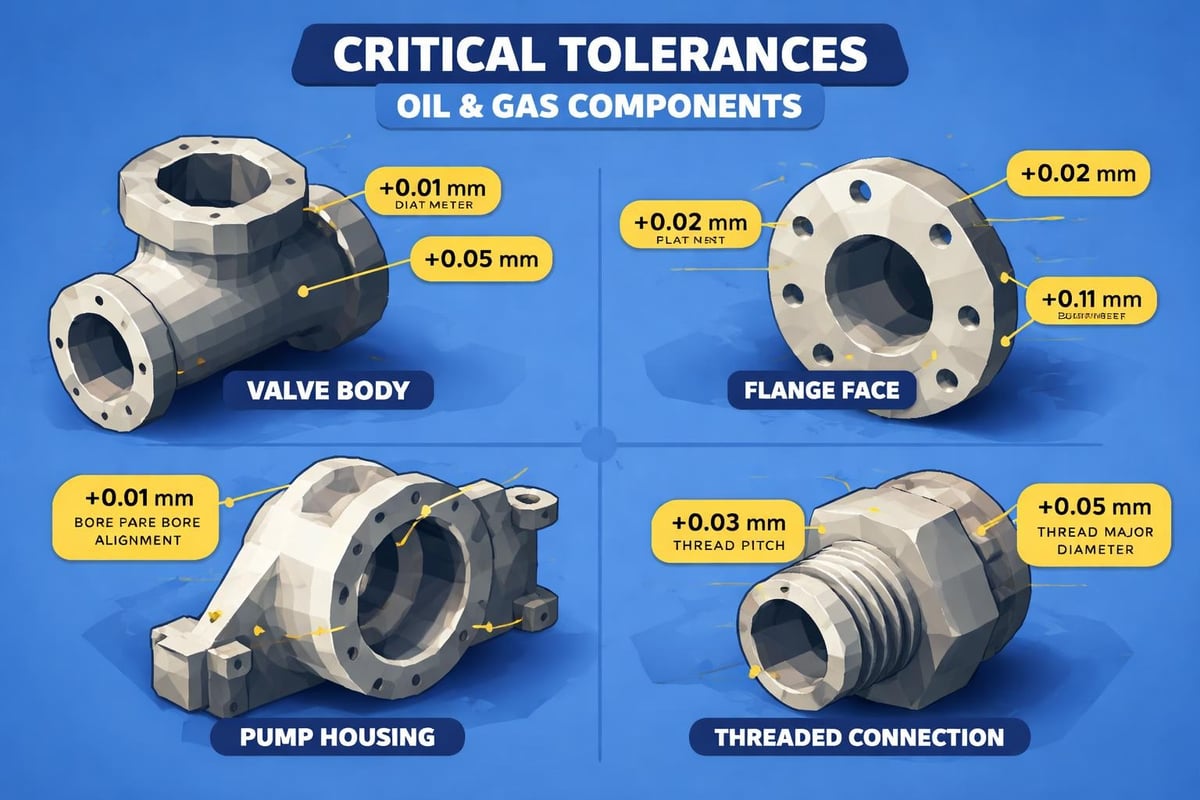
While welding and structural fabrication receive considerable attention, precision machining plays an equally vital role in oil and gas fabrication. Many components require tolerances measured in thousandths of an inch to ensure proper fit, seal integrity, and operational reliability.
CNC machining capabilities enable fabricators to produce complex geometries with repeatability and accuracy. Valve bodies, pump housings, and compressor components frequently require multi-axis machining operations to achieve final specifications.
Common Machining Operations
Turning operations create cylindrical features on shafts, flanges, and valve stems. Milling processes produce flat surfaces, pockets, and complex contours on manifolds and adapter plates. Boring procedures achieve precise internal diameters in pressure-retaining components.
Thread cutting demands particular attention in energy applications where threaded connections must seal against high pressures or provide structural load paths. Surface finishing operations ensure proper sealing surfaces on flanges and ensure dimensional stability through stress relief.
The integration of machining with fabrication work creates opportunities for comprehensive project execution. Rather than coordinating between multiple vendors, energy operators benefit when a single provider like LTJ Industrial Services can handle both structural fabrication and precision machining requirements.
Quality Standards and Certification Requirements
The oil and gas sector maintains some of the most rigorous quality and safety standards of any industry. Fabrication work must comply with multiple overlapping requirements from regulatory agencies, industry organizations, and end users.
Essential Certifications and Standards
ISO certifications for oil and gas operations provide frameworks for quality management systems, environmental controls, and occupational health and safety. These standards ensure consistent processes and continuous improvement in fabrication operations.
API specifications govern everything from welding procedures to material selection for pressure-containing components. ASME codes establish design, fabrication, inspection, and testing requirements for boilers, pressure vessels, and piping systems. AWS certifications verify welder qualifications and welding procedure specifications.
Beyond these industry-wide standards, many operators impose additional requirements:
- Company-specific welding procedure qualifications
- Enhanced non-destructive examination protocols
- Material traceability documentation
- Positive material identification testing
- Witness and hold point inspections during fabrication
Non-Destructive Examination Methods
Quality verification relies heavily on non-destructive examination (NDE) techniques that assess component integrity without causing damage. Radiographic testing reveals internal discontinuities in welds and castings. Ultrasonic examination detects subsurface flaws and measures wall thickness.
Magnetic particle inspection identifies surface and near-surface defects in ferromagnetic materials. Liquid penetrant testing highlights surface-breaking discontinuities in non-magnetic materials. Visual inspection remains the most fundamental and frequently applied examination method.
Quality welders understand that proper technique during fabrication prevents defects more effectively than inspection catches them. This philosophy of “building quality in” rather than “inspecting quality in” drives superior fabrication outcomes.
Field Services and On-Site Fabrication
While shop fabrication offers controlled environments and superior efficiency, many oil and gas projects require fabrication work at remote field locations. This reality demands versatile capabilities and specialized equipment.
Mobile Fabrication Solutions
Field fabrication teams bring shop-quality work to well sites, processing facilities, and pipeline construction zones. Portable welding equipment enables certified processes in locations far from permanent facilities. Mobile machining units perform precision work on equipment that cannot be removed for shop service.
Custom welding services adapt to site-specific challenges including weather exposure, limited access, and operational constraints. Fabricators working in the field must demonstrate additional competencies beyond technical welding and machining skills:
- Safety awareness in active operational environments
- Coordination with other contractors and operators
- Equipment mobilization and demobilization efficiency
- Quality control in less-than-ideal conditions
- Documentation practices meeting regulatory requirements
Specialized Applications in Subsea and Offshore Work
Offshore and subsea environments present unique fabrication challenges that demand specialized knowledge and capabilities. Components must resist seawater corrosion, perform reliably at extreme depths, and accommodate installation through complex marine operations.
Subsea fabrication awards highlight the technical achievements required in this demanding sector. Structures installed on the seafloor must function for decades with minimal maintenance access.
Material Selection for Marine Environments
Corrosion resistance becomes paramount in subsea applications. Duplex stainless steels offer excellent resistance to chloride-induced stress corrosion cracking. Super-duplex grades extend performance to higher strength requirements and more severe conditions. Titanium alloys provide exceptional corrosion resistance despite higher material costs.
Cathodic protection systems integrated during fabrication extend service life through electrochemical corrosion control. Coating systems create barriers between base materials and corrosive environments. Galvanic isolation prevents accelerated corrosion where dissimilar metals contact each other.
| Application | Typical Material | Primary Challenge |
|---|---|---|
| Subsea Manifolds | Super Duplex | Corrosion, pressure rating |
| Riser Supports | Duplex Stainless | Fatigue, corrosion |
| Pipeline Connections | Carbon Steel, Clad | Weld integrity, coating damage |
| Subsea Trees | Duplex, Inconel | Pressure, temperature, corrosion |
Advanced Technologies Transforming Fabrication
The oil and gas fabrication industry continuously adopts new technologies that improve efficiency, quality, and safety. Digital transformation initiatives change how fabricators approach design, production planning, and quality verification.
Digital Twins and Advanced Modeling
Digital twin frameworks enable fabricators to create virtual replicas of physical components and assemblies. These models support optimization during design phases and provide decision-making tools throughout fabrication and operational lifecycles.
3D laser scanning captures as-built conditions with millimeter accuracy, supporting retrofit work and reverse engineering applications. Finite element analysis predicts stress distributions and validates structural adequacy before cutting the first piece of material.
Building information modeling coordinates multiple disciplines during large project execution. Clash detection identifies interference issues before fabrication begins. These technologies reduce rework and accelerate project schedules.

Material Traceability and Supply Chain Management
Ensuring proper materials enter fabrication processes requires comprehensive tracking systems and supplier qualification programs. Material substitution or grade confusion can lead to catastrophic failures in pressure-containing components.
Documentation and Verification
Every piece of material entering a fabrication project should carry mill test reports documenting chemical composition and mechanical properties. Positive material identification testing verifies actual material chemistry against specifications.
Heat number tracking connects each component to source materials throughout fabrication and into service. This traceability becomes critical during failure investigations or when manufacturing defects are discovered after installation.
Industrial fabrication services implement material control procedures that prevent mix-ups and ensure compliance with specifications. Color coding, physical separation, and restricted access to material storage areas support these objectives.
Hydraulic Systems and Fluid Power Components
Oil and gas operations rely heavily on hydraulic systems for actuation, control, and power transmission. Fabricating hydraulic components requires understanding both mechanical engineering principles and fluid dynamics.
Hydraulic manifolds route pressurized fluid to multiple actuators while minimizing leak points and pressure losses. Accumulator systems store energy and dampen pressure spikes. Valve blocks integrate multiple control functions into compact assemblies.
Hydraulic cylinder repair and fabrication demands precision machining to maintain proper clearances and seal compatibility. Chrome-plated rods, honed bores, and precision-ground pistons ensure reliable performance under cyclic loading.
Environmental and Safety Considerations
Modern oil and gas fabrication must address environmental stewardship and worker safety with the same rigor applied to quality and productivity. Regulatory compliance drives many initiatives, but leading fabricators exceed minimum requirements.
Emission Control and Waste Management
Welding fume extraction protects workers from harmful particulates and gases. Coating application environments capture overspray and volatile organic compounds. Cutting operations manage metallic dust and particulates.
Hazardous waste management procedures ensure proper handling of spent solvents, contaminated absorbents, and other regulated materials. Recycling programs recover valuable metals from scrap and reduce landfill disposal.
Safety protocols protect personnel from the inherent hazards of fabrication work:
- Confined space entry procedures for vessel interiors
- Hot work permits controlling ignition sources
- Overhead crane operations and rigging practices
- Personal protective equipment selection and use
- Emergency response planning and drills
Emerging Trends Shaping Future Fabrication
The oil and gas fabrication landscape continues evolving as new technologies emerge and industry priorities shift. Understanding these trends helps fabricators and their customers prepare for future requirements.
Automation and Robotics
Automated welding systems improve consistency and reduce labor requirements for repetitive operations. Robotic welding cells handle pipe fabrication and structural assemblies with minimal human intervention. Collaborative robots assist welders with positioning and material handling tasks.
Artificial general intelligence applications may eventually optimize fabrication sequences, predict quality issues before they occur, and enhance supply chain coordination. While full AGI remains theoretical, narrow AI applications already support quality inspection and process optimization.
Additive Manufacturing Integration
Metal 3D printing technologies enable fabrication of complex geometries impossible through conventional methods. While not yet suitable for primary pressure-containing components, additive manufacturing produces tooling, fixtures, and specialized parts that support fabrication operations.
The shale revolution’s continued evolution drives demand for fabrication services supporting unconventional resource development. Horizontal drilling and hydraulic fracturing require specialized surface equipment fabricated to demanding specifications.
Project Management and Scheduling Optimization
Successful fabrication projects require more than technical expertise. Coordinating materials, labor, equipment, and inspection resources determines whether projects meet schedule and budget targets.
Critical Path Analysis
Understanding task dependencies and resource constraints enables realistic scheduling. Material procurement lead times often define project start dates. Inspection hold points create dependencies where work cannot proceed until third-party verification occurs.
Shop loading optimization balances multiple projects competing for limited resources. Manufacturing project coordination ensures critical path activities receive priority while maintaining workflow for other concurrent work.
Communication protocols keep all stakeholders informed of progress, issues, and schedule impacts. Regular project meetings, formal reporting, and collaborative problem-solving prevent small issues from becoming major delays.
Selecting the Right Fabrication Partner
Energy operators choosing fabrication partners should evaluate multiple factors beyond price competitiveness. The right partner brings technical capabilities, quality systems, and collaborative approaches that support project success.
Key Evaluation Criteria
Technical capabilities must align with project requirements including material grades, thickness ranges, code compliance needs, and specialty processes. Capacity assessment ensures the fabricator can handle project scope within required timelines.
Quality system maturity indicates consistent performance and regulatory compliance. Trace-A-Matic’s certifications and processes exemplify the comprehensive quality management systems leading fabricators maintain.
Financial stability ensures the fabricator remains viable throughout project execution. Safety performance history predicts future incident rates and cultural commitment to protecting workers. Past performance with similar projects demonstrates proven capability.
Geographic location influences transportation costs, response times for urgent needs, and familiarity with regional conditions. Fabricators serving the Western United States understand high-altitude welding considerations, temperature extremes, and logistical challenges specific to mountain and desert environments.
Workforce Development and Skills Training
The fabrication industry faces ongoing challenges maintaining adequate skilled labor supplies. Experienced welders, machinists, and fabricators remain in high demand while fewer young workers enter these trades.
Training and Certification Programs
Comprehensive training programs develop competencies in welding processes, blueprint reading, metallurgy fundamentals, and quality procedures. Apprenticeship models combine classroom instruction with supervised on-the-job training.
Welder certification testing verifies skills in specific processes, positions, and material combinations. Maintaining certifications requires periodic retesting demonstrating continued proficiency. Skilled welders command premium compensation reflecting their specialized knowledge and proven capabilities.
Continuing education keeps fabrication professionals current with evolving codes, emerging technologies, and new materials. Industry conferences, technical seminars, and online training resources support ongoing skill development.
Oil and gas fabrication combines precision craftsmanship, engineering knowledge, and rigorous quality standards to produce critical infrastructure supporting global energy production. From pressure vessels and processing equipment to subsea structures and modular facilities, fabrication excellence ensures safe, reliable operations in demanding environments. Whether your project requires shop fabrication services, field welding support, precision machining, or integrated solutions across multiple disciplines, partnering with experienced professionals makes the difference between adequate and exceptional outcomes. LTJ Industrial Services delivers comprehensive fabrication, welding, and machining expertise throughout the Western United States, combining technical capabilities with quality systems that meet the oil and gas industry’s most demanding requirements.