
Metal fabrication manufacturing serves as the backbone of industrial production across sectors ranging from oil and gas to recycling and aggregate processing. This essential industry transforms raw metal materials into finished components and structures through cutting, bending, welding, and machining processes. As industries throughout the Western United States demand increasingly sophisticated solutions, understanding the capabilities, technologies, and best practices in metal fabrication manufacturing becomes critical for operational success.
Understanding Core Metal Fabrication Manufacturing Processes
Metal fabrication manufacturing encompasses several interconnected processes that transform raw materials into functional components. Each process requires specialized equipment, skilled technicians, and precise quality control measures to deliver reliable results.
Cutting and Shearing Technologies
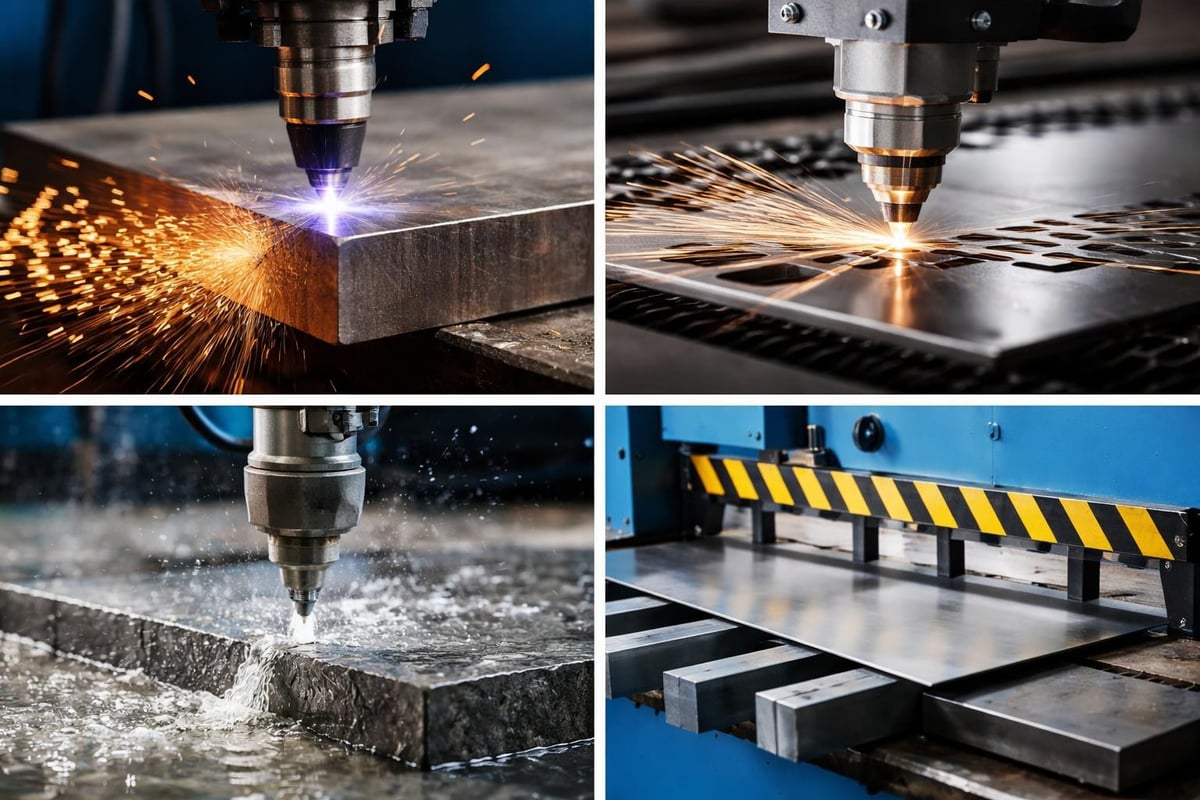
The first stage of metal fabrication manufacturing typically involves cutting materials to size. Modern facilities employ multiple cutting methods to achieve different results:
- Plasma cutting for rapid processing of thick steel plates
- Laser cutting for precision work requiring tight tolerances
- Water jet cutting for materials sensitive to heat
- Traditional shearing for straight-line cuts on sheet metal
Precision CNC plasma cutting services have revolutionized how fabricators approach complex designs. These automated systems deliver consistent accuracy while reducing material waste and production time.
Water jetting technology deserves special attention for its versatility. This process uses high-pressure water streams, sometimes mixed with abrasive materials, to cut through metal without introducing heat. This characteristic makes it ideal for materials that might warp or lose their properties when exposed to thermal cutting methods.
Forming and Bending Operations
After cutting, metal fabrication manufacturing often requires shaping materials into specific configurations. Press brakes, rollers, and stamping equipment apply controlled force to create bends, curves, and complex geometries.
The forming process demands careful calculation of material properties. Different metals exhibit varying degrees of elasticity, requiring operators to account for springback-the tendency of metal to partially return to its original shape after bending. Experienced fabricators adjust their techniques based on material thickness, grain direction, and alloy composition.
| Forming Method | Best Applications | Typical Tolerance |
|---|---|---|
| Press Brake | Angular bends, boxes | ±1 degree |
| Roll Forming | Cylinders, tubes | ±0.5mm |
| Stamping | High-volume parts | ±0.2mm |
| Stretch Forming | Large curves | ±2mm |
Welding Integration in Metal Fabrication Manufacturing
Welding represents the critical joining phase where separate components become unified structures. Custom welding and fabrication services must address diverse material types and application requirements.
Common Welding Techniques
MIG (Metal Inert Gas) welding provides excellent versatility for general fabrication work. This process uses a continuously fed wire electrode and inert gas shielding, making it suitable for both shop and field applications. The technique delivers strong welds on steel, stainless steel, and aluminum when properly configured.
TIG (Tungsten Inert Gas) welding offers superior precision for critical applications. This method produces exceptionally clean welds with minimal spatter, making it ideal for stainless steel, exotic alloys, and situations requiring aesthetic perfection alongside structural integrity.
Stick welding remains relevant for field work and challenging conditions. Its portability and effectiveness on rusty or painted surfaces make it invaluable for maintenance and repair operations in industrial environments.
The oil and gas industry particularly demands certified welders who can execute procedures according to stringent codes. Pressure vessels, pipelines, and structural components require documentation, non-destructive testing, and ongoing quality assurance throughout the metal fabrication manufacturing process.
Machining Capabilities in Modern Fabrication
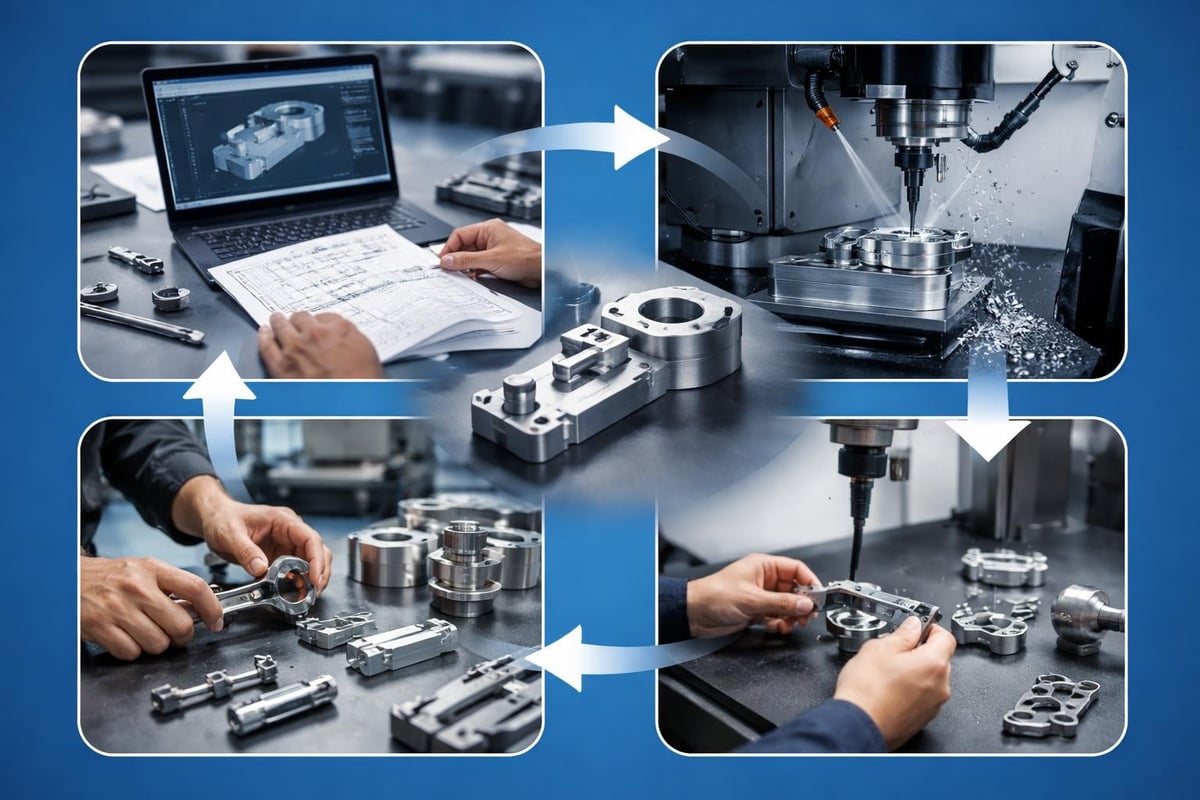
Manufacturing and machining operations add precision to fabricated components. CNC mills, lathes, and drilling equipment create exact dimensions, threads, and surface finishes that manual processes cannot achieve consistently.
CNC Machining Advantages
Computer Numerical Control technology has transformed metal fabrication manufacturing by enabling:
- Repeatable accuracy within thousandths of an inch
- Complex geometries impossible with manual methods
- Reduced setup time for production runs
- Digital documentation for quality control
- Integration with CAD/CAM design systems
Field machining extends these capabilities beyond the shop floor. Mobile machining equipment allows technicians to perform precision work on installed equipment, eliminating costly disassembly and transportation.
When aggregate processing equipment requires bearing journal repairs or oil and gas facilities need flange facing services, field machining delivers solutions without extended downtime. This capability proves particularly valuable throughout the Western United States, where remote locations make shop-based repairs impractical.
Industry Applications and Sector-Specific Requirements
Metal fabrication manufacturing serves diverse industries, each with unique demands and specifications. Understanding these sector-specific requirements ensures appropriate material selection, process choices, and quality standards.
Oil and Gas Sector Needs
The oil and gas industry requires fabricated components that withstand extreme pressures, corrosive environments, and temperature variations. Structural steel fabrication for mining equipment and energy applications demands materials like carbon steel, stainless alloys, and specialty metals resistant to hydrogen sulfide and other corrosive agents.
Pressure vessels, heat exchangers, and processing equipment must comply with ASME codes and undergo rigorous inspection protocols. Welding procedures require qualification testing, and finished products often need radiographic or ultrasonic examination before entering service.
Recycling and Aggregate Industries
Manufacturing recycling equipment presents different challenges. Conveyors, screening systems, and crushing equipment face abrasive materials that rapidly wear standard steel. Fabricators employ hardened steel plates, wear-resistant liners, and replaceable components designed for easy maintenance.
Aggregate processing facilities benefit from large-scale metal fabrication for construction projects that includes hoppers, chutes, and support structures. These components must balance durability with cost-effectiveness, often incorporating design features that simplify field repairs.
Commercial and Industrial Manufacturing
Commercial metal fabrication encompasses everything from architectural elements to production equipment. These projects often require aesthetic considerations alongside functional performance, demanding superior surface finishes and precise dimensional control.
Emerging Technologies Reshaping Metal Fabrication Manufacturing
The landscape of metal fabrication manufacturing continues evolving as new technologies emerge. Recent industry analysis highlights automation, digital manufacturing, and IoT integration as key trends driving change in 2026.
Automation and Robotics
Automated welding cells, robotic material handling, and lights-out machining operations increase throughput while maintaining consistency. These systems excel at repetitive tasks, freeing skilled workers to focus on complex problem-solving and quality control.
However, automation complements rather than replaces human expertise. Experienced fabricators program robots, troubleshoot issues, and handle custom work that automated systems cannot address efficiently.
Industry 4.0 Integration
Integration of Industry 4.0 technologies brings data analytics and connectivity to metal fabrication manufacturing. Sensors monitor machine performance, predictive maintenance algorithms reduce downtime, and digital twins simulate processes before physical production begins.
IoT-enabled equipment communicates operational data to centralized systems, allowing managers to optimize scheduling, track material usage, and identify bottlenecks. This connectivity proves particularly valuable for industrial manufacturing companies serving multiple sectors with varying demands.
Sustainable Manufacturing Practices
Environmental considerations increasingly influence metal fabrication manufacturing decisions. Future industry trends emphasize energy efficiency, waste reduction, and recyclability throughout production processes.
Strategies include:
- Optimizing nesting patterns to minimize scrap
- Capturing and recycling cutting fluids and coolants
- Implementing energy-efficient equipment
- Reclaiming heat from welding and cutting operations
- Selecting materials with recycled content
These initiatives align with broader sustainability goals while often reducing operational costs through improved efficiency.
Quality Control and Inspection Protocols
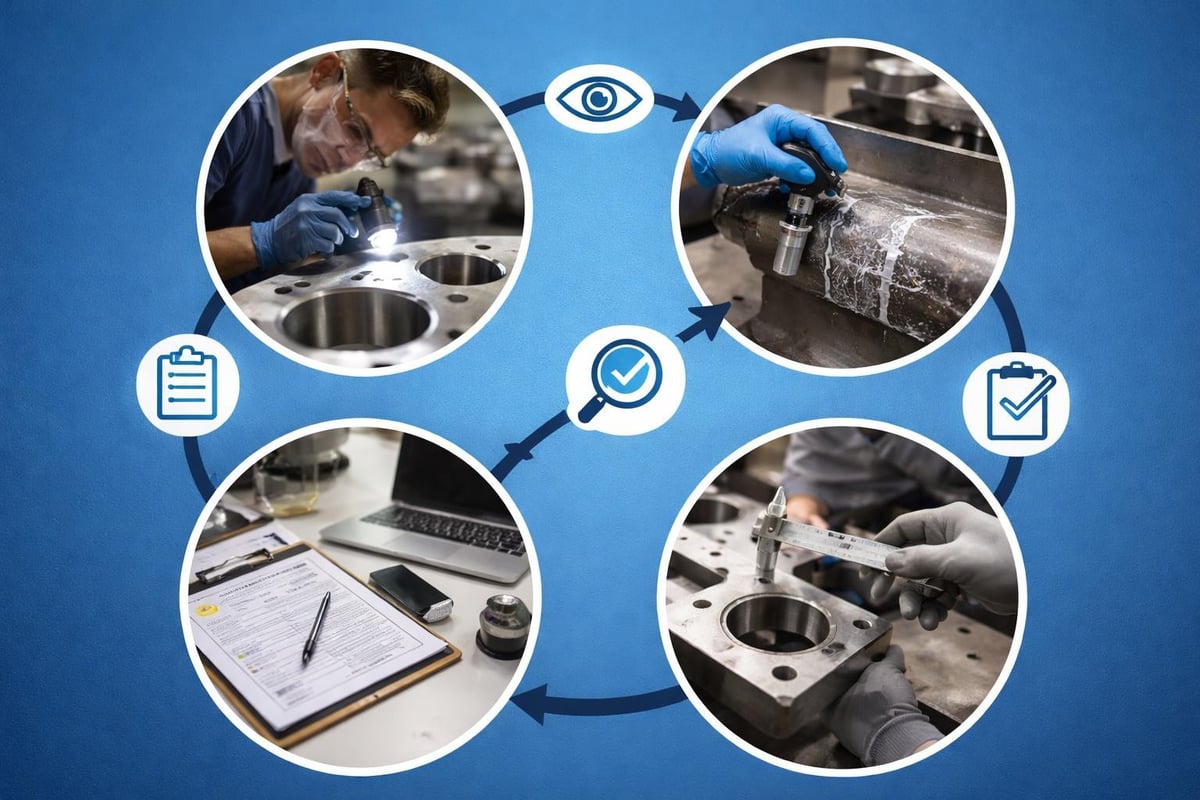
Maintaining quality standards separates exceptional metal fabrication manufacturing from mediocre work. Comprehensive inspection protocols verify that finished components meet specifications before delivery.
Non-Destructive Testing Methods
Visual inspection represents the first line of quality control. Trained inspectors examine welds, surface finishes, and dimensional accuracy, identifying obvious defects before further testing.
Magnetic particle testing reveals surface and near-surface discontinuities in ferromagnetic materials. This method proves particularly useful for weld inspection, detecting cracks invisible to visual examination.
Ultrasonic testing uses sound waves to identify internal defects in thick materials. This technique examines weld penetration, detects inclusions, and verifies material integrity without damaging components.
Radiographic testing provides detailed images of internal structures, particularly for critical welds in pressure vessels and pipelines. This method documents weld quality for permanent records required by industry codes.
| Testing Method | Detection Capability | Typical Cost | Documentation |
|---|---|---|---|
| Visual | Surface defects | Low | Photo records |
| Magnetic Particle | Surface cracks | Moderate | Test reports |
| Ultrasonic | Internal flaws | Moderate | Data logs |
| Radiographic | Complete internal | High | Film/digital images |
Dimensional Verification
Precision measurement equipment confirms that fabricated components meet drawing specifications. Coordinate measuring machines (CMMs) verify complex geometries, while laser scanning creates detailed 3D models of finished assemblies.
Metal fabrication projects requiring tight tolerances benefit from statistical process control methods that track dimensional trends over production runs. This approach identifies process drift before parts fall outside acceptable ranges.
Material Selection and Properties
Choosing appropriate materials significantly impacts the performance and longevity of fabricated components. Metal fabrication manufacturing professionals must understand how different alloys behave during processing and in service.
Carbon Steel Applications
Carbon steel remains the workhorse material for structural fabrication. Its combination of strength, weldability, and cost-effectiveness makes it ideal for frames, supports, and general-purpose equipment. Grades range from mild steel for non-critical applications to higher-carbon varieties offering increased hardness.
Stainless Steel Benefits
Stainless steel alloys provide corrosion resistance essential for food processing, chemical handling, and marine environments. The 300-series austenitic grades offer excellent formability and weld characteristics, while 400-series martensitic grades deliver higher strength and wear resistance.
Specialty Alloys
Specialized applications demand exotic materials like Inconel, Hastelloy, or titanium. These alloys withstand extreme temperatures, aggressive chemicals, or weight-sensitive applications where standard steel proves inadequate. However, they require specialized welding procedures and careful heat management during fabrication.
Shop Versus Field Fabrication Considerations
Metal fabrication manufacturing occurs in both controlled shop environments and challenging field locations. Each setting presents distinct advantages and limitations that influence project planning.
Shop-Based Advantages
Fabrication welding shops provide controlled environments optimizing quality and efficiency:
- Climate control for consistent welding conditions
- Full equipment access including overhead cranes
- Organized material storage and workflow
- Comfortable conditions improving worker performance
- Comprehensive quality control facilities
Shop fabrication allows complex assemblies to be completed in stages, with thorough inspection between operations. Finished components ship to installation sites ready for final positioning and connection.
Field Work Necessities
Some projects require on-site fabrication and installation. Pipeline repairs, equipment modifications, and structural additions often cannot be completed in a shop setting. Field crews bring portable welding equipment, cutting tools, and machining capabilities to work locations.
Weather protection, power supply arrangements, and safety considerations complicate field operations. However, welding businesses with experienced field teams overcome these challenges through careful planning and specialized equipment.
Project Management and Client Communication
Successful metal fabrication manufacturing extends beyond technical execution. Effective project management ensures that work progresses on schedule, within budget, and according to specifications.
Estimating and Quoting
Accurate fabrication quotes require detailed material takeoffs, labor hour calculations, and consideration of special requirements. Experienced estimators account for material waste, setup time, inspection costs, and contingencies for unforeseen complications.
Transparent communication during the quoting phase establishes clear expectations. Clients should understand what specifications will be met, what testing will be performed, and what documentation will be provided upon completion.
Progress Documentation
Manufacturing projects benefit from regular status updates including photographs, test results, and milestone completions. This documentation provides accountability while creating records useful for future reference or warranty claims.
Digital project management tools facilitate communication between fabrication teams, quality inspectors, and clients. Cloud-based systems allow stakeholders to review progress without physical site visits, particularly valuable for remote locations throughout the Western United States.
Supporting Infrastructure Integration
Complete metal fabrication manufacturing projects often require coordination with complementary trades. Electrical systems, roofing protection, and other building components integrate with fabricated metalwork to create functional facilities.
For facilities requiring electrical installations, coordinating conduit runs, panel locations, and equipment connections during the fabrication phase prevents conflicts and rework. Structural steel must accommodate electrical penetrations while maintaining load-bearing capacity.
Similarly, roofing services must integrate with structural steel frameworks. Proper flashing details, attachment points, and waterproofing considerations ensure that fabricated structures remain protected from weather exposure.
Workforce Development and Skills Training
The metal fabrication manufacturing industry faces ongoing workforce challenges. Experienced welders, machinists, and fabricators remain in high demand as older workers retire and technological changes require new competencies.
Apprenticeship Programs
Structured apprenticeship programs combine classroom instruction with hands-on training. Apprentices learn blueprint reading, metallurgy fundamentals, welding techniques, and safety protocols while earning wages and building experience.
These programs typically span 3-4 years, producing journey-level craftsmen qualified to work independently on complex projects. Industrial and manufacturing companies investing in apprenticeship development build sustainable talent pipelines.
Continuing Education Requirements
Technology evolution demands ongoing learning. Current industry trends show increasing automation and digital integration requiring workers to develop programming skills, data interpretation abilities, and advanced troubleshooting capabilities alongside traditional fabrication expertise.
Certification programs through organizations like the American Welding Society provide standardized skill verification. These credentials demonstrate proficiency in specific processes, materials, or applications valued by employers and clients.
Cost Management and Efficiency Optimization
Controlling costs while maintaining quality defines successful metal fabrication manufacturing operations. Top industry trends emphasize efficiency improvements through technology adoption and process optimization.
Material Waste Reduction
Strategic nesting of parts on raw material sheets minimizes scrap. Advanced software calculates optimal layouts accounting for grain direction, edge distance requirements, and cutting path efficiency. A 5% reduction in material waste significantly impacts profitability on large projects.
Labor Productivity Enhancement
Workflow organization dramatically affects labor efficiency. Organizing work areas to minimize material handling, providing proper tooling, and eliminating delays between operations increase throughput without sacrificing quality.
Cross-training workers to perform multiple tasks creates flexibility during scheduling and reduces bottlenecks when specialists are unavailable.
Equipment Utilization Tracking
Monitoring machine run times, setup durations, and maintenance schedules identifies improvement opportunities. Equipment sitting idle represents lost revenue, while machines running continuously without maintenance risk expensive failures.
Modern manufacturing services implement computerized maintenance management systems tracking service intervals, parts inventory, and equipment history.
Regional Considerations for Western United States
Geographic factors influence metal fabrication manufacturing throughout the Western United States. Distance, climate, and industry concentrations shape operational approaches.
Transportation Logistics
Remote project locations common in oil and gas, mining, and aggregate industries create transportation challenges. Colorado industrial operations must consider whether components should be fully assembled before shipping or transported in sections for field assembly.
Oversized loads require special permits, route planning, and escort vehicles. These logistics add cost and complexity that estimators must account for during project planning.
Climate Adaptations
Temperature extremes affect field work feasibility. Summer heat in desert regions limits working hours during peak temperatures, while winter cold requires preheating procedures for welding and special consideration for material brittleness.
Altitude effects also influence operations. Welding at high elevations requires gas flow adjustments to maintain proper shielding, and equipment ratings may require derating for thinner atmosphere conditions.
Equipment Maintenance and Reliability
Metal fabrication manufacturing depends on well-maintained equipment. Preventive maintenance programs prevent unexpected failures that halt production and miss delivery deadlines.
Critical System Components
Hydraulic systems powering press brakes, shears, and other forming equipment require regular fluid analysis, filter changes, and seal inspections. Industrial machinery refurbishment and maintenance extends equipment lifespan while maintaining performance specifications.
Welding power sources need periodic calibration to ensure consistent arc characteristics. Wire feeders require cleaning and roller replacement to prevent feeding issues that compromise weld quality.
CNC controllers and servo systems demand software updates, backup verification, and occasional component replacement as technology advances.
Tooling Management
Cutting tools, dies, and fixtures represent significant investments requiring careful management. Tool tracking systems monitor usage, schedule sharpening or replacement, and maintain inventory of critical items preventing delays when replacements are needed.
Proper storage protects precision tooling from damage and corrosion. Climate-controlled tool rooms with organized storage systems pay dividends through extended tool life and improved efficiency.
Safety Protocols and Regulatory Compliance
Metal fabrication manufacturing involves inherent hazards requiring comprehensive safety programs. Innovations driving the industry include enhanced safety technologies alongside productivity improvements.
Personal Protective Equipment
Welders require auto-darkening helmets, flame-resistant clothing, and respiratory protection depending on materials and ventilation. Fabricators working with metal cutting equipment need safety glasses, hearing protection, and cut-resistant gloves.
Regular PPE inspection and replacement ensures continued protection. Damaged equipment must be removed from service immediately.
Facility Hazard Control
Proper ventilation removes welding fumes, cutting smoke, and grinding dust from breathing zones. Local exhaust systems at work stations supplement general building ventilation.
Fire prevention includes proper storage of flammable materials, hot work permits for field operations, and readily accessible firefighting equipment. Combustible dust from grinding operations requires specialized housekeeping procedures preventing accumulations that could fuel explosions.
Machine guarding protects operators from rotating components, flying debris, and pinch points. Lockout/tagout procedures prevent accidental equipment startup during maintenance.
Regulatory Requirements
OSHA regulations govern workplace safety across the metal fabrication manufacturing industry. Compliance requires documented training, hazard assessments, and ongoing monitoring of workplace conditions.
Environmental regulations address air emissions, wastewater discharge, and waste disposal. Facilities must obtain necessary permits and maintain records demonstrating compliance with applicable standards.
Metal fabrication manufacturing continues evolving through technological advancement while relying on fundamental craftsmanship that transforms raw materials into essential industrial components. Success requires balancing traditional skills with emerging capabilities, maintaining rigorous quality standards, and adapting to changing industry demands. LTJ Industrial Services delivers comprehensive metal fabrication manufacturing solutions throughout the Western United States, combining shop and field capabilities with expertise across welding, machining, and custom fabrication. Whether your operation requires routine maintenance, emergency repairs, or complex custom projects, our experienced team provides the quality and reliability that keeps your business running.