
As industries race to modernize for 2026, the demand for fabrication welding shop expertise is reaching new heights. These shops are now the backbone of infrastructure upgrades, advanced manufacturing, and technological breakthroughs.
For entrepreneurs, technicians, and industry leaders, mastering the path to shop success means unlocking significant growth. This guide delivers a clear, step-by-step approach to launching, managing, and scaling a fabrication welding shop for lasting results.
You will discover the latest industry trends, must-have equipment, shop setup tips, workflow optimization strategies, critical safety protocols, business growth tactics, and how to future-proof your shop for 2026.
Understanding the Fabrication Welding Industry in 2026
The fabrication welding shop landscape is rapidly evolving as industries modernize for 2026. To thrive, owners and operators need to keep pace with emerging trends, technologies, regulations, and sustainability demands. This section explores the essential factors shaping the future of fabrication welding shop success.
Market Trends and Growth Projections
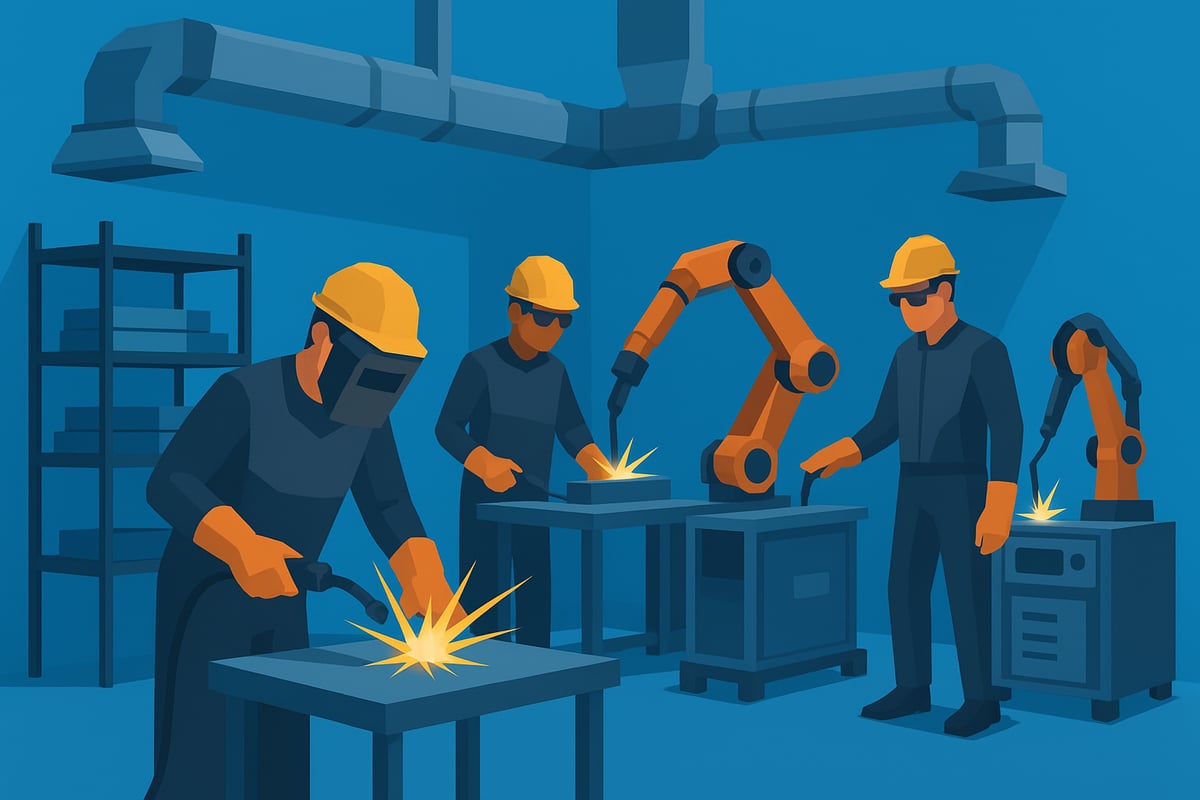
The global fabrication welding shop market is expanding, driven by automation, sustainability, and a surge in domestic manufacturing. According to Statista, metal fabrication is expected to see a 4.5% CAGR through 2026. Key growth drivers include advanced automation, adoption of new materials, and increasing focus on eco-friendly practices. Sectors such as construction, oil and gas, recycling, and manufacturing are leading the demand for fabrication welding shop services.
Reshoring and domestic production initiatives in the U.S. are boosting local opportunities. For a comprehensive analysis of these trends and strategic insights, refer to the Commercial Fabrication Guide 2026. Staying informed about these projections positions any fabrication welding shop for long-term growth.
Evolving Technologies and Materials
Fabrication welding shop capabilities are advancing rapidly thanks to new technologies. Shops are adopting methods like laser welding, robotic automation, and friction stir welding to increase precision and throughput. The integration of high-strength alloys, composites, and eco-friendly materials is becoming standard.
Smart shop management systems and IoT devices are also transforming operations. According to a Fabricator survey, 35% of shops plan to invest in automation by 2026. By embracing these technologies, a fabrication welding shop can stay competitive and meet client expectations for quality and efficiency.
Regulatory and Compliance Landscape
Compliance is critical for any fabrication welding shop. OSHA and EPA standards set clear requirements for workplace safety and emissions. Shops must also meet certification benchmarks, including AWS, ASME, and ISO. Keeping up with local and state regulations is essential to avoid costly fines.
In recent years, OSHA fines for non-compliance have increased by 10%. Regular training, documentation, and safety audits help ensure a fabrication welding shop consistently meets regulatory demands and maintains a reputation for reliability.
Skills and Workforce Development
A skilled workforce is the foundation of fabrication welding shop success. The industry faces a growing need for certified welders and fabricators as older workers retire and demand increases. Training programs, apprenticeships, and ongoing education are vital for workforce development.
Diversity is also on the rise, with more women and underrepresented groups entering the field. The American Welding Society predicts a shortage of 360,000 welders by 2026, making recruitment and retention a top priority for every fabrication welding shop.
Sustainability and Green Practices
Sustainability is now a key differentiator in the fabrication welding shop sector. Energy-efficient equipment, smart shop layouts, and robust recycling protocols help reduce environmental impact. Clients increasingly request recycled or low-carbon materials, with 60% of industrial customers making sustainability a requirement.
Implementing green practices not only attracts new business but also positions a fabrication welding shop as a leader in responsible manufacturing. Forward-thinking shops are investing in sustainable solutions to future-proof their operations.
Essential Equipment and Shop Setup
A successful fabrication welding shop requires careful planning, the right equipment, and strategic shop design. The correct setup not only boosts productivity but also ensures safety and compliance. Let us explore the essential elements every fabrication welding shop must consider for optimal operations.
Core Welding and Fabrication Equipment
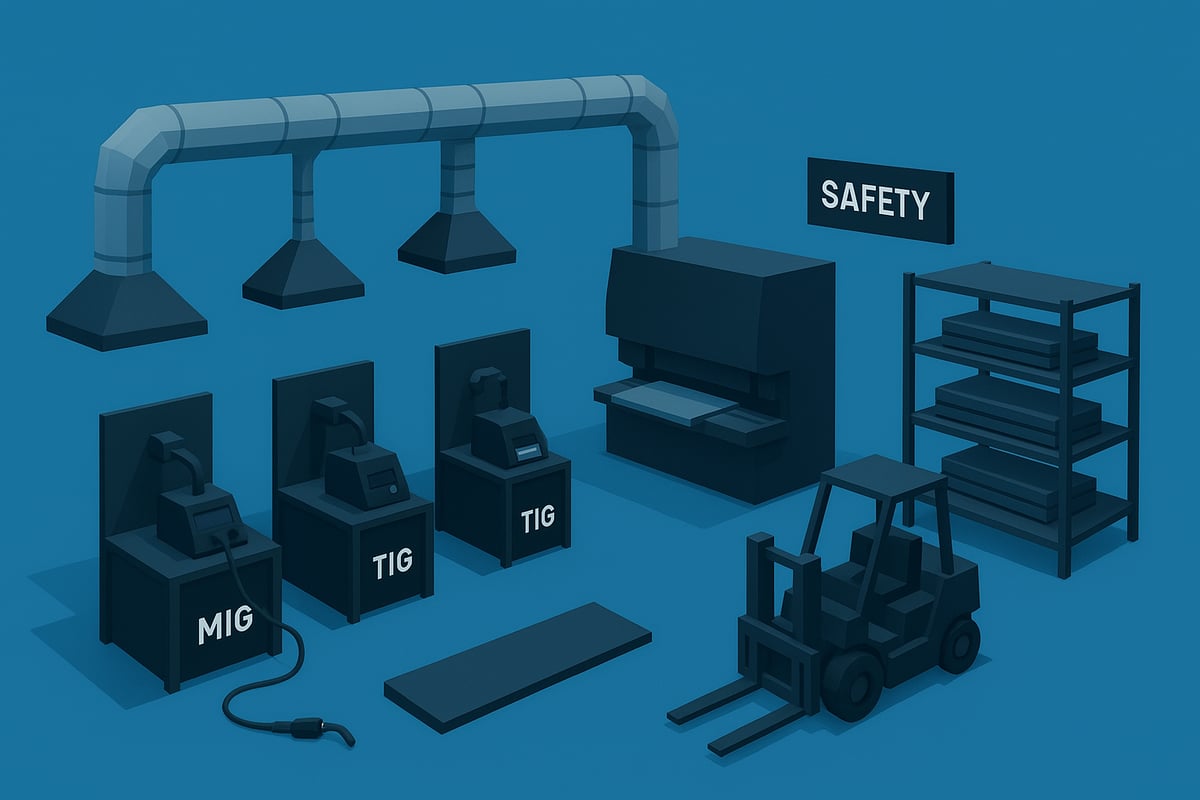
The backbone of any fabrication welding shop is its equipment. Essential machines include MIG, TIG, and Stick welders, each suited for different materials and thicknesses. Cutting tools such as plasma cutters, oxy-fuel torches, and waterjet systems are crucial for precise shaping. Forming equipment like press brakes, shears, and rollers help shape metal for complex projects. For a deeper dive into equipment options and features, review the Essential Fabrication Equipment Overview for valuable insights.
Entry-level MIG welders range from $800 to $2,000, while advanced machinery may cost significantly more. Investing in reliable, industry-standard tools sets the foundation for a high-performing fabrication welding shop.
Shop Layout and Workflow Optimization
Designing the physical layout of your fabrication welding shop directly impacts safety and efficiency. A well-organized shop typically uses zoning to separate welding, cutting, assembly, and finishing processes. This reduces cross-contamination and streamlines material flow.
Effective ventilation and dust control are critical for both worker health and regulatory compliance. U-shaped layouts can improve productivity by up to 15 percent, allowing seamless movement of materials and personnel. Regularly review and adjust your layout to match changing workflows and project needs.
Material Storage and Handling Solutions
Efficient material storage and handling systems are vital for a fabrication welding shop. Use racking systems to keep raw stock and finished goods organized and accessible. Material handling equipment, such as forklifts, cranes, and carts, simplifies the movement of heavy materials.
Implementing barcode inventory systems can help reduce material loss by 30 percent. Investing in inventory management technology ensures you always have the right materials on hand, reducing delays and supporting just-in-time production.
Power, Utilities, and Infrastructure
A fabrication welding shop must be equipped with the right infrastructure to support heavy-duty operations. Most industrial welders require 3-phase power to operate efficiently. Compressed air and gas supply systems are necessary for various welding and cutting processes.
Fire suppression systems and clear emergency protocols are mandatory for safety and compliance. Proper planning for utilities not only protects your investment but also ensures reliable operation of all shop equipment.
Shop Safety and Compliance Essentials
Safety is the cornerstone of any fabrication welding shop. Provide all employees with personal protective equipment, including helmets, gloves, jackets, and respiratory protection. Install clear safety signage, eyewash stations, and first aid kits throughout the facility.
Conduct regular safety audits and maintain thorough documentation to meet OSHA requirements. PPE violations remain a leading source of citations, so ongoing training and vigilance are essential to protect your team and your business.
Building a High-Performance Team
A thriving fabrication welding shop relies on the strength of its team. Building a high-performance workforce is essential for meeting client expectations, maintaining safety, and driving shop growth. In this section, we break down how to recruit, train, retain, and lead your team to success.
Recruitment and Hiring Best Practices
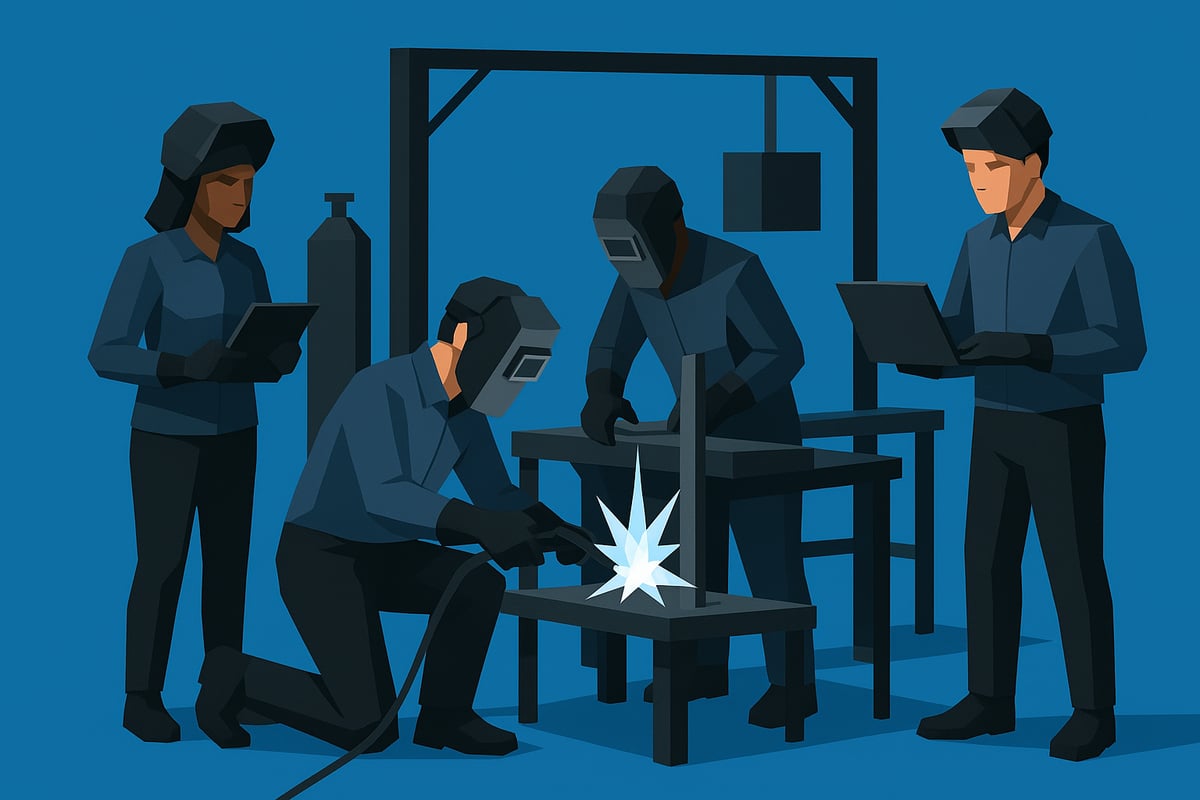
Recruiting top talent for your fabrication welding shop sets the foundation for quality and productivity. Start by partnering with local trade schools and apprenticeship programs to build a pipeline of skilled candidates. Seek out individuals with up-to-date certifications and a strong safety record.
Screen applicants for both technical skills and cultural fit. Consider offering in-house training to attract entry-level workers who show potential. Promoting your shop’s diverse welding and metal fabrication services can help draw experienced professionals seeking varied, challenging work.
Shops that invest in training report a 25 percent lower turnover rate. By focusing on careful hiring and onboarding, you create a fabrication welding shop team that is prepared for long-term success.
Training, Certification, and Upskilling
Continuous development is vital for any fabrication welding shop aiming to remain competitive. Establish a structured onboarding program for new hires, ensuring they understand shop protocols and safety standards.
Support your team in achieving industry certifications such as AWS or ASME. Encourage cross-training so employees can handle multiple tasks, increasing flexibility and efficiency. Shops with cross-trained teams complete projects 20 percent faster and adapt quickly to shifting workloads.
Regularly review skill gaps and offer opportunities for upskilling through workshops or online courses. Investing in your team’s growth ensures your fabrication welding shop can take on increasingly complex projects.
Workplace Culture and Retention
A positive workplace culture is a cornerstone of any successful fabrication welding shop. Foster an environment where safety comes first and every employee feels valued. Implement recognition programs that highlight achievements and encourage ongoing excellence.
Provide pathways for career advancement and promote diversity within your team. Balance productivity demands with employee well-being by offering flexible scheduling or wellness programs. Shops that prioritize safety and health see 18 percent fewer accidents and enjoy higher retention rates.
By cultivating a supportive culture, you create a fabrication welding shop where people are motivated to stay and contribute their best work.
Leadership and Team Communication
Effective leadership is essential for guiding your fabrication welding shop team. Shop floor managers should lead by example, emphasizing safety, efficiency, and open communication. Use daily briefings and feedback sessions to keep everyone aligned on project goals.
Adopt digital communication tools to streamline updates and track progress. Encourage team members to share ideas and raise concerns, which fosters innovation and prevents issues from escalating. Regular meetings improve project delivery times by 12 percent and ensure everyone works toward the same objectives.
Strong leadership and clear communication are the backbone of a fabrication welding shop that consistently delivers quality results.
Workflow, Quality Control, and Productivity Optimization
Efficient operations define a successful fabrication welding shop. From the moment a client requests a quote to the final inspection, each step must be streamlined, transparent, and controlled for quality. Let’s break down the core elements that drive productivity and ensure customer satisfaction in today’s competitive landscape.
Project Planning and Quoting
Every fabrication welding shop thrives on precise project planning. Accurate job costing starts with estimating software that factors in materials, labor, and lead times. This approach minimizes surprises and builds trust with clients.
Modern quoting tools help define project scope and set realistic timelines. By using digital platforms, shops communicate transparently and manage client expectations. For example, digital quoting systems can reduce errors by 40 percent, directly increasing profitability and customer confidence.
A fabrication welding shop that prioritizes planning stands out in a crowded market.
Shop Floor Workflow Management
Optimizing workflow is crucial for any fabrication welding shop aiming for consistent output. Lean manufacturing principles like 5S and Kanban create organized workspaces and smooth material flow.
Digital work order tracking systems keep teams aligned, ensuring tasks are sequenced efficiently. Scheduling software highlights bottlenecks and helps managers reallocate resources quickly. Shops that adopt lean strategies often see a 25 percent boost in throughput.
A fabrication welding shop with well-managed workflow can deliver projects faster without sacrificing quality.
Quality Assurance and Inspection Processes
Quality control is non negotiable for a fabrication welding shop. In process inspections, such as visual checks and non destructive testing (NDT), catch defects early and prevent costly rework.
Documenting each stage of fabrication ensures traceability and compliance with industry standards. Customer acceptance testing closes the feedback loop, helping shops refine their processes. NDT methods alone can reduce rework rates by 35 percent.
A consistent quality assurance program builds the reputation of a fabrication welding shop and keeps clients returning.
Maintenance and Equipment Reliability
Reliability is the backbone of a productive fabrication welding shop. Preventive maintenance schedules reduce the risk of equipment failures and unplanned downtime.
Predictive maintenance uses data to anticipate when machines need attention, optimizing repair timelines and spare parts inventory. Regular calibration and thorough record keeping are essential for maintaining performance.
By investing in maintenance, a fabrication welding shop protects its assets and ensures continuous operation, supporting high output and safety.
Digital Tools and Automation
Digitalization is transforming the fabrication welding shop environment. Shop management software streamlines scheduling, inventory, and reporting, providing managers with real time insights.
Automation, including robotic welding and CNC integration, increases output and reduces errors. According to Welding Robotics Market Trends, new developments in robotics are reshaping productivity benchmarks across the industry.
A fabrication welding shop that leverages automation and digital tools gains a competitive advantage, consistently achieving higher productivity and quality standards.
Business Growth Strategies for Fabrication Welding Shops
A fabrication welding shop that aims for long-term growth in 2026 needs to combine smart marketing, competitive pricing, reliable partnerships, strong financial controls, and a forward-thinking mindset. The strategies below help owners and managers build resilience, expand opportunities, and establish a reputation for excellence in a competitive market.
Marketing and Customer Acquisition
Establishing a strong marketing presence is essential for any fabrication welding shop seeking new business. Digital marketing, including SEO-optimized websites and social media outreach, can dramatically boost visibility. Participating in trade shows and industry events connects your shop with potential clients and partners.
Networking within the industry and building referral programs can create a steady stream of leads. According to Welding Consumables Market Growth Projections, infrastructure expansion and technology adoption are fueling demand for welding services. This trend means a well-promoted fabrication welding shop is primed for growth.
Pricing, Contracts, and Profitability
A fabrication welding shop must adopt pricing strategies that reflect both market conditions and unique value. Value-based pricing, where you highlight specialized services or faster turnaround, can command higher rates. Always clarify contract terms to avoid disputes and manage scope changes efficiently.
| Pricing Strategy | Description |
|---|---|
| Cost-plus | Base cost plus set profit margin |
| Value-based | Price based on perceived value |
| Competitive | Match or beat local competitors |
Regularly reviewing costs and refining your approach ensures your fabrication welding shop maintains healthy profit margins and remains competitive.
LTJ Industrial Services: Your Trusted Partner in Welding Fabrication
Choosing the right partner can elevate your fabrication welding shop’s capabilities. LTJ Industrial Services offers comprehensive solutions, from custom welding to machining and hydraulics. With a proven track record in sectors like recycling, aggregate, and oil and gas, they deliver consistent quality and versatility.
Their commitment to skilled labor, advanced technology, and safety means your projects are handled with care. By partnering with LTJ Industrial Services, your fabrication welding shop can solve complex technical challenges and focus on sustainable growth.
Financial Management and Funding
Sound financial management is the backbone of every successful fabrication welding shop. Develop detailed budgets, monitor cash flow, and implement robust controls to track expenses. Consider financing options such as equipment loans, grants, or the Section 179 tax deduction for new machinery.
Potential funding sources include:
- Traditional bank loans for capital investments
- Government grants aimed at manufacturing innovation
- Equipment leasing for flexibility and lower upfront costs
By keeping finances in check, your fabrication welding shop can confidently pursue new opportunities and weather market fluctuations.
Scaling Operations and Diversification
To future-proof your fabrication welding shop, explore opportunities to diversify services or expand into new markets. Adding mobile welding, precision machining, or CNC capabilities attracts a broader client base. Forming strategic partnerships or subcontracting with larger firms enables you to tackle bigger projects.
Consider opening additional locations or franchising once your processes are proven. Diversification not only strengthens your fabrication welding shop during economic shifts, it also positions your business for long-term resilience and success.
Future-Proofing Your Fabrication Welding Shop
Staying ahead in the fabrication welding shop industry demands a proactive approach. As the landscape evolves, shop owners must anticipate technological, supply chain, regulatory, and sustainability shifts to ensure long-term success. The following strategies will help your fabrication welding shop remain competitive and resilient through 2026 and beyond.
Adapting to Technological Change
To future-proof your fabrication welding shop, prioritize continuous learning and investment in emerging technologies. Attend industry conferences and seminars to keep your team informed about the latest advancements. Integrate automation, robotics, and IoT systems to streamline operations and boost productivity.
Explore the benefits of advanced welding equipment and smart shop management by reviewing insights like those in the Arc Welding Equipment Market Analysis. Staying current with innovations ensures your fabrication welding shop can deliver high-quality results efficiently.
Navigating Supply Chain and Material Challenges
A resilient fabrication welding shop builds strong supplier relationships and maintains backup sources for critical materials. Adopt digital supply chain management tools to track inventory and anticipate shortages. Diversify sourcing to reduce the risk of material delays and price volatility.
Consider implementing just-in-time inventory strategies and regular audits. These measures help your fabrication welding shop respond swiftly to external disruptions and maintain steady project delivery.
Sustainability and Environmental Responsibility
Clients increasingly demand sustainable solutions from their fabrication welding shop partners. Implement green manufacturing processes such as energy-efficient equipment and recycling programs. Reduce energy, water, and material waste by optimizing shop layouts and adopting eco-friendly materials.
Pursue recognized green certifications for your fabrication welding shop to stand out in a competitive market. These efforts not only attract more clients but also position your shop as an industry leader in environmental responsibility.
Preparing for Regulatory and Market Shifts
Regulations and market conditions can shift rapidly, impacting fabrication welding shop operations. Monitor policy updates, industry standards, and local ordinances regularly. Engage in scenario planning to prepare your team for economic or regulatory disruptions.
Participate in industry associations and advocacy groups to stay informed and influence positive change. Proactive compliance and adaptability will protect your fabrication welding shop from legal risks and operational setbacks.
As you look ahead to the opportunities in the fabrication welding industry for 2026, remember that building a successful shop starts with having the right expertise and reliable support. Whether you are launching a new venture or optimizing your current operations, partnering with specialists who understand the demands of commercial and industrial manufacturing can make all the difference. If you are ready to take the next step and want tailored solutions for welding, machining, or shop setup, let’s connect and discuss your goals in detail. You can Request a Quote and start building your pathway to success today.