
Heavy equipment plays a critical role in industrial operations across mining, construction, aggregate processing, and oil and gas sectors. When these massive machines experience wear, damage, or structural failures, welding becomes the primary method for restoration and repair. Heavy equipment welding represents a specialized discipline that demands technical expertise, precise methodology, and strict adherence to safety protocols. The stakes are high because improper welds can lead to catastrophic equipment failures, costly downtime, and serious safety incidents.
Understanding Heavy Equipment Welding Requirements
Heavy equipment welding differs significantly from general fabrication work due to the extreme operating conditions these machines endure. Excavators, loaders, crushers, and drilling rigs experience constant vibration, impact loading, and environmental stress. Welders must account for material thickness, alloy composition, and the structural loads equipment will bear after repairs.
Material Considerations and Metallurgy
Most heavy equipment construction utilizes high-strength low-alloy (HSLA) steels designed for durability and weight reduction. These materials require specific welding procedures to maintain their mechanical properties. Understanding base metal composition prevents common issues like cracking, brittleness, or loss of strength in the heat-affected zone.
Key material factors include:
- Carbon content affecting hardenability and weld cracking susceptibility
- Alloy elements like manganese, chromium, and nickel influencing strength
- Material thickness determining heat input requirements
- Previous repairs or modifications affecting metallurgical structure
- Operating temperature ranges the equipment experiences
Preheating becomes essential when working with thick sections or high-carbon materials. The guide to welding earthmoving equipment and attachments emphasizes proper temperature control to prevent thermal shock and ensure adequate fusion.

Critical Welding Processes for Heavy Machinery
Different repair scenarios demand specific welding processes. Selecting the appropriate method directly impacts repair quality, longevity, and cost-effectiveness. Skilled welders must evaluate each situation to determine the optimal approach.
Shielded Metal Arc Welding (SMAW)
SMAW, commonly known as stick welding, remains popular for field repairs due to its portability and versatility. This process works effectively in outdoor conditions with wind and requires minimal equipment. Operators can quickly address structural cracks, worn bucket edges, and frame damage.
Gas Metal Arc Welding (GMAW)
GMAW, or MIG welding, offers higher deposition rates and better control for production welding environments. This process excels in shop settings where custom fabrication and welding projects require consistent, high-quality results on thinner materials.
Flux-Cored Arc Welding (FCAW)
FCAW combines advantages of both SMAW and GMAW, providing excellent penetration and the ability to weld in all positions. This method works particularly well for heavy equipment welding applications requiring deep joint penetration and minimal pre-cleaning.
| Welding Process | Best Applications | Advantages | Limitations |
|---|---|---|---|
| SMAW | Field repairs, structural cracks | Portable, wind-resistant | Lower deposition rate |
| GMAW | Shop fabrication, production work | High speed, clean welds | Wind-sensitive |
| FCAW | Heavy sections, all-position welding | Deep penetration, versatile | Higher equipment cost |
| GTAW | Precision repairs, thin materials | Excellent control, quality | Slow deposition rate |
Safety Standards and Regulatory Compliance
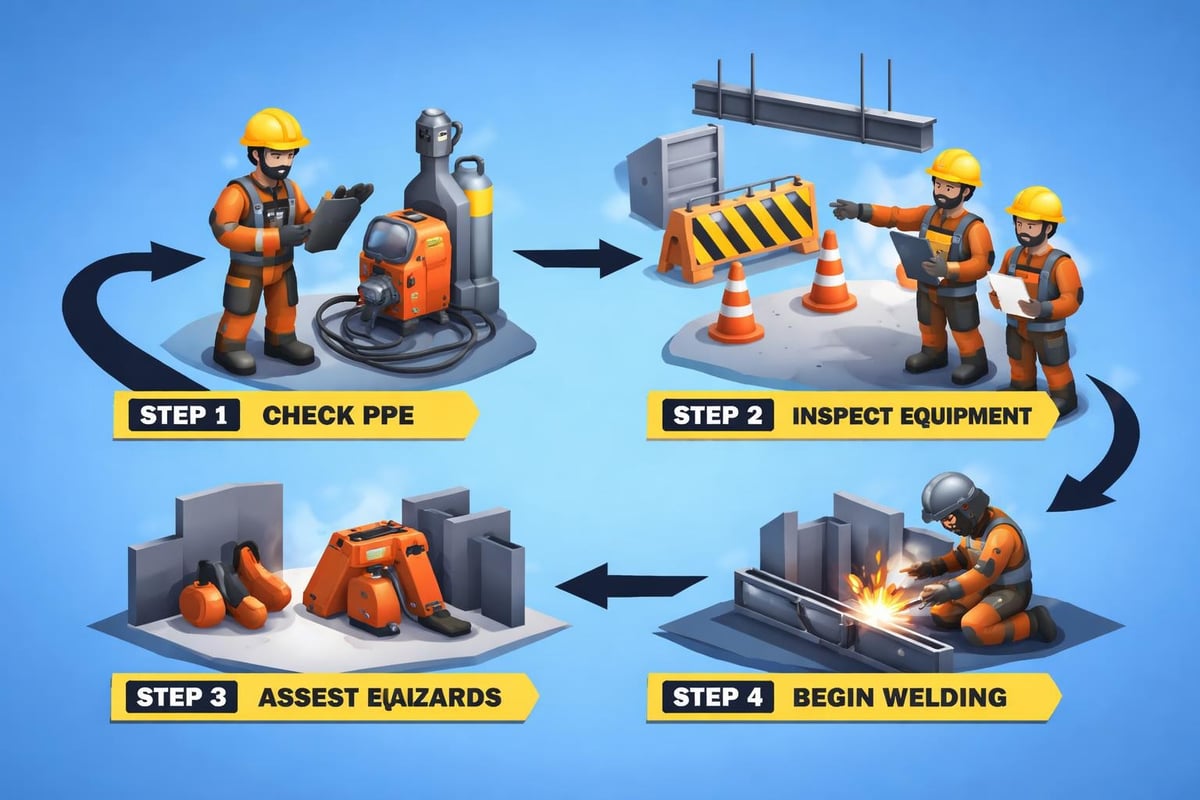
Heavy equipment welding presents numerous hazards that require comprehensive safety measures. Federal regulations through OSHA’s arc welding standards establish minimum requirements for equipment, operator training, and workplace conditions.
Personal Protective Equipment Requirements
Welders face exposure to intense ultraviolet radiation, molten metal spatter, toxic fumes, and electrical hazards. Proper PPE selection forms the foundation of welder safety. The University of Tennessee welding guidelines provide detailed recommendations for protective equipment selection.
Essential PPE components:
- Auto-darkening welding helmets with appropriate shade ratings
- Fire-resistant clothing covering all exposed skin
- Leather gloves designed for welding applications
- Safety boots with metatarsal protection
- Respiratory protection when working with coated materials or in confined spaces
Equipment Inspection and Maintenance
Regular inspection of welding equipment prevents equipment failures and safety incidents. The welding machine pre-use checklist covers critical verification points before beginning work. Operators should inspect power cables for damage, verify gas system integrity, and confirm proper operation of safety features.
Field Welding vs. Shop Repairs
The location where heavy equipment welding occurs significantly impacts methodology, quality control, and project timelines. Each environment presents unique advantages and challenges that influence repair strategies.
On-Site Field Welding Challenges
Field repairs address equipment breakdowns at job sites, minimizing transportation costs and downtime. However, welders face environmental variables including weather, limited power availability, and contaminated work surfaces. Proper surface preparation becomes more challenging when equipment cannot be moved to controlled environments.
Wind affects shielding gas coverage, moisture promotes hydrogen cracking, and temperature extremes influence material behavior. Successful field welding requires adaptive techniques and thorough planning. Industrial services companies specializing in mobile repair units bring complete welding capabilities directly to operational sites.
Shop-Based Repair Advantages
Controlled shop environments enable superior quality through precise positioning, climate control, and access to specialized equipment. Heavy machinery can be thoroughly cleaned, preheated uniformly, and positioned for optimal weld access. Fabrication shop facilities provide overhead cranes, positioners, and dedicated welding bays that improve efficiency and consistency.
Post-weld heat treatment becomes feasible in shop settings, relieving residual stresses and improving metallurgical properties. Non-destructive testing equipment verifies weld integrity before equipment returns to service.
Common Heavy Equipment Repairs
Understanding typical failure modes helps prioritize preventive maintenance and develop standardized repair procedures. Heavy equipment welding addresses both predictable wear patterns and unexpected damage from operational incidents.
Structural Crack Repairs
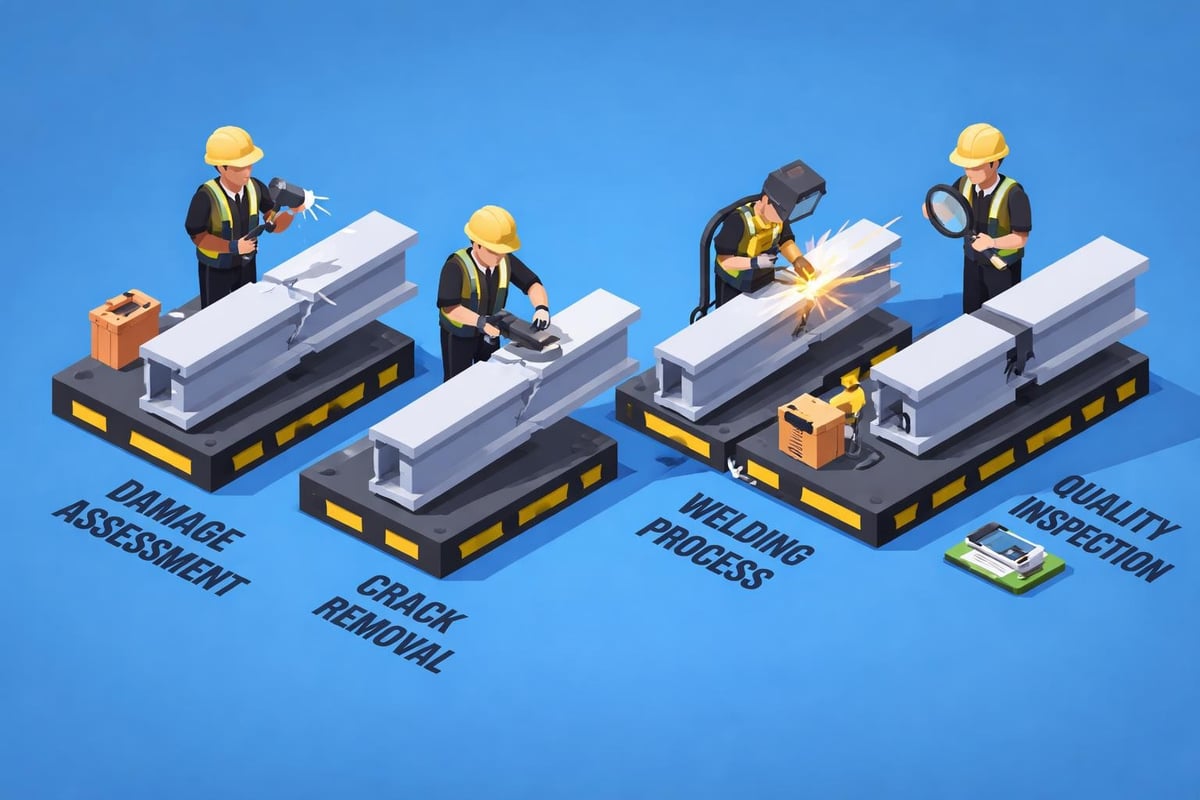
Cracks develop from fatigue, impact damage, or stress concentration points in equipment frames. Proper crack repair requires complete removal of damaged material, careful joint preparation, and controlled welding procedures to prevent crack propagation.
Crack repair sequence:
- Identify full crack extent using dye penetrant or magnetic particle testing
- Drill stop holes at crack terminations to prevent further growth
- Grind out crack to sound metal, creating appropriate joint geometry
- Clean thoroughly to remove contaminants
- Preheat as required by material thickness and composition
- Weld using qualified procedures with controlled heat input
- Allow proper cooling and perform post-weld inspection
Bucket and Blade Edge Rebuilding
Ground-engaging tools experience severe abrasive wear requiring periodic rebuilding. Hardfacing applications extend service life by depositing wear-resistant materials on cutting edges, teeth, and wear surfaces. Metal fabrication and welding specialists develop custom solutions that balance hardness with impact resistance.
Hydraulic Cylinder Repair
Hydraulic cylinders power critical equipment functions and require specialized welding knowledge. Hydraulic cylinder repair involves working with hard chrome-plated rods, precision-machined barrels, and high-pressure sealing surfaces. Welding procedures must avoid distortion while maintaining dimensional accuracy.
| Repair Type | Typical Welding Process | Critical Considerations | Average Duration |
|---|---|---|---|
| Frame cracks | SMAW or FCAW | Complete crack removal, preheat | 4-8 hours |
| Bucket rebuilding | GMAW with hardfacing wire | Wear resistance, impact strength | 6-12 hours |
| Boom extensions | FCAW or SMAW | Structural loading, NDT verification | 8-16 hours |
| Cylinder barrel repair | GTAW for precision areas | Dimensional control, surface finish | 3-6 hours |
Quality Control and Inspection Methods
Heavy equipment welding quality directly affects operational safety and equipment reliability. Comprehensive inspection programs verify weld integrity before equipment returns to demanding service conditions. The ANSI Z49.1-2021 safety standard addresses both safety and quality aspects of welding operations.
Visual Inspection Techniques
Visual examination remains the primary quality control method, catching most weld defects when performed systematically. Inspectors evaluate weld profile, surface condition, and dimensional accuracy against acceptance criteria. Proper lighting and magnification tools improve defect detection.
Non-Destructive Testing Applications
Critical welds require NDT methods to verify internal soundness. Magnetic particle testing detects surface and near-surface cracks in ferromagnetic materials. Ultrasonic testing evaluates weld penetration and identifies internal discontinuities. Radiographic testing provides permanent records of weld quality for documentation purposes.
NDT method selection factors:
- Material type and thickness
- Joint configuration and accessibility
- Required sensitivity levels
- Production schedule constraints
- Regulatory or customer specifications
Welding Procedure Development
Standardized welding procedures ensure consistent results across multiple welders and projects. Procedure development involves testing variables to establish parameters that produce acceptable welds reliably. Industrial and manufacturing operations benefit from documented procedures that reduce variability and training time.
Welding Procedure Specification (WPS)
A WPS documents all essential variables including base materials, filler metals, preheat requirements, heat input ranges, and post-weld treatments. These specifications guide welders through each step, ensuring compliance with engineering requirements. Critical applications may require procedure qualification through destructive testing of sample welds.
Welder Qualification and Certification
Individual welder skill verification ensures personnel can execute procedures correctly. Qualification testing evaluates each welder’s ability to produce sound welds in specific positions using designated processes. Documentation tracks qualified welders and the scope of their certifications.
Preventive Maintenance Strategies
Proactive welding maintenance prevents minor issues from escalating into major failures. Regular inspection programs identify wear, cracks, and structural concerns before catastrophic failures occur. Industrial machinery refurbishment and maintenance programs integrate welding services with comprehensive equipment care.
Scheduled Inspection Intervals
Equipment operating conditions determine appropriate inspection frequencies. Harsh applications like quarry work or demolition require more frequent examinations than general construction use. Developing inspection schedules based on operating hours, load cycles, or calendar intervals creates predictable maintenance windows.
Thermal imaging identifies stress concentrations and fatigue-prone areas before visible cracks develop. Monitoring high-stress components allows planned repairs during scheduled downtime rather than emergency breakdowns.
Weld Overlay and Hardfacing Programs
Strategic application of wear-resistant materials extends component life dramatically. Hardfacing worn surfaces during scheduled maintenance costs far less than replacing failed components. Programs that track wear rates optimize overlay timing and material selection.
Environmental and Workplace Considerations
Heavy equipment welding generates fumes, radiation, and heat that affect both workers and surrounding areas. Proper ventilation systems remove hazardous fumes from the breathing zone. The New York State DOT welding guidelines emphasize ventilation requirements and exposure monitoring.
Fume Extraction and Ventilation
Welding fumes contain metal oxides and other compounds that pose respiratory hazards. Local exhaust ventilation captures fumes at the source, preventing atmospheric contamination. Portable fume extractors provide protection during field repairs where permanent ventilation systems are unavailable.
Ventilation system requirements:
- Adequate air volume for complete fume removal
- Capture hoods positioned near weld zone
- Filtration appropriate for specific fume constituents
- Regular maintenance and filter replacement
- Airflow monitoring and documentation
Fire Prevention Protocols
Welding operations create ignition sources that can start fires in combustible materials. Clearing work areas of flammable materials, providing fire extinguishers, and establishing fire watch procedures prevent incidents. OSHA’s welding safety standards require specific precautions when working near flammable materials or in confined spaces.
Advanced Welding Technologies
Technological developments continue improving heavy equipment welding efficiency and quality. Pulsed welding power sources provide superior control over heat input, reducing distortion while improving penetration. Synergic welding systems automatically adjust multiple parameters simultaneously, simplifying operation and improving consistency.
Robotic and Automated Welding
Large-scale fabrication operations increasingly utilize robotic welding for repetitive tasks. Automated systems deliver consistent quality, higher deposition rates, and improved operator safety. While field repairs remain manual operations, shop-based component manufacturing benefits significantly from automation.
Weld Monitoring Systems
Real-time monitoring technology tracks welding parameters continuously, verifying compliance with procedure specifications. These systems record voltage, amperage, travel speed, and other variables, creating quality documentation automatically. Advanced systems provide immediate feedback when parameters drift outside acceptable ranges.
Material Selection for Repair Applications
Choosing appropriate filler metals significantly impacts repair performance and longevity. Matching base metal composition ensures compatible mechanical properties and thermal expansion characteristics. Over-matching strength levels may seem beneficial but can create stress concentration issues.
Filler Metal Classification Systems
AWS (American Welding Society) classification systems identify filler metal composition, mechanical properties, and intended applications. Understanding these designations helps welders select appropriate consumables. Electrode manufacturers provide detailed technical data supporting proper selection.
| Base Metal Type | Recommended Filler Metal | Key Properties | Typical Applications |
|---|---|---|---|
| Mild steel | E7018 | General purpose, crack resistant | Structural repairs, frames |
| HSLA steel | E8018-C3 | Low temperature toughness | Cold climate equipment |
| Abrasion-resistant steel | E10018-D2 | High strength, good ductility | Wear plates, buckets |
| Cast iron | ENi-CI | Prevents cracking, machinable | Housing repairs, brackets |
Consumable Storage and Handling
Proper electrode storage prevents moisture absorption that causes weld defects. Low-hydrogen electrodes require heated storage cabinets maintaining specific temperature ranges. Flux-cored wires need protection from humidity and physical damage. Welding businesses implement strict consumable management protocols ensuring material integrity.
Documentation and Record Keeping
Comprehensive documentation supports quality assurance, warranty claims, and regulatory compliance. Repair records track work performed, materials used, welding procedures applied, and inspection results. This information proves invaluable during equipment audits or failure investigations.
Work Order Systems
Detailed work orders capture customer requirements, equipment identification, problem descriptions, and authorization levels. Tracking systems monitor job progress, labor hours, and material consumption. Digital systems improve accessibility and enable data analysis for process improvement.
Certification and Compliance Records
Equipment operating in regulated industries requires documented proof of qualified welders and approved procedures. Maintaining current certification records, procedure qualifications, and inspection reports demonstrates regulatory compliance. ASME code welding services demand particularly rigorous documentation standards.
Cost Management and Economic Considerations
Heavy equipment welding represents significant investment in labor, materials, and overhead. Balancing repair costs against equipment replacement value requires careful analysis. Sometimes extensive welding repairs cost more than equipment worth, making replacement the economical choice.
Repair vs. Replace Decision Factors
Equipment age, remaining service life, and availability of replacement parts influence repair decisions. Older machines may lack parts availability, making fabrication the only option. Market conditions affecting used equipment prices shift economic calculations.
Economic analysis components:
- Direct repair costs including labor and materials
- Indirect costs from equipment downtime
- Current equipment market value
- Anticipated remaining service life after repair
- Alternative equipment rental or purchase costs
- Tax implications of repair expense vs. capital investment
Value Engineering Approaches
Creative problem-solving often identifies cost-effective alternatives to original repair specifications. Welding heavier material than original construction may extend service life beyond standard repairs. Modifying designs to eliminate stress concentrations prevents recurring failures.
Training and Workforce Development
The welding industry faces persistent skilled labor shortages. Developing internal training programs ensures adequate qualified personnel for heavy equipment welding demands. Apprenticeship programs combining classroom instruction with supervised practice build competent welders over time.
Continuing Education Requirements
Welding technology evolves continuously with new materials, processes, and equipment. Regular training keeps welders current with industry developments. Certification renewals often require demonstration of continued competency through testing or documented work experience.
Professional development opportunities include manufacturer training on specific equipment, AWS certification programs, and specialized courses in metallurgy or inspection techniques. CNC machining and fabrication operations benefit from cross-training programs that develop multi-skilled technicians.
Safety Training Programs
Initial and recurring safety training protects workers and reduces incident rates. Training covers hazard recognition, PPE selection, emergency response, and regulatory compliance. The Mine Safety and Health Administration’s best practices provide valuable guidance for comprehensive safety programs.
Industry-Specific Applications
Different industrial sectors present unique heavy equipment welding challenges. Understanding industry-specific requirements helps tailor services to customer needs.
Mining and Quarry Equipment
Mining operations subject equipment to extreme abrasion, impact loading, and corrosive environments. Welding repairs must withstand these harsh conditions while maintaining safety standards. Haul trucks, crushers, and conveyor systems require specialized knowledge of wear-resistant materials and structural reinforcement techniques.
Oil and Gas Industry Equipment
Drilling rigs, pumping units, and pipeline equipment operate under demanding conditions requiring specialized welding expertise. Pressure-containing components demand code-compliant welding procedures and rigorous inspection protocols. Working in explosive atmospheres requires additional safety certifications and specialized equipment.
Aggregate and Recycling Operations
Processing equipment for aggregate production and material recycling experiences continuous abrasive wear. Conveyor components, screening equipment, and crusher parts require frequent rebuilding. Developing standardized repair procedures for common components improves turnaround times and cost predictability.
Heavy equipment welding requires specialized expertise combining metallurgical knowledge, technical skill, and strict safety discipline to deliver reliable repairs that keep industrial operations running efficiently. Whether your equipment needs field repairs at a remote job site or comprehensive shop-based refurbishment, LTJ Industrial Services brings decades of welding, fabrication, and machining experience serving the Western United States. Our team understands the unique demands of the aggregate, recycling, and oil and gas industries, delivering quality solutions that minimize downtime and maximize equipment reliability.