
The welding manufacturing process represents one of the most critical operations in modern industrial fabrication, serving as the backbone for countless applications across sectors including oil and gas, recycling, aggregate processing, and commercial construction. As manufacturing demands grow more complex and quality standards more stringent, understanding the comprehensive nature of welding processes becomes essential for businesses seeking reliable, durable fabricated products. This specialized discipline combines metallurgical science, skilled craftsmanship, and precision engineering to create permanent joints that meet exacting specifications and withstand demanding operational environments throughout the Western United States and beyond.
Understanding the Fundamentals of Welding Manufacturing
The welding manufacturing process encompasses a systematic approach to joining metallic materials through the application of heat, pressure, or both, creating metallurgical bonds that often exceed the strength of the base materials themselves. This sophisticated process involves multiple stages, from initial design and material selection through execution and quality verification.
Core Components of Modern Welding Operations
At its foundation, the welding manufacturing process requires careful consideration of several interconnected elements that determine the success of any fabrication project. Material compatibility stands as the first critical factor, as different metals and alloys respond uniquely to various welding techniques.
Essential welding process elements include:
- Base material composition and thickness specifications
- Filler material selection and compatibility verification
- Heat input control and thermal management protocols
- Joint design and preparation requirements
- Shielding gas selection or flux application methods
- Post-weld treatment and finishing procedures
The American Welding Society (AWS) offers comprehensive standards that guide practitioners in selecting appropriate methods and ensuring consistent quality across diverse applications. These industry-wide best practices have evolved through decades of research and field experience.
Material Science in Welding Applications
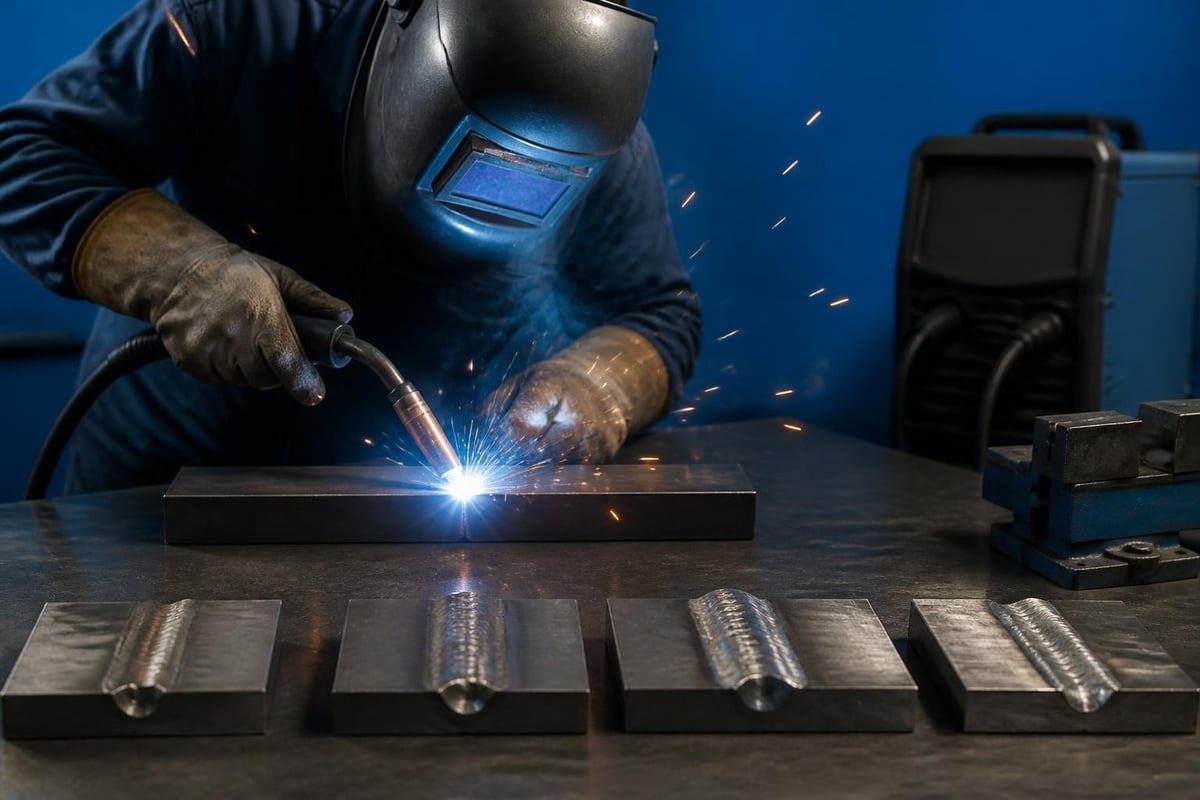
Understanding the metallurgical transformations that occur during the welding manufacturing process proves essential for achieving optimal results. The heat-affected zone (HAZ) surrounding each weld experiences significant microstructural changes that can impact mechanical properties, corrosion resistance, and service longevity.
Different material families require distinct approaches. Carbon steels, stainless alloys, aluminum, and exotic metals each present unique challenges regarding thermal conductivity, oxidation susceptibility, and solidification characteristics. The historical development and various processes involved in welding demonstrate how techniques have evolved to address these diverse material requirements.
Primary Welding Techniques in Manufacturing
The welding manufacturing process encompasses numerous techniques, each offering specific advantages for particular applications, material combinations, and production environments. Selecting the appropriate method requires evaluating project requirements, production volume, accessibility constraints, and quality specifications.
Arc Welding Methods
Arc welding processes dominate industrial manufacturing due to their versatility, cost-effectiveness, and adaptability to field conditions. These techniques utilize an electric arc to generate the intense heat necessary for melting and fusing base materials.
| Welding Method | Primary Applications | Key Advantages | Typical Industries |
|---|---|---|---|
| SMAW (Stick) | Field repair, structural steel | Portable, wind-resistant | Construction, pipeline, maintenance |
| GMAW (MIG) | Production welding, thin materials | High deposition rates, minimal cleanup | Manufacturing, automotive, fabrication |
| GTAW (TIG) | Precision work, exotic alloys | Superior quality, excellent control | Aerospace, pharmaceutical, food processing |
| FCAW (Flux-Core) | Heavy fabrication, outdoor work | Deep penetration, all-position capability | Shipbuilding, heavy equipment, structural |
Shielded Metal Arc Welding (SMAW) remains popular for emergency mobile industrial welding services due to its minimal equipment requirements and adaptability to challenging environmental conditions.
Gas Metal Arc Welding (GMAW) has become the workhorse of production environments, offering excellent productivity and consistent results when properly configured. Recent advances in deep learning for online quality prediction in GMAW demonstrate how technology continues advancing process control and quality assurance.
Specialized Welding Processes
Beyond conventional arc welding, the welding manufacturing process includes specialized techniques designed for specific material challenges or production requirements.
Advanced welding methods include:
- Submerged Arc Welding (SAW) for heavy plate fabrication
- Resistance welding for high-volume automotive and appliance manufacturing
- Laser welding for precision electronics and medical device applications
- Friction stir welding for aluminum alloys and dissimilar material joining
- Electron beam welding for aerospace and vacuum-service components
These specialized processes often require significant capital investment and controlled environments, making them more suitable for dedicated manufacturing facilities rather than field applications. However, their precision and repeatability make them invaluable for critical applications where traditional methods cannot achieve required specifications.
Welding Procedure Development and Documentation
Standardization and documentation form the cornerstone of reliable welding manufacturing process execution. Proper procedure development ensures consistency, enables quality auditing, and provides essential guidance for welders executing complex fabrication projects.
Welding Procedure Specifications
The Welding Procedure Specification (WPS) serves as the fundamental document governing how specific joints should be welded. This detailed instruction set includes parameters such as base material specifications, filler metal selection, preheat requirements, interpass temperature limits, and post-weld heat treatment protocols.
Creating effective WPS documentation requires comprehensive understanding of:
- Material properties and chemical composition limits
- Joint configuration and preparation standards
- Electrical parameters and travel speed ranges
- Shielding gas flow rates and composition
- Acceptable welding positions and techniques
For critical applications like ASME code welding services for pressure piping, procedure qualification becomes mandatory. This process involves producing test welds under controlled conditions and subjecting them to destructive testing that verifies mechanical properties meet or exceed specified requirements.
Welding Symbols and Documentation Standards
Clear communication between designers, fabricators, and inspectors requires standardized notation systems. Understanding symbols and conventions used in welding documentation enables all stakeholders to interpret fabrication requirements accurately without ambiguity.
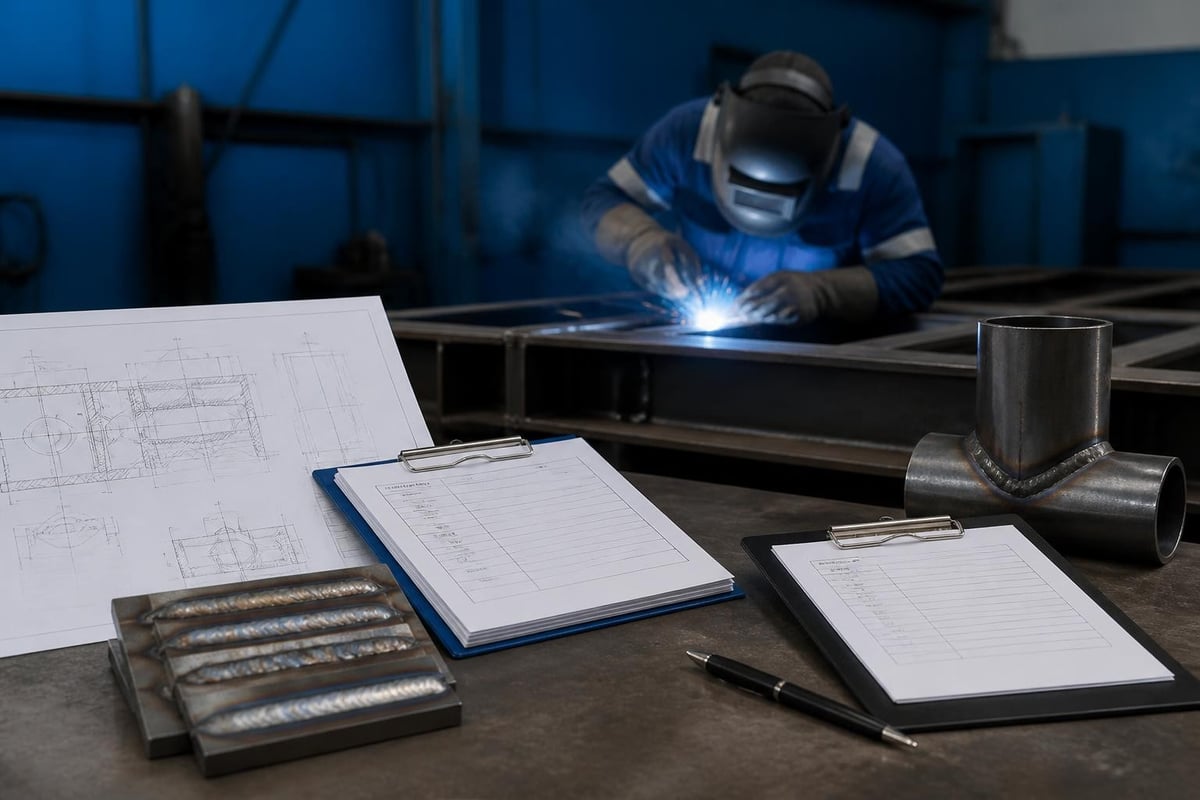
The welding data dictionary developed by NIST provides comprehensive terminology standardization that facilitates digital information exchange and automated process control in modern manufacturing environments.
Quality Control and Inspection Methods
Ensuring weld integrity represents a critical aspect of the welding manufacturing process, particularly for applications involving pressure containment, structural loading, or hazardous service conditions. Comprehensive quality programs incorporate multiple inspection techniques at various production stages.
Non-Destructive Testing Approaches
Non-destructive testing (NDT) methods enable thorough examination of completed welds without compromising component integrity. These techniques identify internal discontinuities, surface defects, and dimensional variations that could compromise performance or safety.
Common NDT methods in welding inspection:
- Visual inspection for surface discontinuities and dimensional conformance
- Liquid penetrant testing for detecting surface-breaking defects
- Magnetic particle inspection for ferromagnetic materials
- Radiographic examination revealing internal porosity and lack of fusion
- Ultrasonic testing for volumetric inspection and thickness measurement
- Eddy current testing for surface and near-surface defect detection
Advanced facilities serving sectors like oil and gas fabrication typically maintain comprehensive NDT capabilities to verify weld quality meets stringent industry codes and customer specifications.
Statistical Process Control in Welding
Modern manufacturing increasingly employs statistical methods to monitor welding manufacturing process consistency and predict quality outcomes before defects occur. Research into statistical methods for modeling quality inconsistencies demonstrates how data-driven approaches enhance process reliability.
| Quality Metric | Measurement Method | Acceptable Range | Action When Exceeded |
|---|---|---|---|
| Heat input | Calculation from electrical parameters | Per WPS specification | Stop welding, verify equipment |
| Travel speed | Electronic monitoring or manual timing | ±10% of qualified range | Adjust technique, retrain operator |
| Interpass temperature | Contact pyrometer or infrared | Per WPS specification | Allow cooling or apply preheat |
| Visual quality | Trained inspector examination | Zero unacceptable defects | Repair or remove affected area |
Implementing robust quality control systems reduces rework costs, minimizes production delays, and ensures customer satisfaction with finished products.
Process Variables and Their Impact
The welding manufacturing process involves numerous interdependent variables that collectively determine weld quality, productivity, and cost-effectiveness. Understanding these relationships enables optimization for specific application requirements.
Thermal Management Considerations
Heat input directly affects weld penetration, fusion quality, and metallurgical properties in the heat-affected zone. Excessive heat input can cause grain growth, reduce toughness, and increase distortion, while insufficient heat results in incomplete fusion and inadequate penetration.
Preheat requirements vary based on material thickness, carbon equivalent, and ambient temperature. Thick sections and high-strength materials typically require elevated preheat temperatures to prevent cracking from rapid cooling rates. Conversely, some materials like certain stainless steels require limited heat input to preserve corrosion resistance.
Research examining residual stress accumulation during welding highlights how thermal cycles create locked-in stresses that can affect dimensional stability and service performance, particularly in large fabrications like those common in large-scale metal fabrication for construction projects.
Shielding and Atmospheric Protection
Protecting molten weld metal from atmospheric contamination proves essential for achieving sound welds. Oxygen, nitrogen, and hydrogen in ambient air can dissolve in molten metal, causing porosity, embrittlement, and reduced mechanical properties.
Different shielding approaches include:
- Inert gas shielding using argon or helium for reactive materials
- Active gas mixtures combining argon with CO2 or oxygen for enhanced arc characteristics
- Flux coverage providing both shielding and alloying elements
- Vacuum or controlled atmosphere chambers for extremely reactive materials
Gas flow rates, nozzle positioning, and wind protection all influence shielding effectiveness. Field welding operations face additional challenges from environmental factors that shop-based processes can more easily control.
Welder Qualification and Skill Development
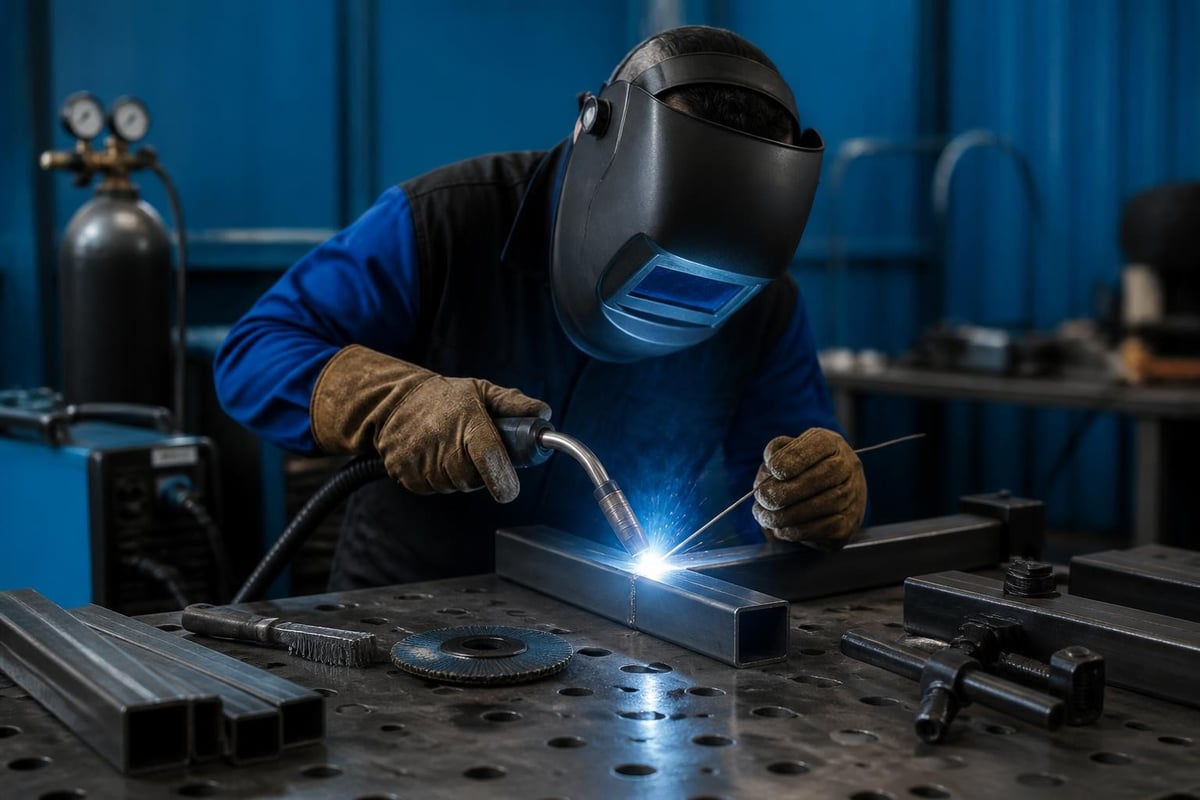
The human element remains central to welding manufacturing process success despite advancing automation. Qualified welders combine technical knowledge with manual dexterity, spatial awareness, and adaptive problem-solving abilities developed through extensive training and experience.
Certification and Qualification Standards
Welder qualification testing verifies that individual operators can produce acceptable welds following specific procedures. These qualifications typically specify:
- Welding process and equipment type
- Base material thickness ranges
- Welding positions (flat, horizontal, vertical, overhead)
- Filler metal classification
- Joint configurations
Organizations like AWS administer standardized certification programs that demonstrate competency across various processes and positions. Many fabrication shops maintain rigorous internal qualification programs ensuring their workforce possesses skills matching project requirements, as demonstrated by facilities employing quality welders who maintain current certifications.
Continuous Skill Enhancement
The welding field continually evolves with new materials, processes, and quality requirements. Successful welding operations invest in ongoing training that keeps welders current with industry developments and emerging technologies.
Effective training programs address:
- New welding processes and equipment operation
- Advanced materials and dissimilar metal joining
- Robotic welding programming and monitoring
- Quality inspection and self-verification techniques
- Safety protocols and hazard recognition
Companies prioritizing workforce development attract and retain skilled welders who contribute to competitive advantages through superior craftsmanship and productivity.
Material Preparation and Joint Design
Proper preparation significantly influences welding manufacturing process outcomes. Joint configuration, edge preparation, and cleanliness directly impact weld quality, strength, and inspection results.
Joint Configuration Selection
Engineers select joint types based on loading conditions, material thickness, accessibility, and cost considerations. Common configurations include butt joints, corner joints, T-joints, lap joints, and edge joints, each offering specific advantages for particular applications.
| Joint Type | Best Applications | Advantages | Limitations |
|---|---|---|---|
| Butt | Pressure vessels, piping | Full penetration, efficient loading | Requires edge preparation |
| Corner | Boxes, frames, enclosures | Simple fitup, accessible | Limited strength without full penetration |
| T-Joint | Structural connections | Versatile, multiple weld options | Potential for lamellar tearing |
| Lap | Sheet metal, repairs | Minimal preparation, good fitup tolerance | Crevice corrosion risk, stress concentration |
Proper joint design considers stress distribution, inspection accessibility, and manufacturing efficiency. Complex assemblies may incorporate multiple joint types optimized for specific locations and loading conditions.
Surface Preparation Requirements
Contaminants including mill scale, rust, oil, paint, and moisture can cause porosity, cracking, and inadequate fusion. Thorough cleaning proves essential for quality welds, often requiring mechanical methods like grinding or chemical processes. Facilities offering industrial sandblasting and powder coating services can provide comprehensive surface preparation for fabrication projects.
Critical applications may require solvent cleaning followed by mechanical abrasion to ensure complete contaminant removal. Stainless steel welds particularly benefit from dedicated stainless-only tools preventing iron contamination that compromises corrosion resistance.
Advanced Technologies in Welding Manufacturing
Technological advancement continues transforming the welding manufacturing process through automation, sensing systems, and data analytics that enhance quality, productivity, and consistency.
Robotic and Automated Welding Systems
Automated welding equipment excels in high-volume production environments where repeatability and consistency prove paramount. Robotic systems execute programmed weld sequences with precision impossible for manual operators, maintaining exact travel speeds, torch angles, and wire feed rates.
Benefits of automation include:
- Consistent quality across production runs
- Reduced labor costs for repetitive operations
- Improved safety through reduced human exposure
- Enhanced productivity with continuous operation capability
- Detailed process documentation and traceability
However, automation requires significant capital investment and proves most economical for standardized components produced in volume. Custom fabrication and field work continue relying on skilled manual welders who adapt techniques to varying conditions.
Real-Time Monitoring and Quality Prediction
Sensor technologies now enable continuous monitoring of critical welding parameters, detecting deviations before they produce defective welds. These systems track electrical values, wire feed rates, travel speeds, and even acoustic signatures indicating process stability.
Machine learning algorithms process sensor data to predict weld quality and identify optimal parameter combinations for specific applications. This data-driven approach reduces qualification testing requirements and accelerates process development for new materials or joint configurations.
Industry-Specific Applications and Requirements
Different industrial sectors impose unique requirements on the welding manufacturing process based on service conditions, regulatory frameworks, and performance expectations.
Pressure Vessel and Piping Applications
Components containing pressurized fluids face stringent fabrication requirements governed by codes like ASME Boiler and Pressure Vessel Code. These standards specify material selection, welding procedures, inspection requirements, and documentation protocols ensuring safe, reliable pressure containment.
Certified pressure vessel welding and repair services require specialized qualifications, equipment, and quality systems meeting code requirements. Failures in these applications can cause catastrophic consequences, justifying rigorous quality programs.
Structural and Architectural Fabrication
Building construction and infrastructure projects utilize welding extensively for steel framework, architectural features, and structural connections. These applications prioritize strength, ductility, and fatigue resistance while meeting building codes and aesthetic requirements.
Structural welding often involves heavy sections requiring high deposition rate processes and careful distortion control. Prequalified joint details and standardized procedures streamline fabrication while ensuring code compliance.
Oil and Gas Industry Demands
Energy sector applications subject welds to extreme conditions including high pressures, corrosive fluids, cyclic loading, and temperature extremes. Material selection and welding procedures must account for sour service environments, offshore exposure, and long-term reliability requirements.
Pipeline welding demands specific skills for horizontal and vertical-down welding positions executed under field conditions. Automated pipeline welding systems have improved productivity while maintaining the quality necessary for these critical applications.
Environmental and Safety Considerations
The welding manufacturing process generates various hazards requiring comprehensive safety programs protecting workers, facilities, and surrounding communities.
Health and Safety Protocols
Welding produces intense ultraviolet and infrared radiation, toxic fumes, and electrical hazards. Effective safety programs incorporate engineering controls, personal protective equipment, and administrative procedures minimizing exposure risks.
Critical safety elements include:
- Adequate ventilation removing welding fumes from breathing zones
- Appropriate eye and face protection against radiation exposure
- Fire-resistant clothing and gloves protecting from burns
- Electrical safety devices preventing shock hazards
- Confined space protocols for enclosed welding operations
- Respiratory protection for operations generating hazardous fumes
Regular safety training and hazard communication ensure welders understand risks and employ appropriate protective measures throughout their work activities.
Environmental Impact Management
Modern welding operations increasingly focus on environmental sustainability through waste reduction, energy efficiency, and emission control. Spent electrodes, slag, and contaminated materials require proper disposal following environmental regulations.
Welding fume extraction systems protect both workers and the environment by capturing particulates and gases at their source. Advanced filtration technologies enable fume recycling and reduce atmospheric emissions from manufacturing facilities.
Mastering the welding manufacturing process requires integrating metallurgical science, skilled craftsmanship, and rigorous quality systems to produce reliable fabricated components meeting demanding specifications. Whether your operation demands precision custom welding services, certified pressure vessel work, or emergency field repairs, partnering with experienced professionals ensures project success. LTJ Industrial Services delivers comprehensive welding, fabrication, and machining capabilities throughout the Western United States, combining advanced equipment with skilled craftsmen to support your manufacturing goals.