Industrial safety and uninterrupted operations depend on the integrity of pressure vessels. Choosing a certified pressure vessel welding and repair service is critical for meeting regulatory standards and minimizing risk.
This guide delivers an authoritative overview of the latest certification requirements, repair processes, and provider selection strategies for 2026. You will learn how to identify qualified professionals, understand compliance updates, and implement best practices.
Explore essential topics including certification standards, welding and repair steps, compliance, provider evaluation, new technologies, and maintenance. Equip yourself with the knowledge to make informed decisions, maximize safety, and ensure regulatory compliance.
Understanding Pressure Vessel Certification Standards
Ensuring the integrity of industrial equipment begins with a thorough understanding of certification standards. For any facility manager or manufacturer, engaging a certified pressure vessel welding and repair service is not only a regulatory requirement but also a cornerstone of operational safety. Navigating the evolving landscape of codes, credentials, and compliance is essential for minimizing risk and safeguarding your business.
The Role of Certification in Pressure Vessel Safety
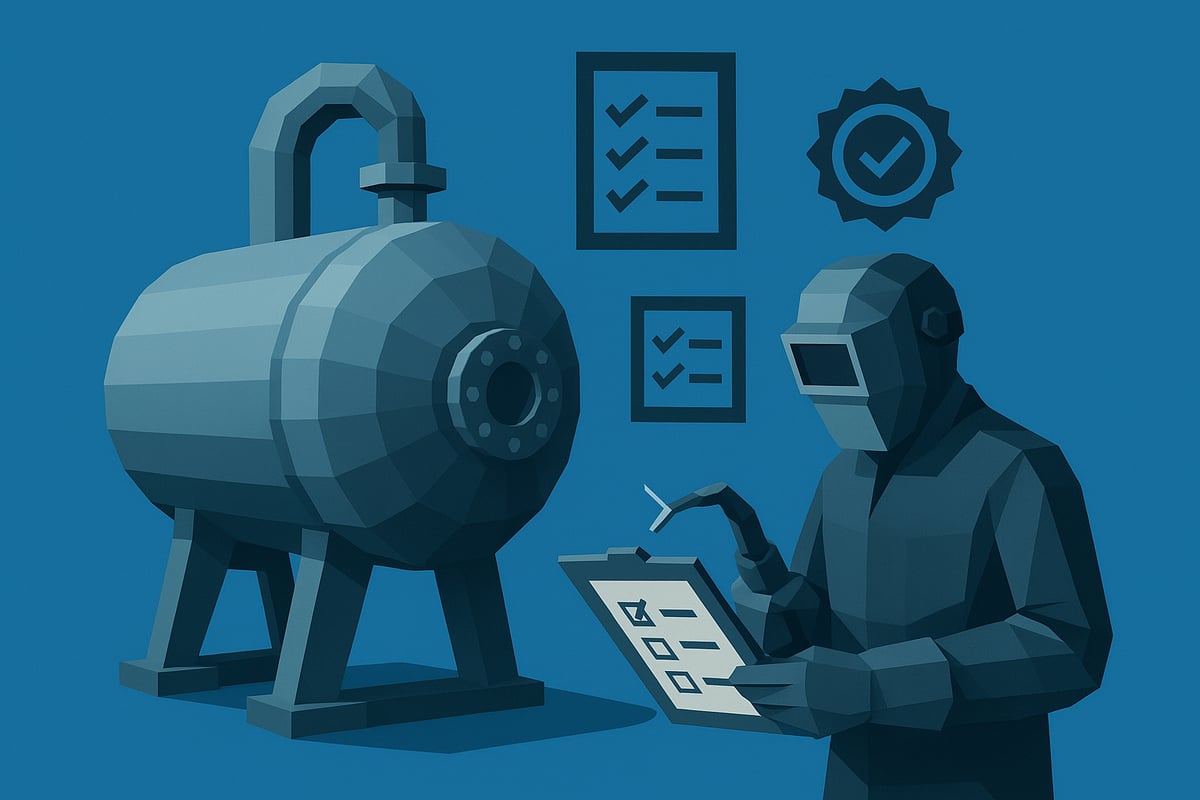
Certification is mandated to ensure pressure vessels can safely withstand operating conditions. Regulatory bodies like ASME, NBIC, API, and local authorities set strict rules, making certified pressure vessel welding and repair service a legal and ethical necessity. When repairs are performed without proper certification, the results can be catastrophic. Facilities have faced explosions, toxic leaks, and costly shutdowns due to uncertified work. For instance, a chemical plant incident in 2023 resulted in injuries and millions in damages after a non-certified repair failed under pressure. Choosing certified services is the first line of defense against such disasters.
Key Certification Requirements for 2026
The landscape for certified pressure vessel welding and repair service is evolving. ASME Section VIII and IX have introduced updates for 2026, including revised welding procedure standards and expanded traceability. The NBIC has also revised documentation protocols, now requiring digital record-keeping for all repairs. This means every weld, inspection, and material used must be traceable through secure digital logs. According to OSHA, over 90% of industrial accidents involving pressure vessels cite certification lapses as a root cause. For a comprehensive look at compliance, providers like Certified Industrial Welding Services outline the latest requirements and best practices.
Types of Certified Pressure Vessel Welders and Inspectors
A certified pressure vessel welding and repair service relies on a team of highly qualified professionals. Certified welders, inspectors, and welding engineers each play a distinct role. Credentials such as AWS Certified Welding Inspector (CWI) and API 510 Pressure Vessel Inspector are essential. Ongoing education and regular recertification ensure skills remain current. Shop certifications often differ from those required for field repairs due to varying conditions and code requirements.
| Role | Credential | Scope |
|---|---|---|
| Welder | ASME IX, NBIC | Shop/Field |
| Inspector | CWI, API 510 | Inspection/Audit |
| Welding Eng. | PE, ASME IX | Procedure Development |
For example, a CWI focuses on weld quality, while an API 510 Inspector assesses vessel integrity and compliance.
Common Pressure Vessel Materials and Their Certification Implications
Certified pressure vessel welding and repair service providers must understand the unique demands of different materials. Carbon steel, stainless steel, and exotic alloys each have specific certification and inspection requirements. Stainless steel vessels, for example, require 20% more inspection steps on average, as confirmed by a recent industry survey. Material selection affects not only repair techniques but also which codes and documentation are mandatory for compliance.
- Carbon steel: Standard certification, common in most industries.
- Stainless steel: Enhanced inspection, stricter traceability.
- Exotic alloys: Specialized procedures, often requiring additional welder qualifications.
Choosing the right material and ensuring compliant repairs reduces long-term risk.
The Cost and Value of Certification
Investing in a certified pressure vessel welding and repair service involves upfront costs, such as certification fees, training, and digital documentation systems. However, the long-term value is substantial. Certified repairs minimize downtime, reduce the risk of failures, and can lower insurance premiums. For example, one manufacturing company saw a 30% reduction in unplanned outages after switching to certified providers. The return on investment comes from safer operations, fewer incidents, and improved regulatory standing.
The Certified Pressure Vessel Welding & Repair Process: Step by Step
Certified pressure vessel welding and repair service is a complex, multi-stage process requiring precision, compliance, and expertise. Each step must meet stringent industry standards to ensure vessel safety and regulatory approval. Below, we break down every phase, showing you exactly what to expect when partnering with a certified provider.

Initial Assessment and Damage Evaluation
Every certified pressure vessel welding and repair service begins with a thorough assessment. Technicians conduct visual inspections and employ advanced non-destructive testing (NDT) methods such as ultrasonic, radiographic, magnetic particle, or dye penetrant testing.
These tests reveal both surface and hidden flaws, including cracks, corrosion, or weld defects. Accurate documentation of all findings is essential, forming the baseline for repair decisions.
Choosing between repair and replacement hinges on the extent and type of damage. For example, ultrasonic NDT can uncover tiny cracks in high-pressure vessels, preventing catastrophic failures and ensuring your certified pressure vessel welding and repair service delivers maximum safety.
Planning and Procedure Development
After assessment, the certified pressure vessel welding and repair service provider crafts a comprehensive repair plan. This plan aligns with ASME and NBIC codes, ensuring every detail meets regulatory requirements.
Engineers select the most appropriate welding process, such as Shielded Metal Arc Welding (SMAW), Gas Tungsten Arc Welding (GTAW), or Flux-Cored Arc Welding (FCAW). The next step is creating Welding Procedure Specifications (WPS) and Procedure Qualification Records (PQR), which define materials, techniques, and quality benchmarks.
A formal WPS is critical. Industry audits reveal that 75 percent of repair failures stem from missing or inadequate WPS documentation. A robust plan is the backbone of any certified pressure vessel welding and repair service.
Material Preparation and Pre-Weld Activities
Preparation is vital to the success of any certified pressure vessel welding and repair service. Teams start by cleaning the vessel surface, removing contaminants that could compromise weld integrity.
Next, beveling edges and performing fit-up checks ensures optimal joint alignment. For thick-walled vessels, preheating and interpass temperature control help prevent cracking and distortion.
Certified filler materials, matched to the vessel's base material, are mandatory. For instance, thick-walled carbon steel vessels often require specific preheat temperatures to reduce thermal stress and ensure a sound weld.
Certified Welding Execution
Execution is where the certified pressure vessel welding and repair service truly demonstrates its value. Only certified welders and supervisors perform the work, adhering strictly to approved procedures and safety protocols.
Throughout the process, real-time quality monitoring is standard. Automated welding systems are increasingly used, boosting consistency and reducing human error by up to 30 percent.
Detailed documentation accompanies every weld pass, ensuring traceability and compliance. The combination of skilled professionals and advanced technology ensures your vessel meets all requirements.
Inspection, Testing, and Quality Assurance
Once welding is complete, the certified pressure vessel welding and repair service provider performs rigorous inspections. Post-weld NDT methods, such as radiography and ultrasonic testing, verify weld integrity and detect any internal flaws.
Hydrostatic or pneumatic testing follows, subjecting the vessel to pressures above its operating limit to confirm leak-tightness. Third-party inspectors may be engaged for independent sign-off, adding another layer of assurance.
For real-world examples of how compliant repairs deliver long-term safety and operational continuity, explore Case Studies: Certified Repairs. These demonstrate the difference that certified processes make in preventing costly failures.
Final Documentation and Compliance Reporting
The final stage of a certified pressure vessel welding and repair service is meticulous documentation. Providers compile all records, including inspection reports, weld maps, material certifications, and test results.
These are submitted to regulatory agencies to validate compliance. Increasingly, digital documentation is used, reducing audit times by 40 percent and ensuring data is easily retrievable for future reference.
Comprehensive records guarantee traceability and simplify future audits, protecting your operation’s compliance and reputation.
Regulatory Compliance and Industry Standards for 2026
Regulatory compliance is the backbone of any certified pressure vessel welding and repair service. In 2026, stricter standards and evolving codes require facility managers and manufacturers to stay vigilant. Understanding which bodies govern the industry, what documentation is required, and how to prepare for audits is critical for operational safety, insurance, and business continuity.
Overview of Major Regulatory Bodies
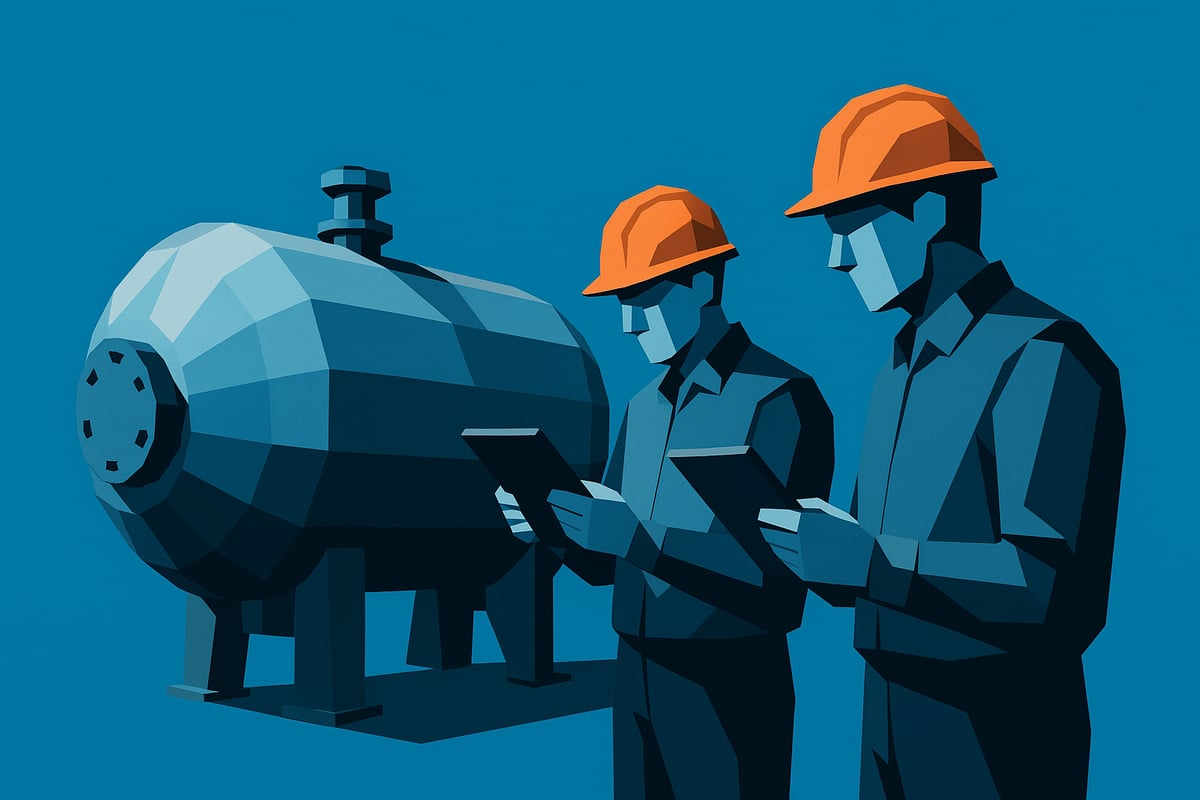
The certified pressure vessel welding and repair service industry is shaped by several key regulatory organizations. These include:
- ASME (American Society of Mechanical Engineers): Sets codes for design and fabrication.
- API (American Petroleum Institute): Focuses on inspection and best practices.
- NBIC (National Board Inspection Code): Governs repairs, alterations, and inspections.
- OSHA (Occupational Safety and Health Administration): Ensures workplace safety.
- State and local authorities: May impose additional requirements.
Each regulatory body brings unique guidelines. For example, Colorado enforces state-specific rules for pressure vessel registration and inspection, which must be layered atop federal standards. Navigating these overlapping jurisdictions is vital for any certified pressure vessel welding and repair service provider.
Key 2026 Code Updates and Their Impact
The regulatory landscape for certified pressure vessel welding and repair service is evolving in 2026. Major changes include amendments to ASME Section IX, affecting welding procedure qualifications, and NBIC updates that alter inspection frequencies and reporting methods. Providers must now adopt digital submission of compliance documents, reducing manual errors and streamlining regulatory reviews.
These updates will directly impact repair timelines and documentation processes. According to recent projections, 60% of existing vessels will require adjustments to remain compliant with the new codes. For deeper insights into these changes, review the ASME Section IX Updates, which detail the latest meeting schedules and qualification requirements. Staying current ensures your certified pressure vessel welding and repair service remains ahead of compliance risks.
Record-Keeping and Traceability Requirements
Record-keeping is a cornerstone of certified pressure vessel welding and repair service compliance. In 2026, digital documentation is rapidly becoming the standard. Mandatory data retention periods are in place, and tools like QR codes and blockchain technology are being piloted for enhanced traceability.
| Method | Features | Audit Speed |
|---|---|---|
| Digital | Cloud storage, instant search | Fast |
| Paper | Manual filing, prone to loss | Slow |
| Blockchain | Tamper-proof, transparent logs | Very Fast |
For example, blockchain pilot programs are helping track vessel repairs from start to finish, ensuring every step meets regulatory scrutiny. Choosing a certified pressure vessel welding and repair service that invests in these technologies helps future-proof your compliance.
Consequences of Non-Compliance
Failing to comply with regulations can have severe consequences for any certified pressure vessel welding and repair service. Non-compliance may lead to:
- Significant fines from regulatory agencies
- Forced facility shutdowns
- Legal liability for accidents or injuries
- Insurance claims denied due to incomplete records
A recent case study involved a facility closure after an audit revealed missing repair documentation. This underscores why certified pressure vessel welding and repair service providers must prioritize thorough record-keeping and compliance at every stage.
Preparing for Regulatory Audits
Audit readiness is essential for a certified pressure vessel welding and repair service. Preparation steps include:
- Verifying all certifications and repair records
- Maintaining digital logs and inspection reports
- Reviewing documentation for completeness
- Using checklists to prevent common oversights
Common audit findings often relate to incomplete or missing documentation. Data shows that 35% of failed audits cite this issue as the main cause. Regular internal reviews and staff training can help your certified pressure vessel welding and repair service avoid costly audit failures and maintain a robust compliance posture.
Selecting a Certified Pressure Vessel Welding & Repair Provider
Choosing the right certified pressure vessel welding and repair service is crucial for maintaining safety, compliance, and operational reliability. With so many providers in the market, understanding what sets a qualified partner apart is essential. Below, we break down the most important factors to consider when selecting a provider to ensure your facility’s pressure vessels are in expert hands.
Essential Qualities of Certified Service Providers
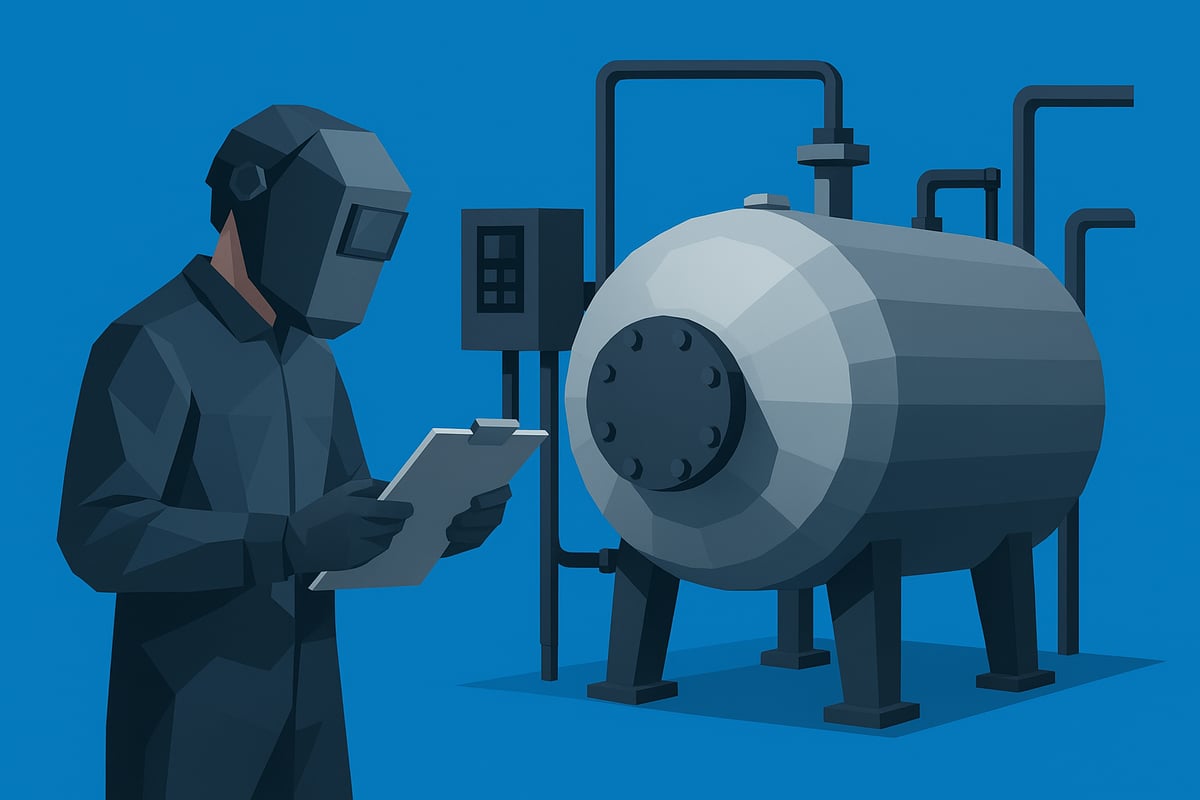
When evaluating a certified pressure vessel welding and repair service, start by confirming their credentials. Providers must hold current certifications from recognized authorities such as ASME, NBIC, and API. Ask for documentation and verify these accreditations are valid for your vessel type and material.
Look for a proven safety record and established quality control programs. Providers with experience in your industry, whether oil and gas, manufacturing, or recycling, will understand sector-specific challenges. For example, a provider with both ASME and API accreditation can handle a broader range of compliance requirements.
A reputable certified pressure vessel welding and repair service will openly share their certifications and safety performance data. This transparency builds confidence and sets the foundation for a strong partnership.
Evaluating Technical Capabilities and Equipment
Technical capability is a defining factor in choosing a certified pressure vessel welding and repair service. Providers should demonstrate expertise with advanced welding processes and the latest non-destructive testing (NDT) technologies.
Assess whether the provider offers in-house services or relies on subcontractors. In-house NDT and fabrication can reduce turnaround time by 25 percent and ensure tighter quality control. Field service capabilities are also important for facilities needing on-site repairs.
For a deeper understanding of manufacturing strengths, review the provider’s broader industrial manufacturing expertise. This insight shows their ability to handle complex projects and maintain compliance with industry standards.
Assessing Reputation and Track Record
A provider’s reputation speaks volumes about their reliability and quality. Request references from recent projects and review case studies that highlight successful certified pressure vessel welding and repair service outcomes.
Check online reviews and industry forums for feedback on their performance, safety record, and responsiveness. Prioritize companies with a history of incident-free operations spanning a decade or more.
A trustworthy certified pressure vessel welding and repair service will have a strong presence in the industry and a portfolio of satisfied clients. This track record shows consistent delivery of safe, compliant solutions.
Service Agreements, Pricing, and Transparency
Clear service agreements are vital when selecting a certified pressure vessel welding and repair service. Insist on detailed quotes that outline the scope of work, pricing, and timelines. Ask about warranties and post-repair support to avoid surprises later.
Transparent contracts help prevent disputes. In fact, providers with clear agreements reduce misunderstandings by 40 percent. Make sure all terms, including emergency response and ongoing maintenance, are documented.
Review the provider’s approach to pricing and ensure there are no hidden fees. A reputable certified pressure vessel welding and repair service values open communication and long-term client relationships.
LTJ Industrial Services: Certified Welding Solutions for the Western U.S.
LTJ Industrial Services is a leading certified pressure vessel welding and repair service provider for commercial and industrial clients across the Western U.S. Their team is highly skilled in ASME and NBIC-compliant welding, advanced NDT, and both shop and field repairs.
LTJ delivers custom solutions for oil and gas, aggregate, and recycling industries. Their in-house capabilities include fabrication, machining, and hydraulic repair, streamlining complex projects from start to finish.
Clients benefit from LTJ’s commitment to quality, safety, and regulatory compliance. Flexible options—on-site field teams or in-shop repairs—ensure that every certified pressure vessel welding and repair service is tailored to your needs. Direct consultation and custom quotes are available for all pressure vessel projects.
Technological Advancements in Pressure Vessel Welding and Repair
The landscape of certified pressure vessel welding and repair service is rapidly evolving thanks to new technologies. These advancements are transforming safety, efficiency, and compliance. Understanding the latest tools and methods is crucial for any facility aiming to maintain a competitive edge and meet strict regulatory requirements.
Automation and Robotics in Welding
Automation is redefining how certified pressure vessel welding and repair service providers operate. Automated welding systems deliver unmatched precision, consistency, and speed, especially for repetitive or complex welds.
Robotic welding arms can access difficult or hazardous locations, reducing risks for human operators. This technology is especially valuable in high-stress joints or when handling exotic alloys. For example, a recent case study showed robotic systems reduced human error and improved weld quality in high-pressure vessel seams.
Key benefits include:
- Improved weld repeatability
- Enhanced safety for workers
- Faster project turnaround
As automation becomes more accessible, it is quickly becoming a standard for certified pressure vessel welding and repair service projects of all sizes.
Advanced Non-Destructive Testing (NDT) Methods
Modern certified pressure vessel welding and repair service relies on advanced NDT to ensure weld integrity and detect flaws early. Techniques like phased array ultrasonic testing (PAUT), digital radiography, and acoustic emission analysis provide faster, more accurate assessments than traditional methods.
Phased array ultrasonic testing, for instance, can scan complex geometries and reveal hidden defects with 50% less inspection time compared to conventional ultrasonic testing. Digital radiography offers instant image processing and easier record storage. These tools help identify issues before they become critical, reducing unexpected downtime and costly repairs.
Using these advanced NDT methods is now a best practice for any certified pressure vessel welding and repair service seeking to maximize safety and compliance.
Digital Documentation and Compliance Tools
Digital transformation is streamlining every certified pressure vessel welding and repair service. Cloud-based record-keeping, mobile inspection apps, and real-time reporting make documentation more accurate and accessible.
Providers now use QR codes for instant access to vessel histories and even blockchain to ensure tamper-proof traceability. These innovations align with upcoming ASME Section VIII 2025 Code Updates, which emphasize electronic submissions and robust data retention.
Benefits of digital compliance tools include:
- Reduced audit preparation time
- Improved traceability and accuracy
- Easier regulatory submissions
Staying ahead with digital solutions is essential for any certified pressure vessel welding and repair service aiming to comply with evolving industry standards.
Sustainable and Eco-Friendly Repair Practices
Sustainability is becoming a key focus in certified pressure vessel welding and repair service. Providers are adopting low-emission welding processes and recycling removed vessel materials whenever possible.
Green welding consumables reduce airborne contaminants and improve environmental safety. For example, using eco-friendly filler metals has been shown to lower a facility’s carbon footprint while maintaining weld quality.
Sustainable practices not only support regulatory compliance but also enhance a company’s reputation. As clients and regulators demand greener solutions, integrating these methods is vital for any certified pressure vessel welding and repair service looking to lead in the industry.
Best Practices for Pressure Vessel Maintenance and Longevity
Proper maintenance is the backbone of safe and efficient pressure vessel operation. By following a structured approach, facility managers can prevent failures, extend equipment life, and ensure compliance with every certified pressure vessel welding and repair service. The following best practices are essential for maximizing vessel longevity and reliability.
Scheduled Inspection and Preventive Maintenance
Routine inspection is vital for any certified pressure vessel welding and repair service program. Establish a documented schedule based on manufacturer recommendations and regulatory guidelines. Annual inspections, supplemented by interim checks, help identify early signs of wear or damage.
Key preventive measures include:
- Visual and non-destructive testing (NDT)
- Internal cleaning to remove deposits
- Monitoring pressure and temperature cycles
When issues arise, rapid response is critical. For urgent repairs or on-site needs, consider specialized Emergency Mobile Welding Solutions to minimize downtime and restore safety swiftly.
Common Failure Modes and How to Prevent Them
Understanding potential failure modes is crucial for anyone relying on certified pressure vessel welding and repair service providers. The most common risks include:
- Corrosion from internal or external sources
- Fatigue cracks due to pressure cycling
- Weld defects like porosity or incomplete fusion
- Overheating and thermal stress
Prevention involves:
- Regular NDT to detect hidden flaws
- Applying corrosion-resistant coatings
- Ensuring welds meet code standards
- Maintaining proper operating conditions
Early detection and mitigation significantly reduce the risk of catastrophic failure and ensure ongoing compliance.
Record-Keeping and Lifecycle Management
Accurate records are a cornerstone of every certified pressure vessel welding and repair service. Document all inspections, repairs, modifications, and incidents in a centralized system. Digital record-keeping simplifies audits, supports regulatory compliance, and provides a clear maintenance history.
Best practices include:
- Logging every inspection and repair
- Tracking vessel modifications and upgrades
- Retaining documentation for the vessel’s entire lifecycle
Vessels with comprehensive records demonstrate longer operational lifespans and improved reliability, making proactive management a smart investment.
Training and Safety Culture for Operators
Operator training is fundamental to the success of any certified pressure vessel welding and repair service strategy. Well-trained staff recognize warning signs, follow safety protocols, and respond quickly to irregularities.
Implement a robust training program that covers:
- Vessel operation and monitoring
- Emergency response procedures
- Safe handling of inspection and repair equipment
A strong safety culture, reinforced by continuous education, leads to fewer incidents and fosters accountability at every level of the organization.
With so much riding on the integrity and compliance of your pressure vessels, it’s essential to choose a partner who brings both expertise and reliability to the table. Throughout this guide, we covered what it takes to meet 2026’s rigorous certification standards and why a qualified provider makes all the difference—protecting your operations, your people, and your bottom line. If you’re ready to prioritize safety and efficiency with certified welding or repair, I encourage you to take the next step and Request a Quote. Let’s find the right solution for your facility’s unique needs.