The industrial manufacturing sector relies heavily on skilled metalworking processes to create everything from structural steel components to precision machinery parts. These processes combine technical expertise, specialized equipment, and rigorous quality standards to deliver reliable solutions across multiple industries. For businesses in the aggregate, recycling, and oil and gas sectors throughout the Western United States, understanding these capabilities is essential for maintaining operational efficiency and meeting project specifications.
Understanding Core Welding Processes
Modern welding and fabrication operations utilize multiple techniques to join metals effectively. Each method offers distinct advantages based on material type, thickness, and application requirements.
MIG Welding Applications
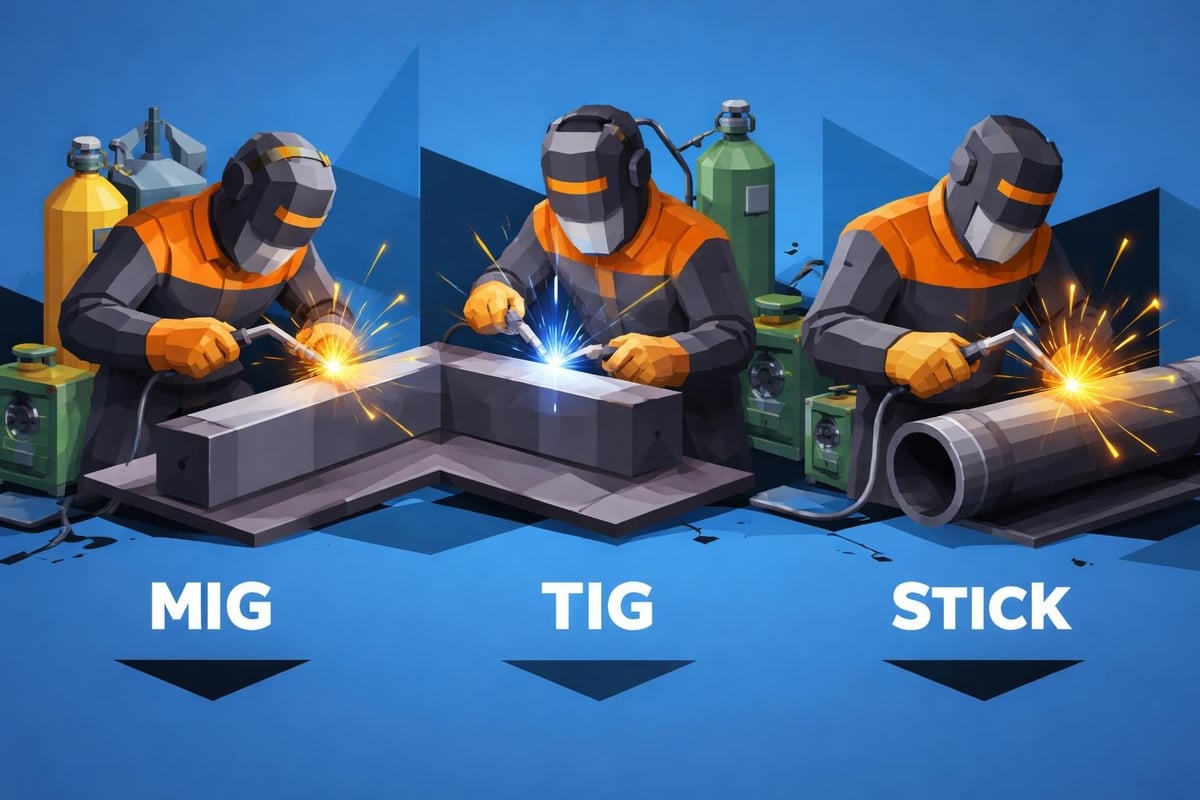
Metal Inert Gas (MIG) welding remains one of the most versatile processes in industrial settings. This technique uses a continuously fed wire electrode and shielding gas to create strong, clean welds on various metals. MIG welding excels in production environments where speed and consistency matter most.
- Ideal for carbon steel, stainless steel, and aluminum
- Produces minimal spatter and clean weld beads
- Suitable for both thin and thick materials
- Reduces post-weld cleanup time significantly
The process works particularly well for structural steel fabrication projects requiring long, continuous welds. Manufacturing facilities appreciate how quickly operators can complete repetitive welding tasks while maintaining quality standards.
TIG Welding Precision
Tungsten Inert Gas (TIG) welding delivers unmatched precision for critical applications. This process uses a non-consumable tungsten electrode and requires exceptional skill to master. Industries demanding high-quality welds consistently choose TIG for their most demanding projects.
| Characteristic | MIG Welding | TIG Welding | Stick Welding |
|---|---|---|---|
| Speed | Fast | Moderate | Moderate |
| Precision | Good | Excellent | Fair |
| Material Versatility | High | Very High | High |
| Outdoor Use | Limited | Poor | Excellent |
| Skill Required | Moderate | High | Moderate |
TIG welding produces aesthetically superior welds with minimal distortion. The process allows operators to control heat input precisely, making it perfect for thin materials and exotic alloys commonly used in pressure vessels and critical piping systems.
Metal Fabrication Capabilities
Welding and fabrication encompasses far more than joining metals together. Comprehensive metalworking shops provide complete services from initial design through final assembly.
Cutting and Preparation
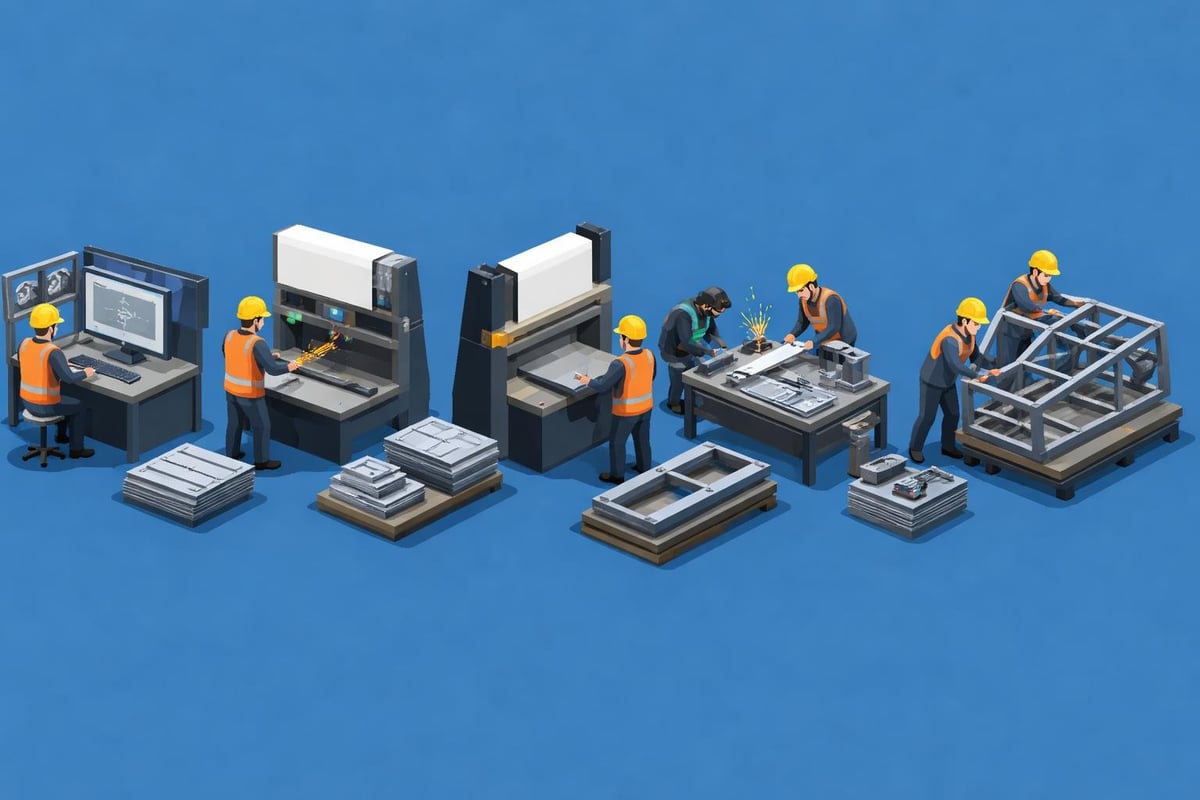
Material preparation sets the foundation for quality fabrication work. Modern shops employ multiple cutting technologies to process raw materials accurately:
- Plasma cutting for rapid processing of thick steel plates
- Oxy-fuel cutting for versatile field applications
- Bandsaw operations for precise dimensional cutting
- Grinding and beveling to prepare weld edges properly
Proper material preparation directly impacts final weld quality. Experienced custom fabrication and welding specialists understand how edge preparation affects penetration, strength, and overall joint integrity.
Forming and Assembly Operations
After cutting, materials undergo forming processes to achieve required shapes. Press brakes bend sheet metal to precise angles, while rolling machines create cylindrical or conical sections. These operations demand careful calculation to account for material springback and thickness variations.
Assembly work brings individual components together into finished structures. Skilled fabricators use jigging and fixturing to maintain dimensional accuracy throughout the assembly process. This attention to detail ensures that welded assemblies meet engineering specifications without costly rework.
Industry Standards and Compliance
Professional welding and fabrication operations must adhere to numerous codes and standards. These requirements protect public safety while ensuring structural integrity across applications.
AWS Certification Requirements
The American Welding Society establishes comprehensive standards for welding procedures, welder qualifications, and facility certifications. Their Certified Welding Fabricator program evaluates companies on quality management systems, personnel qualifications, and production capabilities.
Facilities pursuing CWF accreditation demonstrate their commitment to excellence. The certification process reviews:
- Quality control procedures and documentation systems
- Welder and welding operator qualifications
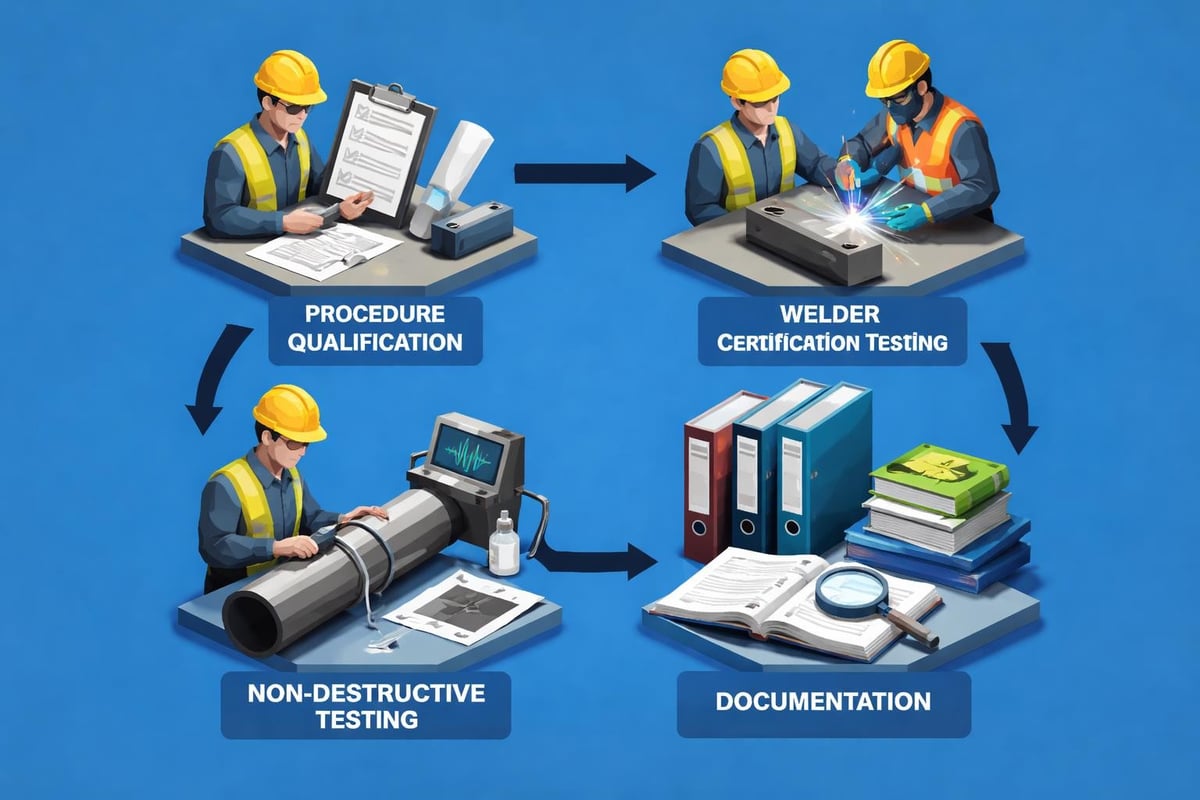
- Welding procedure specifications (WPS) development
- Non-destructive testing capabilities
- Material handling and storage practices
- Equipment maintenance and calibration programs
ASME Code Compliance
Projects involving pressure vessels and boilers must comply with strict ASME standards. The ASME Boiler and Pressure Vessel Code provides detailed requirements for design, fabrication, inspection, and testing of pressure-containing equipment.
Section IX of the ASME code specifically addresses welding and brazing qualifications. This section outlines how fabricators must qualify their welding procedures and personnel before beginning production work. Many industrial metal fabrication projects in the oil and gas sector require ASME compliance to meet safety regulations.
Quality Control and Inspection Methods
Maintaining consistent quality requires systematic inspection throughout the fabrication process. Professional shops implement multiple verification steps to catch defects before they become costly problems.
Visual Inspection Techniques
Every weld begins with visual examination. Trained inspectors evaluate bead appearance, size, and profile against acceptance criteria. They look for surface defects including cracks, porosity, undercut, and incomplete fusion. Understanding welding symbols and conventions helps inspectors verify that work matches engineering drawings.
Visual inspection serves as the first line of defense against weld defects. Catching issues early prevents wasted effort on subsequent operations and reduces overall project costs.
Non-Destructive Testing Applications
Beyond visual examination, fabricators employ various non-destructive testing (NDT) methods:
| NDT Method | Best Applications | Detection Capabilities | Limitations |
|---|---|---|---|
| Magnetic Particle | Ferromagnetic materials | Surface and near-surface cracks | Only works on magnetic metals |
| Liquid Penetrant | All non-porous materials | Surface-breaking defects | Cannot detect subsurface flaws |
| Ultrasonic Testing | Thick sections | Internal discontinuities | Requires skilled technicians |
| Radiographic Testing | Critical welds | Internal porosity and cracks | Safety concerns with radiation |
Implementing appropriate NDT methods ensures that finished products meet specified quality levels. The National Institute of Standards and Technology maintains comprehensive welding data resources that help fabricators understand testing requirements for different applications.
Field Welding Services
Not all fabrication work happens in controlled shop environments. Many industrial operations require on-site welding to repair equipment, modify existing structures, or install new systems.
Mobile Welding Capabilities
Field welding demands versatility and adaptability. Skilled welders bring specialized equipment directly to customer facilities, minimizing downtime and transportation costs. Mobile units typically include:
- Diesel-powered welding generators for remote locations without electrical power
- Multiple welding processes available from a single machine
- Portable cutting equipment for modifications and repairs
- Safety gear and ventilation systems for confined space work
These capabilities prove invaluable for industries like aggregate processing and recycling, where equipment often cannot be easily transported to fabrication shops.
Emergency Repair Services
Equipment failures don't follow regular business hours. Companies providing comprehensive industrial services understand the importance of rapid response capabilities. Emergency welding services help minimize production losses by restoring critical equipment quickly.
Experienced field technicians assess damage, develop repair strategies, and execute solutions efficiently. Their expertise with various materials and welding processes enables them to handle diverse challenges across multiple industries.
Advanced Fabrication Technologies
The welding and fabrication industry continues evolving through technological innovation. Modern shops integrate traditional craftsmanship with cutting-edge tools to improve efficiency and quality.
Automated Welding Systems
Robotic welding cells deliver consistent results for repetitive production runs. These systems excel at high-volume manufacturing where identical parts require numerous welds. Programming robots eliminates operator fatigue factors while maintaining precise parameters throughout production.
However, automation doesn't replace skilled welders entirely. Complex assemblies, one-off projects, and field work still require human expertise. The most successful welding fabrication shops balance automated efficiency with craftsman flexibility.
Digital Monitoring and Documentation
Recent advancements in welding technology include real-time monitoring systems that track critical parameters. Research into deep learning-based quality prediction systems demonstrates how artificial intelligence can identify potential defects during the welding process itself.
Digital documentation systems maintain complete records of welding procedures, material certifications, and inspection results. This traceability proves essential for regulated industries and helps fabricators demonstrate compliance with customer specifications.
Material Selection Considerations
Choosing appropriate materials significantly impacts fabrication success. Different metals exhibit unique welding characteristics that affect process selection, filler material choice, and post-weld treatment requirements.
Carbon Steel Applications
Carbon steel remains the workhorse material for structural fabrication. Its excellent weldability, strength, and cost-effectiveness make it ideal for frames, supports, and general fabrication projects. Low-carbon grades weld easily with minimal preheat requirements, while higher-carbon content demands more careful heat control to prevent cracking.
Stainless Steel and Specialty Alloys
Corrosion resistance applications require stainless steel or exotic alloys. These materials demand specific filler metals and shielding gases to preserve their properties. Fabricators must control heat input carefully to avoid chromium carbide precipitation that reduces corrosion resistance.
Specialty industries like oil and gas frequently specify:
- 316 stainless steel for chemical resistance
- Duplex stainless steels combining strength and corrosion resistance
- Inconel and Hastelloy alloys for extreme temperature applications
- Aluminum alloys where weight reduction matters
Working with these materials requires extensive knowledge of metallurgy and welding procedures. Professional fabricators maintain qualified procedures for each material grade they process.
Machining Integration
Complete metalworking shops combine welding and fabrication with precision machining capabilities. This integration allows single-source responsibility for complex projects requiring both skillsets.
Complementary Processes
Machining operations prepare welded assemblies for final use. Common post-weld machining includes:
- Face milling to create flat reference surfaces
- Boring operations for precise hole diameters
- Threading for mechanical connections
- Grinding and polishing for surface finish requirements
Manufacturing and machining capabilities under one roof streamline project coordination and reduce turnaround times. Customers benefit from unified quality standards and simplified communication.
Hydraulic Component Services
Industrial equipment relies heavily on hydraulic systems for power transmission. Fabrication shops serving this market offer specialized services including hydraulic cylinder repair and custom cylinder fabrication.
These services combine welding, machining, and assembly expertise. Technicians restore damaged cylinders to original specifications or fabricate entirely new units based on customer requirements.
Industry-Specific Applications
Different industrial sectors present unique welding and fabrication challenges. Understanding these requirements helps shops deliver appropriate solutions.
Oil and Gas Sector Demands
The energy industry requires fabricators who understand high-pressure piping systems, pressure vessels, and process equipment. Projects must meet stringent code requirements and often involve exotic materials resistant to corrosive environments.
Documentation and traceability become paramount in this sector. Every weld requires proper procedure qualification, and inspectors verify compliance through comprehensive testing programs.
Aggregate and Mining Equipment
Heavy equipment in aggregate processing and mining operations withstands extreme wear and impact. Fabricators supporting these industries specialize in heavy equipment welding using wear-resistant materials and hard-facing techniques.
Repairs often happen on-site to minimize equipment downtime. Mobile welding crews travel to quarries and processing plants, performing structural repairs and component rebuilds in challenging field conditions.
Recycling Industry Needs
Recycling facilities process diverse materials that damage equipment through abrasion, impact, and chemical attack. Custom fabrication helps these operations maintain productivity by creating specialized components and repairing damaged systems.
Conveyor systems, screening equipment, and material handling structures require frequent maintenance. Fabricators familiar with recycling operations design repairs that extend equipment life while maintaining safety standards.
Project Planning and Execution
Successful fabrication projects require careful planning from initial concept through final delivery. Professional shops follow structured approaches that minimize risks and ensure customer satisfaction.
Engineering and Design Collaboration
Projects begin with thorough communication between customers and fabricators. Reviewing welding reference guides and handbooks helps teams understand best practices and industry standards applicable to specific applications.
Design reviews identify potential fabrication challenges before work begins. Experienced fabricators suggest modifications that improve manufacturability without compromising functionality. This collaboration reduces costs and prevents delays caused by unforeseen difficulties.
Material Procurement and Management
Sourcing appropriate materials at competitive prices impacts project profitability. Established fabricators maintain relationships with steel suppliers and maintain inventory of common materials for quick turnaround projects.
Material certification documentation proves essential for code work. Mills provide material test reports (MTRs) that verify chemical composition and mechanical properties. Fabricators maintain these certificates as part of project quality records.
Safety and Environmental Considerations
Welding and fabrication operations present significant safety hazards that require comprehensive management programs. Professional shops prioritize worker safety while complying with environmental regulations.
Workplace Hazard Control
Effective safety programs address multiple hazards:
- Arc radiation protection through appropriate shade lenses and screens
- Fume extraction systems removing harmful welding emissions
- Fire prevention measures including hot work permits and fire watch procedures
- Personal protective equipment requirements for welders and nearby workers
- Confined space protocols for tank and vessel work
Regular safety training keeps workers current on best practices and regulatory requirements. Shops maintain detailed safety documentation demonstrating compliance with OSHA standards.
Environmental Compliance
Metal fabrication generates waste streams requiring proper management. Cutting operations produce scrap metal for recycling, while grinding and welding create dust and fumes that need collection and filtration.
Responsible fabricators implement environmental management systems that minimize waste, recycle materials where possible, and properly dispose of hazardous substances. These practices protect workers and surrounding communities while supporting sustainable operations.
Mastering welding and fabrication requires combining technical expertise, quality standards, and customer focus to deliver reliable metalworking solutions across diverse industrial applications. Whether your operation needs custom welding services, precision machining, or emergency field repairs, LTJ Industrial Services brings comprehensive capabilities to support your manufacturing, recycling, aggregate, and oil and gas operations throughout the Western United States.