
Machining fabrication represents the intersection of two critical manufacturing disciplines, combining precision cutting, milling, and turning operations with the assembly and construction of metal components. This integrated approach has become essential for industries throughout the Western United States, particularly in sectors like oil and gas, aggregate processing, and recycling operations. Companies seeking to maintain competitive advantages require partners who can deliver both precise machining work and robust fabrication capabilities under one roof, ensuring consistency, quality control, and streamlined project timelines.
Understanding the Fundamentals of Machining Fabrication
Machining fabrication encompasses a broad spectrum of metalworking processes that transform raw materials into finished products. At its core, this discipline combines subtractive manufacturing techniques-where material is removed to achieve desired shapes and dimensions-with additive fabrication methods that join components into complete assemblies.
The machining component involves operations such as turning, milling, drilling, boring, and grinding. These processes utilize computer numerical control (CNC) equipment to achieve tolerances measured in thousandths of an inch. Modern facilities employ multi-axis machining centers capable of producing complex geometries that would be impossible through manual operations.
Fabrication brings these machined components together through welding, bolting, riveting, and assembly processes. Custom metal fabrication requires skilled tradespeople who understand metallurgy, heat treatment, and structural engineering principles to create durable, functional products.
The Technology Driving Modern Operations
Advanced CNC Systems
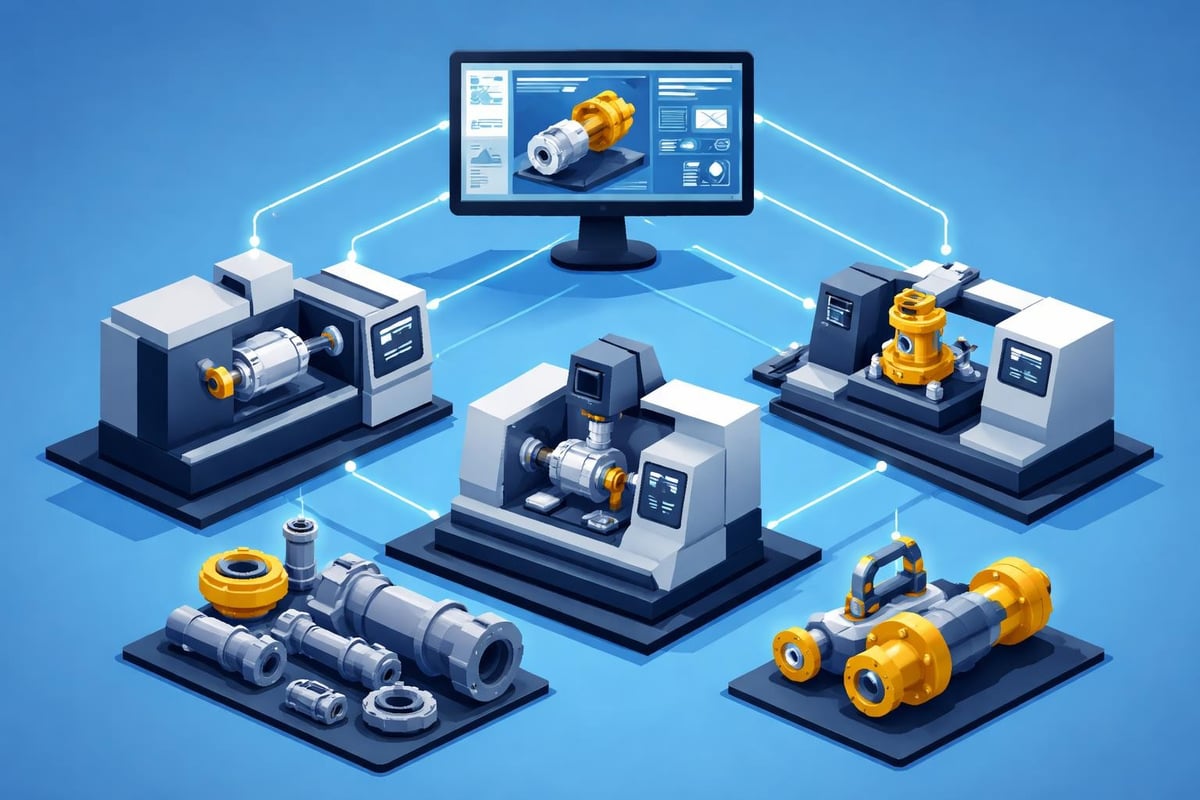
Today's machining fabrication facilities rely on sophisticated computer-controlled equipment. Five-axis machining centers can approach workpieces from multiple angles without repositioning, reducing setup times and improving accuracy. Research in neural networks for predicting machining cycle times demonstrates how data-driven approaches optimize production efficiency.
Software Integration
Computer-aided design (CAD) and computer-aided manufacturing (CAM) software bridge the gap between engineering concepts and physical production. These platforms allow manufacturers to simulate machining operations, detect potential collisions, and optimize tool paths before cutting any metal. The integration extends through enterprise resource planning (ERP) systems that coordinate scheduling, inventory, and quality control.
Critical Applications Across Industrial Sectors
Oil and Gas Industry Requirements
The energy sector demands machining fabrication services that meet rigorous specifications for pressure vessels, valve assemblies, and drilling equipment. Components must withstand extreme temperatures, corrosive environments, and high-pressure conditions. Oil and gas fabrication projects often require ASME code compliance and detailed documentation of material certifications.
Common Components:
- Custom valve bodies and bonnets
- Pump housings and impellers
- Pressure vessel heads and nozzles
- Flanges and pipe fittings
- Downhole tool assemblies
Aggregate and Mining Equipment
Aggregate processing facilities require durable equipment capable of handling abrasive materials. Machining fabrication produces wear-resistant components including crusher parts, conveyor assemblies, and screening equipment. The structural steel fabrication for mining equipment must balance strength with maintainability.
Material selection becomes critical in these applications. Hardened steel alloys, abrasion-resistant plates, and specialized coatings extend component life in punishing environments. Manufacturers must understand how different stainless steels respond to machining and fabrication to select appropriate grades for specific applications.
Recycling Industry Innovations
The recycling sector presents unique challenges for machining fabrication specialists. Equipment must process diverse materials while maintaining operational efficiency. Shredder hammers, sorting mechanism components, and baling press parts require precise machining followed by expert fabrication and assembly.
| Equipment Type | Machining Requirements | Fabrication Needs | Typical Materials |
|---|---|---|---|
| Shredder Components | High-precision balance | Heavy-duty welding | AR400, AR500 plate |
| Conveyor Systems | Bearing housing machining | Structural assembly | A36, A572 steel |
| Sorting Mechanisms | Tight tolerance shafts | Modular construction | Stainless 304, 316 |
| Baling Equipment | Hydraulic cylinder work | Frame fabrication | High-strength alloys |
Material Selection and Metallurgical Considerations
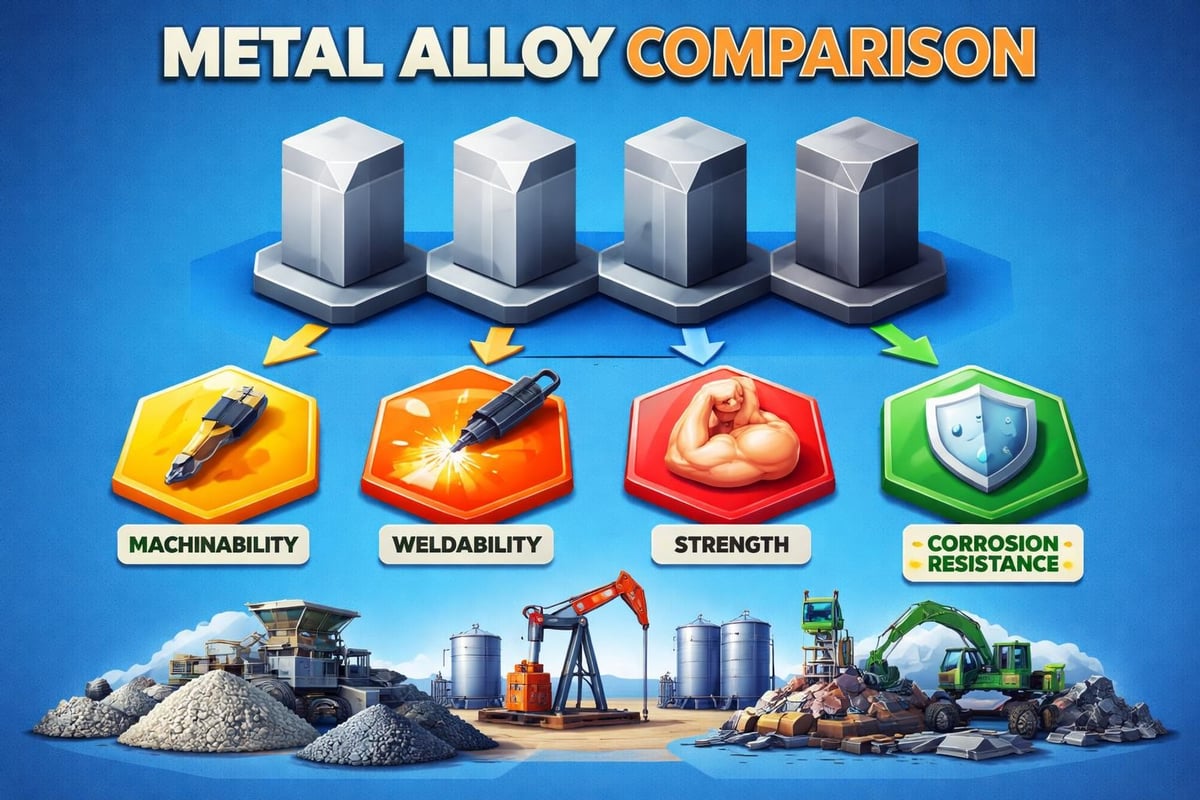
Selecting appropriate materials represents a critical decision in machining fabrication projects. The choice affects machinability, weldability, corrosion resistance, strength, and cost. Engineering teams must balance competing requirements while meeting project specifications.
Common Alloy Systems
Carbon Steels
Low-carbon grades (1008-1020) offer excellent weldability and formability but limited strength. Medium-carbon steels (1040-1050) provide better mechanical properties with slightly reduced weldability. High-carbon grades excel in wear resistance but require careful heat treatment during fabrication.
Stainless Steels
Austenitic grades like 304 and 316 deliver superior corrosion resistance and maintain toughness across temperature extremes. However, their work-hardening characteristics complicate machining operations. Ferritic and martensitic stainless steels offer different property combinations suitable for specific applications.
Aluminum Alloys
The 6061 and 7075 series aluminum alloys combine favorable strength-to-weight ratios with good machinability. These materials find applications in aerospace, transportation, and mobile equipment where weight reduction provides operational benefits.
Specialty Alloys
Nickel-based superalloys, titanium, and exotic materials serve extreme environments. These materials require specialized cutting tools, modified machining parameters, and controlled welding procedures. Their cost justifies use only when standard materials cannot meet performance requirements.
Quality Control and Precision Measurement
Maintaining dimensional accuracy and material integrity throughout machining fabrication processes requires comprehensive quality systems. Successful manufacturers implement multiple inspection points from raw material receipt through final assembly.
Dimensional Verification Methods
Coordinate Measuring Machines (CMM)
These computer-controlled inspection systems probe workpiece surfaces to verify dimensions against CAD models. CMM technology detects deviations measured in microns, ensuring critical features meet engineering tolerances.
Optical Comparators and Vision Systems
Non-contact measurement systems project magnified part profiles for comparison against master drawings. Modern vision systems automate this process, rapidly inspecting features and generating statistical process control data.
Traditional Tools with Modern Applications
Micrometers, calipers, height gauges, and dial indicators remain essential for shop-floor verification. Digital versions of these classic tools transmit measurements directly to quality management software, creating permanent records.
Non-Destructive Testing
Inspection Techniques:
- Visual examination under proper lighting
- Liquid penetrant testing for surface defects
- Magnetic particle inspection on ferrous materials
- Ultrasonic testing for internal discontinuities
- Radiographic examination of critical welds
- Hardness testing to verify heat treatment
Process Planning and Manufacturing Engineering
Successful machining fabrication projects begin with thorough planning. Manufacturing engineers analyze drawings, select processes, determine tooling requirements, and establish production sequences. This planning phase directly impacts product quality, lead times, and manufacturing costs.
Fixture Design and Workholding
Properly designed fixtures ensure consistent part positioning during machining operations. Research on fixture design for milling, shaping, and drilling emphasizes their critical role in precision and efficiency. Custom fixtures may represent significant investments but pay dividends through reduced setup times and improved repeatability.
Workholding Considerations:
- Accessibility for cutting tools and inspection
- Adequate clamping force without workpiece distortion
- Quick-change capabilities for batch production
- Integration with pallet systems for automation
- Modular components for setup flexibility
Tool Selection and Management
Cutting tool selection influences surface finish, dimensional accuracy, and production rates. Carbide inserts, high-speed steel cutters, and ceramic tools each offer advantages for specific materials and operations. Modern tool management systems track usage, predict wear, and schedule replacements to prevent quality issues.
Advanced Manufacturing Techniques
The machining fabrication field continuously evolves through technological innovation. Manufacturers who adopt advanced techniques gain competitive advantages in capability, efficiency, and quality.
Multi-Axis Machining
Five-axis machining centers can orient cutting tools at compound angles, producing complex geometries in single setups. This capability reduces handling, improves accuracy, and enables designs impossible with conventional three-axis equipment. Publications like Modern Machine Shop regularly feature advancements in multi-axis technology.
Hybrid Manufacturing
Combining additive manufacturing with traditional machining creates new possibilities. Directed energy deposition builds up material where needed, then precision machining achieves final dimensions and surface finishes. This hybrid approach reduces material waste and enables component repairs previously requiring complete replacement.
Electrical Discharge Machining
EDM processes remove material through controlled electrical sparks, enabling the creation of intricate cavities, sharp corners, and hardened materials that resist conventional cutting. Applications include mold cavities, wire cutting, and micro-flow channels on metallic components.
Environmental Considerations and Sustainable Practices
Modern machining fabrication operations must address environmental impacts while maintaining productivity. Regulatory compliance, waste reduction, and resource conservation represent both legal obligations and business opportunities.
Pollution Prevention Strategies
The EPA’s guidance on metal manufacturing and fabrication outlines pollution prevention opportunities. Effective strategies include:
- Implementing closed-loop coolant systems
- Recycling metal chips and turnings
- Substituting less hazardous chemicals
- Optimizing cutting parameters to reduce waste
- Capturing and filtering welding fumes
- Segregating waste streams for recycling
Energy Efficiency
Machine tool energy consumption varies significantly based on equipment age, duty cycle, and operating parameters. Modern servo-driven systems reduce energy use during idle periods. Industrial machinery refurbishment and maintenance programs extend equipment life while incorporating energy-saving updates.
Workforce Development and Skill Requirements
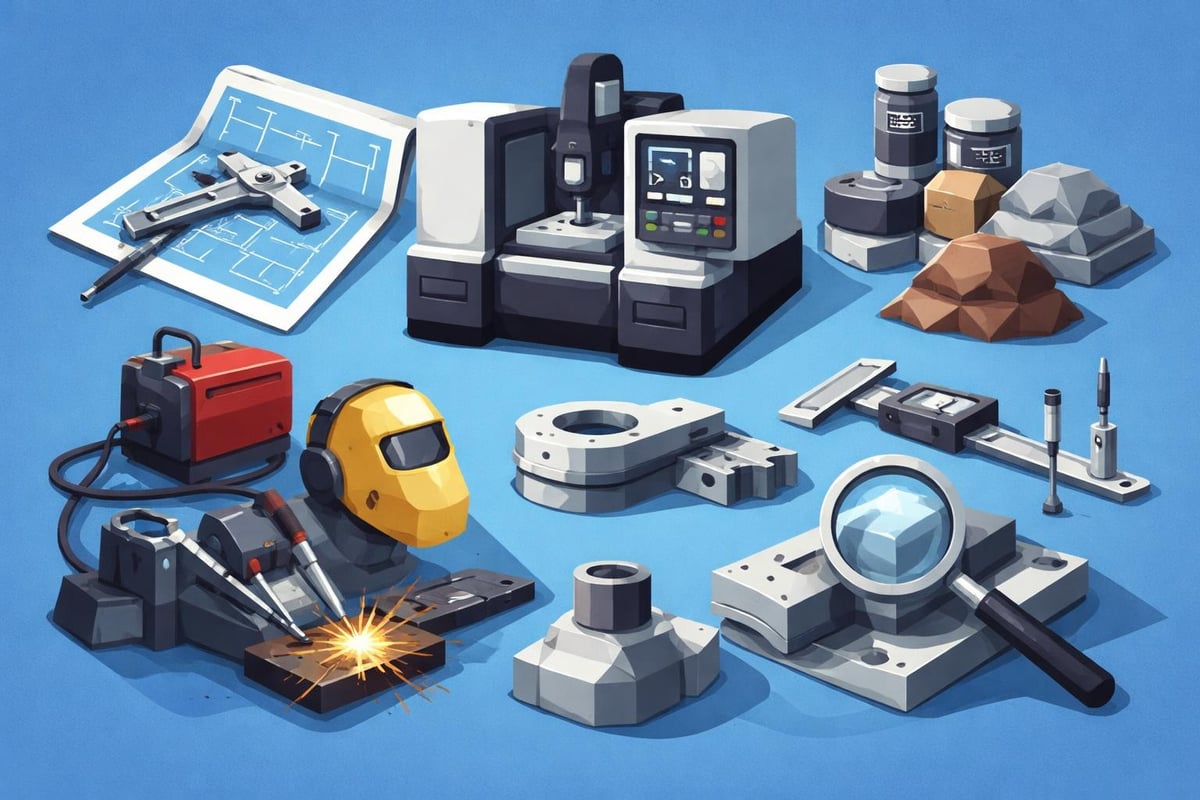
The machining fabrication industry faces ongoing challenges recruiting and retaining skilled workers. Successful operations invest in training programs that develop both technical expertise and problem-solving capabilities.
Essential Competencies
Technical Skills:
- Blueprint reading and geometric dimensioning
- CNC programming and operation
- Manual machining fundamentals
- Welding and fabrication services techniques
- Metrology and inspection methods
- Material properties and selection
Soft Skills:
- Communication with engineering teams
- Time management and prioritization
- Attention to detail and quality focus
- Continuous improvement mindset
- Safety awareness and compliance
Certification and Standards
Industry certifications validate worker competencies and ensure consistent quality. Welding certifications follow AWS D1.1 structural or ASME Section IX pressure vessel codes. ASME code welding services for pressure piping require documented welder qualifications and procedure specifications.
CNC machining certifications from organizations like NIMS (National Institute for Metalworking Skills) demonstrate proficiency in programming, setup, and operation. These credentials provide portable proof of capabilities as workers advance their careers.
Project Management and Customer Collaboration
Successful machining fabrication projects require effective communication between customers, engineering teams, and production personnel. Clear specifications, realistic timelines, and collaborative problem-solving ensure projects meet expectations.
Request for Quote Process
| Stage | Customer Responsibilities | Manufacturer Responsibilities |
|---|---|---|
| Initial Inquiry | Provide drawings, quantities, timeline | Review feasibility, identify clarifications |
| Technical Review | Answer questions, supply material specs | Assess capabilities, recommend alternatives |
| Quote Development | Evaluate proposals, compare options | Calculate costs, define deliverables |
| Award | Issue purchase order, provide deposits | Confirm schedule, assign resources |
| Production | Approve samples, monitor progress | Execute processes, communicate updates |
| Delivery | Inspect quality, process payment | Ship product, provide documentation |
Those seeking custom fabrication quotes should provide complete information including CAD files, material specifications, quantity requirements, and delivery timelines.
Design for Manufacturability
Early collaboration between design engineers and manufacturing specialists prevents costly issues. Design for manufacturability reviews identify opportunities to:
- Simplify geometries without compromising function
- Standardize features to reduce tooling costs
- Select materials balancing performance and machinability
- Minimize secondary operations through clever part design
- Incorporate inspection access into assemblies
Industry Standards and Regulatory Compliance
Machining fabrication operations must navigate complex regulatory landscapes. Standards ensure safety, quality, and interoperability while providing frameworks for specification and inspection.
Key Standards Organizations
ASME (American Society of Mechanical Engineers)
ASME codes govern pressure vessel design, construction, and inspection. Section VIII covers unfired pressure vessels while Section IX addresses welding and brazing qualifications. Compliance requires detailed documentation, qualified personnel, and authorized inspector involvement.
AWS (American Welding Society)
AWS standards define welding processes, procedures, and qualifications. The D1.1 structural welding code applies to building and bridge construction while specialty codes address pipelines, sheet metal, and other applications.
ISO and ANSI
International and national standards cover topics from dimensional tolerances (ISO 2768, ASME Y14.5) to quality management systems (ISO 9001). Manufacturing standards for CNC machining ensure consistent interpretation of engineering requirements.
Documentation Requirements
Traceability Records:
- Material test reports and certifications
- Welding procedure specifications (WPS)
- Procedure qualification records (PQR)
- Welder performance qualifications
- Non-destructive examination reports
- Dimensional inspection data
- Heat treatment charts
- Final inspection certificates
Field Services and On-Site Capabilities
While shop-based machining fabrication offers controlled environments and optimized equipment, many projects require field services. Field machining brings precision capabilities to customer locations, minimizing equipment downtime and transportation challenges.
Portable Machining Equipment
Modern portable line boring machines, pipe beveling systems, and flange facers deliver shop-quality results at remote locations. These specialized tools enable repairs and modifications without removing massive components from service positions.
Field Service Applications:
- In-situ bearing housing repairs
- Pipeline tie-in machining and welding
- Equipment alignment and shimming
- Emergency breakdown response
- Planned maintenance outages
Mobile Welding and Fabrication
Field welding requires adaptable professionals who work safely in diverse environments. Whether performing structural steel fabrication at construction sites or emergency repairs at processing facilities, field welders maintain quality standards despite challenging conditions.
Cost Management and Value Engineering
Machining fabrication projects involve significant investments in materials, labor, and overhead. Understanding cost drivers enables informed decisions that optimize value without compromising quality.
Primary Cost Components
Material Costs
Raw material typically represents 30-50% of total project cost. Strategic sourcing, inventory management, and yield optimization reduce material expenses. Value engineering may identify alternative materials or sizes that meet performance requirements at lower cost.
Labor and Overhead
Skilled labor commands premium wages justified by expertise and productivity. Efficient process planning minimizes non-productive time while appropriate tooling and fixtures reduce per-piece labor content. Overhead allocation covers facility costs, equipment depreciation, and administrative functions.
Secondary Operations
Heat treatment, surface finishing, coating, and assembly operations add value but increase cost. Designers should specify only necessary secondary processes while manufacturers should optimize these operations for efficiency.
Make vs. Buy Decisions
Companies must decide which capabilities to maintain internally versus outsourcing. Industrial and manufacturing operations benefit from strategic partnerships with specialized machining fabrication providers. This approach accesses expertise and equipment without capital investments while maintaining focus on core competencies.
Trends Shaping the Future
The machining fabrication industry continues evolving through technological advancement, changing workforce demographics, and shifting market demands. Forward-thinking organizations position themselves to leverage emerging opportunities.
Automation and Robotics
Collaborative robots (cobots) work alongside human operators, handling repetitive tasks while skilled workers focus on complex operations. Automated material handling, robotic welding cells, and lights-out machining extend productive capacity without proportional labor increases.
Industry 4.0 Integration
Smart manufacturing concepts connect machines, systems, and people through industrial internet of things (IoT) technologies. Real-time data collection enables predictive maintenance, process optimization, and quality assurance. Digital twins simulate operations before physical production begins.
Additive-Subtractive Hybrid Approaches
Combining 3D printing with conventional machining creates new possibilities for complex geometries, material combinations, and rapid prototyping. Research in machine learning for optimizing laser machining processes demonstrates how artificial intelligence enhances advanced manufacturing techniques.
Nearshoring and Domestic Manufacturing
Supply chain disruptions have renewed interest in domestic manufacturing capacity. Companies throughout the Western United States seek reliable welding fabrication shops capable of supporting operations without extended lead times or international logistics complications.
Machining fabrication remains fundamental to industrial manufacturing, combining precision machining with expert fabrication to create components that drive economic activity across multiple sectors. Success requires technical expertise, quality systems, and collaborative partnerships between manufacturers and their customers. LTJ Industrial Services delivers comprehensive machining fabrication capabilities throughout the Western United States, supporting commercial and industrial clients in oil and gas, aggregate, recycling, and manufacturing sectors with shop and field services that keep operations running efficiently.