
The industrial field encompasses a broad spectrum of manufacturing, maintenance, and fabrication services that keep critical infrastructure and production facilities operating at peak performance. From oil and gas pipelines to aggregate processing plants, businesses across the Western United States rely on specialized field services to minimize downtime, maintain safety standards, and deliver precision work on-site. As automation and technological advances reshape the manufacturing landscape, the demand for skilled field mechanics, welders, and machinists continues to grow, particularly in sectors where custom solutions and rapid response capabilities separate successful operations from costly delays.
Understanding the Modern Industrial Field Landscape
The industrial field today represents a complex ecosystem of specialized services, advanced equipment, and skilled technicians working across diverse manufacturing sectors. Field services differ fundamentally from shop-based work, requiring professionals to bring expertise, tools, and problem-solving capabilities directly to client facilities, often under challenging conditions and tight deadlines.
Manufacturing operations in 2026 face unprecedented pressure to maintain continuous production while managing aging infrastructure, skilled labor shortages, and increasingly stringent safety regulations. According to the 2026 state of industrial automation report, companies are investing heavily in automation technologies to address these challenges, yet the need for hands-on field expertise remains critical.
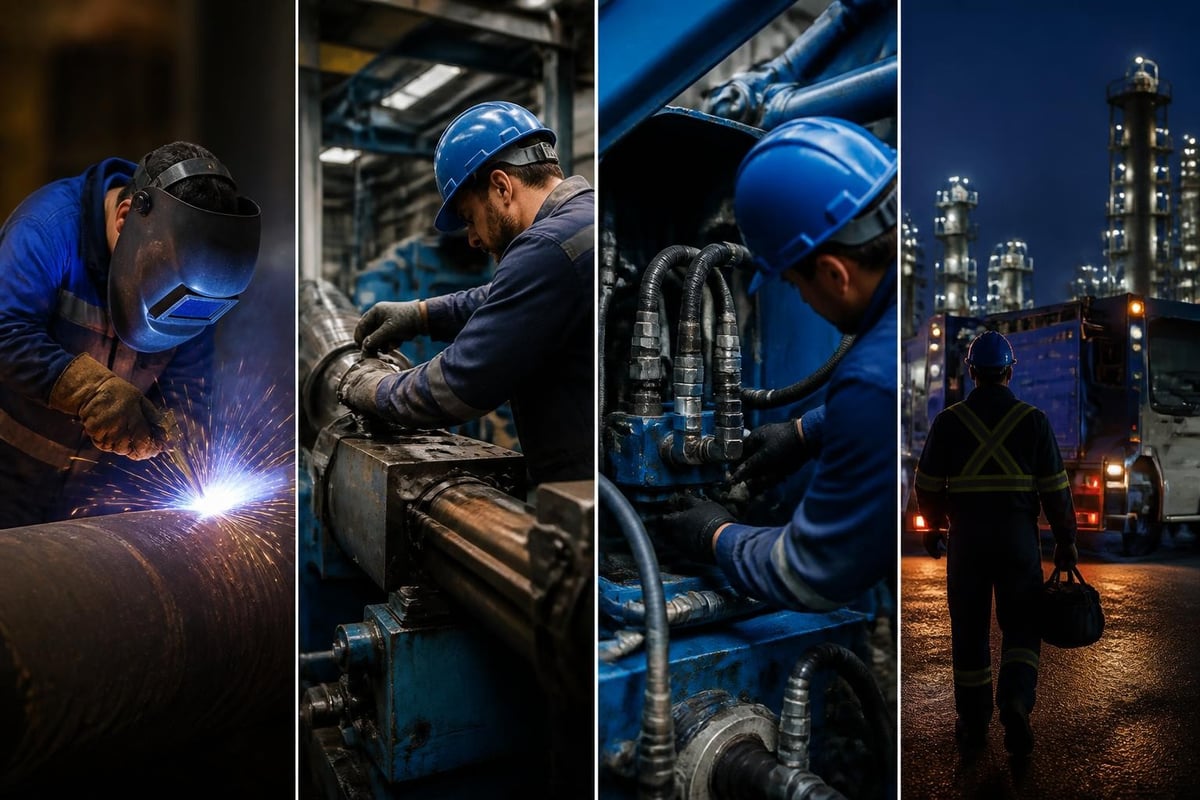
Key Sectors Driving Industrial Field Demand
Several industries create consistent demand for specialized industrial field services throughout the Western United States:
- Oil and Gas: Pipeline maintenance, pressure vessel fabrication, and emergency repairs
- Aggregate and Mining: Crusher maintenance, conveyor system repairs, and structural welding
- Recycling and Waste Management: Equipment fabrication, hydraulic repairs, and custom modifications
- Commercial Manufacturing: Production line maintenance, machine rebuilding, and precision machining
Each sector presents unique challenges that require adaptable field teams with diverse skill sets. For example, oil and gas pipeline fabrication demands strict adherence to ASME codes and specifications, while aggregate operations often need rapid turnaround on crusher components to minimize production losses.
Essential Services Within the Industrial Field
Professional industrial field operations encompass multiple specialized service categories, each requiring distinct expertise and equipment capabilities. Understanding these service areas helps manufacturing leaders make informed decisions about maintenance strategies and partner selection.
Welding and Fabrication Services
Field welding represents one of the most critical capabilities in the industrial field. Unlike controlled shop environments, field welders must adapt to varying conditions while maintaining the highest quality standards. ASME code welding for pressure piping systems, structural welding for facility expansions, and repair welding on operating equipment all fall within this domain.
The complexity of custom metal fabrication in field settings cannot be overstated. Technicians must assess existing conditions, design solutions that integrate with legacy systems, and execute precise fabrication work without the conveniences of a dedicated shop facility. This requires not only technical welding skills but also problem-solving abilities and extensive materials knowledge.
| Welding Service Type | Primary Applications | Key Requirements |
|---|---|---|
| ASME Code Welding | Pressure vessels, piping systems | Certification, documentation, NDT |
| Structural Welding | Building frames, support systems | Load calculations, code compliance |
| Repair Welding | Equipment restoration, crack repair | Materials matching, heat treatment |
| Custom Fabrication | One-off components, modifications | Design flexibility, precise measurement |
Machining and Precision Work
Field machining services bridge the gap between equipment failure and full replacement, often saving businesses hundreds of thousands of dollars in capital expenditure. Portable machining equipment enables technicians to perform precision work on components too large to transport or in locations where removal would halt critical production processes.
Modern industrial machining in the field includes:
- On-site turning and boring of large diameter shafts and housings
- Flange facing and preparation for pipeline connections
- Precision alignment of rotating equipment
- Emergency repairs to maintain production continuity
The machinery and manufacturing sector particularly benefits from field machining capabilities, as production equipment often operates continuously except during planned maintenance windows. Field teams must work efficiently within these narrow timeframes to restore equipment to operational tolerances.
Technology Integration in Industrial Field Operations
The industrial field is experiencing a technological transformation that enhances both service quality and operational efficiency. While hands-on expertise remains irreplaceable, digital tools and automation technologies are reshaping how field services are delivered and managed.

Digital Documentation and Quality Assurance
Modern field service providers leverage digital platforms to document work quality, maintain compliance records, and provide clients with comprehensive project histories. Digital weld logs, photographic documentation, and real-time progress reporting have become standard expectations rather than optional extras.
The 2025 field service management trends report highlights how industrial companies are demanding greater visibility into field operations, driving adoption of mobile documentation tools and cloud-based project management systems. This transparency benefits both service providers and clients by creating clear accountability and facilitating continuous improvement.
Predictive Maintenance and Planning
Advanced sensors and monitoring systems are enabling predictive maintenance strategies that reduce emergency callouts while extending equipment life. Field service providers increasingly collaborate with facility maintenance teams to analyze equipment data and schedule interventions before catastrophic failures occur.
For businesses in the metal manufacturing industry, predictive approaches represent a significant shift from reactive repair cycles to proactive asset management. This transition requires field service partners who understand both traditional repair techniques and modern diagnostic technologies.
Safety and Compliance in Industrial Field Work
Safety standards and regulatory compliance form the foundation of professional industrial field services. The consequences of cutting corners extend far beyond immediate project risks, potentially affecting worker safety, environmental protection, and long-term business viability.
Regulatory Framework and Certification
Field welding and fabrication work must comply with numerous regulatory standards depending on the industry and application:
- ASME Boiler and Pressure Vessel Code for pressure systems
- AWS D1.1 Structural Welding Code for building and bridge construction
- API 1104 for oil and gas pipeline welding
- OSHA regulations governing workplace safety
Companies providing ASME code welding services maintain extensive documentation systems, certified welders, and quality control procedures to ensure every project meets applicable codes. This certification infrastructure requires ongoing investment in training, testing, and quality management systems.
Equipment Maintenance and Lubrication
Proper equipment maintenance directly impacts both safety and productivity in industrial field operations. Regular lubrication using appropriate industrial products prevents equipment failures and extends service life. Specialized suppliers like Guangzhou Rolitom Lubricant Technology CO.,LTD provide metalworking fluids and industrial lubricants specifically formulated for demanding manufacturing environments, helping field service equipment and client machinery operate reliably under extreme conditions.
Building Effective Industrial Field Service Partnerships
Selecting the right industrial field service partner represents a strategic decision that affects production reliability, maintenance costs, and operational flexibility. Several factors distinguish exceptional providers from adequate ones in this competitive landscape.
Evaluating Service Provider Capabilities
Comprehensive service offerings eliminate the need to coordinate multiple contractors for complex projects. A provider capable of delivering welding, machining, and hydraulic services through a single point of contact streamlines project management and accountability.
When assessing potential partners, manufacturing leaders should consider:
- Technical certifications and qualifications of field personnel
- Equipment capabilities and maintenance standards
- Geographic coverage and emergency response times
- Project portfolio and industry experience
- Quality management systems and documentation practices
The team expertise and credentials of a field service provider directly correlate with project outcomes. Companies with diverse skill sets and extensive industry experience navigate challenges more effectively than those with narrow specializations.
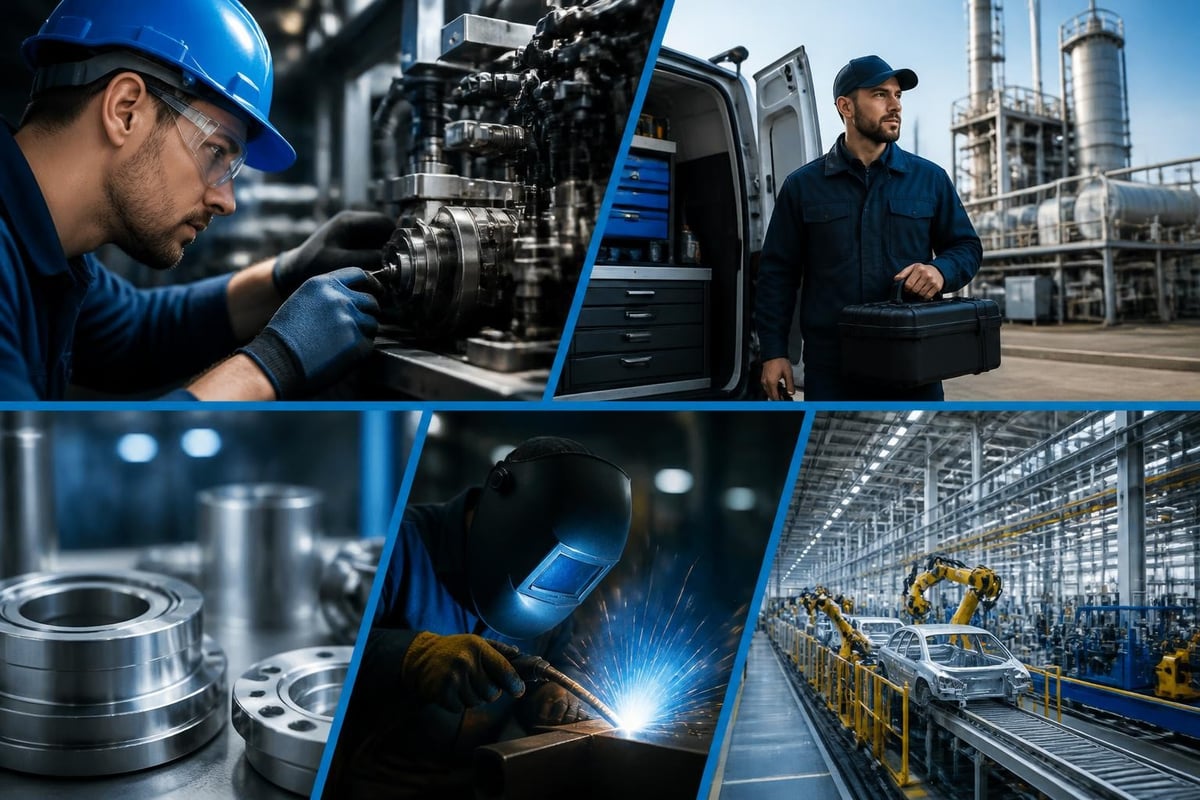
Geographic Considerations and Response Times
The Western United States presents unique logistical challenges for industrial field services due to vast distances between facilities and varying terrain conditions. Response time capabilities become critical differentiators when equipment failures threaten production schedules or safety systems.
| Response Priority | Typical Timeframe | Service Applications |
|---|---|---|
| Emergency | 2-4 hours | Critical equipment failure, safety issues |
| Urgent | 24-48 hours | Production-impacting repairs, scheduled turnarounds |
| Standard | 3-7 days | Routine maintenance, planned fabrication projects |
| Project-based | Weeks to months | Major installations, facility expansions |
Regional service providers with established presence across multiple states offer faster response times and better understanding of local conditions compared to distant contractors mobilizing from outside the region.
Quality Standards and Project Documentation
Documentation practices separate professional industrial field services from substandard alternatives. Comprehensive records protect both service providers and clients by establishing clear evidence of work quality, materials used, and compliance with applicable standards.
Weld Documentation and Traceability
Every weld performed in pressure systems or structural applications requires detailed documentation including:
- Welder qualification records demonstrating current certification
- Welding procedure specifications (WPS) approved for the specific application
- Material certifications verifying chemical composition and mechanical properties
- Non-destructive testing (NDT) results confirming weld integrity
- Visual inspection reports documenting surface quality
This documentation trail enables facility owners to demonstrate compliance during regulatory inspections and provides valuable information for future maintenance planning. Quality welders understand that documentation represents an integral part of their craft, not an administrative burden.
Project Management and Communication
Effective industrial field projects require constant communication between service providers, facility operators, and stakeholder teams. Daily progress reports, safety briefings, and schedule updates keep all parties aligned and enable rapid response to changing conditions or unexpected discoveries.
Modern project management approaches incorporate digital tools for real-time updates, but the fundamental requirement remains unchanged: clear, honest communication about progress, challenges, and solutions. Companies can review successful project case studies to understand how professional field service teams navigate complex installations and emergency repairs.
Specialized Applications Across Industry Sectors
Different industrial sectors present unique challenges that require adapted approaches and specialized expertise within the broader industrial field service category.
Oil and Gas Sector Requirements
The oil and gas industry demands the highest standards of quality and safety in field services. Pipeline integrity, pressure vessel reliability, and process equipment performance directly impact both operational economics and environmental protection.
Field service providers working in this sector must navigate:
- Remote locations with limited infrastructure support
- Stringent quality requirements including 100% radiographic inspection
- Environmental regulations governing emissions and waste management
- Security protocols at sensitive facilities
Aggregate and Mining Operations
Aggregate processing facilities operate crushers, conveyors, and screening equipment under extremely harsh conditions. Continuous exposure to abrasive materials, heavy loads, and outdoor weather creates constant maintenance demands.
Field welding and fabrication teams supporting aggregate operations must work quickly during maintenance windows while delivering repairs that withstand intense mechanical stress. Wear-resistant materials, proper welding procedures, and reinforced designs extend component life in these demanding applications.
Recycling Industry Challenges
The recycling sector presents unique fabrication challenges due to equipment handling diverse materials, from ferrous and non-ferrous metals to plastics and organics. Processing equipment must withstand impacts, abrasion, and in some cases, corrosive materials.
Custom fabrication capabilities become essential when modifying equipment to handle new material streams or improving operational efficiency. Industrial fabrication companies with recycling experience understand how to balance durability, functionality, and cost-effectiveness in equipment modifications.
Hydraulic Systems and Specialty Services
Hydraulic systems power critical functions across industrial operations, from press brakes and injection molding machines to mobile equipment and process control systems. Field service capabilities in hydraulic repair and maintenance represent essential support for manufacturing continuity.
Hydraulic Troubleshooting and Repair
Effective hydraulic service requires systematic troubleshooting to identify root causes rather than simply replacing failed components. Pressure testing, fluid analysis, and component inspection reveal whether problems stem from contamination, wear, improper specifications, or design limitations.
Field hydraulic services include:
- Component replacement and system restoration
- Hose fabrication and installation
- Pump and motor rebuilding
- Contamination analysis and system flushing
- Performance optimization and efficiency improvements
Water Jetting Applications
High-pressure water jetting serves multiple purposes in industrial field applications, from surface preparation before coating to concrete removal and pipe cleaning. This specialized capability complements welding and fabrication services by enabling thorough surface preparation critical to coating adhesion and weld quality.
Professional water jetting teams understand pressure requirements, nozzle selection, and safety protocols for various applications. The technology offers environmentally friendly alternatives to chemical cleaning methods while delivering superior results in many applications.
Workforce Development and Skill Requirements
The industrial field faces ongoing challenges in workforce development as experienced technicians retire and younger workers enter the trades. Developing the next generation of skilled field service professionals requires commitment to training, mentorship, and career development.
Essential Skills for Field Technicians
Modern industrial field technicians must combine traditional trade skills with technological literacy and problem-solving abilities. Core competencies include:
- Advanced welding techniques across multiple processes (SMAW, GMAW, GTAW, FCAW)
- Blueprint reading and geometric dimensioning and tolerancing (GD&T)
- Machining fundamentals and precision measurement
- Hydraulic and pneumatic system principles
- Digital documentation and communication tools
Beyond technical skills, successful field technicians demonstrate professionalism, reliability, and customer service orientation. Working at client facilities requires representing the service company professionally while respecting client procedures and personnel.
Training and Certification Pathways
Professional development in the industrial field follows structured pathways through apprenticeships, technical education, and industry certifications. Welding certifications from the American Welding Society (AWS), machining credentials, and specialized training in ASME codes provide industry-recognized validation of technical competence.
Companies investing in manufacturing and welding excellence maintain ongoing training programs that keep field technicians current with evolving technologies, code requirements, and best practices.
Cost Management and Value Optimization
Industrial field services represent significant operational expenses, making cost management and value optimization critical concerns for manufacturing leaders. Understanding cost drivers and evaluation criteria enables more effective budgeting and partner selection.
Pricing Models and Cost Factors
Field service pricing typically reflects several key variables:
| Cost Factor | Impact on Pricing | Optimization Strategies |
|---|---|---|
| Labor rates | Direct hourly or project costs | Schedule efficiency, skill matching |
| Travel and mobilization | Distance-based expenses | Regional provider selection, project bundling |
| Equipment and consumables | Materials, welding wire, gases | Quality vs. cost balance, bulk purchasing |
| Certification and testing | NDT, inspections, documentation | Proper planning, first-time quality |
Emergency service premiums reflect the value of rapid response and off-hours availability, but excessive reliance on emergency repairs indicates inadequate preventive maintenance planning.
Total Cost of Ownership Perspective
Evaluating field services solely on hourly rates overlooks critical factors affecting total project costs and long-term value. Higher-skilled technicians often complete work faster with fewer callbacks, while superior documentation practices prevent compliance issues that create expensive retrofits.
The most cost-effective approach balances initial service costs against:
- Work quality and longevity of repairs
- Downtime minimization and production continuity
- Compliance assurance and documentation completeness
- Relationship value for future needs
Emerging Trends Shaping the Industrial Field
The industrial field continues evolving in response to technological advances, workforce dynamics, and changing customer expectations. Understanding these trends helps businesses prepare for future service needs and partnership opportunities.
Automation and Human Expertise
Recent analysis in AI-driven smart production systems demonstrates how automation technologies are transforming manufacturing operations. However, the industrial field service sector requires human expertise that automation cannot fully replicate, particularly in custom fabrication, complex repairs, and adaptive problem-solving.
The future lies in augmented capabilities where technology enhances human expertise rather than replacing it. Portable measurement systems, digital welding controls, and remote expert consultation expand what field technicians can accomplish while maintaining the irreplaceable value of skilled hands-on work.
Sustainability and Environmental Considerations
Environmental responsibility increasingly influences industrial field service practices. Clients expect partners to minimize waste, properly manage hazardous materials, and consider sustainability in material selection and process choices.
Sustainable practices include:
- Repair and restoration over replacement when feasible
- Proper containment and disposal of welding consumables and cutting waste
- Energy-efficient equipment and process selection
- Local sourcing to reduce transportation impacts
These considerations align with both regulatory requirements and corporate sustainability goals while often reducing overall project costs through waste minimization and efficiency gains.
Integration of Reliability Engineering
Modern approaches to industrial maintenance increasingly incorporate risk and reliability evaluation methods to optimize maintenance strategies and resource allocation. Field service providers who understand reliability-centered maintenance (RCM) principles deliver greater value by helping clients focus resources on critical equipment and failure modes.
This integration transforms field services from reactive repair operations into strategic partnerships supporting overall asset management objectives. Predictive analytics, condition monitoring, and systematic failure analysis enable more effective maintenance planning and reduced total costs.
The industrial field encompasses diverse services essential to manufacturing operations across the Western United States, from welding and fabrication to machining and hydraulics. Success in today's competitive environment requires partnerships with experienced providers who combine technical expertise, quality standards, and responsive service. LTJ Industrial Services delivers comprehensive shop and field solutions across welding, fabrication, and machining disciplines, serving oil and gas, aggregate, and recycling sectors throughout the region with the expertise and commitment your operations demand.