The backbone of American industry rests on the seamless integration of advanced equipment, skilled craftsmanship, and technological innovation. From the oil fields of the Western United States to aggregate processing facilities and recycling operations, machinery and manufacturing operations determine the productivity, safety, and profitability of commercial enterprises. Understanding the critical relationship between equipment performance, fabrication quality, and maintenance protocols enables businesses to maximize uptime while minimizing operational risks in today's competitive industrial landscape.
The Evolution of Industrial Equipment and Processes
Modern machinery and manufacturing have transformed dramatically over the past two decades, driven by automation, data analytics, and precision engineering. Industrial facilities now rely on sophisticated equipment that demands equally sophisticated maintenance and fabrication support. The commercial sectors serving recycling, aggregate, and energy extraction require robust solutions that withstand harsh operating conditions while maintaining tight tolerances.
Manufacturing operations today face unprecedented pressure to improve efficiency while reducing downtime. Equipment failures can cost thousands of dollars per hour in lost productivity, making preventive maintenance and rapid repair capabilities essential business functions. Data-driven approaches to machinery fault detection have become increasingly sophisticated, allowing maintenance teams to identify potential failures before they occur.
Equipment Categories Driving Industrial Success
Different industrial sectors require specialized machinery designed for specific applications and environments. Understanding these categories helps businesses make informed decisions about equipment selection, maintenance strategies, and fabrication needs.
Primary Industrial Equipment Types:
- Processing machinery: Crushers, screens, conveyors, and separation equipment for aggregate and recycling operations
- Power generation systems: Hydraulic pumps, motors, and drive systems that power industrial processes
- Material handling equipment: Cranes, loaders, and transport systems moving raw materials and finished products
- Fabrication tools: Lathes, mills, welding equipment, and precision machining centers
- Auxiliary systems: Cooling systems, lubrication equipment, and control mechanisms
The oil and gas sector presents unique challenges requiring specialized pipeline fabrication contractors who understand the demanding specifications of energy infrastructure. These projects often involve custom welding applications, pressure vessel fabrication, and field installation services that must meet stringent safety and performance standards.
Safety Standards and Compliance in Manufacturing Operations
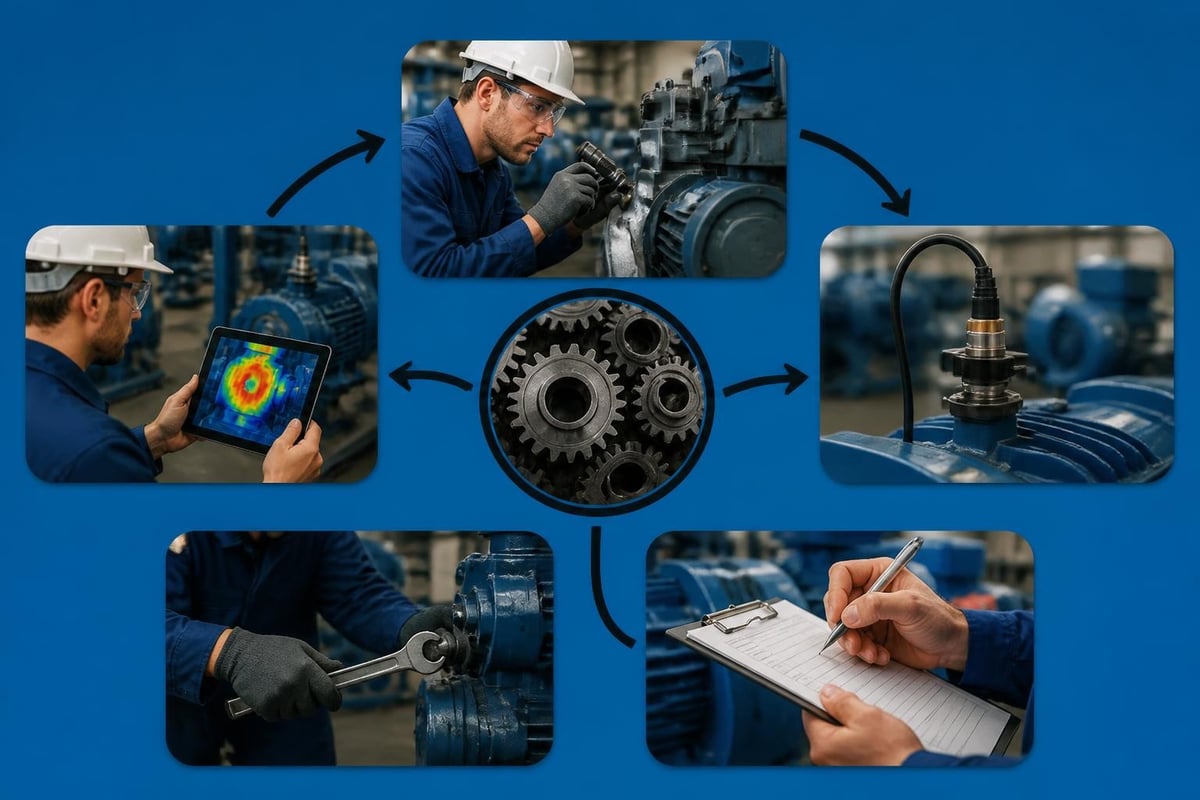
Safety remains paramount in machinery and manufacturing environments where heavy equipment, high pressures, and moving parts create inherent risks. Regulatory compliance protects workers while reducing liability exposure for business owners. The ANSI B11 machine guarding standards provide comprehensive guidelines for protecting operators from mechanical hazards.
Implementing proper safety protocols requires understanding both federal regulations and industry best practices. Manufacturing facilities must establish comprehensive safety programs that address equipment-specific hazards while promoting a culture of continuous improvement.
Critical Safety Components
| Safety Element | Application | Benefit |
|---|---|---|
| Machine Guards | Physical barriers on rotating equipment | Prevents contact injuries |
| Lockout/Tagout | Energy isolation procedures | Eliminates unexpected startup |
| PPE Requirements | Job-specific protective equipment | Reduces injury severity |
| Training Programs | Operator certification and refreshers | Improves hazard awareness |
| Inspection Protocols | Regular equipment safety audits | Identifies developing risks |
Essential Safety Practices:
- Conduct daily pre-shift equipment inspections
- Maintain comprehensive lockout/tagout procedures
- Provide job-specific safety training for all operators
- Document all incidents and near-misses
- Implement corrective actions promptly
- Review safety performance metrics monthly
Welding operations present specific hazards requiring specialized safety measures. Industrial welding companies must ensure proper ventilation, fire prevention systems, and protective equipment for welders working with various materials and processes. The combination of heat, sparks, fumes, and electrical hazards demands rigorous safety protocols.
Precision Machining and Fabrication Excellence
Quality manufacturing outcomes depend on precision machining capabilities that deliver components to exact specifications. Whether producing replacement parts for aging equipment or fabricating custom assemblies for new installations, machining accuracy directly impacts equipment performance and longevity. Metal fabrication and welding services form the foundation of industrial manufacturing support.
Modern machining centers utilize computer numerical control (CNC) technology to achieve tolerances measured in thousandths of an inch. This precision enables manufacturers to produce interchangeable parts, reduce assembly time, and improve overall equipment reliability.
Machining Processes for Industrial Applications
Different machining operations serve specific manufacturing needs, from rough material removal to final surface finishing. Understanding these processes helps businesses specify requirements accurately and evaluate fabrication capabilities.
- Turning operations: Creating cylindrical components like shafts, bushings, and sleeves on lathes
- Milling processes: Producing flat surfaces, slots, and complex profiles using rotary cutters
- Drilling and boring: Creating precise holes for fasteners, bearings, and alignment
- Grinding: Achieving final dimensions and superior surface finishes on hardened materials
- Welding fabrication: Joining metal components through various fusion and solid-state processes
The metal manufacturing industry continues evolving with advanced materials requiring specialized machining approaches. High-strength alloys, wear-resistant steels, and corrosion-resistant materials demand appropriate tooling, cutting speeds, and coolant systems to achieve optimal results.
Field Service Capabilities and On-Site Solutions
Equipment downtime costs money every minute operations remain halted. Field service capabilities bring machinery and manufacturing expertise directly to job sites, minimizing transportation logistics and accelerating repair timelines. Mobile welding, machining, and hydraulic services enable rapid response to equipment failures in remote locations.
Machinery orders continue rising as automation grows, reflecting increased industrial investment across multiple sectors. This growth creates corresponding demand for maintenance and repair services that keep equipment operating at peak performance.
Mobile Service Advantages
Benefits of Field Service Programs:
- Eliminates equipment transportation costs and delays
- Reduces production downtime during repairs
- Enables immediate assessment of failure modes
- Provides on-site troubleshooting and diagnostics
- Allows repairs in equipment's operating environment
- Maintains production continuity during maintenance
Field welding presents unique challenges compared to shop-based operations. Environmental conditions, accessibility constraints, and power availability all influence process selection and execution. Experienced field technicians adapt techniques to site-specific conditions while maintaining weld quality and structural integrity.
Hydraulic Systems in Manufacturing Operations
Hydraulic power transmission systems drive countless industrial processes, from material handling to precision positioning. These systems convert fluid pressure into mechanical force, enabling equipment to perform heavy-duty tasks with precise control. Machinery and manufacturing operations rely heavily on hydraulic components that require regular maintenance and occasional repair.
Understanding hydraulic principles helps operators identify developing problems before catastrophic failures occur. Common symptoms like slow cycle times, overheating, or excessive noise often indicate specific component issues that trained technicians can diagnose and correct.
| Hydraulic Component | Function | Common Failure Modes |
|---|---|---|
| Pumps | Generate fluid flow and pressure | Wear, cavitation, seal failure |
| Cylinders | Convert pressure to linear motion | Seal leaks, rod damage, scoring |
- Valves | Control flow direction and pressure | Contamination, wear, sticking |
| Motors | Convert pressure to rotary motion | Bearing failure, seal leaks |
| Hoses/Fittings | Transmit fluid between components | Age deterioration, abrasion |
Hydraulic Maintenance Essentials:
- Monitor fluid temperature and viscosity
- Maintain proper filtration to control contamination
- Inspect hoses and connections for leaks or damage
- Check pressure settings and relief valve operation
- Analyze fluid samples for wear particles
- Replace filters according to manufacturer specifications
- Document system performance and maintenance activities
Water Jetting Technology for Surface Preparation
High-pressure water jetting provides effective surface preparation and cleaning for machinery and manufacturing applications. This process removes coatings, scale, rust, and contaminants without introducing heat or mechanical stress that might damage substrate materials. The technology proves particularly valuable when preparing surfaces for welding, coating, or inspection.
Water jetting systems operate at pressures ranging from 10,000 to 40,000 PSI, with ultra-high-pressure systems reaching 55,000 PSI or higher. These pressure levels enable operators to remove even tenacious coatings while adjusting parameters to protect delicate underlying surfaces.
Applications Across Industrial Sectors
Different industries utilize water jetting for specific applications that leverage the technology's unique capabilities. From coating removal to concrete surface preparation, the versatility of water jetting makes it valuable across diverse manufacturing environments.
- Removing industrial coatings before repainting equipment
- Cleaning heat exchangers and process vessels
- Preparing steel surfaces for welding operations
- Cutting and demolition work in confined spaces
- Removing concrete for repair or modification
- Cleaning production equipment between product runs
Predictive Maintenance and Equipment Monitoring
Advanced monitoring systems transform machinery and manufacturing maintenance from reactive repairs to predictive interventions. Research on multi-fault diagnosis in industrial rotating machines demonstrates how data-driven approaches identify developing problems weeks or months before failures occur. This capability allows businesses to schedule maintenance during planned downtime rather than responding to unexpected breakdowns.
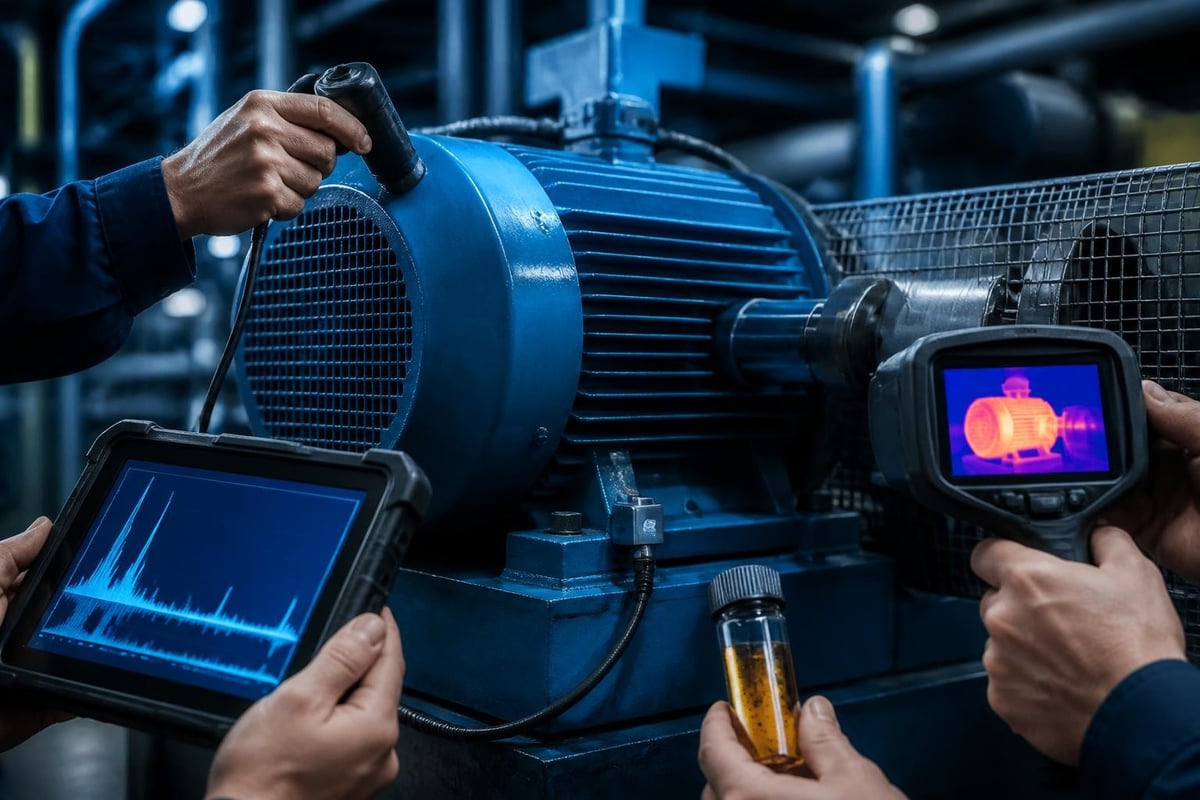
Vibration analysis, thermal imaging, and oil analysis provide windows into equipment health that enable informed maintenance decisions. These technologies detect bearing wear, misalignment, imbalance, and lubrication problems while equipment continues operating.
Predictive Monitoring Technologies:
| Technology | What It Detects | Typical Applications |
|---|---|---|
| Vibration Analysis | Bearing wear, imbalance, misalignment | Rotating equipment, motors, pumps |
| Thermal Imaging | Hot spots, electrical issues, insulation | Electrical systems, bearings, processes |
| Oil Analysis | Wear particles, contamination, degradation | Engines, gearboxes, hydraulic systems |
| Ultrasonic Testing | Leaks, electrical arcing, bearing issues | Compressed air, steam, electrical |
Implementing predictive maintenance requires initial investment in monitoring equipment and training, but the return on investment typically appears within the first year through reduced downtime and extended equipment life.
Custom Solutions for Unique Manufacturing Challenges
No two manufacturing operations face identical challenges. Equipment configurations, operating environments, production requirements, and material specifications create unique situations demanding custom solutions. Fabrication companies that understand diverse industrial sectors can engineer solutions addressing specific operational needs.
Custom fabrication begins with thorough problem analysis to understand root causes rather than symptoms. This approach ensures solutions address actual needs rather than temporary fixes that fail to prevent recurrence. Engineering expertise combined with fabrication capabilities enables creation of purpose-built components that integrate seamlessly with existing equipment.
Engineering Custom Industrial Solutions
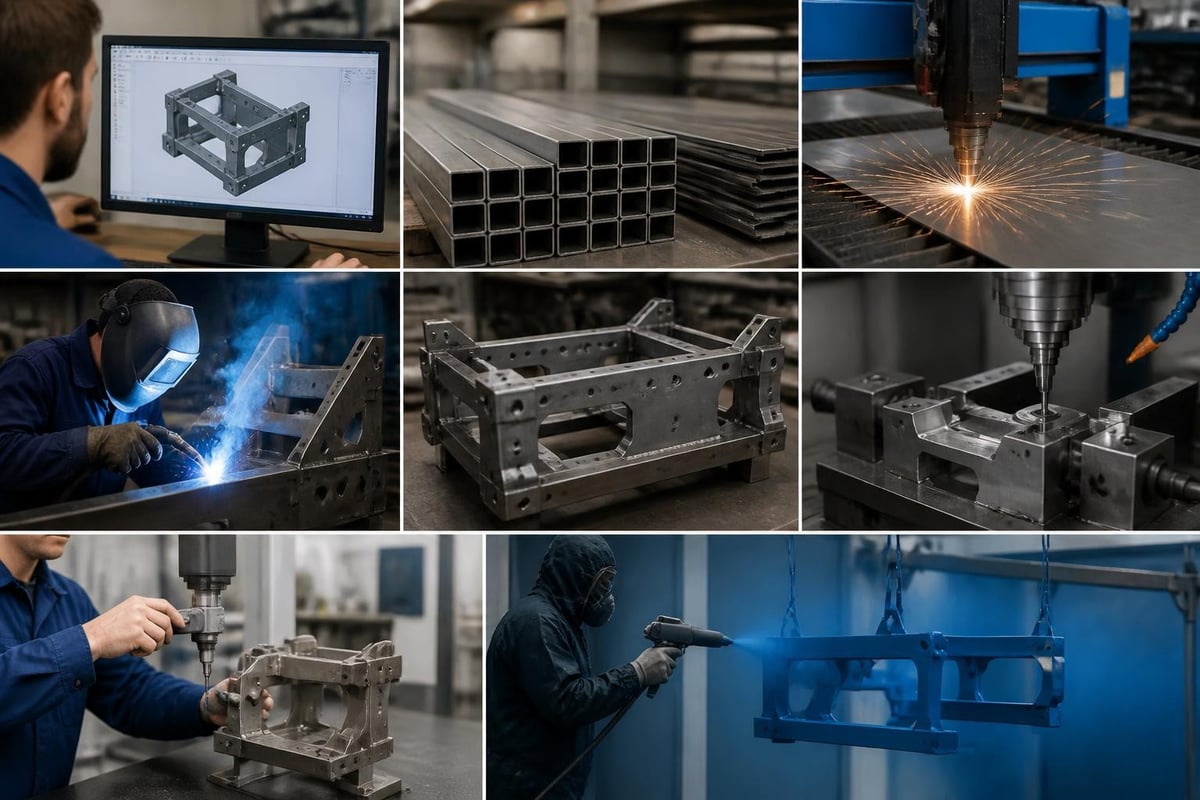
The custom fabrication process follows structured steps that transform concepts into functional hardware. Each phase builds upon previous work, ensuring the final product meets specifications while remaining manufacturable within budget and schedule constraints.
- Requirements definition: Document specifications, constraints, and performance criteria
- Concept development: Generate multiple design approaches evaluating pros and cons
- Detailed engineering: Create manufacturing drawings with dimensions, tolerances, materials
- Material procurement: Source appropriate materials meeting specification requirements
- Fabrication execution: Machine, weld, and assemble components per engineering drawings
- Quality verification: Inspect dimensions, test functionality, document compliance
- Installation support: Provide technical assistance during equipment integration
- Performance validation: Verify solution meets original requirements under operating conditions
Material Selection for Industrial Applications
Choosing appropriate materials significantly impacts component performance, longevity, and total cost of ownership. Machinery and manufacturing operations expose components to various stresses including mechanical loads, temperature extremes, corrosive environments, and abrasive conditions. Material selection must account for all operating conditions while remaining economically viable.
Carbon steels provide cost-effective solutions for general structural applications where corrosion resistance isn't critical. Low-alloy steels offer improved strength and toughness for demanding mechanical applications. Stainless steels resist corrosion in chemical processing and food production environments. Specialty alloys address extreme temperature, pressure, or corrosive conditions.
Common Industrial Materials:
- A36 carbon steel: General structural applications, economical, readily weldable
- 4140 alloy steel: High-strength components, shafts, gears, tooling
- 304 stainless steel: Corrosion resistance, food processing, chemical handling
- 316 stainless steel: Superior corrosion resistance, marine environments, pharmaceuticals
- Inconel alloys: High temperature, extreme corrosion, aerospace applications
- Hardox wear plate: Abrasion resistance, chutes, hoppers, wear surfaces
Quality Control and Inspection Protocols
Maintaining consistent quality requires systematic inspection procedures throughout machinery and manufacturing processes. Quality control begins with incoming material verification and continues through each fabrication step until final product acceptance. Documentation provides traceability and enables continuous improvement through data analysis.
Non-destructive testing (NDT) methods evaluate component integrity without causing damage. These techniques detect internal flaws, verify weld quality, and confirm material properties while leaving parts serviceable. Different NDT methods suit specific applications based on material type, geometry, and defect characteristics.
Non-Destructive Testing Methods
| NDT Method | Applications | Advantages | Limitations |
|---|---|---|---|
| Visual Inspection | Surface defects, weld quality | Low cost, immediate results | Surface only, subjective |
| Magnetic Particle | Ferrous materials, cracks | Sensitive to surface cracks | Ferrous materials only |
| Liquid Penetrant | Non-porous materials | Detects surface breaking flaws | Surface only, processing time |
| Ultrasonic | Internal flaws, thickness | Volumetric inspection | Requires skilled operators |
| Radiographic | Welds, castings, assemblies | Permanent record, internal flaws | Safety concerns, cost |
Workforce Development and Technical Training
Skilled craftsmen form the foundation of successful machinery and manufacturing operations. The technical knowledge required for precision machining, structural welding, and hydraulic systems repair demands years of training and experience. Businesses investing in workforce development gain competitive advantages through improved quality, efficiency, and problem-solving capabilities.
Apprenticeship programs combine classroom instruction with hands-on experience under supervision of journey-level craftsmen. This approach develops practical skills while building theoretical understanding of materials, processes, and systems. Certification programs validate competencies and demonstrate commitment to professional standards.
Essential Technical Competencies:
- Blueprint reading and geometric dimensioning
- Precision measurement and inspection techniques
- Material properties and selection criteria
- Welding processes and procedure qualification
- Machining operations and tool selection
- Hydraulic and pneumatic system principles
- Safety protocols and hazard recognition
- Problem-solving and troubleshooting methodologies
The machinery and manufacturing sectors continue evolving as experienced craftsmen retire and new technologies emerge. Successful companies develop succession plans ensuring knowledge transfer from senior personnel to developing technicians.
Success in modern industrial operations requires integrating advanced machinery with expert fabrication, welding, and machining capabilities. Whether you're managing aggregate processing operations, oil and gas infrastructure, or recycling facilities throughout the Western United States, partnering with experienced professionals ensures your equipment operates reliably and efficiently. LTJ Industrial Services delivers comprehensive shop and field services including precision machining, custom welding, hydraulic repairs, and water jetting across Colorado and the Western region. Contact us today to discuss how our expertise can support your operational goals.