The industrial landscape continues to evolve, demanding increasingly specialized solutions that standard manufacturing processes cannot deliver. Custom manufacturing has emerged as the cornerstone of modern production strategies, enabling businesses across commercial and industrial sectors to obtain precisely engineered components, assemblies, and systems tailored to their unique operational requirements. For industries like recycling, aggregate, and oil and gas, where standard off-the-shelf components often fall short, the ability to create bespoke solutions has become not just advantageous but essential for maintaining competitive operations.
Understanding Custom Manufacturing Fundamentals
Custom manufacturing represents a production approach where components, assemblies, or complete systems are designed and fabricated to meet specific client requirements rather than mass-produced for general markets. Unlike conventional manufacturing, which prioritizes volume production of standardized items, custom manufacturing focuses on creating unique solutions that address particular operational challenges, dimensional constraints, or performance specifications.
This specialized approach encompasses multiple disciplines working in concert. Metal fabrication forms the structural foundation, while precision machining ensures components meet exacting tolerances. Welding techniques join materials in configurations impossible through other methods, and finishing processes deliver the durability required for harsh industrial environments.
Why Industries Choose Custom Solutions
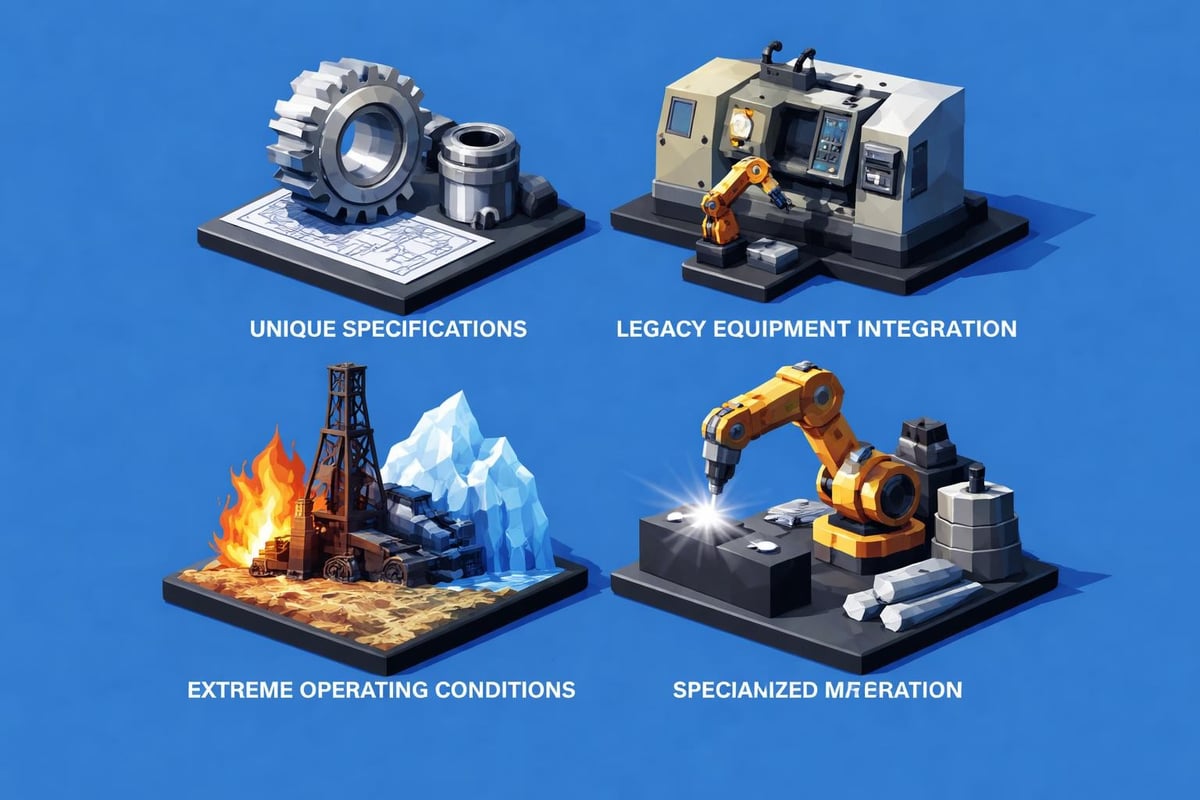
The decision to pursue custom metal fabrication stems from several critical factors that standard manufacturing cannot address:
- Unique operational requirements that demand specialized geometries or material combinations
- Space constraints requiring components designed for specific installation environments
- Performance specifications exceeding what standard products deliver
- Integration challenges where new components must interface with existing legacy equipment
- Material selection based on chemical resistance, temperature extremes, or corrosion environments
Manufacturing facilities throughout the Western United States frequently encounter situations where catalog products simply will not work. A recycling operation might need custom conveyor components resistant to specific abrasive materials. An aggregate processing facility could require specialized screening equipment designed for unique particle sizes. Oil and gas operations often demand pressure vessels or piping assemblies engineered for extreme service conditions.
Core Manufacturing Processes and Capabilities
Custom manufacturing integrates multiple technical disciplines to transform raw materials into finished components. Understanding these processes helps businesses identify the most effective approach for their specific needs.
Metal Fabrication Techniques
Metal fabrication provides the foundation for most custom industrial components. This discipline includes cutting, forming, and assembling metal materials into specified configurations. Modern fabrication shops utilize plasma cutting, laser cutting, and waterjet cutting technologies to achieve precise geometries from various metal thicknesses.
Forming operations bend, roll, and shape metal into three-dimensional configurations. Press brake operations create precise angles, while rolling equipment produces cylindrical shapes for tanks, vessels, and structural components. Fabrication in welding combines these cutting and forming operations with joining techniques to create complete assemblies.
| Fabrication Process | Typical Applications | Material Thickness Range |
|---|---|---|
| Plasma Cutting | Structural steel, plate work | 1/4" to 2" |
| Press Brake Forming | Brackets, enclosures, frames | 18 gauge to 1/2" |
| Roll Forming | Tanks, cylinders, cones | 10 gauge to 1" |
| Sheet Metal Fabrication | Panels, guards, ducting | 20 gauge to 1/4" |
Precision Machining Operations
While fabrication creates the overall structure, machining delivers the precision required for proper fit and function. Manufacturing and machining operations remove material to achieve exact dimensions, surface finishes, and geometric tolerances that fabrication alone cannot provide.
Turning operations create cylindrical features like shafts, pins, and bushings. Milling produces flat surfaces, pockets, and complex contours. Drilling, boring, and threading establish mounting holes and fastener locations. For large components that cannot fit conventional machine tools, portable machining equipment brings precision to the workpiece location.
The integration of Computer Numerical Control (CNC) technology has revolutionized machining capabilities, enabling consistent production of complex geometries with minimal human intervention. However, skilled manual machinists remain essential for prototype development, one-off components, and situations requiring adaptive problem-solving.
Welding and Joining Methods
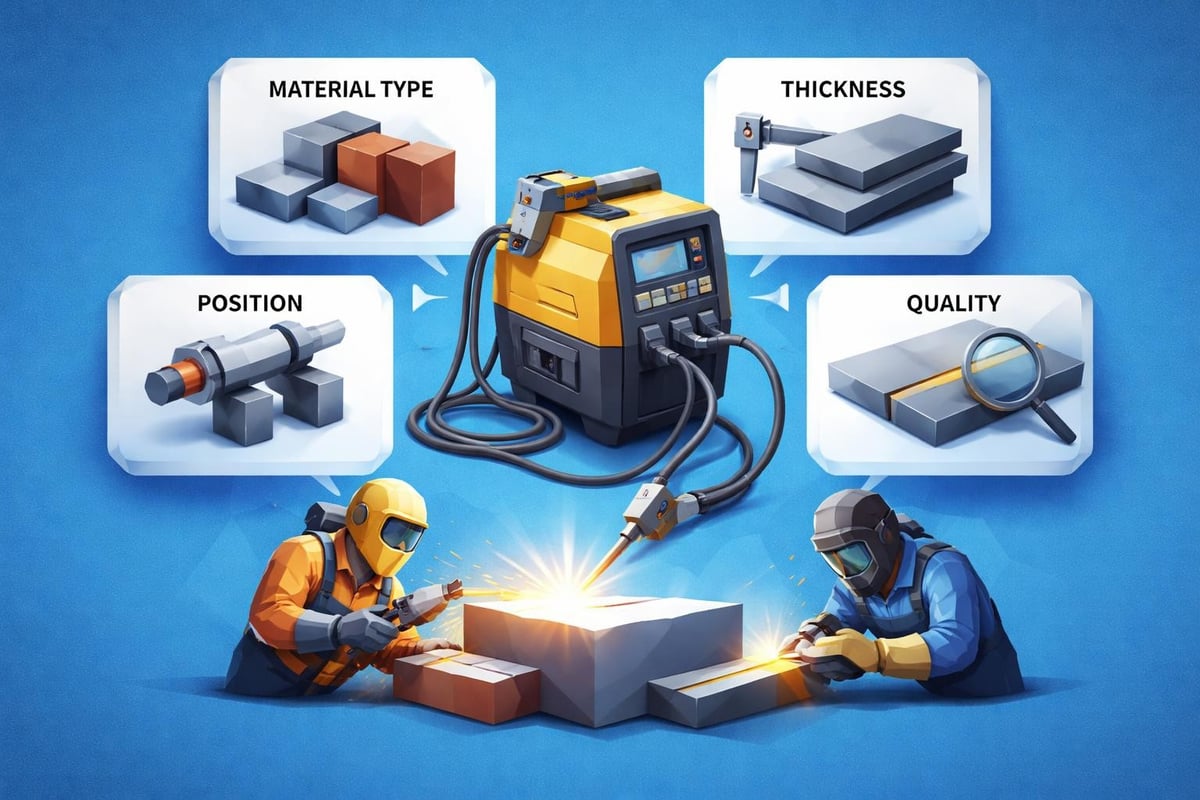
Welding forms the permanent bonds that transform individual components into functional assemblies. The selection of appropriate welding processes depends on material types, thickness, service conditions, and quality requirements. Custom welding and fabrication projects often require multiple welding processes within a single assembly.
Common welding processes include:
- Shielded Metal Arc Welding (SMAW) for field repairs and structural applications
- Gas Metal Arc Welding (GMAW/MIG) for production efficiency and versatility
- Gas Tungsten Arc Welding (GTAW/TIG) for precision work and exotic materials
- Flux-Cored Arc Welding (FCAW) for heavy plate and outdoor applications
- Submerged Arc Welding (SAW) for thick sections requiring deep penetration
Critical applications in pressure vessel fabrication or pipeline construction often require certified welders working to specific codes and standards. These qualifications ensure welds meet stringent safety and performance requirements.
Applications Across Industrial Sectors
Custom manufacturing serves diverse industries throughout the commercial and industrial landscape, each with distinct requirements and challenges.
Recycling Industry Solutions
Recycling operations process materials ranging from scrap metal to electronic waste, creating demanding environments for equipment and components. Custom manufacturing addresses these challenges through specialized solutions designed for abrasive materials, heavy impact loads, and continuous operation.
Conveyor systems require custom-designed wear plates, liners, and idlers engineered for specific material types. Sorting equipment needs frames and housings that accommodate specialized separation technologies. Baling equipment demands robust construction withstanding tremendous compressive forces. Material handling systems benefit from industrial machinery refurbishment and maintenance programs that extend service life through strategic component replacement and upgrading.
Aggregate and Mining Applications
Aggregate processing facilities crush, screen, and wash raw materials into specified sizes for construction applications. This environment combines heavy impact loads, abrasive materials, and outdoor exposure, demanding equipment built to withstand extreme conditions.
Custom solutions include screen decks designed for specific particle separation, crusher components engineered for particular rock types, and conveyor structures adapted to site-specific layouts. Structural steel fabrication for mining equipment provides the heavy-duty frameworks supporting crushing and screening machinery.
Oil and Gas Sector Requirements
The oil and gas industry presents some of the most demanding custom manufacturing challenges, combining high pressures, extreme temperatures, corrosive environments, and strict regulatory compliance. Components must meet specific codes and standards while delivering reliable performance in critical applications.
Pressure vessels, piping assemblies, and process equipment require precision fabrication and certified welding. Skid-mounted systems need compact designs integrating multiple functions within confined spaces. Field installations often demand on-site fabrication and machining to adapt equipment to existing infrastructure.
Benefits Driving Custom Manufacturing Adoption
Organizations choosing custom manufacturing over standard products realize multiple advantages that directly impact operational efficiency and financial performance.
Operational Advantages
Custom-engineered solutions optimize performance for specific applications. Custom manufacturing processes deliver advantages including improved productivity through designs that eliminate operational bottlenecks, enhanced reliability from components sized appropriately for actual loads, and simplified maintenance through accessible designs facilitating service activities.
Equipment designed for specific applications operates more efficiently than adapted standard products. Custom conveyor systems move materials at optimal speeds and configurations. Specialized screening equipment maximizes throughput for particular particle sizes. Purpose-built pressure vessels minimize material costs while meeting performance requirements.
Financial Considerations
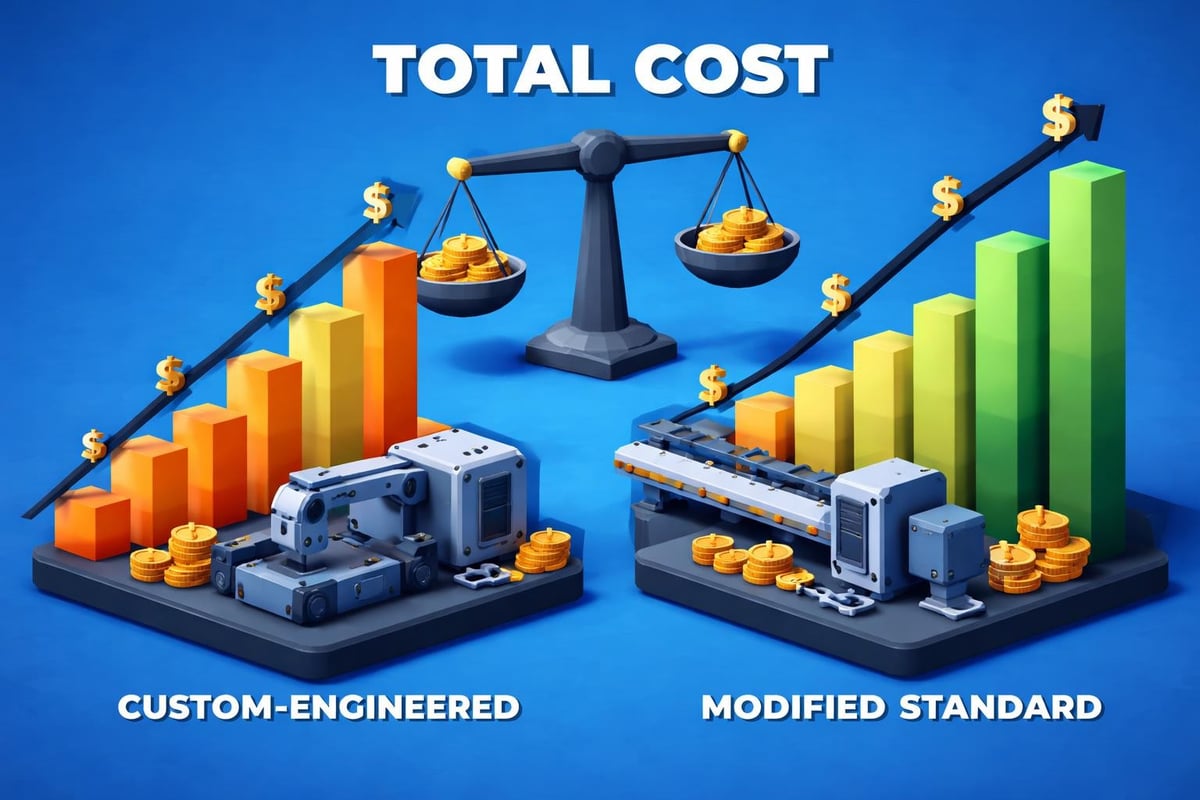
While custom casting challenges traditional manufacturing through higher initial costs, the total cost of ownership often favors custom solutions. Properly designed custom components last longer, require less maintenance, and perform more efficiently than modified standard products.
Financial benefits include:
- Reduced energy consumption from optimized designs
- Lower maintenance costs through accessibility and proper component sizing
- Minimized downtime from enhanced reliability
- Eliminated modification costs associated with adapting standard products
- Extended service life from application-specific material selection
Competitive Differentiation
Custom manufacturing enables companies to develop proprietary processes and equipment that competitors cannot easily replicate. Unique component designs, specialized material treatments, and optimized configurations create operational advantages that translate into market differentiation.
Technology Integration and Modern Capabilities
The custom manufacturing sector has embraced technological advancement, integrating digital tools and automated systems that enhance capabilities while maintaining the craftsmanship essential for quality results.
Digital Design and Engineering
Computer-Aided Design (CAD) software enables detailed visualization of components before material cutting begins. Three-dimensional models allow engineers to verify fit, identify interference issues, and optimize designs for manufacturability. These digital representations facilitate customer communication, ensuring alignment between specifications and deliverables.
Finite Element Analysis (FEA) simulates stress distributions, thermal effects, and structural performance, validating designs before fabrication. This analytical approach reduces prototype iterations and ensures components meet performance requirements under actual operating conditions.
Advanced Manufacturing Technologies
CNC machining centers execute complex operations with repeatability impossible through manual methods. Multi-axis machines produce intricate geometries in single setups, maintaining tight tolerances across multiple features. These capabilities prove particularly valuable for components requiring precise alignment of mounting holes, bearing surfaces, and sealing faces.
Waterjet cutting technology processes materials without heat-affected zones, preserving material properties throughout cut edges. This cold-cutting process handles everything from thin gauge sheet metal to thick armor plate, producing clean edges requiring minimal finishing.
Artificial Intelligence Applications
Artificial intelligence in customized manufacturing is transforming production planning, quality control, and process optimization. Machine learning algorithms analyze production data to identify patterns, predict maintenance requirements, and optimize manufacturing parameters. While AI adoption in custom manufacturing remains in early stages compared to mass production environments, forward-looking shops are exploring applications in scheduling optimization, defect detection, and predictive quality management.
Quality Control and Certification Standards
Custom manufacturing for industrial applications demands rigorous quality control throughout every production phase. Components serving critical functions cannot afford failures that could compromise safety, disrupt operations, or damage other equipment.
Inspection and Testing Protocols
Quality verification begins with incoming material inspection, confirming mill certifications match specifications and material properties meet requirements. Dimensional inspection throughout fabrication ensures components maintain tolerances as work progresses. Final inspection verifies all features meet drawing specifications before delivery.
Testing methods include:
- Visual inspection for weld quality, surface finish, and dimensional conformance
- Dimensional measurement using precision instruments and coordinate measuring machines
- Non-destructive testing including ultrasonic, radiographic, and magnetic particle inspection
- Hydrostatic testing for pressure vessels and piping systems
- Material verification through positive material identification and hardness testing
Industry Certifications and Standards
Many industries require compliance with specific codes and standards governing design, fabrication, and inspection. The American Society of Mechanical Engineers (ASME) publishes codes for pressure vessels, boilers, and piping systems. The American Welding Society (AWS) establishes qualification requirements for welders and welding procedures. The American Institute of Steel Construction (AISC) provides standards for structural steel fabrication.
Maintaining certifications demonstrates commitment to quality and regulatory compliance. Third-party inspection services verify adherence to applicable codes, providing documentation essential for permitting and insurance requirements.
Project Planning and Execution Strategies
Successful custom manufacturing projects require careful planning, clear communication, and systematic execution. Understanding the process helps clients prepare appropriate specifications and set realistic expectations.
Requirements Definition
The foundation of any custom manufacturing project lies in thoroughly understanding what the component must accomplish. This includes dimensional constraints, performance requirements, operating environment, service life expectations, and regulatory compliance needs. Commercial fabrication guide insights emphasize the importance of comprehensive requirements gathering before design work begins.
Effective requirement definition involves collaboration between client operations personnel, engineering teams, and fabrication specialists. Operations staff understand functional needs and environmental challenges. Engineers translate these needs into technical specifications. Fabricators provide manufacturability input ensuring designs can be built efficiently.
Design and Engineering Phase
Engineering transforms requirements into detailed designs specifying materials, dimensions, tolerances, and fabrication methods. This phase generates drawings, material lists, and manufacturing instructions guiding fabrication activities.
For complex projects, prototype development validates design concepts before committing to full production. Prototypes reveal unforeseen challenges, allowing refinements that prevent costly modifications later. Even simple mockups constructed from inexpensive materials can verify fit and functionality.
Fabrication and Assembly
Production follows a logical sequence progressing from raw materials to finished assemblies. Material procurement ensures specified grades and forms arrive when needed. Cutting operations produce blanks and components. Forming operations create three-dimensional shapes. Machining establishes precision features. Welding joins components into assemblies. Finishing operations prepare surfaces and apply protective coatings.
Quality checkpoints throughout fabrication catch errors early, preventing wasted effort on non-conforming work. Dimensional verification after each major operation confirms work remains within tolerance. Regular communication keeps clients informed of progress and addresses questions promptly.
Supply Chain Considerations and Lead Times
Custom manufacturing involves longer timelines than ordering standard products from inventory. Understanding factors affecting lead times helps businesses plan projects appropriately and set realistic expectations.
Material Procurement Challenges
Custom projects often require specific material grades, sizes, or forms not maintained in standard inventory. Steel service centers stock common sizes and grades but may need to special order materials for unique requirements. Exotic alloys, specialized plate thicknesses, or uncommon tube dimensions can require mill orders with extended delivery schedules.
Material availability has become increasingly variable in recent years, with supply chain disruptions affecting lead times unpredictably. Prudent planning includes buffer time for material procurement, particularly for projects requiring uncommon specifications.
Production Scheduling Factors
Shop capacity, project complexity, and current workload all influence production timelines. Large-scale metal fabrication for construction projects requires substantial shop space and equipment time, potentially affecting scheduling flexibility during peak periods.
Complex assemblies involving multiple disciplines take longer than simple components. A fabricated structure requiring extensive machining and certified welding demands more time than straight fabrication work. Testing and inspection requirements add days or weeks depending on procedures required.
| Project Complexity | Typical Lead Time | Key Factors |
|---|---|---|
| Simple components | 2-4 weeks | Material availability, shop schedule |
| Standard assemblies | 4-8 weeks | Fabrication complexity, finishing requirements |
| Complex systems | 8-16 weeks | Engineering time, multiple disciplines, testing |
| Critical pressure equipment | 12-20 weeks | Code compliance, inspection, certification |
Future Trends Shaping Custom Manufacturing
The custom manufacturing sector continues evolving, driven by technological advancement, changing customer expectations, and broader industry trends. The future of custom manufacturing trends to watch in 2025 and beyond include several significant developments reshaping how custom components are designed, fabricated, and delivered.
Smart Manufacturing Integration
Connected sensors, data analytics, and automated systems are transforming production environments. Smart manufacturing technologies monitor equipment performance, track production metrics, and optimize processes in real-time. While full automation remains impractical for low-volume custom work, selective automation of repetitive operations improves consistency and efficiency.
Production monitoring systems provide visibility into project status, resource utilization, and quality metrics. This transparency enables proactive scheduling adjustments and early identification of potential issues. Clients benefit from improved communication regarding project progress and more accurate delivery estimates.
Sustainability and Resource Efficiency
Environmental considerations increasingly influence manufacturing decisions. Material selection emphasizes recyclability and lifecycle impacts. Process optimization reduces energy consumption and waste generation. Efficient nesting of cut patterns minimizes scrap. Waste materials find routes to recycling rather than disposal.
Custom manufacturing offers inherent sustainability advantages over mass production. Components designed for specific applications last longer and operate more efficiently than adapted standard products. Repair and refurbishment services extend equipment life, delaying replacement and conserving resources.
Hybrid Manufacturing Approaches
The convergence of additive and subtractive manufacturing technologies creates new possibilities for custom component production. Metal 3D printing produces complex geometries impossible through conventional fabrication, while traditional machining delivers precision finishing. Combined approaches leverage the strengths of each technology.
For low-volume custom work, hybrid methods can reduce lead times and costs compared to conventional fabrication. Complex internal passages, organic shapes, and consolidated assemblies become practical through additive processes followed by precision machining of critical features.
Selecting the Right Manufacturing Partner
The success of custom manufacturing projects depends heavily on choosing a capable, reliable partner with appropriate expertise and resources. Several factors deserve consideration when evaluating potential manufacturers.
Technical Capabilities Assessment
Match the manufacturer's capabilities to project requirements. Verify they possess necessary equipment, technical expertise, and facility capacity for your specific needs. A shop specializing in precision machining might not have the heavy fabrication equipment for large structural assemblies. Conversely, a structural steel fabricator may lack the precision machining capabilities for tight-tolerance components.
Review past projects similar to your requirements. Request references from clients with comparable work. Visit the facility to observe operations, assess equipment condition, and evaluate quality practices.
Geographic and Logistical Factors
For industrial and manufacturing projects throughout the Western United States, proximity provides significant advantages. Local manufacturers better understand regional industry requirements, environmental conditions, and regulatory landscapes. Transportation costs decrease for large, heavy components. Field service availability improves when technical personnel are nearby.
However, geography should not override capability. Specialized work requiring unique expertise or equipment may justify working with distant suppliers when local options lack necessary capabilities.
Quality Systems and Certifications
Verify the manufacturer maintains quality systems appropriate for your industry. ISO certifications demonstrate commitment to quality management practices. Industry-specific certifications like ASME code stamps or AWS accreditation prove capability for regulated work.
Request documentation of welding procedures, welder qualifications, and inspection protocols. Review quality control processes including inspection equipment, testing capabilities, and documentation practices.
Custom manufacturing transforms industrial operations by delivering precisely engineered solutions that standard products cannot match, optimizing performance while addressing unique operational challenges across recycling, aggregate, and oil and gas sectors. When your operations demand specialized components, systems, or assemblies built to exacting specifications, LTJ Industrial Services brings comprehensive metal fabrication, machining, and welding expertise to projects throughout the Western United States, delivering the quality and reliability your operations require.