Metal fabrication projects represent the backbone of industrial manufacturing across the Western United States, transforming raw metal materials into functional components and structures that power countless industries. From recycling facilities to oil and gas operations, these projects require precision planning, expert execution, and a deep understanding of metallurgy, welding techniques, and machining capabilities. Whether you're developing custom equipment for aggregate processing or building critical infrastructure for commercial operations, understanding the fundamental aspects of successful metal fabrication projects can mean the difference between operational excellence and costly delays.
Understanding the Scope of Metal Fabrication Projects
Metal fabrication projects encompass a wide range of activities, from small-scale component production to massive structural assemblies. The scope of any project depends on multiple factors including material specifications, design complexity, and end-use applications.
Industrial facilities throughout Colorado and the Western United States regularly undertake metal fabrication projects that support their core operations. These initiatives often involve cutting, bending, welding, and assembling metal components to create everything from conveyor systems to pressure vessels.
Defining Project Parameters
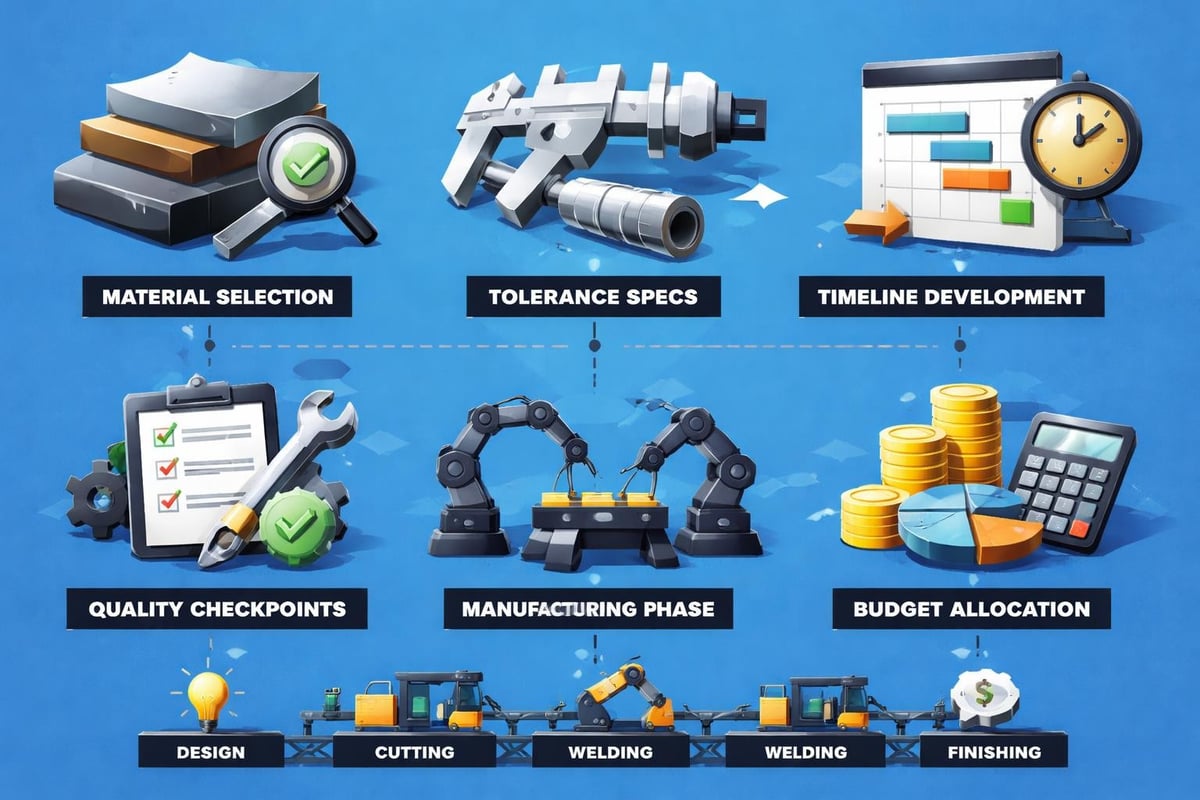
Successful metal fabrication projects begin with clearly defined parameters. Project managers must establish specific requirements including dimensional tolerances, material grades, surface finish specifications, and compliance standards.
Key parameters to consider include:
- Material type and grade (carbon steel, stainless steel, aluminum, exotic alloys)
- Quantity requirements and production timeline
- Quality standards and inspection protocols
- Budgetary constraints and cost targets
- Environmental and safety compliance needs
The American Welding Society provides comprehensive standards that guide many industrial fabrication projects, ensuring quality and safety across diverse applications.
Planning and Design Considerations
Effective planning distinguishes successful metal fabrication projects from those that encounter delays, cost overruns, or quality issues. The design phase requires collaboration between engineers, fabricators, and end users to ensure the final product meets operational requirements.
Modern metal fabrication projects increasingly leverage advanced computational frameworks for material selection and process optimization, particularly in specialized applications involving additive manufacturing and custom alloy development.
Engineering and Blueprint Development
Engineering drawings serve as the roadmap for all metal fabrication projects. These technical documents specify exact dimensions, weld symbols, material callouts, and assembly sequences that fabricators follow during production.
Working with experienced fabrication teams who understand manufacturing and machining requirements ensures that designs are not only theoretically sound but also practically achievable within real-world constraints.
| Design Element | Consideration | Impact on Project |
|---|---|---|
| Material Selection | Strength, corrosion resistance, cost | Determines longevity and performance |
| Joint Design | Weld accessibility, structural integrity | Affects fabrication complexity |
| Tolerance Specifications | Machining capabilities, fit requirements | Influences manufacturing methods |
| Surface Finish | Operational environment, aesthetic needs | Dictates post-fabrication processes |
Material Procurement Strategy
Sourcing the right materials at the right time can make or break metal fabrication projects. Lead times for specialty metals can extend several weeks or months, particularly for exotic alloys or custom mill runs.
Establishing relationships with reliable suppliers and maintaining appropriate inventory levels helps fabrication shops respond quickly to project demands. The EPA’s guidance on metal manufacturing emphasizes material efficiency strategies that reduce waste while optimizing procurement processes.
Fabrication Processes and Methodologies
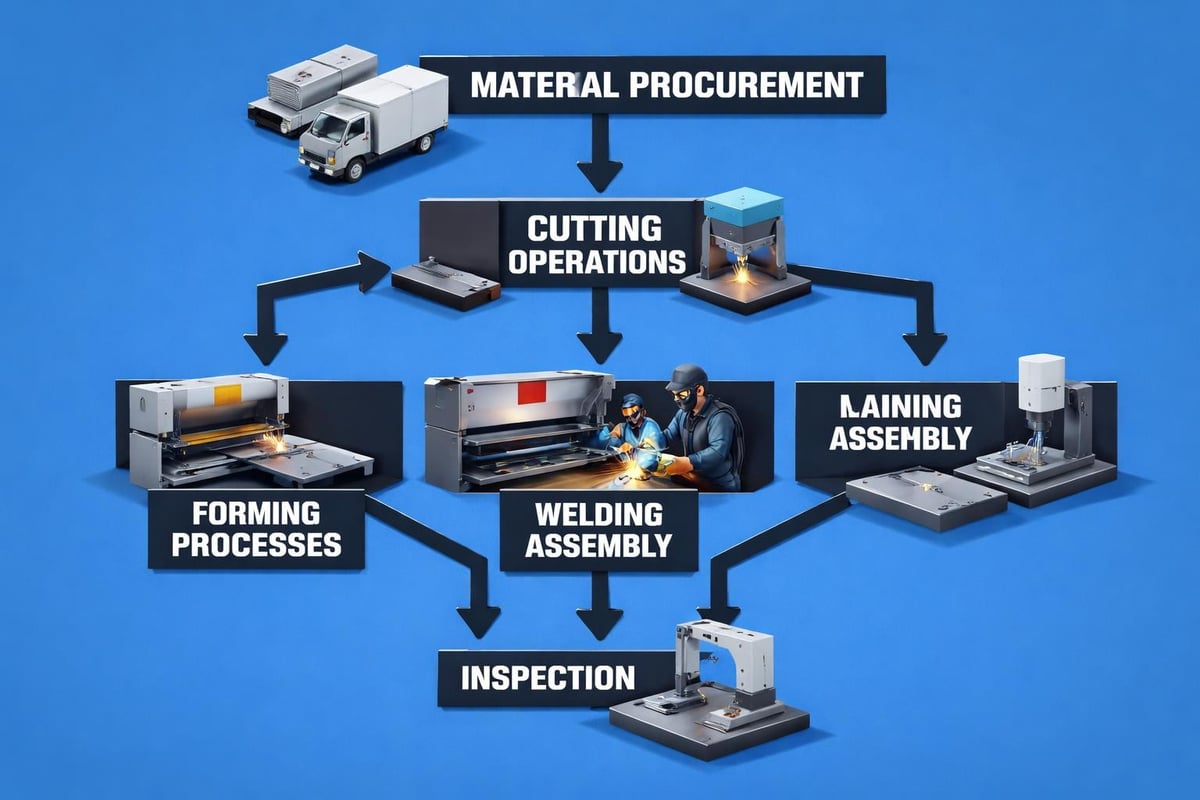
Metal fabrication projects employ various processes depending on design requirements and material properties. Understanding these methodologies helps project managers select the most appropriate techniques for their specific applications.
Cutting and Forming Operations
Precision cutting represents the first critical step in most metal fabrication projects. Modern shops utilize multiple cutting technologies including plasma cutting, laser cutting, water jet cutting, and traditional saw cutting.
Forming operations transform flat metal stock into three-dimensional shapes through:
- Press brake bending for angles and channels
- Roll forming for cylindrical and conical shapes
- Stamping for high-volume repetitive parts
- Hydroforming for complex geometries
Each method offers distinct advantages for specific metal fabrication projects, with selection based on material thickness, complexity, and production volume.
Welding and Joining Techniques
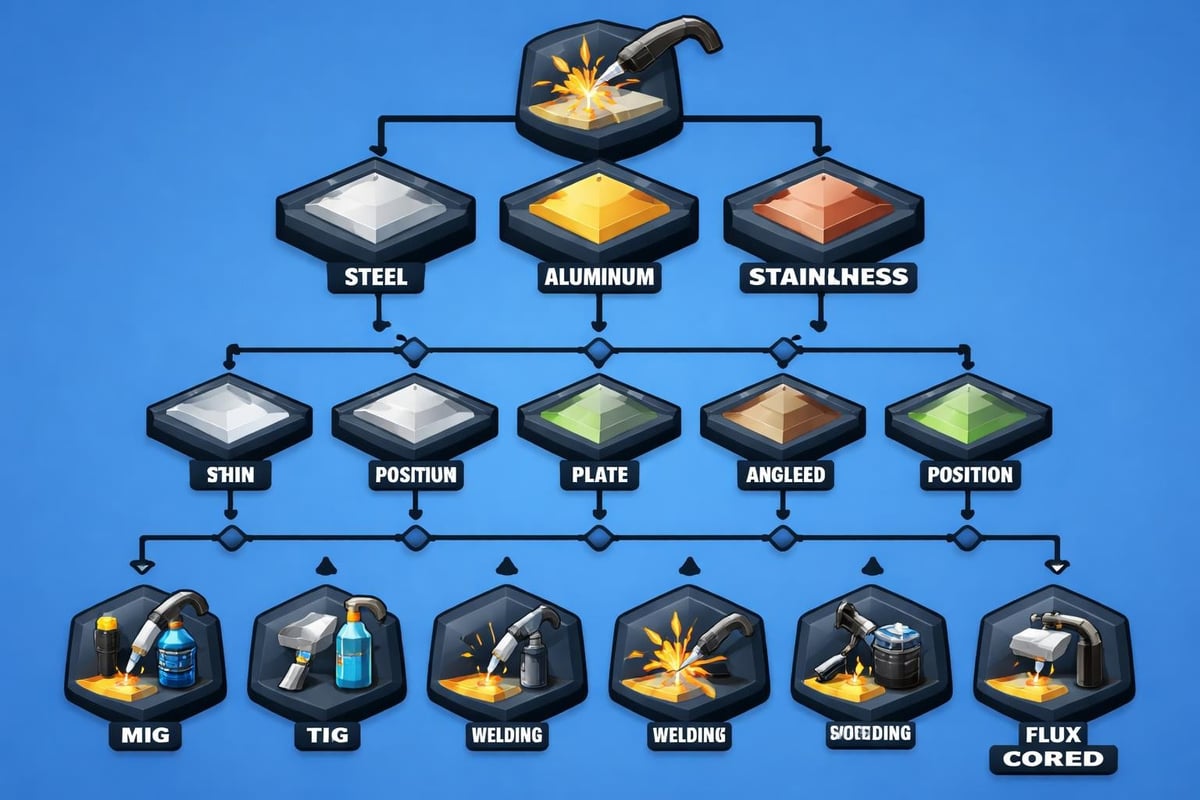
Welding constitutes the core process in many metal fabrication projects, permanently joining metal components to create structural assemblies. The choice of welding process depends on material type, thickness, position, and strength requirements.
For critical applications in oil and gas operations, ASME code welding services ensure compliance with pressure piping standards that govern high-pressure systems.
Common welding processes include:
- MIG (GMAW): Versatile process for carbon and stainless steel
- TIG (GTAW): Precision welding for thin materials and exotic alloys
- Stick (SMAW): Reliable field welding method for heavy structural work
- Flux-Cored (FCAW): High-deposition process for thick materials
Experienced teams at welding and fabrication shops maintain certifications across multiple processes, ensuring they can tackle diverse project requirements.
Machining and Precision Work
Many metal fabrication projects require machining operations to achieve tight tolerances that welding and forming alone cannot deliver. Machining removes material through cutting, drilling, turning, or milling to create precise features.
CNC Machining Capabilities
Computer Numerical Control (CNC) machining has revolutionized metal fabrication projects by enabling repeatable precision and complex geometries. Modern machining metal operations can hold tolerances to thousandths of an inch across large workpieces.
CNC capabilities essential for fabrication projects include:
- Multi-axis milling for complex contours
- Precision turning for cylindrical components
- Drilling and tapping for fastener holes
- Boring for accurate hole sizing
Integration with Fabrication Workflows
Successful metal fabrication projects seamlessly integrate machining operations within the broader fabrication workflow. This integration requires careful scheduling to ensure machined components are ready when needed for assembly without creating bottlenecks.
| Machining Operation | Typical Application | Tolerance Range |
|---|---|---|
| Rough Milling | Material removal, surfacing | ±0.010" |
| Finish Milling | Final dimensions, smooth surfaces | ±0.002" |
| Precision Boring | Bearing surfaces, tight fits | ±0.0005" |
| Thread Milling | Custom thread forms | Class 2A/2B or better |
Quality Control and Inspection
Quality assurance throughout metal fabrication projects prevents costly rework and ensures final products meet specifications. Comprehensive inspection protocols verify dimensions, material properties, and weld integrity.
Dimensional Verification
Dimensional inspection confirms that fabricated components match engineering specifications. Techniques range from simple hand measurements with calipers and micrometers to sophisticated coordinate measuring machines (CMM) for complex geometries.
Regular inspection checkpoints throughout fabrication catch deviations early when corrections are less expensive than discovering issues during final assembly.
Non-Destructive Testing
For critical metal fabrication projects, particularly those involving pressure vessels or structural components, non-destructive testing (NDT) methods verify weld quality without damaging the finished product.
Common NDT methods include:
- Ultrasonic testing for internal weld defects
- Radiographic testing for complete weld penetration verification
- Magnetic particle testing for surface crack detection
- Dye penetrant testing for non-magnetic materials
The Canadian Welding Bureau provides certification programs that establish quality benchmarks for welding inspection and testing procedures.
Project Management Best Practices
Effective project management ensures metal fabrication projects stay on schedule, within budget, and meet quality expectations. Strong communication between stakeholders including clients, engineers, fabricators, and inspectors prevents misunderstandings that lead to delays.
Timeline Development
Realistic scheduling accounts for material lead times, fabrication complexity, inspection requirements, and potential contingencies. Breaking large projects into manageable phases with clear milestones facilitates progress tracking and early problem identification.
Cost Control Strategies
Budget management for metal fabrication projects requires understanding both direct costs (materials, labor, consumables) and indirect costs (overhead, equipment maintenance, quality control). Value engineering during the design phase can identify cost savings without compromising functionality.
For companies seeking efficient execution of custom fabrication work, partnering with experienced shops that understand cost drivers helps optimize project economics.
Industry-Specific Applications
Metal fabrication projects serve diverse industrial sectors, each with unique requirements and challenges. Understanding sector-specific needs ensures fabricators deliver solutions that perform reliably in demanding environments.
Oil and Gas Sector
The energy industry relies heavily on metal fabrication projects for pipeline infrastructure, processing equipment, and support structures. These applications demand materials that withstand high pressures, corrosive environments, and extreme temperatures.
Fabrication work for oil and gas operations often requires specialized certifications and compliance with industry codes including ASME, API, and AWS standards.
Recycling and Aggregate Industries
Recycling facilities and aggregate operations need durable equipment that handles abrasive materials and heavy loads. Metal fabrication projects for these sectors often involve structural steel fabrication, conveyor systems, and material handling equipment.
Companies specializing in structural steel fabrication for mining equipment understand the extreme conditions these components face and design accordingly.
Manufacturing Support
Metal fabrication projects also support general manufacturing through custom fixtures, jigs, production tooling, and facility infrastructure. These applications prioritize precision, repeatability, and cost-effectiveness to support high-volume production environments.
Emerging Technologies and Innovation
The metal fabrication industry continues evolving through technological advancement. Projects today can leverage capabilities that were impossible or impractical just a few years ago.
Additive Manufacturing Integration
While traditional subtractive and forming processes dominate metal fabrication projects, additive manufacturing increasingly plays a complementary role. Metal 3D printing excels at creating complex geometries, consolidating assemblies, and producing low-volume custom parts.
Research into computational design tools for wireframe structures demonstrates how digital fabrication technologies expand design possibilities for metal projects.
Automation and Robotics
Robotic welding systems improve consistency and productivity for repetitive metal fabrication projects. Automated material handling reduces labor requirements while improving workplace safety by removing workers from hazardous environments.
However, skilled human fabricators remain essential for complex, one-off projects where adaptability and problem-solving capabilities outweigh the benefits of automation.
Environmental and Safety Considerations
Modern metal fabrication projects must address environmental impact and worker safety throughout the production process. Responsible fabricators implement practices that protect both people and the environment.
Waste Reduction Strategies
Minimizing scrap generation reduces material costs while lessening environmental impact. Nesting software optimizes cutting patterns to maximize material utilization. Recycling programs ensure scrap metal is reclaimed rather than landfilled.
Workplace Safety Protocols
Metal fabrication involves inherent hazards including hot work, heavy materials, and sharp edges. Comprehensive safety programs include personal protective equipment requirements, proper ventilation systems, material handling procedures, and ongoing training.
Professional industrial fabrication companies maintain rigorous safety standards that protect workers while ensuring project continuity.
Selecting the Right Fabrication Partner
Choosing a fabrication partner for metal fabrication projects requires evaluating multiple factors beyond simple cost comparisons. The right partner brings expertise, capacity, and reliability that contribute to project success.
Capability Assessment
Review potential partners' equipment capabilities including cutting technologies, welding processes, machining capacity, and quality control systems. Verify they can handle your project's material types, sizes, and complexity requirements.
Technical resources like those available through Pennsylvania College of Technology’s welding and metal fabrication guides provide valuable reference information for evaluating fabrication capabilities.
Experience and Track Record
Previous project experience in your industry provides valuable insights into a fabricator's ability to understand your specific requirements. Request case studies, references, and examples of similar work.
For companies throughout the Western United States, working with established providers who understand regional industry needs ensures metal fabrication projects benefit from relevant expertise.
Communication and Collaboration
Effective communication throughout project execution prevents misunderstandings and facilitates problem-solving. Look for fabrication partners who proactively share progress updates, welcome collaboration on design optimization, and respond quickly to questions or concerns.
| Selection Criteria | Why It Matters | Questions to Ask |
|---|---|---|
| Technical Capabilities | Ensures they can execute your design | What equipment and processes do you have? |
| Quality Systems | Validates output meets specifications | What inspection and testing protocols do you follow? |
| Project Management | Keeps timeline and budget on track | How do you handle scheduling and communication? |
| Industry Experience | Provides relevant expertise | Have you completed similar projects in our sector? |
Field Services and On-Site Fabrication
Not all metal fabrication projects can be completed entirely in a shop environment. Many applications require field fabrication, installation, or repair services at client facilities.
Mobile Fabrication Capabilities
Portable welding and cutting equipment enables fabricators to perform work directly at client sites, eliminating transportation challenges for large assemblies and reducing project timelines.
Field services are particularly valuable for:
- Equipment repairs that cannot wait for shop turnaround
- Large structural assemblies too big to transport
- Modifications to existing installed equipment
- Emergency breakdown response
Integration with Existing Systems
On-site metal fabrication projects often involve integrating new components with existing equipment and infrastructure. This work requires careful measurement, adaptive problem-solving, and the ability to work around operational constraints.
Companies offering both shop and field capabilities provide maximum flexibility for complex projects that span multiple locations or require phased implementation.
Successful metal fabrication projects require the right combination of technical expertise, modern equipment, quality processes, and experienced project management. Whether you're developing new equipment for aggregate processing, maintaining critical oil and gas infrastructure, or supporting manufacturing operations, choosing the right fabrication partner is essential. LTJ Industrial Services brings comprehensive shop and field capabilities to metal fabrication projects throughout the Western United States, combining precision machining, expert welding, and reliable project execution to help your operation achieve its goals.