
The manufacturing landscape in 2026 represents a complex ecosystem where traditional industrial processes meet cutting-edge technology. Understanding all manufacturing operations requires examining both foundational techniques and emerging innovations that shape production across industries. From metal fabrication shops in Colorado to large-scale industrial facilities throughout the Western United States, manufacturing excellence depends on mastering diverse capabilities while adapting to technological shifts that redefine industry standards.
The Foundation of All Manufacturing Operations
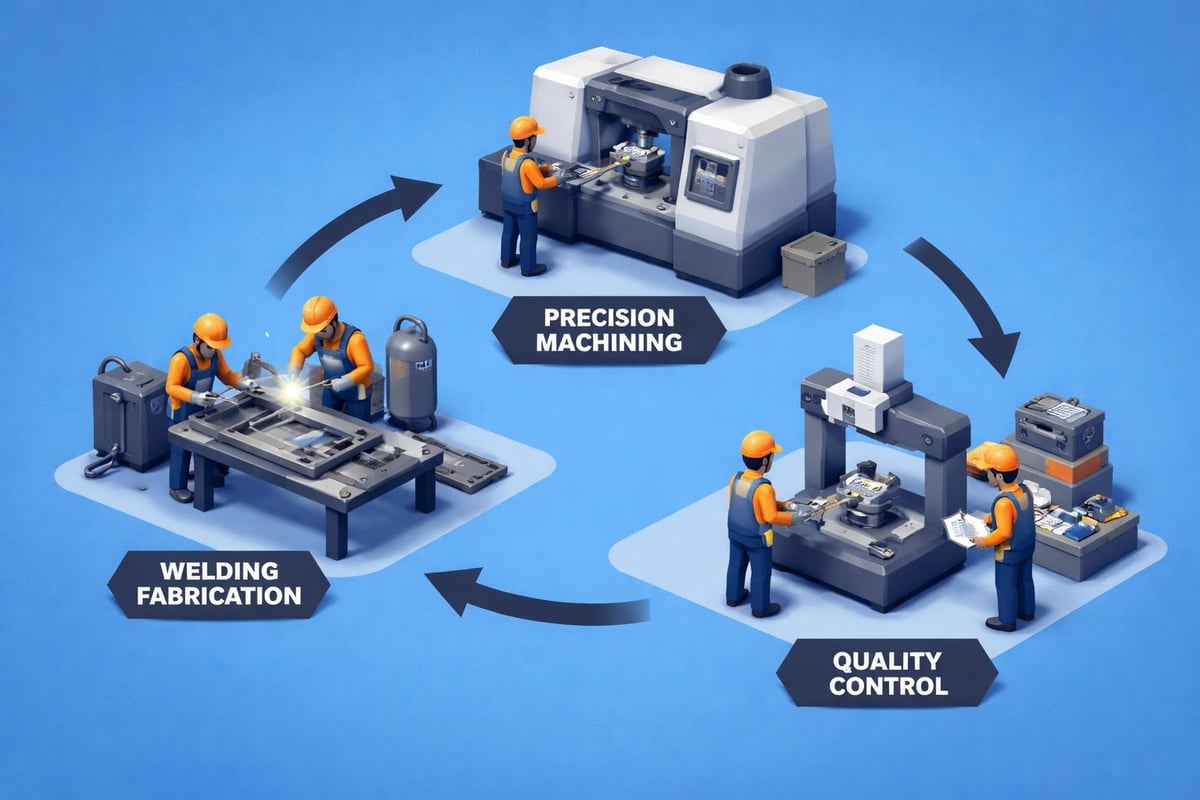
Manufacturing encompasses far more than assembly lines and mass production. The term “all manufacturing” reflects the interconnected nature of production processes, from raw material transformation to finished product delivery. Metal fabrication, precision machining, and specialized welding form the backbone of industrial manufacturing across sectors including oil and gas, aggregate processing, and recycling operations.
Traditional manufacturing techniques continue to hold immense value despite technological advances. Skilled craftspeople who understand metallurgy, thermal dynamics, and structural engineering remain essential to production quality. These professionals bridge the gap between design specifications and physical reality, ensuring components meet exacting tolerances and performance requirements.
Core Manufacturing Disciplines
Modern manufacturing facilities integrate multiple specialized capabilities under one roof. This integration creates operational efficiency while maintaining quality standards across diverse project requirements.
Essential manufacturing capabilities include:
- Custom metal fabrication for structural components
- CNC machining for precision parts production
- ASME code welding for pressure systems
- Hydraulic system design and repair
- Water jetting for cutting and surface preparation
- Field service for on-site industrial maintenance
| Manufacturing Process | Primary Application | Key Benefit |
|---|---|---|
| Metal Fabrication | Structural components | Custom solutions |
| Precision Machining | Tight-tolerance parts | Accuracy to 0.001″ |
| Code Welding | Pressure vessels | Safety compliance |
| Hydraulic Services | Power transmission | System reliability |
The manufacturing and machining sector continues evolving, incorporating automation while preserving the craftsmanship essential for complex industrial projects. This balance ensures manufacturers can scale operations without sacrificing the attention to detail that critical applications demand.
Technology Transformation in All Manufacturing Sectors
Digital transformation has fundamentally altered how manufacturers approach production planning, quality control, and operational efficiency. According to AI-driven manufacturing adoption in Europe, 53% of manufacturers now utilize artificial intelligence on the factory floor, with 98% planning implementation in the near future.
Automation and Smart Manufacturing
Smart factories represent the convergence of physical production and digital intelligence. Sensors embedded throughout manufacturing equipment collect real-time data on machine performance, environmental conditions, and product quality metrics. This information feeds into analytics platforms that identify optimization opportunities and predict maintenance requirements before failures occur.
Predictive maintenance has emerged as a critical application of manufacturing technology. By analyzing vibration patterns, temperature variations, and operational cycles, maintenance teams can schedule interventions during planned downtime rather than responding to unexpected breakdowns. This approach reduces costs while improving equipment reliability across all manufacturing operations.
Collaborative robots, or cobots, work alongside human operators to handle repetitive tasks with consistent precision. Unlike traditional industrial robots that require safety cages and dedicated work cells, cobots integrate directly into existing workflows. They excel at tasks requiring endurance and repeatability while freeing skilled workers to focus on complex problem-solving and quality verification.
Digital Design and Production Planning
Computer-aided design (CAD) systems have evolved beyond simple drafting tools into comprehensive engineering platforms. Modern CAD software incorporates simulation capabilities that predict how components will perform under stress, thermal cycling, and other operational conditions. This virtual testing identifies potential issues before physical production begins, reducing costly revisions and material waste.
The shift toward SaaS-based CAD solutions democratizes access to sophisticated design tools. Smaller manufacturers and specialized shops can leverage enterprise-grade capabilities without massive capital investments in software licenses and IT infrastructure. Cloud-based platforms also facilitate collaboration between design teams, production planners, and quality inspectors regardless of physical location.
Workforce Development Challenges Across All Manufacturing
Skilled labor shortages represent one of the most pressing challenges facing all manufacturing sectors in 2026. As experienced craftspeople approach retirement, the industry struggles to attract and train the next generation of welders, machinists, and fabricators. Digital technology solutions for workforce challenges demonstrate how virtual reality training and AI-powered learning platforms help bridge this skills gap.
Training and Skill Development
Effective training programs combine multiple approaches:
- Apprenticeship models pairing novices with master craftspeople
- Virtual reality simulations for practicing complex procedures safely
- Digital learning platforms offering on-demand technical instruction
- Industry certifications validating competency in specialized processes
- Cross-training initiatives developing versatile capabilities
Custom welding services require particularly specialized training. Welders must understand metallurgy, electrical systems, gas properties, and safety protocols while developing the hand-eye coordination necessary for precise bead placement. ASME code welding adds another layer of complexity, requiring knowledge of regulatory standards and documentation requirements.
Machining operations demand similar depth of expertise. CNC programmers must translate engineering drawings into machine code while accounting for tool wear, material properties, and thermal expansion. Manual machinists develop tactile sensitivity that allows them to detect subtle variations in cutting resistance that indicate tool condition or material inconsistencies.
Retention and Career Advancement
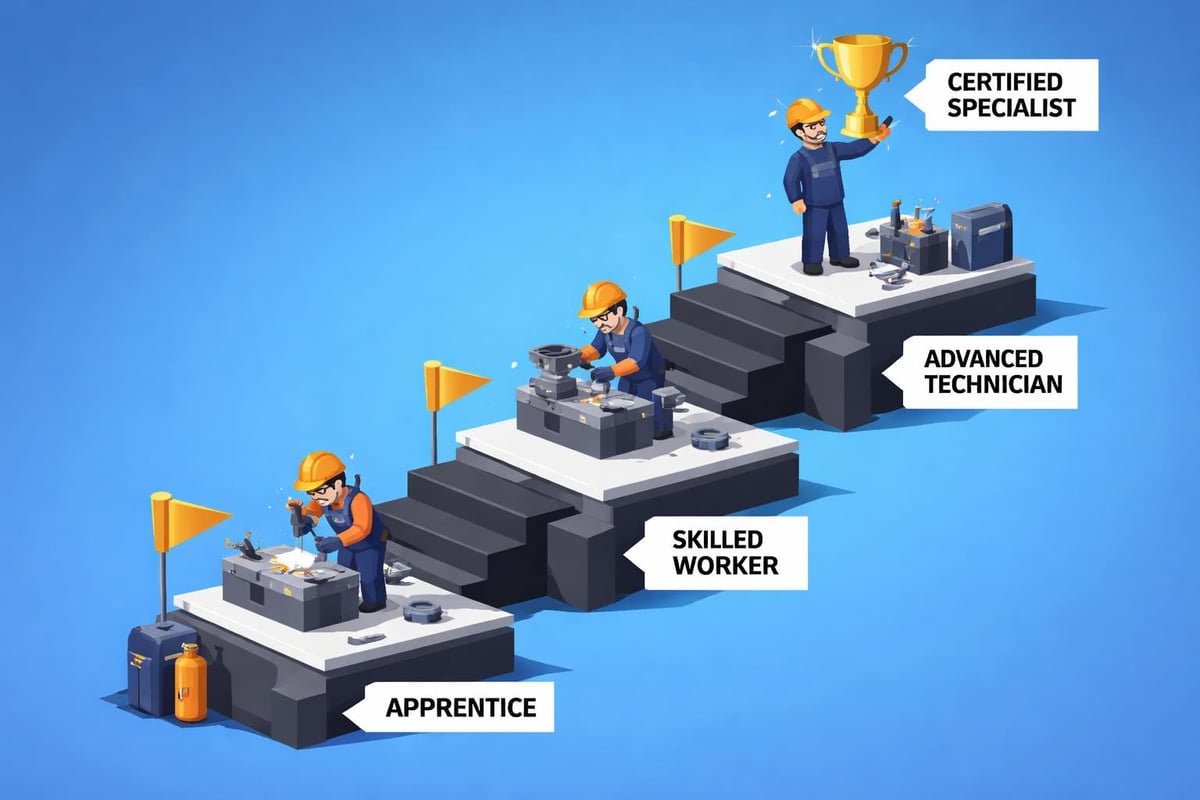
Competitive compensation represents just one factor in workforce retention. Manufacturing professionals seek opportunities for continuous learning, career advancement, and meaningful work that challenges their capabilities. Companies that invest in employee development and create clear advancement pathways experience lower turnover and stronger institutional knowledge retention.
The industrial fabrication service sector particularly benefits from experienced teams who understand the nuances of different industries. A fabricator working in oil and gas operations brings valuable insights about corrosion resistance and pressure requirements that translate directly into better project outcomes.
Industry-Specific Manufacturing Applications
All manufacturing processes adapt to meet unique industry requirements. While core capabilities remain consistent, application details vary significantly across commercial and industrial sectors.
Oil and Gas Industry Requirements
Energy sector manufacturing demands exceptional quality standards due to the harsh operating environments and safety-critical nature of equipment. Components must withstand extreme temperatures, corrosive substances, and high pressures while maintaining structural integrity over decades of service.
ASME code welding services for pressure piping exemplify the specialized capabilities required for energy infrastructure. These welds undergo rigorous inspection protocols including radiographic testing, ultrasonic examination, and pressure testing to verify integrity. Documentation requirements trace every aspect of the welding procedure, from base material certification to welder qualifications and inspection results.
Hydraulic systems used in drilling operations require precision manufacturing and expert maintenance. Hydraulic cylinder repair services must address wear patterns, seal degradation, and contamination issues while maintaining tight tolerances essential for system performance.
Aggregate and Recycling Operations
Material processing industries subject equipment to severe abrasion, impact loading, and continuous operation cycles. Manufacturing solutions for these sectors prioritize durability and field serviceability over aesthetic considerations.
Key requirements for aggregate processing equipment:
- Wear-resistant materials selection
- Robust structural design for impact loads
- Field-serviceable components for rapid repairs
- Modular construction allowing section replacement
- Corrosion protection for outdoor installation
Recycling operations add complexity through material variability and contamination concerns. Equipment must handle unexpected items without catastrophic failure while maintaining processing efficiency. Heavy equipment welding repairs often occur on-site under time pressure, requiring mobile capabilities and creative problem-solving.
Quality Management Throughout All Manufacturing
Quality assurance transcends final inspection, encompassing every stage from material procurement through delivery. Comprehensive quality management systems document procedures, track metrics, and drive continuous improvement across all manufacturing operations.
Inspection and Testing Protocols
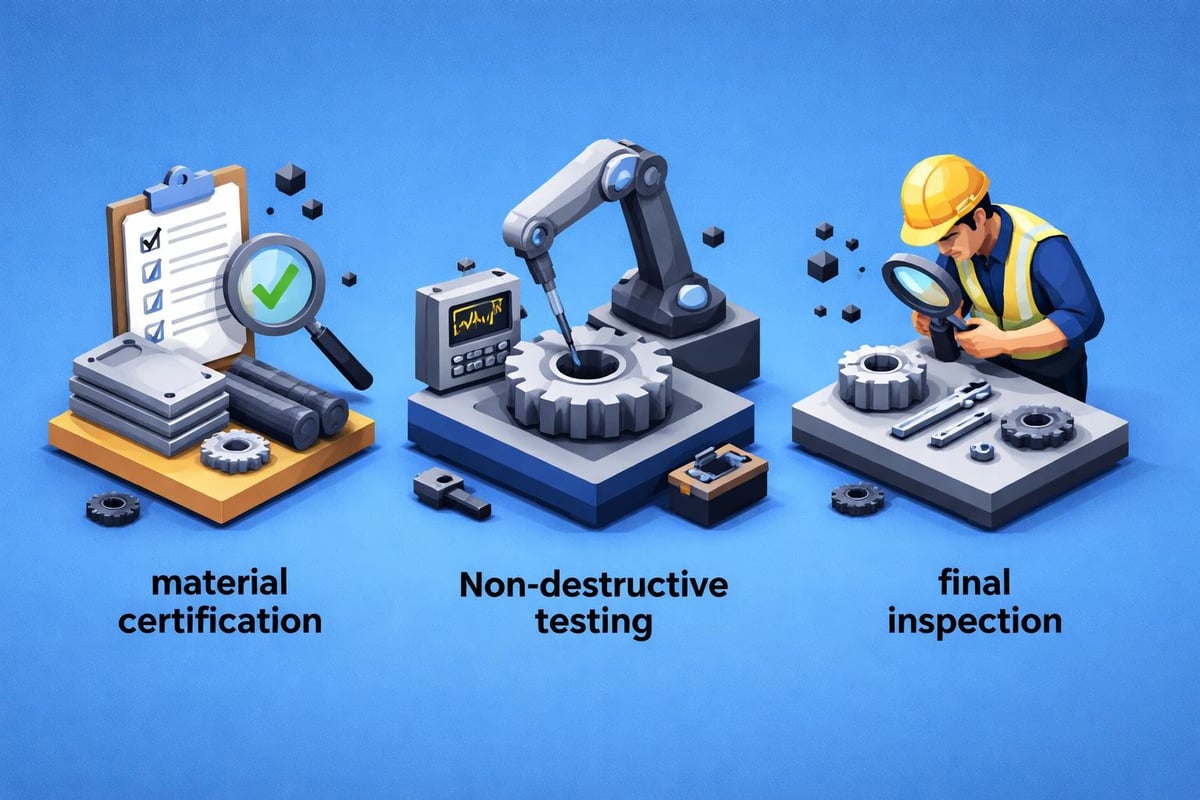
Non-destructive testing methods verify component integrity without compromising usability. Visual inspection identifies surface defects, dimensional variations, and finish quality issues. Magnetic particle testing reveals cracks and discontinuities in ferromagnetic materials. Ultrasonic testing detects internal flaws through sound wave reflection patterns. Radiographic testing provides detailed images of weld penetration and fusion characteristics.
Dimensional inspection utilizes coordinate measuring machines (CMM) and laser scanning technology to verify that manufactured parts match design specifications. These tools capture thousands of data points, creating detailed maps that highlight deviations requiring correction. Statistical process control analyzes measurement data to identify trends before parts drift out of tolerance, enabling proactive adjustments.
| Quality Method | Application | Detection Capability |
|---|---|---|
| Visual Inspection | Surface assessment | Cracks, porosity, finish |
| Magnetic Particle | Ferrous materials | Surface/near-surface cracks |
| Ultrasonic Testing | Thick sections | Internal discontinuities |
| Radiographic | Weld examination | Incomplete fusion, inclusions |
| CMM Scanning | Precision parts | Dimensional accuracy |
Material traceability ensures every component’s origin and properties remain documented throughout production. Heat numbers link metal stock to mill test reports certifying chemical composition and mechanical properties. This documentation proves essential when manufacturing critical components for regulated industries.
Continuous Improvement Methodologies
Lean manufacturing principles eliminate waste while enhancing value delivery. Value stream mapping identifies non-value-adding activities that consume resources without improving customer outcomes. 5S workplace organization creates efficient, safe, and organized production environments. Kaizen events bring cross-functional teams together to solve specific operational challenges.
Six Sigma methodologies apply statistical rigor to process improvement initiatives. DMAIC (Define, Measure, Analyze, Improve, Control) provides a structured framework for addressing quality issues and reducing variation. These approaches have proven particularly effective in metal fabrication industries where consistency directly impacts assembly efficiency and product performance.
Regional Manufacturing Strengths and Challenges
Geographic location influences all manufacturing operations through factors including workforce availability, proximity to customers, transportation infrastructure, and regulatory environments. The Western United States presents unique opportunities and constraints for industrial manufacturers.
Western United States Manufacturing Landscape
Colorado and surrounding states host diverse industrial sectors requiring specialized manufacturing support. Oil and gas operations span from conventional wells to advanced extraction techniques. Mining and aggregate processing facilities operate throughout mountainous regions. Agricultural equipment manufacturers serve vast farming operations across plains states.
Colorado industrial manufacturers benefit from proximity to these customer industries while facing challenges related to geographic dispersion and rural labor markets. Companies that offer both shop-based production and field service capabilities provide comprehensive solutions regardless of project location.
Transportation logistics influence material costs and delivery schedules. Raw materials often travel significant distances from mills and distributors, requiring careful inventory management to balance holding costs against lead time risks. Finished component delivery to remote job sites demands robust packaging and sometimes specialized transportation arrangements.
Economic Factors and Industry Trends
European industrial production challenges demonstrate how energy costs and demand fluctuations impact manufacturing viability. While North American manufacturers face different specific pressures, the fundamental lesson about operational efficiency and market responsiveness applies universally.
Energy-intensive processes like metal melting and heat treating become increasingly expensive as utility rates rise. Manufacturers respond through equipment upgrades that improve thermal efficiency, process optimization that reduces cycle times, and alternative energy sources where feasible. These investments require careful financial analysis balancing upfront costs against long-term operational savings.
The U.S. electronics manufacturing sector supports 5.2 million jobs and contributes $1.8 trillion in economic output, demonstrating manufacturing’s continued importance to national prosperity. While electronics differ from heavy industrial manufacturing, both sectors share common challenges around workforce development, supply chain resilience, and technological adaptation.
Supply Chain Integration and Material Management
All manufacturing operations depend on reliable material flows and component availability. Supply chain disruptions that emerged during recent global events highlighted vulnerabilities in just-in-time inventory systems and single-source procurement strategies.
Strategic Sourcing and Vendor Management
Diversified supplier networks reduce risks associated with individual vendor issues. Dual sourcing critical materials provides alternatives when primary suppliers face capacity constraints or quality problems. However, qualification processes for new suppliers consume resources and may extend lead times for initial orders.
Material certification requirements vary by industry and application. Structural steel used in building construction requires mill test reports documenting chemical composition and mechanical properties. Exotic alloys for chemical processing demand additional verification of corrosion resistance and high-temperature performance. Procurement teams must understand these requirements and ensure suppliers provide appropriate documentation.
Effective vendor management practices include:
- Regular performance reviews tracking quality and delivery metrics
- Long-term agreements providing volume commitments for favorable pricing
- Collaborative improvement initiatives addressing recurring issues
- Technology integration enabling real-time inventory visibility
- Contingency planning for supply disruption scenarios
Inventory optimization balances carrying costs against shortage risks. Manufacturing resource planning (MRP) systems calculate material requirements based on production schedules and lead times. However, these calculations rely on accurate forecasts and stable supplier performance, conditions that don’t always hold in dynamic markets.
Logistics and Distribution
Transportation costs significantly impact total landed cost for raw materials and finished goods. Freight consolidation reduces per-unit transportation expenses by combining multiple orders into full truckload shipments. However, consolidation may extend delivery times and require coordination among different customers or suppliers.
Field service operations for industrial maintenance require rapid parts availability. Welding and fabrication services providers maintain strategic inventory of common consumables and replacement components while leveraging expedited shipping for specialized items. This approach minimizes downtime costs that often exceed premium freight charges by orders of magnitude.
Environmental Sustainability in All Manufacturing
Environmental responsibility has evolved from regulatory compliance burden to competitive differentiator. Companies that proactively address sustainability demonstrate forward-thinking leadership while potentially reducing operational costs through waste elimination and energy efficiency.
Waste Reduction and Recycling
Metal fabrication generates scrap through cutting operations, dimensional corrections, and rejected components. Systematic scrap segregation maximizes recycling value while reducing disposal costs. Ferrous metals, aluminum alloys, copper, and stainless steel command different scrap values and require separate collection to avoid contamination.
Waste minimization strategies include:
- Nesting software optimizing material layouts for minimal scrap
- Offcut libraries tracking usable remnants for future projects
- Process improvements reducing rework and rejection rates
- Consumable management extending cutting tool and abrasive life
- Packaging reduction through returnable container systems
Water jetting operations consume significant water volumes while generating waste streams containing abrasive media and removed coatings. Closed-loop filtration systems recycle water while capturing solid waste for proper disposal. These systems reduce freshwater consumption and wastewater discharge volumes, lowering both environmental impact and utility costs.
Energy Efficiency Initiatives
Manufacturing facilities represent substantial energy consumers through welding equipment, machining centers, compressed air systems, and environmental conditioning. According to manufacturing industry trends, energy management systems provide granular visibility into consumption patterns, enabling targeted efficiency improvements.
LED lighting retrofits offer rapid payback through reduced electricity consumption and maintenance costs. Variable frequency drives on motors and compressors match energy input to actual load requirements rather than running constantly at full capacity. Heat recovery systems capture waste thermal energy from welding and machining processes for space heating or other applications.
Building envelope improvements reduce heating and cooling loads in climate-controlled manufacturing spaces. Insulation upgrades, air sealing, and high-performance doors minimize thermal losses while maintaining comfortable working conditions. These investments improve employee comfort and productivity while reducing energy expenses.
Future Directions for All Manufacturing
Manufacturing continues evolving through technological innovation, changing customer expectations, and workforce transformation. Companies that anticipate these trends and adapt proactively will maintain competitive advantages in increasingly dynamic markets.
Additive Manufacturing Integration
Three-dimensional printing technologies have progressed from prototyping tools to production methods for specific applications. Metal 3D printing creates complex geometries impossible through conventional machining while minimizing material waste. However, the technology currently suits low-volume production of high-value components rather than mass manufacturing.
Additive manufacturing advantages include:
- Design freedom enabling topology optimization
- Rapid iteration cycles for design refinement
- On-demand production reducing inventory requirements
- Supply chain simplification for spare parts
- Material efficiency through near-net-shape production
Manufacturing trends analysis identifies 3D printing growth as a significant industry shift, particularly for replacement parts and customized tooling. Integration with traditional CNC machining job shop capabilities creates hybrid manufacturing approaches leveraging each technology’s strengths.
Product-as-a-Service Business Models
Some manufacturers shift from selling equipment to providing performance outcomes. Under product-as-a-service arrangements, manufacturers retain ownership while customers pay for availability, production output, or other performance metrics. This model aligns incentives around reliability and lifecycle costs rather than initial purchase price.
For industrial service providers, this trend creates opportunities for ongoing maintenance contracts and performance guarantees. Fabrication specialists who understand equipment operation and failure modes can offer value-added services beyond traditional repair work.
Artificial Intelligence and Machine Learning Applications
AI technologies address multiple manufacturing challenges from design optimization to predictive quality control. Machine learning algorithms analyze historical production data to identify patterns correlating process parameters with outcomes. These insights enable preemptive adjustments that improve yield and reduce defects.
Computer vision systems inspect products with consistency impossible for human operators while generating detailed documentation. These systems detect subtle defects, verify assembly completeness, and measure dimensions with micrometer precision. Integration with manufacturing execution systems creates closed-loop quality control that automatically adjusts processes when trends indicate potential issues.
All manufacturing success in 2026 requires balancing traditional craftsmanship with emerging technologies while maintaining focus on quality, safety, and customer outcomes. Whether you’re operating in oil and gas, aggregate processing, recycling, or other industrial sectors throughout the Western United States, having reliable partners who understand your unique requirements makes the difference between operational excellence and costly downtime. LTJ Industrial Services brings decades of welding, fabrication, and machining expertise to help your operation achieve its goals through comprehensive shop and field services tailored to your specific needs.