Finding reliable certified welding services near me has become increasingly critical for businesses across manufacturing, energy, and industrial sectors in 2026. As projects grow more complex and regulatory requirements tighten, understanding what certifications matter, which standards apply to your industry, and how to evaluate local providers can make the difference between project success and costly failures. Whether you operate in oil and gas, aggregate processing, recycling, or commercial manufacturing, the right welding partner brings more than technical skill-they deliver proven compliance, documented quality, and peace of mind.
Understanding What "Certified" Really Means in Welding Services
When you search for certified welding services near me, you're looking for more than a business license and insurance. True certification in welding involves multiple layers of qualification, from individual welder credentials to company-level quality system approvals. The distinction matters because different industries require different proof of competence.
Individual welder certification starts with programs like the American Welding Society’s Certified Welder Program, which tests a welder's ability to produce quality welds according to specific procedures and positions. These certifications verify that the person holding the torch possesses demonstrated skill, not just self-reported experience. For companies serving industries like oil and gas or aggregate equipment manufacturing, having certified welders on staff is often a baseline requirement.
Company-level certifications go deeper. They validate entire quality systems, procedures, and organizational capabilities. For example, ASME certification demonstrates that a fabricator has implemented rigorous quality controls for pressure vessel and boiler work. When your project involves code-controlled applications, finding certified welding services near me with proper company credentials becomes mandatory, not optional.
The Role of Welding Inspectors and Quality Control
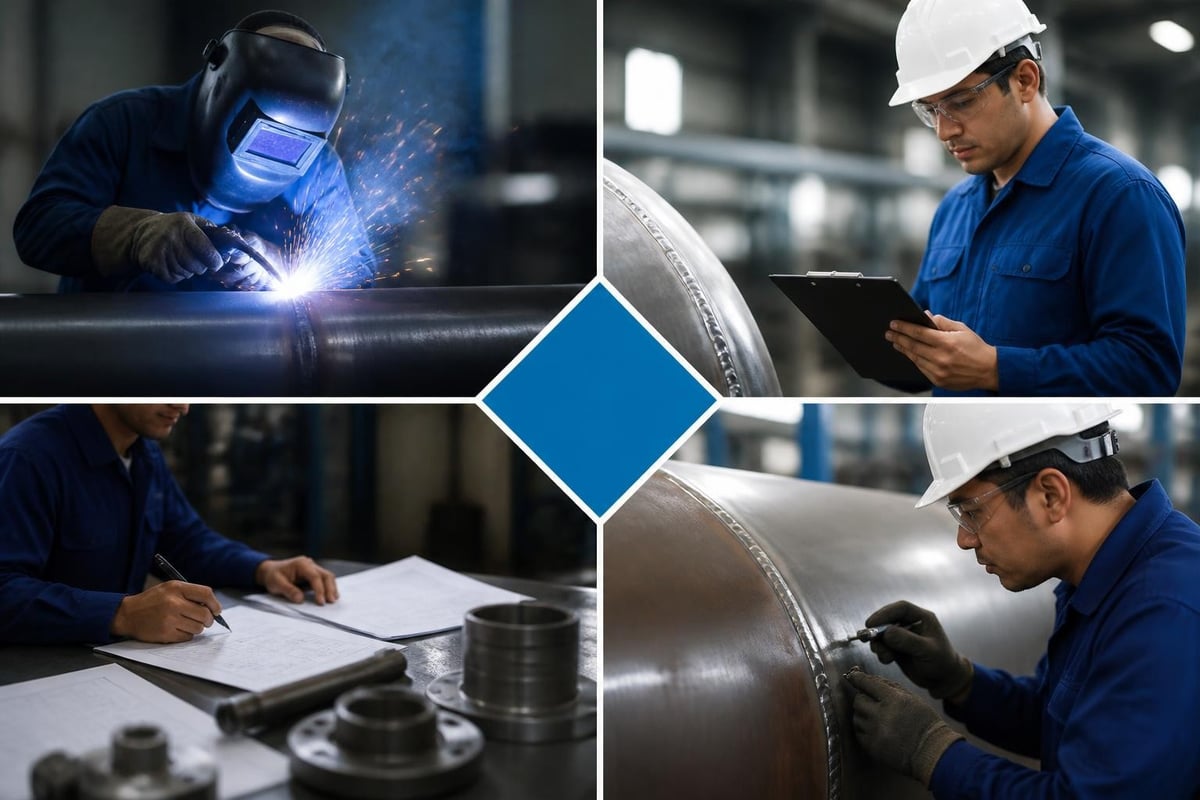
Behind every certified welding operation stands another layer of qualification: the inspector. Certified Welding Inspectors (CWI) serve as third-party eyes, verifying that welds meet specification requirements and code compliance. These professionals undergo extensive training in visual inspection, testing methods, metallurgy, and code interpretation.
When evaluating certified welding services near me, ask whether the shop employs CWIs in-house or subcontracts inspection services. In-house inspectors typically provide faster turnaround and deeper familiarity with your project requirements. This becomes especially valuable on time-sensitive field repairs or when working with recycling equipment that can't afford extended downtime.
Key Certifications to Look for in Industrial Welding Providers
Not all certifications carry equal weight for every application. Understanding which credentials matter for your specific needs helps narrow your search for certified welding services near me to truly qualified candidates.
| Certification Type | Governing Body | Best Suited For | Typical Industries |
|---|---|---|---|
| ASME Section IX | ASME | Pressure vessels, piping, boilers | Oil & gas, power generation, chemical processing |
| AWS D1.1 | American Welding Society | Structural steel welding | Construction, mining equipment, aggregate processing |
| API 1104 | American Petroleum Institute | Pipeline welding | Oil & gas transmission, distribution systems |
| Nadcap Welding | PRI | Aerospace and defense critical welds | Aerospace, defense contractors |
| ISO 3834 | International Standards Org | Overall welding quality management | European export markets, multinational projects |
ASME Certification for Pressure-Critical Applications
For businesses in oil and gas, chemical processing, or power generation, ASME certification represents the gold standard. The ASME Boiler and Pressure Vessel Code Section IX establishes the framework for qualifying welding procedures and welders. When searching for certified welding services near me for pressure vessels or piping systems, ASME credentials are typically non-negotiable.
This certification requires documented Welding Procedure Specifications (WPS), Procedure Qualification Records (PQR), and welder Performance Qualification Records. The shop must maintain these records and make them available for review. For field welding on existing systems, the provider needs qualified procedures that match your base materials, positions, and process requirements.
Companies throughout the Western United States increasingly require vendors to hold active ASME stamps. You can verify a provider's ASME certification status through the ASME company locator, which maintains an official registry of certified fabricators and service providers.
AWS and API Standards for Structural and Pipeline Work
While ASME dominates pressure vessel work, AWS and API standards govern structural and pipeline applications. When you need certified welding services near me for building mining equipment frames, aggregate processing structures, or pipeline repairs, AWS D1.1 and API 1104 become the relevant benchmarks.
AWS D1.1 covers structural welding of carbon and low-alloy steels, addressing everything from bridge construction to heavy equipment fabrication. The standard specifies joint design, workmanship criteria, and inspection requirements. For businesses in aggregate or recycling equipment manufacturing, finding welders qualified to D1.1 ensures your structures meet engineered specifications.
API 1104 focuses specifically on pipeline welding and repair. If your operations include oil and gas transmission lines or gathering systems, this certification ensures welders understand the unique challenges of pipe welding, including root passes, hot passes, and cap techniques specific to pressurized systems.
What to Evaluate When Searching for Local Certified Welding Services
Beyond checking credential boxes, finding the right certified welding services near me requires evaluating practical capabilities and business factors that affect project outcomes.
Geographic Coverage and Response Time
Location matters more than ever in 2026, especially for field welding and emergency repairs. A provider based in Rifle, Colorado, for example, can respond quickly to industrial sites throughout the Western United States without incurring excessive mobilization costs. When equipment fails at an aggregate plant or recycling facility, hours count. Local or regional certified welding services near me can dispatch technicians the same day, minimizing production losses.
Consider these geographic factors:
- Travel time to your primary facilities
- Coverage area for mobile welding trucks
- Ability to support multiple job sites simultaneously
- Regional familiarity with local codes and inspection authorities
- Relationship with area suppliers for rush material orders
Shop vs. Field Welding Capabilities
The best certified welding services near me offer both controlled shop environments and field welding capabilities. Understanding the differences between field welding and shop welding helps you choose the right approach for each project.
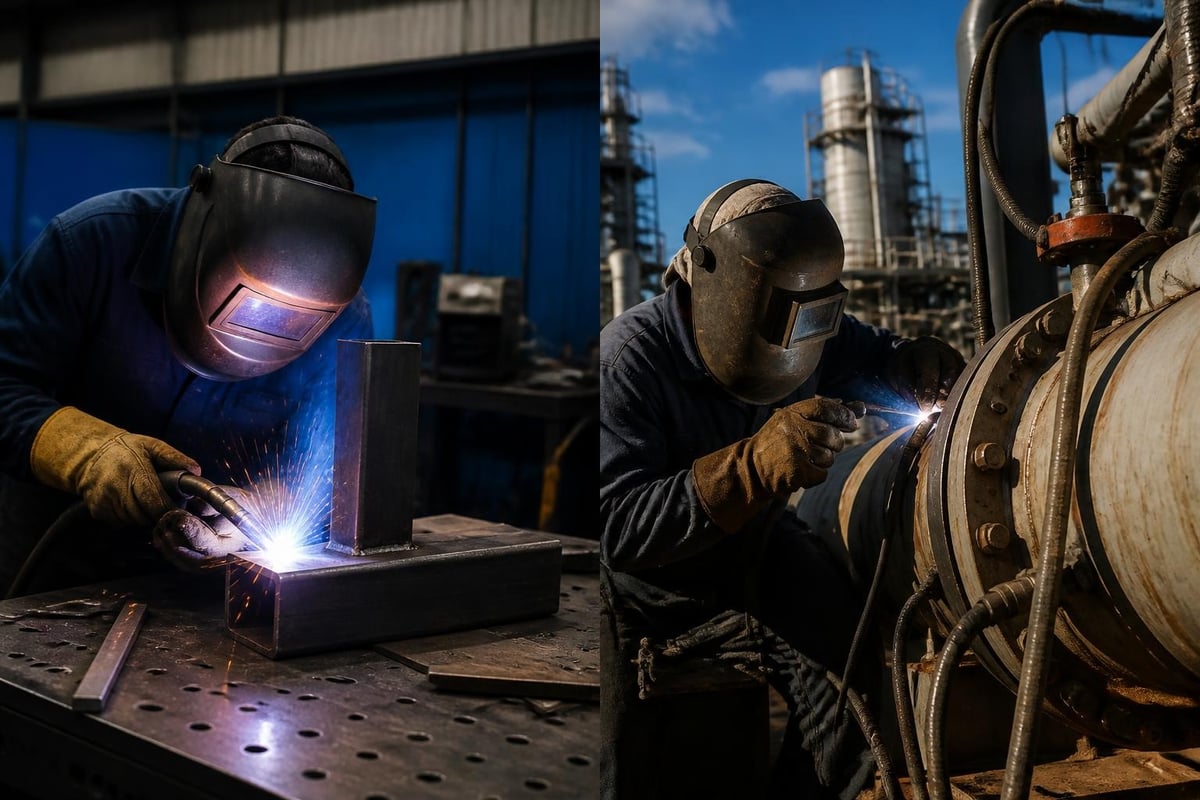
Shop welding provides controlled conditions, access to overhead cranes, positioners, and environmental protection. Complex fabrication, precision machining integration, and large assemblies often benefit from shop work. However, many industrial applications require on-site repairs, modifications, or installations where transportability makes field welding the only practical option.
Look for providers equipped with:
- Mobile welding rigs with on-board power generation
- Portable environmental controls (tents, heaters, ventilation)
- Field-portable inspection equipment (UT, MT, PT capabilities)
- Multiple truck deployment for large-scale shutdowns
- Experience working in active industrial environments
Industry-Specific Certification Requirements
Different sectors demand specific certifications and compliance standards. When searching for certified welding services near me, understanding your industry's requirements prevents costly restarts or rejected work.
Oil and Gas Sector Requirements
Oil and gas operations typically require the most stringent certifications. Beyond basic welder qualification, projects often demand:
API 1104 compliance for pipeline work, including documented procedures for each pipe grade, diameter range, and wall thickness. Field welding on gathering lines or transmission systems requires procedures qualified in the 6G position (pipe at 45 degrees), demonstrating the welder can handle any orientation encountered in practice.
ASME Section VIII certification for pressure vessels, separators, and storage tanks. Many oil field facilities operate under ASME jurisdiction, requiring fabricators to hold appropriate stamps (U, U2, or S depending on application).
Specialized procedures for sour service, high-pressure applications, or exotic alloys. Hydrogen sulfide environments, for example, require specific preheat and heat treatment protocols documented in qualified procedures.
When evaluating certified welding services near me for oilfield maintenance, verify the provider maintains current procedures for your specific applications and can document compliance with operator-specific requirements.
Aggregate and Recycling Equipment Certification
Aggregate processing and recycling operations face unique challenges: high-wear applications, mixed materials, and cost-sensitive repairs that still demand reliability. While these industries may not require ASME pressure vessel certification, they benefit from other credentials.
AWS D1.1 structural certification ensures conveyor frames, support structures, and equipment housings meet engineered load requirements. Heavy equipment used in aggregate processing experiences continuous vibration and impact loading; proper welding prevents catastrophic failures.
Hardfacing and wear plate experience matters tremendously. Equipment like crusher jaws, screen decks, and conveyor chutes require specialized welding techniques to apply wear-resistant materials. Not every shop claiming to offer certified welding services near me possesses the expertise to properly apply chromium carbide overlays or high-carbon hardfacing alloys.
Field repair capabilities become critical when a production line goes down. Aggregate plants and recycling facilities often operate 24/7 during peak seasons. Finding certified welding services near me with after-hours response and experienced field technicians minimizes costly downtime.
The Certification Process: What Qualified Shops Must Maintain
Understanding what certified providers must do to maintain their credentials helps you appreciate the value they bring and evaluate their operational maturity.
Documented Welding Procedures and Qualifications
Every certified welding operation maintains a library of qualified Welding Procedure Specifications (WPS). These documents detail exactly how each type of weld must be executed: base materials, filler metals, preheat requirements, interpass temperatures, heat input limits, post-weld heat treatment, and dozens of other parameters.
Before a WPS can be used in production, it must be qualified through testing. The shop creates Procedure Qualification Records (PQR) by welding test coupons according to proposed parameters, then subjecting those coupons to destructive testing: tensile tests, bend tests, impact tests, and macro examination. Only after passing these tests can the procedure be used on actual work.
When you engage certified welding services near me, you're paying for this investment in procedure development and qualification. A mature shop may maintain hundreds of qualified procedures covering different material combinations, processes, and positions.
Welder Performance Qualification Records
Individual welders must also qualify to each procedure they'll use. The shop maintains Welder Performance Qualification Records (WPQR or welder certs) documenting each person's demonstrated ability to execute specific procedures.
These qualifications expire if not maintained through continuous practice or periodic retesting. Reputable certified welding services near me track expiration dates and proactively retest welders before credentials lapse. This administrative burden represents a significant investment in quality assurance.
Ask potential providers:
- How many welders do you employ with active certifications?
- What specific processes and positions are they qualified for?
- When were certifications last renewed?
- Do you maintain in-house testing capability or use third-party test facilities?
- Can you provide copies of welder certs for personnel assigned to my project?
Beyond Basic Certification: Advanced Capabilities to Consider
While basic certification establishes minimum competence, advanced capabilities separate truly exceptional certified welding services near me from merely adequate providers.
Specialty Process Expertise
Modern industrial applications increasingly require processes beyond basic stick welding. When evaluating providers, consider whether they offer:
| Process | Applications | Key Advantages |
|---|---|---|
| TIG (GTAW) | Exotic alloys, root passes, precision work | Superior quality, minimal distortion, excellent corrosion resistance |
| MIG (GMAW) | Production welding, thicker materials | High deposition rates, good penetration, economical |
| Flux-Cored (FCAW) | Field welding, thick sections, all-position | Wind resistant, deep penetration, productive |
| Submerged Arc (SAW) | Heavy fabrication, long seams | Highest deposition rates, excellent weld quality, minimal spatter |
| Orbital TIG | Sanitary piping, tube-to-tubesheet | Automated consistency, complex joint access, pharmaceutical/food grade |
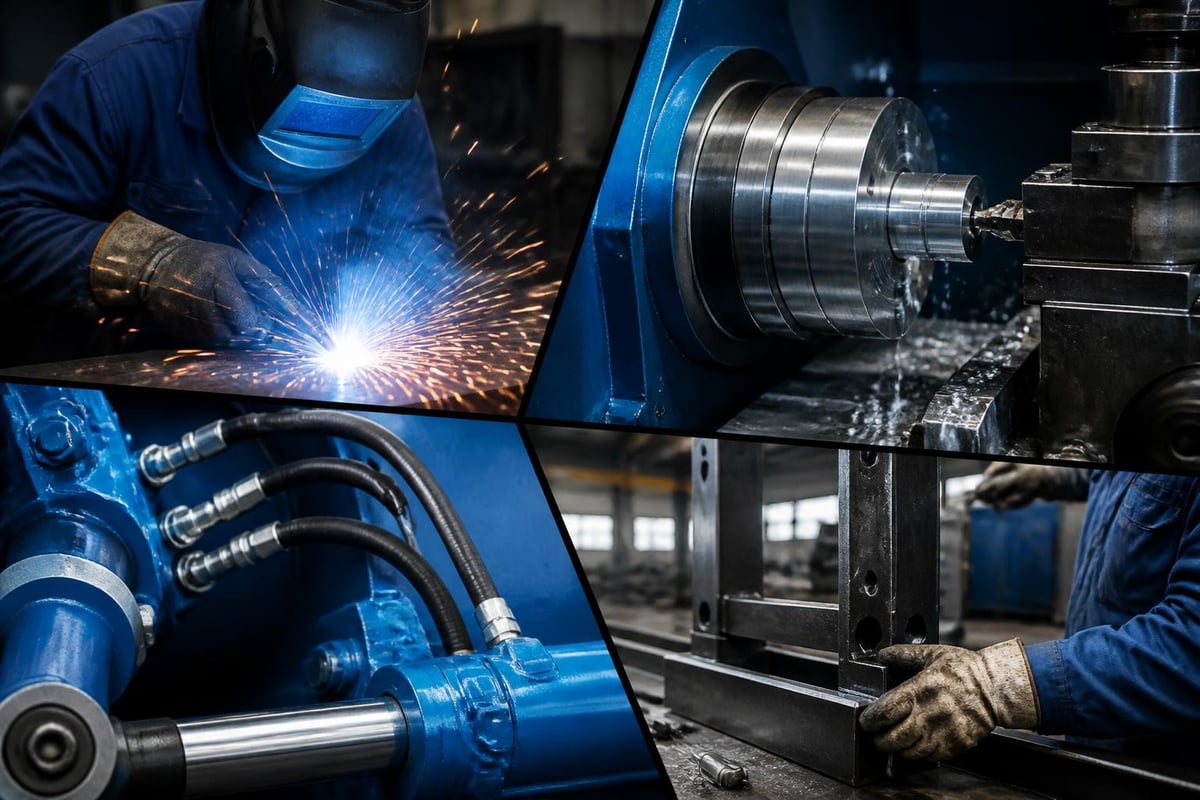
For businesses requiring precision machining services integrated with fabrication, finding certified welding services near me that also offer CNC machining creates significant advantages. Components can be machined and welded in one location, maintaining tolerances and reducing transit damage risks.
Complementary Service Integration
The most valuable certified welding services near me function as complete solution providers, not just welding shops. Integration with related capabilities streamlines project execution and consolidates vendor management.
Machining and welding integration proves especially valuable for equipment repair. When a hydraulic cylinder rod fails, for example, the repair may require both machining to restore dimensions and welding to rebuild worn areas. Shops offering both hydraulic cylinder repair and welding can complete repairs faster and more economically than parceling work across multiple vendors.
Hydraulic systems expertise complements welding for industrial equipment service. Many welded assemblies incorporate hydraulic components; having technicians who understand both disciplines prevents interference problems and ensures proper system integration.
Water jetting capabilities support surface preparation and cutting operations. Understanding what waterjet cutting is used for and how it integrates with welding helps optimize fabrication sequences and part nesting strategies.
Cost Considerations and Value Assessment
Searching for certified welding services near me naturally raises cost questions. Understanding pricing structures and value drivers helps make informed decisions.
What Drives Pricing in Certified Welding Services
Several factors influence certified welding service costs:
Labor rates reflect welder skill level, certification maintenance, and prevailing regional wages. Certified welders command premium rates, but their lower rejection rates and faster work often deliver better total project economics than cheaper alternatives.
Overhead and compliance costs include procedure development, inspector salaries, equipment calibration, audits, and quality system maintenance. These expenses support the certification credentials you're paying for.
Material costs include not just filler metals but also consumables like shielding gas, electrodes, grinding wheels, and inspection materials. Certified shops specify materials by manufacturer and lot number for traceability, sometimes increasing costs versus commodity alternatives.
Travel and mobilization for field work can represent significant expenses. Certified welding services near me minimize these costs through proximity, but complex field setups still require specialized equipment, environmental controls, and extended travel time.
For planning purposes, request detailed estimates that break down these components. Understanding custom metal fabrication costs helps benchmark quotes and identify outliers.
Evaluating Total Cost of Ownership
The cheapest certified welding services near me rarely deliver the best value. Total cost of ownership includes:
- Initial welding costs
- Inspection and testing expenses
- Potential rework if quality issues arise
- Downtime costs if repairs fail prematurely
- Long-term reliability and warranty coverage
A weld that costs 20% less but fails in six months ultimately costs far more than a properly executed repair that lasts years. When selecting providers, prioritize quality credentials, proven track records, and comprehensive warranties alongside competitive pricing.
Questions to Ask When Vetting Certified Welding Providers
Before committing to any provider, ask these essential questions to verify capabilities and fit:
Certification and qualification questions:
- What specific certifications do you hold (company and individual welder levels)?
- Can you provide copies of your ASME stamps, AWS certifications, or other credentials?
- When were your certifications last audited or renewed?
- Do you maintain in-house welding inspection capability, and if so, what certifications do your inspectors hold?
Project-specific capability questions:
- Do you have qualified procedures that match my materials, thickness, and process requirements?
- Have you completed similar projects in my industry?
- Can you provide references from comparable applications?
- What is your typical turnaround time for projects of this scope?
Quality and compliance questions:
- What quality management system do you follow (ISO 9001, AS9100, etc.)?
- How do you document and track material certifications and traceability?
- What non-destructive testing capabilities do you offer in-house?
- How do you handle nonconforming work or weld repairs?
These questions, similar to those you'd ask when selecting questions to ask a machine shop, help separate qualified professionals from underprepared vendors.
Industry-Leading Standards and Accreditations
Beyond basic certifications, certain industry sectors require additional accreditations that demonstrate extraordinary quality system maturity.
Nadcap Accreditation for Aerospace and Defense
For businesses serving aerospace and defense markets, Nadcap accreditation represents the highest tier of welding qualification. This Performance Review Institute program conducts rigorous audits of welding processes, equipment, personnel qualifications, and quality systems.
Nadcap accreditation addresses specific aerospace requirements outlined in standards like AS7110, which establishes welding requirements for national aerospace and defense contractors. The audit process examines everything from welder training records to calibration systems to environmental controls.
While most industrial manufacturing doesn't require Nadcap credentials, understanding this accreditation level helps appreciate the quality systems mature certified welding services near me implement even for non-aerospace work.
ISO 3834 for International Quality Standards
Companies exporting products to European markets or working with multinational corporations often encounter ISO 3834 requirements, which specify comprehensive quality requirements for fusion welding of metallic materials.
This standard addresses manufacturer quality requirements, including technical review, welding coordination, production planning, identification and traceability, and post-weld heat treatment. ISO 3834 certification demonstrates that a welding fabricator maintains systems comparable to European Welding Federation standards.
For businesses in the Western United States serving global markets, finding certified welding services near me with ISO 3834 compliance facilitates export opportunities and multinational project participation.
Emergency Response and Field Service Considerations
Industrial equipment doesn't break down on convenient schedules. The best certified welding services near me offer responsive field service for emergency repairs and unplanned maintenance.
What Constitutes True Emergency Welding Capability
24/7 availability means more than an answering service. True emergency response requires:
- Standby duty welders with active certifications
- Fully equipped mobile welding rigs ready to deploy
- Spare parts inventory for common repair materials
- On-call inspection services to verify completed repairs
- Established relationships with after-hours testing labs
When evaluating certified welding services near me for emergency support, verify their average response time for after-hours calls and ask about recent emergency deployments. Shops that handle frequent emergency work maintain systems and staffing levels that others cannot match.
Field Welding for Operating Facilities
Many industrial facilities require welding repairs on operating equipment or in hazardous areas. This demands additional capabilities beyond basic certification:
Hot work permit familiarity including gas testing, fire watch procedures, and confined space protocols. Welders working in aggregate plants, recycling facilities, or oil and gas installations must understand facility-specific safety requirements.
Minimal-impact repair techniques that limit downtime and avoid disrupting adjacent operations. Experienced field welders plan access, material staging, and work sequences to minimize production interruption.
Multi-shift coordination to execute repairs during maintenance windows or planned shutdowns. For facilities operating continuous processes, certified welding services near me must coordinate with production teams to maximize efficiency during limited access periods.
Making the Final Selection Decision
After researching certifications, evaluating capabilities, and interviewing potential providers, use these final criteria to select certified welding services near me for your project.
Create a Weighted Decision Matrix
Assign importance weights to factors that matter most for your application:
| Selection Criteria | Weight (%) | Provider A Score | Provider B Score | Provider C Score |
|---|---|---|---|---|
| Relevant certifications | 25 | |||
| Geographic proximity | 15 | |||
| Field service capability | 20 | |||
| Complementary services | 10 | |||
| Industry experience | 15 | |||
| References and reputation | 10 | |||
| Pricing competitiveness | 5 |
This structured approach removes emotion from the decision and ensures you prioritize factors that truly impact project success rather than defaulting to the lowest bidder.
Request and Verify References
Always contact references before final selection. Prepare specific questions about:
- Project complexity and how it compared to your needs
- Adherence to schedule and budget commitments
- Responsiveness to issues or change requests
- Quality of final deliverables and any post-completion support
- Whether they would hire the provider again
Strong references from similar applications provide confidence that certified welding services near me will deliver comparable results on your project.
Long-Term Partnership Value
The best outcome when searching for certified welding services near me isn't just completing one successful project-it's establishing a long-term partnership that supports ongoing operational needs.
Benefits of Consistent Provider Relationships
Familiarity with your equipment develops over time. A welding partner who's repaired your aggregate screens, recycling equipment, or oil field machinery multiple times understands your specific challenges, material histories, and performance expectations. This accumulated knowledge makes each subsequent project faster and more efficient.
Inventory and logistics optimization improves when you concentrate work with fewer vendors. Certified welding services near me that handle most of your repair and fabrication needs can maintain common spare parts, pre-qualified procedures for your frequent applications, and dedicated contacts who understand your priorities.
Emergency response improves through relationship building. When certified welding services near me know your facilities, access requirements, and critical equipment, emergency mobilization happens faster with fewer coordination delays.
Cost efficiencies emerge through volume relationships, blanket purchase agreements, and reduced transaction overhead. Rather than soliciting bids for every small repair, establish framework agreements with preferred certified welding services near me that specify pricing, terms, and service level expectations.
Supporting Your Industrial Operations Throughout the Western United States
For businesses operating across Colorado, Wyoming, Utah, and neighboring states, regional coverage matters tremendously. Finding certified welding services near me with multiple service vehicles and broad geographic coverage prevents the frustration of maintaining separate vendor relationships in each operating region.
Operations spanning the Western United States benefit from providers like LTJ Industrial Services, which combines certified welding capabilities with comprehensive machining, hydraulics, and fabrication services throughout the region. This integration supports everything from routine maintenance to complex emergency repairs without coordinating multiple specialists.
Finding qualified certified welding services near me requires evaluating certifications, capabilities, and practical service factors that affect project outcomes. The right partner brings not just technical credentials but also responsive service, industry-specific experience, and complementary capabilities that streamline your operations. Whether you need emergency field repairs on recycling equipment, precision fabrication for aggregate processing systems, or ongoing maintenance support across multiple facilities, LTJ Industrial Services delivers certified welding, machining, and fabrication expertise throughout the Western United States to keep your operations running efficiently.