When manufacturers and industrial service providers mention ASME certification, they're signaling a commitment to the highest standards of safety, quality, and engineering excellence. For businesses in the welding, fabrication, and machining sectors, understanding what does ASME certification mean is essential to ensuring compliance, maintaining client trust, and delivering equipment that meets rigorous safety requirements. This certification represents more than a stamp on a piece of equipment-it validates that fabrication processes, materials, and quality control systems meet the stringent requirements set forth by the American Society of Mechanical Engineers.
Understanding ASME and Its Role in Industrial Manufacturing
The American Society of Mechanical Engineers (ASME) is a globally recognized organization that establishes engineering codes and standards for mechanical systems and equipment. Founded in 1880, ASME develops comprehensive technical standards that govern the design, fabrication, inspection, and testing of pressure-retaining equipment.
What does ASME certification mean in practical terms? It signifies that a manufacturer or service provider has demonstrated the capability to construct pressure vessels, boilers, piping systems, and related equipment according to ASME's Boiler and Pressure Vessel Code (BPVC). This code encompasses multiple sections covering different types of equipment and construction methods.
The ASME Boiler and Pressure Vessel Code
The ASME Boiler & Pressure Vessel Code (BPVC) serves as the foundation for ASME certification. This comprehensive code includes:
- Section I: Power Boilers
- Section II: Materials specifications
- Section IV: Heating Boilers
- Section V: Nondestructive Examination
- Section VIII: Pressure Vessels (Divisions 1, 2, and 3)
- Section IX: Welding and Brazing Qualifications
- Section X: Fiber-Reinforced Plastic Pressure Vessels
Each section addresses specific equipment types and manufacturing requirements. For companies like LTJ Industrial Services, which provides welding and fabrication services throughout the Western United States, understanding these code requirements is fundamental to delivering compliant, high-quality work.
The ASME Certification Process
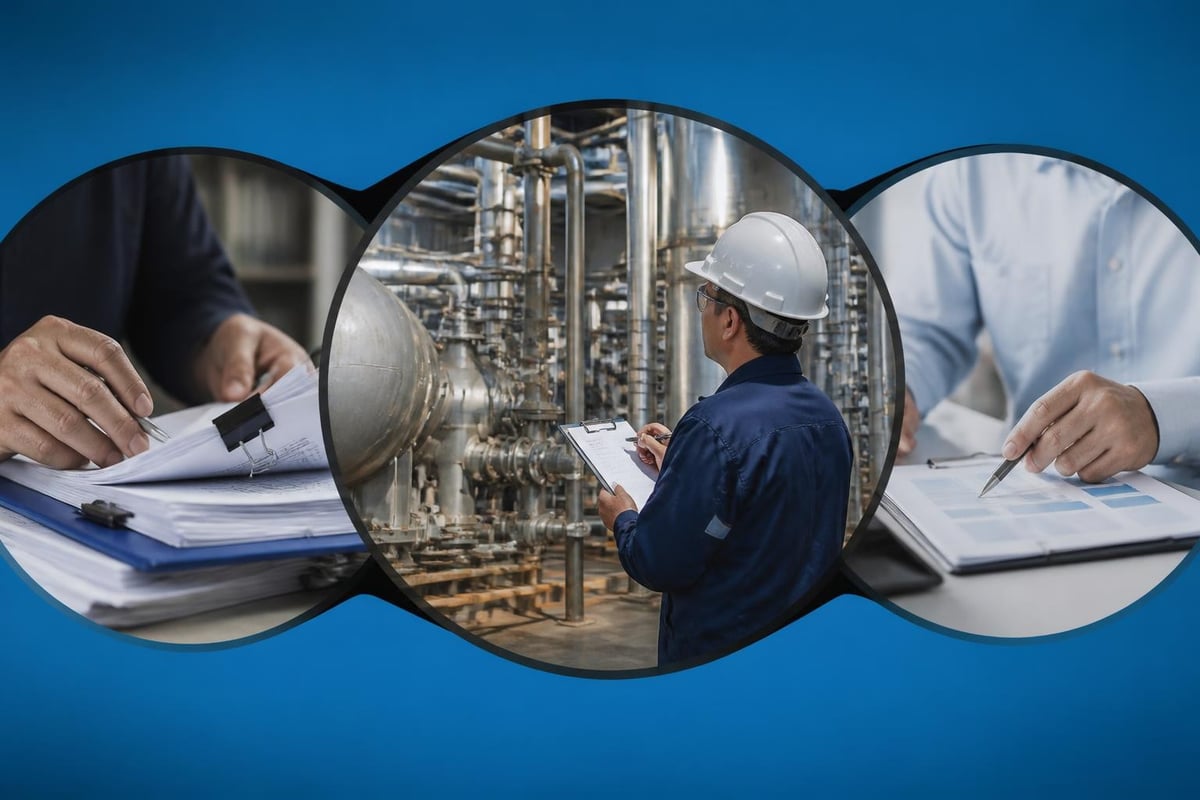
Understanding what does ASME certification mean requires examining how organizations obtain this credential. The certification process is rigorous and involves multiple stages designed to verify that a manufacturer possesses the necessary skills, equipment, and quality control systems.
Application and Initial Assessment
Organizations seeking ASME certification must complete a formal application through ASME’s certification process. This application includes:
- Submission of a quality control manual
- Documentation of welding procedures and qualifications
- Evidence of qualified personnel
- Facility and equipment descriptions
- Payment of applicable fees
The quality control manual must demonstrate compliance with ASME Section VIII Division 1, Mandatory Appendix 10, or equivalent sections depending on the scope of certification sought.
Survey and Inspection
After the initial application review, ASME dispatches an authorized inspector to conduct an on-site survey. This comprehensive inspection evaluates:
- Manufacturing facilities and equipment capabilities
- Quality control procedures and documentation systems
- Welding procedures and welder qualifications
- Material handling and traceability systems
- Nondestructive examination capabilities and procedures
- Management oversight and responsibility assignments
The survey ensures that the organization can consistently produce code-compliant products. For businesses serving industries like recycling, aggregate, and oil & gas, this verification is critical to maintaining operational safety.
Ongoing Compliance and Renewal
ASME certification is not a one-time achievement. Certificate holders must undergo periodic renewal surveys, typically every three years. Between surveys, manufacturers must:
- Maintain current quality control procedures
- Keep welder qualifications up to date
- Document all code construction activities
- Participate in ASME's Joint Review process when required
- Respond to any technical inquiries or discrepancies
| Certification Stage | Timeframe | Key Requirements |
|---|---|---|
| Initial Application | 30-60 days | QC manual, procedures, fees |
| Survey Scheduling | 60-90 days | Facility readiness, documentation |
| On-Site Inspection | 1-3 days | Equipment, personnel, processes |
| Certificate Issuance | 30 days post-survey | Successful survey completion |
| Renewal Survey | Every 3 years | Continued compliance demonstration |
Types of ASME Certifications and Stamps
What does ASME certification mean when you see different stamp designations? ASME issues various certificate types, each authorizing specific manufacturing activities and represented by distinct code stamps.
Common ASME Certificate Designations
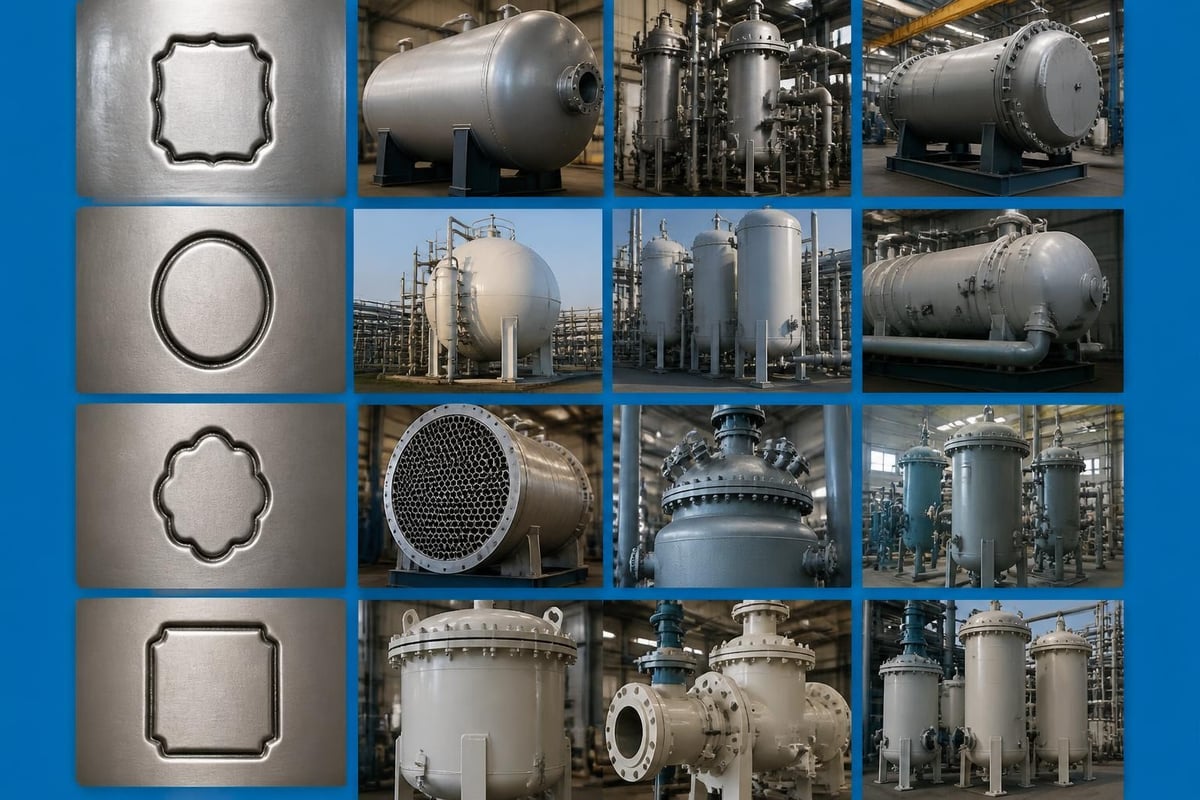
"U" Stamp (Section VIII, Division 1): The most common certification for unfired pressure vessels. This stamp authorizes construction of pressure vessels operating above 15 PSIG, including tanks, reactors, heat exchangers, and similar equipment used extensively in industrial manufacturing.
"S" Stamp (Section I): Authorizes construction of power boilers generating steam for power generation or process applications.
"PP" Stamp (Section VIII, Division 3): For high-pressure vessels, typically those operating above 10,000 PSIG, used in specialized industrial applications.
"R" Stamp: Issued for organizations performing repairs and alterations to pressure-retaining equipment, critical for maintenance and industrial welding contractors providing field services.
National Board Registration
Many ASME certificate holders also pursue National Board registration, which provides additional recognition and facilitates equipment registration across jurisdictions. The National Board of Boiler and Pressure Vessel Inspectors maintains a comprehensive database of registered manufacturers and equipment.
The "NB" symbol on pressure equipment indicates registration with the National Board, providing an additional layer of traceability and quality assurance. This registration is particularly valuable for equipment that may be relocated or sold across state or international boundaries.
Why ASME Certification Matters for Industrial Operations
For businesses in the aggregate, recycling, and oil & gas sectors, understanding what does ASME certification mean directly impacts operational safety, regulatory compliance, and project success.
Safety and Risk Mitigation
Pressure vessels and boilers represent significant hazard potential. Historical incidents involving catastrophic pressure equipment failures led to the development of the ASME code in the early 20th century. ASME certification ensures:
- Proper material selection for operating conditions
- Adequate design safety factors
- Qualified welding procedures and personnel
- Appropriate inspection and testing protocols
- Documented quality control throughout fabrication
For companies operating recycling equipment or maintaining oilfield systems, this certification provides confidence that pressure-retaining components meet safety standards.
Regulatory Compliance and Jurisdictional Requirements
Most U.S. states and Canadian provinces have adopted ASME codes into their regulatory frameworks for pressure equipment. The National Board maintains documentation of jurisdictional requirements showing where ASME certification is legally mandated.
Operating uncertified pressure equipment in jurisdictions requiring ASME compliance can result in:
- Equipment shutdown orders
- Significant financial penalties
- Voided insurance coverage
- Legal liability exposure
- Project delays and contract breaches
International Recognition and Market Access
While ASME is a U.S.-based organization, its codes have gained international acceptance. However, it's important to distinguish between ASME certification and other regulatory systems. The European Union’s Pressure Equipment Directive represents a different conformity assessment approach, though many manufacturers hold both ASME certification and PED compliance.
Similarly, the UK’s Health & Safety Executive provides guidance on pressure systems that references internationally recognized codes like ASME. This global recognition makes ASME certification valuable for manufacturers serving international markets.
ASME Certification for Welding and Fabrication Companies
What does ASME certification mean specifically for welding and fabrication service providers? For companies specializing in custom fabrication and field services, certification demonstrates capability and opens market opportunities.
Section IX Welder Qualification
ASME Section IX governs welding and brazing qualifications. Even companies not holding an ASME manufacturing certificate often maintain Section IX-qualified welders. These qualifications:
- Validate welder skill for specific processes (SMAW, GMAW, GTAW, FCAW, SAW)
- Define qualified base material groups
- Establish position limitations (flat, horizontal, vertical, overhead)
- Set thickness and diameter ranges
- Require periodic renewal through continuity of work
For a company providing custom metal fabrication services, maintaining Section IX-qualified welders ensures capability to work on code-controlled equipment.
Quality Control System Requirements
Beyond individual welder qualifications, ASME certification requires a comprehensive quality control system. This system must address:
- Design control: Ensuring designs meet code requirements
- Material control: Verifying material certifications and traceability
- Examination and inspection: Implementing appropriate NDT methods
- Correction of nonconformities: Procedures for addressing defects
- Welding control: Managing procedure qualifications and welder performance
- Records retention: Maintaining documentation for equipment lifetime
These requirements ensure consistent quality across all production activities, from initial design through final inspection.
Benefits for Service Providers
Companies offering field welding, repair, and maintenance services gain several advantages from ASME certification:
- Enhanced credibility with industrial clients requiring code compliance
- Expanded service capabilities to include pressure equipment repairs
- Competitive differentiation in bidding for major projects
- Reduced liability through adherence to established standards
- Access to specialized markets requiring certified manufacturers
For businesses serving sectors like aggregate processing or oil and gas, where pressure vessels and piping systems are common, this certification becomes a business necessity.
Common Misconceptions About ASME Certification
Understanding what does ASME certification mean also involves clarifying what it does not mean. Several misconceptions persist in the industry.
Certification Versus Code Construction
Not all code-compliant work requires ASME certification. In some jurisdictions and for certain equipment types, manufacturers may build to ASME code requirements without holding an ASME certificate. However, they cannot apply the ASME code stamp without proper certification.
Individual Versus Company Certification
ASME certifies organizations, not individuals. While individual welders, inspectors, and engineers may hold personal qualifications (CWI, PE licenses, welder certifications), the ASME manufacturing certificate belongs to the company and its quality system.
One-Time Versus Ongoing Commitment
Some organizations mistakenly view certification as a one-time achievement. In reality, maintaining ASME certification requires continuous compliance, updated procedures, ongoing training, and periodic renewal surveys.
| Misconception | Reality |
|---|---|
| Any welder can work on ASME jobs | Only qualified welders following qualified procedures |
| Certification never expires | Requires renewal every three years |
| The stamp is just paperwork | Represents comprehensive quality system verification |
| All pressure vessels need ASME stamps | Depends on jurisdiction and operating parameters |
| Certification is expensive and unnecessary | Often legally required; prevents costly failures |
Practical Implications for Industrial Manufacturing
What does ASME certification mean for day-to-day operations in welding, fabrication, and machining? The practical implications extend across multiple business functions.
Project Bidding and Contract Requirements
Many industrial projects specify ASME-certified fabricators in their bid requirements. Without certification, companies cannot compete for these opportunities. Contract specifications often require:
- Specific ASME stamp designations (U, S, R, etc.)
- Authorized Inspector sign-off
- Data reports and documentation
- Material traceability records
- Final hydrostatic or pneumatic testing
Documentation and Traceability
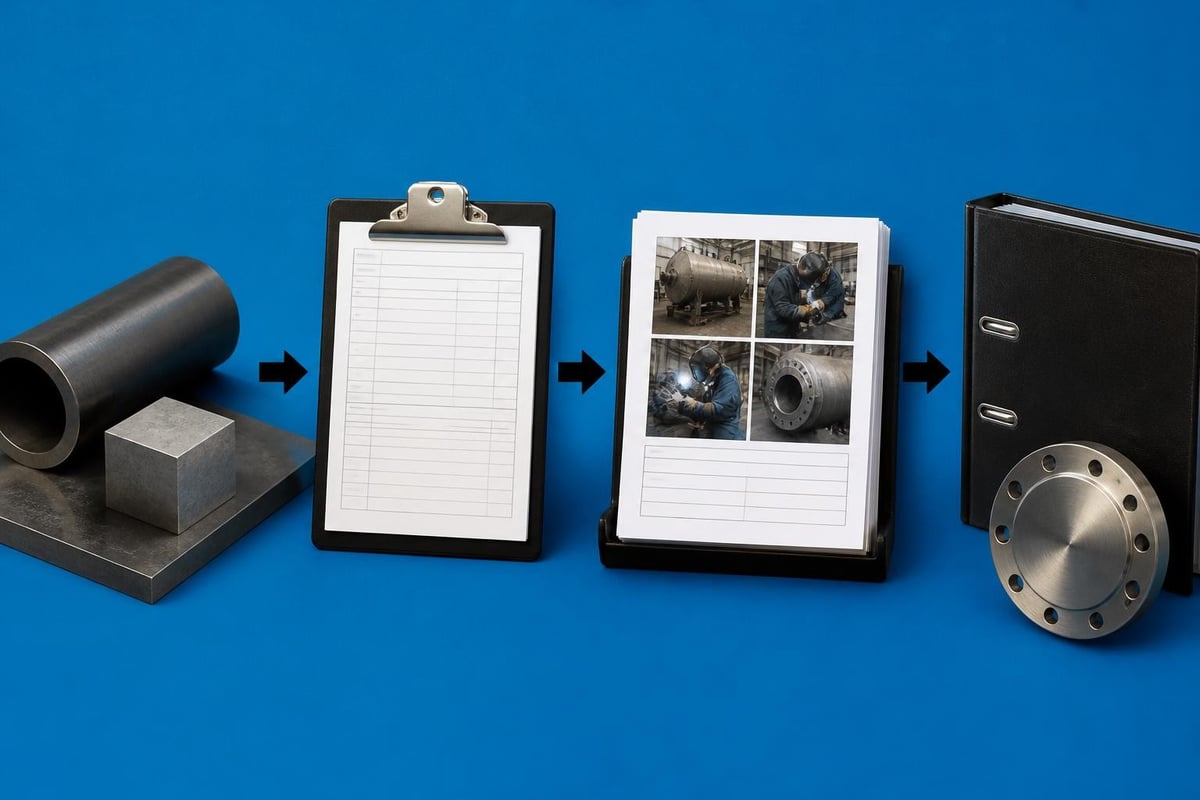
ASME work generates extensive documentation. For each code-stamped vessel or component, manufacturers must produce:
- Manufacturer's Data Reports (U-1, U-1A, etc.)
- Material test reports showing chemical and mechanical properties
- Welding procedure specifications (WPS) and procedure qualification records (PQR)
- Radiographic or ultrasonic examination reports
- Heat treatment charts when required
- Hydrostatic test documentation
This documentation follows the equipment throughout its service life and supports regulatory inspections, insurance requirements, and future repairs.
Integration with Other Services
For companies offering comprehensive industrial services, ASME certification integrates with complementary capabilities. A business providing hydraulic cylinder repair may encounter pressure-retaining components requiring code compliance. Similarly, industrial gearbox repair and machining services may involve equipment connected to pressure systems.
Selecting ASME-Certified Partners and Contractors
Industrial facility operators must often select fabrication and welding contractors for new equipment or repairs. Understanding what does ASME certification mean helps in making informed decisions.
Verification Steps
Before engaging a contractor for pressure equipment work:
- Verify current certification status through ASME's online database
- Confirm appropriate stamp designations for your specific needs
- Review the scope of certification (pressure range, construction methods)
- Check National Board registration if applicable
- Request sample data reports from similar projects
Questions to Ask Potential Contractors
- How long have you held your ASME certification?
- What are your most recent survey results?
- Do you maintain Section IX-qualified welders on staff?
- What NDT capabilities do you have in-house?
- Can you provide references from similar code work?
- How do you handle design review and engineering support?
Red Flags
Be cautious of contractors who:
- Cannot produce current certification documentation
- Claim to "build to code" without proper certification for stamped work
- Lack appropriate insurance covering code construction
- Have no quality control manual or documented procedures
- Cannot demonstrate welder qualification records
Future Trends in ASME Certification and Code Development
The ASME code continues to evolve, reflecting new materials, manufacturing technologies, and industry needs. Recent developments include:
Advanced Manufacturing Methods
ASME is developing standards for additive manufacturing (3D printing) of pressure components. Section VIII Division 2 has incorporated provisions for advanced analysis methods and new construction techniques.
Alternative Materials
Code revisions increasingly address composite materials, advanced alloys, and specialty metals used in extreme service conditions. These updates expand options for equipment designers while maintaining safety standards.
Digital Documentation and Inspection
Electronic data reports, digital radiography, and automated inspection technologies are being integrated into code requirements. These advances streamline documentation while maintaining traceability and verification.
Global Harmonization
Efforts continue to harmonize ASME codes with international standards, facilitating global trade while maintaining rigorous safety requirements. This harmonization benefits manufacturers serving international markets.
Understanding what does ASME certification mean is fundamental for anyone involved in pressure equipment fabrication, maintenance, or operation. This certification represents a comprehensive commitment to safety, quality, and professional excellence that protects workers, facilities, and the public. When your operations require welding, fabrication, or machining services for pressure equipment or related industrial systems, partnering with experienced professionals ensures code compliance and operational reliability. LTJ Industrial Services brings comprehensive expertise in welding, fabrication, and machining to commercial and industrial clients throughout the Western United States, delivering quality workmanship that meets the demanding standards of the recycling, aggregate, and oil & gas industries.