Industrial facilities across the Western United States face daily decisions about equipment maintenance, structural repairs, and fabrication projects that require professional welding expertise. Understanding when welding is needed and how to identify quality welding services can mean the difference between operational efficiency and costly downtime. From aggregate processing plants to oil and gas operations, recognizing the signs that welding needed has become essential knowledge for facility managers, plant supervisors, and operations directors tasked with maintaining critical infrastructure and equipment.
Identifying When Professional Welding Services Are Required
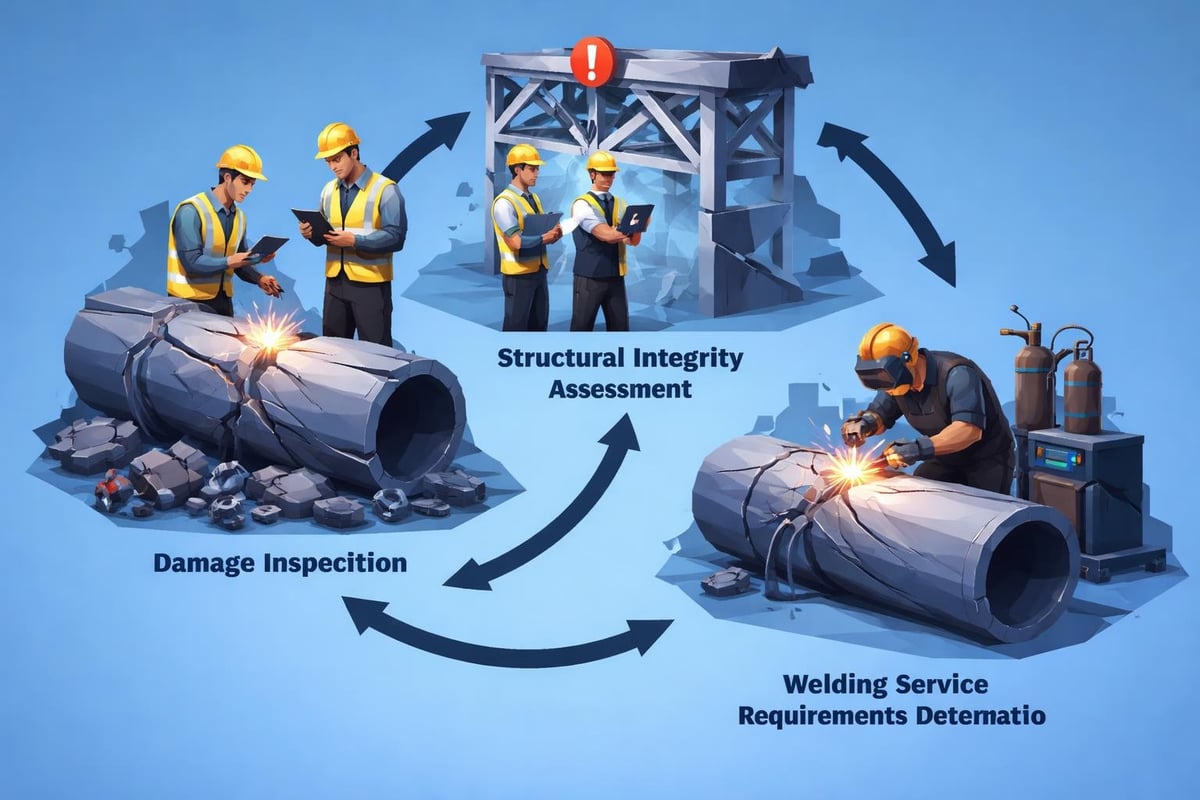
Manufacturing and industrial operations encounter numerous situations where welding needed becomes apparent. Structural damage to support beams, cracks in pressure vessels, broken conveyor components, and worn equipment mounts all signal the need for certified welding professionals. These issues rarely resolve themselves and often escalate into larger safety hazards or production bottlenecks if left unaddressed.
Equipment failure represents one of the most common scenarios requiring immediate welding intervention. Hydraulic systems, processing machinery, and material handling equipment all contain welded joints that experience stress, vibration, and environmental degradation over time. When these joints fail, production stops, and welding needed becomes a critical priority for restoring operations.
Common Industrial Applications Requiring Welding
Different industries encounter unique welding requirements based on their operational demands and equipment specifications. Understanding these applications helps facility managers plan maintenance schedules and budget appropriately for welding services.
Recycling Operations:
- Conveyor system repairs and modifications
- Sorting equipment frame reinforcement
- Hopper and container fabrication
- Material handling chute restoration
Aggregate Production:
- Crusher frame repairs
- Screen deck modifications
- Feeder equipment maintenance
- Storage bin fabrication and repair
Oil and Gas Facilities:
- Pipeline repairs and installations
- Tank fabrication and modification
- Wellhead equipment maintenance
- Support structure reinforcement
The complexity of these applications often requires specialized knowledge beyond basic welding capabilities. Metal fabrication and welding services must address material compatibility, environmental conditions, and operational requirements specific to each industry sector.
Safety Considerations When Welding Is Needed
Safety remains paramount whenever welding needed arises in industrial settings. The American Welding Society outlines five essential welding safety tips that all certified professionals follow to protect workers and facilities during welding operations.
Proper personal protective equipment represents the first line of defense against welding hazards. Certified welders utilize helmets with appropriate lens shading, flame-resistant clothing, welding gloves, and steel-toed boots to minimize exposure to sparks, molten metal, and ultraviolet radiation. These precautions become even more critical in confined spaces or elevated work areas common in industrial facilities.
Regulatory Compliance and Standards
Industrial welding operations must comply with multiple regulatory frameworks that govern workplace safety and welding quality. OSHA provides comprehensive standards for welding, cutting, and brazing across various industrial sectors, establishing minimum safety requirements that all operations must meet.
| Regulation | Primary Focus | Industry Application |
|---|---|---|
| OSHA 1910 Subpart Q | General industry welding safety | Manufacturing facilities |
| ANSI Z49.1-2021 | Welding process safety guidelines | All welding operations |
| AWS D1.1 | Structural welding code | Construction and fabrication |
| ASME Section IX | Welding qualification procedures | Pressure vessels and piping |
Compliance with these standards protects both workers and facilities while ensuring that welding work meets quality benchmarks necessary for long-term structural integrity. Professional welding services maintain current certifications and update procedures regularly to reflect evolving safety requirements.
Fire prevention measures require special attention in environments containing flammable materials or dust. SafetyCulture outlines ten welding safety rules emphasizing the importance of conducting welding in designated safe locations and preparing work areas to eliminate ignition sources. These precautions become particularly important in recycling facilities and aggregate operations where combustible materials may be present.
Evaluating Welding Service Providers
When welding needed becomes apparent, selecting the right service provider requires careful evaluation of credentials, capabilities, and experience. Not all welding companies possess the equipment, expertise, or certifications necessary for complex industrial applications.
Certification verification stands as the most critical step in evaluating potential welding providers. AWS-certified welders demonstrate proficiency in specific welding processes and materials through rigorous testing and examination. These certifications ensure that welders possess the technical knowledge and practical skills necessary for high-quality work.
Key Qualifications to Consider
Professional welding services should demonstrate comprehensive capabilities across multiple dimensions:
- Process expertise in MIG, TIG, stick, and flux-core welding
- Material knowledge spanning carbon steel, stainless steel, aluminum, and exotic alloys
- Code compliance with ASME, AWS, and industry-specific standards
- Field service capabilities for on-site repairs and installations
- Fabrication experience in custom component manufacturing
- Quality assurance through testing and inspection protocols
Companies offering custom welding services typically maintain diverse capabilities that address various industrial needs. This versatility proves valuable when projects require multiple welding processes or involve unusual materials and configurations.

Response time and availability represent additional considerations when welding needed arises from unexpected equipment failures. Emergency welding services that provide rapid response can minimize production downtime and prevent secondary damage from compromised structural integrity. Industrial fabrication services that maintain both shop and field capabilities offer greater flexibility in addressing urgent repair needs.
Shop Versus Field Welding Services
The decision between shop-based and field welding services depends on several factors including component size, equipment mobility, and operational constraints. Each approach offers distinct advantages for different project types and circumstances.
Shop welding provides controlled environment conditions that optimize weld quality and efficiency. Temperature regulation, proper ventilation, and stable work surfaces contribute to superior results, particularly for complex fabrication projects requiring precision. Components brought into fabrication shops benefit from specialized equipment, including positioners, fixtures, and advanced welding machines not easily transported to field locations.
Field welding becomes necessary when welding needed involves large structures, installed equipment, or components that cannot be removed from service locations. Heavy equipment welding frequently requires on-site service delivery due to equipment size and operational constraints. Mobile welding units bring professional capabilities directly to facilities, minimizing disruption to ongoing operations.
| Service Type | Primary Advantages | Best Applications |
|---|---|---|
| Shop Welding | Controlled environment, precision equipment | Custom fabrication, complex assemblies |
| Field Welding | On-site convenience, minimal equipment downtime | Structural repairs, large equipment |
| Portable Service | Flexibility, rapid response | Emergency repairs, remote locations |
The welding and fabrication services market increasingly emphasizes hybrid capabilities that combine shop fabrication with field installation and repair. This integrated approach allows single-source solutions for projects spanning initial fabrication through final installation and ongoing maintenance.
Material Considerations in Welding Projects
Material selection and compatibility significantly impact welding processes, quality outcomes, and long-term performance. When welding needed arises, understanding material properties and their welding characteristics helps ensure appropriate process selection and optimal results.
Carbon steel remains the most common material in industrial welding applications due to its strength, availability, and weldability. Standard structural grades like A36 and A572 respond well to most welding processes and provide reliable performance in diverse applications. However, higher carbon content steels require preheating and specific welding procedures to prevent cracking and ensure proper joint strength.
Specialized Materials and Welding Challenges
Stainless steel applications introduce additional complexity due to chromium content and heat sensitivity. Maintaining corrosion resistance requires careful heat control and appropriate filler material selection to preserve the protective chromium oxide layer. TIG welding often provides superior results for stainless steel due to precise heat control and clean weld appearance.
Aluminum Welding Considerations:
- Oxide layer removal through cleaning or specialized processes
- High thermal conductivity requiring increased heat input
- Susceptibility to porosity from moisture or contamination
- Material-specific filler wire selection
Exotic alloys found in oil and gas applications demand specialized expertise and certification. Materials like Inconel, Hastelloy, and duplex stainless steels require strict adherence to welding procedures, interpass temperature controls, and post-weld heat treatment protocols. Manufacturing and machining capabilities often complement welding services for projects involving these challenging materials.
Quality Assurance and Testing Protocols
Professional welding services implement comprehensive quality assurance measures to verify weld integrity and ensure code compliance. These protocols protect facility operators from potential failures that could compromise safety or operational efficiency.
Visual inspection represents the first level of quality verification, examining weld appearance for surface defects, proper bead profile, and complete fusion. Certified welding inspectors trained in AWS standards identify discontinuities that might indicate underlying problems requiring additional testing or repair.
Non-destructive testing methods provide deeper insight into weld quality without damaging completed joints. These techniques include:
- Ultrasonic testing for internal defect detection
- Radiographic examination revealing internal discontinuities
- Magnetic particle inspection identifying surface and subsurface cracks
- Dye penetrant testing for surface-breaking defects
- Pressure testing verifying joint integrity in piping and vessels
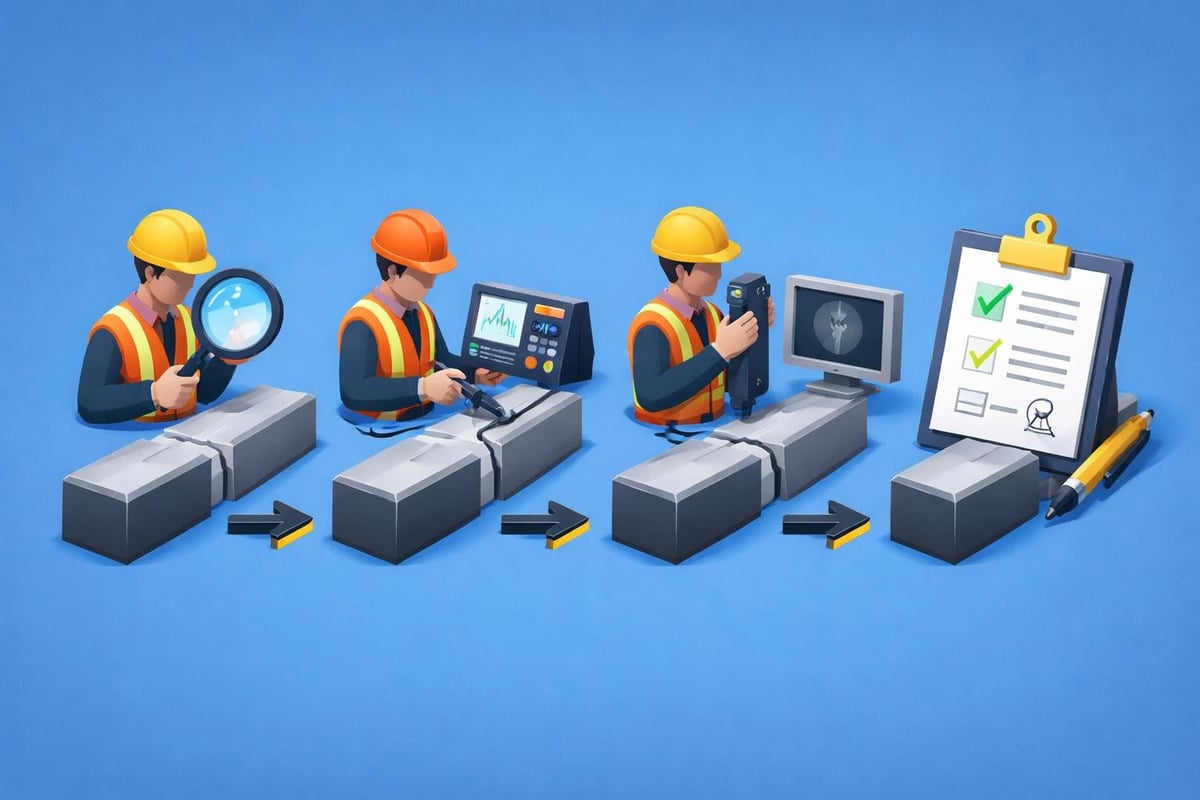
Documentation of welding procedures, welder qualifications, and inspection results creates accountability and provides reference for future maintenance. Proper record-keeping becomes particularly important for pressure vessels, structural components, and safety-critical systems where regulatory compliance requires detailed quality documentation. The ANSI Z49.1-2021 standard offers comprehensive guidelines on welding safety and quality management systems.
Project Planning and Scheduling
Effective planning minimizes disruption when welding needed becomes part of scheduled maintenance or improvement projects. Coordinating welding services with production schedules, equipment availability, and complementary trades ensures efficient project execution and reduces unnecessary downtime.
Preliminary assessment identifies project scope, material requirements, and timeline constraints. Detailed evaluation of existing conditions, access limitations, and safety considerations informs accurate project estimates and realistic scheduling. Custom metal fabrication projects particularly benefit from thorough planning that addresses design refinement, material procurement, and installation logistics.
Optimizing Welding Service Delivery
Strategic scheduling approaches maximize value and minimize operational impact:
- Planned outages: Coordinate welding work with scheduled maintenance windows
- Phased implementation: Break large projects into manageable segments
- Parallel processing: Conduct shop fabrication while preparing field installation
- Contingency planning: Prepare backup approaches for unexpected challenges
Resource coordination ensures that necessary equipment, materials, and support services align with welding timelines. Crane services, scaffolding, utilities, and safety equipment must be available when needed to prevent delays and maintain project momentum. Companies providing large-scale metal fabrication for construction projects develop sophisticated project management capabilities that integrate these complex logistical requirements.
Cost Considerations and Value Assessment
Understanding welding service costs requires evaluation beyond simple hourly rates or linear measurements. True project value encompasses quality, reliability, compliance, and long-term performance in addition to initial expense.
Labor costs typically represent the largest component of welding service pricing, reflecting welder skill level, certification requirements, and project complexity. Certified welders with specialized expertise command premium rates justified by superior quality and reduced risk of costly failures or rework. Field welding generally costs more than shop work due to travel time, equipment mobilization, and less controlled working conditions.
| Cost Factor | Impact Level | Value Consideration |
|---|---|---|
| Welder certification | High | Ensures code compliance and quality |
| Material selection | High | Affects durability and performance |
| Project complexity | Medium-High | Requires specialized expertise |
| Location (shop/field) | Medium | Influences efficiency and setup costs |
| Testing requirements | Medium | Verifies quality and compliance |
| Timeline urgency | Variable | Emergency service commands premium |
Material costs vary significantly based on alloy type, market conditions, and quantity requirements. Bulk purchasing power and established supplier relationships allow experienced fabricators to optimize material costs while maintaining quality standards. Hidden expenses like wasted material from improper procedures or failed inspections can substantially increase project costs when working with inexperienced providers.
Long-term value assessment considers total cost of ownership rather than focusing solely on initial project expense. Quality welding that extends equipment life, prevents failures, and maintains production efficiency delivers returns far exceeding modest savings from choosing low-cost providers. Industrial machinery refurbishment and maintenance programs demonstrate how strategic welding investments preserve asset value and optimize operational costs.
Environmental and Operational Factors
Industrial environments present unique challenges that influence welding procedures and outcomes. Temperature extremes, moisture, wind, contamination, and confined spaces all affect weld quality and require specific procedural adjustments when welding needed arises in challenging conditions.
Cold weather welding demands special attention to preheating requirements, moisture control, and proper storage of welding consumables. Electrodes and filler materials absorb moisture from cold air, potentially causing porosity and reduced weld strength. Professional welders maintain proper storage conditions and follow manufacturer recommendations for reconditioning electrodes exposed to adverse conditions.
Wind protection becomes critical for gas-shielded welding processes like MIG and TIG that rely on inert gas coverage to prevent atmospheric contamination. Field welding enclosures, windbreaks, and strategic positioning protect the weld pool while allowing adequate ventilation for fume control. Babcock International discusses crucial welding safety measures including environmental control and hazard mitigation strategies.
Contamination Prevention
Surface contamination from oil, grease, paint, rust, or scale compromises weld quality and must be removed before welding operations begin. Proper surface preparation through grinding, wire brushing, chemical cleaning, or blasting ensures clean base material that promotes proper fusion and prevents defects.
Critical Cleaning Requirements:
- Remove all paint and coatings within 2 inches of weld zone
- Grind rust and scale to bare metal
- Degrease surfaces using approved solvents
- Verify cleanliness through visual inspection
Confined space welding introduces additional safety requirements beyond standard precautions. Ventilation, gas monitoring, emergency procedures, and rescue planning become mandatory when welding needed occurs inside tanks, vessels, or enclosed structures. TRADESAFE offers welding safety rules focusing on protecting workers from fumes and gases in restricted environments.
Integration With Complementary Services
Welding rarely exists as an isolated activity within industrial facilities. Integration with machining, fabrication, hydraulics, and mechanical services creates comprehensive solutions that address complex maintenance and improvement projects more effectively than fragmented approaches.
Machining capabilities complement welding by providing precise component preparation, post-weld machining, and custom part manufacturing that supports welding projects. Mating surfaces requiring tight tolerances benefit from machined precision before welding, while post-weld machining restores critical dimensions affected by heat distortion. Companies offering machining and fabrication services deliver integrated solutions that eliminate coordination challenges between separate vendors.
Hydraulic system expertise proves valuable when welding needed involves equipment containing hydraulic components. Coordinated service delivery ensures proper system isolation, component protection, and functional testing after welding completion. This integrated approach prevents damage to sensitive hydraulic parts from welding heat, spatter, or electrical current.
Project Coordination Benefits
Single-source providers offering multiple complementary services deliver several advantages:
- Unified project management and accountability
- Streamlined communication and coordination
- Reduced scheduling conflicts and delays
- Consistent quality standards across all work phases
- Simplified procurement and vendor management
The coordination advantage becomes particularly apparent in complex refurbishment projects requiring welding, machining, hydraulic rebuilding, and mechanical assembly. Manufacturing projects that span multiple disciplines benefit from integrated service delivery that maintains project continuity and reduces interface issues between different trades.
Preventive Maintenance and Inspection Programs
Proactive identification of welding needs through regular inspection programs prevents unexpected failures and allows strategic scheduling of repairs during planned maintenance windows. Systematic evaluation of welded structures and equipment reveals developing problems before they escalate into emergency situations requiring costly expedited repairs.
Visual inspection programs conducted by qualified personnel identify early warning signs like surface cracks, corrosion at weld joints, mechanical damage, and signs of fatigue. Documentation of findings creates historical records that track deterioration rates and inform maintenance planning. Industrial Safety & Hygiene News provides quick tips on welding safety including proper inspection protocols.
Thermography and vibration analysis complement visual inspection by detecting problems not visible to the naked eye. Hot spots indicating stress concentration or poor heat dissipation often appear at welded connections experiencing excessive loading or fatigue. Early detection through predictive maintenance technology allows planned intervention before catastrophic failure occurs.
Implementing Effective Inspection Schedules
Risk-based inspection approaches prioritize resources toward critical equipment and high-consequence failure points:
- Critical systems: Monthly visual inspection, annual non-destructive testing
- Production equipment: Quarterly inspection, testing as conditions warrant
- Secondary structures: Annual visual inspection, testing every 3-5 years
- Low-risk components: Inspection during scheduled maintenance cycles
Inspection data feeds into maintenance planning systems that schedule welding services based on actual condition rather than arbitrary time intervals. This condition-based approach optimizes resource allocation and prevents both over-maintenance and unexpected failures. Service manufacturing operations benefit from data-driven maintenance scheduling that aligns welding services with actual equipment needs.
Recognizing when welding is needed and implementing appropriate professional services protects industrial operations from costly failures while maintaining production efficiency. Whether addressing emergency repairs, planned maintenance, or custom fabrication projects, partnering with experienced providers ensures quality outcomes that support long-term operational goals. LTJ Industrial Services brings comprehensive welding, fabrication, and machining expertise to commercial and industrial operations throughout the Western United States, delivering certified professional services that keep facilities operating safely and efficiently.