
The backbone of American manufacturing lies in the skilled hands of professionals who transform raw materials into precision components that power industries across the nation. United machinists represent a collective force of highly trained technicians whose expertise spans traditional manual machining to cutting-edge computer numerical control (CNC) operations. These professionals work collaboratively within manufacturing environments, bringing together decades of accumulated knowledge, apprenticeship training, and technological proficiency to meet the demanding requirements of commercial and industrial sectors.
The Evolution of Machinist Expertise in Modern Manufacturing
The machining profession has undergone dramatic transformation over the past several decades, yet the fundamental principles of precision, measurement, and material understanding remain constant. United machinists today must balance traditional skills with emerging technologies, creating a unique blend of old-world craftsmanship and digital innovation.
From Manual Operations to Computer-Controlled Precision
Modern machining operations integrate both conventional and CNC equipment to achieve optimal results. While CNC machines handle complex geometries and high-volume production runs, skilled machinists still rely on manual mills, lathes, and grinders for specialized tasks, prototyping, and small-batch work.
Key competencies for contemporary machinists include:
- Blueprint reading and geometric dimensioning and tolerancing (GD&T)
- CNC programming using G-code and CAM software
- Material science and heat treatment knowledge
- Precision measurement with micrometers, calipers, and coordinate measuring machines (CMM)
- Tool selection and cutting parameter optimization
The International Association of Machinists and Aerospace Workers has historically represented these skilled professionals, advocating for training standards and workplace safety across the industry. This organization has played a significant role in establishing the professional framework that guides modern machinist development.
Technical Training and Certification Pathways
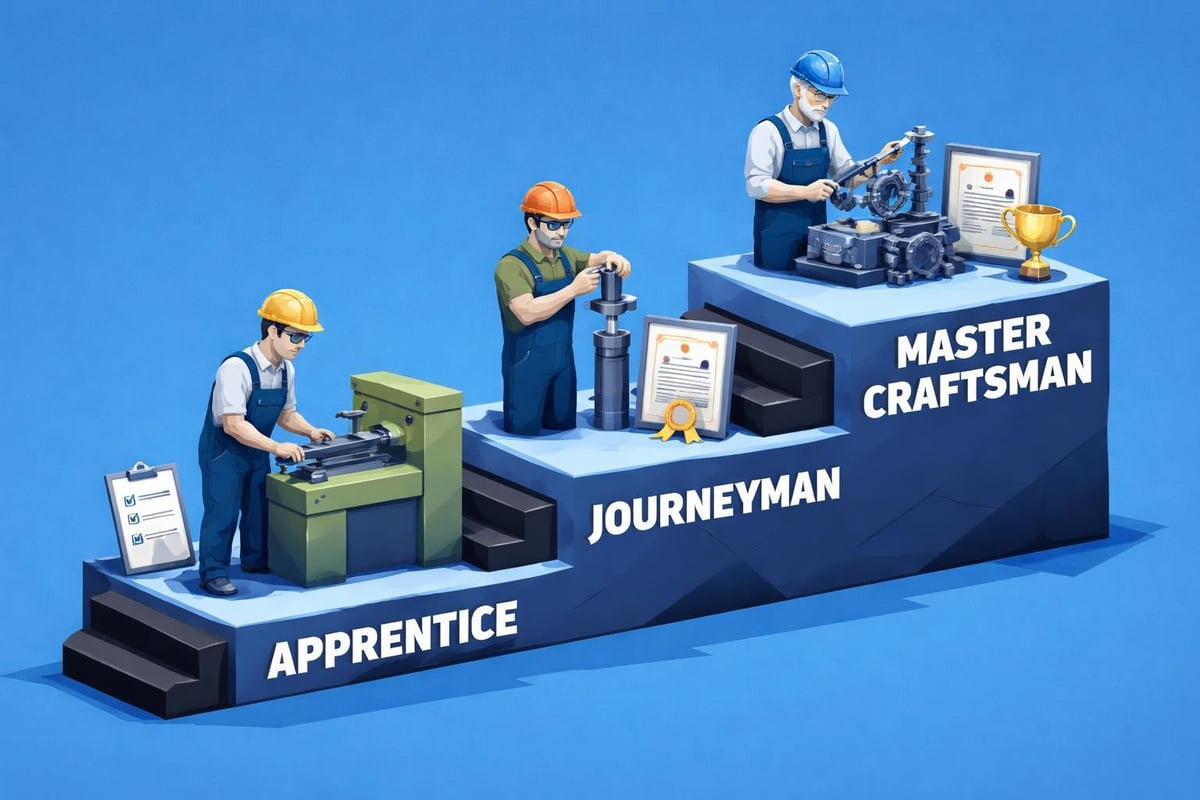
United machinists typically enter the profession through multiple pathways, each offering distinct advantages for career development. Apprenticeship programs combine on-the-job training with classroom instruction, creating well-rounded professionals who understand both theoretical concepts and practical application.
| Training Pathway | Duration | Key Components | Best For |
|---|---|---|---|
| Formal Apprenticeship | 4-5 years | 8,000+ hours hands-on, 576+ classroom hours | Comprehensive skill development |
| Technical College | 2-4 years | Associate degree, lab work, internships | Academic foundation with credentials |
| On-the-Job Training | Varies | Direct mentorship, production experience | Immediate employment, practical focus |
| Military Training | 3-6 years | Structured programs, advanced equipment | Discipline, precision standards |
Companies like LTJ Industrial Services recognize that investing in skilled machinists directly impacts production quality and operational efficiency. These professionals bring specialized knowledge to complex fabrication and machining projects throughout the Western United States.
Industry Applications and Specialized Machining Services
United machinists serve diverse industrial sectors, each requiring specific expertise and equipment capabilities. The versatility of modern machining operations allows these professionals to support everything from oil and gas infrastructure to aggregate processing equipment.
Critical Sectors Relying on Precision Machining
The commercial manufacturing landscape depends heavily on machinist expertise for equipment repair, component fabrication, and custom part production. Industrial facilities cannot afford extended downtime, making the availability of skilled machinists essential for operational continuity.
Primary industries served include:
- Oil and Gas – Valve components, wellhead parts, drilling equipment repairs
- Aggregate and Mining – Crusher components, conveyor systems, wear parts
- Recycling Operations – Shredder hammers, hydraulic cylinders, processing equipment
- Construction Manufacturing – Structural components, custom brackets, specialized hardware
- Food Processing – Stainless steel components, sanitary fittings, packaging machinery parts
Professionals providing custom metal fabrication services often coordinate machining operations with welding and assembly processes, creating complete solutions for industrial clients. This integrated approach reduces lead times and ensures dimensional accuracy across multi-process projects.
Precision Tolerances and Quality Standards
Modern manufacturing demands increasingly tight tolerances, with some applications requiring dimensional accuracy within tenths of thousandths of an inch. United machinists must understand material properties, thermal expansion, tool deflection, and measurement techniques to achieve these exacting specifications.
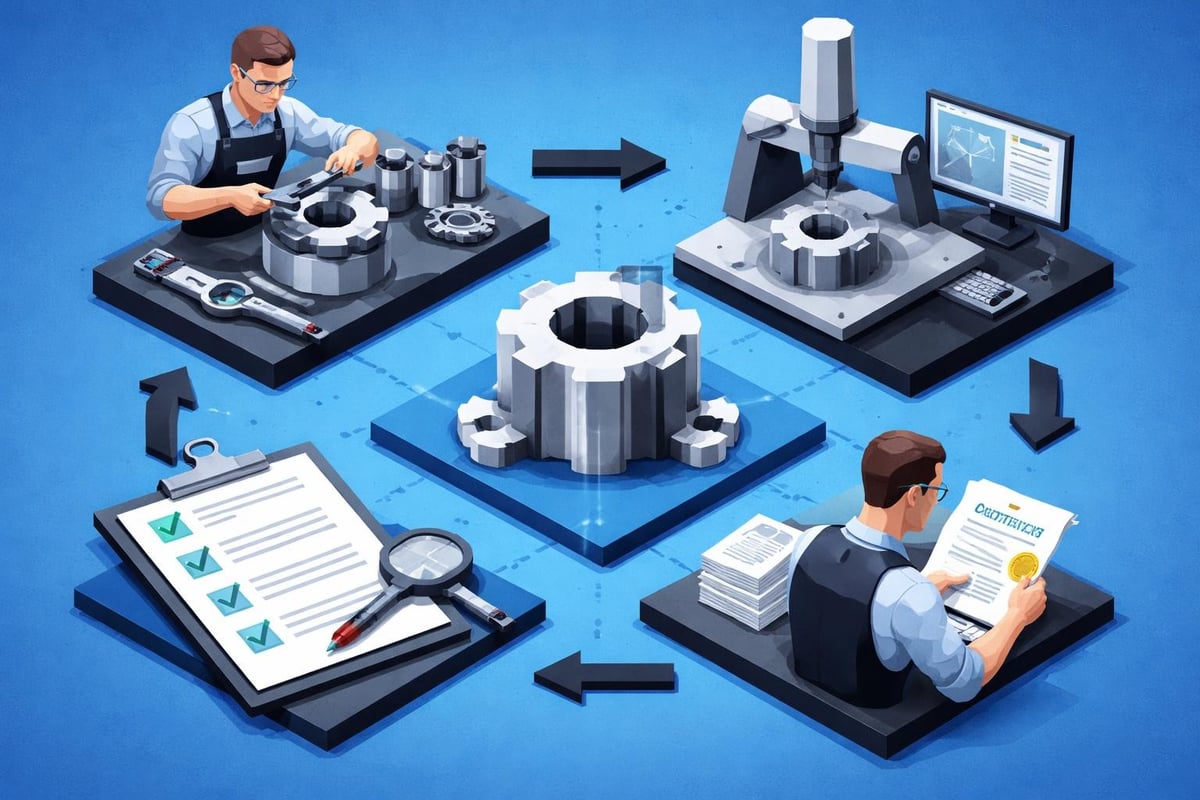
Quality control protocols vary by industry and application, but generally include first-piece inspection, in-process verification, and final dimensional analysis. Machinists working on pressure vessel components or aerospace parts face particularly stringent requirements, with full traceability and material certification mandatory for compliance.
Advanced Technologies Reshaping Machining Operations
The machining industry continues to evolve rapidly as technological innovations create new capabilities and efficiency opportunities. United machinists who embrace these changes position themselves for long-term career success while delivering enhanced value to employers and clients.
Digital Integration and Smart Manufacturing
According to emerging trends in the machine tool industry, advanced CNC software, digital twinning, and artificial intelligence integration are transforming how machinists approach complex projects. These technologies enhance precision while reducing setup times and material waste.
Digital twinning allows machinists to simulate entire machining operations virtually before cutting the first chip. This capability identifies potential collisions, optimizes tool paths, and predicts cycle times with remarkable accuracy. The result is reduced scrap, improved efficiency, and greater confidence in first-run success rates.
Current technology trends include:
- Multi-axis machining centers with automatic tool changers
- Integrated probing systems for in-process measurement
- Cloud-based CAM software with collaborative features
- Predictive maintenance through sensor monitoring
- Additive-subtractive hybrid manufacturing systems
Sustainability and Resource Optimization
Modern machining operations increasingly focus on environmental responsibility and resource conservation. United machinists implement strategies to minimize waste, recycle cutting fluids, and optimize material usage through efficient nesting and programming.
The analysis of machining trends toward 2030 reveals growing emphasis on sustainability practices, including adoption of dry machining techniques, biodegradable cutting fluids, and energy-efficient equipment. These initiatives align with broader manufacturing goals while reducing operational costs.
| Sustainability Practice | Environmental Benefit | Operational Impact |
|---|---|---|
| Coolant recycling systems | Reduced hazardous waste disposal | Lower fluid replacement costs |
| High-efficiency tooling | Decreased energy consumption | Extended tool life, faster cycle times |
| Precision material nesting | Minimized scrap generation | Improved material yield rates |
| LED machine lighting | Lower power usage | Better visibility, reduced heat |
Collaborative Work Environments and Team Integration
United machinists rarely work in isolation. Modern manufacturing requires coordination between multiple departments, including engineering, quality assurance, production planning, and maintenance. Effective communication and teamwork skills complement technical abilities.
Cross-Functional Collaboration
Machining projects often begin with engineering drawings that require interpretation and sometimes clarification. Skilled machinists contribute valuable input during design reviews, identifying potential manufacturing challenges before production begins. This proactive approach prevents costly delays and design revisions.
When working on industrial manufacturing projects, machinists collaborate with welders, fabricators, and assembly technicians to ensure components fit properly within larger assemblies. Dimensional verification at multiple stages prevents integration issues downstream.
Successful machinists develop strong relationships with:
- Quality inspectors who verify dimensional accuracy and surface finish
- Maintenance technicians who keep equipment running optimally
- Production schedulers who coordinate workflow and prioritize urgent jobs
- Procurement specialists who source appropriate materials and tooling
- Engineers who provide technical specifications and design intent
Knowledge Transfer and Mentorship
The machining profession benefits enormously from experienced practitioners sharing their expertise with newer professionals. United machinists who participate in mentorship programs help preserve institutional knowledge while developing their own leadership capabilities.
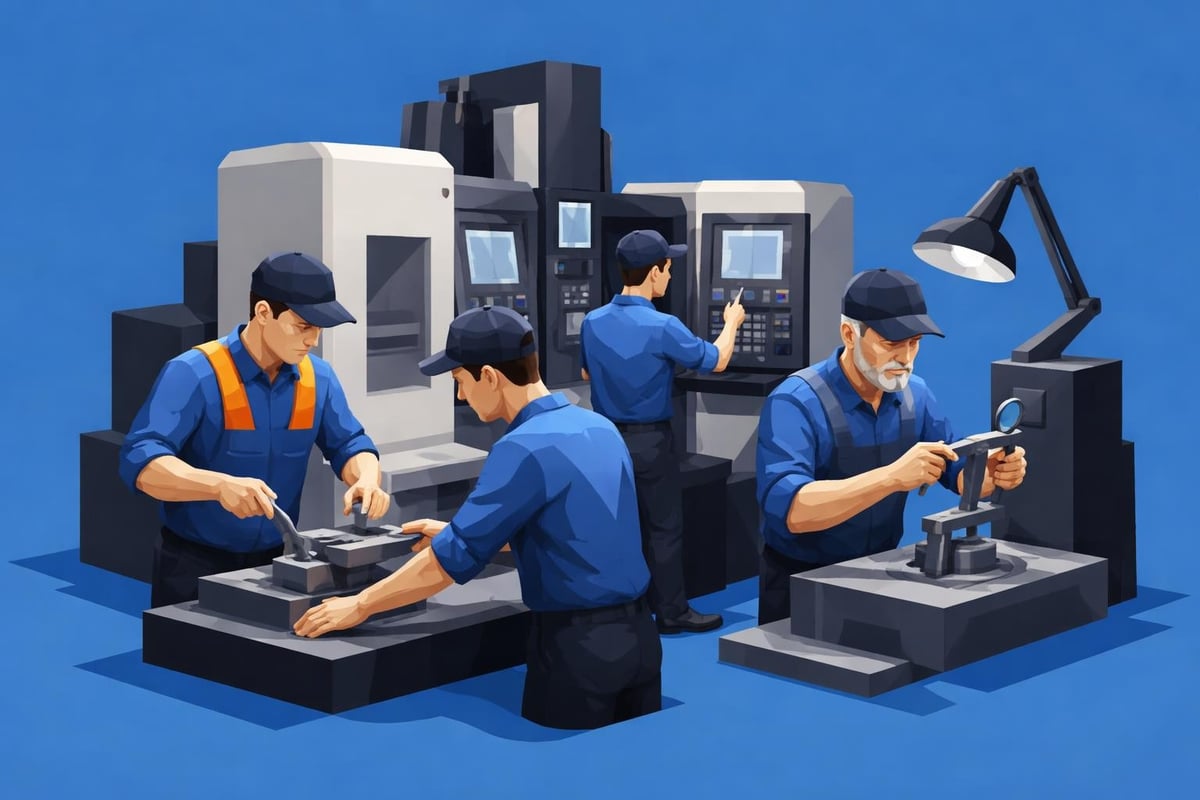
Many organizations implement formal knowledge transfer programs where senior machinists document best practices, create procedure guides, and provide hands-on instruction. This systematic approach ensures critical skills pass to the next generation while maintaining quality standards.
Field Service and On-Site Machining Capabilities
While shop-based machining handles most production work, certain applications require bringing machining capabilities directly to the worksite. United machinists trained in portable machining techniques provide invaluable services for equipment that cannot be transported or when downtime must be minimized.
Portable Equipment and Techniques
Field machinists utilize specialized portable equipment designed for on-site operations. Line boring machines, portable milling equipment, and flange facers allow precision machining of large components in their installed positions. This capability is particularly valuable for maintenance and repair work in industrial facilities.
Common field machining applications:
- Bearing housing repairs on installed equipment
- Valve seat refacing on large process valves
- Flange facing for pipe connections and pressure vessels
- Shaft repair and keyway cutting
- Emergency breakdown repairs requiring immediate response
Organizations offering comprehensive welding mechanic services often combine field machining with on-site welding and fabrication capabilities. This integrated approach provides complete solutions without requiring equipment removal or facility shutdowns.
Emergency Response and Critical Repairs
Industrial operations face unexpected equipment failures that demand rapid response. United machinists with field service experience provide critical support during these emergencies, often working extended hours to restore production capabilities.
The ability to assess damage, determine appropriate repair strategies, and execute precision machining under field conditions requires advanced skills and extensive experience. These professionals must adapt traditional machining principles to challenging environments while maintaining quality standards.
Professional Development and Continuous Learning
The machining profession demands lifelong learning as technologies, materials, and techniques continuously evolve. United machinists who prioritize professional development maintain competitive advantages and advance their careers more rapidly than those who rely solely on existing knowledge.
Industry Certifications and Credentials
Multiple organizations offer machining certifications that validate specific skill sets and knowledge areas. These credentials provide objective evidence of competency, supporting career advancement and salary negotiations.
| Certification | Issuing Organization | Focus Area | Career Value |
|---|---|---|---|
| NIMS Machining Level I & II | National Institute for Metalworking Skills | General machining competencies | Industry-recognized baseline |
| CNC Programmer Certification | Various technical colleges | Programming proficiency | Specialized skill validation |
| Quality Inspector Certification | American Society for Quality | Measurement and inspection | Quality role advancement |
| Manufacturing Technician | Manufacturing Skill Standards Council | Broad manufacturing skills | Multi-discipline credential |
Staying Current with Industry Publications
Historical resources like American Machinist have documented industry evolution since 1877, providing valuable perspectives on technological advancement. Modern machinists benefit from various trade publications, online forums, and video resources that share current techniques and troubleshooting solutions.
Professional development activities include attending trade shows, participating in webinars, joining online communities, and experimenting with new techniques during downtime. Companies that support these learning activities cultivate more capable workforces and foster innovation.
Economic Impact and Workforce Considerations
United machinists contribute significantly to regional and national economies through their role in manufacturing operations. The availability of skilled machinists influences business location decisions, production capacity, and competitive positioning.
Workforce Demographics and Future Outlook
The machining profession faces workforce challenges as experienced professionals approach retirement while fewer young people pursue manufacturing careers. This demographic shift creates opportunities for individuals entering the field but also presents challenges for employers seeking qualified candidates.
Workforce trends affecting the machining profession:
- Average machinist age approaching retirement in many regions
- Increased competition for skilled workers across manufacturing sectors
- Growing wage premiums for advanced CNC programming skills
- Expansion of apprenticeship programs to address skill gaps
- Rising emphasis on technical education and vocational training
Regional economic development depends partly on maintaining robust manufacturing capabilities. Areas with strong concentrations of skilled machinists attract industrial investment and support diverse business operations. The Western United States, including Colorado's industrial centers, benefits from professionals providing specialized manufacturing and machining services.
Compensation and Career Advancement
Machining offers competitive compensation with clear advancement pathways based on skill development and experience. Entry-level positions provide solid wages while learning foundational skills, with significant earning potential as professionals master advanced techniques and take on greater responsibilities.
Career progression typically follows this pattern:
- Apprentice/Helper – Learning basic operations, assisting experienced machinists
- Machinist I – Operating conventional equipment, simple setups
- Machinist II – Running CNC machines, moderate complexity programming
- Senior Machinist – Complex setups, advanced programming, troubleshooting
- Lead Machinist/Supervisor – Team coordination, quality oversight, process improvement
- Shop Manager/Manufacturing Engineer – Strategic planning, facility management, technology implementation
Machinists who develop specialized expertise in areas like five-axis machining, EDM operations, or exotic materials command premium compensation. Those who combine machining skills with welding, fabrication, or inspection capabilities increase their value further.
Safety Standards and Best Practices
Machining operations involve inherent hazards requiring strict adherence to safety protocols. United machinists must understand equipment-specific risks, proper personal protective equipment (PPE) usage, and emergency procedures to maintain safe work environments.
Common Hazards and Mitigation Strategies
Machine shops present multiple safety concerns including rotating equipment, sharp edges, flying chips, chemical exposure, and noise hazards. Comprehensive safety programs address these risks through engineering controls, administrative procedures, and PPE requirements.
Essential safety practices include:
- Machine guarding and interlocking safety systems
- Proper chip management to prevent accumulation and projection
- Eye protection rated for high-speed particle impact
- Hearing protection in high-noise environments
- Cut-resistant gloves for handling sharp materials and tools
- Lockout/tagout procedures during maintenance and setup
- Ventilation systems for cutting fluid mist and grinding dust
Organizations providing ASME code welding services for pressure piping and related machining work implement rigorous safety standards that exceed basic requirements. These enhanced protocols protect workers while ensuring regulatory compliance across multiple jurisdictions.
Ergonomics and Long-Term Health
Beyond acute injury prevention, modern safety programs address ergonomic concerns that affect long-term health. Repetitive motions, awkward postures, and heavy lifting can cause cumulative trauma disorders without proper controls.
Progressive employers invest in adjustable workstations, material handling equipment, and rotation schedules that minimize ergonomic stress. United machinists benefit from these investments through reduced injury rates and extended career longevity.
The skilled expertise of united machinists remains fundamental to manufacturing success across industrial sectors, combining traditional craftsmanship with advanced technology to deliver precision components and solutions. Whether your operation requires complex CNC programming, field machining services, or integrated fabrication and machining capabilities, partnering with experienced professionals ensures optimal results. LTJ Industrial Services brings decades of machining expertise to commercial and industrial clients throughout the Western United States, delivering the precision, reliability, and responsive service your operations demand.