
The industrial landscape has fundamentally shifted over the past decades, moving beyond traditional product-centric models to embrace a more integrated approach. Service manufacturing represents this evolution, where manufacturing capabilities and service delivery converge to create superior value for clients. For companies in the welding, fabrication, and machining sectors, understanding this paradigm is essential for maintaining competitive advantage and meeting the sophisticated demands of modern industrial clients across sectors like oil and gas, aggregate processing, and recycling operations.
Understanding Service Manufacturing in Industrial Operations
Service manufacturing bridges the gap between pure product creation and comprehensive service delivery. This approach recognizes that manufacturing excellence alone is insufficient in today's industrial marketplace. Instead, successful operations must integrate manufacturing capabilities with ongoing service support, maintenance expertise, field operations, and consultative problem-solving.
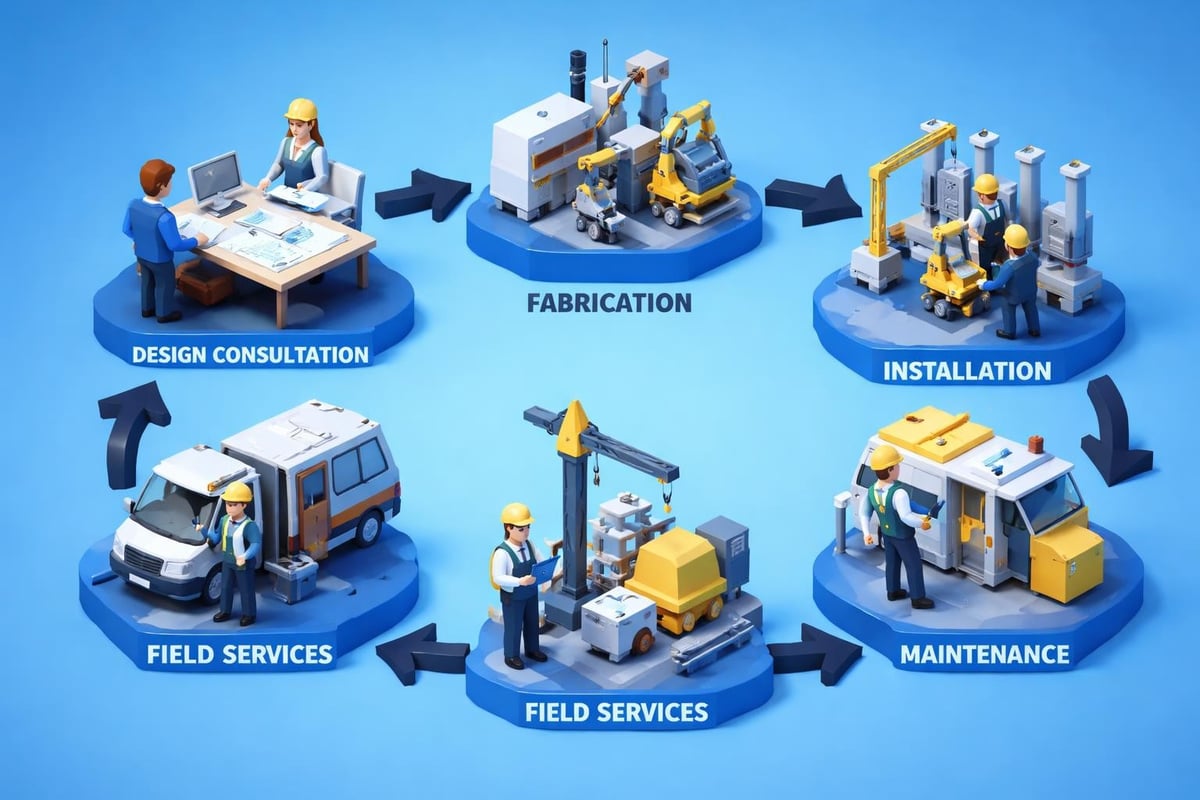
The concept emerged as manufacturers recognized that their relationships with clients extended far beyond the initial product delivery. Service manufacturing transforms traditional fabrication shops into strategic partners that provide continuous value throughout a product's lifecycle. This includes everything from custom design consultation to emergency field repairs, preventive maintenance programs, and equipment optimization services.
The Evolution from Product to Service Integration
Traditional manufacturing focused primarily on producing high-quality components or assemblies. A fabrication shop would create a custom vessel, deliver it, and consider the transaction complete. The service factory concept revolutionized this thinking by demonstrating how manufacturing facilities could function simultaneously as service providers, creating stronger client relationships and recurring revenue streams.
For welding and fabrication businesses, this evolution means developing capabilities beyond the shop floor. It requires:
- Field service teams capable of on-site repairs and installations
- Emergency response protocols for urgent industrial breakdowns
- Preventive maintenance programs that extend equipment lifespan
- Technical consultation services for process optimization
- Custom engineering solutions tailored to specific operational challenges
This transition aligns perfectly with the needs of industries like aggregate processing and oil and gas extraction, where equipment downtime directly impacts profitability and operational efficiency.
Core Components of Service Manufacturing Excellence
Implementing service manufacturing requires a comprehensive approach that integrates multiple operational elements. Success depends on building infrastructure, developing expertise, and creating systems that deliver consistent value across both manufacturing and service dimensions.
Manufacturing Capability as Foundation
The manufacturing foundation remains critical. Without exceptional fabrication, machining, and welding capabilities, service promises become hollow. Service manufacturing starts with technical excellence in core competencies. For industrial service providers, this means maintaining state-of-the-art equipment, certified welders, precision machining capabilities, and quality control systems that ensure every manufactured component meets exacting specifications.
Manufacturing and machining services form the bedrock upon which service capabilities are built. Clients must trust that fabricated components will perform reliably under demanding conditions, whether in recycling operations, aggregate processing plants, or oil and gas facilities throughout the Western United States.
| Manufacturing Component | Service Integration | Client Benefit |
|---|---|---|
| Custom Fabrication | Design Consultation | Optimized Solutions |
| Precision Machining | Tolerance Analysis | Enhanced Performance |
| Certified Welding | Field Repair Services | Reduced Downtime |
| Quality Control | Performance Monitoring | Extended Lifespan |
| Material Selection | Application Engineering | Cost Efficiency |
Field Service and Rapid Response
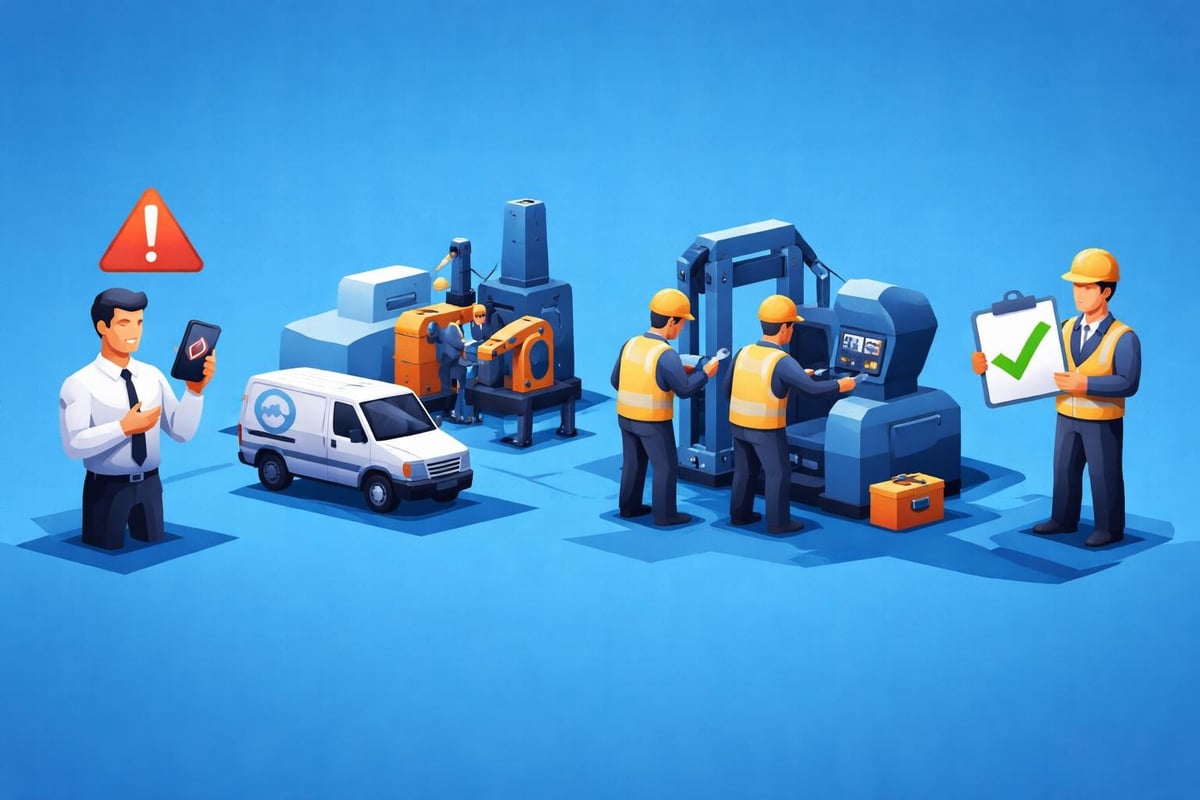
Service manufacturing extends manufacturing capabilities beyond the shop into the field. Industrial operations cannot afford extended downtime while equipment is transported to a fabrication facility, repaired, and returned. Field service teams bring welding, machining, and repair expertise directly to client sites, minimizing disruption and maintaining operational continuity.
Effective field service requires:
- Mobile equipment capable of performing complex repairs on-site
- Cross-trained technicians with expertise in welding, machining, and mechanical systems
- Logistics systems that ensure rapid deployment with necessary tools and materials
- Communication protocols that keep clients informed throughout the repair process
- Safety programs that meet or exceed industry standards for diverse industrial environments
For companies serving the oil and gas sector, field service capabilities are particularly valuable. When a critical component fails at a remote drilling site or processing facility, the ability to dispatch qualified welders and machinists immediately can save millions in lost production.
Integrating Technology with Service Manufacturing
Modern service manufacturing leverages technology to enhance both manufacturing precision and service delivery effectiveness. The cloud manufacturing paradigm demonstrates how digital tools can transform manufacturing resources into accessible, manageable services that clients can engage as needed.
Digital Systems for Enhanced Service Delivery
Technology integration in service manufacturing encompasses several critical areas. Project management systems track fabrication projects from initial consultation through delivery and ongoing service support. Inventory management ensures parts availability for both new manufacturing and repair services. Client portals provide transparency into project status, service history, and preventive maintenance scheduling.
Service manufacturing organizations utilize technology to:
- Monitor equipment performance remotely, predicting failures before they occur
- Schedule preventive maintenance based on actual usage patterns and operating conditions
- Maintain detailed service histories that inform future recommendations
- Coordinate field service teams efficiently across large geographic territories
- Document welding procedures, material certifications, and quality inspections
For industrial and manufacturing clients, this technological integration translates to reduced downtime, predictable maintenance costs, and longer equipment lifecycles.
Data-Driven Service Optimization
Service manufacturing generates valuable operational data that informs continuous improvement. Tracking failure modes, repair frequencies, and performance metrics across client installations reveals patterns that drive better designs, material selections, and preventive maintenance protocols.
This data-driven approach aligns with broader trends in the industrialization of services, where systematic analysis replaces intuition and guesswork. Fabrication shops that track which welds fail under specific conditions can refine their procedures. Machining operations that analyze bearing failures across multiple installations can recommend better materials or tolerances.
Strategic Benefits for Industrial Manufacturers
Adopting a service manufacturing approach delivers measurable competitive advantages for fabrication and machining businesses. These benefits extend beyond simple revenue diversification to fundamentally strengthen client relationships and market positioning.
Enhanced Client Relationships and Retention
Service manufacturing creates ongoing touchpoints with clients long after initial fabrication projects conclude. Regular maintenance visits, emergency repairs, and performance consultations build relationships that pure manufacturing transactions cannot achieve. Clients view service-oriented manufacturers as partners invested in their operational success rather than vendors focused solely on individual transactions.
This relationship depth proves particularly valuable in specialized industries. An aggregate processing company that experiences exceptional field service during an emergency shutdown will likely return for future fabrication projects. Similarly, an oil and gas operator that receives proactive maintenance recommendations develops trust that influences major capital equipment decisions.
Benefits include:
- Recurring revenue streams from maintenance contracts and service agreements
- Competitive barriers as switching costs increase with service integration
- Cross-selling opportunities for additional fabrication and machining services
- Market intelligence gathered through ongoing client interaction
- Referral generation from satisfied clients who experience comprehensive value
Operational Efficiency and Expertise Development
Service manufacturing enhances internal expertise through continuous exposure to how fabricated components perform in real-world applications. Welders who perform field repairs gain insights into which techniques withstand specific stresses. Machinists who service equipment learn how tolerances affect long-term performance. This knowledge feeds back into manufacturing processes, creating a continuous improvement cycle.
Custom metal fabrication capabilities improve as service experiences reveal design optimizations, material substitutions, and manufacturing techniques that enhance component longevity and performance under demanding conditions.
| Service Activity | Knowledge Gained | Manufacturing Improvement |
|---|---|---|
| Field Welding Repairs | Failure Mode Analysis | Enhanced Joint Design |
| Equipment Maintenance | Wear Pattern Recognition | Material Selection |
| Emergency Breakdown Response | Stress Point Identification | Structural Reinforcement |
| Performance Monitoring | Operating Condition Data | Design Optimization |
| Client Consultation | Application Requirements | Custom Solutions |
Building Service Manufacturing Capabilities
Transitioning from traditional manufacturing to service manufacturing requires strategic planning and investment. Companies must develop new capabilities, train personnel, acquire equipment, and establish systems that support integrated service delivery.
Workforce Development and Training
Service manufacturing demands versatile technicians who combine manufacturing expertise with service orientation. Welders must adapt techniques for field conditions that differ from controlled shop environments. Machinists need diagnostic skills to assess equipment problems and recommend solutions. All personnel require safety training for diverse industrial settings.
Effective workforce development includes:
- Cross-training programs that broaden technical capabilities
- Customer service training that enhances client interaction skills
- Safety certifications for various industrial environments
- Continuing education on emerging technologies and techniques
- Mentorship systems that transfer knowledge from experienced to newer technicians
For businesses serving industries throughout the Western United States, training must address the specific challenges of aggregate processing, recycling operations, and oil and gas facilities. Each sector presents unique technical requirements, safety protocols, and operational constraints.
Equipment and Infrastructure Investment
Service manufacturing requires equipment beyond traditional shop tools. Mobile welding units, portable machining equipment, hydraulic systems, and specialized diagnostic tools enable field service delivery. Vehicles must transport personnel, equipment, and materials efficiently across large geographic territories.
Infrastructure investments should prioritize:
- Mobile fabrication capabilities for on-site custom work
- Diagnostic equipment that identifies problems quickly and accurately
- Communication systems linking field teams with shop resources
- Parts inventory strategically positioned for rapid deployment
- Safety equipment appropriate for diverse industrial environments
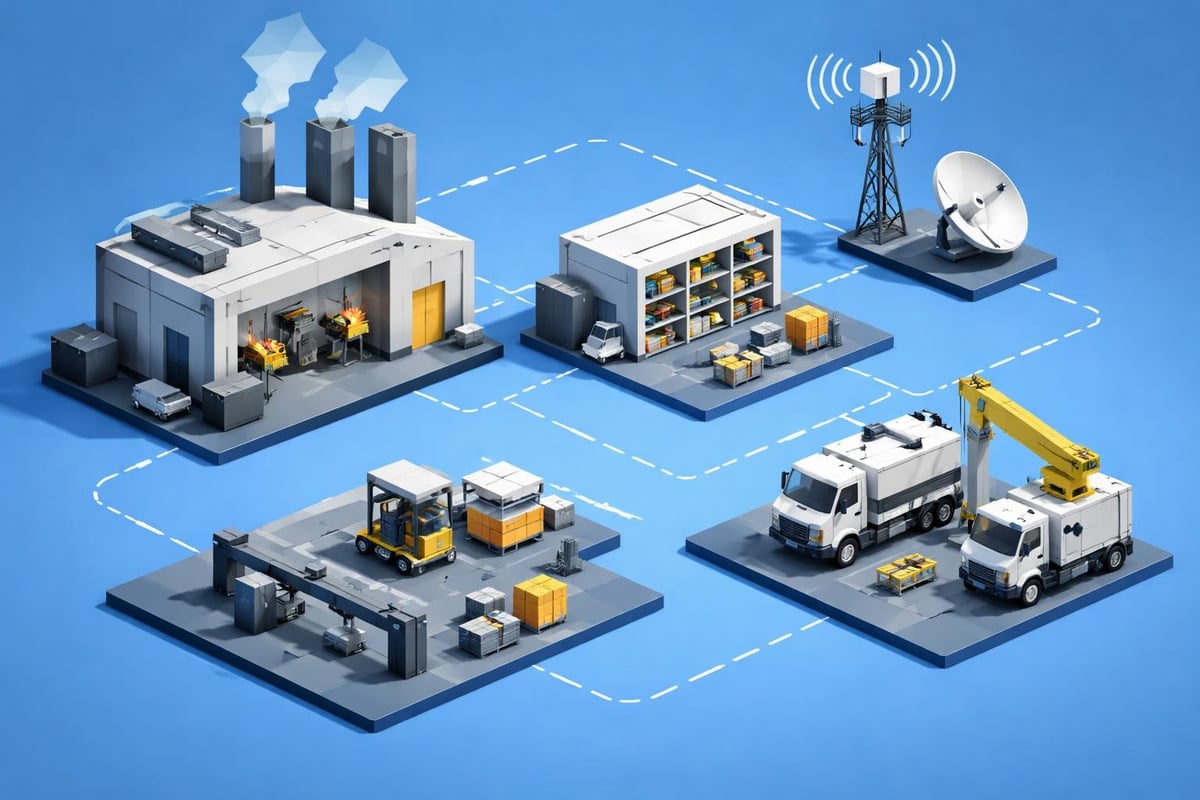
These investments transform a fabrication shop into a comprehensive service manufacturing organization capable of supporting clients wherever operations occur. For companies like those in the Rifle, CO region serving Western industrial operations, this geographic flexibility proves essential for competitive success.
Service Manufacturing in Specialized Industrial Sectors
Different industrial sectors present unique service manufacturing opportunities and requirements. Understanding these variations enables fabrication and machining businesses to tailor their service offerings for maximum value.
Oil and Gas Sector Applications
The oil and gas industry demands exceptional reliability in harsh, often remote environments. Equipment failures can halt production worth millions daily, making rapid response and preventive maintenance critical. Service manufacturing in this sector combines heavy fabrication capabilities with specialized field services.
Key service manufacturing applications include:
- Emergency pipeline repair using mobile welding equipment
- Pressure vessel fabrication with ongoing inspection services
- Pump and compressor maintenance programs
- Custom tooling fabrication for specialized extraction equipment
- Tank and storage system repairs with compliance documentation
Metal fabrication and welding services specifically designed for oil and gas applications must meet stringent quality standards while providing the flexibility to respond to urgent field situations.
Aggregate and Recycling Industry Solutions
Aggregate processing and recycling operations subject equipment to continuous abrasive wear and impact stresses. Crushers, conveyors, screens, and sorting equipment require regular maintenance and frequent repairs to maintain productivity. Service manufacturing addresses these needs through predictable maintenance scheduling combined with rapid breakdown response.
Service offerings for this sector include:
- Conveyor system fabrication and repair with wear-resistant materials
- Crusher component rebuilding through precision machining and hard-facing
- Screen deck fabrication optimized for specific material characteristics
- Structural repairs on frames, chutes, and support systems
- Preventive maintenance programs that minimize unscheduled downtime
The relationship between manufacturing projects and ongoing service support creates particular value in these industries, where equipment operates continuously under demanding conditions.
Measuring Service Manufacturing Success
Effective service manufacturing requires metrics that track both manufacturing quality and service performance. These measurements guide continuous improvement and demonstrate value to clients.
Key Performance Indicators
Service manufacturing organizations should monitor multiple performance dimensions. Manufacturing metrics ensure product quality meets specifications. Service metrics track responsiveness, effectiveness, and client satisfaction. Combined, these indicators provide comprehensive operational insight.
Critical metrics include:
| Metric Category | Specific Measures | Target Performance |
|---|---|---|
| Manufacturing Quality | Defect rates, rework percentage, inspection results | 99%+ first-pass quality |
| Service Response | Emergency call response time, scheduled service punctuality | Under 4 hours emergency response |
| Client Satisfaction | Net promoter score, repeat business rate, service ratings | 90%+ satisfaction scores |
| Financial Performance | Service revenue percentage, maintenance contract renewal | 40%+ service revenue mix |
| Technical Effectiveness | Mean time between failures, equipment uptime improvement | 15%+ uptime improvement |
These metrics align with broader trends documented by the Services Business Activity Index, which tracks business conditions across service sectors, including service manufacturing.
Client Value Documentation
Service manufacturing creates value that extends beyond individual transactions. Documenting this comprehensive value helps clients understand the return on their service investments and supports contract renewals and expansion.
Value documentation should capture:
- Downtime reduction quantified in hours and production value
- Equipment lifespan extension compared to industry averages
- Emergency cost avoidance through preventive maintenance
- Performance improvements in throughput or efficiency
- Compliance support meeting regulatory requirements
For industrial clients evaluating service manufacturing partners, this documentation provides concrete evidence of value creation that justifies premium pricing and long-term commitments.
Competitive Differentiation Through Service Excellence
As manufacturing capabilities become increasingly commoditized, service excellence provides sustainable competitive differentiation. Fabrication shops throughout any region can produce similar components, but exceptional service manufacturing creates barriers that competitors struggle to overcome.
Building Competitive Moats
Service manufacturing creates multiple competitive advantages that compound over time. Equipment familiarity from regular maintenance gives service providers intimate knowledge of client operations. Historical performance data enables superior predictive maintenance recommendations. Emergency response experience builds operational confidence that new vendors cannot immediately replicate.
These advantages strengthen as relationships mature. A fabrication company that has maintained a client's aggregate processing equipment for years understands that operation better than any competitor. This knowledge informs better fabrication recommendations, more accurate repair estimates, and superior preventive maintenance protocols.
The service factory model demonstrates how manufacturing operations can leverage service capabilities for sustained competitive advantage, particularly in industrial sectors where relationships and reliability matter more than lowest initial cost.
Service as Market Differentiation
In commodity markets, price competition erodes margins and sustainability. Service manufacturing enables differentiation based on comprehensive value rather than component pricing alone. Clients evaluating fabrication providers increasingly consider total cost of ownership, which includes maintenance, repairs, downtime, and operational support over equipment lifecycles.
Companies offering integrated service manufacturing can position themselves as premium providers justified by superior total value. This positioning proves particularly effective in industries like oil and gas and aggregate processing, where operational reliability directly impacts profitability and minor price differences pale compared to downtime costs.
Future Trends in Service Manufacturing
Service manufacturing continues evolving as technology advances and client expectations shift. Forward-thinking fabrication and machining businesses should monitor emerging trends that will shape competitive dynamics in coming years.
Predictive Maintenance and IoT Integration
Internet of Things sensors and predictive analytics are transforming maintenance from reactive or scheduled approaches to truly predictive models. Equipment sensors monitor vibration, temperature, pressure, and other parameters continuously, detecting anomalies that signal impending failures before breakdowns occur.
Service manufacturing organizations that integrate these technologies can:
- Schedule maintenance at optimal intervals based on actual equipment condition
- Reduce emergency repairs through early intervention
- Optimize parts inventory based on predicted failure patterns
- Demonstrate measurable value through avoided breakdowns
- Differentiate services through technological sophistication
For industries served by companies throughout the Western United States, predictive maintenance reduces the impact of geographic dispersion by optimizing service deployment and minimizing wasted trips.
Sustainability and Lifecycle Optimization
Environmental concerns and resource efficiency drive increased focus on equipment lifecycle optimization. Service manufacturing supports sustainability by extending equipment life, reducing waste, and optimizing resource utilization. Repair and rebuilding services keep components in service longer, deferring the environmental impact of new manufacturing.
This sustainability focus creates service opportunities in:
- Equipment assessment and life extension planning
- Rebuilding and remanufacturing programs
- Material efficiency optimization
- Energy consumption reduction through performance improvements
- End-of-life recycling and material recovery services
As noted by the U.S. Department of Commerce Manufacturing and Services division, service integration strengthens American industrial competitiveness while supporting environmental objectives through enhanced efficiency and resource optimization.
Service manufacturing represents the future of industrial fabrication and machining businesses, integrating manufacturing excellence with comprehensive service support to create sustainable competitive advantages. By combining shop capabilities with field services, preventive maintenance, and consultative expertise, companies deliver superior value that strengthens client relationships and drives business growth. Whether you need custom fabrication, emergency field repairs, or ongoing maintenance programs for your aggregate, recycling, or oil and gas operations, LTJ Industrial Services provides the comprehensive service manufacturing solutions that keep your equipment running efficiently throughout the Western United States.