
Modern industrial manufacturing relies on the seamless integration of fabrication and machining processes to deliver precision components that power critical operations across multiple sectors. From oil and gas infrastructure to aggregate processing and recycling operations, the ability to transform raw materials into exact specifications separates successful operations from those struggling with downtime and inefficiency. As manufacturing technology advances in 2026, understanding the relationship between these complementary processes has become essential for businesses seeking competitive advantages in quality, turnaround time, and cost-effectiveness.
Understanding Core Fabrication Processes
Fabrication encompasses the comprehensive manipulation of raw materials into finished products through cutting, bending, forming, and assembly operations. These processes form the foundation of industrial manufacturing, enabling the creation of everything from structural steel frameworks to custom pressure vessels.
Metal Cutting Technologies
The modern fabrication shop relies on multiple cutting methods, each suited to specific materials, thicknesses, and precision requirements. Plasma cutting delivers rapid processing for conductive metals up to two inches thick, making it ideal for structural steel applications in aggregate and mining operations. Laser cutting provides exceptional precision for thinner materials, achieving tolerances within thousandths of an inch for applications requiring exact specifications.
Waterjet cutting has emerged as a versatile solution for materials sensitive to heat-affected zones, including composites and specialty alloys. This cold-cutting process eliminates thermal distortion while maintaining edge quality across diverse material types. Companies offering industrial metal fabrication services integrate these technologies to match each project with the optimal cutting method.
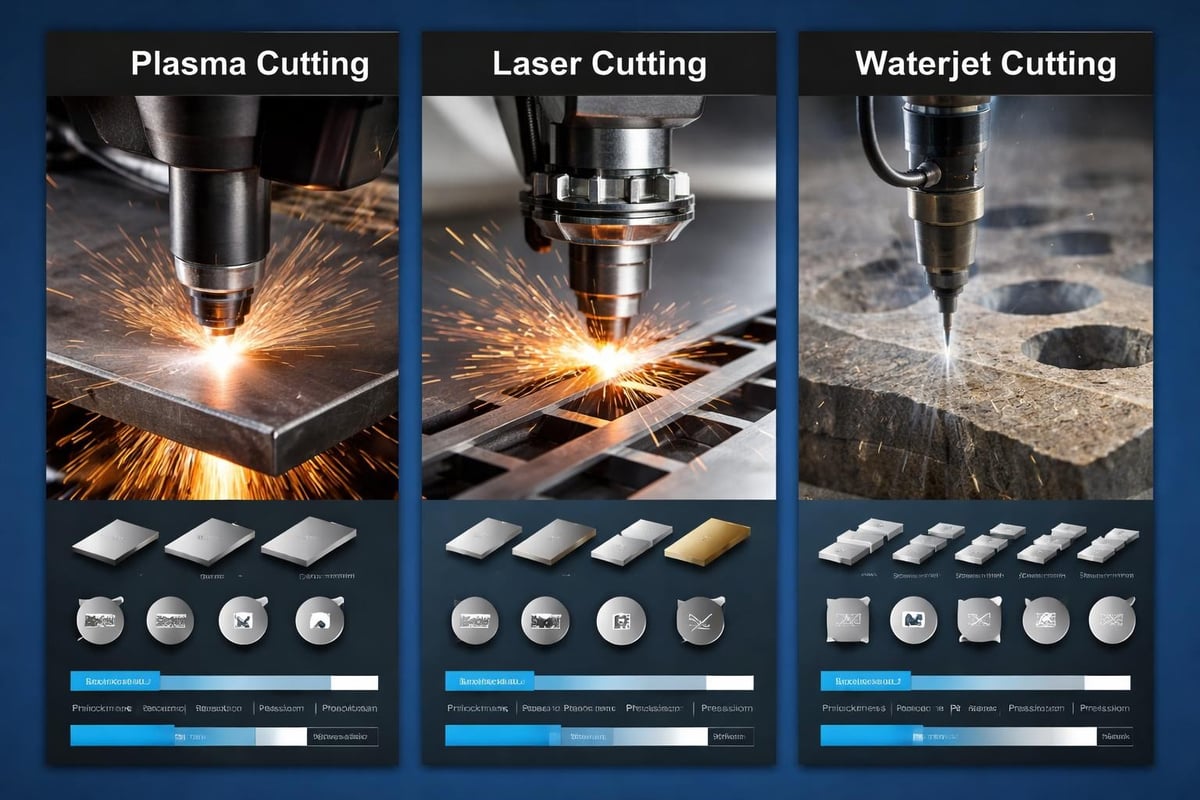
- Plasma cutting: Cost-effective for thick steel, rapid processing speeds
- Laser cutting: Superior edge quality, minimal secondary finishing required
- Waterjet cutting: No heat-affected zone, processes virtually any material
- Oxy-fuel cutting: Economic choice for very thick plates, portable for field applications
Forming and Bending Operations
Sheet metal forming transforms flat stock into three-dimensional components through controlled deformation. Press brakes apply precise force along designated bend lines, creating angles from simple 90-degree bends to complex multi-bend assemblies. Roll forming gradually shapes metal into curved profiles, essential for tanks, pressure vessels, and cylindrical structures.
Advanced forming techniques incorporate computer numerical control (CNC) technology, ensuring repeatability across production runs. This precision proves critical for industries like oil and gas, where component interchangeability directly impacts safety and operational efficiency. Modern metal fabrication projects often combine multiple forming operations to achieve final geometry.
Machining Technologies and Applications
Machining removes material through controlled cutting operations, achieving tolerances and surface finishes impossible through fabrication alone. The integration of fabrication and machining creates complete manufacturing solutions, allowing single-source providers to deliver finished components without external processing delays.
CNC Machining Capabilities
Computer numerical control has revolutionized machining precision and repeatability. Multi-axis CNC mills execute complex toolpaths, creating intricate geometries from solid stock or fabricated blanks. These machines operate continuously with minimal supervision, maximizing productivity while maintaining consistent quality across thousands of parts.
CNC turning centers process cylindrical components, producing shafts, bushings, and custom fasteners to exact specifications. The combination of live tooling and sub-spindle capabilities enables complete part processing in single setups, reducing handling time and cumulative tolerancing errors.
| Machining Process | Typical Tolerance | Surface Finish | Best Applications |
|---|---|---|---|
| CNC Milling | ±0.001" to ±0.005" | 32-125 Ra | Complex geometries, pockets, contours |
| CNC Turning | ±0.0005" to ±0.002" | 16-63 Ra | Cylindrical parts, shafts, bushings |
| Drilling/Boring | ±0.001" to ±0.003" | 63-125 Ra | Precision holes, bearing bores |
| Grinding | ±0.0001" to ±0.0005" | 4-16 Ra | Critical dimensions, hardened materials |
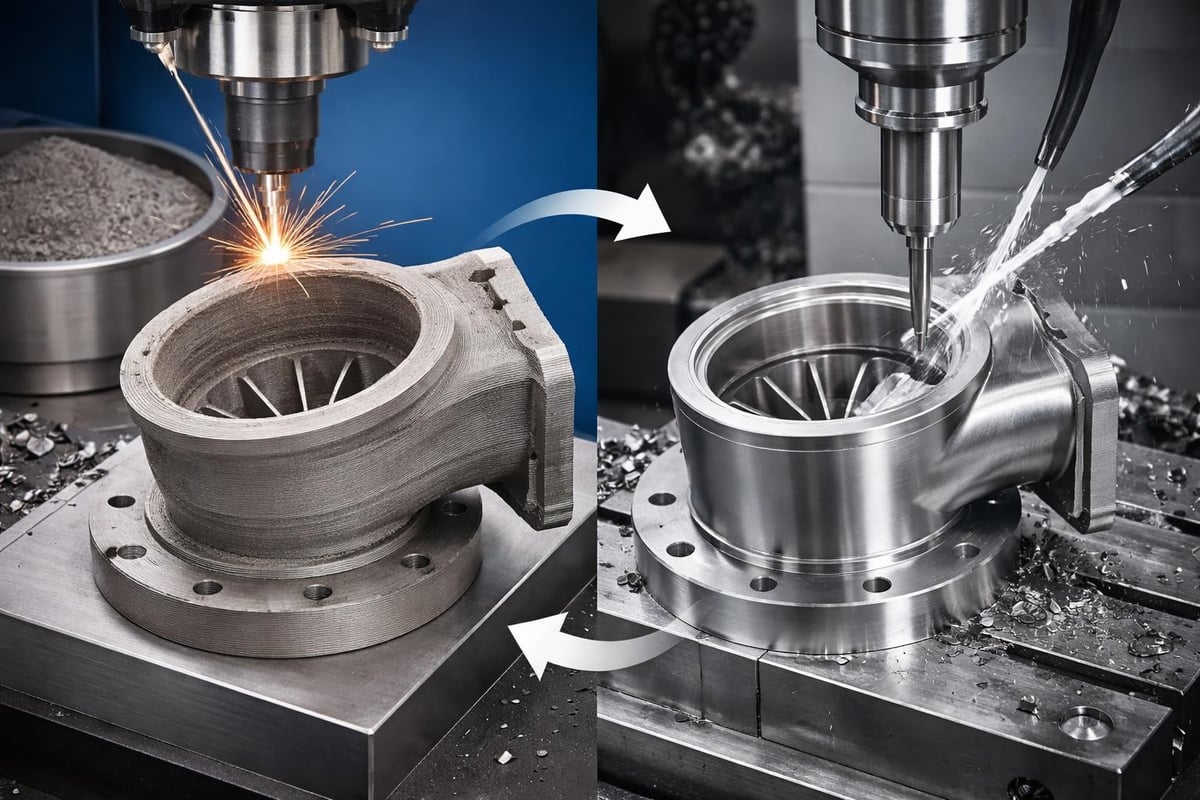
Research into ultra-precision machining techniques demonstrates continued advancement in achievable tolerances and surface qualities, particularly when integrated with additive manufacturing processes for hybrid component creation.
Conventional Machining Methods
Manual machining retains relevance for prototype development, repair operations, and low-volume production. Skilled machinists operating manual mills and lathes provide flexibility for quick modifications and custom one-off components that don't justify CNC programming time.
Horizontal boring mills address large-scale machining requirements, processing workpieces weighing thousands of pounds. These machines excel at maintaining precise bore alignment across extended lengths, critical for hydraulic cylinders and rotating equipment housings common in industrial applications.
Field machining extends these capabilities directly to customer facilities, eliminating transportation challenges for oversized components. Portable line boring, flange facing, and on-site milling minimize downtime for critical equipment, particularly valuable for operations in remote locations throughout the Western United States.
Welding Integration in Fabrication and Machining
Welding serves as the primary joining method in metal fabrication, creating permanent bonds that often exceed base material strength. The coordination between welding, fabrication, and machining determines final assembly quality and structural integrity.
Structural Welding Applications
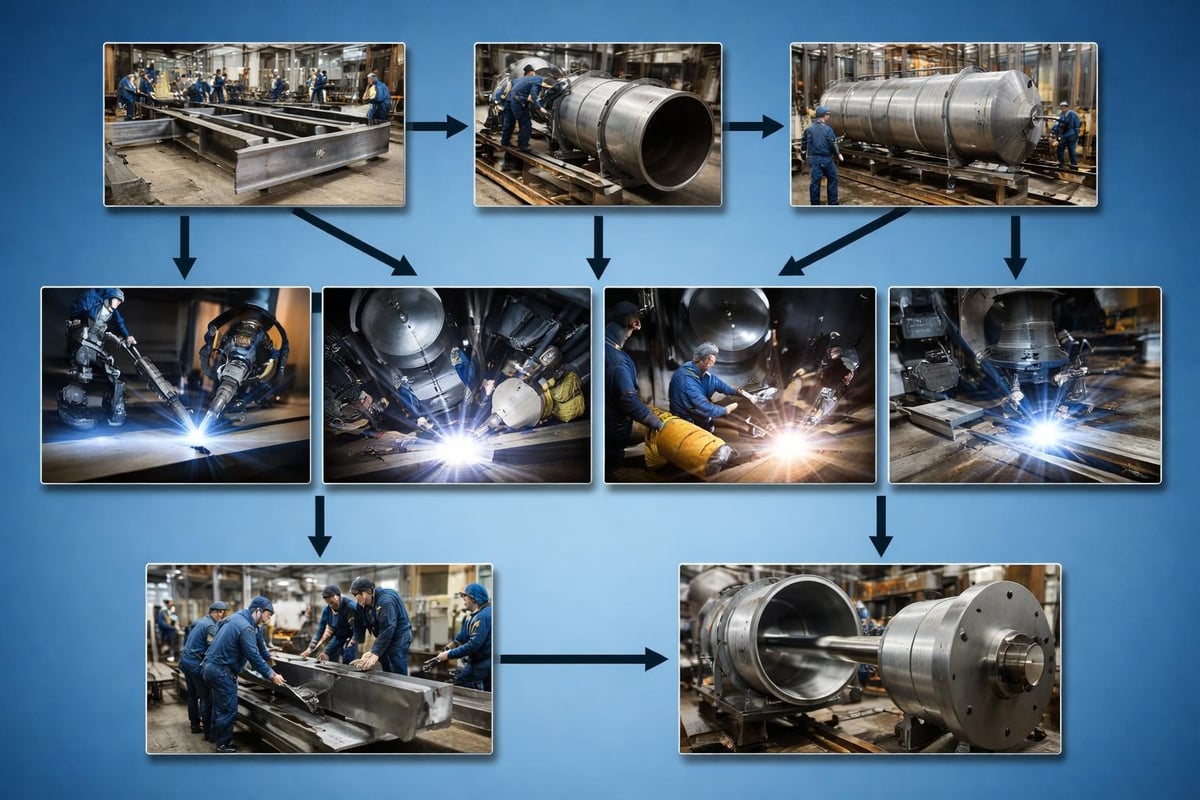
Structural steel fabrication relies on multiple welding processes tailored to joint configuration, material thickness, and performance requirements. Shielded metal arc welding (SMAW) provides versatility for field conditions and positional welding challenges. Gas metal arc welding (GMAW) delivers higher deposition rates for production welding, increasing throughput on repetitive assemblies.
Flux-cored arc welding (FCAW) combines penetration depth with all-position capability, making it preferred for heavy structural applications in wind-exposed environments. These processes require certified welders trained in procedure qualification and inspection standards specific to industry codes.
Precision Welding for Machined Components
Post-machining welding introduces unique challenges, as heat input can distort previously achieved tolerances. Successful integration requires careful heat management through proper sequencing, fixturing, and welding parameter control. Gas tungsten arc welding (GTAW) provides excellent control for joining machined components, minimizing dilution and heat-affected zone size.
The sequence of operations significantly impacts final dimensions. Strategic planning determines whether machining occurs before welding, after welding, or in split operations around welding processes. Complex assemblies often require intermediate machining steps to establish reference surfaces before final welding and finish machining.
Material Selection and Processing Considerations
Material properties directly influence both fabrication and machining approaches. Understanding these relationships enables optimal process planning and cost-effective manufacturing solutions.
Carbon and Alloy Steels
Low-carbon steels offer excellent weldability and formability, making them economical choices for structural applications. These materials machine readily with standard tooling, though work hardening during forming operations may require increased cutting forces. Medium-carbon steels provide enhanced strength but require preheating for thick-section welding to prevent cracking.
Alloy steels incorporating chromium, molybdenum, and nickel deliver superior mechanical properties for demanding applications. These materials often require specialized welding procedures and post-weld heat treatment to maintain specified properties. Machining considerations include proper tool selection and cutting parameter optimization to manage increased hardness and strength.
Stainless Steels and Specialty Alloys
Austenitic stainless steels resist corrosion while maintaining fabricability across temperature extremes. These materials require controlled heat input during welding to prevent sensitization and carbide precipitation. Machining stainless steels demands sharp tools and adequate coolant flow to manage work hardening and built-up edge formation.
Specialty alloys like Inconel, Hastelloy, and titanium serve extreme environments in chemical processing and aerospace applications. These materials challenge both fabrication and machining operations with poor thermal conductivity, work hardening tendencies, and chemical reactivity. Successful processing requires specialized knowledge and equipment capabilities.
| Material Class | Fabrication Considerations | Machining Characteristics | Common Applications |
|---|---|---|---|
| Low-Carbon Steel | Excellent formability, easy welding | Good machinability, economical tooling | Structural frames, general fabrications |
| Stainless 304/316 | Requires backing gas, work hardens | Moderate difficulty, sharp tools required | Food processing, chemical equipment |
| Chrome-Moly Alloys | Preheat/PWHT often required | Harder cutting, carbide tools recommended | Pressure vessels, high-temperature service |
| Aluminum Alloys | Oxide removal critical, fast welding | Excellent machinability, high speeds | Lightweight structures, corrosion resistance |
Quality Control and Inspection Methods
Maintaining specifications throughout fabrication and machining operations requires systematic inspection and quality verification. Modern quality systems integrate measurement at critical process steps, preventing defect propagation and reducing rework costs.
Dimensional Verification
Coordinate measuring machines (CMM) provide three-dimensional inspection capabilities, comparing manufactured components against CAD models with sub-thousandth accuracy. These automated systems generate comprehensive inspection reports documenting conformance to engineering specifications.
Portable measurement tools extend precision verification to field locations and oversized components. Laser trackers and photogrammetry systems measure large structures with accuracy comparable to laboratory equipment, essential for validating custom metal fabrication assemblies before shipment.
Traditional measurement instruments including micrometers, calipers, and height gauges remain fundamental for shop floor verification. Skilled inspectors combine these tools with geometric dimensioning and tolerancing (GD&T) knowledge to ensure complete specification compliance.
Non-Destructive Testing
Weld quality verification employs multiple non-destructive examination (NDE) methods depending on code requirements and service conditions. Radiographic testing (RT) reveals internal discontinuities in critical welds, creating permanent film records for regulatory compliance. Ultrasonic testing (UT) provides depth information and real-time evaluation, particularly valuable for thick-section inspections.
Magnetic particle testing (MT) detects surface and near-surface defects in ferromagnetic materials. Liquid penetrant testing (PT) identifies surface breaking discontinuities in non-magnetic materials. These methods ensure structural integrity without compromising component usability, critical for industries where failure carries significant safety and economic consequences.
Advanced Manufacturing Integration
The convergence of traditional fabrication and machining with emerging technologies creates new manufacturing capabilities. Understanding these developments positions industrial operations for future competitiveness.
Additive Manufacturing Hybridization
Metal additive manufacturing (3D printing) complements conventional processes by enabling complex geometries impossible through traditional methods. Hybrid approaches combine additive deposition with subtractive machining, building near-net shapes and finish machining to final dimensions. This integration reduces material waste while maintaining precision tolerances on critical features.
Research published in comprehensive manufacturing texts demonstrates how design optimization for additive processes creates lightweight structures with integrated functionality. Post-processing through conventional machining ensures interface surfaces meet assembly requirements, bridging the gap between innovative design and practical implementation.
Automation and Industry 4.0 Applications
Robotic welding systems deliver consistent quality on repetitive assemblies, freeing skilled welders for complex positional work and field applications. These automated cells integrate with material handling systems, reducing labor costs while improving throughput and repeatability.
Data collection and analysis transform traditional job shops into connected facilities. Machine monitoring systems track utilization, predict maintenance requirements, and optimize scheduling across multiple work centers. Studies on adaptive manufacturing capabilities reveal how data-driven decision-making enhances productivity and responsiveness to customer requirements.
Process Planning and Project Execution
Successful fabrication and machining projects require comprehensive planning that considers material procurement, process sequencing, quality verification, and delivery logistics. This systematic approach minimizes delays and ensures specification compliance.
Engineering and Design Collaboration
Early engagement between design engineers and manufacturing specialists prevents costly modifications during production. Design for manufacturability (DFM) reviews identify opportunities to simplify fabrication, reduce machining time, and improve assembly efficiency. These collaborative sessions often reveal alternative approaches that maintain functionality while reducing costs.
Three-dimensional modeling enables virtual assembly verification before cutting the first piece of material. Interference checking identifies clearance issues, while weld accessibility analysis ensures joint preparation and welding equipment access. This digital validation reduces field fit-up problems that plague poorly planned projects.
Material optimization through nesting software maximizes yield from raw stock, reducing waste and material costs. Advanced algorithms arrange parts to minimize scrap while considering grain direction, surface quality requirements, and remnant usability for future projects.
Resource Allocation and Scheduling
Effective project management coordinates multiple processes across fabrication and machining departments. Critical path analysis identifies bottleneck operations and dependencies, allowing proactive resource allocation to maintain schedule commitments. This planning proves essential for industries like oil and gas, where project delays carry significant financial penalties.
Capacity planning balances incoming work against available equipment and labor resources. Understanding machine capabilities, setup requirements, and cycle times enables realistic promise dates and prevents overcommitment. Companies providing manufacturing services across multiple industries must maintain flexibility while ensuring quality never suffers from schedule pressure.
Industry-Specific Applications and Requirements
Different industrial sectors impose unique requirements on fabrication and machining operations. Understanding these specialized needs ensures delivered components meet both functional requirements and regulatory compliance.
Oil and Gas Industry Standards
Pressure vessel fabrication for oil and gas applications demands strict adherence to ASME Section VIII codes. These standards govern material selection, welding procedures, heat treatment requirements, and inspection protocols. Oil and gas fabrication specialists maintain certifications demonstrating compliance with these rigorous standards.
Machining tolerances for rotating equipment in hydrocarbon service often exceed standard commercial grades. Shaft runout, bearing bore concentricity, and surface finish specifications ensure reliable operation in harsh environments. Field machining capabilities enable on-site repair and modification, minimizing downtime for critical production equipment.
Aggregate and Mining Equipment
Heavy equipment fabrication for aggregate processing combines structural integrity with wear resistance. Crusher frames, conveyor structures, and screening equipment endure constant vibration and impact loading. Material selection balances strength, weldability, and cost-effectiveness for these demanding applications.
Replacement parts for mining equipment frequently require reverse engineering from worn components. Precision measurement captures existing geometry, compensating for wear patterns while restoring original functionality. This capability extends equipment service life and reduces capital expenditure on new machinery.
Recycling Industry Solutions
Recycling operations impose unique challenges through material contamination, abrasive wear, and corrosive environments. Custom fabrications for sorting equipment, shredders, and material handling systems must withstand these conditions while maintaining operational efficiency. Innovative designs often incorporate replaceable wear components, reducing maintenance downtime and extending equipment life.
Research into advanced composite machining demonstrates techniques applicable to specialty recycling applications, particularly in processing complex waste streams containing mixed materials.
Maintenance and Repair Capabilities
Beyond new fabrication, industrial operations require ongoing maintenance, modification, and repair services. Integrated fabrication and machining capabilities enable comprehensive support throughout equipment lifecycles.
Preventive Maintenance Programs
Regular inspection and measurement identify wear patterns before failure occurs. Shaft diameter measurement, bearing clearance verification, and alignment checks detect developing problems. Scheduled rebuilds incorporating machining and welding restore equipment to original specifications, preventing catastrophic failures and unplanned downtime.
Mobile field machining teams bring precision capabilities directly to customer facilities. Portable boring bars, line boring systems, and flange facing equipment perform major repairs without equipment removal. This responsiveness proves invaluable for operations in remote locations throughout the Western United States.
Emergency Repair Response
Equipment failures in industrial operations create urgent response requirements. Rapid assessment, expedited material procurement, and accelerated processing minimize production interruptions. Maintaining diverse fabrication and machining capabilities enables single-source emergency response, eliminating coordination delays between multiple vendors.
Weld repair procedures for cracked components require qualified processes specific to material type and service conditions. Proper preparation, preheating, and post-weld heat treatment ensure repairs meet or exceed original strength. Documentation and traceability satisfy regulatory requirements for critical applications.
Cost Optimization Strategies
Balancing quality requirements against project budgets requires strategic decisions throughout the fabrication and machining process. Understanding cost drivers enables informed choices that maintain specifications while controlling expenses.
Make-or-Buy Analysis
Not every component justifies in-house production. Economic analysis compares internal processing costs against vendor quotations, considering setup time, material utilization, equipment capacity, and quality risk. Low-volume specialty items often prove more economical to outsource, freeing internal capacity for core competencies.
Strategic partnerships with specialized suppliers extend capability ranges without capital investment. Accessing specialized processes like heat treating, coating, or precision grinding through qualified vendors maintains quality while controlling fixed costs.
Process Selection Economics
Multiple processes often achieve identical results with different cost profiles. Understanding these economics guides optimal method selection. Waterjet cutting eliminates secondary finishing costs but operates slower than plasma cutting. The break-even point depends on material thickness, edge quality requirements, and available equipment capacity.
Machining decisions similarly balance speed against precision. Roughing operations remove bulk material rapidly with lower-cost tooling. Finishing passes employ premium tools at reduced feeds and speeds to achieve final dimensions and surface quality. Optimizing this balance minimizes overall cycle time while controlling consumable costs.
Workforce Development and Certification
Skilled labor shortages challenge manufacturing industries across all sectors. Developing and maintaining qualified fabricators, machinists, and welders ensures consistent quality and operational continuity.
Technical Training Requirements
Modern fabrication and machining demands both traditional craft skills and technical knowledge. Blueprint reading, geometric dimensioning and tolerancing interpretation, and metallurgical understanding form the foundation. Computer skills for CNC programming and CAD/CAM systems increasingly complement manual expertise.
Apprenticeship programs combine classroom instruction with supervised hands-on training, developing well-rounded technicians over multi-year periods. Industry certifications from organizations like the American Welding Society (AWS) and National Institute for Metalworking Skills (NIMS) validate competency and provide career advancement pathways.
Continuous Improvement Culture
Technological advancement requires ongoing skill development throughout careers. Regular training on new equipment, updated welding procedures, and emerging manufacturing technologies maintains workforce competency. Companies investing in employee development create competitive advantages through enhanced capabilities and improved retention.
Cross-training between fabrication and machining disciplines develops versatile team members who understand how their work affects downstream operations. This holistic perspective improves communication, reduces errors, and fosters collaborative problem-solving when challenges arise.
Successful industrial operations in 2026 depend on reliable fabrication and machining partnerships that deliver precision components on schedule and within budget. Whether you're maintaining existing equipment, expanding production capacity, or developing new products, selecting a provider with comprehensive capabilities and industry-specific experience ensures project success. LTJ Industrial Services combines extensive fabrication and machining expertise with field service capabilities throughout the Western United States, supporting commercial and industrial operations across recycling, aggregate, and oil and gas sectors.