Commercial metal fabrication serves as the backbone of modern industrial manufacturing, transforming raw metal materials into precise components and structures that power industries across the Western United States and beyond. From oil and gas infrastructure to aggregate processing equipment, the demand for high-quality fabrication services continues to grow as businesses seek reliable partners who can deliver custom solutions that meet exacting specifications. Understanding the processes, techniques, and industry trends in commercial metal fabrication helps companies make informed decisions when selecting fabrication partners and planning projects.
Understanding Commercial Metal Fabrication Processes
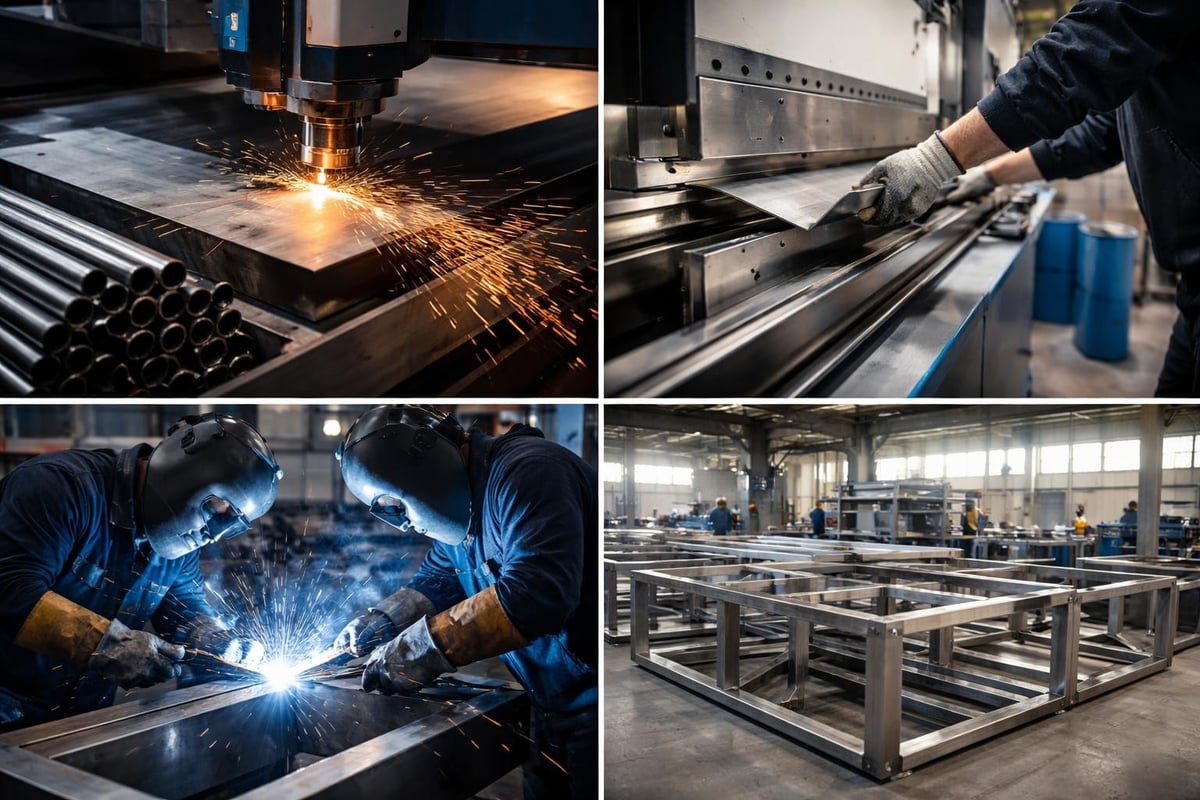
Commercial metal fabrication encompasses a comprehensive range of manufacturing processes designed to shape, cut, join, and finish metal materials into functional products. The common metal fabrication processes include cutting, bending, welding, and assembly operations that transform raw stock into finished components.
Core Fabrication Techniques
The foundation of commercial metal fabrication rests on several essential techniques that manufacturers deploy depending on project requirements:
- Cutting operations using plasma, laser, waterjet, or traditional sawing methods
- Bending and forming to create angles, curves, and complex geometries
- Welding processes including MIG, TIG, and stick welding for permanent joints
- Machining for precision tolerances and detailed features
- Assembly to combine individual components into complete structures
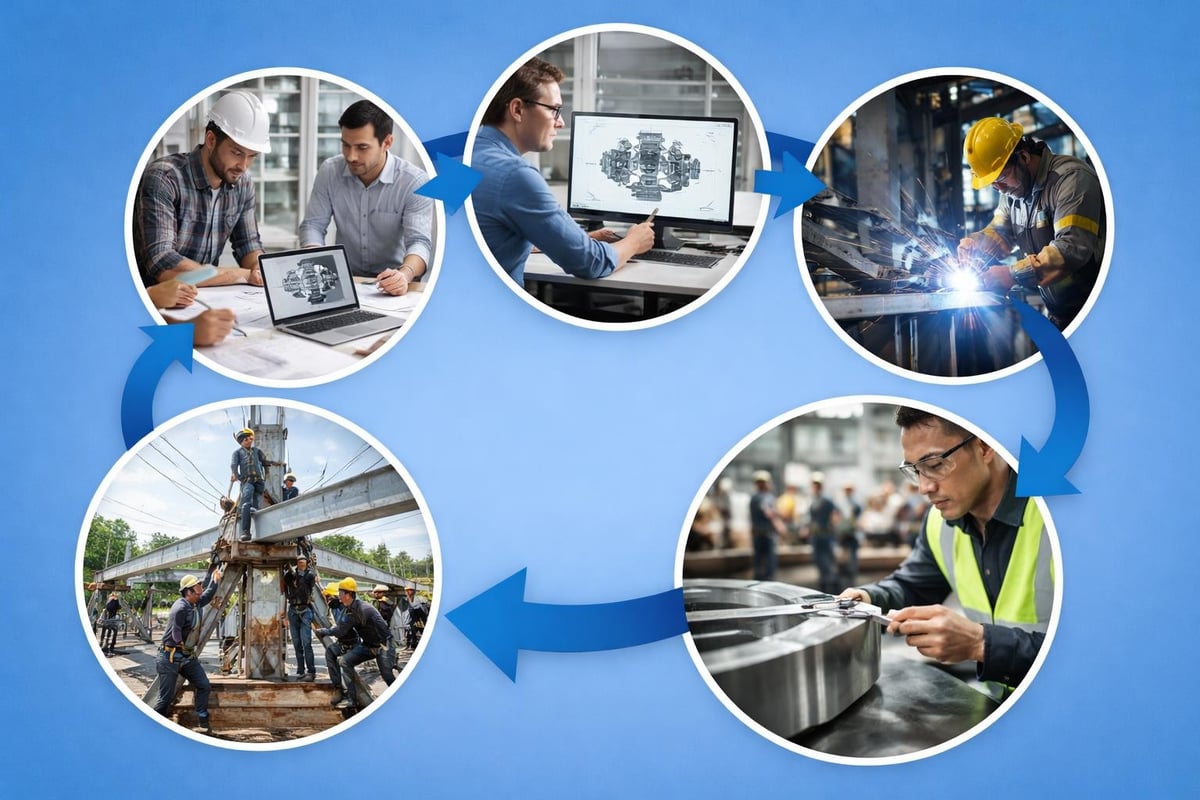
Modern fabrication shops integrate multiple techniques within a single workflow, allowing them to handle complex projects from initial design through final installation. Essential techniques and methods in metal processes have evolved significantly with technological advancement, enabling greater precision and efficiency.
Material Selection and Specifications
Selecting appropriate materials represents a critical decision in commercial metal fabrication. Different industries require specific material properties based on environmental conditions, load requirements, and regulatory standards.
| Material Type | Common Applications | Key Properties |
|---|---|---|
| Carbon Steel | Structural components, frames, enclosures | High strength, cost-effective, weldable |
| Stainless Steel | Food processing, chemical equipment, pressure vessels | Corrosion resistance, hygiene compliance |
| Aluminum | Transportation, aerospace, lightweight structures | Low density, corrosion resistance, formability |
| Alloy Steels | High-stress applications, heavy equipment | Enhanced strength, wear resistance, toughness |
Experienced fabrication partners like those offering custom metal fabrication services guide clients through material selection based on application requirements, budget constraints, and long-term performance expectations.
Industrial Applications and Sector-Specific Requirements
Commercial metal fabrication serves diverse industrial sectors, each with unique requirements and challenges. The fabricated structural metal manufacturing industry continues expanding as industrial operations demand increasingly sophisticated solutions.
Oil and Gas Sector Fabrication
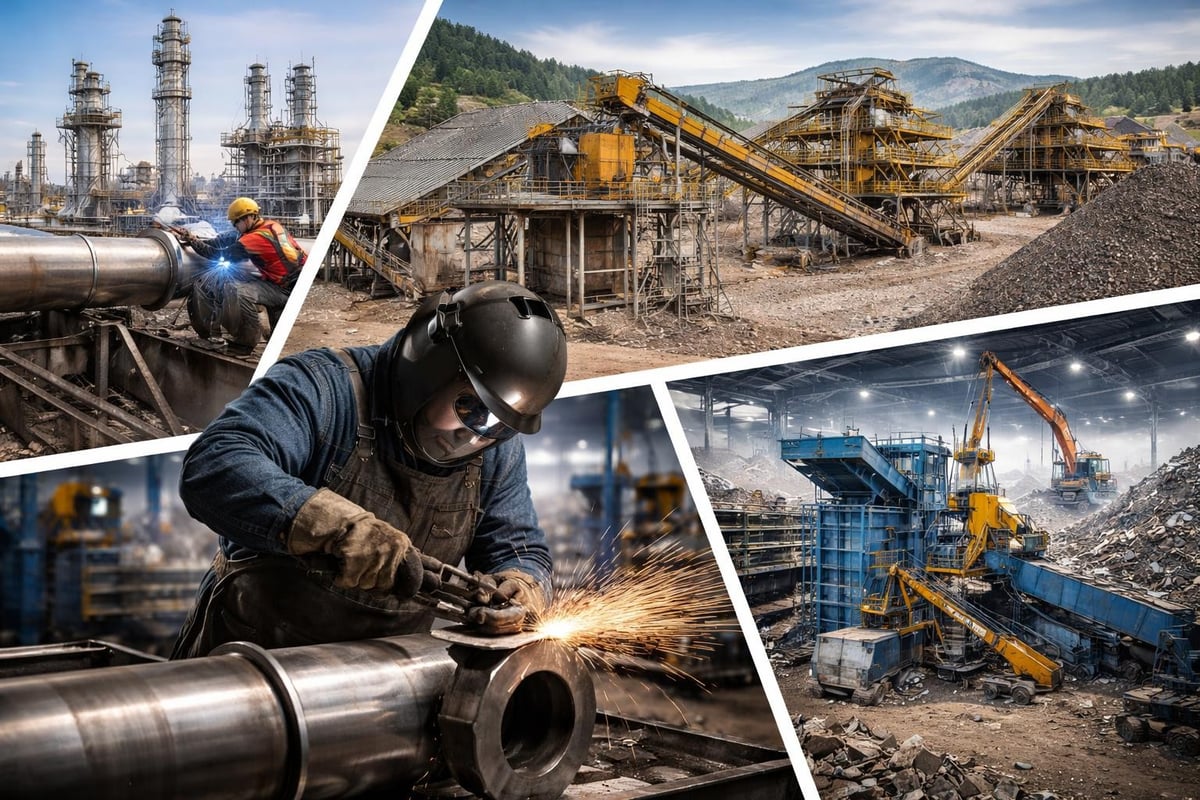
The oil and gas industry requires robust fabrication capabilities that withstand harsh operating environments and maintain integrity under pressure. Components include pressure vessels, pipeline supports, processing equipment frames, and safety structures that must comply with stringent industry standards.
Fabrication shops serving this sector typically maintain certifications for pressure vessel welding and repair to ensure compliance with ASME codes and other regulatory requirements. The specialized nature of oil and gas fabrication demands expertise in working with high-strength materials and executing precision welds that pass rigorous inspection protocols.
Aggregate and Mining Equipment
Aggregate processing and mining operations subject equipment to extreme wear, impact, and abrasion. Commercial metal fabrication for this sector focuses on durability and longevity, often incorporating wear-resistant materials and reinforced designs.
Common fabrication projects include:
- Conveyor system components and support structures
- Hopper and bin assemblies for material handling
- Screen boxes and vibrating equipment frames
- Crusher housings and wear plate installations
- Custom chutes and material transfer solutions
These applications benefit from manufacturing services that combine fabrication with precision machining to ensure proper fit and function in demanding environments.
Recycling Industry Solutions
The recycling sector presents unique fabrication challenges, requiring equipment that processes diverse materials while maintaining operational efficiency. Metal fabrication supports this industry through custom sorting equipment, conveyor systems, baling equipment modifications, and processing line components.
Recycling equipment fabrication often involves retrofitting existing machinery or designing entirely new systems tailored to specific material streams. The ability to provide both shop-based fabrication and field installation services proves invaluable for facilities requiring minimal downtime during upgrades or repairs.
Advanced Fabrication Technologies and Industry Trends
The commercial metal fabrication landscape continues evolving as manufacturers adopt advanced technologies that enhance precision, efficiency, and capabilities. According to Fall 2025 M&A activity in the metal fabrication industry, automation and digital manufacturing represent significant trends shaping the sector.
CNC Machining Integration
Computer numerical control (CNC) technology has revolutionized commercial metal fabrication by enabling unprecedented precision and repeatability. CNC machining capabilities allow fabricators to produce complex geometries, tight tolerances, and intricate features that manual processes cannot achieve consistently.
Modern fabrication facilities integrate CNC equipment across multiple processes including plasma cutting, waterjet cutting, milling, turning, and drilling operations. This integration streamlines production workflows and reduces the time between design approval and finished components.
Digital Design and Engineering
Three-dimensional CAD modeling and engineering simulation software enable fabricators to visualize projects before cutting any metal. This capability reduces errors, optimizes material usage, and facilitates client communication throughout the design phase.
Digital engineering also supports collaborative workflows where clients, engineers, and fabricators work together remotely to refine designs, address challenges, and ensure manufacturability before production begins. This approach minimizes costly revisions and accelerates project timelines.
Quality Control and Inspection Protocols
Professional fabrication operations maintain rigorous quality control measures throughout production. Inspection protocols include dimensional verification, weld quality assessment, material certification review, and final assembly testing.
| Inspection Method | Application | Benefits |
|---|---|---|
| Visual Inspection | Weld quality, surface finish | Immediate feedback, cost-effective |
| Dimensional Measurement | Tolerance verification | Ensures fit and function |
| Non-Destructive Testing | Weld integrity, material defects | Validates structural integrity without damage |
| Material Certification | Alloy verification, traceability | Confirms specifications, regulatory compliance |
These quality measures ensure that fabricated components meet specifications and perform reliably in their intended applications, reducing the risk of field failures and costly rework.
Custom Fabrication Capabilities and Project Management
Successful commercial metal fabrication requires more than technical expertise-it demands comprehensive project management that coordinates design, production, and delivery to meet client timelines and budgets. Companies offering welding and fabrication services typically provide end-to-end project support.
Design Consultation and Engineering Support
The fabrication process begins with understanding client requirements and translating them into manufacturable designs. Professional fabricators provide design consultation services that help clients optimize their concepts for cost-effectiveness, functionality, and manufacturability.
Engineering support includes material recommendations, structural analysis, regulatory compliance review, and value engineering suggestions that maintain quality while controlling costs. This collaborative approach ensures that final designs meet both performance objectives and budget constraints.
Shop and Field Fabrication Services
Different projects require different fabrication approaches. Some work occurs entirely within controlled shop environments, while other applications necessitate on-site fabrication and installation. The distinction between shop and field services impacts project planning, scheduling, and execution.
Shop fabrication advantages:
- Controlled environment optimizes quality and precision
- Access to full range of equipment and tools
- Efficient workflow and resource allocation
- Better protection from weather-related delays
Field fabrication benefits:
- Eliminates transportation challenges for oversized components
- Enables modification of existing structures in place
- Reduces facility downtime during equipment upgrades
- Accommodates site-specific adjustments during installation
Many projects benefit from a hybrid approach combining shop prefabrication with field assembly and finishing work, maximizing efficiency while accommodating practical constraints.
Prototyping and Production Scaling
Custom fabrication projects often begin with prototype development to validate designs before committing to full production. Prototyping allows clients to test form, fit, and function, identify potential improvements, and make informed decisions about production quantities.
Once prototypes receive approval, fabricators scale production according to project requirements. Whether manufacturing a single custom unit or producing hundreds of identical components, professional shops maintain consistent quality through standardized processes and documented procedures.
Welding Expertise and Specialized Processes
Welding represents a critical component of commercial metal fabrication, with different processes suited to specific applications, materials, and quality requirements. The overview of metal fabrication processes emphasizes the importance of selecting appropriate joining methods.
MIG, TIG, and Stick Welding Applications
Three primary welding processes dominate commercial fabrication work:
MIG (Metal Inert Gas) Welding provides high deposition rates and works well for thick materials and long production runs. This process excels in structural fabrication, heavy equipment manufacturing, and applications requiring speed and efficiency.
TIG (Tungsten Inert Gas) Welding delivers superior precision and quality for thin materials, critical joints, and applications requiring exceptional appearance. Stainless steel fabrication, aluminum work, and pressure vessel construction frequently specify TIG welding.
Stick Welding offers versatility and portability, making it ideal for field repairs, outdoor applications, and situations where wind or contamination challenges other processes. Many field machining and welding projects rely on stick welding for on-site work.
Pressure Vessel and Code Welding
Certain applications require welders certified to specific codes and standards. Pressure vessels, boilers, and piping systems must comply with ASME Boiler and Pressure Vessel Code requirements, demanding both specialized training and rigorous inspection protocols.
Fabricators serving regulated industries maintain certified welders and welding procedures that meet industry standards. Documentation, testing, and traceability ensure compliance throughout the fabrication process.
Specialized Joining Techniques
Beyond traditional welding, commercial metal fabrication sometimes incorporates alternative joining methods including bolted connections, riveting, adhesive bonding, and mechanical fastening. The choice depends on factors such as material compatibility, structural requirements, maintenance considerations, and disassembly needs.
For clients requiring structural steel components, structural steel fabrication specialists apply appropriate joining methods based on building codes, load calculations, and project specifications.
Material Handling and Secondary Operations
Complete commercial metal fabrication extends beyond primary forming and joining operations to include finishing, surface treatment, and assembly processes that prepare components for service.
Surface Preparation and Coating
Metal surfaces typically require preparation before installation or service. Options include grinding and deburring to remove sharp edges and weld spatter, sandblasting to clean surfaces and prepare for coating, painting or powder coating for corrosion protection, and galvanizing for long-term outdoor durability.
Surface treatment selection depends on environmental exposure, aesthetic requirements, maintenance preferences, and budget considerations. Industrial applications often prioritize function and longevity over appearance, while architectural applications may emphasize visual quality alongside performance.
Assembly and Testing Procedures
Complex fabrications require assembly of multiple components into integrated systems. Assembly procedures ensure proper alignment, secure connections, operational functionality, and compliance with design specifications.
Testing validates that assemblies meet performance requirements. Depending on application, testing may include pressure testing for leak detection, load testing for structural verification, functional testing of moving components, and dimensional inspection for fit verification.
Packaging and Shipping Logistics
Large or complex fabrications require careful planning for transportation and delivery. Professional fabricators coordinate packaging to protect finished components, shipping arrangements for oversized or heavy items, delivery timing to accommodate installation schedules, and unloading support at destination sites.
For projects requiring engineering expertise beyond fabrication, partnering with firms like ZALIG Consulting Ltd can provide comprehensive engineering services including structural analysis, foundation design, and project planning that complement fabrication capabilities.
Building Customizable Solutions for Diverse Industries
The versatility of commercial metal fabrication enables customized solutions across numerous industrial applications. Understanding client needs and translating them into practical designs separates competent fabricators from exceptional ones.
Agricultural and Equipment Applications
Agricultural operations rely on metal fabrication for equipment modifications, storage solutions, and specialized handling systems. Custom fabrication supports farming efficiency through irrigation system components, grain handling equipment, livestock facility structures, and equipment attachments.
Similarly, companies providing durable structures like those from Metal Structure Sales LLC demonstrate how metal fabrication creates functional buildings and covers that protect valuable equipment and materials from environmental exposure.
Municipal and Infrastructure Projects
Government agencies and infrastructure contractors utilize commercial metal fabrication for public works projects including wastewater treatment equipment, municipal vehicle maintenance facilities, park and recreation structures, and transportation infrastructure components.
These projects often involve long-term planning cycles, strict budget controls, and compliance with multiple regulatory requirements. Fabricators serving this market segment must demonstrate financial stability, bonding capacity, and experience navigating public procurement processes.
Manufacturing and Production Equipment
Manufacturers frequently require custom fabrication to support their production operations. Projects range from simple machine guards and workstations to complex material handling systems and custom processing equipment.
Understanding manufacturing workflows and production requirements enables fabricators to design solutions that enhance efficiency, improve safety, and integrate seamlessly with existing operations. The ability to provide manufacturing services that combine fabrication with machining and assembly creates comprehensive solutions for industrial clients.
Regional Considerations for Western United States Operations
Geography influences commercial metal fabrication in ways that impact material sourcing, project logistics, and service delivery. Businesses operating throughout the Western United States face unique considerations related to distances, terrain, and industrial concentrations.
Project Accessibility and Field Service Capabilities
Remote industrial sites common in Western states often require fabricators capable of providing field services. The ability to dispatch skilled welders and fabricators to client locations minimizes equipment downtime and accommodates projects where transporting components proves impractical.
Industrial fabrication services that include mobile capabilities offer significant advantages for clients operating mines, oil fields, and processing facilities in isolated areas. Field service teams equipped with portable welding equipment, machining tools, and hydraulic systems can execute repairs and modifications on-site.
Material Sourcing and Delivery Timelines
Western states' geographic expanse affects material procurement and delivery schedules. Fabricators must maintain supplier relationships that ensure reliable material availability and plan project timelines accounting for shipping distances.
Strategic inventory management of common materials reduces lead times for standard projects while maintaining flexibility to source specialized alloys and products for custom applications. This balance supports both rapid turnaround for urgent work and cost-effective execution of planned projects.
Industry Concentration and Specialization
Different regions concentrate specific industries creating fabrication specialization opportunities. Colorado's aggregate and mining operations, Wyoming's energy sector, Utah's manufacturing base, and Nevada's mining industry each present distinct market opportunities requiring tailored expertise.
Fabricators serving these diverse markets develop specialized knowledge of industry-specific requirements, building relationships within sectors and accumulating experience that improves project outcomes. This specialization creates value for clients through reduced learning curves, better anticipation of challenges, and more efficient execution.
Selecting the Right Fabrication Partner
Choosing a commercial metal fabrication partner significantly impacts project success, affecting quality, timeline, cost, and long-term satisfaction. Several factors deserve careful consideration when evaluating potential fabricators.
Technical Capabilities and Equipment
Assess whether potential fabricators possess equipment and expertise matching your project requirements. Key considerations include:
- Range of fabrication processes available in-house
- CNC machining capabilities and precision levels
- Welding certifications and specialized process expertise
- Capacity to handle project size and complexity
- Quality control systems and inspection equipment
Visit fabrication facilities when possible to observe operations firsthand and evaluate organizational capabilities, equipment condition, and shop organization.
Experience and Industry Knowledge
Prior experience in your industry provides valuable insight that improves project execution. Fabricators familiar with your sector understand regulatory requirements, application-specific challenges, common failure modes, and best practices that optimize designs.
Review metal fabrication projects completed by potential partners to evaluate relevant experience and quality standards. Request references from clients in similar industries and contact them to discuss their experiences.
Project Management and Communication
Effective communication throughout fabrication projects prevents misunderstandings, resolves issues quickly, and ensures alignment between expectations and deliverables. Evaluate how potential partners manage client communication, provide project updates, handle change orders, and address concerns.
Responsive communication and proactive problem-solving distinguish professional fabricators from those that may create frustration through poor coordination or delayed responses.
Geographic Proximity and Service Coverage
While not always essential, proximity can benefit projects requiring frequent collaboration, site visits, or rapid response to field issues. Consider whether fabricators serve your geographic area, maintain field service capabilities, provide emergency repair support, and deliver completed work efficiently.
For operations throughout the Western United States, partnering with Colorado industrial services providers positioned to serve multi-state territories offers logistical advantages.
Cost Factors and Value Optimization
Understanding cost drivers in commercial metal fabrication enables better budgeting and value optimization. While price matters, focusing solely on lowest cost often proves counterproductive when quality, reliability, and long-term performance enter consideration.
Material Costs and Market Fluctuations
Raw material prices fluctuate based on global supply and demand, affecting fabrication costs. Steel prices particularly experience volatility tied to international trade policies, production capacity, and economic conditions.
Professional fabricators help clients navigate market fluctuations through strategic timing recommendations, material substitution options where appropriate, and volume purchasing advantages for large projects.
Labor and Complexity Considerations
Fabrication labor costs reflect the skill level required, project complexity, and production efficiency. Simple, high-volume projects benefit from standardized processes that reduce per-unit costs, while custom, one-off fabrications require more engineering and setup time.
| Cost Factor | Impact on Pricing | Optimization Strategy |
|---|---|---|
| Design Complexity | Higher engineering time, specialized processes | Simplify designs where possible without compromising function |
| Material Selection | Raw material costs, processing requirements | Select most cost-effective material meeting specifications |
| Tolerances | Precision machining, inspection requirements | Specify tightest tolerances only where critical |
| Finish Requirements | Additional processing steps, materials | Match finish level to functional requirements |
| Volume | Setup costs distributed across units | Increase quantities when feasible to reduce per-unit cost |
Total Cost of Ownership Perspective
Evaluating fabrication costs requires considering total ownership costs rather than initial purchase price alone. Higher-quality fabrication may cost more initially but deliver value through extended service life, reduced maintenance requirements, better performance reliability, and lower failure rates.
This perspective particularly matters for critical applications where component failure creates significant downtime costs, safety risks, or production losses exceeding the component's purchase price many times over.
Safety Standards and Regulatory Compliance
Commercial metal fabrication operates within frameworks of safety regulations and industry standards designed to protect workers, ensure product quality, and maintain environmental responsibility.
OSHA Requirements and Workplace Safety
Fabrication shops must comply with Occupational Safety and Health Administration standards covering welding operations, material handling, machine guarding, personal protective equipment, and hazardous material management.
Professional fabricators implement comprehensive safety programs including regular training, hazard assessments, incident prevention protocols, and continuous improvement initiatives. Strong safety cultures protect workers while reducing insurance costs and liability exposure.
Industry Standards and Certifications
Different applications reference specific standards governing fabrication quality. Common standards include AWS (American Welding Society) welding specifications, ASME codes for pressure vessels and boilers, AISC (American Institute of Steel Construction) standards for structural steel, and industry-specific requirements for specialized applications.
Fabricators maintain familiarity with applicable standards and implement quality systems ensuring compliance throughout production. Third-party certifications and audits validate compliance and provide clients with confidence in fabricator capabilities.
Environmental Responsibility
Metal fabrication generates waste streams requiring proper management including metal scrap for recycling, welding fumes and air contaminants, cutting fluids and process chemicals, and paint and coating materials.
Responsible fabricators implement environmental management practices that minimize waste, maximize recycling, control emissions, and comply with environmental regulations. These practices demonstrate corporate responsibility while often reducing operating costs through improved efficiency.
Commercial metal fabrication remains fundamental to industrial operations across diverse sectors, with evolving technologies and capabilities continually expanding what's possible in custom metalworking. Companies seeking reliable fabrication partners benefit from evaluating technical capabilities, industry experience, quality systems, and service coverage to find providers aligned with their specific needs. LTJ Industrial Services delivers comprehensive metal fabrication, welding, and machining solutions throughout the Western United States, combining shop and field capabilities to support commercial and industrial manufacturing sectors with the expertise and responsiveness your projects demand.