
Modern industrial operations depend heavily on specialized fabrication application processes to transform raw materials into functional components that drive production efficiency. Whether creating custom pressure vessels, structural steel assemblies, or precision machined parts, understanding how fabrication applications serve different industries helps businesses optimize their manufacturing strategies. Throughout the Western United States, companies in sectors ranging from oil and gas to aggregate processing rely on advanced fabrication techniques to maintain competitive advantages and meet stringent quality standards.
Understanding Fabrication Application in Modern Manufacturing
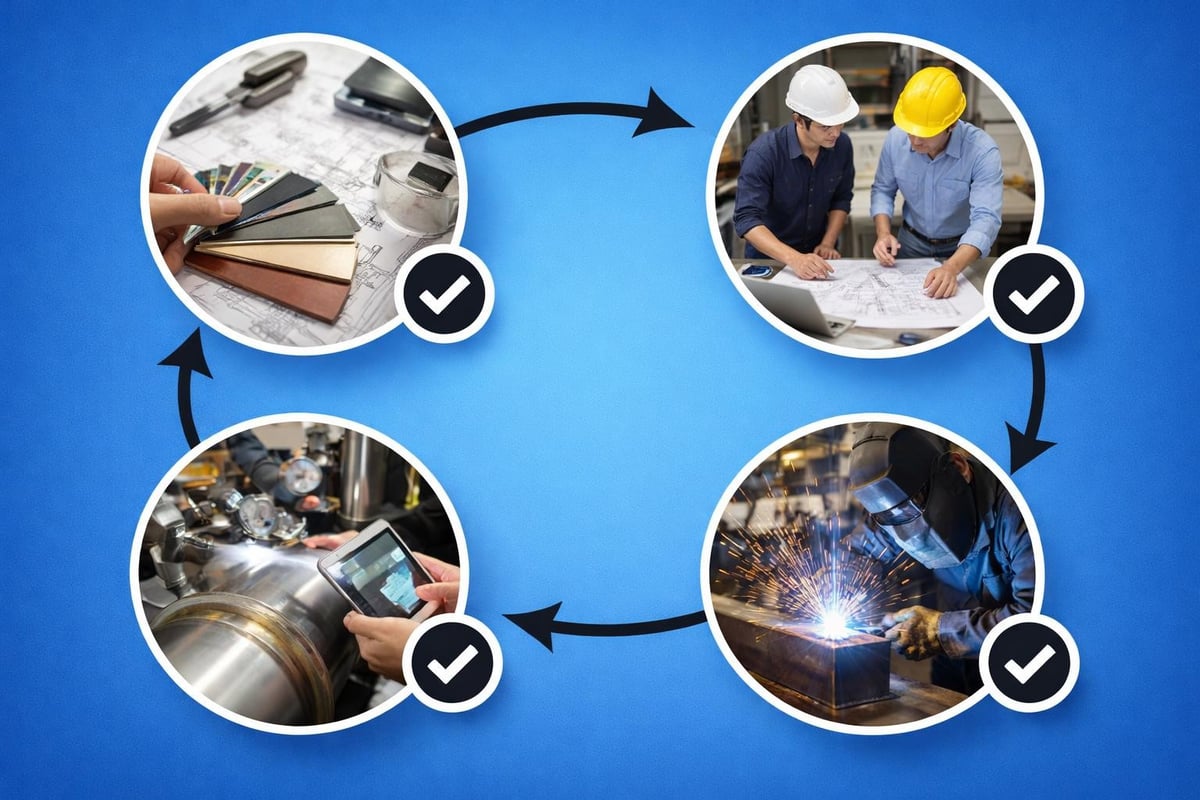
A fabrication application represents the practical implementation of manufacturing processes to create specific components or assemblies for industrial use. This encompasses everything from initial design and material selection through cutting, forming, welding, and finishing operations. Manufacturing and fabrication processes require careful planning to ensure dimensional accuracy and structural integrity.
The scope of fabrication application extends across multiple industries, each with unique requirements and specifications. Commercial manufacturing sectors demand solutions that balance cost-effectiveness with durability, while industrial applications often prioritize strength and resistance to extreme operating conditions.
Core Components of Effective Fabrication Applications
Every successful fabrication application begins with comprehensive project assessment. Engineers and fabricators must evaluate material properties, load requirements, environmental factors, and operational constraints before selecting appropriate manufacturing methods.
Key considerations include:
- Material compatibility with intended service conditions
- Dimensional tolerances and quality specifications
- Welding procedures and metallurgical requirements
- Surface treatments and corrosion protection needs
- Assembly sequences and installation constraints
Proper planning during the initial stages prevents costly rework and ensures that finished components meet or exceed performance expectations. This systematic approach applies whether fabricating simple brackets or complex pressure vessels requiring certified welding and repair services.
Industry-Specific Fabrication Applications
Different industrial sectors utilize fabrication applications in ways tailored to their operational demands. Understanding these variations helps businesses select appropriate fabrication partners and optimize their component specifications.
Oil and Gas Sector Applications
The energy industry requires fabrication applications that withstand harsh environments, high pressures, and corrosive substances. Pressure vessels, piping systems, and processing equipment must meet rigorous codes and standards including ASME Section VIII requirements.
Typical fabrication applications in this sector include:
- Wellhead equipment and manifolds – Custom fabricated assemblies that control flow and pressure
- Storage tanks and separators – Large-scale vessels requiring precision welding and testing
- Processing skids – Integrated systems combining piping, instrumentation, and structural components
- Pipeline support structures – Engineered frameworks designed for specific load conditions
Companies specializing in oil and gas fabrication maintain certifications and expertise specific to petroleum industry standards, ensuring compliance with safety regulations and operational requirements.
Aggregate and Mining Applications
Aggregate processing operations demand robust fabrication applications capable of handling abrasive materials and continuous duty cycles. Conveyor components, screening equipment, and crusher assemblies require specialized welding techniques and wear-resistant materials.
| Component Type | Primary Fabrication Methods | Key Material Considerations |
|---|---|---|
| Conveyor frames | Structural welding, bolt-on assemblies | Carbon steel, galvanized finish |
| Chute liners | Wear plate installation, overlay welding | AR400/500 abrasion-resistant steel |
| Screen decks | Precision cutting, modular construction | High-tensile wire mesh, support frames |
| Crusher housings | Heavy plate fabrication, stress relieving | High-strength alloy steel |
This sector benefits significantly from custom metal fabrication services that can modify existing equipment or create specialized components matching unique site conditions.
Recycling Industry Requirements
Recycling operations utilize fabrication applications to process diverse material streams efficiently. Sorting equipment, baling machinery, and material handling systems must accommodate varying feedstock while maintaining operational reliability.
Fabrication applications commonly deployed in recycling facilities include shredder components, magnetic separator frames, and hydraulic press assemblies. These systems require design flexibility to handle everything from scrap metal to industrial waste materials.
Advanced Technologies in Fabrication Application
Modern fabrication applications leverage technological innovations that enhance precision, efficiency, and quality outcomes. Integration of computer-aided design and manufacturing systems has transformed how fabricators approach complex projects.
Computer-Aided Design and Manufacturing Integration
CAD software and advanced fabrication tools enable fabricators to visualize assemblies, simulate loads, and optimize material usage before physical production begins. This digital-first approach reduces errors and accelerates project timelines.
Three-dimensional modeling allows stakeholders to review designs, identify potential interference issues, and verify that components will integrate properly with existing systems. When combined with CNC machining and automated cutting equipment, these tools deliver consistent results across production runs.
Benefits of technology-enhanced fabrication:
- Reduced material waste through optimized nesting and cutting patterns
- Improved dimensional accuracy via CNC-controlled equipment
- Enhanced documentation including detailed drawings and weld maps
- Faster iteration when design modifications become necessary
- Better communication between design teams and shop floor personnel
Shops offering comprehensive machining and fabrication services utilize these technologies to provide complete manufacturing solutions from concept through installation.
Robotic Welding and Automation
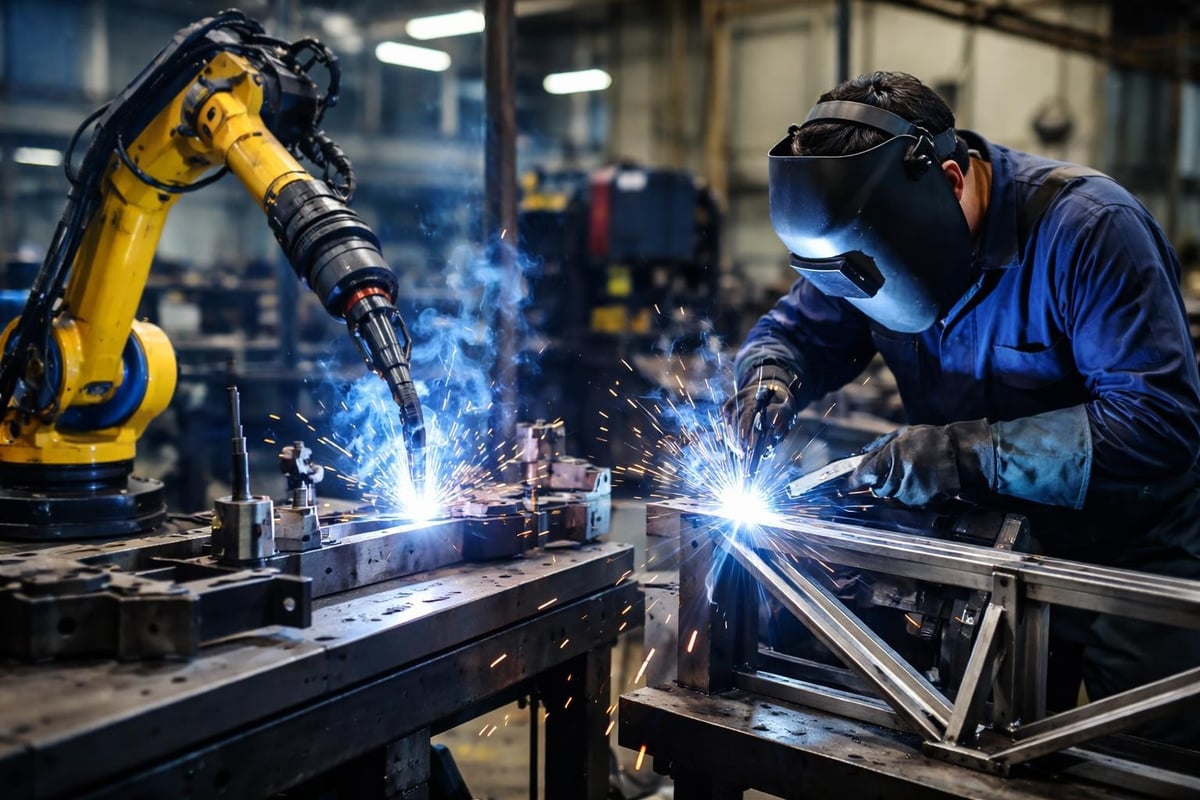
Automated welding systems represent a significant advancement in fabrication application consistency. Robotic welders can maintain precise torch angles, travel speeds, and heat input parameters that human operators find challenging to replicate across extended production runs.
These systems excel at repetitive tasks such as seam welding on cylindrical vessels or consistent fillet welds on structural assemblies. However, skilled welders remain essential for complex joint configurations, field repairs, and specialized applications requiring adaptive techniques.
Material Selection for Specific Fabrication Applications
Choosing appropriate materials directly impacts fabrication application success. Different alloys and grades offer varying characteristics regarding strength, corrosion resistance, weldability, and cost-effectiveness.
Carbon Steel Applications
Standard carbon steels remain the most common choice for general fabrication applications due to their balance of properties and economic value. A36 structural steel and related grades provide adequate strength for many applications while maintaining good weldability.
For higher-stress applications, fabricators specify higher-strength grades such as A572-50 or A588 weathering steel. These materials support increased loads or provide enhanced atmospheric corrosion resistance without protective coatings.
Stainless Steel and Specialty Alloys
Applications involving corrosive environments or sanitary requirements necessitate stainless steel fabrication. Food processing equipment, pharmaceutical systems, and chemical handling components typically utilize 304 or 316 stainless steel grades.
More demanding conditions may require specialty alloys such as Inconel for high-temperature applications or duplex stainless steels for superior corrosion resistance combined with strength. These materials present unique welding challenges requiring specific procedures and qualified welders familiar with specialized welding materials.
| Material Category | Typical Applications | Fabrication Considerations |
|---|---|---|
| Carbon steel (A36, A572) | Structural frames, general equipment | Excellent weldability, minimal preheat |
| Stainless steel (304, 316) | Sanitary systems, corrosive environments | Requires argon backing, heat control |
| Abrasion-resistant (AR400/500) | Wear surfaces, impact zones | Preheat required, special electrodes |
| High-strength alloy | Pressure vessels, critical components | Strict procedure qualification needed |
Quality Control in Fabrication Applications
Rigorous quality assurance processes ensure fabrication applications meet specified requirements and perform reliably throughout their service life. Inspection protocols vary based on component criticality and applicable codes.
Non-Destructive Testing Methods
Critical fabrication applications undergo non-destructive examination to verify weld integrity without damaging the component. Common NDT methods include:
- Visual inspection – Initial assessment of weld profiles, surface conditions, and dimensional conformance
- Magnetic particle testing – Detection of surface and near-surface discontinuities in ferromagnetic materials
- Liquid penetrant examination – Identification of surface-breaking defects in non-magnetic materials
- Radiographic testing – Internal weld evaluation using X-ray or gamma radiation
- Ultrasonic examination – Volumetric inspection detecting internal flaws and measuring thickness
Pressure vessel fabrication applications typically require the most extensive testing protocols, following ASME Section VIII Division 1 or Division 2 requirements depending on design conditions.
Dimensional Verification and Documentation
Precision measurements confirm that fabricated components match design specifications. Modern coordinate measuring machines (CMM) provide detailed dimensional data for complex geometries, while traditional tools suffice for straightforward assemblies.
Complete documentation packages include material certifications, weld procedure specifications, welder qualification records, inspection reports, and as-built drawings. These records provide traceability and support future maintenance or modification activities.
Field Fabrication Applications
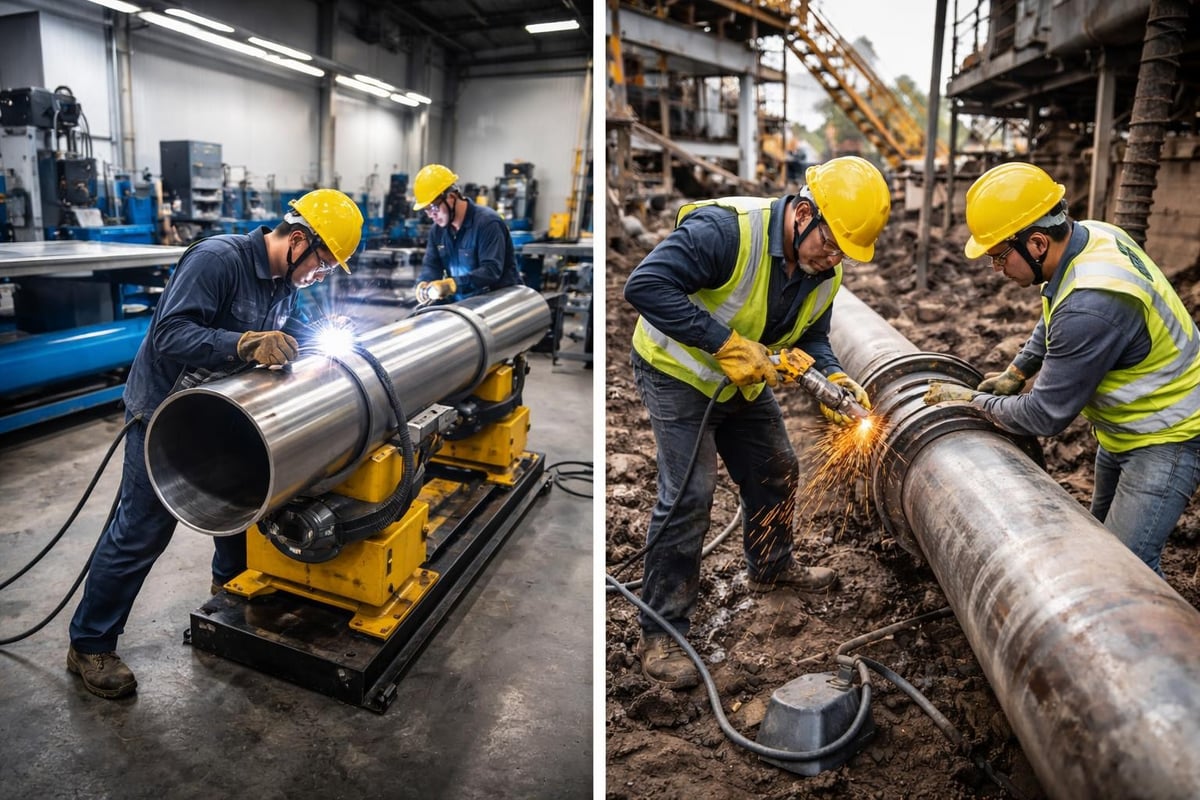
Not all fabrication work occurs in controlled shop environments. Many industrial operations require on-site fabrication to repair equipment, modify existing systems, or install new components where transportation limitations prevent shop fabrication.
Challenges and Solutions for Field Work
Field fabrication applications face unique obstacles including weather exposure, limited equipment access, and working around operational facilities. Successful field fabricators develop adaptive strategies to overcome these constraints while maintaining quality standards.
Common field fabrication scenarios:
- Emergency repairs on critical production equipment
- Tie-ins connecting new piping or systems to existing infrastructure
- Structural modifications accommodating process changes
- Equipment relocation and reinstallation
- Custom brackets and supports for specialized installations
Companies providing both shop and field machining capabilities offer comprehensive solutions that address the full spectrum of industrial fabrication needs.
Custom Fabrication Application Development
Standard components cannot address every industrial requirement. Custom fabrication applications allow businesses to obtain precisely engineered solutions matching their unique operational parameters and spatial constraints.
Design Collaboration Process
Effective custom fabrication begins with detailed collaboration between the client's engineering team and fabrication specialists. This partnership ensures that design intent translates accurately into manufacturable components that function as intended.
Initial consultations establish project scope, performance requirements, budget parameters, and delivery timelines. Experienced fabricators contribute value engineering suggestions that may reduce costs or improve functionality without compromising quality.
Prototyping and testing may occur for particularly complex or critical applications. This validation step confirms that the fabrication application will perform satisfactorily before committing to full production quantities.
Scalability Considerations
Some fabrication applications begin as single custom pieces but evolve into recurring production requirements. Designing with scalability in mind enables efficient transition from prototype to production while maintaining consistency.
Modular design approaches facilitate this scalability by standardizing subassemblies that can be configured differently for various applications. This strategy appears frequently in industrial metal fabrication serving multiple related sectors.
Maintenance and Lifecycle Management
Fabrication applications require ongoing attention to maximize service life and maintain performance. Preventive maintenance programs identify wear patterns and address issues before they result in failures.
Inspection Schedules and Criteria
Regular inspections detect corrosion, fatigue cracks, mechanical wear, and other degradation mechanisms. Inspection frequency depends on service severity, with critical safety equipment receiving more frequent attention than non-essential components.
Detailed inspection records track component condition over time, revealing trends that inform replacement decisions. This data-driven approach optimizes maintenance budgets by replacing components based on actual condition rather than arbitrary schedules.
Repair vs. Replacement Decisions
Economic analysis determines whether repairing or replacing fabrication applications makes better financial sense. Factors include repair complexity, expected remaining service life, availability of replacement components, and impact of equipment downtime.
Simple repairs such as weld buildup on worn surfaces or replacement of bolt-on wear components typically prove cost-effective. Extensive damage or repeated failures may justify complete replacement with updated designs incorporating lessons learned from operational experience.
Professional fabricators offering welding and fabrication services can assess damage and recommend appropriate remedial actions based on engineering principles and industry best practices.
Emerging Trends in Fabrication Application
The fabrication industry continues evolving as new technologies, materials, and methods emerge. Staying informed about these developments helps businesses make strategic decisions regarding equipment investments and capability development.
Additive Manufacturing Integration
While traditional subtractive and formative processes dominate fabrication applications, additive manufacturing (3D printing) increasingly serves niche applications. Metal printing creates complex geometries impossible to achieve through conventional methods, though size limitations and production economics currently restrict widespread adoption.
Hybrid approaches combining additive and traditional fabrication show promise for creating components with optimized internal geometries surrounded by conventionally fabricated structures. This integration may expand as equipment capabilities improve and costs decline.
Sustainability and Environmental Considerations
Modern fabrication applications increasingly incorporate sustainability principles. Material efficiency, energy consumption, and end-of-life recyclability receive greater emphasis as industries pursue environmental responsibility alongside economic performance.
Various industrial fabrication types adapt these principles differently, but common themes include reduced waste generation, increased use of recycled content materials, and designs facilitating disassembly and component reuse.
Water jetting and other non-thermal cutting methods reduce heat-affected zones and material waste compared to traditional thermal cutting. These technologies align with sustainability goals while delivering precision results for demanding applications.
Workforce Development and Skill Requirements
Successful fabrication applications depend on skilled professionals who understand materials, processes, and quality requirements. The industry faces ongoing challenges attracting and retaining qualified personnel as experienced workers retire.
Essential Competencies
Modern fabricators require diverse competencies spanning traditional crafts and contemporary technologies:
- Blueprint reading and geometric dimensioning and tolerancing (GD&T) interpretation
- Welding procedure specification development and qualification
- CNC programming for machining and cutting equipment
- Material science fundamentals affecting process selection
- Quality control methods and inspection techniques
- Safety protocols including confined space and fall protection
Cross-training programs develop versatile employees capable of contributing across multiple fabrication disciplines. This flexibility improves workforce utilization and enhances project coordination.
Certification and Qualification Programs
Industry certifications validate individual competencies and organizational capabilities. AWS welding certifications, ASME code stamps, and ISO quality management registrations demonstrate commitment to professional standards and customer satisfaction.
Maintaining these credentials requires ongoing investment in training, equipment, and quality systems. However, the competitive advantages and expanded market access typically justify these expenditures for serious fabrication operations.
Fabrication applications serve as the foundation for industrial equipment and infrastructure across every manufacturing sector, transforming engineering concepts into functional components that drive operational success. Whether you need precision pressure vessels, structural steel assemblies, or custom solutions for unique challenges, partnering with experienced professionals ensures quality outcomes. LTJ Industrial Services brings decades of expertise in welding, fabrication, and machining to commercial and industrial clients throughout the Western United States, delivering the comprehensive capabilities and quality craftsmanship your projects demand.