
When selecting equipment and processes for metal joining in industrial settings, understanding the full spectrum of available options is essential. All welders share a common purpose-creating permanent bonds between metal components-yet they accomplish this through dramatically different methods, each suited to specific applications, materials, and working conditions. From the dusty job sites of oil and gas facilities to precision fabrication shops, the right welding approach determines project success, structural integrity, and cost efficiency.
Understanding Fundamental Welding Categories
The welding industry encompasses numerous process variations, but all welders fundamentally fall into several primary categories based on their energy source and bonding mechanism.
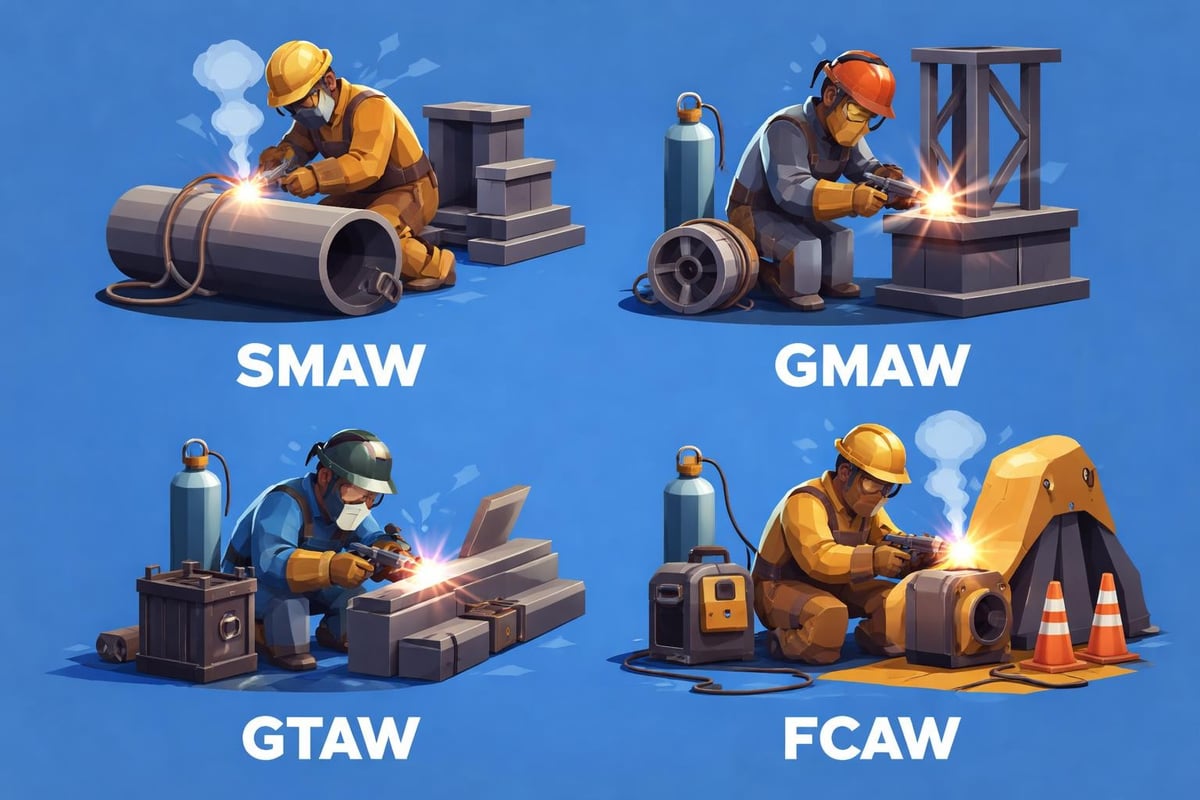
Arc welding processes form the backbone of industrial fabrication. These techniques use electrical current to generate intense heat, creating an arc between an electrode and the base material. Shielded metal arc welding remains one of the most versatile and widely adopted methods across construction and maintenance operations.
Gas metal arc welding (GMAW), commonly called MIG welding, feeds a continuous wire electrode through a gun while shielding gas protects the weld pool from atmospheric contamination. This process excels in production environments where speed and consistency matter most.
Gas Tungsten Arc Welding Precision
Gas tungsten arc welding (GTAW or TIG) delivers unmatched precision and clean results. All welders seeking the highest quality in stainless steel, aluminum, and exotic alloys turn to this process.
- Non-consumable tungsten electrode creates the arc
- Separate filler rod allows precise control
- Inert gas shield prevents oxidation
- Ideal for critical aerospace and medical applications
- Slower than other processes but produces superior aesthetics
The learning curve for TIG welding is steep, requiring exceptional hand-eye coordination and patience. However, shops serving industries with stringent quality requirements-such as those providing custom metal fabrication-rely heavily on this process.
Specialized Welding Technologies
Beyond conventional arc processes, all welders should understand specialized techniques that serve unique industrial needs.
Advanced Beam Welding Methods
Electron-beam welding operates in vacuum chambers, using focused electron beams to join metals with minimal heat-affected zones. This technology finds applications in aerospace, nuclear, and automotive manufacturing where distortion must be eliminated.
Laser beam welding similarly concentrates energy into tiny focal points, enabling deep penetration welds with exceptional precision. These automated systems dominate high-volume automotive assembly lines and electronics manufacturing.
| Welding Process | Heat Source | Primary Applications | Typical Penetration |
|---|---|---|---|
| Electron Beam | Focused electrons | Aerospace, nuclear | Very deep (>100mm) |
| Laser Beam | Concentrated light | Automotive, electronics | Deep (up to 20mm) |
| Plasma Arc | Ionized gas | Aerospace, precision | Medium to deep |
| Resistance | Electrical resistance | Sheet metal assembly | Spot welds |
Solid-State Joining Processes
Not all welders generate molten weld pools. Solid-state processes create bonds through pressure, friction, or diffusion without melting the base materials.
Ultrasonic welding vibrates components at high frequencies, generating heat through friction at the joint interface. This process excels for plastics and thin metals in electronics and medical device manufacturing.
Friction stir welding plunges a rotating tool into the joint line, plasticizing material through frictional heat. The aerospace industry uses this process extensively for aluminum alloy structures where traditional fusion welding would compromise strength.
Equipment Selection for Industrial Applications
All welders need appropriate equipment matching their specific operational requirements. Power source selection, duty cycle, and portability considerations vary dramatically between shop and field applications.
Shop-Based Welding Systems
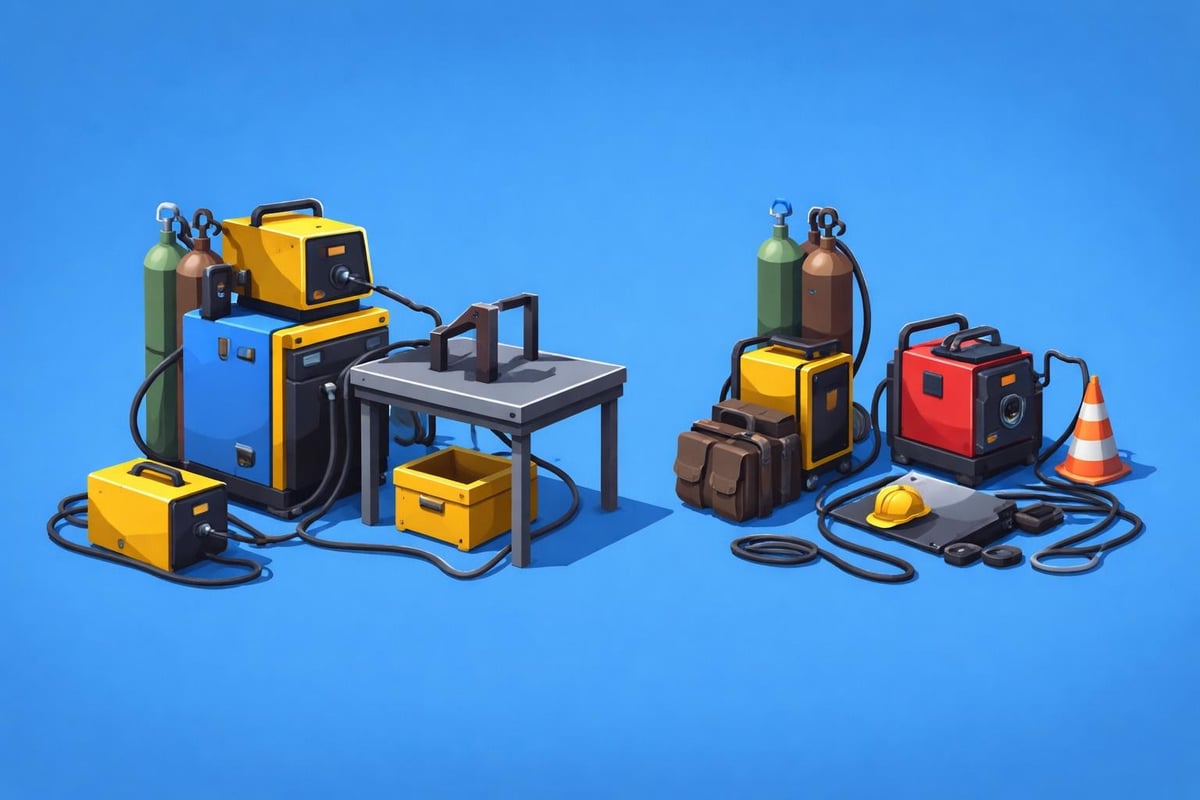
Stationary fabrication shops benefit from heavy-duty equipment with consistent power delivery. Multi-process machines offer flexibility, switching between MIG, TIG, and stick welding without changing power sources.
Key shop equipment features:
- 230V or 460V three-phase power compatibility
- 100% duty cycle at rated amperage
- Digital controls for precise parameter adjustment
- Integrated fume extraction connections
- Programmable memory settings for repetitive jobs
Companies specializing in welding and fabrication invest in robust equipment capable of handling diverse project requirements from structural steel to precision stainless work.
Field Service Welding Gear
Portable welding equipment enables repair and installation work at remote sites. All welders working in oil and gas, aggregate processing, or industrial maintenance require self-contained systems.
Engine-driven welders combine generator and welding power source into single units, operating independently from electrical infrastructure. These machines often include auxiliary power outlets for grinders, lights, and other tools.
Battery-powered inverter technology has revolutionized field welding. Modern lithium-ion systems deliver professional results for several hours on single charges, eliminating generator noise and emissions in confined spaces.
Material-Specific Welding Considerations
All welders must match processes and parameters to base material properties. Metal composition, thickness, and intended service conditions dictate appropriate techniques.
Carbon and Low-Alloy Steels
Structural steel fabrication represents the largest volume application across construction and manufacturing sectors. SMAW, GMAW, and FCAW all perform effectively on carbon steels.
Preheat requirements depend on carbon content and section thickness. Materials exceeding 0.35% carbon typically require controlled heating before welding to prevent cracking in the heat-affected zone.
Stainless Steel Fabrication
Corrosion-resistant applications in food processing, chemical plants, and pharmaceutical facilities demand stainless steel. All welders working with these materials must prevent sensitization-chromium carbide precipitation that reduces corrosion resistance.
Lower heat input through TIG or pulsed MIG processes minimizes sensitization risk. Backing gas on pipe interiors prevents sugaring (oxidation discoloration) on root passes.
Aluminum Welding Challenges
Aluminum’s high thermal conductivity and oxide layer formation complicate welding operations. AC TIG welding or specialized MIG processes with spray transfer modes produce quality aluminum joints.
Cleaning procedures prove critical-aluminum oxide melts at much higher temperatures than the base aluminum, preventing fusion if not removed. Wire brushing with dedicated stainless steel brushes immediately before welding ensures proper bonding.
| Base Material | Preferred Process | Key Challenge | Critical Control |
|---|---|---|---|
| Carbon Steel | GMAW, SMAW, FCAW | Weld cracking | Preheat, hydrogen control |
| Stainless Steel | GTAW, pulsed GMAW | Sensitization | Heat input management |
| Aluminum | AC GTAW, GMAW | Oxide layer | Surface preparation |
| Duplex Stainless | GTAW, GMAW | Phase balance | Interpass temperature |
Safety Protocols for All Welders
Welding safety encompasses multiple hazards requiring comprehensive protective measures. Every welding operation generates risks that demand respect and proper mitigation.
Personal Protective Equipment Requirements
Eye protection varies by process intensity. Passive shade 10-13 lenses protect against arc welding radiation, while auto-darkening helmets increase productivity and reduce neck strain from repeatedly raising traditional helmets.
Flame-resistant clothing prevents burns from sparks and spatter. Natural fibers like cotton or leather outperform synthetic materials that melt when contacted by hot particles.
Essential PPE for welding operations:
- Auto-darkening or passive welding helmet (appropriate shade number)
- Flame-resistant jacket and pants without cuffs
- Leather gloves rated for welding temperatures
- Steel-toed leather boots with metatarsal guards
- Safety glasses with side shields under helmet
Respiratory Protection and Ventilation
Welding fumes contain metal oxides and potentially toxic compounds depending on base materials and coatings. Adequate ventilation prevents dangerous accumulations in breathing zones.
Local exhaust ventilation captures fumes at the source using extraction guns or overhead hoods. When engineering controls prove insufficient, all welders must use approved respirators matched to specific contaminant exposure levels.
Confined space welding presents extreme hazards. Oxygen displacement by shielding gases can cause asphyxiation within seconds. Understanding welding hazards and implementing proper monitoring prevents tragedies.
Certification and Qualification Standards
All welders performing code work must demonstrate competency through qualification testing. Industry standards vary by application sector and governing jurisdictions.
AWS Certification Programs
The American Welding Society administers several certification programs. Certified Welder credentials verify ability to produce sound welds meeting specific code requirements.
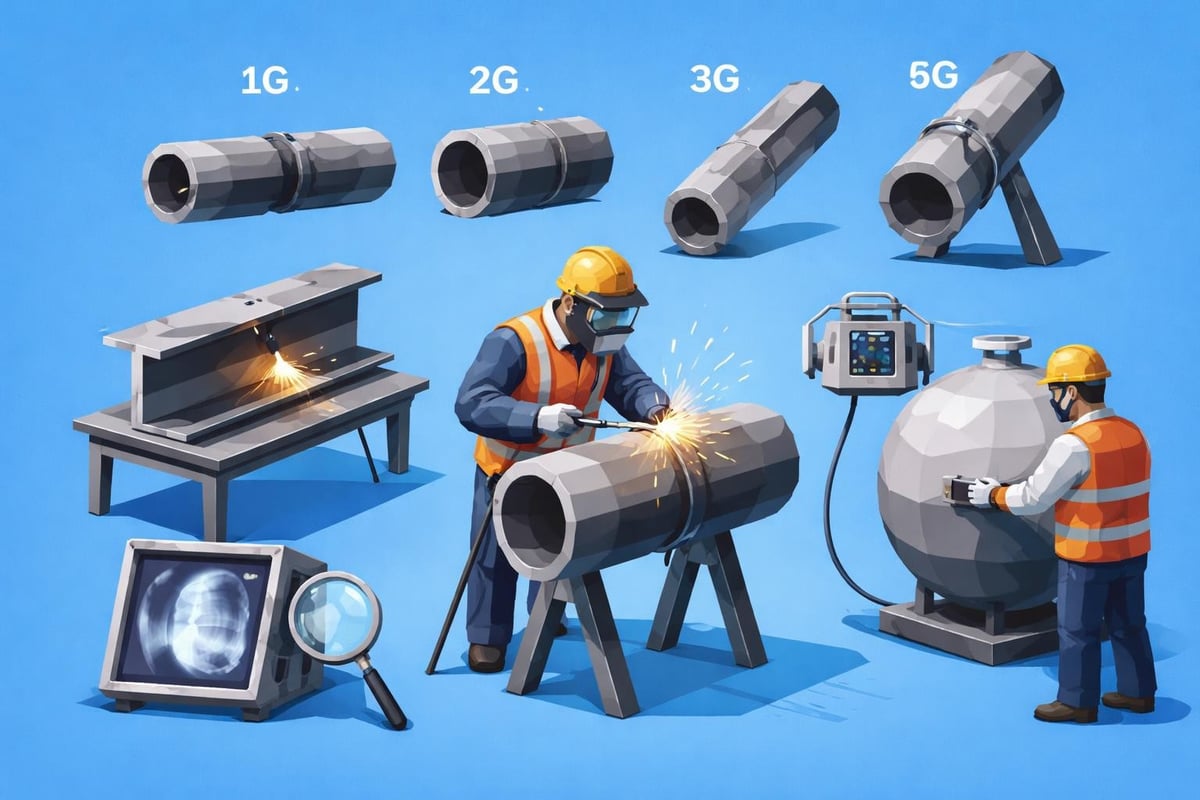
Testing encompasses position variations (flat, horizontal, vertical, overhead), joint configurations, and process types. Certifications expire, requiring periodic retesting to maintain credentials.
Industry-Specific Qualifications
Pipeline welding follows API 1104 standards with stringent testing protocols. All welders on oil and gas transmission systems must qualify using actual pipe diameters and wall thicknesses matching field conditions.
Structural steel fabrication references AWS D1.1, establishing prequalified joint details and testing procedures. Shops serving industrial and manufacturing sectors maintain qualified welders across multiple certifications.
Pressure vessel work demands ASME Section IX qualifications. These rigorous tests include radiographic or ultrasonic examination of test coupons, revealing internal discontinuities invisible to surface inspection.
Emerging Welding Technologies
Innovation continues advancing capabilities available to all welders. Automation, monitoring, and hybrid processes expand what’s possible in metal joining.
Robotic and Automated Systems
Six-axis industrial robots equipped with welding torches deliver consistent quality on high-volume production runs. Programming flexibility allows quick changeover between product variations.
Collaborative robots (cobots) work alongside human welders, handling repetitive portions while operators manage complex fit-up and tacking. This hybrid approach optimizes both productivity and flexibility.
Monitoring and Documentation Systems
Weld data logging captures parameters throughout production, creating permanent records for quality assurance. Traceability requirements in aerospace and nuclear applications demand such documentation.
Vision systems analyze weld pool geometry in real-time, automatically adjusting parameters to maintain consistent penetration despite variations in fit-up or travel speed.
Hybrid Welding Processes
Combining complementary technologies yields advantages unavailable from single processes. Laser-arc hybrid welding pairs laser beam precision with GMAW’s gap-bridging capability and higher deposition rates.
Hot plate welding and friction techniques continue evolving for plastics and composites applications. While traditionally metal-focused, all welders increasingly encounter multi-material assemblies requiring diverse joining knowledge.
Quality Control and Inspection Methods
Verification ensures welds meet design requirements and performance expectations. All welders should understand common inspection techniques even when performed by dedicated quality personnel.
Visual Examination Fundamentals
Trained inspectors identify surface discontinuities including cracks, porosity, undercut, and insufficient fusion. Proper lighting, magnification, and measurement tools enable accurate assessment.
Acceptance criteria vary by application. Cosmetic welds tolerate minor imperfections that would reject structural or pressure-containing joints.
Non-Destructive Testing Applications
Radiography reveals internal discontinuities using X-rays or gamma radiation. Film or digital imaging shows porosity, slag inclusions, and lack of fusion invisible externally.
Ultrasonic testing uses high-frequency sound waves, detecting flaws through reflection patterns. UT proves especially valuable for thick sections where radiography becomes impractical.
Common NDT methods for weld inspection:
- Visual testing (VT) – surface evaluation
- Liquid penetrant testing (PT) – surface-breaking defects
- Magnetic particle testing (MT) – ferromagnetic materials only
- Radiographic testing (RT) – internal discontinuities
- Ultrasonic testing (UT) – volumetric examination
- Eddy current testing (ET) – surface and near-surface flaws
Maintenance and Equipment Care
Proper maintenance extends equipment life and ensures consistent welding results. All welders benefit from establishing regular service schedules.
Power Source Maintenance
Cooling systems require periodic inspection. Radiator fins accumulate dust and debris, restricting airflow and causing overheating. Compressed air cleaning prevents thermal shutdowns during critical operations.
Electrical connections develop resistance over time. Annual inspection and retorquing of power cables and terminals prevent voltage drops that compromise arc stability.
Consumable Management
Electrode storage prevents moisture absorption in flux-coated rods. Low-hydrogen electrodes require holding ovens maintaining 250-300°F to preserve coating integrity.
Wire feed systems need regular cleaning and adjustment. Drive roll pressure, liner condition, and contact tip wear all affect wire feeding reliability. Companies offering welding services maintain strict consumable control procedures ensuring consistent results.
Gas System Verification
Shielding gas purity affects weld quality significantly. Contaminated cylinders or leaking regulators introduce porosity and oxidation defects.
Flowmeter calibration ensures proper gas coverage. Excessive flow wastes expensive gases while creating turbulence that draws in atmospheric contamination. Insufficient flow allows oxygen and nitrogen to compromise the weld pool.
Training and Skill Development
All welders progress through stages from basic competency to expert-level proficiency. Continuous learning separates adequate performers from exceptional craftspeople.
Apprenticeship Programs
Structured training combines classroom instruction with supervised hands-on practice. Apprentices typically complete 4,000-8,000 hours over several years, learning multiple processes and applications.
Experienced skilled welders mentor apprentices, passing along trade knowledge not captured in textbooks. This relationship proves invaluable for developing judgment and problem-solving abilities.
Advanced Specialization
After establishing fundamental skills, all welders choose specialization paths matching interests and market demand. Options include:
- Certified welding inspector credentials
- Robotic programming and maintenance
- Welding engineering technology
- Non-destructive testing certification
- Underwater wet welding qualifications
Cost Considerations and Project Economics
Understanding welding costs enables better project planning and process selection. All welders should recognize factors driving expenses beyond simple labor rates.
Direct Welding Costs
Deposition rates vary dramatically between processes. GMAW deposits 3-8 pounds per hour while SMAW typically achieves 1-3 pounds hourly. This productivity difference directly impacts labor costs on high-volume projects.
Consumable expenses include electrodes, shielding gas, and contact tips. Exothermic welding uses specialized molds and reactant materials with higher unit costs but eliminates power requirements for remote applications.
Indirect Project Factors
Pre-weld preparation affects total costs significantly. Poor fit-up requires excessive filler material and slows travel speeds. Investment in accurate fabrication and fixturing pays dividends through reduced welding time.
Post-weld operations including grinding, heat treatment, and inspection add substantial costs. Process selection should minimize these requirements when specifications permit.
| Cost Factor | Low-Cost Scenario | High-Cost Scenario |
|---|---|---|
| Deposition Rate | FCAW at 12 lb/hr | GTAW at 2 lb/hr |
| Operator Skill | Semi-skilled acceptable | Certified specialist required |
| Distortion Control | Minimal fixturing | Extensive jigging and sequencing |
| Inspection | Visual only | Full radiography |
The welding industry offers numerous process options, each with specific advantages for particular applications and materials. All welders must understand these variations to select optimal approaches for their projects. Whether your operation requires precision TIG work on stainless components, high-production MIG fabrication, or field repairs in challenging environments, matching process to application ensures quality and efficiency. LTJ Industrial Services delivers comprehensive welding, fabrication, and machining solutions throughout the Western United States, serving commercial and industrial sectors with the expertise and equipment to handle projects of any complexity.