Waterjet cutting has revolutionized industrial manufacturing by offering a versatile, precise cutting method that works across virtually any material without generating heat-affected zones. For businesses in the commercial and industrial sectors, understanding what is waterjet cutting used for helps determine when this technology delivers the best results for fabrication projects, equipment repair, and custom manufacturing needs. This cold-cutting process uses high-pressure water, often mixed with abrasive particles, to slice through materials ranging from soft rubber to hardened steel and exotic alloys.
Understanding Waterjet Cutting Technology
Waterjet cutting operates on a simple yet powerful principle: accelerating water to extreme velocities creates enough force to cut through solid materials. The system pressurizes water to between 40,000 and 90,000 pounds per square inch (PSI), then forces it through a small orifice to create a coherent stream capable of cutting.
Two primary types of waterjet cutting exist in industrial applications. Pure waterjet cutting uses only pressurized water and works best for softer materials like rubber, foam, gaskets, and food products. Abrasive waterjet cutting (AWJ) adds garnet or other abrasive particles to the stream, enabling it to cut through metals, stone, glass, composites, and ceramics.
The comprehensive review of abrasive waterjet machining published in 2024 explains how process parameters like pressure, abrasive flow rate, and traverse speed affect cutting performance across different materials. These variables make waterjet cutting adaptable to diverse industrial requirements.
Key Components of Waterjet Systems
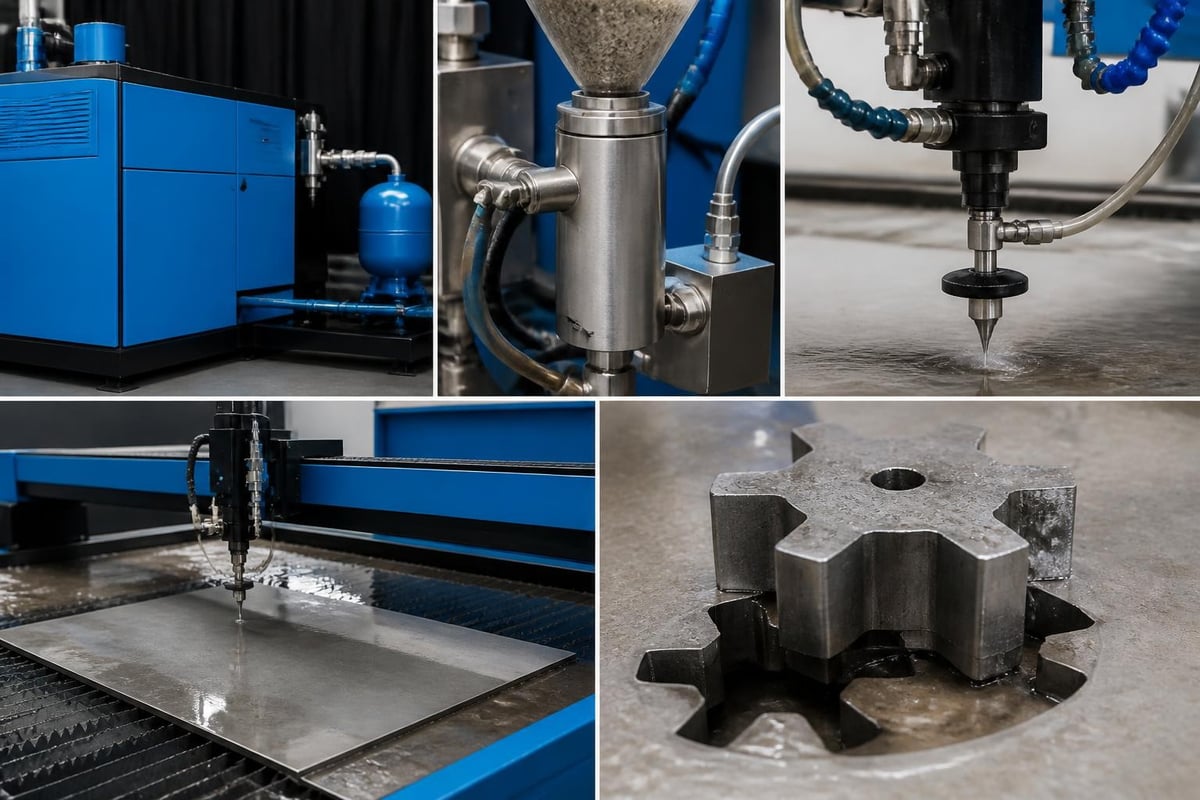
Modern waterjet cutting systems integrate several critical components:
- High-pressure pump: Generates the required water pressure
- Cutting head: Focuses the water stream and mixes abrasives
- Abrasive delivery system: Meters and feeds abrasive particles
- CNC controller: Guides the cutting head with precision
- Catcher tank: Contains the water stream after cutting
This technology has become essential in waterjet cutting services offered by industrial fabrication shops throughout the Western United States.
Industrial Manufacturing Applications
What is waterjet cutting used for in the manufacturing sector? The applications span dozens of industries, each leveraging the technology's unique advantages. Manufacturing facilities rely on waterjet cutting for both production runs and custom one-off projects.
In metal fabrication, waterjet cutting excels at processing thick materials that would challenge other cutting methods. The process cuts steel plates up to 8 inches thick, stainless steel up to 6 inches, and aluminum up to 10 inches without creating thermal distortion. This capability proves invaluable for custom metal fabrication projects requiring precision without heat damage.
The aerospace industry represents one of the most demanding applications for waterjet technology. Recent research on titanium alloy cutting demonstrates how aerospace manufacturers optimize waterjet parameters for exotic materials. Titanium, Inconel, and composite materials used in aircraft construction benefit from waterjet's cold-cutting properties, which preserve material properties and eliminate the need for secondary finishing operations.
Material Capabilities and Thickness Ranges
| Material Type | Maximum Thickness | Primary Applications |
|---|---|---|
| Carbon Steel | 8 inches | Structural components, equipment frames |
| Stainless Steel | 6 inches | Food processing, chemical equipment |
| Aluminum | 10 inches | Aerospace, transportation |
| Titanium | 4 inches | Aerospace, medical devices |
| Composites | 3 inches | Aircraft parts, sporting goods |
| Stone/Granite | 12 inches | Architectural elements, countertops |
Oil and Gas Industry Applications
The oil and gas sector demands cutting solutions that handle heavy-duty materials in challenging configurations. What is waterjet cutting used for in this industry? The answer includes fabricating equipment components, repairing drilling machinery, and creating custom parts for wellhead assemblies.
Waterjet cutting processes thick-walled pipe sections, pressure vessel components, and valve bodies without introducing residual stresses. The cold-cutting nature prevents hardening at cut edges, a critical consideration for components operating under high pressure and temperature extremes.
Field operations benefit from portable waterjet systems that perform on-site cutting and repair work. This capability reduces downtime by eliminating the need to transport large components back to fabrication shops. Many industrial contractors integrate waterjet capabilities with welding field services to provide complete on-site manufacturing solutions.
Specific oil and gas applications include:
- Drilling equipment repair and modification
- Wellhead component fabrication
- Pipeline flange cutting
- Pressure vessel repairs
- Valve seat machining
- Pump component manufacturing
Aggregate and Mining Equipment Fabrication
The aggregate and mining industries rely heavily on waterjet cutting for mining equipment fabrication and repair. What is waterjet cutting used for in these demanding environments? Primarily for processing wear-resistant materials and creating replacement parts for crushers, screens, and conveyor systems.
Hardened steel components used in rock crushing operations require cutting methods that don't compromise their wear resistance. Waterjet cutting maintains the material's hardness by avoiding thermal alteration. This preserves the engineered properties that extend component service life in abrasive environments.
Recycling Industry Components
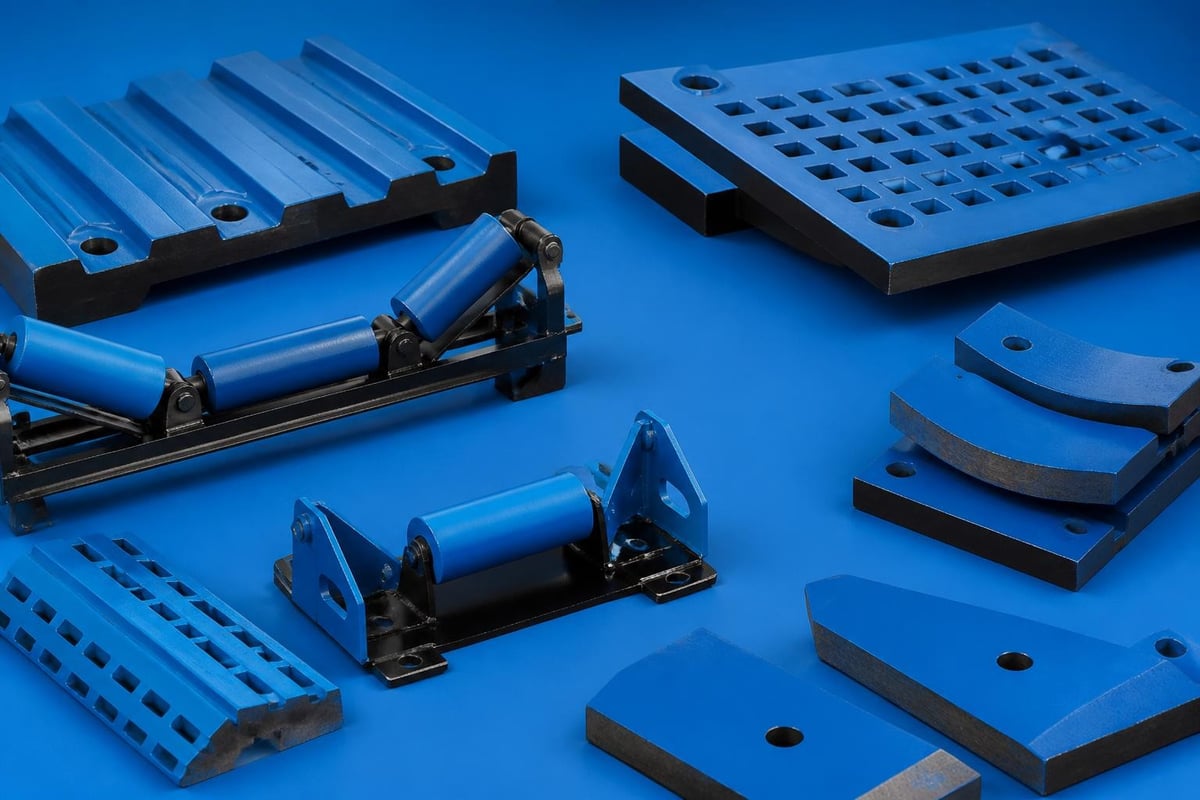
Recycling facilities process diverse materials that generate extreme wear on sorting, shredding, and separation equipment. Waterjet cutting fabricates and repairs these components efficiently:
- Shredder blades and rotors
- Sorting screen decks
- Conveyor wear plates
- Magnetic separator housings
- Baler components
- Material handling chutes
The WaterJet Technology Association conference proceedings include case studies showing how recycling operations reduce maintenance costs through waterjet-cut replacement parts.
Precision Cutting and Intricate Designs
Beyond heavy industrial applications, waterjet cutting delivers exceptional precision for intricate designs and tight tolerances. Modern CNC-controlled waterjet systems achieve positioning accuracy within ±0.003 inches and cutting tolerances of ±0.005 inches on most materials.
This precision makes waterjet cutting ideal for prototyping and custom design work. Engineers and designers specify waterjet cutting when developing new products because it accommodates design changes without tooling modifications. Unlike stamping or laser cutting that require dies or specific focal lengths, waterjet systems cut any 2D shape programmed into the controller.
What is waterjet cutting used for in precision applications? The technology excels at creating complex geometries, tight radius corners, and intricate patterns that other cutting methods struggle to produce. Artists and architects commission waterjet cutting for decorative metalwork, signage, and artistic installations requiring both precision and creative freedom.
Advantages Over Alternative Cutting Methods
Comparing waterjet cutting to plasma, laser, and traditional machining reveals distinct advantages for specific applications:
| Cutting Method | Heat Affected Zone | Material Versatility | Edge Quality | Thickness Limit |
|---|---|---|---|---|
| Waterjet | None | Excellent | Excellent | Very thick |
| Plasma | Significant | Metals only | Good | Moderate |
| Laser | Moderate | Good | Excellent | Limited |
| Milling | None | Good | Excellent | Limited by tool |
For a detailed comparison of specific technologies, waterjet cutting vs plasma cutting analysis helps manufacturers select the optimal process for their project requirements.
Stack Cutting and Production Efficiency
Industrial manufacturers appreciate waterjet's ability to stack multiple sheets and cut them simultaneously. This production technique significantly reduces per-part costs for medium-volume runs. What is waterjet cutting used for in production environments? Stack cutting produces identical parts from materials like aluminum, plastic, rubber, and thin steel sheets.
The process works by clamping multiple layers together and cutting through the entire stack in one pass. Depending on material type and thickness, waterjet systems cut stacks ranging from 2 to 20 layers. This capability bridges the gap between prototype single-piece cutting and high-volume stamping operations.
Stack cutting proves especially valuable for:
- Gasket production from rubber or composite materials
- Sheet metal brackets in multiple thicknesses
- Plastic components for equipment assemblies
- Prototype parts requiring multiple iterations
- Small-batch production (50-500 pieces)
Multi-Material and Composite Cutting
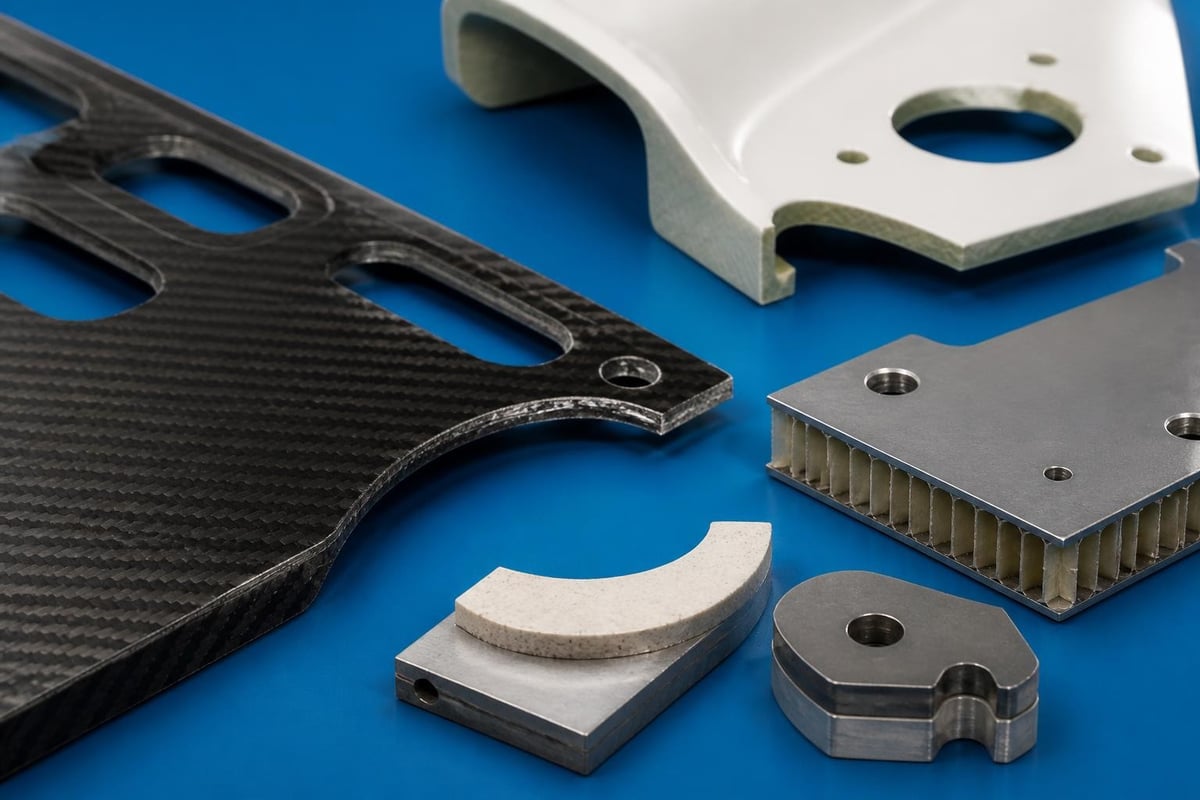
Modern manufacturing increasingly uses composite materials that combine different substances for optimal performance characteristics. What is waterjet cutting used for with these advanced materials? The technology handles multi-layer composites, sandwiched materials, and dissimilar material assemblies without delamination or heat damage.
Fiberglass-reinforced plastics, carbon fiber composites, and metal-faced sandwich panels all cut cleanly with waterjet systems. The process doesn't create the delamination problems common with traditional machining or the burn marks associated with laser cutting organic materials.
Historical aerospace engineering work documented by NASA shows early applications of jet-based processes in advanced material fabrication. Today's waterjet systems continue this legacy by processing next-generation composites for aerospace, automotive, and marine applications.
Surface Preparation and Coating Removal
Beyond cutting, waterjet technology serves critical surface preparation functions. What is waterjet cutting used for in maintenance and repair contexts? High-pressure water removes coatings, rust, and contaminants without damaging base materials.
Industrial facilities use waterjet systems at lower pressures (5,000-25,000 PSI) for surface preparation before industrial sandblasting or coating application. This process cleans equipment surfaces, removes old paint from structural steel, and prepares metal surfaces for welding.
The technology also removes coatings from concrete, cleans heat exchangers, and descales boilers. These maintenance applications extend equipment service life and improve operational efficiency across industrial facilities.
Integration with Fabrication Workflows
Professional fabrication shops integrate waterjet cutting into comprehensive manufacturing workflows. What is waterjet cutting used for within the broader context of custom fabrication projects? The technology handles the initial material processing, creating blanks and components that flow into welding, machining, and assembly operations.
This integration streamlines production by eliminating multiple handling steps. Cut parts proceed directly to welding stations with properly prepared edges and precise dimensions. The absence of heat-affected zones means welders don't encounter hardened edges that complicate joint preparation.
Many fabrication businesses combine waterjet cutting with complementary services:
- Waterjet cutting produces component blanks
- CNC machining adds holes, threads, and features
- Welding assembles components into finished products
- Surface finishing completes the manufacturing process
Understanding the difference between welding and fabrication helps manufacturers appreciate how waterjet cutting supports both disciplines.
Environmental and Safety Considerations
Waterjet cutting offers environmental advantages over thermal cutting processes. What is waterjet cutting used for from a sustainability perspective? The process generates no hazardous fumes, toxic gases, or airborne metal particles that require extensive ventilation systems.
Water and abrasive waste streams contain only the material being cut mixed with water and spent garnet. This waste typically qualifies as non-hazardous and can be filtered, settled, and disposed of through standard industrial waste channels. Many operations recycle the water through filtration systems, reducing consumption and disposal costs.
Environmental benefits include:
- No toxic gas emissions
- Minimal dust generation
- Recyclable abrasive materials
- Reduced energy consumption versus plasma or laser
- No heat-related air quality impacts
Safety considerations focus on high-pressure water hazards rather than fire or fume risks. Proper machine guarding, pressure relief systems, and operator training create safe working environments around waterjet equipment.
Cost Effectiveness and Project Selection
Determining when waterjet cutting delivers the best value requires analyzing project-specific factors. What is waterjet cutting used for when cost efficiency matters most? The technology proves economical for projects involving thick materials, heat-sensitive alloys, small production runs, and complex geometries.
Initial setup costs remain low because waterjet cutting requires no dedicated tooling or dies. This makes the process ideal for prototypes, custom one-off parts, and short production runs. Programming changes implement instantly through the CNC controller, accommodating design revisions without additional tooling expenses.
Material utilization often exceeds 95% with proper nesting software, reducing waste and material costs. Narrow kerf widths (as small as 0.020 inches) maximize the number of parts cut from each sheet. This efficiency becomes significant when processing expensive materials like titanium, Inconel, or specialty alloys.
| Project Characteristic | Waterjet Advantage | Alternative Method |
|---|---|---|
| Thick materials (>1 inch) | Excellent | Limited options |
| Heat-sensitive alloys | Excellent | Problematic |
| Complex 2D shapes | Excellent | May require multiple setups |
| Production runs <500 | Excellent | Tooling cost prohibitive |
| Material variety | Excellent | Process-specific limitations |
| Edge quality requirements | Excellent | May need secondary operations |
Maintenance and Repair Applications
Industrial facilities across the aggregate, oil and gas, and manufacturing sectors use waterjet cutting for equipment maintenance and repair. What is waterjet cutting used for in maintenance contexts? The technology fabricates replacement components, modifies existing equipment, and repairs damaged parts without the logistics of transporting heavy machinery to specialized shops.
Hydraulic system repair often requires custom brackets, mounting plates, and adapter components. Waterjet cutting produces these parts quickly from appropriate materials, minimizing equipment downtime. The precision cutting ensures proper fit and function for critical hydraulic components.
Field service applications benefit from portable waterjet systems that bring cutting capability directly to job sites. This mobility supports emergency repairs, on-site modifications, and rapid response to production equipment failures. Combined with hydraulic equipment repair capabilities, waterjet technology enables comprehensive on-site solutions.
Specialized Industry Applications
Beyond the core industrial sectors, waterjet cutting serves specialized applications across diverse industries. Architectural firms specify waterjet-cut metal panels, stone inlays, and decorative elements for building facades. The technology creates precise patterns in materials ranging from marble to titanium, enabling artistic expression in construction projects.
The food processing industry relies on waterjet cutting for portioning products, trimming meat, and cutting frozen items. Pure waterjet systems (without abrasives) maintain sanitary conditions while processing food products with precision. Medical device manufacturers use waterjet cutting to fabricate surgical instruments, implant components, and specialized medical equipment from biocompatible materials.
What is waterjet cutting used for in these specialized contexts demonstrates the technology's adaptability across vastly different requirements and material types.
Waterjet cutting technology delivers versatile, precise cutting capabilities across industrial manufacturing, from thick steel fabrication to intricate precision components. Understanding the full scope of what is waterjet cutting used for helps businesses select the optimal process for their specific project requirements. Whether you need custom parts for aggregate equipment, precision components for oil and gas applications, or comprehensive fabrication services, LTJ Industrial Services provides expert waterjet cutting, welding, and machining throughout the Western United States from their Rifle, Colorado facility.