Many professionals in the commercial and industrial sectors use the terms "welding" and "fabrication" interchangeably, but understanding what is the difference between welding and fabrication is essential for project planning, vendor selection, and quality control. While these processes are closely related, they represent distinct capabilities that serve different roles in manufacturing. Welding is a specific joining technique, while fabrication encompasses the entire manufacturing process from raw materials to finished products. For businesses in the oil and gas, aggregate, and recycling industries operating across the Western United States, recognizing these distinctions ensures more accurate project specifications, better vendor communication, and ultimately superior results.
Defining Welding as a Joining Process
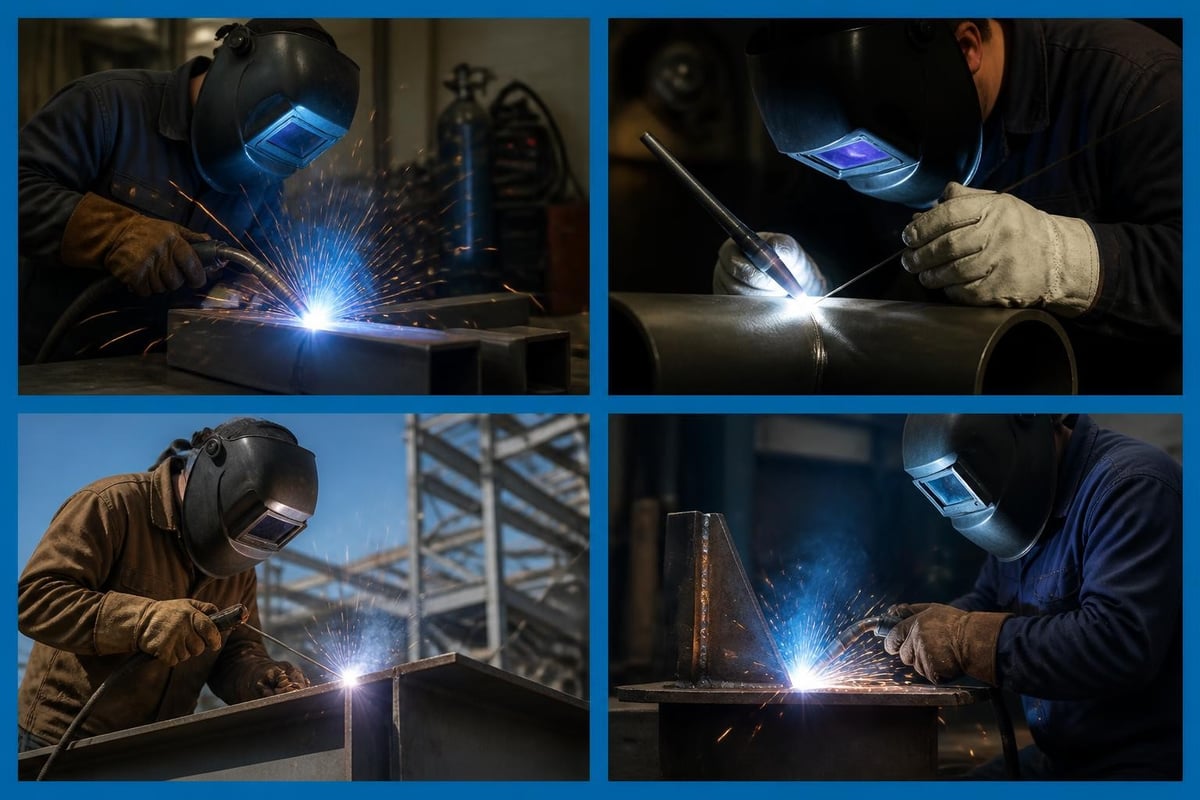
Welding represents a specific fabrication technique focused exclusively on joining two or more pieces of metal together. The process uses heat, pressure, or both to create a permanent bond between materials, often with the addition of a filler material to strengthen the joint.
Core Welding Technologies
Modern industrial welding encompasses several distinct processes, each suited to different materials, thicknesses, and applications. Gas Metal Arc Welding (GMAW), commonly known as MIG welding, uses a continuous wire feed and is ideal for production environments where speed matters. Gas Tungsten Arc Welding (GTAW or TIG) offers superior precision for thin materials and critical applications. Shielded Metal Arc Welding (SMAW or stick welding) remains popular for field work and outdoor conditions where portability is essential.
The welding services provided in industrial settings must meet specific code requirements and industry standards. Each welding process requires trained operators who understand heat control, joint preparation, and material properties to produce structurally sound results.
Welding Qualifications and Standards
Professional welding demands rigorous certification and documentation. Welders must qualify through practical testing to demonstrate proficiency in specific processes, positions, and materials. Welding Procedure Specifications (WPS) define exactly how a particular weld should be executed, while Procedure Qualification Records (PQR) document that the procedure produces acceptable results.
Key welding documentation includes:
- Welder Performance Qualifications (WPQ) certifying individual welder skills
- Visual inspection reports documenting weld appearance and dimensional accuracy
- Non-destructive testing results verifying internal weld integrity
- Material test reports confirming base metal and filler material properties
These requirements ensure consistency and traceability, particularly in industries where safety and reliability are paramount, such as pressure vessel manufacturing and structural steel construction.
Understanding Fabrication as a Complete Manufacturing Process
Fabrication represents the comprehensive transformation of raw materials into finished products through multiple coordinated processes. While welding often plays a crucial role, fabrication includes cutting, forming, machining, assembly, and finishing operations that work together to create the final deliverable.
The Fabrication Workflow
Sheet metal fabrication provides an excellent example of the multi-step nature of fabrication work. The process begins with engineering and design, where specifications are translated into detailed shop drawings and CAD models. Material selection follows, considering strength requirements, corrosion resistance, cost, and availability.
The actual fabrication sequence typically includes:
- Cutting operations using plasma, laser, waterjet, or mechanical shears
- Forming processes such as bending, rolling, stamping, or hydroforming
- Machining work including drilling, milling, turning, or threading
- Joining operations incorporating welding, bolting, or riveting
- Surface preparation through grinding, deburring, or blasting
- Finishing treatments like painting, powder coating, or galvanizing
Each step requires specific equipment, expertise, and quality control measures. The industrial fabrication workflow often involves multiple departments or specialists working in coordination to deliver the completed assembly.
Fabrication Capabilities Beyond Welding
Understanding what is the difference between welding and fabrication becomes clearer when examining the diverse capabilities fabrication shops maintain. Modern fabrication facilities invest in equipment that extends far beyond welding booths.
| Fabrication Process | Primary Function | Typical Equipment |
|---|---|---|
| Material Cutting | Stock preparation and part production | Plasma tables, laser cutters, saws, shears |
| Metal Forming | Shape creation without material removal | Press brakes, roll formers, stamping presses |
| Machining | Precise material removal and finishing | CNC mills, lathes, drill presses |
| Welding | Permanent joining of components | MIG/TIG/stick welders, welding positioners |
| Surface Treatment | Protection and appearance | Paint booths, sandblasters, coating lines |
The custom machining services component of fabrication enables precision tolerances that welding alone cannot achieve. These capabilities allow fabricators to deliver complete assemblies rather than simply joined components.
How Welding and Fabrication Work Together
The relationship between welding and fabrication is hierarchical rather than competitive. Welding functions as one essential tool within the larger fabrication toolkit, applied at specific points in the manufacturing sequence to create permanent joints between prepared components.
Integration in Real-World Projects
Consider a typical industrial project like manufacturing a custom hopper system for an aggregate processing plant. The fabrication process begins with engineering drawings specifying dimensions, material grades, and performance requirements. Sheet metal and structural steel arrive at the shop where cutting operations produce individual components to precise dimensions.
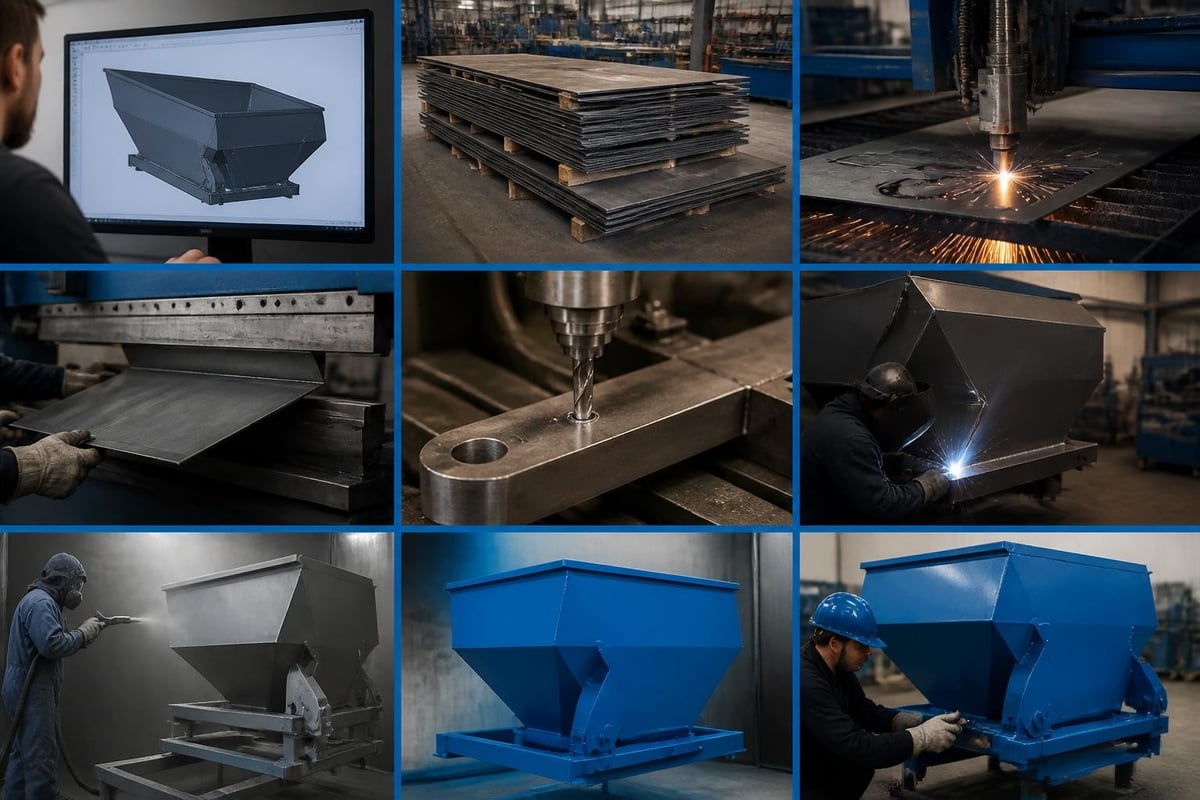
Forming operations bend the sheet metal into the required hopper shape, while machining services create mounting holes, flanges, and discharge openings with exact tolerances. Only after these preparatory steps do welders join the formed components together, creating the structural assembly. Final fabrication steps include grinding welds smooth, surface preparation, and applying protective coatings.
This sequence illustrates why fabrication shops offer more comprehensive capabilities than welding-only services. Each step depends on the quality of previous operations, and welding quality relies heavily on proper fit-up achieved through accurate cutting and forming.
Quality Control Differences
Quality assurance takes different forms in welding versus fabrication contexts. Welding quality focuses on joint integrity, examining factors like penetration depth, fusion quality, and absence of defects such as porosity or cracks. Inspectors use visual examination, dye penetrant testing, radiography, or ultrasonic testing to verify weld soundness.
Fabrication quality encompasses broader dimensional accuracy, overall assembly fit and function, and compliance with engineering specifications. Inspectors verify that holes align properly, surfaces meet flatness requirements, and assemblies operate as designed. The ASME standards for welding and fabrication illustrate how code requirements extend beyond individual welds to address complete system integrity, including design calculations, material traceability, and documentation requirements.
Practical Implications for Industrial Projects
Understanding what is the difference between welding and fabrication directly impacts vendor selection, cost estimation, and project timeline planning. These distinctions affect every phase from initial concept through final installation.
Choosing the Right Service Provider
Businesses seeking simple repairs or modifications may only require welding services. A cracked structural beam, worn equipment component, or damaged conveyor frame can often be addressed through skilled welding without extensive fabrication capabilities. Mobile welding services excel at these field repairs, bringing equipment directly to the job site.
Welding-only services are appropriate for:
- Emergency repair work on existing equipment
- Field modifications requiring on-site joining
- Adding reinforcement to existing structures
- Routine maintenance welding tasks
Full fabrication services become necessary for:
- Custom equipment manufacturing from engineering drawings
- Complex assemblies requiring multiple manufacturing processes
- Projects demanding precise tolerances and dimensional accuracy
- Installations requiring complete turnkey delivery including finishing
The comprehensive services offered by full-capability fabrication shops eliminate the need to coordinate between multiple vendors, reducing communication errors and schedule delays.
Cost and Timeline Considerations
Welding represents just one cost component within a fabrication project. Material costs, engineering time, cutting and forming labor, machining operations, finishing work, and project management all contribute to the total investment. Projects requiring only welding services naturally carry lower costs but deliver limited scope.
| Project Aspect | Welding Service | Fabrication Service |
|---|---|---|
| Design Support | Minimal, welder follows provided instructions | Comprehensive, includes engineering and detailing |
| Material Procurement | Customer typically provides materials | Fabricator sources and verifies materials |
| Preparation Work | Limited to joint prep and fit-up | Includes cutting, forming, machining as needed |
| Assembly Complexity | Single joining operation | Multiple coordinated manufacturing steps |
| Finishing | Usually limited to weld cleanup | Complete surface preparation and coating |
| Documentation | Weld logs and basic inspection | Full material certs, procedures, test reports |
Timeline differences follow similar patterns. Welding-focused repairs can often be completed within days or even hours for emergency work. Fabrication projects require additional time for engineering, material procurement, and sequential manufacturing operations, with timelines measured in weeks or months depending on complexity.
Industry-Specific Applications
Different industrial sectors emphasize welding and fabrication capabilities differently based on their operational needs and regulatory requirements. The oil and gas industry demands both high-quality welding for pressure-containing systems and comprehensive fabrication for processing equipment and support structures.
Oil and Gas Sector Requirements
Pressure vessels, piping systems, and process equipment in oil and gas applications must meet stringent code requirements. The ASME Boiler and Pressure Vessel Code mandates specific fabrication procedures, material controls, and inspection protocols that extend well beyond welding quality alone.
Fabrication shops serving this sector maintain extensive quality systems including materials traceability programs, heat treatment capabilities, and non-destructive examination certifications. The welding performed within these fabrications must meet particularly demanding standards, but represents only one element of code compliance.
Aggregate and Recycling Industries
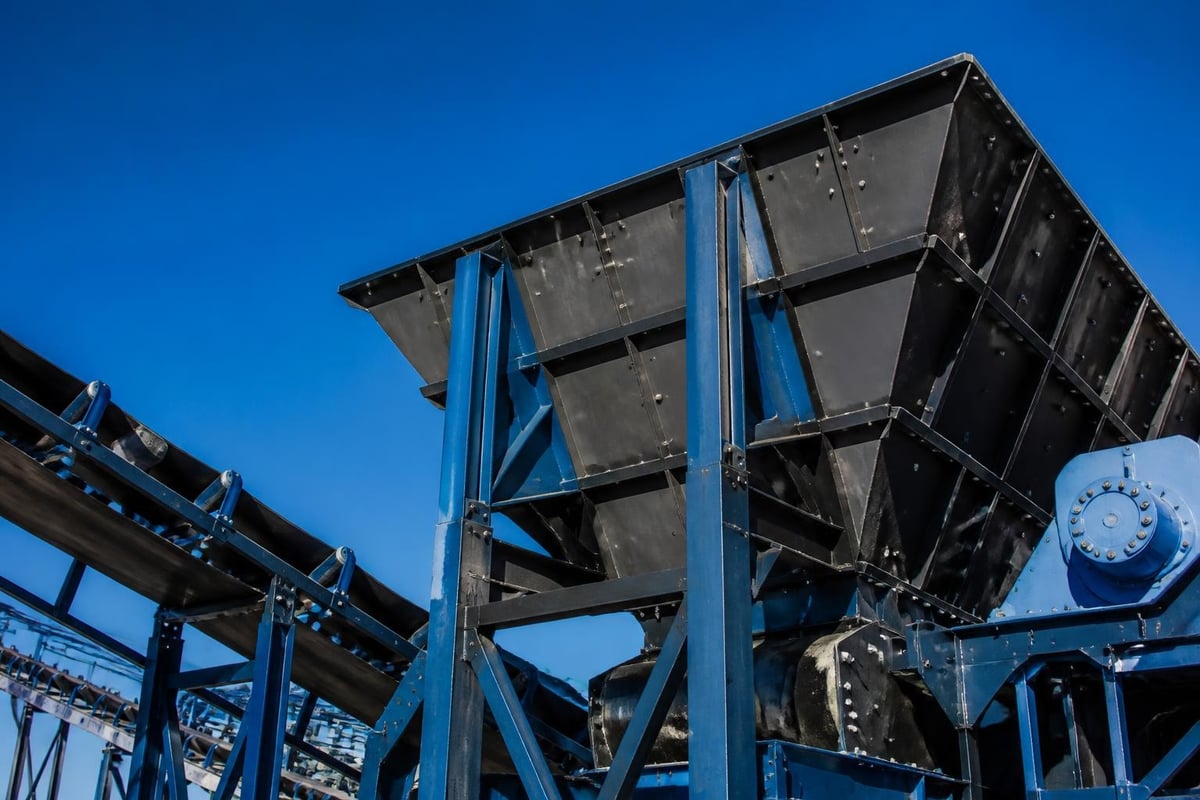
Material handling equipment for aggregate processing and recycling operations faces severe abrasion, impact, and environmental exposure. Custom chutes, hoppers, conveyor components, and screening equipment require robust fabrication combining structural design, wear-resistant materials, and high-quality welding.
These applications benefit from industrial fabrication capabilities that address the complete equipment lifecycle. Fabricators design for maintainability, select appropriate wear materials, and build assemblies that withstand years of demanding service. Welding quality determines joint longevity, while overall fabrication quality ensures proper function and operational efficiency.
Manufacturing and Processing Facilities
General manufacturing operations require everything from simple brackets and guards to complex automated assembly systems. The question of what is the difference between welding and fabrication becomes particularly relevant when manufacturers evaluate whether to maintain in-house capabilities or outsource to specialized providers.
In-house welding capabilities work well for:
- High-volume production of repetitive weldments
- Routine maintenance and repair operations
- Modifications to existing equipment and fixtures
- Simple assemblies with minimal preparation requirements
Outsourced fabrication makes sense for:
- Low-volume custom equipment needs
- Complex assemblies requiring diverse manufacturing processes
- Projects demanding specialized equipment or expertise
- Work requiring certified procedures and extensive documentation
Field Services Versus Shop Fabrication
The location where work is performed significantly impacts the relationship between welding and fabrication. Shop-based fabrication offers controlled environments, comprehensive equipment access, and quality control advantages. Field services prioritize mobility and on-site problem solving.
Shop Environment Advantages
Fabrication shops maintain climate-controlled workspaces that protect materials and work-in-process from contamination and weather exposure. Heavy equipment like press brakes, machining centers, and welding positioners enable work that would be impossible in field conditions. Quality inspectors can thoroughly examine components before they leave the facility.
The shop environment supports the sequential workflow fabrication requires. Components move from cutting stations to forming equipment to machining centers and finally to welding bays in a logical progression. Material storage systems ensure proper inventory management and traceability.
Field Service Capabilities
Field welding services address situations where equipment cannot be brought to a shop or where modifications must be made to installed systems. Mobile welding units, portable power sources, and adaptable fixturing allow skilled welders to work in challenging environments including confined spaces, elevated platforms, and remote locations.
Field welding quality depends heavily on welder skill and environmental control. Wind, temperature extremes, and limited access can all affect weld quality. Documentation and inspection remain critical, but must be adapted to field conditions. While comprehensive fabrication is rarely feasible in field environments, skilled welders can complete structural repairs, modifications, and installations that keep operations running.
Making Informed Service Decisions
Businesses seeking metalworking services should evaluate their specific needs against the capabilities required for successful completion. Clear communication with service providers ensures that scope, expectations, and deliverables align from project inception.
Questions to Ask Potential Providers
When evaluating whether you need welding services or full fabrication capabilities, consider these key questions:
- Does your project require only joining existing components, or do you need parts manufactured from raw materials?
- What tolerances and dimensional accuracy does the application demand?
- Are specialized processes like machining, forming, or heat treatment necessary?
- Does the work require certified procedures and extensive documentation?
- Will the service provider need to manage material procurement and engineering support?
- Is the work best performed in a controlled shop environment or at your facility?
Honest answers to these questions clarify whether welding-focused services suffice or comprehensive fabrication capabilities are necessary. Many industrial projects benefit from providers offering both specialized welding expertise and broad fabrication capabilities, eliminating coordination challenges inherent in managing multiple vendors.
Documentation and Communication Requirements
Successful projects begin with clear specifications and maintain detailed documentation throughout execution. Fabrication projects require engineering drawings, material specifications, quality control plans, and inspection protocols. Welding work within those projects adds welding procedures, welder qualifications, and non-destructive examination results to the documentation package.
The difference between welding and fabrication extends to how projects are specified and communicated. A simple welding repair might be adequately described with a field sketch and verbal instructions. Complex fabrication demands formal drawings, material callouts, dimensional tolerances, surface finish requirements, and acceptance criteria for every manufacturing step.
Equipment and Facility Investment
The capital investment required for welding versus fabrication capabilities differs dramatically. A competent welding operation requires welding machines, safety equipment, consumables, and trained personnel. Full fabrication demands significantly broader infrastructure including material handling systems, cutting equipment, forming machinery, machining centers, and finishing facilities.
Essential Welding Infrastructure
Establishing professional welding capabilities requires several core investments:
- Multiple welding power sources supporting different processes (MIG, TIG, stick)
- Ventilation systems protecting operators from fumes and gases
- Welding positioners and fixturing for ergonomic work positioning
- Consumables inventory including electrodes, wire, shielding gas
- Quality control equipment for visual and non-destructive examination
- Training and certification programs maintaining welder qualifications
These investments enable high-quality joining operations but do not support the broader manufacturing processes fabrication encompasses.
Comprehensive Fabrication Facilities
Full-service fabrication shops maintain substantially larger equipment inventories. Beyond welding infrastructure, these facilities require:
Material Processing Equipment:
- CNC plasma or laser cutting tables for accurate part production
- Hydraulic shears and ironworkers for plate and structural steel cutting
- Band saws and cold saws for precise bar stock sectioning
Forming and Bending Machinery:
- Press brakes with various tonnage capacities and bed lengths
- Plate rolls for cylindrical and conical shell fabrication
- Tube and pipe bending equipment for complex geometry production
Precision Machining Centers:
- CNC milling machines for complex contour generation
- Engine lathes and CNC turning centers for cylindrical work
- Drill presses and radial drills for hole-making operations
This equipment diversity explains why fabrication shops can deliver turnkey solutions while welding-only providers focus on their specialized joining expertise.
Understanding what is the difference between welding and fabrication empowers industrial decision-makers to select appropriate service providers, develop realistic project timelines, and budget accurately for manufacturing needs. Welding excellence remains essential, but comprehensive fabrication capabilities deliver complete solutions that keep operations running efficiently. Whether your project demands precision machining, complex forming operations, structural welding, or field repair services, LTJ Industrial Services combines all these capabilities under one roof, serving the oil and gas, aggregate, and recycling industries throughout the Western United States with shop and field services designed to keep your operations focused on core business objectives.