When production equipment fails or a custom fabrication project demands precision welding, finding a reliable welding company near me becomes critical for maintaining operational continuity. Industrial and manufacturing facilities across the Western United States face unique challenges that require specialized welding expertise, from extreme temperature conditions to regulatory compliance requirements. The right welding partner delivers more than just technical skill-they provide responsive service, industry-specific knowledge, and the flexibility to handle both shop-based and field welding projects that keep your operation running smoothly.
Understanding What Defines a Quality Welding Company
Not all welding providers offer the same level of expertise, equipment, or service coverage. A quality welding company distinguishes itself through multiple factors that directly impact project outcomes and long-term value.
Certification and Compliance Standards
Professional welding companies maintain current certifications that demonstrate their commitment to industry standards and quality workmanship. Look for providers whose welders hold certifications from recognized bodies and who follow established inspection protocols. The welding inspection and nondestructive examination standards published by authoritative organizations provide a framework for quality assurance that serious welding contractors embrace.
Key certifications to verify include:
- Certified welders with process-specific qualifications
- Structural welding certifications for critical applications
- Pressure vessel and pipe welding credentials
- Non-destructive testing capabilities
When evaluating a welding company near me, ask about their quality control processes and how they document their work. Companies serving industrial and manufacturing sectors should be familiar with industry-specific codes and able to provide proper documentation for inspections and compliance purposes.
Service Breadth and Technical Capabilities
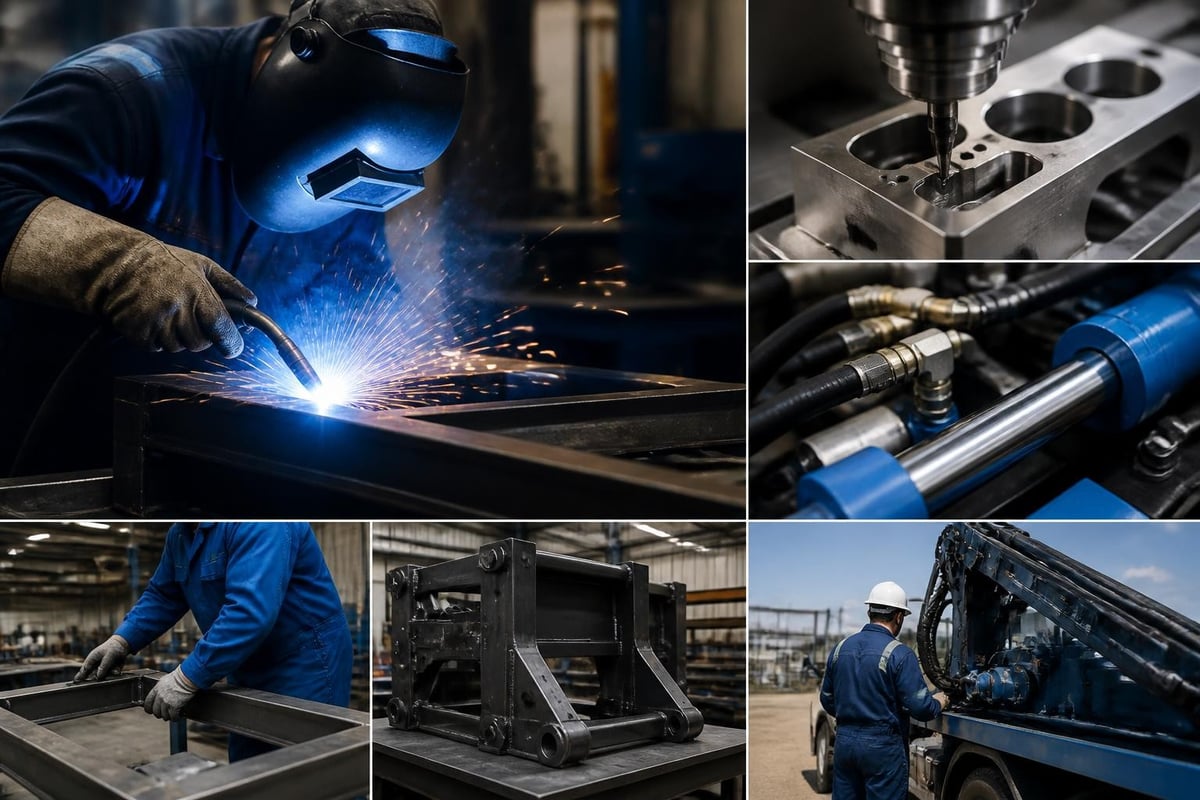
The scope of services a welding company offers reveals their operational capacity and investment in comprehensive capabilities. Advanced facilities provide integrated solutions that extend beyond basic welding to include complementary services.
| Service Category | Capabilities | Business Value |
|---|---|---|
| Shop Welding | Controlled environment, precision fixturing, multiple processes | Higher quality, repeatable results, complex assemblies |
| Field Welding | On-site repairs, emergency response, minimal downtime | Reduced transportation costs, faster turnaround, operational continuity |
| Metal Fabrication | Custom design, cutting, forming, assembly | Complete solutions from concept to installation |
| Machining | Precision tolerancing, complex geometries, finishing | Integrated fabrication-machining workflows |
Companies that offer both shop and field capabilities provide maximum flexibility for different project requirements. This versatility becomes especially valuable when dealing with large equipment that cannot be easily transported or when production schedules cannot accommodate extended downtime.
Geographic Coverage and Response Capabilities
Location matters significantly when selecting a welding provider. While searching for a welding company near me, consider not just physical proximity but also the provider's service territory and response capabilities throughout your operational region.
Regional Service Models
Welding companies structure their service delivery in different ways. Some operate exclusively from a fixed shop location, while others maintain mobile capabilities that bring welding services directly to your facility. The most versatile providers offer both models, allowing them to handle projects ranging from custom fabrication in a controlled shop environment to emergency field repairs at remote sites.
For businesses operating across multiple locations throughout the Western United States, partnering with a welding company that understands regional logistics and can deploy teams efficiently becomes a strategic advantage. This is particularly important in industries like aggregate operations, recycling facilities, and oil and gas infrastructure where equipment is geographically dispersed.
Emergency Response and Scheduling Flexibility
Equipment failures rarely occur at convenient times. Evaluate potential welding partners based on their ability to respond quickly to urgent situations while also accommodating planned maintenance schedules.
Critical response factors include:
- Average response time for emergency calls
- Availability of 24/7 or after-hours service
- Mobile welding unit deployment capabilities
- Inventory of common repair materials and consumables
The best welding companies maintain the staff, equipment, and processes necessary to serve both scheduled projects and unexpected emergencies without sacrificing quality or safety standards.
Industry-Specific Expertise and Experience
Different industrial sectors present unique welding challenges. A welding company's experience in your specific industry directly correlates with their ability to deliver appropriate solutions efficiently.
Manufacturing and Heavy Industry Applications
Companies serving metal fabrication industries encounter demanding applications that require specialized knowledge of materials, joint designs, and performance requirements. Welding providers with deep manufacturing sector experience understand production constraints, material specifications, and the criticality of maintaining tight tolerances.
This expertise becomes particularly valuable when working with:
- High-strength alloys and specialized materials
- Pressure-containing components and vessels
- Equipment subject to cyclical loading or extreme conditions
- Structures requiring compliance with specific building codes
Understanding ASME standards and certification requirements is essential for welding work on pressure equipment and other critical applications. Your welding partner should demonstrate familiarity with the codes governing your industry and maintain documentation practices that support compliance verification.
Recycling, Aggregate, and Resource Industries
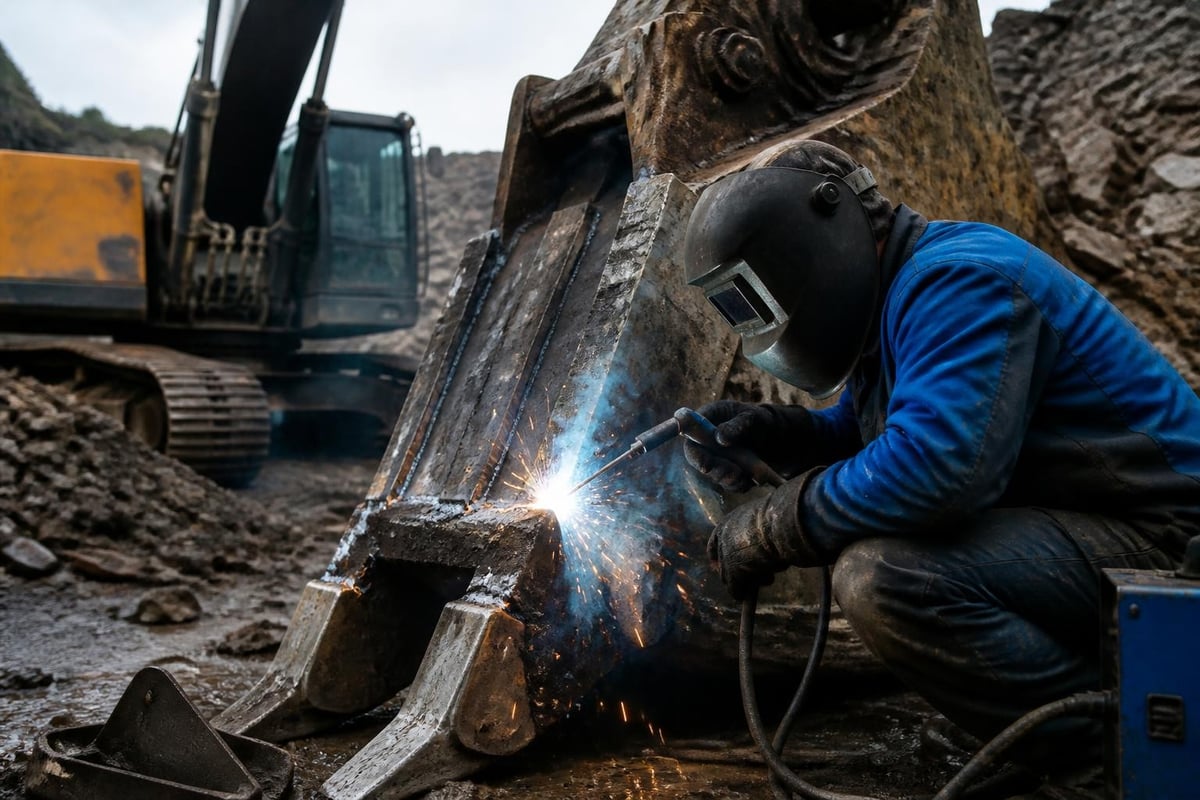
Facilities processing recycled materials, mining aggregates, or extracting natural resources subject equipment to extreme abrasion, impact, and corrosive conditions. Welding companies serving these sectors need specific knowledge of wear-resistant materials, hardfacing techniques, and structural repairs that extend equipment life in punishing environments.
The International Institute of Welding provides valuable research and technical insights on advanced welding technologies that help industrial operators understand emerging capabilities and best practices applicable to challenging operational environments.
Evaluating Technical Processes and Quality Control
The methodologies a welding company employs directly impact the reliability and longevity of their work. Understanding these processes helps you make informed comparisons between providers.
Welding Process Capabilities
Modern welding encompasses multiple processes, each suited to specific applications and materials. A versatile welding company near me should offer several processes and the expertise to select the most appropriate technique for each job.
Common welding processes and their applications:
- SMAW (Stick Welding) – Versatile field welding, structural work, thick materials
- GMAW (MIG Welding) – Production welding, thin to medium materials, high deposition rates
- GTAW (TIG Welding) – Precision work, exotic materials, critical joints requiring superior quality
- FCAW (Flux-Cored Welding) – Heavy fabrication, outdoor applications, high wind tolerance
- Submerged Arc Welding – High-volume production, thick materials, automated applications
The ability to select and properly execute the right process for each application separates professional welding companies from generalist providers. Companies offering shop welding services should maintain equipment for multiple processes and employ welders qualified across different techniques.
Material Expertise and Metallurgy
Different base materials require specific filler metals, preheat procedures, and post-weld treatments. Your welding provider should demonstrate knowledge of metallurgical principles that govern successful welding outcomes.
| Material Type | Welding Considerations | Common Applications |
|---|---|---|
| Carbon Steel | Standard procedures, widely compatible | Structural fabrication, general equipment |
| Stainless Steel | Heat control, corrosion resistance preservation | Food processing, chemical equipment, architectural |
| Aluminum | Cleanliness critical, specialized equipment | Transportation, aerospace, lightweight structures |
| High-Strength Alloys | Qualified procedures, strict heat control | Pressure vessels, critical structural components |
| Cast Iron | Special preheat, appropriate filler selection | Equipment repair, restoration work |
Companies serving diverse manufacturing and industrial sectors encounter a wide range of materials and should maintain the expertise and procedures necessary to work with each appropriately.
Integration with Complementary Services
The most valuable welding partnerships often extend beyond welding itself to include related capabilities that streamline project execution and reduce coordination complexity.
Machining and Precision Work
Many fabrication and repair projects require both welding and precision machining to achieve final specifications. Companies that integrate these capabilities in-house eliminate the coordination challenges and delays associated with shuttling work between multiple subcontractors. A machine shop near me that also offers welding services provides significant advantages for complex projects.
This integration proves especially valuable for:
- Shaft repair and rebuild projects
- Custom component fabrication requiring tight tolerances
- Equipment modifications combining structural welding with precision fits
- Prototype development and testing
Hydraulic Systems and Mechanical Services
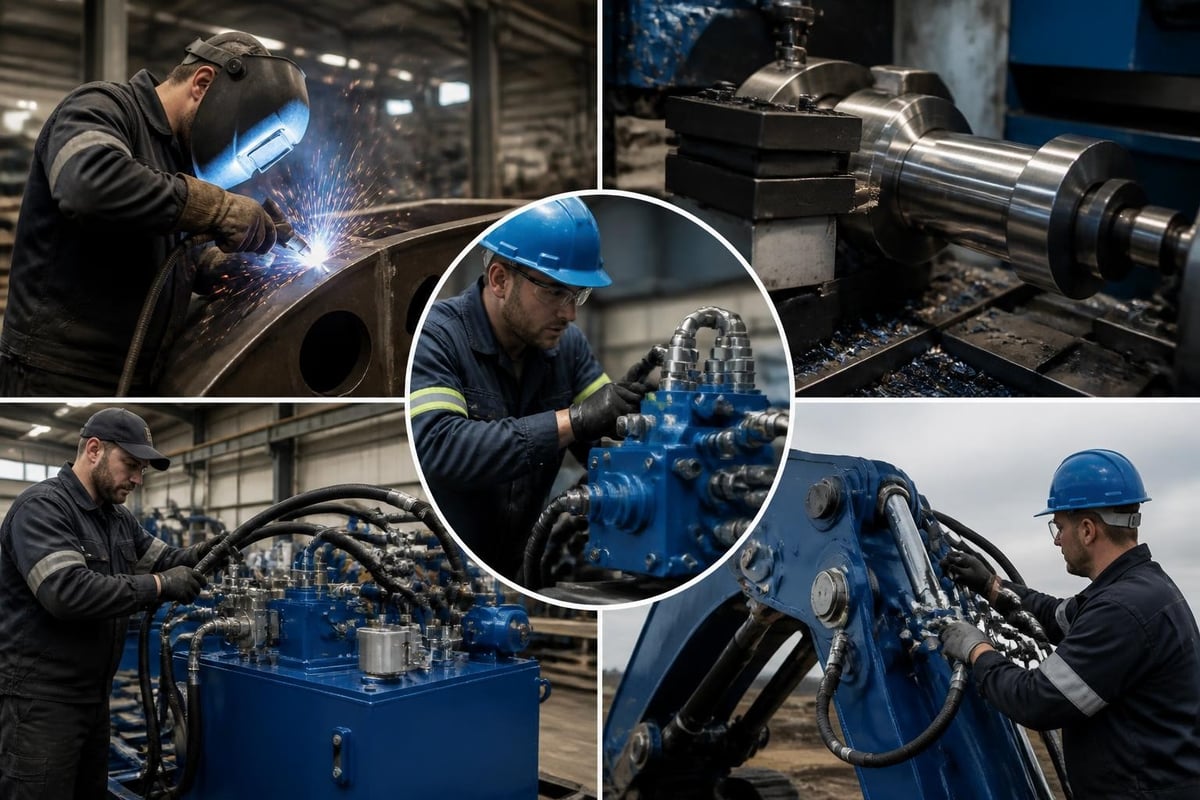
Industrial equipment increasingly incorporates hydraulic systems alongside structural components. Welding companies that understand hydraulic systems can provide more comprehensive repair and fabrication services, addressing both structural and functional aspects of equipment in a single engagement.
Integrated service advantages:
- Single-source accountability for complete repairs
- Reduced equipment downtime through parallel work streams
- Better problem diagnosis through comprehensive system knowledge
- Streamlined project management and communication
Field Services and Water Jetting
Some repair projects require surface preparation or cutting capabilities beyond traditional methods. Companies offering water jetting services alongside welding can handle applications requiring precise cutting, surface cleaning, or coating removal without heat-affected zones or mechanical stress.
This combination supports applications including:
- Tank and vessel internal cleaning before welding
- Precision cutting of complex geometries
- Concrete and composite material removal for access
- Surface preparation for coating application post-welding
Environmental and Regulatory Considerations
Welding operations intersect with various environmental regulations and safety requirements. Responsible welding companies maintain compliance and implement practices that protect both workers and the environment.
Emissions and Air Quality Management
Welding generates fumes and particulates that require proper capture and filtration. The EPA regulations affecting metal fabrication establish standards for air quality management that professional welding operations must meet. When evaluating a welding company near me, consider their environmental compliance practices and how they manage emissions both in shop and field environments.
Safety Protocols and Worker Protection
Professional welding companies prioritize comprehensive safety programs that protect their employees and your facility. Look for providers with documented safety records, active training programs, and clear protocols for managing welding hazards including:
- Arc flash and radiation protection
- Fume exposure mitigation
- Fire prevention and hot work permits
- Confined space procedures
- Fall protection for elevated work
Companies serving industrial businesses should integrate seamlessly with your facility's safety culture and comply with your site-specific safety requirements without extensive hand-holding.
Cost Structures and Value Assessment
Understanding how welding companies price their services helps you evaluate proposals and identify the best value for your specific needs.
Pricing Models and Transparency
Welding services may be priced using different models depending on project scope and complexity:
- Hourly rates – Common for field service, repairs, and projects with undefined scope
- Project-based pricing – Fixed quotes for well-defined fabrication or installation work
- Time and materials – Hybrid approach with defined labor rates plus documented material costs
- Retainer agreements – Ongoing service arrangements providing priority response and predictable costs
The most transparent welding companies provide detailed estimates that break down labor, materials, and any additional charges. This clarity allows you to compare proposals accurately and understand exactly what you're purchasing.
Hidden Costs and Long-Term Value
The lowest initial bid rarely represents the best value. Consider factors that affect total project cost:
| Cost Factor | Impact on Total Value | Evaluation Approach |
|---|---|---|
| Rework rates | Low-quality work requiring corrections multiplies true costs | Request references, review quality documentation |
| Project timeline | Extended downtime costs exceed welding service premiums | Assess provider capacity and response capabilities |
| Warranty and guarantees | Post-project failures create additional expense and disruption | Compare warranty terms and provider stability |
| Transportation and mobilization | Field service deployment costs vary significantly | Evaluate geographic proximity and mobile capabilities |
Companies offering heavy equipment repair services should provide value through minimizing total downtime and maximizing repair longevity, not simply through the lowest hourly rate.
Vetting Process and Due Diligence
Before committing to a welding partnership, conduct thorough due diligence to verify claims and assess actual capabilities.
Essential Questions for Potential Providers
Technical capabilities and qualifications:
- What welding processes do your certified welders perform?
- How do you qualify welding procedures for specific applications?
- What inspection and testing capabilities do you maintain in-house?
- Can you provide examples of similar projects in our industry?
Operational capacity and responsiveness:
- What is your typical response time for emergency field service?
- How many welding technicians can you deploy simultaneously for large projects?
- What geographic territory do you actively serve?
- Do you maintain mobile equipment for field fabrication and machining?
Quality and compliance:
- What documentation do you provide for completed welding work?
- How do you handle non-conformances or quality issues?
- What safety certifications and training do your field personnel maintain?
- Can you work to our specific quality standards and inspection requirements?
Reference Checks and Site Visits
Request references from clients with similar applications and follow up with substantive conversations about actual performance. If possible, visit the welding company's shop facility to assess:
- Equipment condition and technological currency
- Shop organization and cleanliness
- In-process quality control practices
- Material handling and storage procedures
- Safety culture and housekeeping standards
Companies proud of their capabilities welcome site visits and typically maintain facilities that reflect their commitment to quality work.
Building Strategic Welding Partnerships
The most successful welding relationships evolve beyond transactional service calls to become strategic partnerships that deliver ongoing value.
Communication and Project Management
Effective welding partners maintain clear communication throughout project execution. Look for companies that assign dedicated points of contact, provide regular progress updates, and address concerns proactively rather than reactively. This becomes especially important for complex projects involving industrial equipment repair where coordination with your operations team is critical.
Continuous Improvement and Feedback
Quality welding companies actively seek customer feedback and implement continuous improvement practices. Establish feedback mechanisms that allow you to share observations about both successful outcomes and opportunities for improvement. The best providers view constructive feedback as valuable input for refining their processes and better serving your needs.
Partnership development practices:
- Regular business reviews to assess performance metrics
- Joint problem-solving for recurring challenges
- Knowledge sharing about industry developments and new technologies
- Collaborative planning for scheduled maintenance and capital projects
Capacity Planning and Relationship Development
As your relationship with a welding company matures, involve them in planning discussions for upcoming projects and facility expansions. Providers familiar with your equipment, processes, and standards deliver more efficient service because they've eliminated the learning curve present in every new vendor relationship. This familiarity particularly benefits organizations requiring custom fabrication where design intent and operational context significantly influence fabrication decisions.
Technology and Innovation in Modern Welding
The welding industry continues evolving with new technologies that improve quality, efficiency, and capabilities. Forward-thinking welding companies invest in technological advancement and training that benefits their clients.
Advanced Welding Technologies
Modern welding encompasses sophisticated technologies beyond traditional manual processes:
- Robotic and automated welding for high-volume, repeatable applications
- Orbital welding systems for pipe and tube applications requiring consistent quality
- Laser and hybrid welding for specialized applications
- Advanced monitoring and documentation systems that capture welding parameters for quality records
While not every project requires advanced technology, companies that invest in these capabilities demonstrate commitment to staying current with industry developments and can offer these options when applications warrant them.
Digital Integration and Documentation
Progressive welding companies leverage digital tools for project management, quality documentation, and customer communication. Electronic work orders, digital inspection records, and photo documentation provide transparency and create valuable historical records for equipment maintenance planning.
Selecting the right welding company requires careful evaluation of technical capabilities, service breadth, industry experience, and cultural fit with your organization's standards and expectations. The most valuable partnerships deliver reliable quality, responsive service, and comprehensive solutions that address the full scope of your welding and fabrication needs. LTJ Industrial Services provides exactly this combination for commercial and industrial manufacturing operations throughout the Western United States, offering integrated welding, machining, and mechanical services backed by deep expertise in the recycling, aggregate, and oil and gas sectors. Contact LTJ Industrial Services today to discuss how their comprehensive shop and field capabilities can support your operational goals.