Colorado's industrial landscape demands specialized welding expertise to support its diverse manufacturing, energy, and natural resources sectors. From the oil and gas fields of the Western Slope to the aggregate operations across the Front Range, welding professionals provide critical services that keep industrial operations running efficiently. Understanding the unique requirements of welding Colorado facilities requires knowledge of both technical processes and the specific challenges presented by the state's varied industries and demanding environmental conditions.
Colorado's Industrial Welding Landscape
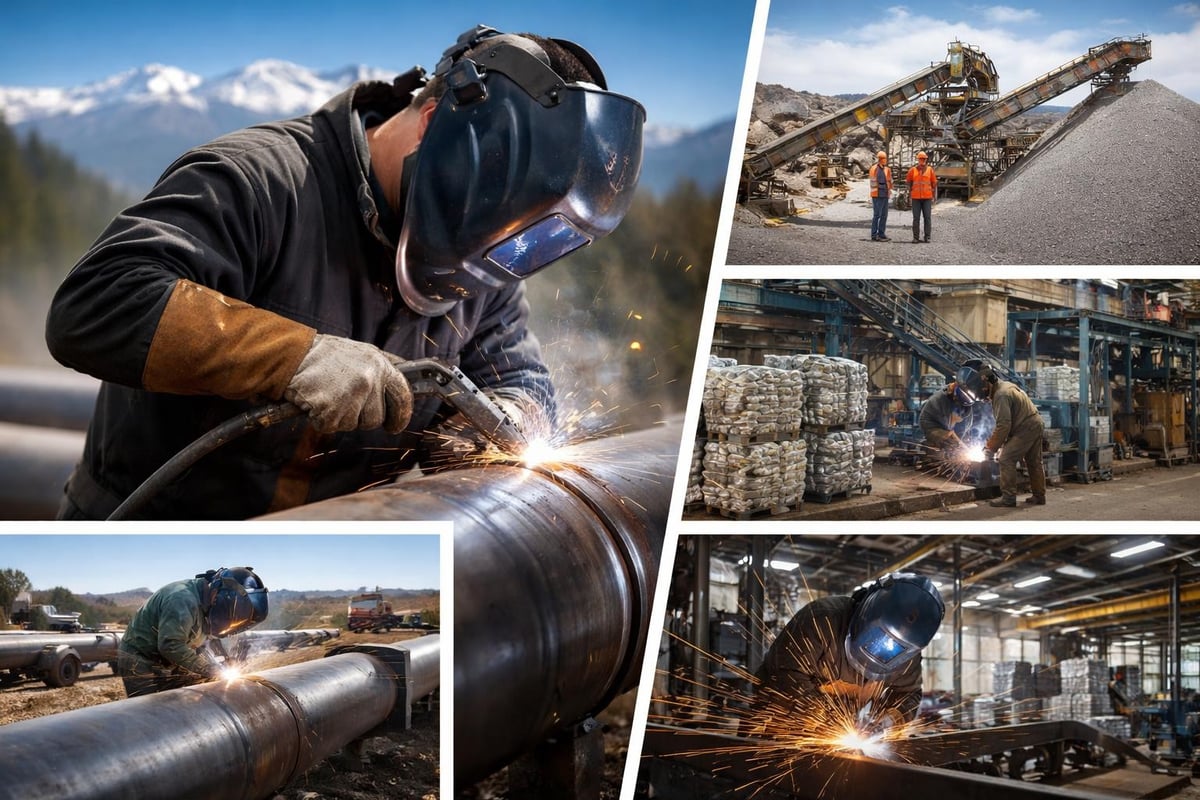
The welding industry in Colorado serves a remarkable range of sectors, each with distinct requirements and technical specifications. The state's industrial economy relies heavily on skilled welders who can perform both shop-based fabrication and field welding services across challenging terrain and weather conditions.
Manufacturing facilities throughout Colorado depend on reliable welding and fabrication services to maintain equipment, create custom solutions, and support production operations. The oil and gas industry, particularly active in western Colorado, requires welders who understand pipeline specifications, pressure vessel codes, and field repair protocols.
Key Industries Served
Colorado's welding professionals support multiple industrial sectors:
- Oil and Gas Operations: Pipeline welding, wellhead repairs, and processing facility maintenance
- Aggregate and Mining: Crusher components, conveyor systems, and heavy equipment fabrication
- Recycling Industry: Material handling equipment, sorting systems, and processing machinery
- Commercial Manufacturing: Custom fabrication, production support, and equipment modification
- Construction: Structural steel, architectural metalwork, and infrastructure projects
The diversity of these industries creates consistent demand for welding services throughout the state. Professionals who understand industry-specific codes, materials, and techniques position themselves for success in Colorado's competitive market.
Shop Versus Field Welding Services
Understanding the distinction between shop and field welding helps businesses select the appropriate service for their specific needs. Each approach offers distinct advantages depending on project scope, timeline, and logistical considerations.
Shop Welding Advantages
Shop-based welding provides controlled environments where welders access sophisticated equipment, climate control, and comprehensive quality assurance systems. Custom metal fabrication facilities offer precision that proves difficult to replicate in field conditions.
Temperature control represents a significant advantage for shop welding in Colorado, where weather extremes can affect weld quality and operator performance. Indoor facilities maintain consistent conditions year-round, ensuring reliable results regardless of season.
Equipment availability expands significantly in shop settings. Heavy-duty positioners, overhead cranes, specialized jigs, and advanced welding machines enable complex projects that would prove impractical in field locations.
Field Welding Capabilities
Field welding addresses on-site repairs, equipment too large to transport, and emergency situations requiring immediate response. Field machining and welding services minimize downtime by bringing expertise directly to the problem location.
Colorado's geographic diversity presents unique challenges for field welders. Mountain operations, remote oil and gas sites, and distributed manufacturing facilities often require mobile welding capabilities that can operate in austere conditions.
| Service Type | Best Applications | Key Benefits | Typical Timeline |
|---|---|---|---|
| Shop Welding | Complex fabrication, precision work, multiple components | Quality control, equipment access, weather protection | 3-14 days |
| Field Welding | Emergency repairs, large equipment, on-site installation | Minimal downtime, location convenience, immediate response | 1-5 days |
| Hybrid Approach | Large projects requiring both fabrication and installation | Optimized costs, comprehensive solutions, coordinated delivery | Varies by project |
Essential Welding Processes for Colorado Industries
Different welding processes suit specific applications, materials, and quality requirements. Understanding these techniques helps businesses specify appropriate methods for their projects.
MIG Welding Applications
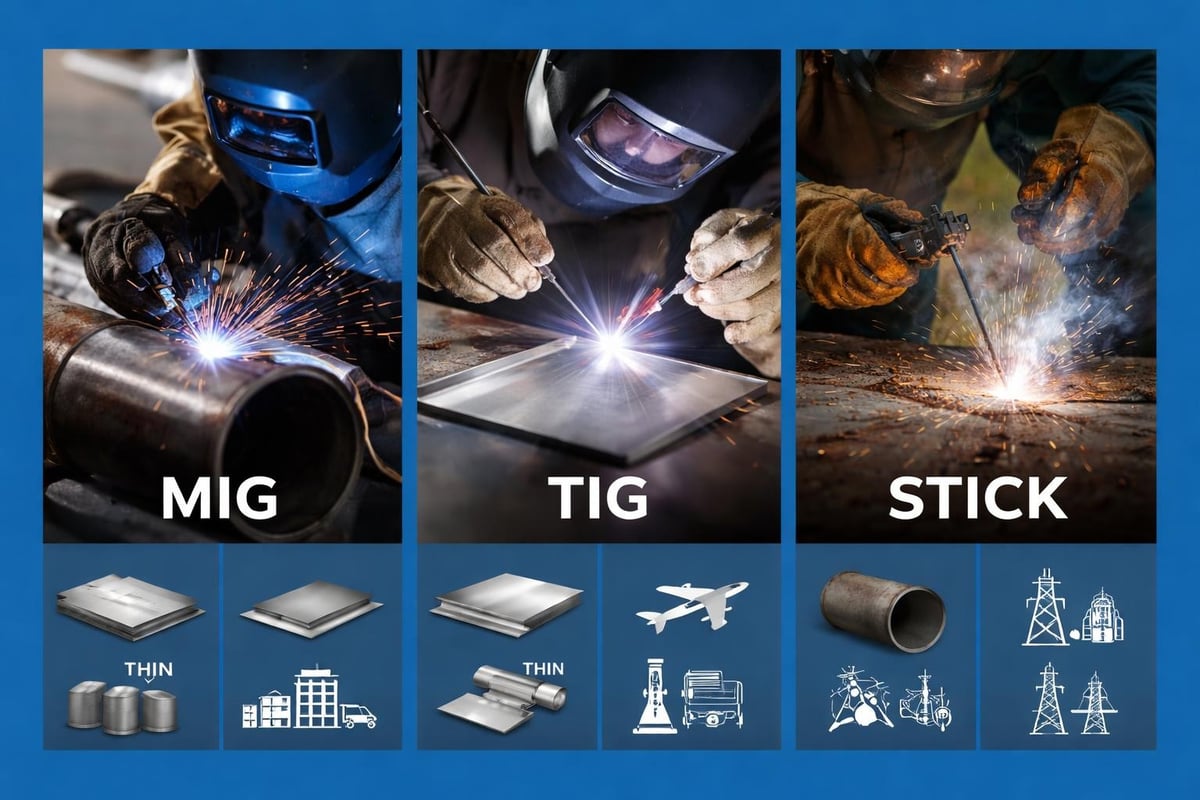
Metal Inert Gas (MIG) welding dominates production environments where speed and efficiency matter most. This process excels at welding steel components commonly found in aggregate equipment, structural fabrication, and general manufacturing applications.
The technique's versatility makes it invaluable for welding businesses serving diverse industrial clients. MIG welding handles various thicknesses, positions, and metal types with relatively straightforward operator training requirements.
TIG Welding Precision
Tungsten Inert Gas (TIG) welding delivers the precision and aesthetic quality demanded by specialized applications. Stainless steel fabrication, aluminum work, and critical pressure vessels often specify TIG welding for superior control and weld appearance.
Colorado's oil and gas sector frequently requires TIG welding for pipeline tie-ins, pressure vessel fabrication, and equipment where weld integrity cannot be compromised. The process produces clean, strong welds with minimal spatter and excellent corrosion resistance.
Stick Welding Versatility
Shielded Metal Arc Welding (stick welding) remains essential for field repairs, structural steel, and situations where portability outweighs other considerations. The process tolerates less-than-ideal conditions, making it valuable for outdoor construction and remote site work.
Wind, dust, and temperature variations that challenge other processes prove manageable with stick welding. This resilience explains its continued popularity among field welders throughout Colorado's varied industrial sites.
Quality Standards and Certification Requirements
Professional welding in Colorado adheres to rigorous standards established by industry organizations and regulatory bodies. These requirements ensure structural integrity, safety compliance, and performance reliability across critical applications.
AWS Certification Standards
The American Welding Society (AWS) establishes comprehensive certification programs recognized throughout the industry. Colorado Welding Institute certification services help professionals obtain credentials that demonstrate competency in specific welding processes and positions.
Certification requirements vary based on industry sector and application criticality. Oil and gas projects typically demand more stringent qualifications than general fabrication work, with specific codes governing pipe welding, pressure vessels, and structural applications.
Industry-Specific Codes
Different sectors reference specific welding codes and standards:
- ASME Section IX: Pressure vessels and boiler applications
- AWS D1.1: Structural steel welding for buildings and bridges
- API 1104: Pipeline welding in oil and gas operations
- AWS D1.6: Stainless steel structural welding
- ASME B31.3: Process piping systems in industrial facilities
Understanding which codes apply to specific projects ensures compliance and prevents costly rework. Professional welding services maintain current certifications across multiple standards to serve diverse client needs.
Material Considerations for Colorado Welding
Material selection significantly impacts welding approach, filler metal choice, and heat treatment requirements. Colorado's industrial applications utilize a broad spectrum of metals, each presenting unique welding considerations.
Carbon and Alloy Steels
Carbon steel remains the predominant material in structural steel fabrication and general industrial applications. Its weldability, strength, and cost-effectiveness make it ideal for manufacturing equipment, building structures, and mechanical components.
Alloy steels introduce additional elements to enhance specific properties such as hardness, wear resistance, or high-temperature performance. Oil and gas applications frequently specify chrome-moly alloys for their superior strength and corrosion resistance in harsh operating conditions.
Stainless Steel Applications
Stainless steel's corrosion resistance and aesthetic appeal make it essential for food processing equipment, chemical handling systems, and architectural applications. TIG welding typically produces the best results with stainless materials, though MIG welding proves effective for thicker sections and production work.
Proper filler metal selection and gas shielding prevent sensitization and maintain corrosion resistance in the weld zone. Experienced welders understand how different stainless grades behave and adjust techniques accordingly.
Aluminum Fabrication
Aluminum's light weight and excellent corrosion resistance drive its use in transportation, aerospace, and specialized manufacturing equipment. The material's high thermal conductivity and oxide layer formation require specific welding approaches, typically TIG or specialized MIG processes.
Colorado's growing aerospace and technology sectors increasingly demand aluminum fabrication expertise. Welders working with aluminum must understand preheating requirements, oxide cleaning, and the material's sensitivity to contamination.
Common Welding Challenges in Colorado
Environmental conditions, logistical constraints, and technical requirements create specific challenges for welding Colorado facilities and equipment. Understanding these obstacles enables better planning and more reliable project execution.
Weather and Altitude Effects
Colorado's high elevation affects welding processes in subtle but important ways. Lower atmospheric pressure can alter gas shielding effectiveness, requiring adjustments to flow rates and technique. Welders operating above 5,000 feet frequently modify standard procedures to compensate for these conditions.
Temperature extremes present ongoing challenges throughout the state. Winter operations demand preheating protocols, moisture control, and cold-weather consumables. Summer heat affects duty cycles and operator comfort, particularly during field work in direct sunlight.
Wind consistently challenges field welding operations across Colorado's open terrain. Effective wind breaks, proper gas coverage, and technique modifications help maintain weld quality when working outdoors. Some projects may require temporary enclosures to create suitable working conditions.
Access and Logistics
Many Colorado industrial sites occupy remote locations with limited infrastructure. Transporting equipment, consumables, and personnel to oil and gas fields, mining operations, or mountain facilities requires careful coordination and specialized vehicles.
Power availability varies significantly across field locations. Welders must determine whether generator support suffices or if engine-driven welding machines prove more practical. Fuel logistics become critical for extended field projects in isolated areas.
Advanced Welding Technologies
Modern welding technology continues evolving, offering improved productivity, quality, and documentation capabilities. Forward-thinking industrial manufacturing companies invest in these technologies to maintain competitive advantages.
Automated and Robotic Welding
Automation transforms high-volume production environments by delivering consistent quality, reduced labor costs, and improved safety. Robotic welding cells excel at repetitive tasks, freeing skilled welders for complex projects requiring human judgment and adaptability.
Colorado manufacturers increasingly adopt automation for competitive advantage. The technology suits production runs where setup costs amortize across multiple identical components. Custom programming allows rapid changeovers between product variations.
Advanced Monitoring Systems
Research into welding quality monitoring demonstrates how technology improves process control and defect detection. Real-time monitoring systems track critical parameters, alerting operators to deviations before they compromise weld integrity.
Statistical process control methods help model quality inconsistencies and identify root causes of defects. These approaches prove particularly valuable for critical applications where failure could result in safety hazards or environmental incidents.
Documentation and Traceability
Modern quality management systems demand comprehensive documentation of welding procedures, welder qualifications, and individual weld records. Digital systems streamline this paperwork while improving accuracy and accessibility.
Barcode tracking, digital photography, and electronic record-keeping create audit trails satisfying regulatory requirements and customer quality programs. Oil and gas projects particularly benefit from robust documentation systems that demonstrate compliance throughout equipment lifecycles.
Building a Career in Welding Colorado
The welding profession offers stable employment, competitive wages, and diverse career paths throughout Colorado's industrial economy. Understanding educational pathways and certification requirements helps aspiring welders launch successful careers.
Training and Education Pathways
Multiple routes lead to welding careers, from technical schools to apprenticeships and military training. Pursuing a welding career in Colorado offers advantages including strong demand, diverse opportunities, and good earning potential.
Technical programs provide foundational knowledge in welding theory, blueprint reading, metallurgy, and hands-on process training. These credentials prepare graduates for entry-level positions and certification testing.
Apprenticeships combine paid work experience with classroom instruction, allowing welders to earn while learning. This approach suits individuals who prefer practical learning environments and want to build industry connections early in their careers.
Certification Progression
Welders typically begin with basic certifications in common processes and positions, then advance to specialized qualifications as experience grows. Strategic certification choices align with target industries and maximize employment opportunities.
| Certification Level | Typical Experience | Industries Served | Salary Range |
|---|---|---|---|
| Entry-Level (3G, 4G) | 0-2 years | General fabrication, construction | $35,000-$50,000 |
| Intermediate (6G Pipe) | 2-5 years | Oil & gas, industrial maintenance | $50,000-$75,000 |
| Advanced (Specialized codes) | 5+ years | Pressure vessels, critical applications | $75,000-$100,000+ |
| Certified Welding Inspector | 7+ years | Quality assurance, project management | $80,000-$110,000+ |
Career Advancement Opportunities
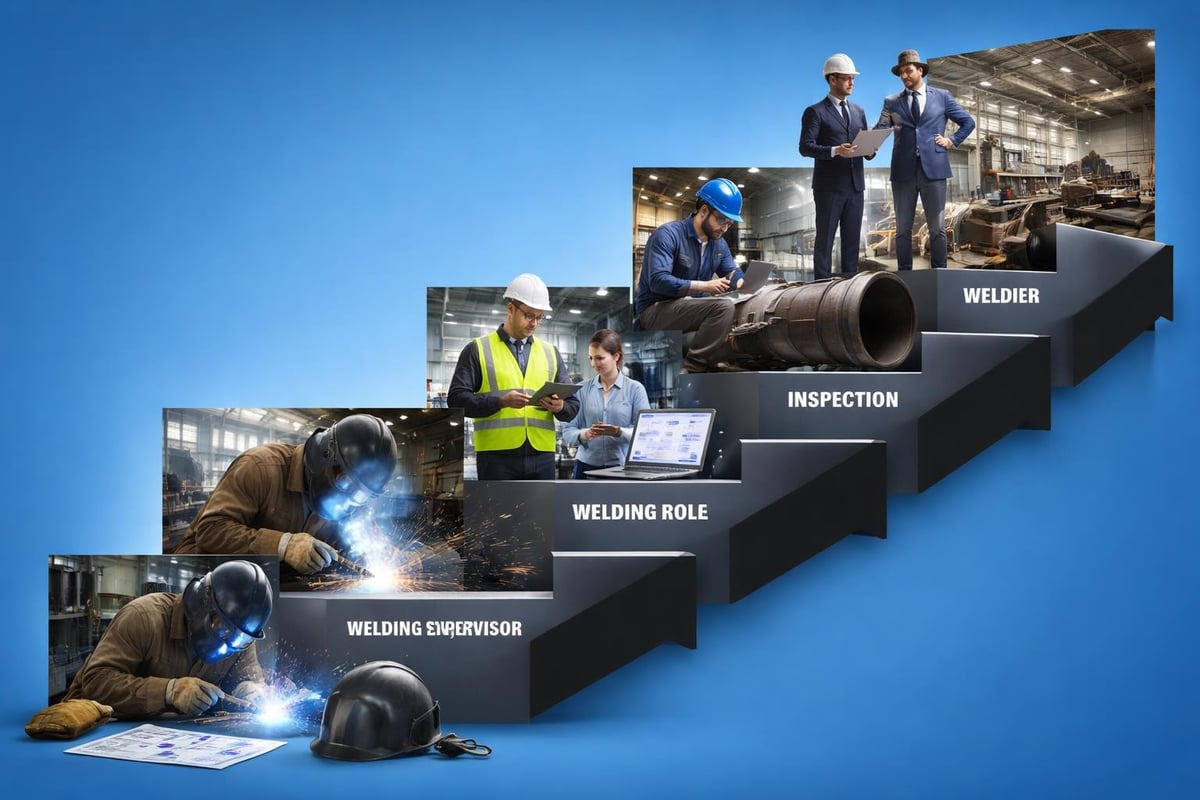
Experienced welders pursue various advancement paths beyond production welding. Welding inspection, supervision, engineering support, and business ownership represent common progression routes.
Some welders transition into specialized niches such as underwater welding, aerospace applications, or artistic metalwork. Others leverage technical expertise into sales positions with welding equipment distributors or consumables manufacturers.
Selecting Welding Service Providers
Businesses requiring welding services must evaluate potential providers based on capabilities, qualifications, and track record. Thorough vetting ensures project success and long-term partnership value.
Critical Evaluation Criteria
Technical Capabilities: Confirm the provider maintains current certifications, qualified welders, and appropriate equipment for your specific applications. Request documentation of welder qualifications and facility accreditations.
Industry Experience: Providers with relevant sector experience understand unique requirements and potential challenges. An oil and gas fabrication specialist brings different expertise than a general fabrication shop.
Quality Systems: Robust quality management systems demonstrate organizational commitment to consistent results. ISO certification, documented procedures, and comprehensive inspection protocols indicate professional operations.
Capacity and Scheduling: Evaluate whether the provider can accommodate your timeline without compromising quality. Shops operating near capacity may rush work or miss deadlines during busy periods.
Shop Tours and References
Visit potential providers' facilities to assess organization, equipment maintenance, and workplace safety. Well-maintained shops with organized work areas typically deliver better results than chaotic environments.
Request references from clients with similar projects and directly contact them about their experiences. Ask specific questions about communication, problem-solving, and how the provider handled unexpected challenges.
Emergency Repair and Maintenance Services
Equipment failures rarely occur at convenient times. Access to responsive emergency welding services minimizes production losses and prevents small problems from becoming major crises.
Response Time Considerations
True emergency services maintain 24/7 availability with rapid response capabilities. Evaluate provider commitments carefully, as some "emergency" services only offer callbacks during business hours.
Geographic coverage matters significantly for multi-site operations. Providers with strategically located facilities or mobile units reduce travel time to your locations throughout Colorado and the Western United States.
Preventive Maintenance Programs
Scheduled inspections and preventive maintenance reduce emergency situations by identifying potential failures before they occur. Welding inspections detect cracks, corrosion, and fatigue damage while repairs remain manageable.
Industrial machinery refurbishment and maintenance programs extend equipment life and improve reliability. Regular attention to critical components proves far less expensive than catastrophic failure and emergency replacement.
Integration with Machining and Fabrication
Comprehensive industrial service providers combine welding with machining and fabrication capabilities, offering coordinated solutions that reduce coordination complexity and improve project outcomes.
Complementary Service Benefits
Projects frequently require both welding and precision machining. Integrated providers eliminate coordination challenges between multiple vendors, streamline scheduling, and maintain accountability throughout project execution.
Manufacturing and machining services complement welding by enabling complete component fabrication from raw materials through final assembly. This integration proves particularly valuable for custom equipment manufacturing and specialized industrial applications.
One-Stop Solution Advantages
Working with a single provider offering welding, fabrication, and machining services simplifies procurement, reduces administrative overhead, and establishes clear responsibility. Communication improves when one organization manages all project aspects.
Quality control becomes more straightforward with integrated services. Single-source providers maintain consistent standards across all processes, reducing interface problems between welding and machining operations.
Regional Welding Service Providers
Colorado hosts numerous welding companies serving different market segments and geographic areas. Understanding the regional landscape helps businesses identify appropriate service providers for their specific needs.
Several established companies demonstrate the industry's diversity. Commercial Welding LLC operates in the Denver metro area, offering pipe welding and structural projects with woman-owned small business certification. Mountain Man Welding and Fabrication provides field welding and custom fabrication services throughout the Front Range.
Western States Welding Services in Johnstown offers comprehensive welding solutions including MIG, TIG, and stick welding for residential and commercial clients. These providers represent the variety of specialized services available throughout Colorado's welding industry.
Environmental and Safety Compliance
Welding operations must comply with environmental regulations and workplace safety standards. Professional providers maintain current knowledge of applicable requirements and implement appropriate controls.
OSHA Welding Safety Standards
The Occupational Safety and Health Administration establishes comprehensive requirements for welding safety, including ventilation, personal protective equipment, fire prevention, and electrical safety. Compliance protects workers while reducing liability exposure for both service providers and clients.
Confined space welding requires specialized training, atmospheric monitoring, and rescue preparedness. Many industrial applications involve confined spaces, making these capabilities essential for comprehensive service providers.
Environmental Considerations
Welding fume control protects worker health and satisfies air quality regulations. Modern ventilation systems capture contaminants at the source, preventing exposure and environmental release.
Waste management practices must address used electrodes, slag, grinding dust, and contaminated materials. Proper handling and disposal prevent environmental violations while demonstrating corporate responsibility.
Project Planning and Estimation
Accurate project planning establishes realistic timelines, budgets, and quality expectations. Thorough planning identifies potential challenges before they impact schedules or costs.
Specification Development
Clear specifications prevent misunderstandings and ensure providers bid on identical scopes. Detailed drawings, material specifications, welding procedure requirements, and inspection criteria establish shared expectations.
Include relevant codes and standards by reference rather than attempting to rewrite their requirements. Specify acceptance criteria for dimensional tolerances, surface finish, and nondestructive testing.
Cost Estimation Factors
Multiple variables influence welding project costs:
- Material costs: Steel prices fluctuate with market conditions
- Labor hours: Complex joints require more time than simple fillet welds
- Consumables: Filler metals, gases, and grinding materials
- Certification requirements: Testing and documentation add costs
- Logistics: Transportation, mobilization, and site access
- Timeline: Rush projects typically command premium pricing
Request detailed breakdowns showing how estimates were developed. Transparent pricing builds confidence and facilitates value engineering discussions.
Timeline Development
Realistic schedules account for material procurement, fabrication sequences, inspection holds, and weather delays. Compressed timelines increase costs and may compromise quality if insufficient time exists for proper procedures.
Build contingency time into schedules for unexpected complications. Complex projects rarely proceed exactly as planned, and schedule flexibility prevents panic responses when issues arise.
Sustainable Welding Practices
Environmental stewardship and resource efficiency increasingly influence industrial operations. Welding providers adopting sustainable practices reduce environmental impact while often improving operational efficiency.
Energy Efficiency Improvements
Modern welding equipment operates more efficiently than older technology, reducing electricity consumption and operating costs. Inverter-based power sources particularly demonstrate superior efficiency compared to conventional transformer machines.
Process selection affects energy consumption significantly. Optimizing parameters reduces the energy required per linear foot of weld while improving deposition rates and productivity.
Material Waste Reduction
Precision cutting and efficient nesting minimize scrap generation during fabrication. Advanced software optimizes material utilization, reducing waste disposal costs and raw material purchases.
Recycling programs capture scrap metal, used consumables, and packaging materials for reprocessing. Many materials maintain significant value, offsetting disposal costs while supporting circular economy principles.
Fume and Emission Control
Advanced ventilation systems capture welding fumes more effectively while using less energy than older exhaust approaches. Source capture equipment removes contaminants at the point of generation, protecting workers and reducing treatment requirements.
Low-fume consumables reduce emission generation while maintaining weld quality. These products prove particularly valuable in confined spaces or areas with limited ventilation capacity.
Colorado's diverse industrial landscape requires welding expertise that spans multiple processes, materials, and applications, from emergency field repairs to complex fabrication projects. Success demands technical knowledge, proper certifications, and understanding of industry-specific requirements across sectors including oil and gas, aggregate, recycling, and manufacturing. Whether your operation needs routine maintenance, custom fabrication, or emergency repair services, partnering with an experienced provider ensures quality results and minimizes downtime. LTJ Industrial Services delivers comprehensive welding, fabrication, and machining solutions throughout western Colorado and the broader Western United States, combining shop capabilities with responsive field service to keep your operations running efficiently.