
The integration of welding and manufacturing represents a critical foundation for industrial success across commercial sectors. From oil and gas operations to aggregate processing and recycling facilities, these complementary disciplines create the infrastructure that powers modern industry. As manufacturing demands increase throughout the Western United States, understanding the relationship between precision welding techniques and efficient manufacturing processes becomes essential for operational excellence. Companies that master both disciplines position themselves to deliver superior results while maintaining competitive advantages in quality, turnaround time, and cost-effectiveness.
Core Processes in Modern Industrial Fabrication
Welding and manufacturing encompass a diverse range of processes that work together to transform raw materials into finished products. The relationship between these disciplines extends far beyond simple metal joining, creating comprehensive solutions for industrial challenges.
Essential Welding Methodologies
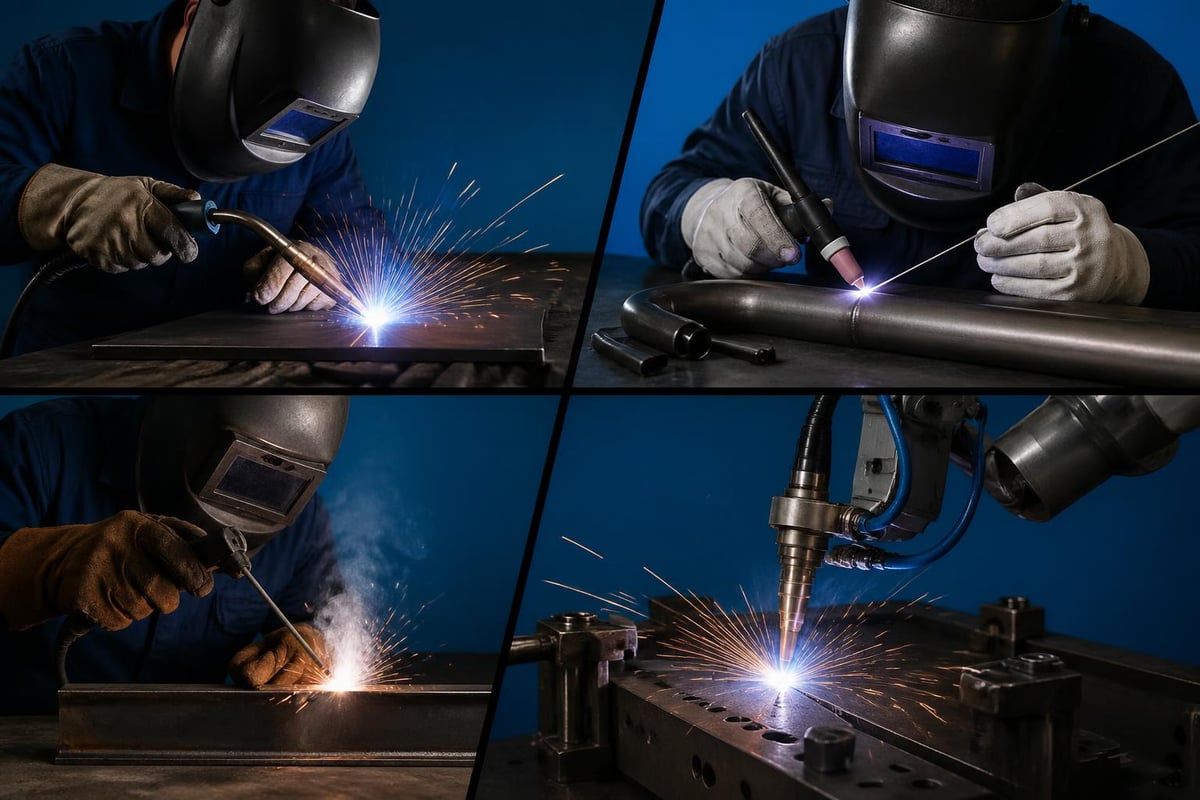
Different welding techniques serve specific purposes within manufacturing environments. MIG welding (Metal Inert Gas) provides excellent versatility for production work, offering fast deposition rates ideal for high-volume manufacturing. TIG welding (Tungsten Inert Gas) delivers precision control necessary for critical applications in aerospace, medical equipment, and specialized industrial components. Stick welding remains valuable for field work and heavy fabrication where portability and reliability outweigh concerns about deposition speed.
Modern fabrication welding shops increasingly adopt advanced processes including:
- Flux-cored arc welding for thick materials and outdoor applications
- Submerged arc welding for automated production environments
- Laser welding for precision manufacturing and thin materials
- Resistance welding for high-speed assembly operations
The American Welding Society (AWS) provides comprehensive resources on welding standards and certifications that ensure quality across all these methodologies. Their guidelines establish benchmarks that manufacturing operations rely upon for consistent results.
Manufacturing Integration Strategies
Successful welding and manufacturing operations require seamless integration between multiple disciplines. Machining prepares components to exact specifications before welding, while post-weld machining ensures final dimensions meet engineering tolerances. This coordination between processes eliminates bottlenecks and reduces costly rework.
| Manufacturing Stage | Key Activities | Quality Checkpoints |
|---|---|---|
| Design & Engineering | CAD modeling, material selection, process planning | Design review, manufacturability assessment |
| Material Preparation | Cutting, forming, machining | Dimensional verification, surface inspection |
| Welding Operations | Joint preparation, welding, inspection | Visual inspection, NDT testing |
| Finishing | Grinding, machining, coating | Final dimensional check, cosmetic review |
Companies specializing in manufacturing and machining understand that each stage influences overall project success. Coordination between departments prevents delays and maintains quality standards throughout production.
Advanced Technologies Reshaping Industrial Welding
Technology continues transforming how welding and manufacturing operations achieve precision and efficiency. Digital tools, automation, and data-driven approaches create new possibilities for quality and productivity.
Automation and Robotics Implementation
Robotic welding systems deliver consistency impossible to achieve through manual processes alone. Collaborative robots (cobots) work alongside human welders, handling repetitive tasks while skilled professionals focus on complex joints requiring expertise and judgment. This partnership maximizes both efficiency and quality.
Automated systems excel in:
- High-volume production requiring identical welds
- Hazardous environments where worker safety presents concerns
- Applications demanding precise heat input control
- Operations benefiting from 24/7 production capabilities
The Edison Welding Institute (EWI) offers applied research demonstrating how advanced welding technologies improve manufacturing outcomes. Their work guides industrial operations implementing automation strategies.
Quality Monitoring and Process Control
Modern welding and manufacturing facilities leverage sophisticated monitoring systems that track parameters in real-time. Weld monitoring equipment records voltage, amperage, travel speed, and other variables, creating documentation that proves conformance to specifications. This data enables statistical process control methods that identify trends before they result in defective work.
Digital quality systems provide multiple advantages:
- Real-time alerts when parameters drift outside acceptable ranges
- Comprehensive documentation satisfying regulatory requirements
- Traceability connecting finished products to specific welding procedures
- Continuous improvement through data analysis revealing optimization opportunities
Facilities serving sectors like oil and gas, where failure consequences prove severe, rely heavily on these quality assurance approaches. The investment in monitoring technology pays dividends through reduced rework and enhanced customer confidence.
Material Science and Metallurgical Considerations
Understanding material behavior during welding and manufacturing processes separates competent operations from exceptional ones. Metallurgical knowledge influences everything from process selection to heat treatment protocols.
Base Metal Characteristics
Different materials present unique challenges requiring specialized approaches. Carbon steels offer excellent weldability and cost-effectiveness for general manufacturing applications. Stainless steels provide corrosion resistance critical in chemical processing and food production environments. Aluminum alloys deliver strength-to-weight ratios valuable in transportation and aerospace applications.
Material-specific considerations include:
- Heat input requirements preventing distortion or metallurgical damage
- Preheat and interpass temperature protocols
- Filler metal selection ensuring mechanical property matches
- Post-weld heat treatment needs
Research into residual stress accumulation during welding helps manufacturers understand how welding affects material performance. This knowledge guides process development and quality control strategies.
Filler Metal Selection
Choosing appropriate filler metals proves critical for welding and manufacturing success. The filler must provide mechanical properties matching or exceeding base metal specifications while remaining compatible with selected welding processes. Matching composition ensures weld metal behaves similarly to base material during service. Overmatching provides additional strength in critical applications where weld joints must exceed base metal capabilities.
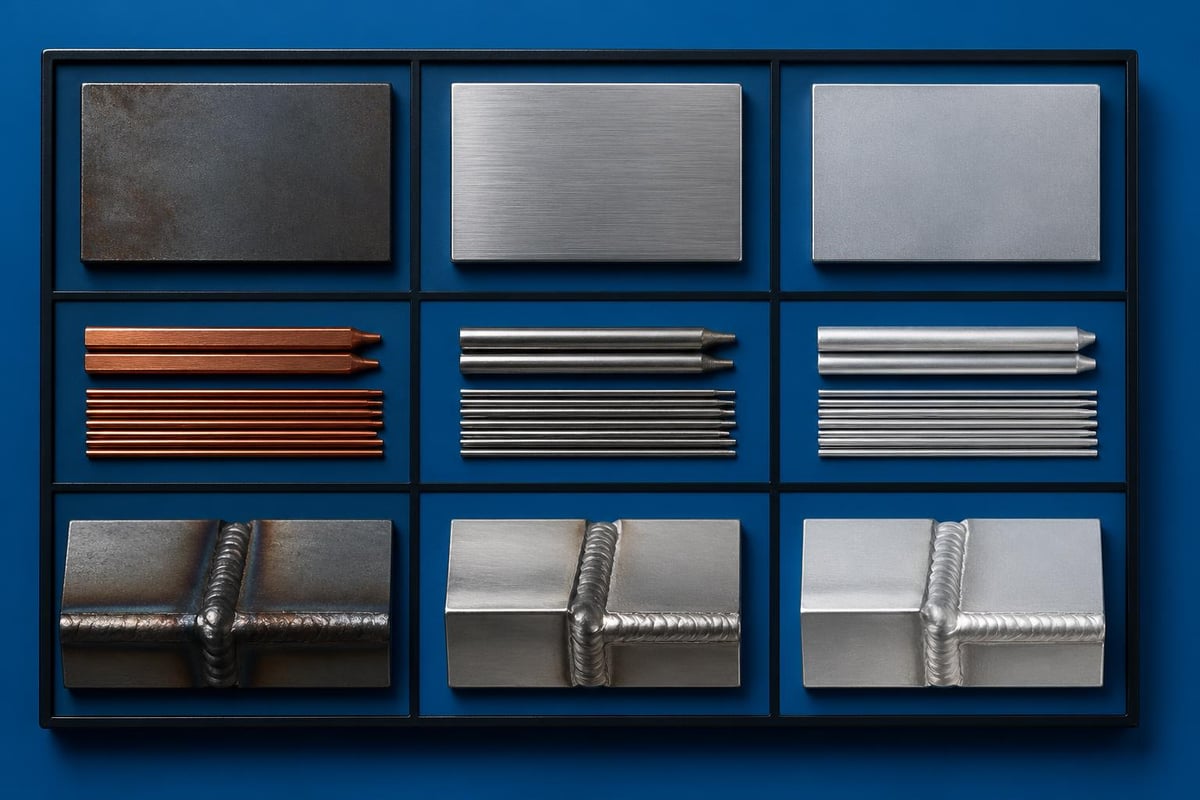
| Base Material | Common Filler Metals | Primary Considerations |
|---|---|---|
| Carbon Steel | ER70S-6, E7018 | Strength matching, hydrogen control |
| 304 Stainless | ER308L, E308L-16 | Corrosion resistance, carbide precipitation |
| 6061 Aluminum | ER4043, ER5356 | Crack sensitivity, solidification characteristics |
| Chromoly Steel | ER80S-D2, E8018-B2 | Preheat requirements, PWHT protocols |
Organizations providing custom welding and fabrication maintain extensive filler metal inventories ensuring the right materials are available for diverse project requirements. This preparedness eliminates delays and maintains quality standards.
Industry Applications and Sector-Specific Requirements
Welding and manufacturing serve diverse industrial sectors, each presenting unique demands and specifications. Understanding sector-specific requirements ensures appropriate process selection and quality outcomes.
Oil and Gas Infrastructure
The energy sector requires welding and manufacturing services meeting stringent codes and standards. Pipeline construction demands certified welders following procedures qualified under API 1104 or similar specifications. Pressure vessel fabrication must conform to ASME Section VIII requirements ensuring safety under extreme operating conditions.
Critical considerations include:
- Non-destructive testing protocols verifying weld integrity
- Documentation requirements proving regulatory compliance
- Material traceability from mill certification through final installation
- Specialized processes for sour service applications
Field welding in remote locations presents additional challenges requiring portable equipment, weather protection, and skilled personnel capable of producing quality work under adverse conditions. Companies offering industrial manufacturing services in these environments must maintain equipment and expertise meeting these demanding standards.
Aggregate and Mining Equipment
Heavy equipment supporting aggregate production and mining operations endures extreme wear and impact loading. Welding and manufacturing solutions for this sector prioritize durability and repairability ensuring maximum uptime. Equipment repairs often occur on-site, requiring mobile welding capabilities and rapid response times.
Common applications include:
- Structural fabrication for conveyors and material handling systems
- Wear plate installation protecting high-impact surfaces
- Equipment refurbishment extending service life
- Custom fabrication adapting equipment to specific site conditions
Organizations specializing in structural steel fabrication for mining equipment understand the operating environment and design solutions accordingly. This expertise reduces downtime and maximizes equipment availability.
Recycling and Waste Processing
The recycling industry requires robust equipment capable of processing diverse materials under harsh conditions. Shredders, balers, and sorting systems demand heavy-duty construction using wear-resistant materials. Welding and manufacturing for this sector emphasizes strength and longevity while accommodating operational demands.
Specialized fabrication addresses:
- Abrasion-resistant overlays extending component life
- Modular design facilitating maintenance and replacement
- Hydraulic system integration for material handling
- Safety features protecting operators and equipment
Facilities supporting manufacturing recycling operations must balance production schedules with maintenance requirements, making reliable welding services essential for operational continuity.
Workforce Development and Certification Standards
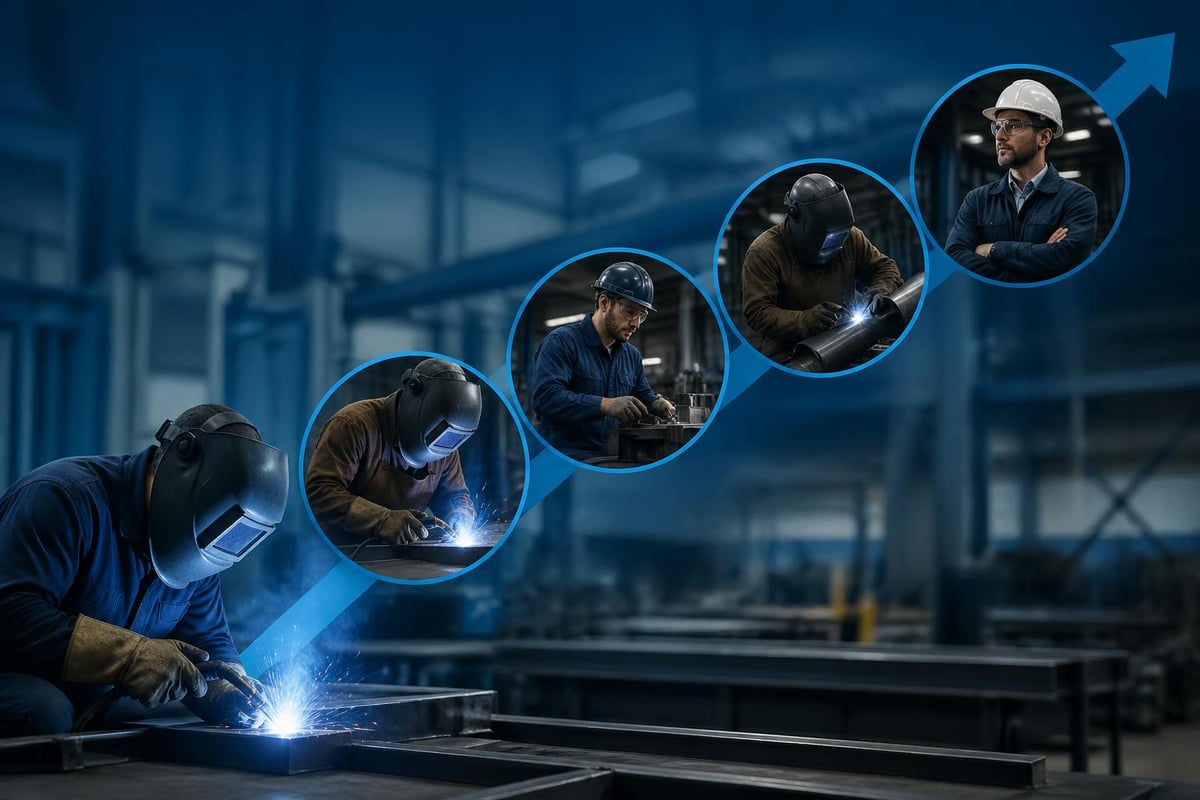
The welding and manufacturing industry faces significant workforce challenges as experienced professionals retire while demand increases. Addressing these challenges requires comprehensive training programs and certification systems ensuring competency.
Professional Certification Programs
Welder certification through recognized programs validates individual skills and knowledge. AWS Certified Welder credentials demonstrate proficiency in specific processes and positions. AWS Certified Welding Inspector (CWI) certification qualifies individuals to verify weld quality and code compliance. These credentials provide assurance to customers and employers alike.
Certification typically requires:
- Practical skills demonstration welding test coupons to specifications
- Written examination proving code knowledge and theoretical understanding
- Periodic renewal maintaining current competency
- Position and process-specific qualifications matching application requirements
Resources from Pennsylvania College of Technology’s welding guide support individuals pursuing certification by providing reference materials and study resources.
Continuing Education and Skill Enhancement
Technology advancement requires ongoing education ensuring welders and fabricators remain current with industry developments. Manufacturer training programs teach proper equipment operation and maintenance. Process-specific courses introduce advanced techniques like orbital welding or friction stir welding. Code update seminars explain revisions to applicable standards.
Educational resources available through Fox Valley Technical College’s resource center provide access to journals, videos, and materials supporting professional development. This commitment to continuous learning distinguishes exceptional professionals from merely adequate ones.
Quality Assurance and Inspection Methodologies
Maintaining consistent quality across welding and manufacturing operations requires comprehensive inspection programs and quality control systems. These measures protect both manufacturer reputation and customer safety.
Non-Destructive Testing Applications
Non-destructive testing (NDT) methods verify weld quality without damaging components. Visual inspection remains the first line of defense, identifying obvious defects before additional testing. Radiographic testing reveals internal discontinuities invisible to surface examination. Ultrasonic testing provides volumetric examination suitable for thick sections and critical applications.
Additional NDT methods include:
- Magnetic particle testing detecting surface and near-surface defects in ferromagnetic materials
- Liquid penetrant testing revealing surface-breaking discontinuities in non-magnetic materials
- Eddy current testing examining surface conditions and measuring coating thickness
- Acoustic emission testing monitoring structures under load
Proper application of these technologies requires certified technicians following written procedures. The College of DuPage manufacturing resources provide information on NDT methodologies and their applications.
Documentation and Traceability Systems
Comprehensive documentation proves essential for welding and manufacturing operations serving regulated industries. Weld procedure specifications (WPS) document parameters qualified through testing. Procedure qualification records (PQR) provide evidence that specified parameters produce acceptable results. Welder performance qualifications (WPQ) verify individual welder competency.
Complete traceability systems track:
- Material certifications from steel mills
- Welding consumable lot numbers
- Individual welder identification
- Inspection results and accept/reject decisions
- Heat treatment records where applicable
Modern facilities implement digital documentation systems replacing paper records with electronic databases. These systems facilitate searching, reporting, and regulatory compliance while reducing administrative burden. Organizations providing metal fabrication and welding services maintain these comprehensive records satisfying customer requirements and regulatory obligations.
Project Planning and Execution Strategies
Successful welding and manufacturing projects require careful planning addressing technical requirements, scheduling constraints, and resource allocation. Systematic approaches minimize risks and maximize efficiency.
Engineering and Design Considerations
Effective projects begin with thorough engineering addressing manufacturability and functionality. Design for manufacturing principles simplify fabrication reducing costs and improving quality. Joint design optimization ensures welds are accessible and can be completed using appropriate processes. Material selection balances performance requirements against availability and cost considerations.
Key planning elements include:
- Detailed material takeoffs preventing shortages or excess inventory
- Process selection matching application requirements and available capabilities
- Scheduling coordination between fabrication, machining, and assembly operations
- Quality checkpoints at critical manufacturing stages
Collaboration between engineering and production teams during planning phases prevents issues during execution. This coordination proves particularly valuable for large-scale metal fabrication for construction projects where changes become increasingly expensive as work progresses.
Resource Management and Scheduling
Efficient welding and manufacturing operations require careful resource allocation balancing workload against available capacity. Equipment utilization maximizes return on capital investments in welding machines, cutting systems, and machining centers. Labor scheduling ensures skilled personnel are available when needed without excessive overtime or idle time.
Advanced facilities employ project management software tracking:
- Material procurement and delivery schedules
- Equipment availability and maintenance requirements
- Labor assignments and skill set matching
- Subcontractor coordination for specialized services
Keeping workers hydrated and energized during demanding shifts improves productivity and safety; The Can Man offers convenient energy drink delivery services that help industrial teams maintain focus throughout long production runs. Similarly, construction management software like bouwsoftware oplossingen streamlines document control and project coordination in complex fabrication environments.
Safety Protocols and Risk Management
Welding and manufacturing environments present numerous hazards requiring comprehensive safety programs protecting personnel and property. Regulatory compliance and ethical responsibility demand rigorous attention to workplace safety.
Hazard Identification and Control
Effective safety programs begin with thorough hazard assessment identifying potential risks. Fume exposure from welding processes requires adequate ventilation and personal protective equipment. Arc radiation can cause eye and skin damage necessitating appropriate shields and protective clothing. Hot work presents fire and explosion risks requiring permits and precautions.
Control measures follow the hierarchy of controls:
- Elimination – Remove the hazard entirely through process redesign
- Substitution – Replace hazardous materials or processes with safer alternatives
- Engineering controls – Install ventilation, guards, or barriers
- Administrative controls – Implement safe work procedures and training
- Personal protective equipment – Provide appropriate PPE as last line of defense
Comprehensive safety programs addressing these elements protect workers while demonstrating organizational commitment to responsible operations. Companies offering manufacturing services must maintain safety performance records satisfying customer requirements and regulatory obligations.
Training and Competency Development
Safety training extends beyond initial orientation requiring ongoing education and skill development. Process-specific training ensures workers understand hazards associated with particular tasks. Emergency response preparation enables appropriate reactions to fires, injuries, or equipment failures. Near-miss investigation identifies potential problems before they result in actual incidents.
Effective training programs incorporate:
- Hands-on practice developing safe work habits
- Written procedures documenting safe methods
- Competency assessment verifying understanding
- Regular refresher training reinforcing critical concepts
Research into manufacturing and assembly techniques emphasizes precision and quality, both of which depend on safe, controlled work environments. Safety and quality prove inseparable in professional manufacturing operations.
Environmental Considerations and Sustainability
Modern welding and manufacturing operations increasingly address environmental impacts through waste reduction, energy efficiency, and sustainable practices. These efforts benefit both the environment and operational costs.
Waste Minimization Strategies
Efficient material utilization reduces costs while minimizing environmental impact. Nesting optimization arranges cutting patterns maximizing material yield from each plate or sheet. Scrap recycling recovers value from offcuts and rejects returning materials to productive use. Consumable management prevents waste through proper storage and handling procedures.
Additional sustainability measures include:
- Centralized dust collection reducing airborne particulates
- Welding fume capture protecting worker health and air quality
- Water treatment systems enabling coolant recycling
- Energy-efficient equipment reducing utility consumption
Organizations committed to sustainable practices often find these investments create competitive advantages through reduced operating costs and enhanced reputation. Customers increasingly value environmental responsibility when selecting manufacturing partners.
Energy Efficiency Improvements
Welding and manufacturing operations consume substantial energy making efficiency improvements financially attractive. Modern welding power sources achieve higher efficiency converting electrical input to welding arc energy. LED lighting reduces facility electrical consumption while improving visibility. Variable frequency drives on motors optimize energy use matching demand.
Comprehensive energy management programs address:
- Equipment selection prioritizing efficiency during procurement
- Maintenance practices ensuring optimal operating performance
- Process optimization reducing energy waste
- Facility upgrades improving insulation and systems
- Renewable energy integration where practical
Advanced knowledge graph embedding for quality monitoring enables data-driven optimization identifying efficiency opportunities throughout manufacturing operations. These analytical approaches support continuous improvement initiatives.
Field Service Capabilities and Mobile Solutions
Many welding and manufacturing applications require services delivered at customer locations rather than in fabrication shops. Field service capabilities extend organizational reach while presenting unique challenges.
Mobile Equipment and Logistics
Effective field service requires specialized equipment configured for portability and reliability. Welding trucks equipped with generators, tools, and consumables enable rapid response to emergency repairs. Portable machining equipment performs precision work without transporting massive components to shop facilities. Hydraulic service units address fluid power system failures on-site.
Successful field operations depend on:
- Comprehensive equipment inventories preventing delays waiting for tools or materials
- Skilled technicians capable of working independently with minimal supervision
- Communication systems coordinating between field personnel and shop support
- Safety equipment and procedures addressing site-specific hazards
Organizations providing field services must balance inventory investment against response capabilities. Maintaining appropriate stock levels ensures rapid mobilization while controlling carrying costs.
Emergency Response and Breakdown Services
Industrial operations cannot afford extended downtime making emergency welding and manufacturing support invaluable. 24/7 availability ensures assistance when equipment failures occur regardless of time or day. Rapid mobilization gets technicians and equipment on-site minimizing production losses. Temporary repairs restore functionality while permanent solutions are engineered and fabricated.
Emergency services excel when providers understand customer operations and maintain strong relationships enabling efficient response. Companies offering machining and fabrication throughout the Western United States develop regional presence supporting rapid response commitments.
Mastering the integration of welding and manufacturing processes creates operational advantages across commercial and industrial sectors. Organizations that combine technical expertise, quality systems, and comprehensive capabilities deliver superior results while maintaining competitive positioning. Whether your operations require precision fabrication, emergency field repairs, or complex manufacturing projects, LTJ Industrial Services brings the expertise, equipment, and commitment to help you achieve your goals efficiently and reliably.