
A weld process specification, more formally called a welding procedure specification (WPS), is a written document that lists the variables a welder must follow to produce a joint that meets defined quality and mechanical-property requirements. To write one, you identify the governing code, define the essential variables, qualify the procedure with a test weld, and record the results so any qualified welder can repeat the work. For operations and maintenance managers, a sound weld process specification is the difference between a repair that returns to service and one that fails inspection or fails in the field.
What a Weld Process Specification Does
A weld process specification defines how a weld is made so the result is repeatable, inspectable and defensible. According to TWI, a WPS identifies the welding variables intended to produce a joint that meets specified quality and mechanical-property requirements. It is supported by records of how the weld was made and by inspection and test results.
In practice, the document serves three audiences:
- Welders, who use it as the working instruction at the machine or in the field.
- Inspectors and authorized agencies, who check the work against the approved variables.
- Owners and operators, who rely on it as evidence that a pressure vessel, pipeline, crusher frame or structural member was joined to code.
A WPS is not a general guideline. It is a controlled document tied to a specific code, material group, thickness range and process. Changing a variable outside the permitted range can invalidate it.
When You Need a Weld Process Specification
You need a weld process specification whenever a code, contract or owner standard requires welding to a qualified procedure. That covers most work in oil and gas, mining, aggregate and recycling operations where failure carries safety or downtime consequences. For a broader overview of how specs cover shop and field work, see our Welding Specification Guide for Shop and Field Work.
Typical triggers include:
- Pressure-retaining equipment governed by ASME Section IX and, where applicable, National Board repair rules.
- Structural steel and heavy equipment fabrication governed by AWS D1.1.
- Pipeline welding governed by API 1104.
- Customer or insurer specifications that call out a procedure by name.
- Repairs to critical wear or load-bearing components, such as crusher frames, screen decks, buckets and conveyor structures.
Construction and maintenance teams often ask whether they can simply adopt another shop's procedure. TWI notes that this depends on the contract, the application and the governing welding code. Confirm this with the code and your inspector before work starts, not after.
What Information a Weld Process Specification Includes
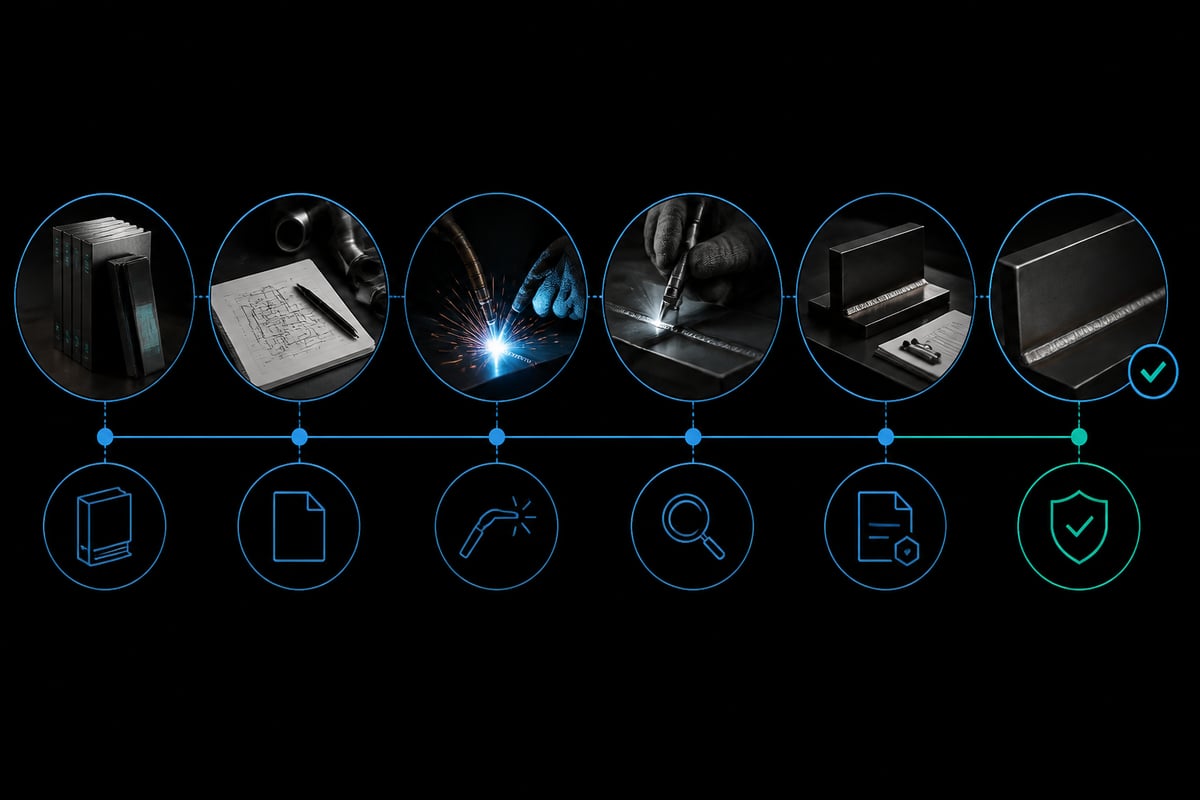
A complete weld process specification records the manufacturer, the base material, the process, the joint, the filler and the parameters needed to repeat the weld. TWI’s summary of UK qualification standards lists the arc welding content as manufacturer, parent material, process, joint design and preparation, position, technique, consumables, process parameters, preheat and interpass temperatures, and post-weld heat treatment where applicable.
The table below shows how those fields are typically organized and why each matters.
| Field | What it records | Why it matters |
|---|---|---|
| Base metal | Material specification, grade, thickness range | Determines weldability, preheat and filler selection |
| Welding process | SMAW, GMAW, GTAW, FCAW, SAW or a combination | Each process carries different qualification limits |
| Joint design | Groove type, angle, root opening, backing | Controls fusion and distortion |
| Position | Flat, horizontal, vertical, overhead | Limits where the procedure can be applied |
| Filler metal | Classification, diameter, shielding gas or flux | Governs strength, toughness and chemistry |
| Electrical parameters | Current range, voltage, polarity, travel speed | Controls heat input and bead profile |
| Preheat and interpass | Minimum preheat, maximum interpass temperature | Prevents cracking and protects properties |
| Post-weld heat treatment | Temperature, hold time, cooling rate | Relieves stress and restores toughness |
Do not copy a form from another source and fill the boxes loosely. Each entry should be a range the qualification test actually supports.
Essential Variables and Why They Drive the Document
Essential variables are the parameters that, if changed beyond a stated limit, require the procedure to be requalified. TWI explains that these can include material type, welding process, thickness range and sometimes welding position, and that the applicable specification determines which variables matter.
This is where most weak procedures fail. A shop qualifies a procedure on one plate thickness, then applies it across a much wider range. Or a filler metal substitution is made in the field without checking whether it falls inside the qualified classification.
Code-specific distinctions also apply. Each governing code sorts its variables into categories and handles prequalified joints differently from qualified ones. Reading the governing code's variable tables before drafting saves a failed test and a repeated cost.
Weld Process Specification vs. PQR and WQR
A WPS tells the welder what to do, a PQR records what was actually done during the test, and a welder qualification record shows who is certified to do it. Keeping these three apart avoids a common paperwork error.
- WPS: the instruction. It lists permitted ranges for each variable.
- PQR (ASME) or WPAR (BS EN ISO 15614): the approval record. TWI states that this is the record that supports the WPS, built from the test weld and its inspection and test results.
- Welder qualification record (WQR): documentation that a specific welder passed a test on a given process, position and material group.
One PQR can support several WPSs, provided each stays within the qualified ranges. A qualified procedure is worth little if the welder holding the torch is not qualified to use it, so confirm both before assigning the job.
How to Write a Weld Process Specification Step by Step
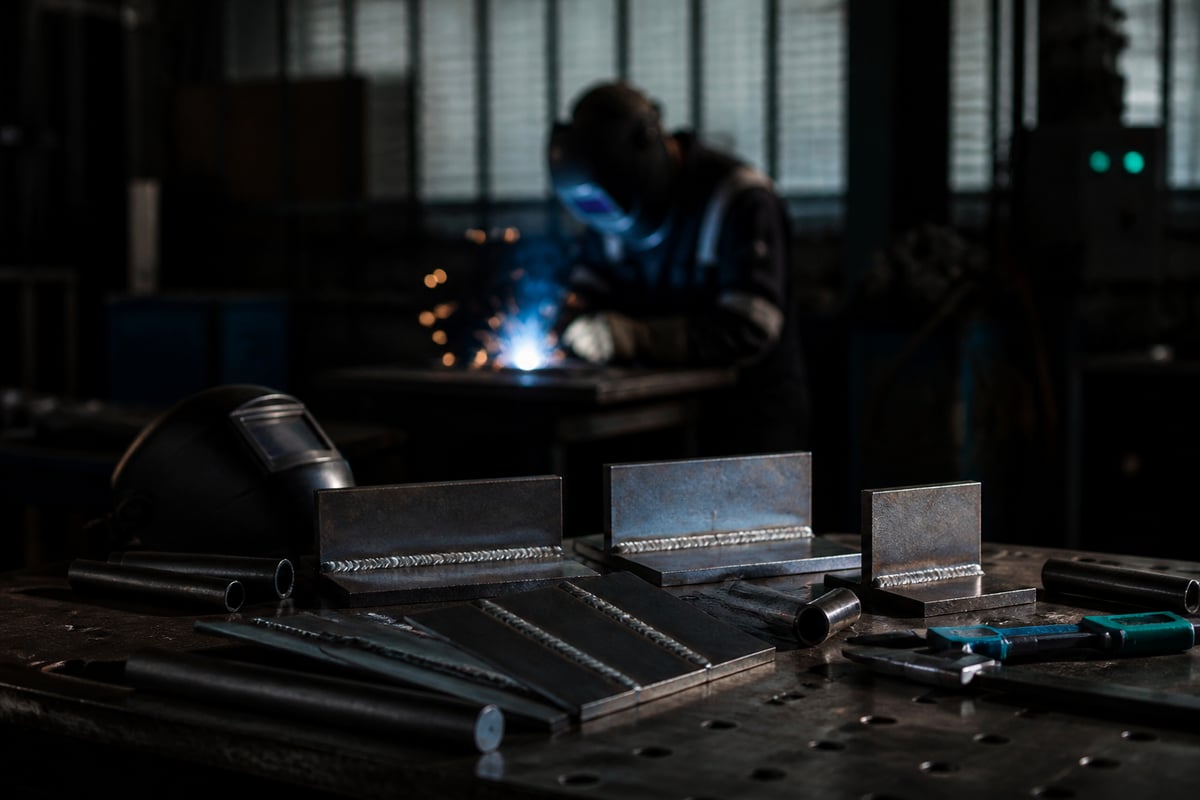
The most reliable way to write a weld process specification is to move from requirements to a draft, then to a test, then to a finished document. The sequence below follows that logic.
- Define the service conditions. Record the equipment, operating temperature, pressure, loading, corrosive exposure and expected life. A sand-conveyor repair and a pressure-boundary weld on a separator call for different procedures.
- Identify the governing code. Choose ASME Section IX, AWS D1.1, API 1104 or the customer standard. This determines the format, variables and test requirements.
- Gather material data. Obtain mill test reports for base metals. Confirm grade, thickness, carbon equivalent and any impact requirements.
- Draft a preliminary WPS. A pWPS is the document used to make a test weld, and its approval record can then support finalizing one or more WPSs and work instructions.
- Select the approval route. TWI lists common routes: a procedure test, approved welding consumables, previous welding experience, a standard welding procedure and a pre-production welding test. The code and contract decide which are permitted.
- Weld and test the coupon. Run the test under witnessed conditions. Perform visual, bend, tensile and, where required, impact testing.
- Record the results in the PQR. Capture actual values used, not target values.
- Issue the final WPS. Set variable ranges that the test supports, add reference numbers and obtain the required signatures.
For readers who want a review step, outside welding engineering services can help review WPS preparation against the governing standards.
Writing a Weld Process Specification for Field Repairs
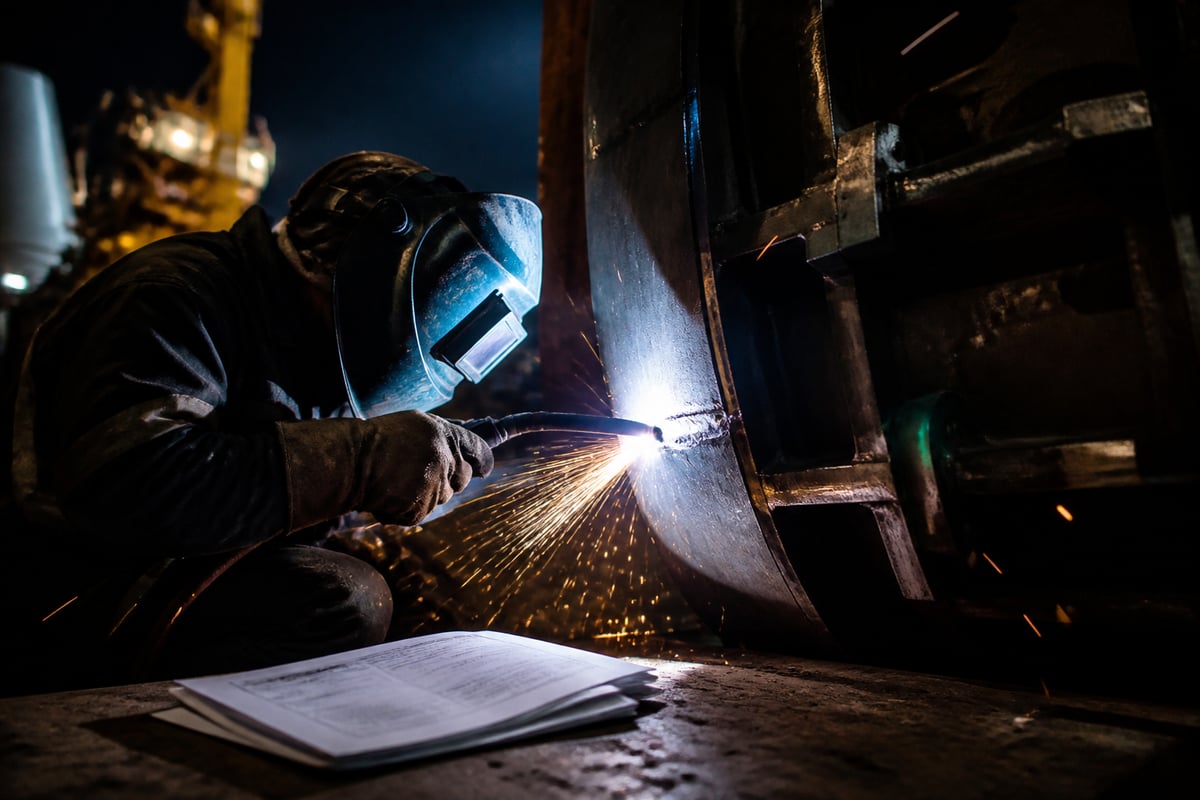
A procedure written for a controlled shop does not automatically transfer to a wellsite, quarry or recycling plant. Field conditions change the variables that matter most, and the document should address them directly.
Consider these points when the work happens on site:
- Wind and shielding. Gas-shielded processes lose protection in wind. Specify self-shielded flux-cored wire, screens or a different process where drafts are unavoidable.
- Ambient temperature. Cold Western U.S. conditions raise preheat demands. Record the minimum ambient temperature the procedure allows and how preheat will be measured.
- Position and access. Confined access to a crusher housing or a vessel nozzle may force out-of-position welding. Confirm the qualified positions cover the real joint.
- Hydrogen control. Low-hydrogen consumables need controlled storage, such as heated rod ovens. Add handling instructions to the document.
- Existing metal condition. Worn, oil-soaked or work-hardened base metal needs cleaning, grinding and sometimes buttering layers that a new-build WPS never considers.
Adding a short field annex to the main specification keeps these controls visible to the crew. This is also where field welding versus shop welding decisions are best made: when a joint cannot be controlled on site, moving the component to the shop is often the faster path to a compliant weld.
Common Mistakes That Invalidate a Procedure
Most failed audits trace back to a small set of repeat errors in the weld process specification. Avoiding them is largely a matter of discipline.
- Applying the procedure outside the qualified thickness or material group.
- Using a filler classification or shielding gas that was never tested.
- Leaving preheat and interpass limits blank or vague.
- Failing to link the WPS to its supporting PQR by number.
- Allowing revisions without a controlled change record.
- Assuming a welder's certificate covers every process and position.
A useful internal check is to give the finished document to someone who did not write it and ask them to explain every parameter. If they cannot, a welder in the field will struggle too. For further background on how procedures fit into broader welding requirements, see this overview of welding specifications and a related explanation of the weld procedure specification.
Choosing a Partner Who Works to a Qualified Procedure
When you outsource welding, the contractor's procedure library and welder certifications determine whether your repair meets code the first time. Ask any prospective partner for current WPS and PQR documentation that matches your material, thickness range and governing standard, along with welder qualification records for the people who will do the work.
LTJ Industrial Services supports customers in the shop and on site. That combination matters for operations teams who need pressure, structural and pipeline work handled under one roof. The team's certified welding covers structural fabrication, equipment repair and custom metal projects, in the shop or in the field. Readers weighing codes and credentials may also find the explanation of ASME welding certification useful.
Maintaining and Revising a Weld Process Specification
A weld process specification is a controlled document, so it needs an owner, a revision history and a review cycle. Treat it like any other engineering record.
Set up a simple control routine:
- Assign a unique number to each WPS and cross-reference its supporting PQR.
- Record every revision with the date, the reason and an approver.
- Review procedures after any change in base metal supplier, filler brand or process.
- Retire superseded versions so crews never work from outdated copies.
- Keep welder continuity logs so qualifications do not lapse.
Digital copies on a tablet help crews in the field, but only if they match the controlled master. Printed copies should carry a revision number and a date so an inspector can verify the version in use.
Start by pulling the governing code and base metal data for your next repair or fabrication job, then ask your contractor to show the matching WPS and PQR before welding begins. LTJ Industrial Services can walk through that documentation with you, with certified welders working in our Rifle shop or at your site across the Western United States. If you need compliant welding, fabrication or machining without extended downtime, use our certified welding service and Request a Quote so we can scope the work to your code and schedule.