
Metal manufacturing stands as the backbone of modern industrial development, transforming raw materials into essential components that power everything from construction equipment to energy infrastructure. This complex industry encompasses numerous processes, technologies, and specialized skills that enable businesses across sectors to build, maintain, and improve their operations. Understanding the fundamentals of metal manufacturing helps organizations make informed decisions about fabrication needs, quality standards, and service partnerships.
Core Metal Manufacturing Processes
The foundation of metal manufacturing rests on several key processes that shape, cut, join, and finish metal materials. Each process serves specific purposes and requires distinct equipment, expertise, and quality control measures.
Fabrication and Forming
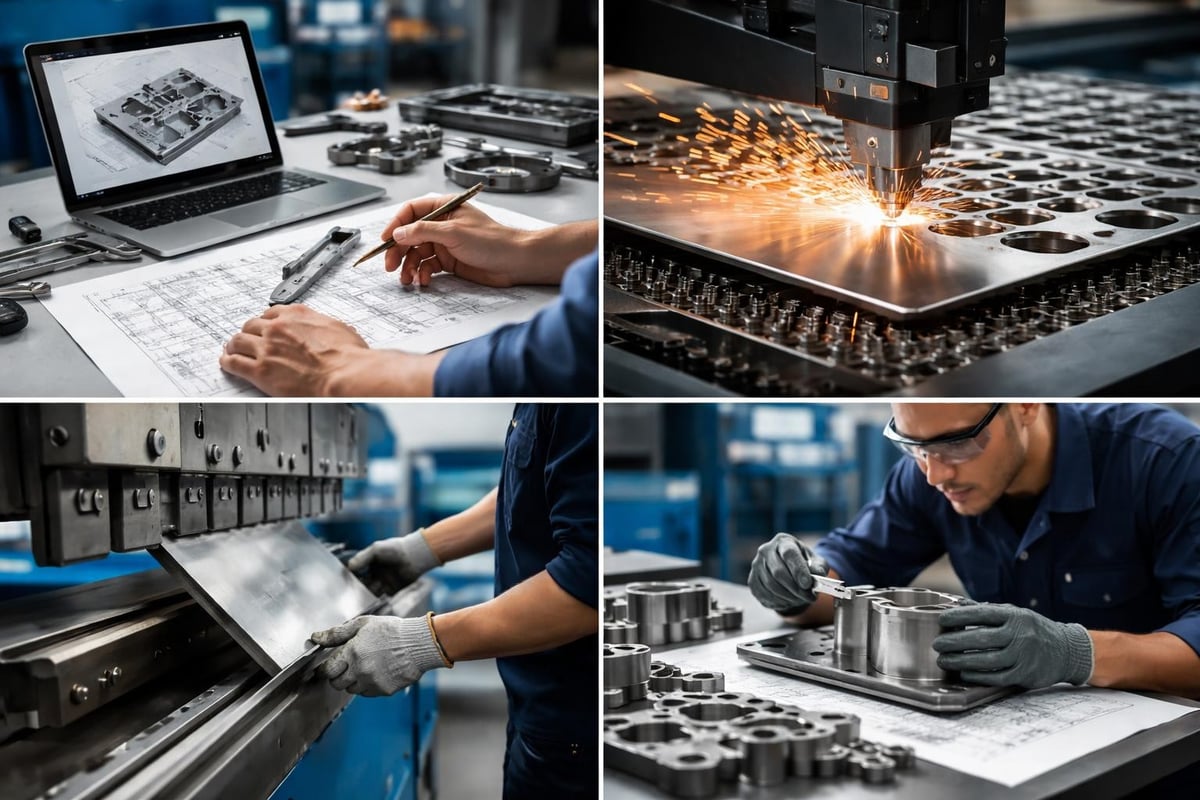
Metal fabrication involves cutting, bending, and assembling raw metal materials into finished products or structural components. This process utilizes various techniques including laser cutting, plasma cutting, waterjet cutting, and traditional sawing methods. Custom metal fabrication transforms standard metal stock into specialized shapes that meet precise specifications for industrial applications.
The forming process reshapes metal without removing material, using techniques such as:
- Press brake forming for creating precise bends and angles
- Roll forming for continuous profiles and cylindrical shapes
- Stamping for high-volume production of identical parts
- Hydroforming for complex hollow shapes with minimal tooling
Advanced metal forming and additive manufacturing processes continue to evolve, offering manufacturers new capabilities for producing high-performance components with improved material properties and reduced waste.
Machining Operations
Machining removes material from metal workpieces to achieve desired dimensions, surface finishes, and tolerances. Modern CNC machining job shops utilize computer-controlled equipment that delivers exceptional precision and repeatability.
| Machining Type | Primary Applications | Typical Tolerances |
|---|---|---|
| Milling | Flat surfaces, slots, complex geometries | ±0.005" – ±0.001" |
| Turning | Cylindrical parts, threading, facing | ±0.003" – ±0.0005" |
| Drilling | Holes, bores, countersinks | ±0.005" – ±0.002" |
| Grinding | Superior surface finishes, tight tolerances | ±0.0005" – ±0.0001" |
The evolution of machining technology has enabled manufacturers to work with increasingly challenging materials, including hardened steels, exotic alloys, and composite materials that demand specialized tooling and cutting strategies.
Welding and Joining
Welding creates permanent bonds between metal components through heat, pressure, or both. Metal fabrication and welding services encompass multiple welding processes, each suited to specific materials, thicknesses, and application requirements.
Common welding methods in metal manufacturing include:
- MIG (Metal Inert Gas) welding for versatile, high-speed applications
- TIG (Tungsten Inert Gas) welding for precision work on thin materials
- Stick welding for heavy structural components and field applications
- Flux-cored arc welding for outdoor work and thick materials
- Submerged arc welding for automated, high-deposition applications
Professional welders must understand metallurgy, heat treatment effects, and proper joint design to ensure structural integrity and longevity in finished products.
Industry Applications and Sectors
Metal manufacturing serves diverse industries, each with unique requirements, specifications, and operational challenges. Understanding sector-specific needs helps manufacturers deliver appropriate solutions.
Oil and Gas Infrastructure
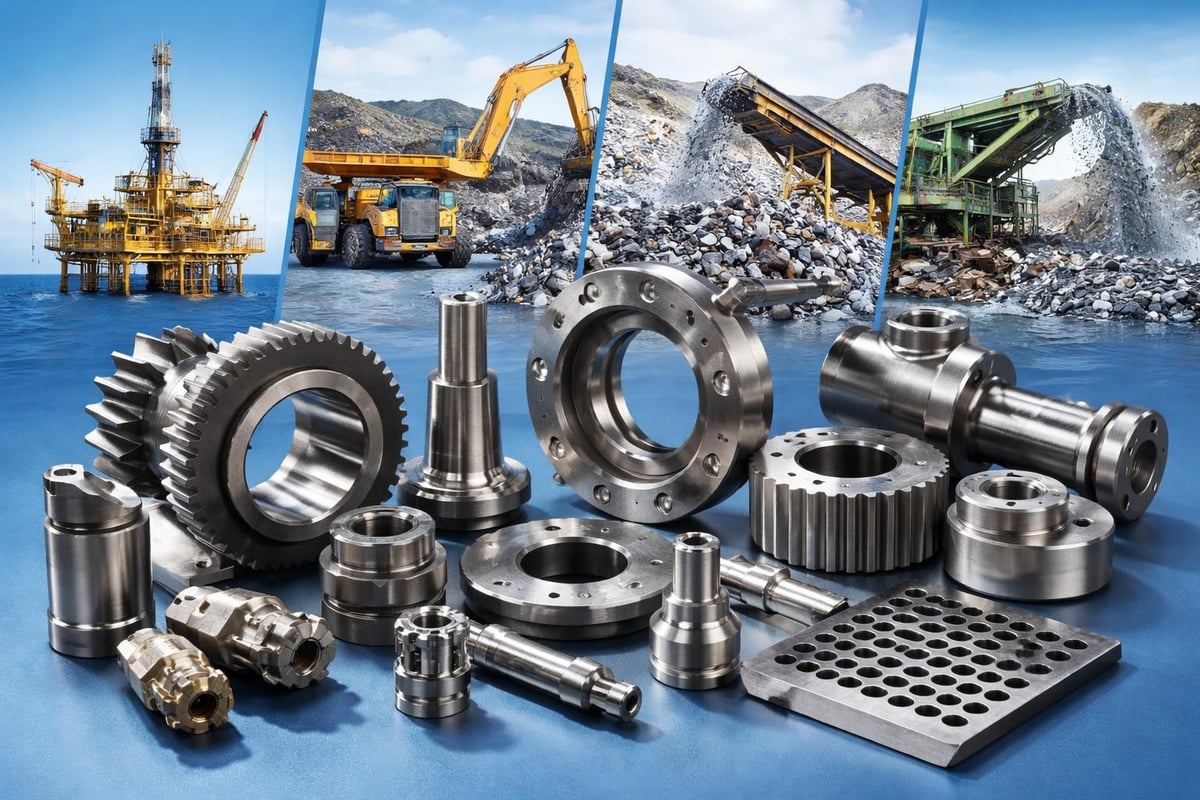
The energy sector demands robust, corrosion-resistant components that withstand extreme pressures, temperatures, and environmental conditions. Metal manufacturing for this industry includes:
- Pressure vessels and storage tanks
- Pipeline components and fittings
- Drilling equipment and tool assemblies
- Processing equipment and structural supports
Companies providing oil and gas fabrication services must meet stringent industry standards such as API, ASME, and AWS certifications to ensure safety and reliability in critical applications.
Mining and Aggregate Processing
Mining operations require heavy-duty equipment capable of continuous operation in abrasive, high-impact environments. Structural steel fabrication for mining equipment includes components such as:
- Conveyor systems and chute assemblies
- Crusher frames and impact bars
- Screen decks and support structures
- Haul truck bodies and wear plates
The manufacturing recycling sector similarly requires durable equipment designed to process various materials efficiently while minimizing downtime.
Commercial Construction and Infrastructure
Large-scale construction projects rely on commercial metal fabrication for structural elements, architectural features, and building systems. This sector encompasses:
Structural Applications:
- Building frames and support beams
- Stairways, railings, and walkways
- Roof trusses and framing systems
- Foundation anchor systems
Architectural Elements:
- Curtain wall systems
- Decorative metalwork
- Canopies and awnings
- Custom fixtures and installations
Precision and adherence to building codes remain paramount in construction-related metal manufacturing to ensure safety, structural integrity, and long-term performance.
Quality Control and Standards
Maintaining consistent quality throughout metal manufacturing processes requires comprehensive inspection protocols, testing procedures, and adherence to industry standards.
Material Verification and Testing
Quality begins with raw material verification. Manufacturers employ various testing methods:
- Visual inspection for surface defects and dimensional accuracy
- Chemical analysis to confirm material composition and grade
- Mechanical testing including tensile, hardness, and impact tests
- Non-destructive testing such as ultrasonic, radiographic, and magnetic particle inspection
These verification steps prevent material mix-ups and ensure components meet specified performance characteristics.
Process Control Measures
Effective manufacturing services implement process controls at every production stage:
| Control Point | Measurement Methods | Acceptance Criteria |
|---|---|---|
| Cutting accuracy | CMM, calipers, micrometers | ±1/16" to ±0.001" depending on application |
| Weld quality | Visual, dye penetrant, radiographic | AWS D1.1 or project-specific standards |
| Surface finish | Profilometer, comparator | Ra values per specification |
| Assembly fit | Gauges, templates, laser alignment | Per engineering drawings |
Recent advancements in steel manufacturing and processing have introduced new quality control techniques that enhance product consistency and reduce defect rates.
Certification and Compliance
Professional metal manufacturing operations maintain relevant certifications that demonstrate capability and commitment to quality:
- ISO 9001 for quality management systems
- AWS certification for welding procedures and welders
- ASME certification for pressure vessels and boilers
- API certification for petroleum and natural gas industry equipment
These certifications require regular audits, documentation, and continuous improvement initiatives.
Advanced Technologies in Modern Metal Manufacturing
The metal manufacturing industry continues to evolve through adoption of advanced technologies that improve efficiency, precision, and capabilities.
Computer-Aided Design and Manufacturing
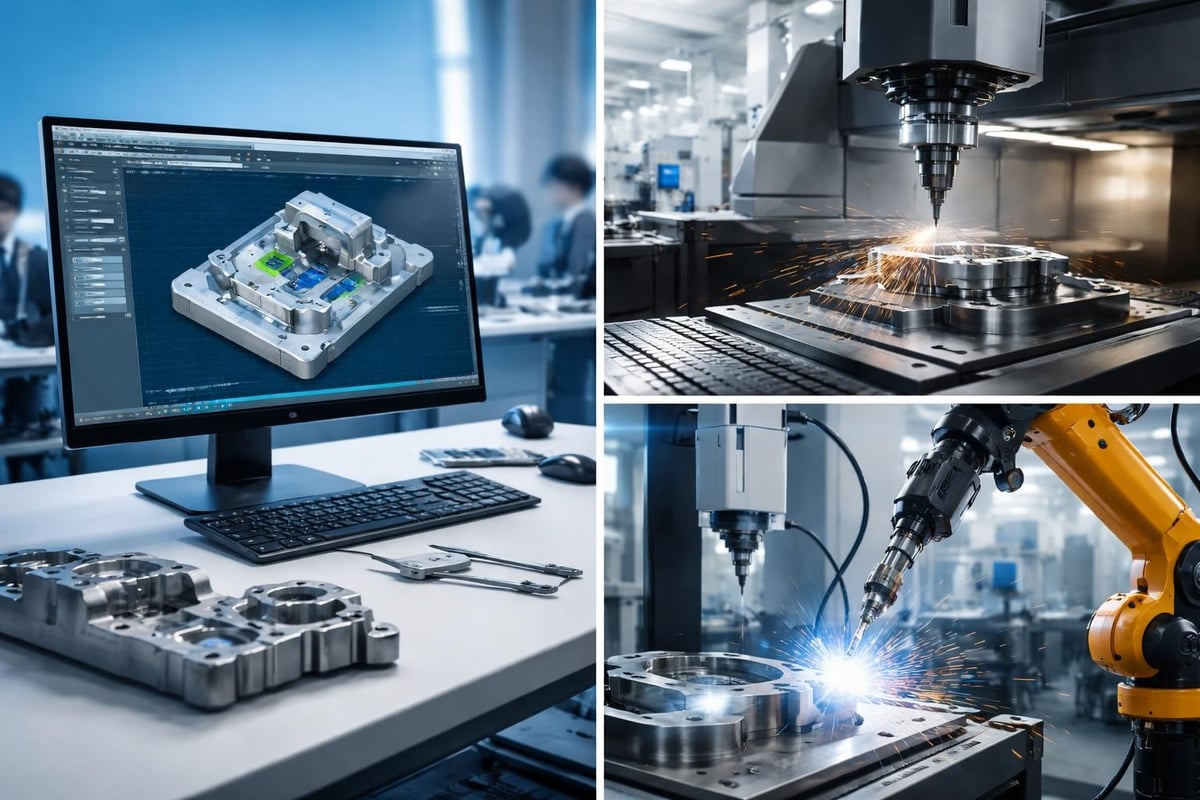
CAD/CAM systems have revolutionized how manufacturers design, simulate, and produce metal components. Benefits include:
- Design optimization through finite element analysis and simulation
- Toolpath generation for efficient machining operations
- Nesting optimization to minimize material waste in cutting operations
- Digital twins for process validation before production
These technologies reduce development time, lower costs, and improve first-time quality rates.
Automation and Robotics
Automated systems enhance productivity while maintaining consistent quality in repetitive operations. Industrial manufacturing companies increasingly integrate:
- Robotic welding cells for high-volume production
- Automated material handling systems
- CNC machine tool changers and pallet systems
- Automated inspection and measurement stations
Automation allows skilled workers to focus on complex tasks requiring human expertise while machines handle routine operations efficiently.
Additive Manufacturing Integration
While traditional metal manufacturing focuses on subtractive and forming processes, additive manufacturing (3D printing) increasingly complements conventional methods. Applications include:
- Rapid prototyping for design validation
- Complex geometries impossible with traditional machining
- Tooling and fixtures for production processes
- Low-volume custom components with unique specifications
Hybrid approaches combining additive and subtractive manufacturing offer new possibilities for component design and production.
Workforce Skills and Expertise
Successful metal manufacturing depends on skilled professionals who understand materials, processes, and precision requirements. The industry faces ongoing challenges in workforce development and retention.
Essential Technical Competencies
Metal manufacturing professionals require diverse skills:
Welders must master multiple processes, understand metallurgy, interpret blueprints, and maintain certification currency. Welding businesses invest heavily in training to ensure welders meet evolving industry demands.
Machinists need proficiency in:
- Blueprint reading and geometric dimensioning
- CNC programming and operation
- Precision measurement techniques
- Material properties and cutting tool selection
Fabricators combine skills from multiple disciplines, including layout, cutting, forming, and assembly operations.
Continuous Training and Development
The metal manufacturing industry evolves rapidly with new materials, processes, and technologies. Successful operations maintain training programs covering:
- Safety protocols and hazard recognition
- New equipment operation and maintenance
- Quality control procedures and documentation
- Advanced welding and machining techniques
Investment in workforce development directly impacts product quality, operational efficiency, and customer satisfaction.
Material Selection Considerations
Choosing appropriate materials for metal manufacturing projects significantly influences performance, cost, and longevity. Engineers and fabricators must evaluate multiple factors when specifying materials.
Common Metal Alloys and Applications
Different projects demand specific material properties:
| Material Category | Common Alloys | Typical Applications |
|---|---|---|
| Carbon Steel | A36, A572, 1018, 4140 | Structural components, general fabrication |
| Stainless Steel | 304, 316, 17-4 PH | Corrosion-resistant equipment, food processing |
| Aluminum | 6061, 7075, 5052 | Lightweight structures, aerospace components |
| Alloy Steel | 4130, 4340, 8620 | High-strength applications, heat-treated parts |
Material selection balances performance requirements against cost, availability, and manufacturability considerations.
Environmental and Operating Conditions
Operating environment dramatically affects material selection:
- Corrosive atmospheres require stainless steels or protective coatings
- High temperatures demand heat-resistant alloys or treated materials
- Impact loads need tough, impact-resistant grades
- Cryogenic conditions require materials that maintain ductility at low temperatures
Welding and fabrication services professionals help clients navigate material selection based on application-specific requirements and industry experience.
Cost-Performance Optimization
Material costs represent a significant portion of metal manufacturing project expenses. Optimization strategies include:
- Selecting appropriate grade (not over-specifying)
- Considering alternative materials with similar properties
- Optimizing design to reduce material volume
- Evaluating total lifecycle costs, not just initial material price
Experienced manufacturers balance initial costs against long-term performance, maintenance, and replacement considerations.
Project Management and Delivery
Successful metal manufacturing requires effective project management from initial quotation through final delivery and installation.
Estimating and Quoting
Accurate project estimation considers:
- Material costs including waste factors and market pricing
- Labor hours for each manufacturing operation
- Equipment time and tooling requirements
- Overhead allocation for facility and administrative costs
- Delivery and installation if included in scope
Obtaining a fabrication quote early in the project planning process helps establish realistic budgets and timelines.
Scheduling and Capacity Planning
Manufacturers must balance multiple projects while maintaining on-time delivery. Effective scheduling considers:
- Equipment availability and preventive maintenance schedules
- Material lead times for specialized alloys or large quantities
- Workforce allocation matching skills to project requirements
- Inspection and testing timeline requirements
- Customer delivery deadlines and installation windows
Manufacturing and machining operations often use ERP systems to optimize scheduling and resource allocation across concurrent projects.
Communication and Documentation
Clear communication throughout metal manufacturing projects prevents errors and ensures customer satisfaction:
- Regular progress updates and milestone reviews
- Timely notification of potential delays or issues
- Comprehensive documentation including material certifications, test reports, and quality records
- As-built drawings reflecting any approved changes from original specifications
Professional manufacturers maintain transparent communication channels and provide complete documentation packages with delivered products.
Field Services and On-Site Capabilities
Many metal manufacturing applications require field services to support installation, maintenance, or emergency repairs at customer facilities.
Mobile Welding and Fabrication
Field welding enables repairs and modifications without transporting large equipment to a shop. Capabilities include:
- Emergency repairs minimizing production downtime
- On-site modifications for equipment upgrades or process changes
- Installation welding for newly fabricated components
- Structural repairs for buildings and infrastructure
Portable Machining Solutions
Field machining addresses situations where components cannot be easily removed or transported. Applications include:
- Shaft and bearing repairs on large rotating equipment
- Flange facing and seal surface restoration
- Line boring for alignment corrections
- Thread repair and hole restoration
These services keep operations running while avoiding costly equipment removal and transportation.
Metal manufacturing encompasses diverse processes, technologies, and expertise that transform raw materials into essential industrial components across multiple sectors. Success requires understanding material properties, mastering fabrication techniques, maintaining rigorous quality standards, and continuously adapting to evolving technologies and customer needs. Whether your operation needs precision machining, complex welding assemblies, or comprehensive fabrication services, partnering with experienced professionals ensures quality results and on-time delivery. LTJ Industrial Services delivers comprehensive metal manufacturing solutions throughout the Western United States, combining shop and field capabilities with deep expertise in welding, fabrication, and machining to support your industrial operations.