
Modern industrial operations depend on precision and versatility when transforming raw metal into finished components. Understanding the full spectrum of metal fabrication techniques allows manufacturers, engineers, and production managers to select the optimal processes for their specific applications. Whether working with structural steel, aluminum, or specialty alloys, mastering these fundamental techniques ensures quality, efficiency, and cost-effectiveness across commercial and industrial manufacturing sectors. From the oil and gas industry to aggregate processing and recycling operations, the right fabrication approach makes the difference between successful project completion and costly delays.
Understanding Core Cutting Methods
Metal cutting represents the foundation of fabrication work, with several distinct approaches offering unique advantages depending on material type, thickness, and precision requirements. The selection of cutting technique directly impacts production speed, edge quality, and overall project costs.
Thermal Cutting Processes
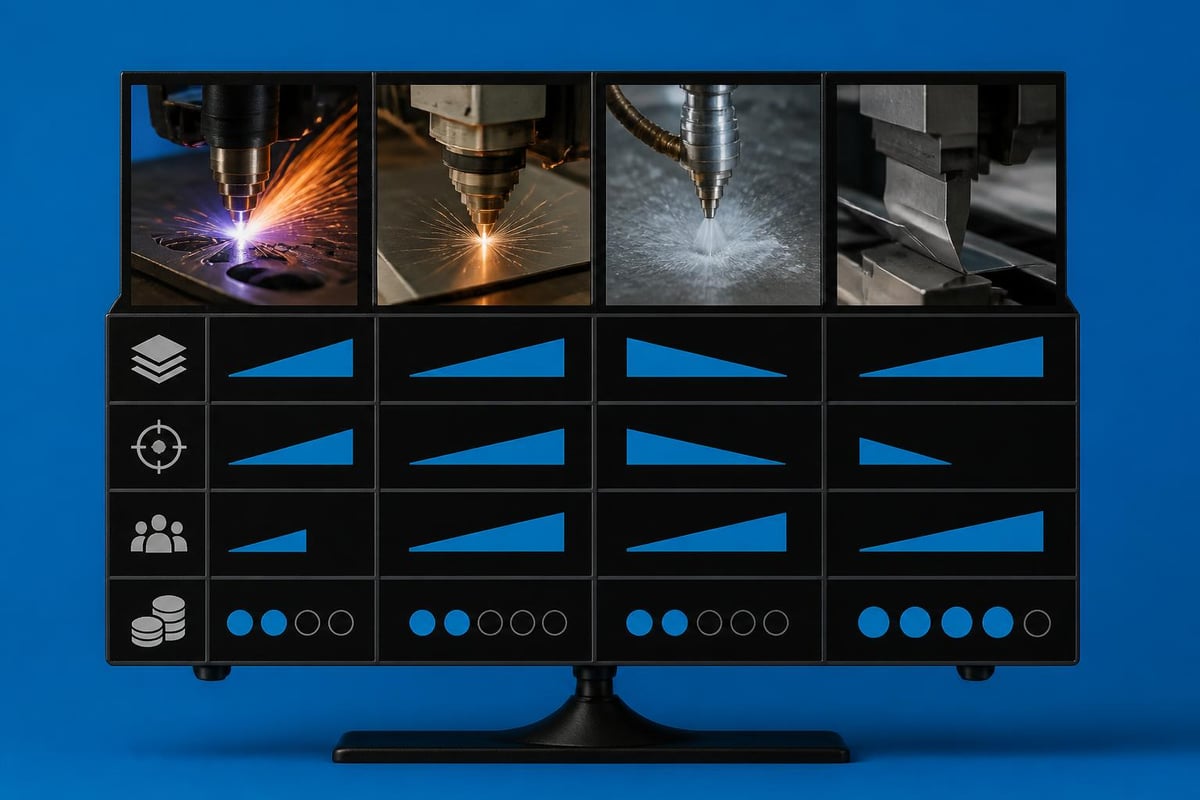
Plasma cutting delivers exceptional speed when working with conductive metals, making it ideal for high-volume production environments. This process generates an electrically conductive gas channel that reaches temperatures exceeding 30,000 degrees Fahrenheit, creating clean cuts through materials up to 6 inches thick.
Oxy-fuel cutting remains relevant for thick steel applications, particularly in structural steel fabrication projects requiring cuts through materials exceeding 8 inches. The process combines oxygen with fuel gases to create a chemical reaction that removes material along the cut line.
Laser cutting provides the highest precision among thermal methods, with tolerances reaching ±0.003 inches on thin materials. Key benefits include:
- Minimal heat-affected zones reducing material distortion
- Complex pattern capability without tooling changes
- Automated operation reducing labor requirements
- Clean edges often requiring no secondary finishing
Mechanical Cutting Applications
Shearing works best for straight-line cuts in sheet metal up to 1/4 inch thick, offering speed and repeatability for high-volume operations. Sawing techniques, including band saws and cold saws, excel at cutting structural shapes, pipe, and solid bar stock with precision and minimal material waste.
Water jet cutting eliminates heat entirely, making it perfect for materials sensitive to thermal stress or those requiring zero heat-affected zones. The process forces water mixed with abrasive particles through a narrow orifice at pressures reaching 90,000 PSI, cutting through virtually any material up to 12 inches thick.
Forming and Bending Techniques
Metal forming shapes material without removing mass, preserving structural integrity while creating desired geometries. Understanding forming capabilities and limitations ensures successful execution of custom metal fabrication projects.
Press Brake Operations
Press brakes use controlled force to bend sheet metal along predetermined lines, creating angles ranging from gentle curves to 180-degree folds. Modern CNC press brakes offer:
- Programmable bend sequences for complex parts
- Automatic back gauge positioning
- Force monitoring preventing material damage
- Tool libraries optimizing setup times
Material springback requires compensation during the bending process, with calculations accounting for material type, thickness, and bend radius. Experienced operators adjust tooling and force based on these variables to achieve specified tolerances.
Roll Forming and Tube Bending
Roll forming feeds sheet metal through successive pairs of rollers, gradually shaping material into consistent profiles. This continuous process produces large quantities of identical parts with excellent repeatability.
Tube and pipe bending techniques vary based on diameter, wall thickness, and required bend radius:
| Bending Method | Best Application | Typical Radius | Material Limit |
|---|---|---|---|
| Rotary Draw | Tight radius, precise angles | 1.5x diameter | 6" diameter |
| Compression | Larger tubes, gentle bends | 3x diameter | 12" diameter |
| Roll Bending | Large radius curves, rings | 5x diameter | Unlimited |
| Mandrel Bending | Thin wall, no collapse | 2x diameter | 4" diameter |
Welding Integration in Fabrication
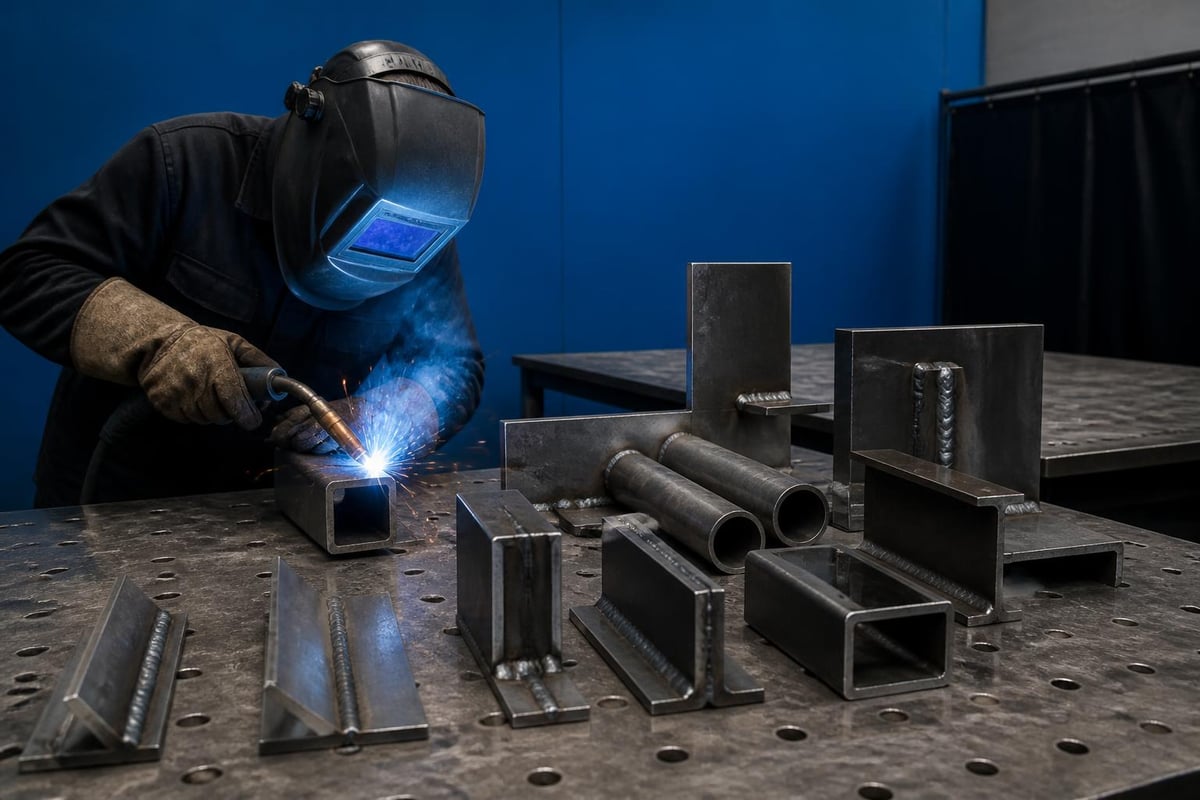
Welding serves as the primary joining method across metal fabrication techniques, with process selection depending on material composition, thickness, position, and quality requirements. The versatility of welding and fabrication services allows manufacturers to assemble complex structures meeting stringent specifications.
Common Welding Processes
MIG (Metal Inert Gas) welding offers excellent productivity for mild steel and aluminum applications, with semi-automatic operation supporting both shop and field installations. The continuous wire feed maintains consistent deposition rates, making it ideal for production environments.
TIG (Tungsten Inert Gas) welding delivers superior quality on thin materials and critical applications requiring X-ray quality welds. While slower than MIG, TIG provides exceptional control over heat input and filler material addition.
Stick welding remains the most versatile field welding option, functioning reliably in adverse conditions including wind, rain, and limited access situations. According to general overview of metal fabrication standards, stick welding continues to dominate pipeline, structural, and heavy equipment repair applications.
Advanced Welding Applications
Flux-cored arc welding (FCAW) combines MIG productivity with stick welding's tolerance for mill scale and contamination. The self-shielding variants eliminate external gas requirements, supporting truly portable welding operations throughout the Western United States.
Submerged arc welding automates high-deposition welding on thick materials, with the arc occurring beneath a blanket of granular flux. This process excels at welding longitudinal seams in pressure vessels, structural beams, and heavy fabrications requiring deep penetration.
Machining Operations in Fabrication
Precision machining removes material to achieve tight tolerances and specific surface finishes that forming and cutting alone cannot deliver. Integration of machining and fabrication capabilities allows complete component production within single facilities.
Conventional Machining Methods
Milling operations use rotating cutters to remove material, creating flat surfaces, slots, pockets, and complex three-dimensional contours. The versatility of milling makes it essential for fabricating mounting surfaces, clearance holes, and precision features on welded assemblies.
Turning processes rotate workpieces against stationary cutting tools, producing cylindrical features including shafts, bushings, and flanges. Engine lathes handle one-off custom work, while CNC lathes automate production of identical components with minimal operator intervention.
Drilling creates holes using rotating bits, with precision boring enlarging holes to exact diameters and surface finishes. These fundamental operations support assembly by creating bolt patterns, lubrication passages, and inspection ports.
CNC Machining Advantages
Computer numerical control transforms machining from manual craft to automated precision manufacturing. Key capabilities include:
- Five-axis machining accessing complex geometries in single setups
- Automatic tool changing supporting multiple operations unattended
- Probe-based verification ensuring dimensional accuracy
- Program libraries enabling rapid job changeovers
The integration of CAD/CAM software streamlines the path from design to finished component, with digital models driving machine movements directly. This digital workflow reduces errors, shortens lead times, and improves consistency across production runs.
Specialized Metal Fabrication Techniques
Beyond conventional methods, specialized metal fabrication techniques address unique requirements in commercial and industrial manufacturing applications. Understanding these advanced processes expands problem-solving capabilities for challenging projects.
Sheet Metal Fabrication
Various sheet metal fabrication techniques support the creation of enclosures, panels, ductwork, and architectural elements. Punching operations use dies to create holes, louvers, and formed features in sheet stock without generating chips or swarf.
Stamping forms three-dimensional shapes through single or progressive die operations, with production volumes justifying tooling investments. Deep drawing produces cylindrical or box-shaped components from flat blanks, transforming sheet metal into functional containers and housings.
Hemming and seaming join sheet metal edges, creating weathertight seals and finished edges without welding or fasteners. These techniques prove essential in HVAC ductwork, automotive components, and appliance manufacturing.
Additive Manufacturing Integration
Metal additive manufacturing complements traditional fabrication by producing complex geometries impossible through conventional methods. Research into large-scale metal additive techniques demonstrates growing capabilities for production-scale components.
Wire arc additive manufacturing (WAAM) deposits metal through welding processes, building large components layer by layer. This hybrid approach combines additive benefits with traditional machining, reducing material waste while maintaining precision on critical surfaces.
Powder bed fusion creates intricate internal passages, lattice structures, and organic shapes optimized through topology analysis. While primarily suited for smaller components, the technology enables consolidation of assemblies into single pieces, reducing part counts and potential failure points.
Surface Treatment and Finishing
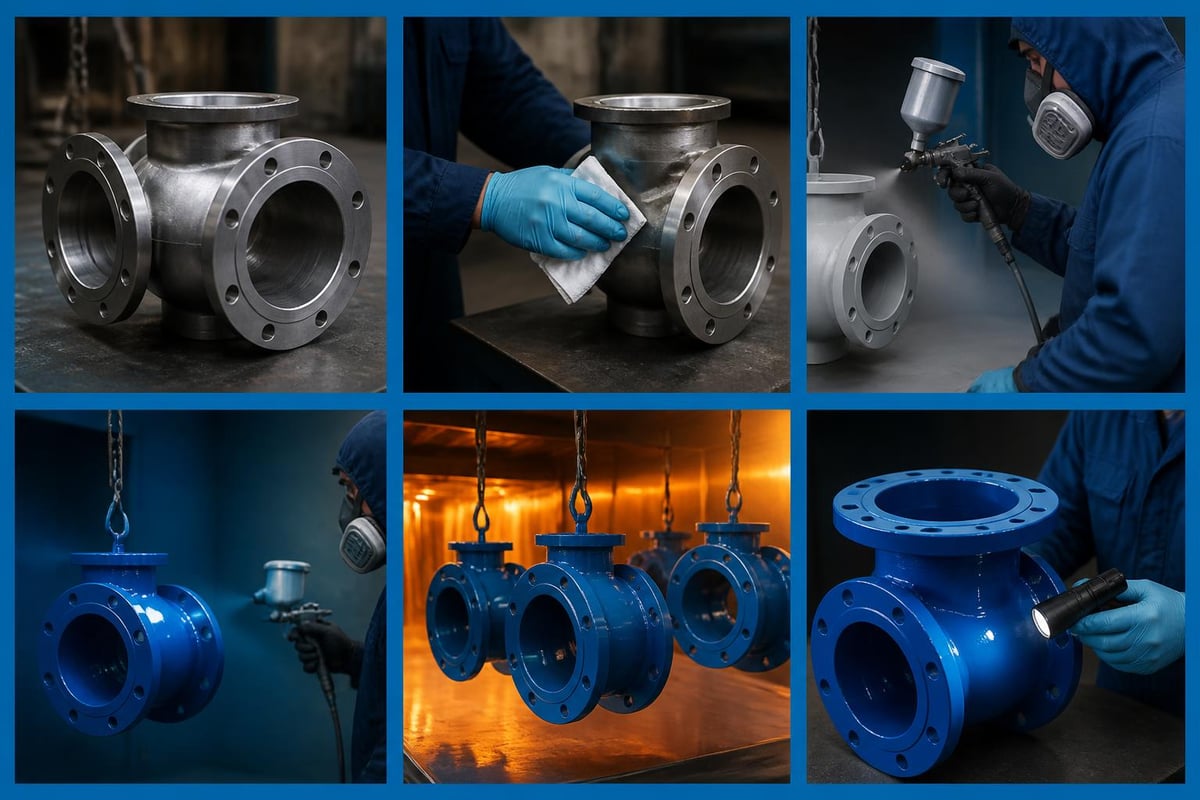
Surface preparation and coating application protect fabricated components from corrosion, wear, and environmental degradation while enhancing appearance and functionality. Proper finishing extends service life and maintains performance across demanding industrial applications.
Preparation Methods
Abrasive blasting removes mill scale, rust, and previous coatings while creating surface profiles that promote coating adhesion. Media selection varies based on substrate condition and desired surface finish:
- Steel grit for aggressive cleaning and profiling
- Aluminum oxide for general-purpose preparation
- Glass bead for cosmetic finishing without dimensional change
- Walnut shell for delicate surfaces requiring gentle treatment
Grinding and polishing achieve specific surface finishes ranging from 32 micro-inch roughness for general fabrication to mirror finishes below 8 micro-inch for sanitary or aesthetic applications. Belt grinding removes weld reinforcement and blends transitions, while disc grinding accesses tight areas and creates specific contours.
Protective Coatings
Powder coating applies electrostatically charged dry powder that melts and cures in ovens, creating durable, uniform finishes resistant to chipping, scratching, and fading. The process generates minimal waste and offers thousands of color options with various gloss levels and textures.
Galvanizing immerses steel in molten zinc, creating metallurgical bonds that protect against corrosion for decades even in harsh environments. Hot-dip galvanizing works well for structural components, while electro-galvanizing suits thinner materials requiring precise dimensional control.
Painting systems range from single-coat applications to multi-layer specifications including primers, intermediates, and topcoats. Proper surface preparation and environmental controls during application ensure coating performance meets or exceeds manufacturer specifications.
Quality Control and Inspection
Maintaining dimensional accuracy and structural integrity requires comprehensive quality control throughout fabrication processes. Inspection techniques verify conformance to specifications, identify defects before assembly, and document compliance with industry standards.
Dimensional Verification
Precision measuring instruments confirm that fabricated components meet drawing tolerances and fit requirements. Common tools include:
- Calipers and micrometers for basic dimensional checks
- Coordinate measuring machines (CMM) for complex geometry verification
- Laser trackers for large structure alignment
- Optical comparators projecting part profiles for comparison
Gauge blocks and fixture plates establish reference surfaces and verify measuring equipment calibration. Regular calibration of inspection tools ensures measurement reliability and traceability to national standards.
Non-Destructive Testing
Visual inspection identifies surface discontinuities, weld defects, and finishing issues before components enter service. Trained inspectors recognize indications requiring further investigation through advanced testing methods.
Magnetic particle testing detects surface and near-surface cracks in ferromagnetic materials, with fluorescent particles under UV light revealing minute defects invisible to naked eye inspection. Liquid penetrant testing performs similar functions on non-magnetic materials including aluminum and stainless steel.
Ultrasonic testing uses high-frequency sound waves to detect internal discontinuities, measure wall thickness, and verify weld penetration. Radiographic testing creates permanent records of internal weld quality, though radiation safety requirements limit its use to certified facilities with proper shielding.
Material Selection Considerations
Choosing appropriate materials optimizes fabrication efficiency while ensuring finished components meet performance requirements. Understanding material properties, availability, and fabrication characteristics guides selection for manufacturing projects across diverse industries.
Common Fabrication Materials
Carbon steel dominates structural and general fabrication due to favorable strength-to-cost ratios, excellent weldability, and widespread availability. Grades range from A36 for general purpose to higher-strength alloys for demanding applications.
| Material | Typical Uses | Fabrication Characteristics | Relative Cost |
|---|---|---|---|
| A36 Steel | Structure, brackets, frames | Excellent formability, easy welding | Low |
| 304 Stainless | Food equipment, chemical processing | Good corrosion resistance, difficult forming | Medium-High |
| 6061 Aluminum | Lightweight structures, aerospace | Excellent machinability, TIG welding preferred | Medium |
| 4140 Alloy Steel | Shafts, gears, high-stress parts | Heat treatable, good strength | Medium |
Stainless steel varieties offer corrosion resistance for chemical processing, food production, and marine environments. Austenitic grades like 304 and 316 maintain ductility at cryogenic temperatures while resisting oxidation at elevated temperatures.
Special Alloy Applications
Aluminum alloys reduce weight while maintaining adequate strength for transportation equipment, aerospace components, and portable structures. The 6000 series offers good forming and welding characteristics, while 7000 series provides maximum strength for critical applications.
Specialty metals including titanium, Inconel, and Monel address extreme conditions beyond carbon steel capabilities. These materials require specialized welding procedures, cutting parameters, and handling protocols to achieve satisfactory results. Processing difficulties and material costs justify their use only where standard materials prove inadequate.
Automation and Technology Integration
Modern fabrication increasingly incorporates automation, robotics, and digital technologies that improve consistency, reduce labor requirements, and expand capabilities. Understanding these advances helps manufacturers remain competitive while meeting rising quality expectations.
Robotic Welding Systems
Automated welding cells perform repetitive operations with consistent quality, freeing skilled welders for complex field installations and custom work. Six-axis robots access difficult joint configurations while maintaining precise torch angles and travel speeds.
Vision systems guide robots to exact weld locations, compensating for part positioning variations and fixture tolerances. Adaptive fill algorithms adjust parameters in real-time, optimizing deposition for gap conditions and joint geometry.
Through-arc tracking maintains consistent contact-tip-to-work distances despite workpiece irregularities, ensuring uniform penetration and appearance. Seam tracking follows joint paths automatically, reducing programming time for new parts.
Digital Fabrication Workflows
CAD/CAM integration eliminates manual programming, translating three-dimensional models directly into machine tool paths. Nesting software optimizes material utilization, arranging parts to minimize scrap while maintaining grain direction requirements.
Manufacturing execution systems track jobs through production, recording actual times, material consumption, and quality metrics. This data supports accurate quoting, identifies bottlenecks, and documents compliance with customer specifications.
Augmented reality applications project assembly instructions, weld symbols, and inspection criteria directly onto workpieces, reducing errors and training time. Digital twins simulate fabrication sequences before physical production begins, identifying interference issues and optimizing process sequences.
Field Fabrication and On-Site Services
Many projects require fabrication at installation locations due to component size, transportation limitations, or integration with existing structures. Field machining and portable welding capabilities extend shop-quality services to remote sites throughout the Western United States.
Mobile Equipment Capabilities
Portable machining tools perform precision operations on installed equipment, eliminating costly disassembly and transportation. Line boring machines restore bearing housings to specification, while portable milling units machine flanges and mounting surfaces in place.
Hydraulic torque tools provide accurate bolt tensioning on large assemblies, ensuring proper load distribution and sealing. Portable coordinate measuring equipment verifies alignment and geometry on structures too large for conventional inspection fixtures.
Environmental Challenges
Field operations contend with temperature extremes, precipitation, and contamination requiring adaptive procedures and protective measures. Preheat requirements increase in cold weather, while wind necessitates enhanced shielding for gas-shielded welding processes.
Safety considerations intensify in field environments with confined spaces, elevated work platforms, and proximity to operating equipment. Comprehensive job hazard analyses, proper fall protection, and coordination with facility operations prevent incidents and ensure efficient execution.
Successfully executing modern metal fabrication techniques requires deep expertise across cutting, forming, welding, and machining disciplines combined with understanding of materials, quality control, and project management. Whether your operation needs comprehensive shop services or field capabilities to support remote installations throughout the aggregate, recycling, or oil and gas sectors, partnering with experienced professionals ensures project success. LTJ Industrial Services delivers the full spectrum of fabrication, welding, and machining services with the expertise and equipment to handle projects of any scale across the Western United States.