
The metal fabrication process transforms raw metal materials into finished products through a series of specialized techniques including cutting, bending, welding, and assembly. For industries across the Western United States, from oil and gas operations to aggregate processing facilities, understanding these processes is essential for maintaining efficient production and ensuring high-quality results. This comprehensive guide explores every aspect of metal fabrication, providing valuable insights for businesses seeking to optimize their manufacturing operations.
Understanding the Metal Fabrication Process Fundamentals
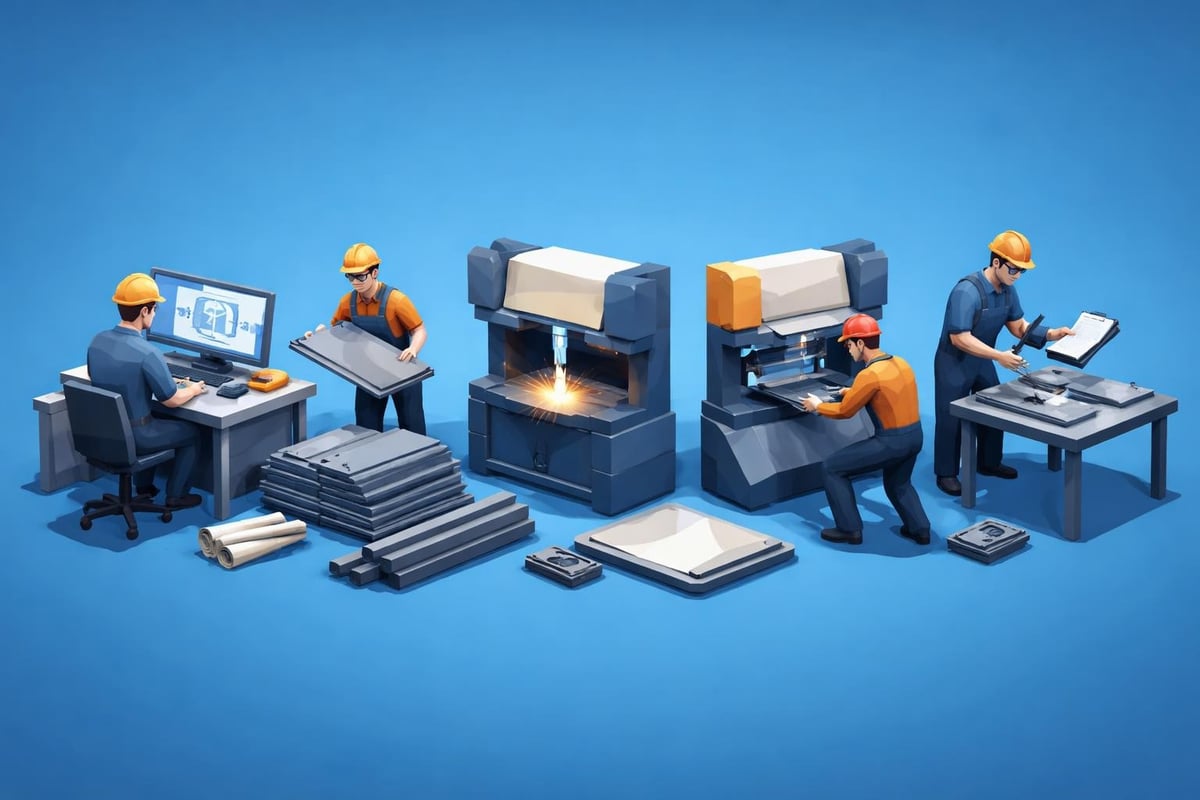
The metal fabrication process begins with careful planning and design considerations that determine the success of the final product. Engineering teams must evaluate material properties, structural requirements, and application-specific demands before selecting appropriate fabrication methods. This initial phase includes detailed CAD drawings, material specifications, and process planning that guides every subsequent step.
Modern fabrication facilities integrate multiple techniques to achieve precise results. The workflow typically follows a structured progression:
- Material selection and procurement based on strength requirements
- Design verification and engineering approval
- Cutting and material preparation using various methods
- Forming and shaping through mechanical processes
- Joining components through welding or mechanical fastening
- Surface finishing and quality control inspection
Material preparation represents a critical foundation for successful fabrication outcomes. Raw metals arrive in various forms including sheets, plates, bars, and structural shapes, each requiring specific handling procedures. Proper storage prevents contamination and corrosion that could compromise the metal fabrication process quality standards.
Essential Cutting Techniques in Metal Fabrication
Cutting operations initiate the transformation of raw materials into component parts with precise dimensions. Mechanical cutting methods include shearing, sawing, and blanking, which provide cost-effective solutions for straight cuts and standard shapes. These traditional approaches remain valuable for high-volume production runs where consistency matters more than complex geometries.
Thermal Cutting Technologies
Advanced thermal cutting methods offer superior versatility for intricate patterns and thick materials. Plasma cutting delivers excellent speed and precision for conductive metals, making it ideal for stainless steel and aluminum applications. The process uses ionized gas to create temperatures exceeding 30,000 degrees Fahrenheit, melting through metal with remarkable accuracy.
Laser cutting represents the premium option for applications demanding the tightest tolerances. This technology produces minimal heat-affected zones and exceptional edge quality, reducing secondary finishing requirements. Industries requiring complex geometries and fine details increasingly rely on laser systems for their metal fabrication process needs.
Oxy-fuel cutting remains relevant for heavy plate applications where material thickness exceeds the practical limits of other methods. This economical approach handles steel plates several inches thick, serving construction and heavy equipment sectors effectively.
| Cutting Method | Thickness Range | Precision Level | Best Applications |
|---|---|---|---|
| Plasma Cutting | 0.25" – 2" | ±0.030" | Stainless steel, aluminum |
| Laser Cutting | 0.01" – 1" | ±0.005" | Complex geometries, fine details |
| Waterjet Cutting | 0.01" – 6" | ±0.005" | Heat-sensitive materials |
| Oxy-Fuel Cutting | 0.5" – 12" | ±0.060" | Heavy plate steel |
Understanding fundamental metal fabrication methods helps businesses select the most appropriate cutting technique for specific project requirements.
Forming and Bending Operations
Metal forming reshapes materials without removing material, utilizing mechanical force to achieve desired configurations. Press brake operations represent the most common forming method, creating precise bends along linear axes. Operators calculate bend allowances and spring-back factors to ensure final dimensions match engineering specifications.
Roll forming produces consistent curved sections for applications requiring cylindrical or conical shapes. This continuous process feeds sheet metal through progressive roller stations, gradually forming the material into the target profile. Structural components for industrial equipment often utilize roll forming for economical production of long, uniform sections.
Advanced Forming Techniques
Stamping operations transform flat sheets into three-dimensional parts through dies and presses. This high-speed process suits mass production environments where identical components are needed in large quantities. The automotive and appliance industries extensively employ stamping for chassis components and enclosures.
Hydroforming applies hydraulic pressure to shape metal into complex forms that would be difficult or impossible with conventional dies. This specialized technique produces lightweight, high-strength components with excellent structural integrity. Aerospace and high-performance applications benefit from hydroforming's unique capabilities.
Spinning operations rotate metal blanks against forming tools, creating symmetrical parts like tanks, vessels, and architectural features. The metal fabrication process incorporates spinning for custom one-off pieces and specialized applications where tooling costs must remain reasonable.
Welding and Joining Methods
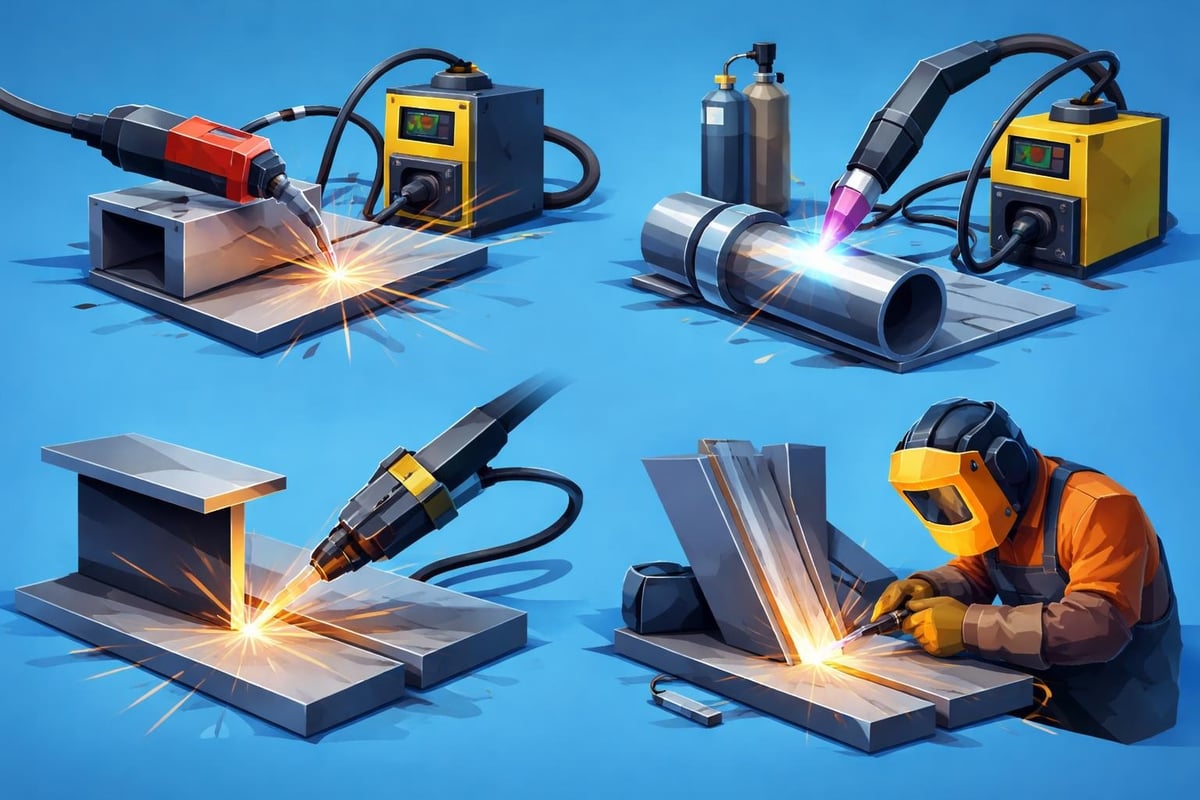
Welding creates permanent bonds between metal components, forming the backbone of structural fabrication. MIG welding (Metal Inert Gas) provides versatile, efficient joining for a wide range of materials and thicknesses. The continuous wire feed and shielding gas combination produces clean, strong welds suitable for most industrial applications.
TIG welding (Tungsten Inert Gas) delivers superior precision and quality for critical applications demanding the highest standards. This process excels with thin materials, exotic alloys, and situations where appearance matters. While slower than MIG welding, TIG produces exceptional results on stainless steel, aluminum, and specialty metals.
Stick welding remains valuable for field work and challenging environmental conditions. The robust, portable equipment handles windy conditions and less-than-ideal surface preparation, making it indispensable for on-site repairs and maintenance. Fabrication in welding requires skilled technicians who understand material properties and joint design principles.
Mechanical Fastening Alternatives
Bolted connections provide disassembly options for maintenance access and modular designs. Structural bolting follows specific torque requirements and patterns to ensure load distribution and joint integrity. Industries like aggregate processing and recycling equipment rely on bolted assemblies for serviceability.
Riveting creates permanent mechanical joints without heat input, preserving material properties in heat-sensitive applications. Blind rivets enable single-sided access installation, valuable for enclosed structures and limited-access locations.
Adhesive bonding complements mechanical fasteners in applications requiring vibration dampening, electrical insulation, or smooth exterior surfaces. Modern structural adhesives achieve remarkable strength while distributing loads across broader areas than point fasteners.
Machining Operations in Metal Fabrication
Precision machining refines fabricated components to exact specifications, removing material through controlled cutting operations. CNC milling centers create complex geometries with multi-axis capabilities, producing intricate features that forming operations cannot achieve. These computer-controlled machines ensure repeatability across production runs.
Turning operations rotate workpieces against cutting tools, generating cylindrical surfaces, threads, and precision diameters. CNC lathes handle everything from small shafts to large rollers, maintaining tight tolerances essential for rotating equipment. The manufacturing and machining expertise required for these operations demands experienced technicians and well-maintained equipment.
Drilling, boring, and tapping create holes and threaded features for assembly purposes. Precision hole placement ensures proper alignment of mating components, critical for equipment that must be disassembled and reassembled during maintenance cycles. Industries throughout the Western United States depend on accurate machining for reliable equipment performance.
Surface Grinding and Finishing
Grinding operations achieve the finest surface finishes and tightest dimensional tolerances. Surface grinders create flat reference surfaces essential for precision assemblies and sealing applications. Cylindrical grinding produces bearing surfaces and precision shafts requiring minimal runout.
Honing and lapping represent finishing processes that polish surfaces to mirror-quality smoothness. These specialized techniques serve hydraulic cylinders, valve seats, and other applications where surface finish directly impacts performance and longevity.
Quality Control and Inspection Procedures
Dimensional inspection verifies that fabricated components meet engineering specifications before assembly or delivery. Coordinate measuring machines (CMM) probe complex geometries with micron-level accuracy, documenting compliance with design intent. This non-destructive testing ensures quality without damaging finished parts.
Visual inspection identifies surface defects, weld quality issues, and finishing problems that could affect performance or appearance. Certified welding inspectors examine joints for proper penetration, uniform bead appearance, and absence of cracks or porosity. The metal fabrication process demands rigorous inspection protocols to maintain quality standards.
Non-destructive testing methods include:
- Ultrasonic testing for internal weld defects and material flaws
- Magnetic particle inspection revealing surface and near-surface cracks
- Dye penetrant testing highlighting surface discontinuities
- Radiographic examination documenting internal weld quality
- Pressure testing verifying vessel and piping integrity
Material certification and traceability documentation accompany critical applications like pressure vessels and structural components. These records prove material composition, heat treatment, and testing compliance, essential for regulated industries.
| Inspection Method | Detection Capability | Typical Applications | Limitations |
|---|---|---|---|
| Ultrasonic | Internal defects | Welds, thick materials | Requires skilled operators |
| Magnetic Particle | Surface/subsurface cracks | Ferromagnetic materials only | Limited to magnetic metals |
| Dye Penetrant | Surface breaking defects | All non-porous materials | Surface defects only |
| Radiography | Internal discontinuities | Critical welds, castings | Radiation safety requirements |
Understanding an overview of metal fabrication processes helps establish comprehensive quality control programs that protect product integrity and customer satisfaction.
Material Selection Considerations
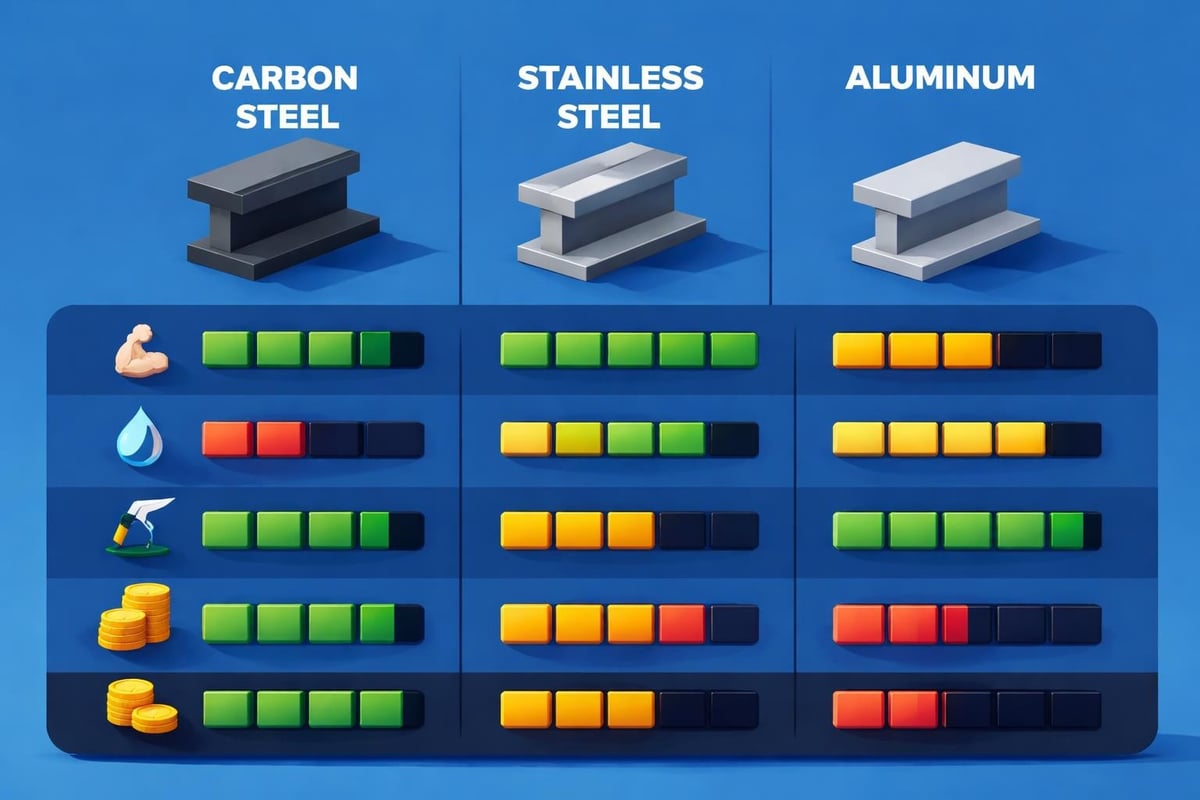
Material properties significantly influence metal fabrication process selection and final product performance. Carbon steel offers excellent strength-to-cost ratios for general structural applications, representing the most common fabrication material across industries. Its weldability and machinability make it versatile for diverse projects.
Stainless steel resists corrosion in harsh environments, essential for food processing equipment, chemical handling systems, and outdoor installations. The material's higher cost and work-hardening characteristics require specialized tooling and techniques, but deliver superior longevity in corrosive conditions.
Aluminum provides lightweight strength ideal for applications where weight reduction matters. The material's thermal conductivity and corrosion resistance suit heat exchangers, architectural applications, and transportation equipment. Aluminum welding requires different procedures than steel, demanding specialized skills and equipment.
Specialty Alloys and Materials
High-strength alloys serve demanding applications in oil and gas, mining, and heavy equipment sectors. Chromoly steel combines strength with weldability, popular for pressure vessels and structural components subjected to extreme loads. Proper heat treatment ensures these materials achieve their designed properties.
Exotic materials including titanium, Inconel, and specialized stainless grades handle extreme temperatures, corrosive chemicals, and high-stress environments. While expensive, these alloys prove economical when lifecycle costs and reliability requirements are considered.
Material availability and lead times influence project planning and metal fabrication process scheduling. Local suppliers provide faster delivery for common materials, while specialty alloys may require extended procurement periods that affect project timelines.
Surface Finishing and Coating Applications
Surface preparation removes mill scale, rust, and contaminants that interfere with coating adhesion and final appearance. Abrasive blasting creates clean, profiled surfaces ideal for paint and coating systems. The process removes surface irregularities while providing mechanical anchor patterns for superior coating performance.
Grinding and polishing produce smooth, attractive finishes for architectural and food-grade applications. Stainless steel polishing ranges from standard mill finishes through mirror-bright #8 finishes, each serving specific aesthetic and functional requirements. These mechanical finishing processes enhance corrosion resistance while improving cleanability.
Protective Coating Systems
Powder coating delivers durable, attractive finishes resistant to chipping, scratching, and fading. The electrostatic application process produces uniform coverage with minimal waste, making it environmentally friendly and economical. Color options and texture variations accommodate diverse design requirements.
Galvanizing protects steel from corrosion through sacrificial zinc coatings. Hot-dip galvanizing creates thick, long-lasting protection ideal for outdoor structures and equipment exposed to weather. The process requires consideration during design phases, as coating thickness affects tolerances and threaded connections.
Paint systems range from single-coat applications through multi-layer industrial coatings engineered for specific environments. Epoxy primers provide excellent adhesion and corrosion resistance, while urethane topcoats deliver weather resistance and color retention. Proper surface preparation and application procedures ensure coating systems achieve their designed service life.
Emerging Technologies and Industry Trends
Automation technologies transform metal fabrication process efficiency and precision. Robotic welding cells maintain consistent quality while increasing production speeds, particularly valuable for repetitive operations and hazardous environments. These systems operate continuously, maximizing facility utilization and reducing labor costs.
Additive manufacturing complements traditional fabrication methods, enabling complex geometries impossible with conventional techniques. 3D metal printing creates intricate internal passages, optimized structural lattices, and consolidated assemblies that eliminate multiple components. While material costs remain high, the technology suits low-volume, high-complexity applications.
Advanced software integration connects design, manufacturing, and quality systems. Digital twins simulate fabrication processes before physical work begins, identifying potential issues and optimizing parameters. This virtual approach reduces material waste and shortens development cycles. Exploring the future of metal fabrication trends and insights helps businesses prepare for evolving industry standards.
Sustainable Practices and Environmental Considerations
Energy efficiency initiatives reduce operational costs while minimizing environmental impact. Modern cutting equipment optimizes power consumption, and heat recovery systems capture waste energy for facility heating. These improvements align with corporate sustainability goals while enhancing profitability.
Material recycling programs divert scrap metal from landfills, generating revenue from remnants and cutoffs. Lean manufacturing principles minimize waste generation through optimized nesting, just-in-time material delivery, and process standardization. Industries including recycling and aggregate processing benefit from fabricators who prioritize sustainable operations.
Water conservation technologies reduce consumption in cooling systems, waterjet cutting, and cleaning operations. Closed-loop systems recycle process water, reducing municipal supply demands and wastewater discharge. Environmental stewardship increasingly influences customer selection of fabrication partners.
Industrial Applications and Industry-Specific Requirements
Oil and gas sector fabrication demands compliance with stringent codes and standards including ASME, API, and AWS certifications. Pressure vessels, piping systems, and structural components must withstand extreme pressures, temperatures, and corrosive environments. The metal fabrication process for these applications requires documented procedures, qualified welders, and rigorous inspection protocols. Companies specializing in oil and gas fabrication maintain certifications and expertise specific to industry requirements.
Aggregate and mining equipment endures severe abrasion, impact loads, and outdoor exposure. Fabricators serving these sectors select wear-resistant materials and employ hardening techniques that extend service life. Modular designs facilitate field repairs and component replacement, minimizing downtime for operations running continuous schedules.
Recycling industry equipment processes diverse materials ranging from lightweight aluminum to heavy steel scrap. Custom fabrication creates hoppers, conveyors, and sorting systems tailored to specific material streams and processing volumes. Durability and maintainability drive design decisions in this demanding sector.
Manufacturing Support Services
Field fabrication and repair services extend fabrication capabilities beyond shop environments. Mobile welding units, portable machining equipment, and on-site assembly teams minimize transportation costs and equipment downtime. Industries throughout the Western United States value fabricators offering comprehensive field support.
Preventive maintenance programs identify wear patterns and potential failures before catastrophic breakdowns occur. Equipment refurbishment restores aging machinery to like-new condition, often at fractions of replacement costs. These services maximize capital equipment investments while maintaining production continuity.
Emergency response capabilities provide critical support during unplanned shutdowns. Experienced fabrication teams mobilize quickly, diagnose problems accurately, and implement effective repairs that restore operations promptly. This responsiveness proves invaluable for industries where downtime costs escalate rapidly.
Project Planning and Cost Optimization
Design for manufacturability principles reduce fabrication costs while improving quality and delivery times. Early collaboration between engineers and fabricators identifies opportunities for material optimization, process simplification, and assembly efficiency. These partnerships produce better outcomes than designs developed in isolation.
Material utilization directly impacts project economics. Nesting software optimizes part layouts on raw material sheets, minimizing scrap and reducing material costs. Strategic purchasing leverages volume discounts and supplier relationships, further controlling expenses.
Make-versus-buy decisions require comprehensive analysis of in-house capabilities, capacity availability, and external fabricator expertise. Strategic partnerships with specialized fabricators provide access to equipment and skills beyond internal resources. For complex projects requiring custom metal fabrication expertise, partnering with experienced providers often delivers superior results.
Value Engineering Approaches
Alternative material evaluation may identify lower-cost options meeting performance requirements. Substituting commercially available sizes for custom dimensions reduces material costs and lead times. These modifications require engineering approval ensuring specifications remain satisfied.
Process sequence optimization reduces handling, minimizes setups, and improves workflow efficiency. Batch processing similar components amortizes setup costs across multiple parts, particularly valuable for CNC machining operations. Production planning balances efficiency gains against inventory carrying costs.
Tolerance analysis identifies dimensions requiring tight control versus those accepting broader ranges. Relaxing non-critical tolerances reduces machining time and inspection requirements without compromising functionality. This pragmatic approach controls costs while maintaining quality standards where it matters most.
Safety Protocols and Workforce Development
Workplace safety remains paramount in metal fabrication environments involving heavy equipment, high temperatures, and various hazards. Comprehensive training programs ensure workers understand proper equipment operation, personal protective equipment requirements, and emergency procedures. Regular safety audits identify potential risks before incidents occur.
Welding operations generate fumes, intense light, and heat exposure requiring specific protective measures. Ventilation systems remove harmful fumes, while appropriate filters and respiratory equipment protect welders from long-term health effects. Arc flash protection and fire prevention protocols minimize injury risks.
Machine guarding prevents contact with moving parts, rotating cutters, and pinch points. Lockout-tagout procedures ensure equipment cannot operate during maintenance activities, protecting technicians from unexpected startups. A strong safety culture values worker wellbeing above production pressures.
Skilled Workforce Requirements
Certified welders demonstrate proficiency through testing to AWS, ASME, or industry-specific standards. Continuing education maintains certifications while introducing new techniques and materials. Fabrication shops invest in workforce development recognizing that skilled craftspeople drive quality outcomes.
CNC programmers and machinists require technical training combining theoretical knowledge with hands-on experience. Apprenticeship programs develop talent pipelines ensuring adequate skilled workers for future needs. Industries across the Western United States compete for qualified personnel, making workforce development essential.
Quality inspectors need specialized training in measurement techniques, inspection procedures, and documentation requirements. Certification programs through organizations like AWS and ASNT validate inspector competencies, ensuring reliable quality verification throughout the metal fabrication process.
Documentation and Compliance Requirements
Engineering drawings communicate design intent through standardized symbols, dimensions, and notes. Fabricators interpret these documents to produce components matching specifications. Drawing revisions must be controlled and distributed systematically, preventing obsolete information from causing manufacturing errors.
Welding procedure specifications (WPS) document qualified welding parameters for specific material and joint combinations. These controlled documents ensure welders follow tested procedures producing reliable, code-compliant welds. Procedure qualification records (PQR) provide test data supporting WPS validity.
Material certifications trace raw materials to specific heats and manufacturing lots. Mill test reports document chemical composition, mechanical properties, and heat treatment details. Critical applications require this documentation proving materials meet specification requirements. Understanding comprehensive metal fabrication guides helps establish robust documentation systems.
Quality Management Systems
ISO 9001 certification demonstrates commitment to quality management and continuous improvement. Documented procedures standardize operations, while internal audits verify compliance. Customer confidence increases when fabricators maintain recognized quality systems.
Non-conformance reporting captures deviations from specifications, enabling root cause analysis and corrective action. Continuous improvement programs utilize this data to refine processes and prevent recurrence. Quality metrics track performance trends, identifying opportunities for enhancement.
Customer-specific requirements may exceed standard industry practices. Contract review processes ensure capabilities match project demands before commitment. Clear communication regarding specifications, delivery schedules, and inspection criteria prevents misunderstandings affecting project success.
The metal fabrication process encompasses diverse techniques, materials, and applications serving critical industries throughout the Western United States. Success requires technical expertise, quality-focused operations, and comprehensive capabilities spanning design through delivery. Whether your project involves pressure vessels for oil and gas operations, heavy-duty equipment for aggregate processing, or custom assemblies for manufacturing facilities, partnering with experienced professionals ensures optimal results. LTJ Industrial Services delivers comprehensive metal fabrication, welding, and machining solutions backed by decades of industry experience, serving commercial and industrial clients across the region with shop and field services designed to keep your operations running efficiently.