
Metal custom fabrication represents the cornerstone of modern industrial manufacturing, transforming raw materials into precisely engineered components that power countless industries. From oil and gas operations to recycling facilities and aggregate production, custom fabrication services deliver tailored solutions that meet exact specifications and rigorous performance standards. As manufacturing demands become increasingly complex in 2026, understanding the processes, capabilities, and applications of custom metal fabrication has never been more critical for businesses seeking competitive advantages and operational excellence.
Understanding Metal Custom Fabrication Processes
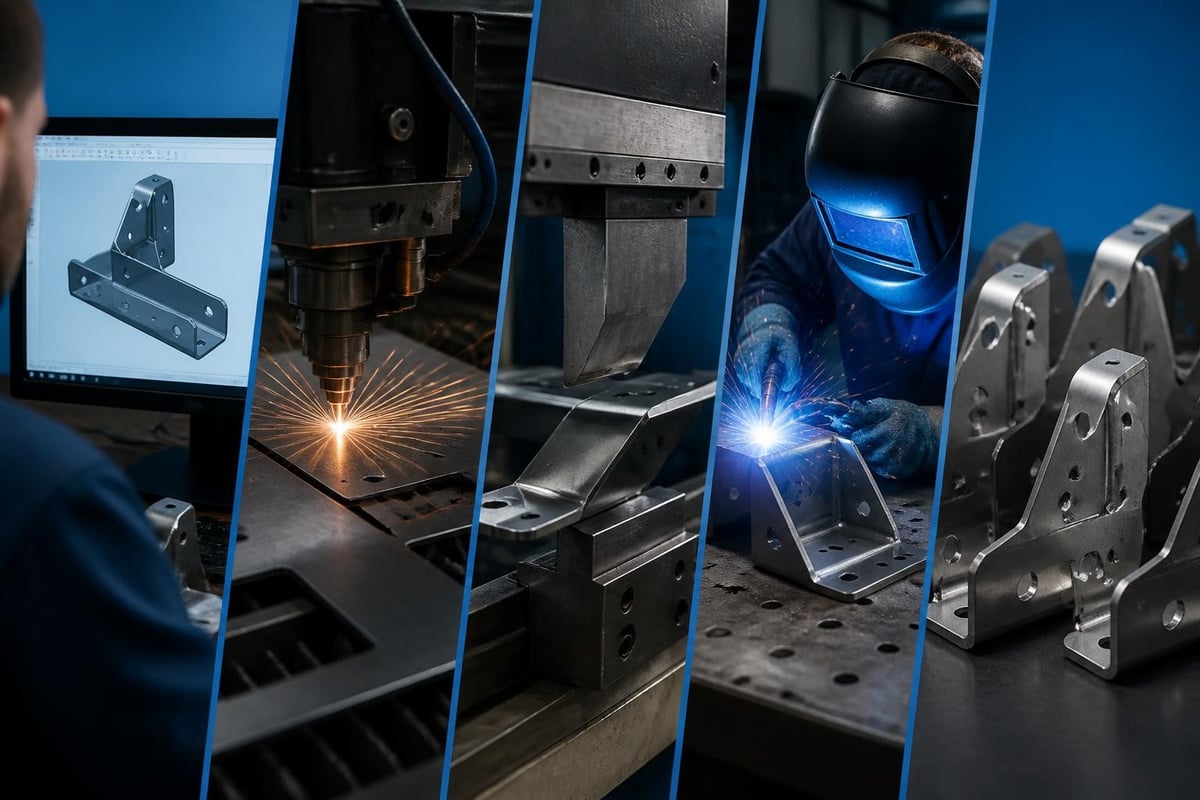
Metal custom fabrication encompasses a diverse range of manufacturing techniques that convert raw metal stock into finished products designed for specific applications. The process begins with detailed engineering specifications and progresses through multiple stages of material transformation.
Primary fabrication methods include:
- Cutting and shearing operations using plasma, laser, or waterjet technology
- Forming and bending to create precise angles and curves
- Welding and joining to assemble complex structures
- Machining for tight tolerances and surface finishes
- Surface treatment including powder coating and sandblasting
The selection of fabrication techniques depends on material properties, project requirements, and end-use applications. Industrial facilities requiring custom metal fabrication often need multiple processes integrated into a comprehensive workflow that ensures dimensional accuracy and structural integrity.
Material Selection and Specifications
Choosing appropriate materials forms the foundation of successful metal custom fabrication projects. Different metals and alloys offer distinct properties that influence performance, durability, and cost-effectiveness.
| Material Type | Primary Applications | Key Advantages |
|---|---|---|
| Carbon Steel | Structural components, frames | High strength, cost-effective, weldable |
| Stainless Steel | Corrosion-resistant parts, food processing | Durability, hygiene, longevity |
| Aluminum | Lightweight structures, transportation | Low density, corrosion resistance |
| Alloy Steel | Heavy machinery, pressure vessels | Enhanced mechanical properties, heat treatment response |
Recent advances in metal alloy fabrication have expanded the possibilities for creating components with specialized properties. Understanding material behavior during fabrication processes ensures optimal results and prevents costly failures in demanding environments.
Material thickness, grade specifications, and certification requirements must align with industry standards and application demands. The aggregate and recycling sectors particularly benefit from materials engineered to withstand abrasive conditions and continuous operational stress.
Advanced Welding Techniques in Custom Fabrication
Welding serves as the primary joining method in metal custom fabrication, creating permanent bonds that maintain structural integrity under extreme conditions. Professional welding services employ multiple techniques tailored to specific materials and applications.
Common Welding Processes
MIG (Metal Inert Gas) welding provides efficient joining for carbon steel and aluminum fabrications. The process delivers consistent results for both thin-gauge materials and thick structural components, making it versatile for diverse industrial applications.
TIG (Tungsten Inert Gas) welding offers superior control and precision for stainless steel and exotic alloys. This process produces clean, high-quality welds essential for pressure vessels, food processing equipment, and critical structural elements.
Stick welding remains valuable for field applications and outdoor environments where portability and versatility outweigh other considerations. This robust process handles contaminated materials and variable conditions effectively.
Key welding considerations include:
- Joint design and preparation requirements
- Heat input management to prevent distortion
- Filler material compatibility with base metals
- Post-weld treatment and inspection protocols
- Environmental factors affecting weld quality
Advanced hybrid manufacturing strategies are expanding the capabilities of traditional welding by integrating additive processes with conventional joining techniques, creating new possibilities for complex geometries and material combinations.
Precision Machining and Finishing Operations
Machining transforms fabricated components into finished parts meeting exact dimensional tolerances and surface requirements. Modern machining services utilize CNC (Computer Numerical Control) equipment that delivers repeatability and precision impossible with manual methods.
Milling operations remove material to create flat surfaces, pockets, and complex contours. Multi-axis CNC mills handle intricate geometries in a single setup, reducing handling time and maintaining tight tolerances across multiple features.
Turning processes generate cylindrical features including shafts, bores, and threaded connections. CNC lathes produce consistent results across production runs while maintaining concentricity and surface finish specifications.
Drilling and boring operations create holes with precise diameters and depths. Advanced tooling and rigid machine construction ensure accuracy even in difficult-to-machine materials commonly found in oil and gas applications.
Surface Treatment and Protection
Surface finishing protects fabricated components from corrosion, wear, and environmental degradation while enhancing appearance and performance characteristics.
| Treatment Method | Purpose | Typical Applications |
|---|---|---|
| Powder Coating | Corrosion protection, aesthetics | Outdoor equipment, architectural elements |
| Sandblasting | Surface preparation, cleaning | Pre-coating treatment, rust removal |
| Galvanizing | Long-term corrosion resistance | Structural steel, outdoor installations |
| Anodizing | Aluminum protection, color | Decorative components, wear surfaces |
Research into improved post-processing treatments continues advancing surface quality outcomes, particularly for components fabricated using emerging technologies that require specialized finishing approaches.
Applications Across Industrial Sectors
Metal custom fabrication serves critical functions across diverse industries, each with unique requirements and performance criteria. Understanding sector-specific needs ensures fabricated components deliver optimal performance throughout their service life.
Oil and Gas Industry Requirements
The energy sector demands fabrication capabilities that meet stringent safety standards and performance specifications. Components must withstand high pressures, corrosive environments, and temperature extremes while maintaining structural integrity.
Pressure vessels, process piping, and support structures require certified welding procedures and material traceability. Specialized oil and gas fabrication services understand these regulatory requirements and quality assurance protocols.
Critical considerations include:
- API (American Petroleum Institute) compliance
- Non-destructive testing and inspection
- Material certification documentation
- Emergency repair and modification capabilities
- Field fabrication for on-site installations
Manufacturing and Processing Equipment
Industrial manufacturing facilities require custom fabrication for production equipment, material handling systems, and processing machinery. These components must integrate seamlessly with existing operations while meeting production efficiency targets.
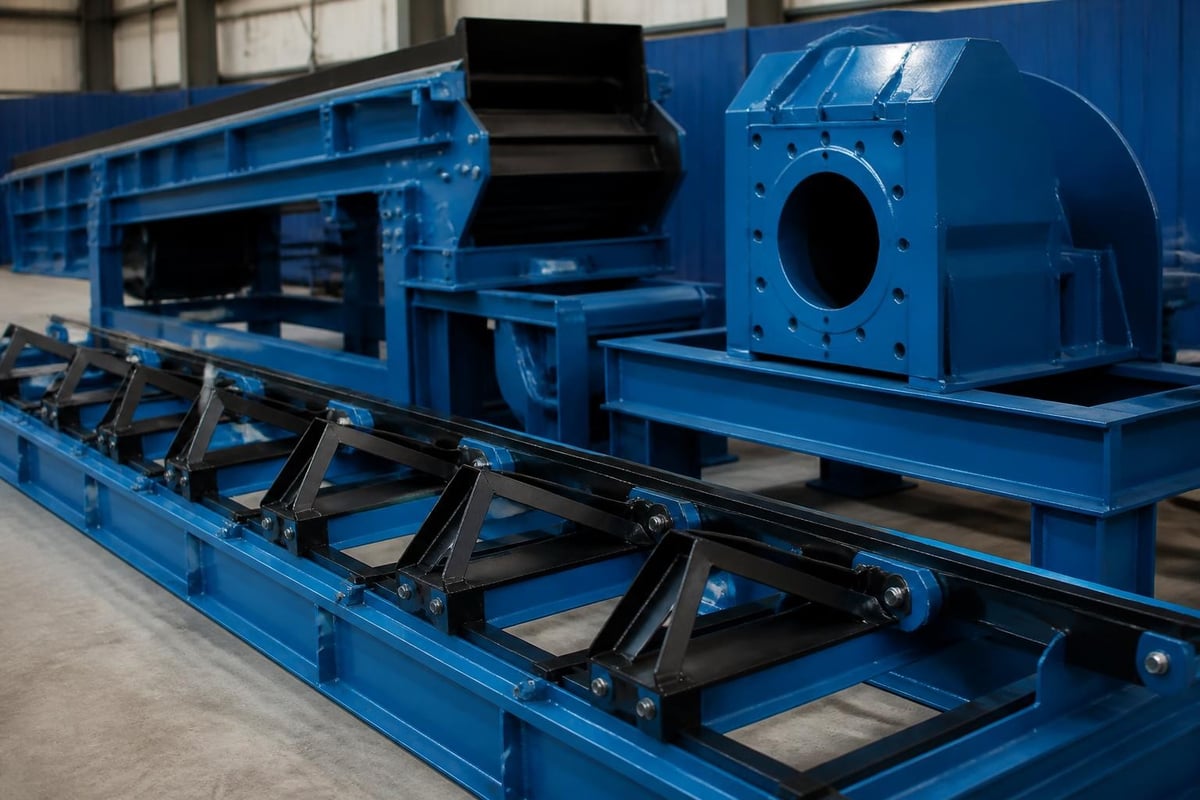
Conveyor systems, screening equipment, and structural supports in aggregate and recycling operations face particularly demanding conditions. Designing for durability and maintainability reduces downtime and operational costs.
Construction and Structural Applications
Large-scale metal fabrication supports construction projects ranging from commercial buildings to industrial facilities. Structural steel fabrication creates frameworks that form the skeleton of modern infrastructure.
Precision in fabrication translates directly to ease of installation and structural performance. Pre-fabricated assemblies reduce on-site labor requirements and construction timelines while improving quality control through shop fabrication environments.
Quality Control and Testing Protocols
Ensuring fabricated components meet specifications requires comprehensive quality control programs integrated throughout the fabrication process. Inspection protocols verify dimensional accuracy, material integrity, and structural soundness.
Visual inspection identifies surface defects, weld discontinuities, and dimensional variations. Trained inspectors recognize potential issues before they progress through subsequent fabrication stages.
Dimensional verification methods include:
- Coordinate measuring machines (CMM) for complex geometries
- Precision measuring tools for standard dimensions
- Laser scanning for large assemblies
- Gauge and fixture verification
- First article inspection protocols
Non-destructive testing (NDT) evaluates weld quality and material integrity without damaging components. Radiographic testing, ultrasonic inspection, and magnetic particle examination reveal internal and surface defects that could compromise performance.
Studies examining destructive testing of fabricated components provide valuable insights into failure modes and design optimization strategies, informing quality control procedures and acceptance criteria.
Documentation and Traceability
Maintaining comprehensive records ensures accountability and facilitates troubleshooting when issues arise. Material certifications, welding procedure specifications, and inspection reports create an auditable trail documenting fabrication processes.
Traceability becomes particularly critical for components serving safety-critical applications or operating under regulatory oversight. The ability to trace materials and processes through the complete fabrication cycle demonstrates quality commitment and regulatory compliance.
Custom Fabrication Project Planning
Successful metal custom fabrication projects begin with thorough planning that aligns technical requirements with budget constraints and schedule expectations. Collaboration between fabricators and clients during the planning phase prevents misunderstandings and scope creep.
Design and Engineering Considerations
Translating concepts into manufacturable designs requires understanding fabrication capabilities and limitations. Designs optimized for fabrication balance performance requirements with manufacturing efficiency.
Tolerance stack-up analysis identifies potential fit issues before fabrication begins. Understanding how individual part tolerances accumulate in assemblies prevents costly rework and modification.
Material availability affects project timelines and costs. Specifying commonly available materials and standard sizes reduces lead times and expense compared to exotic alloys or custom mill runs.
Design optimization strategies:
- Design for manufacturability principles
- Standardized components and assemblies
- Modular designs enabling phased installation
- Accessibility for maintenance and service
- Future modification and expansion capabilities
Computational frameworks for alloy and process design are enabling more sophisticated material selection and fabrication parameter optimization, particularly relevant for specialized applications requiring custom material properties.
Field Services and On-Site Fabrication
While shop fabrication offers controlled environments and optimal conditions, many projects require on-site fabrication and installation capabilities. Mobile welding and field machining extend fabrication services to locations where transporting completed assemblies proves impractical.
Field fabrication addresses unique challenges including weather exposure, limited access to power and equipment, and working around existing operations. Experienced field technicians adapt standard procedures to site-specific conditions while maintaining quality standards.
Emergency Repair and Maintenance
Unplanned equipment failures demand rapid response capabilities that minimize production downtime. Emergency welding services provide critical support when operational continuity depends on immediate repairs.
Mobile equipment brings fabrication capabilities directly to failure points, enabling repairs without lengthy equipment removal and transportation. This approach significantly reduces downtime costs and accelerates return to service.
Preventive maintenance programs incorporating custom fabrication extend equipment life and prevent catastrophic failures. Replacing worn components with upgraded designs improves reliability and performance compared to original specifications.
Emerging Technologies in Metal Fabrication
Additive manufacturing and advanced joining technologies are transforming metal custom fabrication capabilities. While traditional processes remain dominant for most applications, emerging methods offer advantages for specific use cases.
Laser metal deposition creates three-dimensional structures by progressively adding material, enabling complex geometries impossible with conventional fabrication. This technology particularly suits low-volume, high-complexity components and repair applications.
Research into multi-material additive manufacturing addresses challenges of combining dissimilar metals in single components, expanding design possibilities for applications requiring graduated material properties or dissimilar metal joints.
Hybrid approaches combining traditional fabrication with additive processes leverage the strengths of both methodologies. Conventional fabrication creates bulk structures efficiently while additive techniques add complex features or specialized material properties where needed.
Automation and Robotics Integration
Automated welding systems deliver consistent quality and productivity for repetitive fabrication tasks. Robotic welding particularly suits high-volume production and applications requiring precise, repeatable welds.
CNC equipment integration across cutting, forming, and machining operations creates seamless workflows from raw material to finished components. Digital manufacturing processes reduce manual intervention while improving accuracy and repeatability.
Data collection and process monitoring enable continuous improvement through analysis of fabrication parameters and outcomes. Smart manufacturing approaches identify optimization opportunities and predict maintenance requirements before equipment failures occur.
Material Handling and Logistics Considerations
Efficient material flow through fabrication facilities impacts productivity and project timelines. Strategic material handling systems minimize transportation within shops while protecting work in progress from damage.
| Handling Equipment | Applications | Capacity Range |
|---|---|---|
| Overhead Cranes | Large assemblies, heavy plates | 5-50 tons |
| Forklifts | Palletized materials, sheet stock | 3,000-10,000 lbs |
| Jib Cranes | Localized material movement | 250-2,000 lbs |
| Gantry Systems | Long materials, specialized handling | Variable |
Storage systems organize materials by type, size, and project assignment, reducing search time and preventing inventory errors. Proper material storage prevents contamination and damage that could compromise fabrication quality.
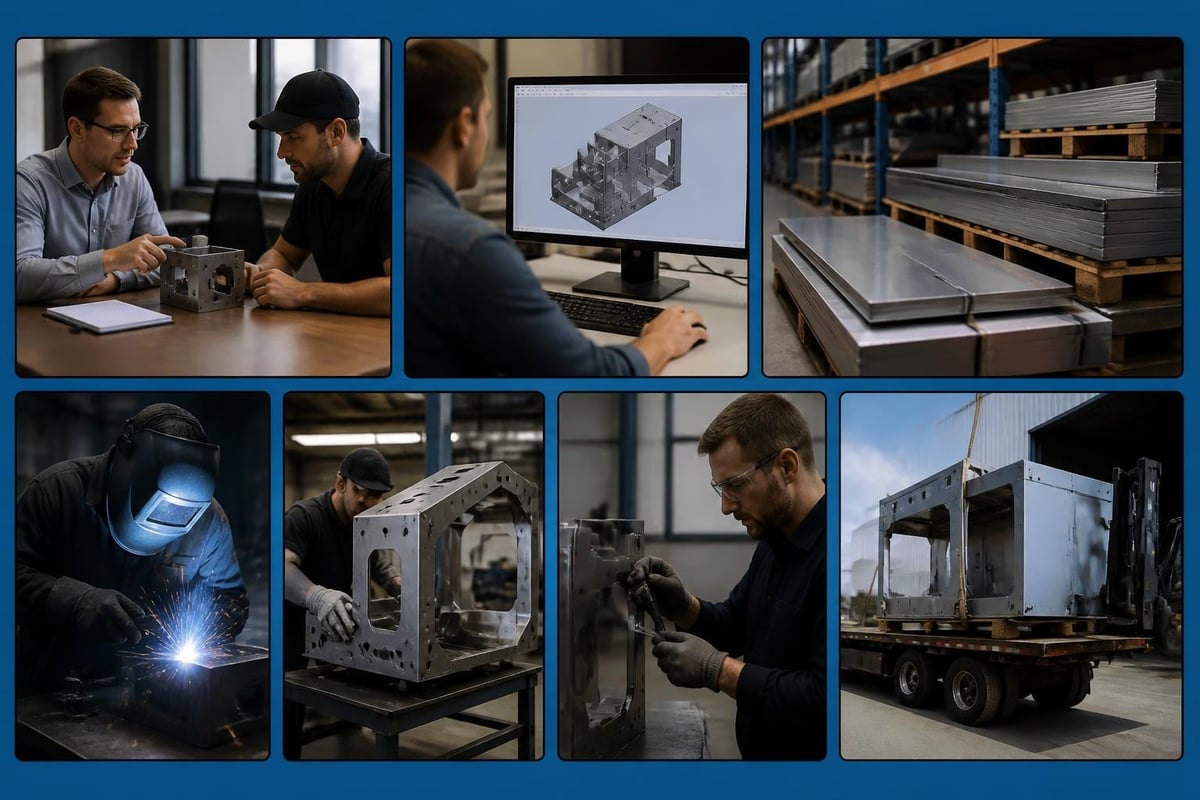
Transportation of completed fabrications requires careful planning to prevent damage during loading, transit, and unloading. Specialized trailers, rigging equipment, and securing methods protect high-value fabrications throughout the delivery process.
Partnering with Fabrication Service Providers
Selecting appropriate fabrication partners significantly impacts project outcomes, delivery timelines, and overall costs. Evaluating potential providers requires assessing capabilities, quality systems, and industry experience.
Facility capabilities determine the size, complexity, and volume of work a fabricator can handle effectively. Shop equipment, floor space, and material handling systems must align with project requirements to ensure efficient execution.
Evaluation criteria include:
- Equipment capabilities and capacity
- Quality certifications and compliance programs
- Industry experience and project portfolio
- Engineering and design support services
- Field service and installation capabilities
- Geographic proximity and service area coverage
The Western United States presents unique challenges including geographic distances, environmental conditions, and industry concentration. Industrial fabrication services familiar with regional requirements and conditions deliver superior results compared to distant providers unfamiliar with local factors.
Technical expertise in specific industries ensures fabricators understand application requirements and performance criteria. Experience with recycling equipment, aggregate processing machinery, or oil and gas infrastructure translates to better design recommendations and fewer fabrication issues.
Communication and project management capabilities affect collaboration effectiveness and problem resolution. Responsive fabricators who proactively communicate project status and potential issues enable better decision-making and schedule management.
Cost Optimization Strategies
Controlling fabrication costs while maintaining quality requires strategic approaches to design, material selection, and process planning. Understanding cost drivers enables informed decisions that balance performance requirements with budget constraints.
Material costs represent significant portions of fabrication project budgets. Specifying standard materials and sizes reduces procurement expenses compared to specialty alloys or custom dimensions requiring minimum order quantities.
Design simplification eliminates unnecessary complexity that increases fabrication time without providing functional benefits. Each additional bend, weld, or machined feature adds labor and introduces potential quality issues.
Cost reduction approaches:
- Value engineering to identify equivalent lower-cost alternatives
- Batch processing of similar components
- Standard component integration where possible
- Design for assembly efficiency
- Long-term supplier relationships for favorable pricing
Process efficiency improvements reduce labor hours per component, directly impacting fabrication costs. Investing in setup optimization, tooling improvements, and operator training delivers ongoing cost benefits across multiple projects.
Quality costs associated with rework, scrap, and warranty claims often exceed prevention costs. Robust quality systems and process controls minimize defects and their associated expenses.
Safety and Environmental Considerations
Metal custom fabrication involves inherent hazards requiring comprehensive safety programs protecting workers and surrounding communities. Welding, cutting, and material handling operations present risks that demand constant vigilance and appropriate controls.
Personal protective equipment (PPE) forms the last line of defense against workplace hazards. Proper selection, fit, and use of protective equipment prevents injuries from sparks, radiation, and physical hazards.
Ventilation systems remove welding fumes, grinding dust, and coating vapors that pose respiratory hazards. Adequate air quality maintenance protects worker health while ensuring compliance with occupational exposure limits.
Environmental compliance addresses waste management, stormwater protection, and air quality regulations. Responsible fabricators implement programs minimizing environmental impacts while meeting regulatory requirements.
Safety program elements:
- Hazard identification and risk assessment
- Standard operating procedures for high-risk tasks
- Regular safety training and competency verification
- Incident investigation and corrective action
- Emergency response planning and drills
Advances in tribocorrosion behavior of fabricated metals inform material selection for applications where corrosion and wear interact, improving component longevity while reducing replacement frequency and associated environmental impacts.
Maintenance and Lifecycle Management
Custom fabricated components require ongoing maintenance to achieve expected service lives and performance levels. Preventive maintenance programs identify and address minor issues before they escalate into major failures.
Inspection protocols tailored to specific applications and operating conditions detect developing problems while intervention remains cost-effective. Regular inspections document component condition and inform replacement timing decisions.
Machinery refurbishment extends useful life beyond original expectations through strategic component replacement and upgrades. This approach often proves more cost-effective than complete equipment replacement while incorporating modern improvements.
Modification and adaptation services update existing fabrications to accommodate changing operational requirements or production demands. Custom fabrication capabilities enable equipment evolution rather than obsolescence.
Documentation systems tracking maintenance history, modifications, and operating conditions inform future decisions and support troubleshooting efforts. Comprehensive records maximize return on fabrication investments through optimized lifecycle management.
Metal custom fabrication delivers the precision-engineered components that keep industrial operations running efficiently across manufacturing, energy, and processing sectors. From initial design through final installation and ongoing maintenance, successful projects demand technical expertise, quality commitment, and responsive service. Whether you need emergency repairs, complete system fabrications, or ongoing maintenance support throughout the Western United States, LTJ Industrial Services provides the comprehensive welding, machining, and fabrication capabilities that help your operation achieve its goals with minimal downtime and maximum reliability.