
Western machining is transforming at a pace never seen before. As we approach 2026, manufacturers and machinists face both complex challenges and exciting opportunities across the Western U.S.
Navigating changing technologies, evolving regulations, and shifting market demands requires not just skill, but strategic insight. This guide offers expert analysis, emerging trends, and proven strategies to help you master western machining and stay ahead of the competition.
Discover the latest in industry trends, advanced technologies, best practices, critical sectors, talent development, and future-proofing tactics. Are you ready to seize new opportunities and lead the way in western machining success? Let’s get started.
The State of Western Machining in 2026: Key Trends and Industry Shifts
Western machining is experiencing a period of dynamic transformation as the industry enters 2026. Regional manufacturers are responding to heightened demand, new technologies, and shifting market forces. Understanding these trends is essential for businesses aiming to stay ahead in the evolving landscape of western machining.
Market Growth and Demand Drivers
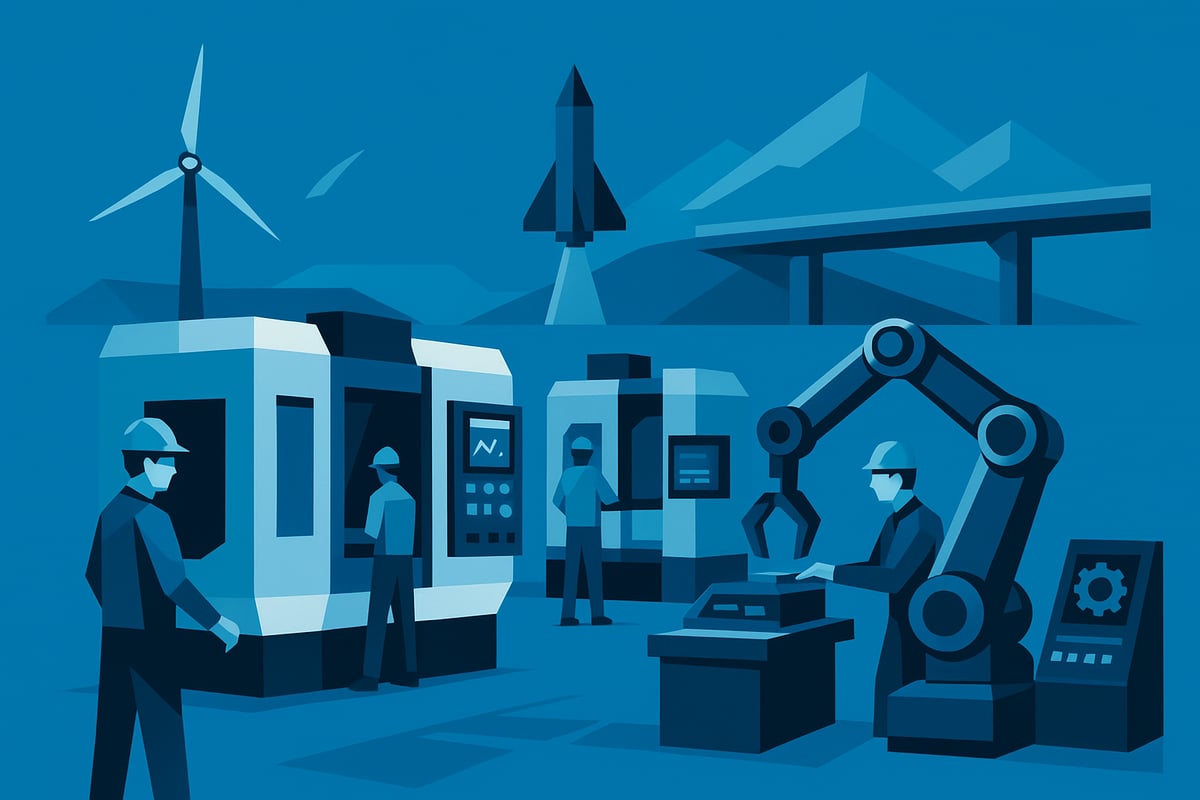
The western machining sector is poised for robust expansion, fueled by large-scale renewable energy, aerospace, and infrastructure projects across the Western United States. Investments in solar, wind, and hydro power are spurring demand for precision components and custom fabrication. Aerospace manufacturers require tight tolerance machining for aircraft and satellite parts.
U.S. manufacturing output is forecasted to grow by 3.5% in 2026, reflecting optimism and ongoing capital investment. Automation and smart manufacturing are becoming cornerstones of this growth. For a deeper dive into these trends, the 2026 Mid-Market Manufacturing Industry Outlook provides comprehensive data and projections.
Technological Advancements Shaping the Industry
Western machining is embracing Industry 4.0, IoT, and AI to revolutionize production. Precision CNC machining, digital twins, and advanced robotics are now standard in leading facilities. Automated quality control and real-time monitoring boost accuracy and efficiency.
These technologies support rapid prototyping and customization, giving manufacturers a competitive edge. As digital transformation accelerates, companies that integrate these advancements will be better positioned to meet evolving industry demands and regulatory requirements in western machining.
Regional Challenges and Opportunities
Despite growth, western machining faces persistent supply chain disruptions. Manufacturers are developing local sourcing strategies and diversifying suppliers to mitigate risk. Labor shortages are another pressing issue, driving an urgent need for upskilling and workforce development programs.
Environmental regulations in the Western U.S. are also shaping operations. Companies are investing in sustainable practices, including energy-efficient equipment and waste reduction, to comply with stricter standards and appeal to eco-conscious clients within the western machining landscape.
Competitive Landscape
The competitive landscape in western machining is defined by established industry leaders and emerging disruptors. Companies are forming strategic partnerships and pursuing mergers to expand capabilities and service offerings. For example, IPM’s acquisition of Western Machine Works has created new opportunities in field machining, welding, and repair services.
Major players are leveraging technology and regional expertise to address industry needs. Strategic alliances are enabling firms to tackle complex projects and deliver end-to-end solutions for clients in critical sectors.
Case Study: Impact of Strategic Partnerships
A notable example in western machining is the collaboration between IPM and Western Machine Works. By joining forces, these companies have broadened their expertise and service portfolio, particularly in the pulp and paper, wind power, and hydro sectors.
Clients benefit from streamlined project management, access to specialized skills, and improved turnaround times. These partnerships enable manufacturers to adapt to changing market demands and deliver high-quality solutions across a variety of industrial applications in the West.
Outlook for 2026 and Beyond
Looking ahead, western machining is expected to see continued market consolidation, with growth concentrated in renewable energy, aerospace, and infrastructure. Innovation hotspots will emerge as companies invest in digital technologies, automation, and sustainability.
Manufacturers that prioritize talent development, strategic alliances, and technology integration will thrive. Staying agile and responsive to both opportunities and challenges will be key for long-term success in the competitive western machining environment.
Essential Machining Services and Capabilities for Western Industries
Western machining is at the core of industrial growth across the Western United States. To stay competitive in 2026, companies must master a diverse range of machining services and capabilities. Understanding which solutions are most in demand, and how they impact key sectors, is crucial for success.
Core Machining Services in Demand
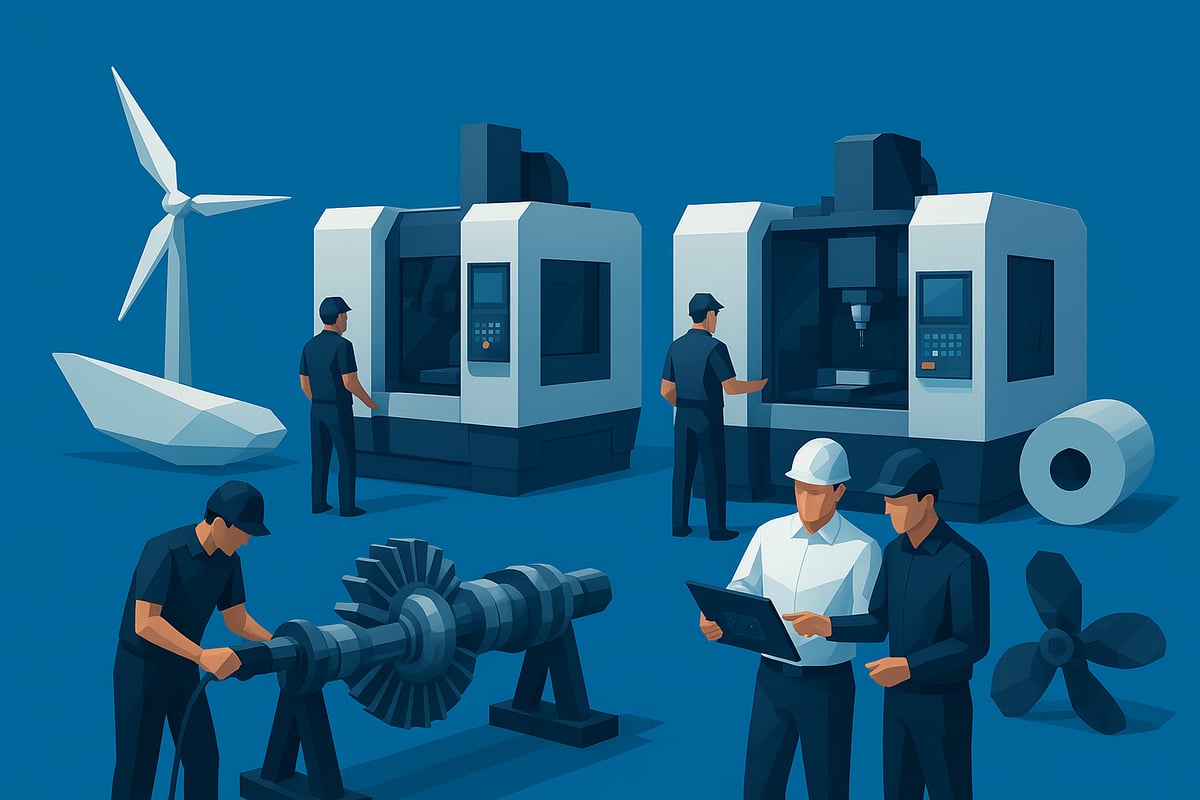
In the current landscape of western machining, several core services are in high demand. Precision CNC machining stands out as the backbone of modern manufacturing, delivering exact tolerances for critical components. Field machining and on-site alignment are essential for industries where equipment is too large or costly to move.
Other sought-after services include Metalstitch® cold cast iron repair, which offers a non-weld solution for cracked castings, and crankshaft repair, vital for heavy equipment reliability. Large-scale cutting, drilling, and component segmentation support sectors like energy, marine, and construction.
To explore a full range of solutions supporting these needs, see manufacturing and machining services for western machining projects.
Custom Fabrication and Engineering Solutions
Many western machining clients require more than off-the-shelf parts—they need custom fabrication and engineering integration. End-to-end metal fabrication addresses unique industrial requirements, from custom brackets to structural frames.
A modern trend is integrating engineering design with shop-floor execution. This approach ensures that fabricated parts meet precise specifications, reducing rework and downtime. Teams skilled in CAD modeling and rapid prototyping can quickly adjust to changing project demands.
By combining fabrication with engineering expertise, companies can deliver robust, custom solutions for the region’s most challenging industrial applications.
Specialized Services for Key Sectors
Western machining supports specialized needs across diverse industries. For the pulp and paper sector, roll grinding, balancing, and refurbishment keep mills running efficiently. In wind and hydro power, machining main shafts, performing large-scale repairs, and fabricating hydro components are mission-critical.
Marine, steel, and heavy industrial clients depend on custom welding, gearbox repair, and structural machining. Each sector requires tailored capabilities and deep industry knowledge to ensure performance and regulatory compliance.
These specialized services allow western machining providers to adapt to sector-specific challenges and drive operational excellence.
Advanced Surface Treatments and Finishing
Surface treatments are essential for extending the lifespan of machined components. Western machining shops employ thermal spray, powder coating, and painting to deliver durable finishes that withstand harsh environments.
Sandblasting and surface preparation are critical steps before coating. They ensure that surfaces are clean, smooth, and ready for optimal adhesion. These finishing techniques add value by improving corrosion resistance and reducing long-term maintenance costs.
Attention to advanced finishes is a hallmark of high-quality western machining, supporting reliability across all industrial sectors.
On-Site vs. In-House Machining: Pros and Cons
Deciding between on-site and in-house machining is a key strategic choice. On-site machining offers rapid response for urgent repairs and is ideal for large or immovable equipment. It minimizes downtime and can save on transportation costs.
In-house machining provides greater control over complex or high-precision work. Facilities often have specialized equipment and can maintain tighter quality standards.
| Factor | On-Site Machining | In-House Machining |
|---|---|---|
| Downtime | Minimal | May increase |
| Precision | Good for most repairs | Highest for complex parts |
| Cost | Lower for urgent jobs | Lower for planned work |
| Flexibility | Ideal for remote projects | Best for customization |
A balanced approach to western machining leverages both models to maximize efficiency and quality.
Example: Large-Scale On-Site Turbine Repair
A recent large-scale on-site turbine repair illustrates the impact of expert western machining. When a major energy provider faced unexpected downtime, a field team mobilized rapidly. Using portable machining equipment, technicians restored critical turbine components without removing them from the facility.
The result was a significant reduction in outage duration and costs, showcasing the power of combining technical skill with flexible service delivery. Such projects highlight why western machining remains a cornerstone of industrial reliability and growth.
Western Machining Technology: Tools, Automation, and Digital Transformation
The landscape of western machining is advancing at an unprecedented pace. Companies are leveraging new tools, automation, and digital transformation to achieve higher precision, lower costs, and improved reliability. Staying ahead requires investing in next-generation technologies and integrating them seamlessly into daily operations.

Precision Equipment and CNC Innovations
Modern western machining facilities rely on state-of-the-art equipment to meet demanding client expectations. The latest CNC machines feature 5-axis milling, multi-tasking lathes, and automated tool changers, pushing the boundaries of complexity and accuracy.
Upgrades in toolholding and fixturing allow for faster changeovers and tighter tolerances. Advanced metrology systems ensure parts meet exacting standards, whether for aerospace, energy, or marine projects.
For companies seeking a competitive edge, Precision CNC machining for heavy industry solutions deliver the expertise and flexibility required for large-scale and high-value components. Embracing these innovations is essential for any western machining operation looking to remain relevant in 2026.
Automation and Robotics for Efficiency
Automation is transforming western machining by streamlining workflows and boosting productivity. Robotic welding, automated material handling, and lights-out machining enable shops to operate around the clock.
Key benefits of automation:
- Reduced labor costs and human error
- Improved safety through machine-guarded environments
- Increased throughput and consistent quality
Automated systems also free up skilled machinists to focus on complex problem-solving, driving further innovation in western machining.
Digital Twins and IoT Integration
Digital twins and IoT have become cornerstones of smart manufacturing. By creating a virtual replica of physical assets, companies can monitor equipment in real time, predict maintenance needs, and optimize processes.
This digital approach reduces downtime and increases accuracy. For western machining businesses, integrating IoT sensors and data analytics means more informed decision-making and a proactive stance toward equipment health.
Digital twins also support remote troubleshooting, enabling specialists to address issues promptly, regardless of location.
Quality Assurance and Measurement Systems
Quality assurance is non-negotiable in western machining. Advanced measurement tools such as 3D scanning, laser alignment, and in-process inspection systems help achieve the tight tolerances required by critical sectors.
Table: Comparison of Measurement Systems
| System | Application | Benefit |
|---|---|---|
| 3D Scanning | Complex geometries | Accurate digital models |
| Laser Alignment | Rotating machinery | Precise shaft setup |
| In-Process QA | Real-time production lines | Immediate corrections |
Investing in these technologies ensures products meet industry standards and client specifications.
Sustainability and Energy Efficiency
Sustainable practices are integral to the future of western machining. Facilities are adopting energy-efficient machinery, optimizing process flows, and implementing waste reduction measures.
Meeting regional environmental regulations is not just about compliance, it also enhances brand reputation and operational efficiency. Solutions such as coolant recycling, energy monitoring, and eco-friendly coatings are now standard in leading shops.
Companies that prioritize sustainability are better positioned to win contracts and appeal to environmentally conscious clients.
Example: Smart Factory Implementation in the Western U.S.
A leading western machining facility recently transformed into a smart factory. By integrating digital twins, IoT sensors, and robotics, the plant achieved:
- 30% reduction in unplanned downtime
- 20% improvement in energy usage
- Enhanced traceability for every machined component
Operators now access real-time dashboards to monitor performance, while automated alerts prompt maintenance before failures occur. This holistic digital transformation sets the benchmark for future-ready machining in the western region.
Talent, Training, and Workforce Development in Western Machining
The future of western machining depends on a skilled, adaptable workforce ready to meet the region’s industrial demands. As the pace of automation and technology quickens, companies face urgent challenges in talent recruitment, training, and retention. Addressing these issues head-on is essential for maintaining a competitive edge in western machining.

Addressing the Skilled Labor Shortage
Western machining companies report persistent difficulty in hiring skilled machinists and technicians. In fact, 60% of manufacturers in the region cite talent shortages as a top concern. To stay ahead, businesses must adopt proactive strategies:
- Offer competitive compensation and clear career paths.
- Build strong relationships with local trade schools and colleges.
- Highlight opportunities for advancement within industrial manufacturing in the West.
By focusing on these areas, organizations can attract fresh talent and keep their teams engaged.
Upskilling and Continuous Learning
Staying current in western machining requires ongoing education. Rapid technological change means today’s machinists need continuous upskilling. Leading companies invest in:
- On-the-job training programs for new technologies.
- Partnerships with technical colleges for certification courses.
- Access to online resources and simulation tools.
These efforts help teams master advanced CNC systems and digital workflows, ensuring long-term adaptability.
Embracing Diversity and Inclusion
A diverse workforce is key to innovation in western machining. Companies that embrace different backgrounds and perspectives tend to solve problems more creatively. Initiatives supporting this goal include:
- Outreach to underrepresented groups in STEM fields.
- Mentorship programs to guide new hires.
- Inclusive hiring practices and workplace policies.
Fostering diversity not only enhances company culture but also drives better business outcomes.
Leadership and Knowledge Transfer
Retaining expertise is a pressing issue as experienced machinists approach retirement. Effective knowledge transfer strategies in western machining include:
- Structured mentorship programs pairing senior and junior staff.
- Documenting best practices and technical procedures.
- Succession planning to maintain leadership continuity.
These steps safeguard institutional knowledge and prepare the next generation of leaders.
Safety Culture and Compliance
Workforce development in western machining is incomplete without a strong safety culture. Companies must:
- Provide regular safety training for both shop and field teams.
- Enforce strict adherence to OSHA and state-specific regulations.
- Encourage reporting and continuous improvement of safety practices.
A safe workplace not only protects employees but also boosts productivity and morale.
Example: Apprenticeship Success Stories in Western States
Apprenticeship programs are making a difference across the western machining landscape. In states like Colorado and Washington, partnerships between manufacturers and technical schools have produced graduates ready for real-world challenges. These programs:
- Combine classroom learning with hands-on experience.
- Offer paid positions and clear advancement opportunities.
- Help close the skills gap while supporting local economies.
By investing in apprenticeships, companies ensure a steady pipeline of skilled talent for years to come.
Sector Spotlights: Western Machining Applications and Success Stories
Innovation in western machining is deeply intertwined with the region’s diverse industries. From renewable energy to aerospace, precision machining solutions are the backbone of progress. Each sector presents unique challenges and opportunities, driving companies to adapt and excel.
Renewable Energy: Wind and Hydro Power
Western machining is fueling the renewable energy boom across the West. Precision work on main shafts, turbine components, and hydroelectric parts is essential for reliability and efficiency in wind and hydro power projects. Machinists repair, refurbish, and manufacture critical pieces that keep energy flowing.
Specialized capabilities in on-site machining allow for maintenance and upgrades without removing massive equipment. As the region’s clean energy infrastructure expands, demand for expert machining continues to surge.
Pulp, Paper, and Packaging
The pulp and paper sector depends on western machining for uptime and quality. Mills require precision roll grinding, dynamic balancing, and emergency repairs to maintain productivity.
Machining experts restore worn rolls, refurbish bearings, and align massive components on-site. These services minimize downtime and extend equipment life. As packaging needs grow in the West, machining partners help mills meet strict tolerances and production goals.
Marine, Shipping, and Offshore
Marine industries rely on western machining for vessel and port maintenance. On-site machining keeps ships, cranes, and offshore platforms operating smoothly.
Technicians perform shaft repairs, flange facing, and structural welding directly at ports or docks. This rapid response is vital for reducing costly delays. The West Coast’s maritime commerce benefits from machining partners who understand the unique demands of saltwater environments.
Steel, Mining, and Aggregate
Resource extraction industries in the West trust western machining to keep heavy equipment running. Custom fabrication and component machining support crushers, conveyors, and process plants.
Machinists repair gearboxes, rebuild shafts, and restore worn surfaces on-site or in the shop. The result is improved reliability and lower maintenance costs. In mining, fast turnaround on critical repairs is essential for safe, continuous operations.
Aerospace and Defense
Western machining is pivotal for aerospace and defense, where precision and certification are non-negotiable. Shops in the region meet exacting standards for aircraft, satellites, and defense systems.
Advanced CNC machining and rigorous inspection ensure every component meets tight tolerances. The sector’s rapid innovation drives demand for new materials and machining techniques, keeping the industry at the forefront of technology.
Infrastructure and Construction
Modernizing infrastructure in the West requires large-scale machining solutions. Western machining supports bridge construction, tunnel boring, and large equipment installation.
Services like cutting, drilling, and structural component fabrication are performed both on-site and in controlled shop environments. Machinists help contractors meet demanding project timelines and quality requirements, strengthening the region’s critical assets.
Example: Western Machine Works and IPM Project Highlights
Strategic partnerships are shaping the future of western machining. The collaboration between Western Machine Works and IPM has delivered outstanding results for clients in pulp and paper, wind energy, and hydro sectors. Their combined expertise enables advanced repairs, complex refurbishments, and rapid field response.
For a deeper look at real-world machining solutions, explore case studies in Western machining that showcase project outcomes and industry impact. These stories highlight the tangible benefits of expert machining across the Western U.S.
Building a Future-Ready Machining Strategy: Best Practices for 2026 Success
Staying ahead in western machining demands a proactive, adaptable strategy. As 2026 approaches, the landscape is shifting quickly, requiring leaders to embrace new practices and technologies. Here, we break down the core pillars for building a machining business that thrives in the future.
Strategic Planning and Investment
Strategic planning is foundational for any western machining operation. Begin by assessing current technology and identifying gaps that could impact your competitiveness. Investing in advanced equipment and smart manufacturing systems helps future-proof your business.
Evaluate the potential return on investment for each major purchase. As highlighted in Advanced Manufacturing and the Promise of Industry 4.0, successful companies leverage digital transformation to drive efficiency and growth. Building resilience against supply chain shocks is also critical, requiring diversified suppliers and contingency plans.
Partnering for Growth and Innovation
No company can master every capability alone. In western machining, forging strategic alliances with specialized service providers can fill gaps and accelerate innovation. Partnerships open doors to expanded capabilities, access to new markets, and shared expertise.
Mergers, joint ventures, and collaborative projects help companies respond faster to client needs. When choosing partners, look for those who align with your values, quality standards, and long-term vision. This approach strengthens your position in a competitive market.
Embracing Continuous Improvement
Continuous improvement is essential for sustained excellence in western machining. Methodologies like Lean, Six Sigma, and Kaizen help eliminate waste and streamline processes. Regularly review workflows to identify opportunities for increased efficiency and reduced costs.
Staying current with industry trends, such as those detailed in 2026 CNC Machining Trends: 5 Key Shifts Defining Precision Manufacturing, ensures your team adapts to technological advances. Encourage employee feedback and involve every level of the organization in improvement efforts.
Sustainability and Environmental Leadership
Sustainability is now a core expectation for western machining businesses. Adopting energy-efficient equipment and eco-friendly practices not only meets regulatory requirements but also appeals to modern clients.
Implement waste reduction programs and select materials with lower environmental impact. Track your sustainability metrics and share progress with stakeholders. Leading in environmental responsibility can set your business apart in the Western U S market.
Customer-Centric Service Models
A customer-centric mindset drives long-term success in western machining. Offer custom solutions tailored to unique project requirements, and maintain open lines of communication with clients.
Prioritize rapid response, proactive maintenance, and clear reporting. Building strong client relationships leads to repeat business and valuable word-of-mouth referrals. Stay responsive to evolving customer needs to maintain your competitive edge.
Actionable Steps for 2026 Success
Below is a quick-reference checklist for leaders in western machining:
| Step | Action Item |
|---|---|
| Technology Assessment | Audit current equipment and software |
| Supply Chain Resilience | Diversify suppliers and logistics partners |
| Workforce Development | Invest in training and upskilling |
| Sustainability Initiatives | Implement energy and waste reduction |
| Strategic Partnerships | Identify and engage key collaborators |
| Customer Engagement | Enhance service offerings and communication |
By following these best practices, your business will be well-positioned for success in the rapidly evolving western machining sector.
As we look ahead to 2026, mastering the evolving landscape of Western machining means staying ahead of new technologies, industry shifts, and the unique challenges facing manufacturers in our region. Whether you’re navigating automation, expanding your capabilities, or looking for reliable partners to handle complex fabrication and machining, having access to trusted expertise makes all the difference. If you’re ready to take the next step toward future-proofing your operations and ensuring your business thrives, let’s connect. You can [Request a Quote](https://www.ltjindustrial.com/contact_us/) and see how LTJ Industrial Services can support your goals.