
Modern industrial operations depend on precise, reliable manufacturing processes to transform raw materials into functional components and finished products. Machining and fabrication represent two fundamental pillars of industrial manufacturing, each offering distinct capabilities while frequently working in tandem to deliver comprehensive solutions. These complementary processes enable businesses across sectors like oil and gas, recycling, aggregate processing, and commercial manufacturing to maintain competitive operations and meet exacting quality standards. Understanding how these processes work, when to deploy each method, and how they integrate provides essential knowledge for industrial decision-makers seeking optimal manufacturing outcomes.
Understanding the Core Differences Between Machining and Fabrication
Machining and fabrication serve different purposes in the manufacturing workflow, though they often overlap in industrial applications. Machining involves removing material from a workpiece to achieve precise dimensions, tolerances, and surface finishes through cutting, drilling, milling, turning, or grinding operations. This subtractive manufacturing process excels at creating components requiring tight tolerances, typically measured in thousandths or ten-thousandths of an inch.
Fabrication encompasses a broader range of processes that reshape, assemble, and construct metal components and structures. Metal fabrication includes cutting, bending, welding, and assembling raw materials into finished products or structural elements. While machining focuses on precision through material removal, fabrication emphasizes forming and joining operations that create larger assemblies and structural components.
When Each Process Delivers Optimal Results
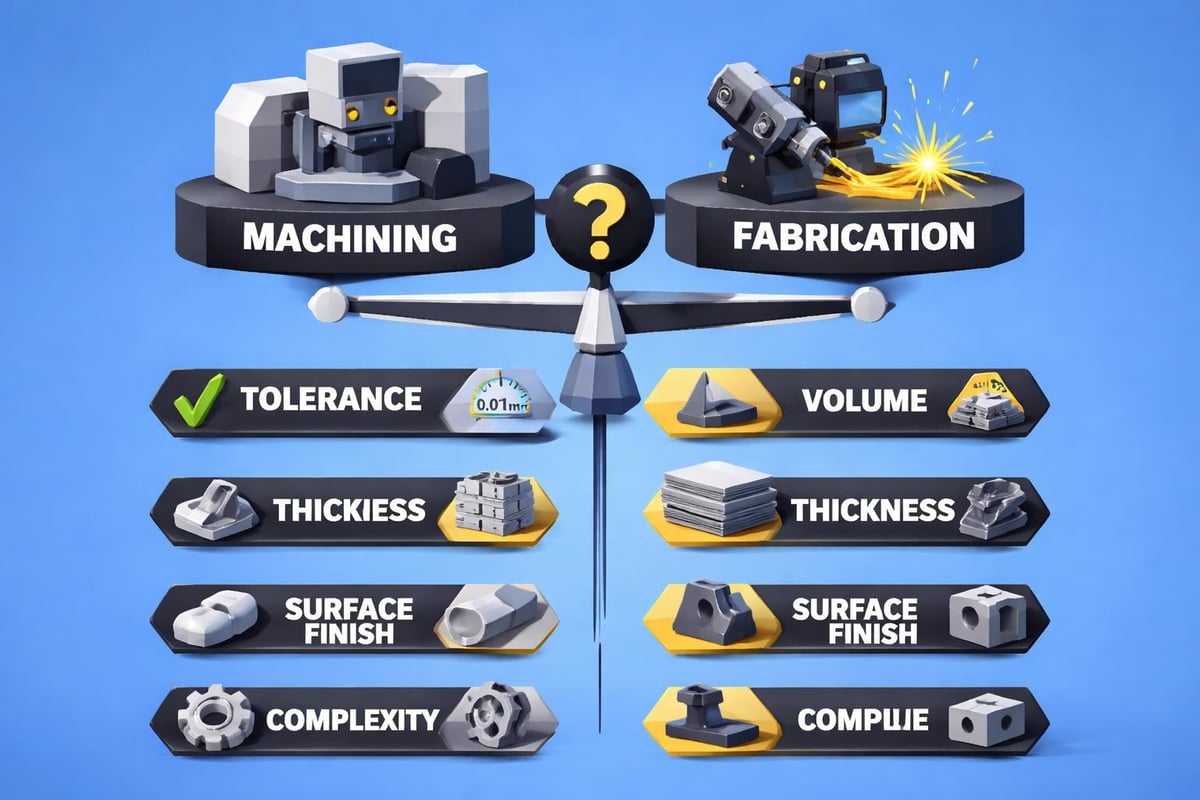
The choice between machining and fabrication depends on project requirements, material specifications, tolerance demands, and production volume. Several factors guide this decision:
- Tolerance requirements: Machining achieves tolerances of ±0.001" or tighter, essential for precision components
- Production volume: Fabrication often proves more economical for larger structures and batch production
- Material thickness: Heavy-gauge materials and structural steel favor fabrication approaches
- Surface finish: Machining delivers superior surface finishes for functional or aesthetic requirements
- Complexity: Intricate geometries may require machining, while large assemblies benefit from fabrication
Essential Machining Processes for Industrial Applications
Machining encompasses multiple specialized processes, each suited to specific geometries, materials, and precision requirements. Understanding these techniques helps manufacturers select appropriate methods for component production.
Conventional Machining Technologies
Traditional machining methods remain fundamental to manufacturing and machining operations across industries. These time-tested processes deliver reliable results for a wide range of applications.
Turning operations rotate workpieces against stationary cutting tools, creating cylindrical parts, shafts, and threaded components. Lathes handle everything from small precision parts to large industrial cylinders, making turning indispensable for producing rotational components used in pumps, motors, and hydraulic systems.
Milling processes use rotating multi-point cutters to remove material from stationary workpieces, creating flat surfaces, slots, pockets, and complex contours. Vertical and horizontal milling machines provide versatility for producing custom brackets, flanges, and machine components requiring precise features.
Drilling and boring create holes of various diameters and depths, essential for fastener locations, fluid passages, and assembly points. These operations ensure proper alignment and fit between mating components in assembled equipment.
| Machining Process | Primary Applications | Typical Tolerances | Material Versatility |
|---|---|---|---|
| Turning | Shafts, cylinders, threads | ±0.001" to ±0.005" | Excellent for metals, plastics |
| Milling | Flat surfaces, slots, complex contours | ±0.002" to ±0.010" | Wide material compatibility |
| Drilling/Boring | Holes, fluid passages | ±0.005" to ±0.015" | Universal applicability |
| Grinding | Fine finishes, tight tolerances | ±0.0001" to ±0.001" | Best for hardened materials |
CNC Machining Advantages
Computer Numerical Control (CNC) technology revolutionized machining by automating tool paths and enabling repeatable precision. CNC machines interpret digital designs, executing complex operations with minimal human intervention. This automation reduces errors, improves consistency, and enables production of intricate geometries impossible with manual methods.
Research on data-driven approaches using neural networks demonstrates how advanced technologies optimize machining cycle times, reducing production costs while maintaining quality standards. These innovations help industrial manufacturers compete more effectively in demanding markets.
Fabrication Methods Powering Industrial Manufacturing
Metal fabrication and welding encompasses diverse processes that transform sheet metal, plate, and structural steel into functional assemblies and structures. These methods enable construction of everything from small brackets to massive processing equipment.
Cutting and Forming Operations
Cutting processes separate material to required dimensions using various technologies. Plasma cutting handles thick steel efficiently, while laser cutting delivers precise edges on thinner materials. Water jet cutting eliminates heat-affected zones, preserving material properties for sensitive applications. Oxy-fuel cutting remains economical for heavy structural steel.
Bending and forming reshape flat materials into three-dimensional components. Press brakes create precise bends in sheet metal and plate, producing enclosures, brackets, channels, and structural elements. Roll forming produces curved sections for tanks, vessels, and architectural applications.
Welding and Assembly Techniques
Joining processes unite individual components into functional assemblies. Multiple welding techniques address different material combinations, thicknesses, and service requirements:
- SMAW (Stick welding): Versatile for field repairs and structural fabrication
- GMAW (MIG welding): High productivity for sheet metal and moderate thickness applications
- GTAW (TIG welding): Precision joining for critical applications requiring excellent quality
- FCAW (Flux-cored welding): Outdoor applications and thick materials benefit from this process
- SAW (Submerged arc welding): Automated, high-deposition welding for heavy fabrication
Professional welding and fabrication services ensure compliance with industry codes and standards, particularly important for pressure vessels, piping systems, and structural applications where safety and reliability remain paramount.
Integrated Machining and Fabrication Workflows
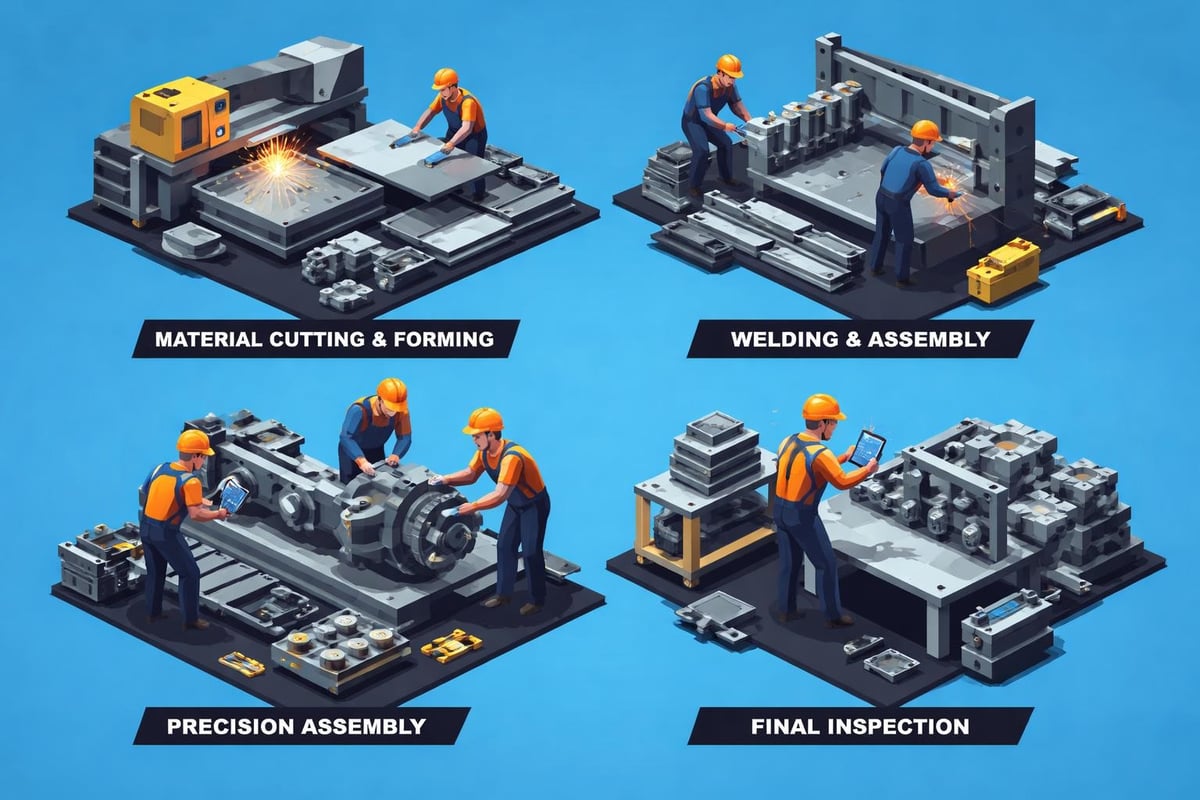
Many industrial projects require both machining and fabrication capabilities working in coordinated sequences. Custom metal fabrication projects often begin with fabrication operations creating basic structures, followed by machining processes adding precision features and final dimensions.
Sequential Process Integration
Consider a typical pressure vessel project requiring both skill sets. Fabrication starts the process by cutting and rolling plate into cylindrical sections, welding seams to create the vessel body, and attaching nozzles and flanges. Machining then adds precision by boring nozzle openings to exact diameters, facing flange surfaces to ensure proper sealing, and creating threaded connections for instrumentation.
This integration requires careful planning to sequence operations efficiently. Material should be machined after stress-relieving heat treatments but before final assembly when possible, ensuring dimensions remain stable. Weld distortion must be anticipated, with machining allowances incorporated into fabrication dimensions.
Quality Control Across Processes
Both machining and fabrication demand rigorous quality control, though inspection methods differ by process. Machining verification relies heavily on dimensional measurement using micrometers, calipers, coordinate measuring machines (CMMs), and optical comparators. Fabrication inspection emphasizes weld quality through visual examination, dye penetrant testing, magnetic particle inspection, radiography, and ultrasonic testing.
According to advanced manufacturing standards developed by organizations like ASME, maintaining documented quality procedures ensures consistent results and regulatory compliance. These standards prove particularly critical in industries like oil and gas where component failures can have severe safety and environmental consequences.
Material Selection Considerations
Material choice profoundly impacts both machining and fabrication processes, affecting cutting speeds, tool life, welding procedures, and final component performance. Understanding material characteristics guides successful manufacturing outcomes.
Common Materials and Their Properties
Carbon steel represents the most widely fabricated and machined material, offering good strength, weldability, and machinability at economical pricing. Grades range from low-carbon mild steel ideal for general fabrication to higher-carbon alloys providing increased strength for structural applications.
Stainless steel delivers corrosion resistance essential for food processing, chemical handling, and marine environments. However, stainless alloys machine more slowly than carbon steel, requiring appropriate cutting speeds and coolant. Welding stainless steel demands clean preparation and proper shielding to prevent carbide precipitation and maintain corrosion resistance.
Aluminum provides excellent strength-to-weight ratios and corrosion resistance, making it popular for transportation and aerospace applications. This material machines easily with sharp tools but requires specialized welding equipment and techniques to prevent porosity and cracking.
| Material | Machinability Rating | Weldability | Primary Applications |
|---|---|---|---|
| Low-Carbon Steel | Good | Excellent | General fabrication, structures |
| Stainless Steel | Fair to Good | Good | Food processing, chemical equipment |
| Aluminum | Excellent | Good (specialized) | Transportation, lightweight structures |
| Tool Steel | Poor to Fair | Difficult | Dies, cutting tools, wear parts |
| Cast Iron | Good | Difficult | Machine bases, wear-resistant parts |
Material Certification and Traceability
Industrial sectors like oil and gas and pressure vessel manufacturing require documented material certifications verifying chemical composition and mechanical properties. ASME Code welding services demand material test reports (MTRs) for all pressure-retaining components, ensuring materials meet code specifications for intended service conditions.
Maintaining material traceability throughout machining and fabrication prevents mixing of similar-appearing but metallurgically different alloys. Heat numbers stamped on raw materials are transferred to finished components, enabling verification during inspections and creating permanent quality records.
Advanced Technologies Shaping Modern Manufacturing
The International Journal of Machine Tools and Manufacture regularly publishes research on emerging technologies transforming machining and fabrication. These innovations enhance capabilities, improve efficiency, and expand application possibilities.
Additive Manufacturing Integration
While traditionally subtractive, modern machining increasingly integrates with additive manufacturing (3D printing) in hybrid approaches. Research on machining spherical components fabricated by selective laser melting illustrates strategies for finishing additive-manufactured parts to final specifications. This combination enables complex internal geometries impossible through conventional methods while achieving required surface finishes and tolerances through subsequent machining.
Automation and Robotics
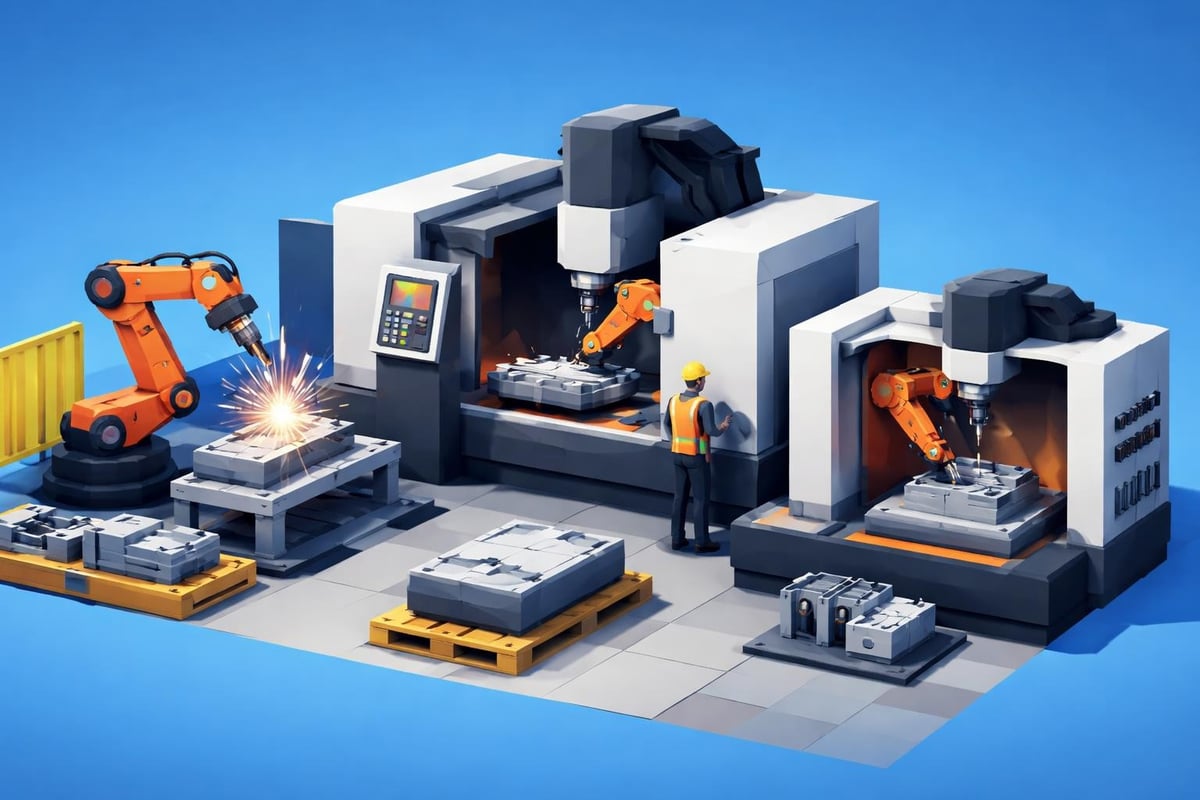
Robotic welding systems deliver consistent quality and high productivity for repetitive fabrication tasks. These systems prove particularly valuable for high-volume production and applications requiring consistent weld parameters. Similarly, robotic material handling and automated tool changers increase machining efficiency by reducing non-productive time.
Multi-tasking machines combine turning, milling, and drilling capabilities in single setups, reducing handling and improving accuracy by maintaining workpiece location throughout multiple operations. These machines particularly benefit complex components requiring multiple machining processes.
Industry-Specific Applications
Different industrial sectors leverage machining and fabrication in unique ways, addressing specific operational challenges and performance requirements.
Oil and Gas Sector Demands
Oil and gas fabrication requires expertise in pressure equipment, corrosion-resistant materials, and extreme service conditions. Projects include:
- Wellhead components machined to API specifications
- Pressure vessels fabricated per ASME Section VIII
- Pipeline sections with precision-machined connection threads
- Valve bodies requiring tight tolerances and superior surface finishes
- Structural skids and equipment supports for processing facilities
These applications demand stringent quality control, documented procedures, and certified personnel to ensure safety and regulatory compliance.
Aggregate and Recycling Equipment
Heavy-duty equipment processing rock, concrete, and recyclable materials experiences severe abrasive wear and impact loading. Machining and fabrication support these operations through:
- Wear plate fabrication using AR (abrasion-resistant) steel for chutes, liners, and impact zones
- Shaft machining and repair restoring worn crusher and conveyor components to service
- Screen deck fabrication creating custom-sized classification equipment
- Bearing housing machining maintaining proper alignment in vibrating equipment
- Structural repairs addressing fatigue cracks and impact damage in frames and supports
Field machining capabilities prove particularly valuable when equipment cannot be transported to shop facilities, enabling on-site repairs that minimize production downtime.
Mining Equipment Requirements
Mining operations demand structural steel fabrication for conveyor systems, processing plants, and material handling equipment. These applications combine heavy fabrication for load-bearing structures with precision machining for rotating components, creating integrated systems capable of continuous operation in demanding environments.
Cost Considerations and Project Planning
Understanding cost drivers in machining and fabrication enables better project planning and budgeting. Multiple factors influence final pricing beyond raw material costs.
Machining Cost Components
Setup time represents significant cost in machining operations, particularly for custom one-off components requiring fixtures, tooling selection, and program development. Batch production amortizes these costs across multiple pieces, reducing per-unit expenses.
Cycle time determines production rates, with faster cutting speeds improving efficiency when material and tool limitations permit. However, aggressive machining parameters can reduce tool life, creating trade-offs between speed and tooling costs.
Material removal rates impact both time and tooling costs. Removing large amounts of material requires more time and consumes cutting tools faster, suggesting fabrication processes like flame cutting or plasma cutting may prove more economical for rough sizing before finish machining.
Fabrication Cost Drivers
Labor represents the largest cost component in custom fabrication, particularly for complex welded assemblies requiring skilled tradespeople. Weld volume directly correlates with fabrication cost, making design optimization valuable for controlling expenses.
Material utilization affects both material costs and waste disposal expenses. Efficient nesting of cut parts from sheet and plate minimizes scrap, while standard material sizes should guide design dimensions when possible to avoid purchasing oversized stock.
Surface preparation and finishing add cost through labor and material expenses. Specifications should balance cosmetic requirements against functional needs, applying expensive finishes only where necessary for corrosion protection or appearance.
Selecting the Right Service Provider
Choosing qualified machining and fabrication partners significantly impacts project success. Several criteria distinguish capable providers from those lacking necessary expertise or equipment.
Capability Assessment
Evaluate potential providers based on:
- Equipment inventory: Modern, well-maintained machines indicate capacity for quality work
- Size capacity: Bed length, swing diameter, and tonnage determine maximum workpiece dimensions
- Process certifications: AWS welding certifications, ISO quality systems, and ASME code stamps verify competency
- Material experience: Familiarity with specific alloys and their unique processing requirements
- Industry knowledge: Understanding sector-specific requirements and standards
The Precision Metalforming Association provides resources for identifying qualified fabricators and understanding industry best practices across North America.
Geographic Considerations
Location impacts shipping costs, lead times, and accessibility for project collaboration. Western operations benefit from service providers familiar with regional industries like mining, energy, and agriculture. Local presence enables rapid response for emergency repairs and facilitates on-site consultation during project planning.
Companies offering both shop and field services provide flexibility, bringing capabilities directly to customer facilities when equipment cannot be moved or production schedules cannot accommodate extended downtime.
Maintenance and Repair Applications
Beyond new fabrication and component production, machining and fabrication skills prove essential for equipment maintenance and restoration. These services extend asset life and avoid costly replacement expenses.
Equipment Refurbishment
Industrial machinery refurbishment and maintenance combines machining and fabrication to restore worn equipment to service specifications. Typical projects include:
- Shaft turning to remove wear and restore bearing surfaces
- Crack repair welding in structural components and housings
- Bearing bore machining to accommodate oversized bearings
- Replacement part fabrication when original components are unavailable
- Alignment restoration through precision machining of mounting surfaces
This work requires diagnostic skills to identify root causes of failures, preventing recurring problems after repairs.
On-Site Machining Solutions
Large equipment and infrastructure often cannot be moved to machine shops for repairs. Portable machining equipment enables precision work at customer sites, addressing issues like:
- Flange facing to restore sealing surfaces on installed piping
- Bore welding and machining to repair worn bearing housings in place
- Keyway cutting on installed shafts and couplings
- Thread repair on large diameter connections
- Stud removal using specialized tooling and techniques
These capabilities minimize downtime by eliminating disassembly, transportation, and reinstallation time required for shop repairs.
Safety and Environmental Compliance
Both machining and fabrication operations present hazards requiring proper safety protocols and environmental controls. Responsible providers prioritize worker safety and environmental stewardship alongside production efficiency.
Workplace Safety Protocols
Machining hazards include rotating equipment, flying chips, and sharp edges requiring:
- Machine guarding preventing contact with moving components
- Personal protective equipment including safety glasses and appropriate clothing
- Chip management preventing slip hazards and contamination
- Lockout/tagout procedures for maintenance and setup activities
Fabrication safety addresses welding fumes, high temperatures, and heavy materials through:
- Adequate ventilation removing fumes and gases from breathing zones
- Fire prevention including hot work permits and fire watch procedures
- Material handling equipment for safe movement of heavy components
- Proper storage preventing material instability and collapse
Environmental Considerations
Modern machining and fabrication operations minimize environmental impact through several practices:
- Coolant recycling systems extending fluid life and reducing disposal volumes
- Scrap metal recycling recovering value from production waste
- Dust collection preventing particulate emissions during cutting and grinding
- Waste oil management ensuring proper handling of hydraulic fluids and lubricants
- VOC reduction using compliant coatings and minimizing solvent usage
These practices satisfy regulatory requirements while reducing operating costs through improved resource efficiency.
Training and Skill Development
The machining and fabrication workforce requires continuous skill development as technologies evolve and industry requirements change. Understanding training pathways helps businesses develop internal capabilities or evaluate service provider qualifications.
Educational Resources
Technical colleges and community colleges offer programs in welding, machining, and manufacturing technology. Resources like Spokane Community College’s CNC reference guide and Pennsylvania College of Technology’s welding and metal fabrication resources provide valuable learning materials for students and practitioners.
Industry certifications validate competency in specific processes. AWS (American Welding Society) certifications verify welding skills for various processes and positions, while NIMS (National Institute for Metalworking Skills) credentials demonstrate machining proficiency. These certifications provide objective evidence of capability, valuable for quality assurance and customer confidence.
Apprenticeship Programs
Traditional apprenticeships combine classroom instruction with supervised practical experience, developing well-rounded tradespeople. These programs typically span three to four years, gradually increasing responsibility as skills develop. Experienced mentors transfer knowledge accumulated through years of problem-solving, providing insights no textbook can match.
Successful industrial operations require reliable machining and fabrication capabilities that deliver precision components and durable structures meeting demanding service requirements. Whether your project involves new equipment fabrication, precision machining, or critical repairs, partnering with experienced professionals ensures quality outcomes and efficient execution. LTJ Industrial Services brings comprehensive shop and field capabilities to commercial and industrial clients throughout the Western United States, combining skilled tradespeople with modern equipment to tackle projects ranging from routine maintenance to complex custom fabrication.