The industrial manufacturing process encompasses the systematic methods and techniques used to transform raw materials into finished products at scale. From precision machining operations to complex welding assemblies, modern manufacturing integrates advanced technology, skilled craftsmanship, and rigorous quality control to meet the demanding requirements of commercial and industrial sectors. Understanding these processes is essential for businesses seeking to optimize production efficiency, maintain competitive advantages, and deliver reliable products to their customers across industries ranging from oil and gas to aggregate processing and recycling operations.
Core Components of the Industrial Manufacturing Process
Every industrial manufacturing process consists of interconnected stages that work together to create finished products. The fundamental components include material preparation, processing operations, assembly procedures, quality inspection, and finishing treatments. Each stage requires careful planning, precise execution, and continuous monitoring to ensure consistent output.
Material preparation involves receiving raw materials, verifying specifications, and preparing them for subsequent processing. This stage often includes cutting stock to size, cleaning surfaces, and conducting preliminary inspections. Processing operations encompass the actual transformation of materials through various techniques.
Machining Operations in Manufacturing
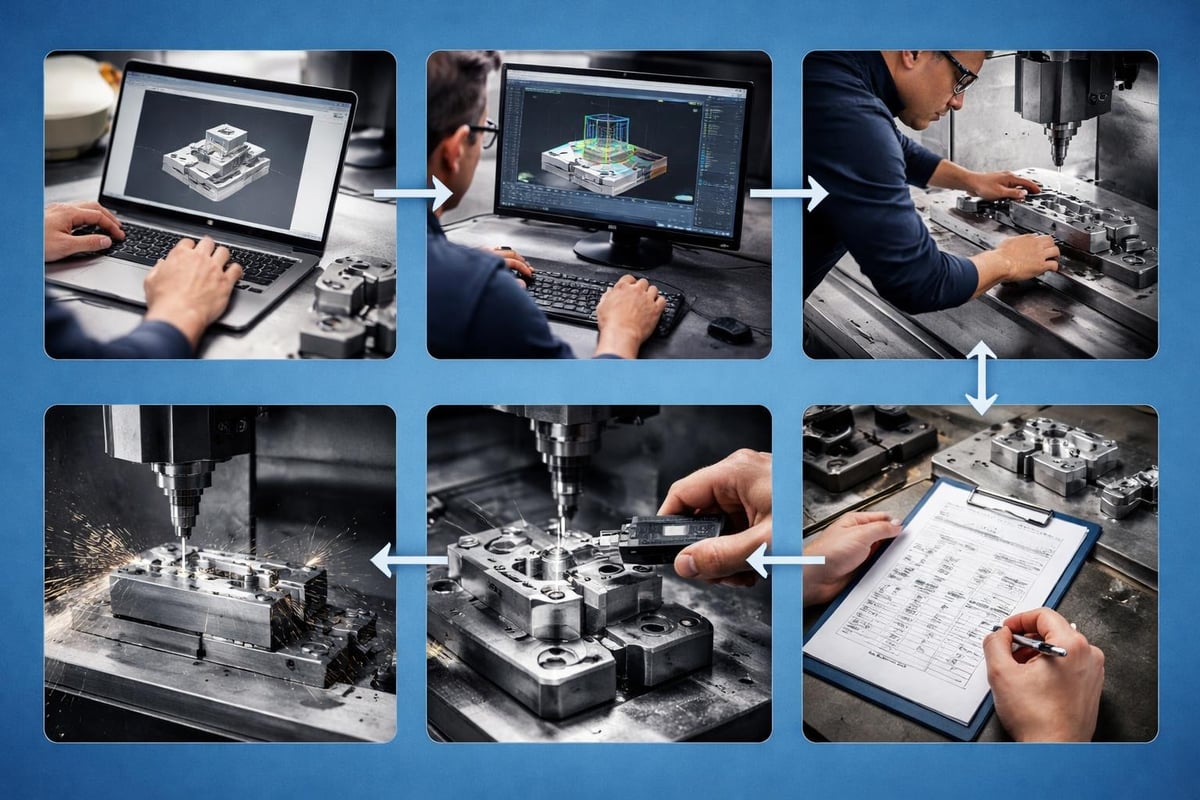
Machining represents a critical element of the industrial manufacturing process, removing material to achieve precise dimensions and surface finishes. CNC machining services for heavy industry utilize computer-controlled equipment to execute complex operations with exceptional accuracy. These operations include:
- Turning: Rotating workpieces against cutting tools to create cylindrical features
- Milling: Using rotating cutters to remove material and create complex geometries
- Drilling: Creating holes with specific diameters and depths
- Grinding: Achieving fine surface finishes and tight tolerances
- Boring: Enlarging existing holes to precise dimensions
Modern machining centers combine multiple operations in single setups, reducing handling time and improving accuracy. Multi-axis machines can simultaneously work on several surfaces, dramatically increasing efficiency for complex parts.
| Machining Process | Typical Tolerance | Surface Finish | Best Applications |
|---|---|---|---|
| CNC Milling | ±0.005" | 63-125 Ra | Complex geometries, pockets, contours |
| CNC Turning | ±0.003" | 32-63 Ra | Cylindrical parts, shafts, bushings |
| Precision Grinding | ±0.0005" | 8-16 Ra | Bearing surfaces, tight tolerances |
| EDM | ±0.0002" | 4-8 Ra | Hard materials, intricate shapes |
The selection of appropriate machining methods depends on material properties, required tolerances, production volumes, and cost considerations. High-strength alloys used in oil and gas applications often require specialized tooling and cutting parameters.
Fabrication and Welding Processes
Metal fabrication and welding form the backbone of structural manufacturing, creating assemblies from individual components. The fabrication process begins with design interpretation, followed by material selection, cutting, forming, and joining operations.
Cutting methods range from traditional sawing and shearing to advanced plasma and waterjet cutting. Each technique offers distinct advantages based on material thickness, edge quality requirements, and production volumes. Plasma cutting excels at processing thick steel plates, while waterjet cutting preserves material properties by eliminating heat-affected zones.
Welding Techniques and Applications
Welding joins metal components through controlled application of heat and pressure, creating permanent bonds that often exceed base material strength. The industrial manufacturing process relies on multiple welding methods:
Arc Welding Processes:
- Shielded Metal Arc Welding (SMAW) for field repairs and heavy fabrication
- Gas Metal Arc Welding (GMAW/MIG) for high-productivity applications
- Gas Tungsten Arc Welding (GTAW/TIG) for precision work and exotic alloys
- Flux-Cored Arc Welding (FCAW) for thick sections and outdoor operations
Specialized Welding:
- Submerged Arc Welding for heavy plate fabrication
- Resistance welding for high-speed assembly operations
- Laser welding for precision micro-joining
Custom welding and fabrication services must account for material properties, joint design, welding position, and service conditions. Pressure vessels, structural steel, and piping systems each require specific procedures, qualified welders, and rigorous inspection protocols.
Welding procedure specifications (WPS) document every critical parameter, including amperage, voltage, travel speed, preheat temperatures, and post-weld heat treatment requirements. These documents ensure consistency across production runs and provide traceability for quality assurance.
Process Control and Quality Management
Understanding industrial process control principles is essential for maintaining consistent output in manufacturing operations. Process control systems monitor critical parameters, detect deviations, and implement corrective actions automatically or through operator intervention.
Statistical Process Control (SPC) uses data analysis to identify trends before defects occur. Control charts track dimensional measurements, material properties, and process variables, providing early warning of potential issues. This proactive approach reduces scrap, minimizes rework, and improves overall equipment effectiveness.
Inspection and Testing Methods
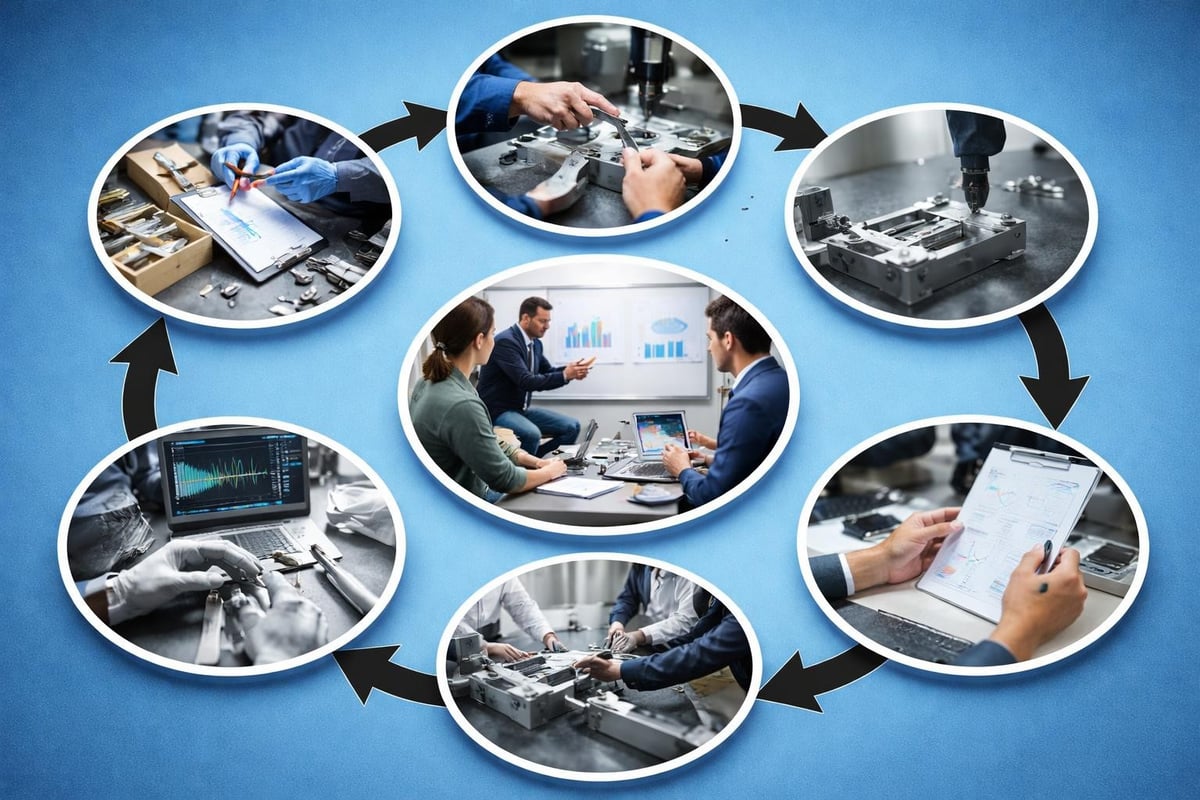
Quality verification occurs throughout the industrial manufacturing process, not just at final inspection. Multiple testing methods ensure conformance to specifications:
- Dimensional Inspection: Coordinate measuring machines (CMM), micrometers, and gauge blocks verify part geometry
- Non-Destructive Testing (NDT): Ultrasonic, radiographic, magnetic particle, and liquid penetrant testing detect internal and surface defects
- Material Testing: Hardness testing, tensile testing, and chemical analysis confirm material properties
- Visual Inspection: Trained inspectors identify surface defects, weld quality, and finish issues
- Functional Testing: Assemblies undergo operational testing to verify performance
Documentation requirements vary by industry and application. Aerospace and pressure vessel manufacturing demand comprehensive material certifications, procedure qualifications, and individual test records. The National Academies report on manufacturing process controls highlights the importance of integrated quality systems for future manufacturing competitiveness.
Advanced Manufacturing Technologies
The modern industrial manufacturing process increasingly incorporates digital technologies and automation to enhance capabilities and efficiency. Computer-aided design (CAD) and computer-aided manufacturing (CAM) systems create seamless workflows from concept to finished part.
Additive manufacturing complements traditional subtractive processes, enabling complex geometries impossible through conventional machining. While still limited in material options and production speeds, 3D printing serves valuable roles in prototyping, tooling, and low-volume specialty parts.
Robotic automation handles repetitive tasks with consistent quality and throughput. Welding robots execute precise weld paths repeatedly, while automated material handling systems move components between workstations. These systems work alongside skilled technicians who program, monitor, and maintain equipment.
Industry 4.0 Integration
Smart manufacturing connects equipment, sensors, and enterprise systems to create data-driven operations. Real-time monitoring provides visibility into machine utilization, cycle times, and quality metrics. Predictive maintenance algorithms analyze vibration patterns, temperature trends, and power consumption to schedule maintenance before failures occur.
Digital twins create virtual representations of physical processes, enabling simulation and optimization without disrupting production. Engineers test parameter changes, evaluate new tooling strategies, and train operators in risk-free virtual environments.
Material Selection and Processing Considerations
Material properties fundamentally influence every aspect of the industrial manufacturing process. Carbon steels, stainless alloys, aluminum, and exotic materials each require specific handling, processing, and joining techniques. Process manufacturing principles apply when mixing, heating, or chemically treating materials during production.
Material Categories and Characteristics:
| Material Type | Key Properties | Common Applications | Processing Challenges |
|---|---|---|---|
| Carbon Steel | High strength, weldable, economical | Structural components, pressure vessels | Corrosion susceptibility |
| Stainless Steel | Corrosion resistant, hygienic | Food processing, chemical equipment | Work hardening, heat input control |
| Aluminum | Lightweight, conductive | Aerospace, transportation | Oxide formation, thermal conductivity |
| High-Strength Alloys | Extreme strength, temperature resistance | Oil and gas, power generation | Difficult machining, special welding procedures |
Surface conditions affect subsequent operations. Mill scale must be removed before welding to prevent defects. Machining leaves tool marks that may require grinding or polishing for critical surfaces. Heat treatment alters material properties, requiring careful control of temperatures, heating rates, and cooling methods.
Production Planning and Workflow Optimization
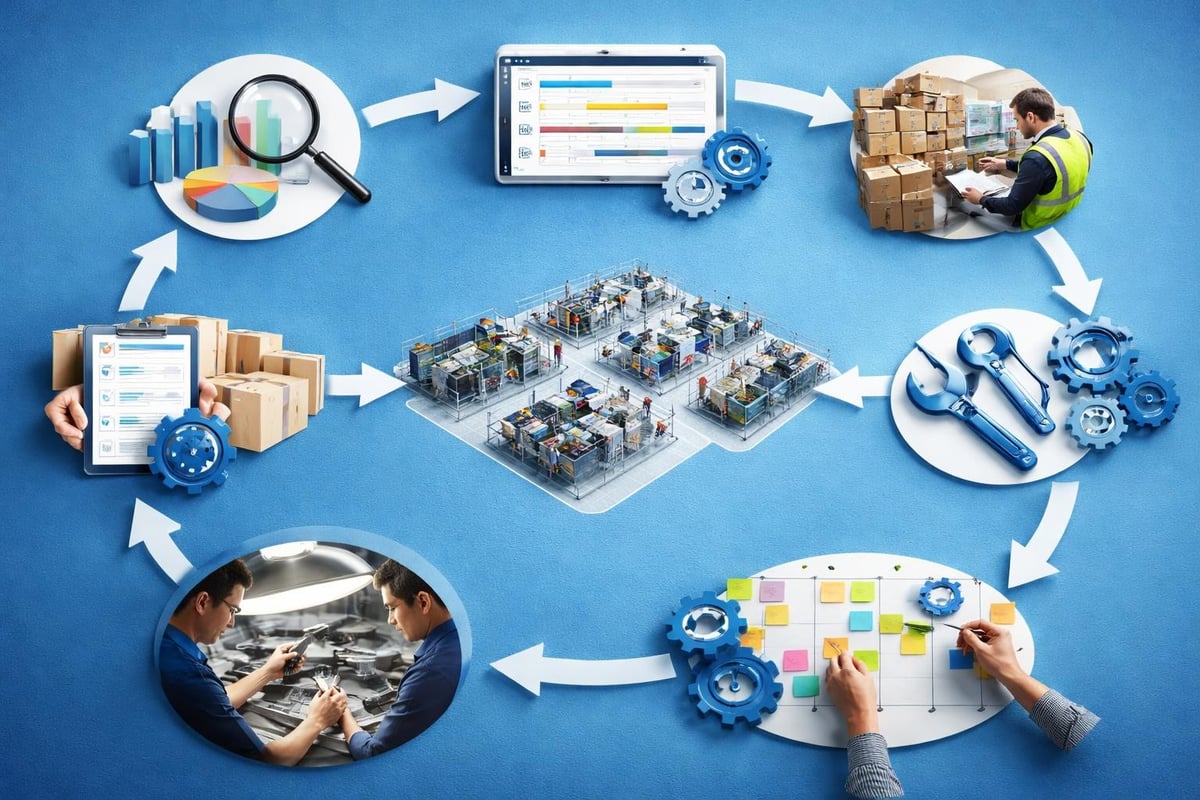
Efficient industrial manufacturing processes balance capacity, lead times, and resource utilization. Production planning begins with demand forecasting, followed by capacity analysis, scheduling, and material procurement. Job sequencing minimizes setup changes and maximizes machine utilization.
Lean manufacturing principles eliminate waste throughout operations. Value stream mapping identifies non-value-adding activities such as excessive material handling, waiting time, and inventory accumulation. Manufacturing and machining operations benefit from cellular layouts that group related processes and reduce transport distances.
Setup reduction techniques enable smaller batch sizes and faster response to customer requirements. Quick-change tooling, standardized work instructions, and dedicated workstations reduce changeover times from hours to minutes. This flexibility accommodates custom orders without sacrificing efficiency.
Capacity Management Strategies
Manufacturing facilities must balance fixed equipment investments with variable demand. Strategies include:
- Internal capacity expansion: Adding shifts, equipment, or facility space
- Outsourcing: Partnering with specialized providers for overflow or specialized capabilities
- Cross-training: Developing workforce flexibility to shift between operations
- Inventory buffering: Maintaining strategic stock for high-demand items
- Demand management: Offering incentives for off-peak ordering
Field services extend manufacturing capabilities beyond shop walls. Industrial machinery refurbishment and maintenance performed on-site minimizes equipment downtime and transportation costs for large assemblies. Mobile welding, machining, and hydraulic services address urgent repairs and modifications at customer facilities.
Safety and Regulatory Compliance
The industrial manufacturing process operates under strict safety regulations protecting workers, communities, and the environment. Occupational Safety and Health Administration (OSHA) standards govern workplace hazards including machine guarding, personal protective equipment, hazardous material handling, and confined space entry.
Welding operations generate fumes, ultraviolet radiation, and fire hazards requiring specific controls. Adequate ventilation removes harmful fumes, welding screens protect nearby workers from arc flash, and fire-resistant barriers prevent ignition of combustible materials. Proper training ensures welders understand hazards and protective measures.
Machining hazards include rotating components, flying chips, and noise exposure. Machine guards prevent contact with cutting tools and moving parts. Coolant systems reduce heat and improve tool life while controlling dust generation. Hearing protection preserves worker health in high-noise environments.
Environmental Considerations
Manufacturing generates waste streams requiring proper management. Metal chips and scrap undergo recycling, recovering valuable materials while reducing landfill burden. Manufacturing recycling operations process materials efficiently, separating ferrous and non-ferrous metals for maximum recovery value.
Cutting fluids, hydraulic oils, and cleaning solvents require controlled handling, storage, and disposal. Secondary containment prevents environmental releases, while waste treatment systems neutralize harmful constituents before discharge. Many facilities implement closed-loop systems that filter and recycle process fluids, reducing consumption and waste generation.
Air quality permits limit emissions from welding, painting, and heat treating operations. Dust collection systems capture particulates, while vapor control systems manage volatile organic compounds. Compliance monitoring ensures operations remain within permitted limits.
Industry-Specific Manufacturing Requirements
Different industrial sectors impose unique requirements on the industrial manufacturing process. Oil and gas applications demand materials and fabrication procedures qualified for extreme pressures, temperatures, and corrosive environments. Pressure vessel codes specify design calculations, material selection, welding procedures, and inspection requirements.
Aggregate and mining equipment withstands severe abrasion, impact loading, and environmental exposure. Wear-resistant materials, robust structural design, and protective coatings extend equipment service life. Structural steel fabrication for mining equipment requires understanding of operating conditions and maintenance accessibility.
Recycling industry equipment processes diverse materials ranging from paper and plastics to metals and electronic waste. Equipment design accommodates variable feed stock while maintaining throughput and separation efficiency. Replaceable wear components and modular construction facilitate maintenance and upgrades.
Industry-Specific Considerations:
- Oil and Gas: API standards, pressure vessel codes, material traceability, destructive testing requirements
- Aggregate: Wear resistance, impact strength, dust sealing, accessibility for maintenance
- Recycling: Contamination resistance, variable material handling, safety interlocks
- Construction: Building codes, seismic requirements, weathering resistance, architectural finishes
- Food Processing: Sanitary design, stainless construction, cleanability, FDA compliance
Understanding these sector-specific needs is essential for industrial and manufacturing companies serving diverse markets. Design engineers, fabricators, and quality personnel must stay current with evolving standards and customer expectations.
Maintenance and Equipment Reliability
Sustained manufacturing performance depends on effective equipment maintenance. Preventive maintenance schedules address routine needs including lubrication, filter changes, and wear component replacement. Predictive maintenance uses condition monitoring to identify developing problems before failures occur.
Vibration analysis detects bearing wear, misalignment, and imbalance in rotating equipment. Thermography identifies electrical hot spots and insulation degradation. Oil analysis reveals contamination, wear particles, and lubricant breakdown. These technologies enable maintenance optimization, performing work when needed rather than on arbitrary schedules.
Equipment history tracking documents repairs, modifications, and performance trends. Analysis reveals chronic problems requiring engineering solutions rather than repeated repairs. Root cause analysis identifies underlying issues such as design weaknesses, operating practice deficiencies, or inadequate preventive maintenance.
Critical equipment may justify spare capacity or rapid-response repair capabilities. Backup machines ensure production continuity during maintenance or unexpected failures. Maintaining spare parts inventory and established supplier relationships minimizes downtime when repairs are required.
Workforce Development and Skills Training
The industrial manufacturing process relies on skilled technicians, machinists, welders, and engineers. Technical education programs provide foundational knowledge, while on-the-job training develops practical skills and company-specific expertise. Apprenticeship programs combine classroom instruction with supervised work experience.
Certification programs validate individual competency in specific processes. American Welding Society (AWS) certifications demonstrate proficiency in various welding processes and positions. National Institute for Metalworking Skills (NIMS) credentials verify machining knowledge and abilities. These credentials provide objective measures of capability.
Continuous training keeps workforce skills current with evolving technologies and methods. Equipment manufacturers provide training on new machines and software updates. Industry associations offer seminars and workshops covering advanced techniques, safety updates, and regulatory changes.
Cross-training develops workforce flexibility and provides career advancement opportunities. Machinists learn welding skills, welders gain fabrication experience, and experienced technicians develop programming and troubleshooting capabilities. This versatility improves operational efficiency and employee engagement.
Understanding the complexities of the industrial manufacturing process enables businesses to optimize operations, improve quality, and meet customer requirements effectively. Whether you need precision machining, custom fabrication, expert welding, or field service capabilities throughout the Western United States, LTJ Industrial Services delivers comprehensive solutions backed by experienced technicians and state-of-the-art equipment. From concept to completion, our team provides the expertise and resources to keep your operations running efficiently.