The industrial landscape of 2026 continues to evolve through advanced fabrication and manufacturing techniques that drive efficiency and innovation across sectors. From the oil and gas fields to aggregate processing facilities, modern operations demand precision engineering, robust quality control, and versatile capabilities that can adapt to challenging environments. Understanding the full spectrum of fabrication and manufacturing processes enables businesses to make informed decisions about their production strategies, equipment investments, and partnership selections.
Understanding Core Fabrication and Manufacturing Processes
Fabrication and manufacturing encompass a diverse range of processes that transform raw materials into finished products. At their foundation, these disciplines combine traditional craftsmanship with cutting-edge technology to create components and systems that power industrial operations.
Metal fabrication represents one of the most fundamental aspects of industrial production. This process involves cutting, bending, shaping, and assembling metal materials to create structures and parts. Modern fabrication shops utilize multiple techniques to achieve precise results:
- Plasma and laser cutting for intricate patterns
- Press brake operations for angular bends
- MIG, TIG, and stick welding for structural integrity
- Rolling and forming for curved components
- Assembly and finishing for completed products
The distinction between fabrication and broader manufacturing lies in scope and application. While fabrication typically focuses on metalworking and creating structural components, manufacturing represents the complete production ecosystem that includes materials processing, assembly, quality assurance, and distribution.
Material Selection and Preparation
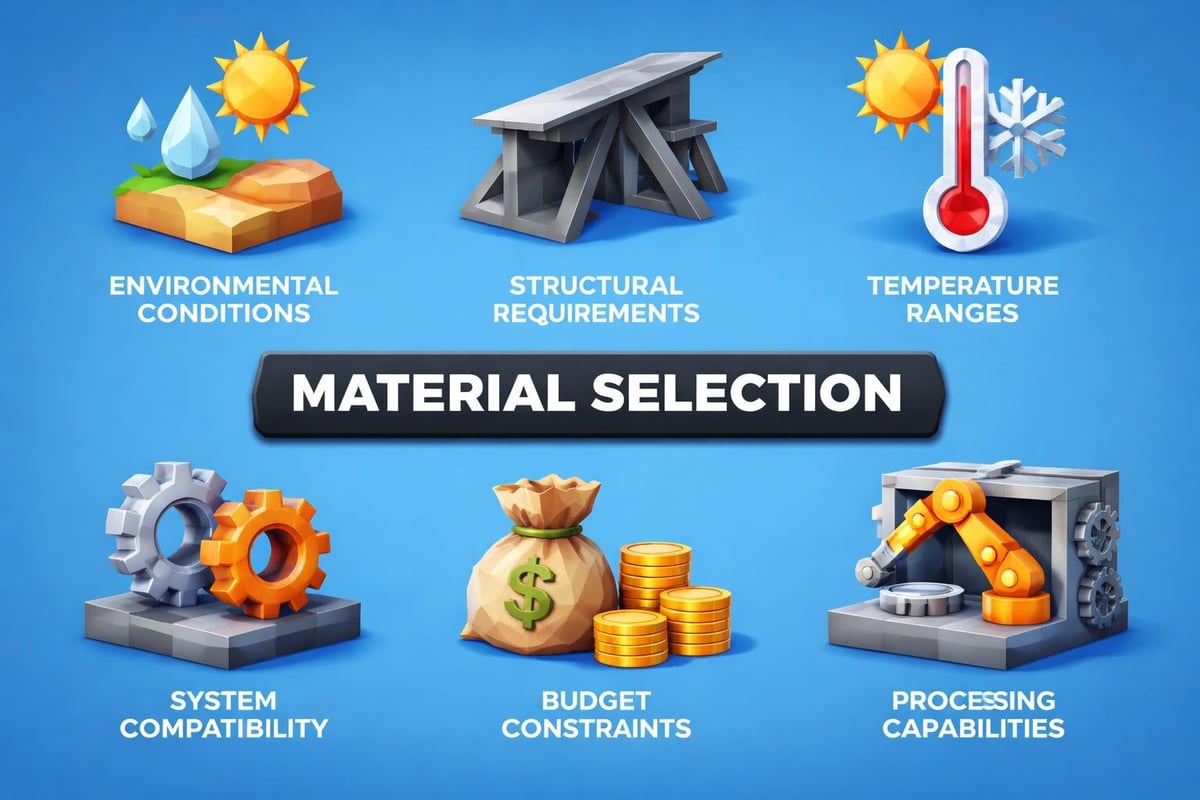
Choosing appropriate materials forms the critical first step in any fabrication and manufacturing project. Carbon steel, stainless steel, aluminum, and specialized alloys each offer distinct properties suited to specific applications.
Material considerations include:
- Environmental exposure (corrosion resistance requirements)
- Load-bearing capacity and structural demands
- Temperature extremes during operation
- Compatibility with existing systems
- Cost efficiency and availability
- Machinability and weldability
Commercial operations in the aggregate and recycling industries face particularly harsh conditions. Equipment subjected to constant abrasion, impact loads, and environmental exposure requires materials that balance durability with workability. Stainless steel components resist corrosion in wet processing environments, while high-carbon steel provides the hardness needed for crushing and grinding applications.
Advanced Machining in Modern Manufacturing
Precision machining represents the intersection of traditional craftsmanship and computer-controlled accuracy. This subset of fabrication and manufacturing creates components with tolerances measured in thousandths of an inch, essential for hydraulic systems, rotating equipment, and custom machinery.
CNC (Computer Numerical Control) machining has revolutionized production capabilities. These systems execute complex operations with repeatability impossible through manual methods. A single setup can perform multiple operations including milling, drilling, boring, and threading, reducing handling time and improving dimensional accuracy.
| Machining Process | Typical Applications | Tolerance Range | Production Speed |
|---|---|---|---|
| CNC Milling | Brackets, housings, plates | ±0.001" – ±0.005" | Medium to High |
| Turning/Lathing | Shafts, bushings, pins | ±0.0005" – ±0.002" | High |
| Grinding | Precision surfaces, bearings | ±0.0001" – ±0.0005" | Low to Medium |
| Boring | Large diameter holes | ±0.001" – ±0.003" | Medium |
Manufacturing and machining services must address both production and maintenance needs. Field machining brings precision equipment directly to industrial sites, enabling repairs without complete disassembly or equipment removal. This capability proves invaluable for large processing equipment, conveyor systems, and production machinery where downtime costs escalate rapidly.
Quality Control and Inspection Methods
Maintaining dimensional accuracy throughout fabrication and manufacturing requires systematic inspection protocols. Quality assurance begins with incoming material verification and continues through every production stage.
Modern shops employ multiple inspection methods:
- Coordinate measuring machines (CMM) for complex geometries
- Laser scanning for large assemblies
- Ultrasonic testing for weld integrity
- Dye penetrant inspection for surface defects
- Hardness testing for material verification
The oil and gas sector demands particularly rigorous quality standards. Pressure vessels, piping systems, and structural supports must meet ASME codes and API specifications. Documentation traceability ensures every component's material certifications, welding procedures, and inspection results remain available throughout the equipment lifecycle.
Welding Technologies and Applications
Welding forms the backbone of structural fabrication and manufacturing, joining metal components into assemblies that withstand extreme forces and environmental conditions. The Western United States industrial corridor relies heavily on welded structures for mining operations, energy production, and materials processing.
Primary welding processes include:
- SMAW (Stick welding) – Versatile process ideal for field repairs and structural work
- GMAW (MIG welding) – High-speed production welding with excellent control
- GTAW (TIG welding) – Precision joining for critical applications and exotic materials
- FCAW (Flux-core welding) – Deep penetration for thick materials and outdoor work
Design for manufacturability principles significantly impact welding success. Joint design, access for welding equipment, distortion control, and post-weld treatment all influence final assembly quality. Experienced fabricators recognize these factors during the design phase, preventing costly modifications during production.
Certified welders bring specialized skills matched to specific materials and applications. Aluminum welding requires different techniques and filler materials than carbon steel. Stainless steel demands cleanliness and shielding gas control to prevent contamination. Chrome-moly alloys used in high-pressure service need precise heat input and post-weld heat treatment.
Field Welding and Mobile Capabilities
Industrial operations throughout Colorado, Utah, Wyoming, and surrounding states face unique challenges when equipment failures occur. Transportation limitations, site access restrictions, and operational pressures often make field repairs the only practical solution.
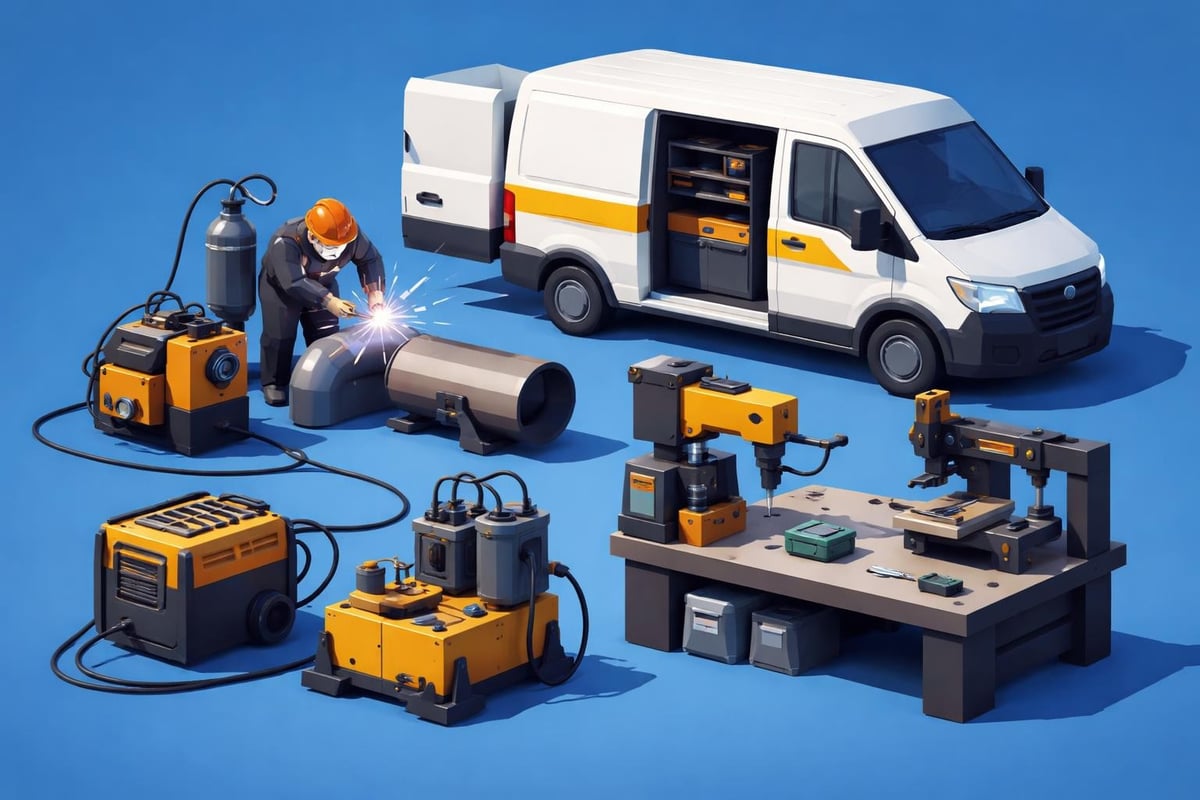
Custom fabrication and welding services delivered on-site provide critical support. Mobile welding rigs equipped with generators, welding machines, tools, and safety equipment bring complete shop capabilities to remote locations. This flexibility enables emergency repairs, modification projects, and new installation work without production shutdowns.
Hydraulic System Fabrication and Maintenance
Hydraulic systems power essential equipment across recycling centers, aggregate plants, and manufacturing facilities. These systems require precision fabrication and manufacturing of components including cylinders, valves, manifolds, and high-pressure tubing assemblies.
Critical hydraulic system elements:
- Custom cylinder fabrication for specific stroke and force requirements
- Manifold machining with precise port locations and sealing surfaces
- High-pressure hose and tubing assemblies with proper fittings
- Filtration and contamination control systems
- Pressure testing and performance verification
Contamination represents the primary cause of hydraulic system failures. Fabrication and manufacturing processes must emphasize cleanliness during assembly. Proper tube preparation, fitting installation, and system flushing prevent particulate contamination that damages pumps, valves, and cylinders.
System design optimization considers pressure drops, heat generation, and maintenance accessibility. Hybrid manufacturing approaches combining traditional fabrication with advanced analysis tools enable performance prediction before physical construction begins.
Custom Fabrication for Specialized Applications
Every industrial operation presents unique challenges requiring custom solutions. Standard off-the-shelf components rarely address site-specific requirements, material handling demands, or integration with existing equipment.
Custom fabrication and manufacturing projects follow a structured development process:
| Project Phase | Key Activities | Timeline Consideration |
|---|---|---|
| Consultation | Requirement analysis, site assessment, feasibility review | 1-3 days |
| Design | Engineering drawings, material selection, cost estimation | 3-10 days |
| Approval | Client review, modifications, final specifications | 2-5 days |
| Fabrication | Cutting, forming, welding, machining, assembly | 1-6 weeks |
| Testing | Quality inspection, function testing, finishing | 1-3 days |
| Delivery | Transportation, installation, commissioning | 1-3 days |
Aggregate processing operations frequently require custom chutes, hoppers, screens, and conveyor components. These fabrications must withstand constant abrasion while maintaining material flow characteristics. Liner selection, wear plate placement, and structural reinforcement all impact service life and performance.
Recycling facilities process diverse material streams with varying contamination levels. Metal fabrication projects for these environments emphasize durability, safety features, and maintenance accessibility. Custom sorting systems, baling equipment modifications, and material handling solutions improve efficiency and reduce operational costs.
Rapid Prototyping and Design Iteration
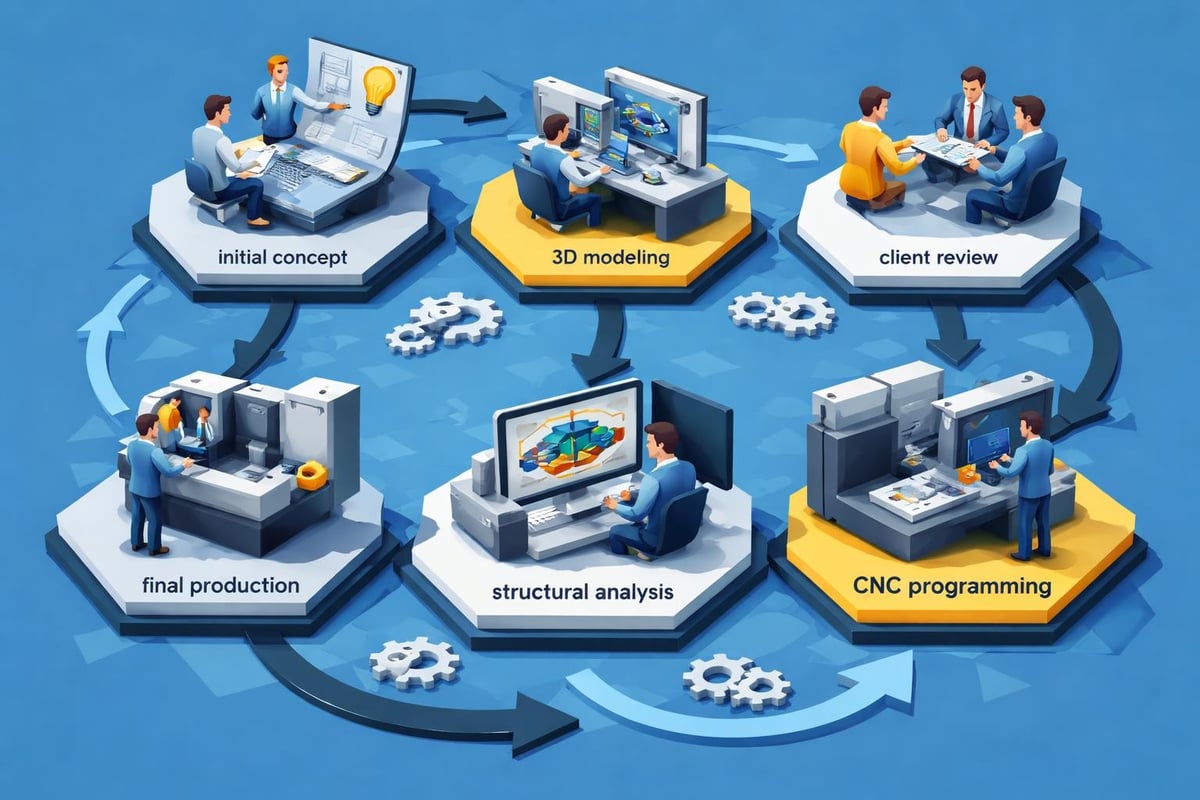
Modern fabrication and manufacturing leverage 3D design in engineering applications to visualize concepts before cutting metal. Computer-aided design (CAD) software enables rapid iteration, interference checking, and structural analysis.
This design-first approach reduces material waste and prevents costly fabrication errors. Clients review 3D models, suggest modifications, and approve final designs with confidence. The digital model then drives CNC cutting equipment, ensuring fabricated parts match engineered specifications exactly.
Water Jetting and Precision Cutting Technologies
Water jetting represents an advanced cutting method within fabrication and manufacturing that uses ultra-high-pressure water streams to cut materials without heat-affected zones. This cold-cutting process prevents material property changes, warping, and hardening that occur with thermal cutting methods.
Water jetting advantages:
- No heat distortion or metallurgical changes
- Cuts virtually any material including composites
- Minimal material waste through narrow kerf width
- Complex shapes and tight nesting capabilities
- Environmentally friendly with no fumes or gases
Industrial applications span gasket cutting, plate fabrication, decorative metalwork, and precision part production. The absence of thermal stress makes water jetting ideal for materials sensitive to heat or requiring subsequent welding without pre-heating.
Abrasive water jetting adds garnet or other media to the stream, enabling cutting of hardened steel, stainless alloys, and thick plate materials. This process maintains the cold-cutting benefits while expanding material thickness capabilities beyond pure water systems.
Integration of Fabrication and Manufacturing Services
Comprehensive industrial metal fabrication combines multiple capabilities under one provider, streamlining project execution and accountability. Single-source providers eliminate coordination challenges between separate welding, machining, and assembly contractors.
This integrated approach offers measurable advantages:
- Faster project completion through parallel processing
- Consistent quality standards across all operations
- Reduced transportation and handling costs
- Single point of contact for project management
- Comprehensive warranty coverage
Large-scale projects benefit particularly from integrated services. A processing plant expansion might require structural steel fabrication, custom equipment manufacturing, hydraulic system installation, and field welding. Coordinating these elements through one experienced provider ensures timeline adherence and budget control.
Emergency Response and Repair Capabilities
Unplanned equipment failures create operational and financial pressure. Production downtime in aggregate, recycling, or energy operations costs thousands of dollars hourly. Rapid response fabrication and manufacturing services minimize these impacts through:
- 24/7 emergency availability and dispatch
- Mobile equipment for on-site work
- Extensive material inventory for common repairs
- Experienced technicians diagnosing problems quickly
- Temporary solutions while permanent repairs are fabricated
Field mechanics assess damage, determine repair strategies, and execute solutions with minimal production interruption. Portable machining equipment enables precision work on-site. Mobile welding systems handle structural repairs and modifications without equipment removal.
Material Processing and Value-Added Services
Beyond core fabrication and manufacturing, value-added services enhance finished products and streamline customer operations. These services include surface preparation, coating application, heat treatment, and assembly integration.
Common value-added processes:
| Service | Purpose | Typical Applications |
|---|---|---|
| Sandblasting | Surface preparation, coating adhesion | Structural steel, tanks, frames |
| Powder coating | Corrosion protection, appearance | Guards, panels, enclosures |
| Galvanizing | Long-term corrosion resistance | Outdoor structures, fasteners |
| Heat treating | Hardness adjustment, stress relief | Wear components, tools |
| Assembly | Complete system delivery | Equipment packages, modules |
Industrial coatings protect fabricated components from harsh operating environments. Two-part epoxies, polyurethanes, and specialized industrial finishes provide chemical resistance, UV protection, and extended service life. Proper surface preparation determines coating performance, making abrasive blasting and chemical cleaning critical pre-coating steps.
Project Management and Client Collaboration
Successful fabrication and manufacturing projects require clear communication, realistic scheduling, and proactive problem-solving. Experienced providers establish structured project workflows that keep clients informed while meeting deadlines.
Effective project management begins with thorough requirement gathering. Site visits, application discussions, and operational constraint identification ensure designs address actual needs rather than assumed requirements. Obtaining a fabrication quote should include detailed specifications, timeline expectations, and delivery logistics.
Documentation throughout the project lifecycle maintains traceability and supports future maintenance. Material certifications, welding procedure specifications, inspection reports, and assembly drawings provide reference for repairs, modifications, or replication projects.
Regular progress updates prevent surprises and enable schedule adjustments when necessary. Photographs, milestone confirmations, and quality checkpoints give clients confidence in project execution. This transparency builds trust and facilitates long-term partnerships.
Industry-Specific Applications and Requirements
Different industrial sectors impose unique demands on fabrication and manufacturing services. Understanding these sector-specific requirements ensures appropriate material selection, process choices, and quality standards.
Oil and gas applications emphasize safety, pressure containment, and environmental protection. ASME Section VIII pressure vessel codes, API pipeline standards, and specialized inspection requirements govern fabrication work. Materials must resist hydrogen embrittlement, sour gas corrosion, and extreme temperatures.
Aggregate and mining operations prioritize abrasion resistance, impact strength, and ease of maintenance. Hardened wear plates, replaceable liners, and bolt-on components extend equipment life while simplifying field repairs. Dust suppression systems, chute designs, and screen deck fabrications directly impact production efficiency.
Recycling facilities process contaminated material streams requiring robust equipment design. Hydraulic systems must tolerate shock loads from inconsistent material. Sorting equipment needs adjustable configurations for varying product streams. Safety features protect operators from unexpected material behavior.
Advancing Capabilities Through Technology Investment
The fabrication and manufacturing sector continues evolving through technology adoption and process refinement. Investment in advanced equipment, training programs, and quality systems separates industry leaders from basic service providers.
CNC plasma and laser cutting systems deliver precision impossible with manual torch cutting. Computer-controlled bending equipment ensures consistent angles across production runs. Welding automation increases deposition rates while reducing defects. Each technology advancement improves quality, reduces lead times, and expands capability ranges.
Certification programs validate technician skills and organizational quality systems. AWS (American Welding Society) certifications demonstrate welder proficiency in specific processes and materials. ISO 9001 registration confirms documented quality management systems. ASME code stamps authorize pressure vessel fabrication.
Continuous improvement methodologies drive efficiency gains without compromising quality. Lean manufacturing principles eliminate waste in material handling, production flow, and inventory management. Six Sigma tools identify process variations requiring correction. These structured approaches to industrial manufacturing deliver measurable cost savings passed to customers through competitive pricing.
Fabrication and manufacturing excellence requires the integration of skilled craftsmanship, advanced technology, and comprehensive process understanding across welding, machining, and assembly operations. Whether your operation needs emergency field repairs, custom equipment fabrication, or ongoing maintenance support, partnering with an experienced provider ensures quality results and minimal downtime. LTJ Industrial Services delivers the complete range of fabrication, welding, and machining capabilities to keep your Western United States operations running efficiently.