When industrial operations need specialized metal components, assemblies, or repairs, searching for "custom fabrication near me" becomes more than a simple internet query. It represents a critical business decision that impacts project timelines, quality standards, and operational efficiency. Local fabrication partnerships offer unique advantages including rapid response times, face-to-face consultations, and the ability to oversee production processes. For businesses across the Western United States, particularly those in manufacturing, oil and gas, recycling, and aggregate industries, identifying the right fabrication partner requires understanding capabilities, certifications, and proven track records in delivering complex metalwork solutions.
Understanding Custom Fabrication Services
Custom fabrication encompasses a wide range of metalworking processes designed to create unique components, structures, and assemblies according to specific project requirements. Unlike mass production, custom work addresses individual client needs through precise engineering and skilled craftsmanship.
Core Fabrication Capabilities
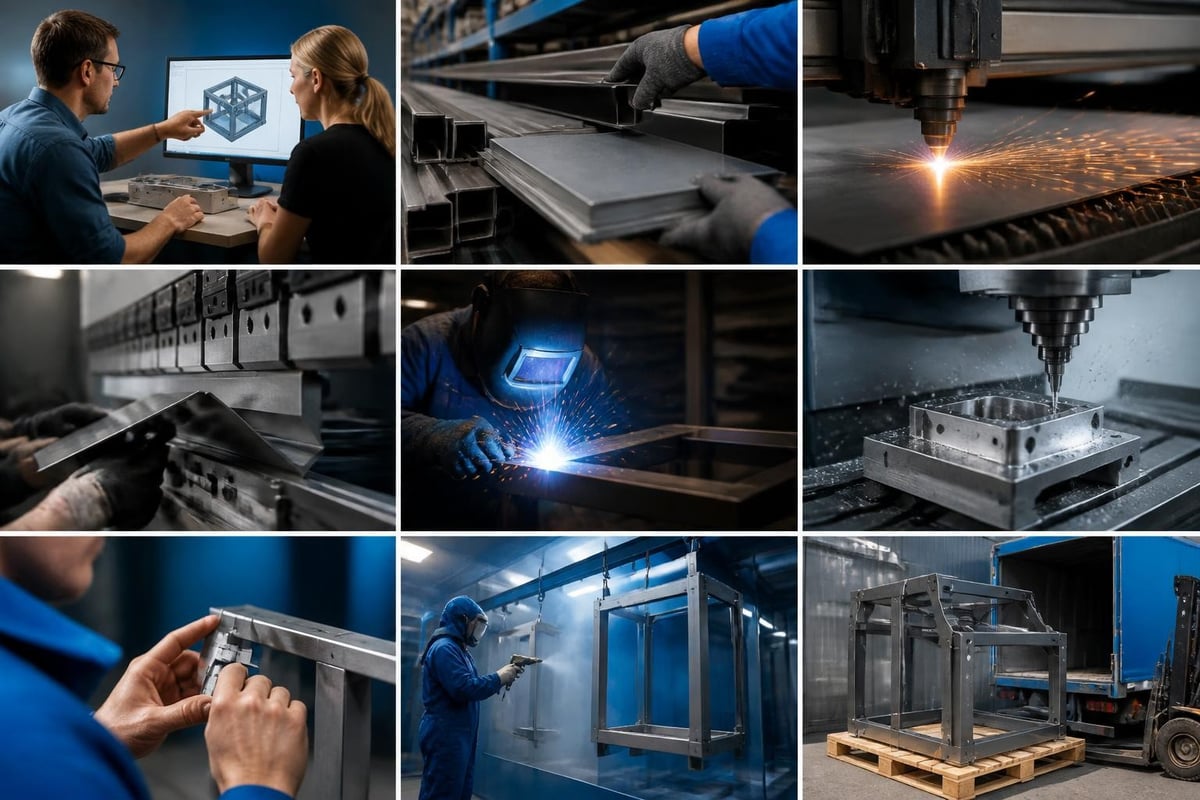
Modern fabrication shops offer comprehensive services that extend beyond basic cutting and welding:
- Metal cutting and forming using CNC plasma, laser, and waterjet technologies
- Precision welding including MIG, TIG, stick, and specialized processes
- CNC machining for tight-tolerance components and custom parts
- Rolling and bending for structural shapes and pipe fabrication
- Assembly and finishing including powder coating and surface treatment
Many businesses need metal fabrication services that combine multiple processes into turnkey solutions. This integrated approach reduces coordination challenges and ensures consistency across complex projects.
Industry-Specific Applications
Custom fabrication serves diverse sectors with unique requirements. The oil and gas industry frequently requires custom skid fabrication for process equipment, pump assemblies, and instrumentation platforms. Aggregate operations need heavy-duty conveyor components, chutes, and screening equipment that withstand abrasive materials.
Recycling facilities depend on custom fabrication for sorting equipment, containment systems, and material handling solutions. Each industry presents distinct challenges regarding material selection, structural design, and operational environment considerations.
Evaluating Local Fabrication Providers
Finding qualified custom fabrication near me requires systematic evaluation of potential partners. The proximity advantage loses value if the fabricator lacks necessary capabilities or quality standards.
Essential Qualifications and Certifications
Professional fabricators maintain current certifications that demonstrate technical competence and quality commitment. The American Welding Society standards establish baseline requirements for welder qualifications and procedural specifications that reputable shops routinely exceed.
| Certification Type | Relevance | Verification Method |
|---|---|---|
| AWS Certified Welders | Ensures skilled personnel | Request certification copies |
| ASME Code Stamps | Required for pressure vessels | Check ASME database |
| ISO 9001 Quality Management | Demonstrates process control | Review audit reports |
| API Certifications | Critical for oil/gas work | Verify through API registry |
Companies serving industrial and manufacturing sectors typically maintain multiple certifications appropriate to their target markets.
Capacity and Equipment Assessment
Equipment sophistication directly impacts what a fabricator can deliver. When evaluating shops, investigate:
- Cutting capabilities including maximum material thickness and bed size
- Welding equipment range and process certifications
- Machining precision with CNC and conventional equipment
- Material handling including cranes, forklifts, and assembly space
- Quality control tools such as CMM machines and NDT equipment
Advanced shops offer precision CNC plasma cutting service alongside traditional capabilities, providing versatility for complex projects requiring multiple manufacturing methods.
Response Time and Geographic Coverage
Local fabrication's primary advantage lies in accessibility. Evaluate how quickly potential partners can respond to urgent needs, conduct site visits, or deliver completed work. Field fabrication services become especially valuable when installation, repair, or modification must occur at your facility rather than in a remote shop.
Consider whether the fabricator serves your industry's geographic footprint. Operations spanning multiple states benefit from partners who provide consistent service throughout their coverage area.
Technical Specifications and Communication
Successful custom fabrication near me partnerships depend on clear technical communication and comprehensive documentation. Misunderstandings during the specification phase create costly rework and project delays.
Drawing and Design Requirements
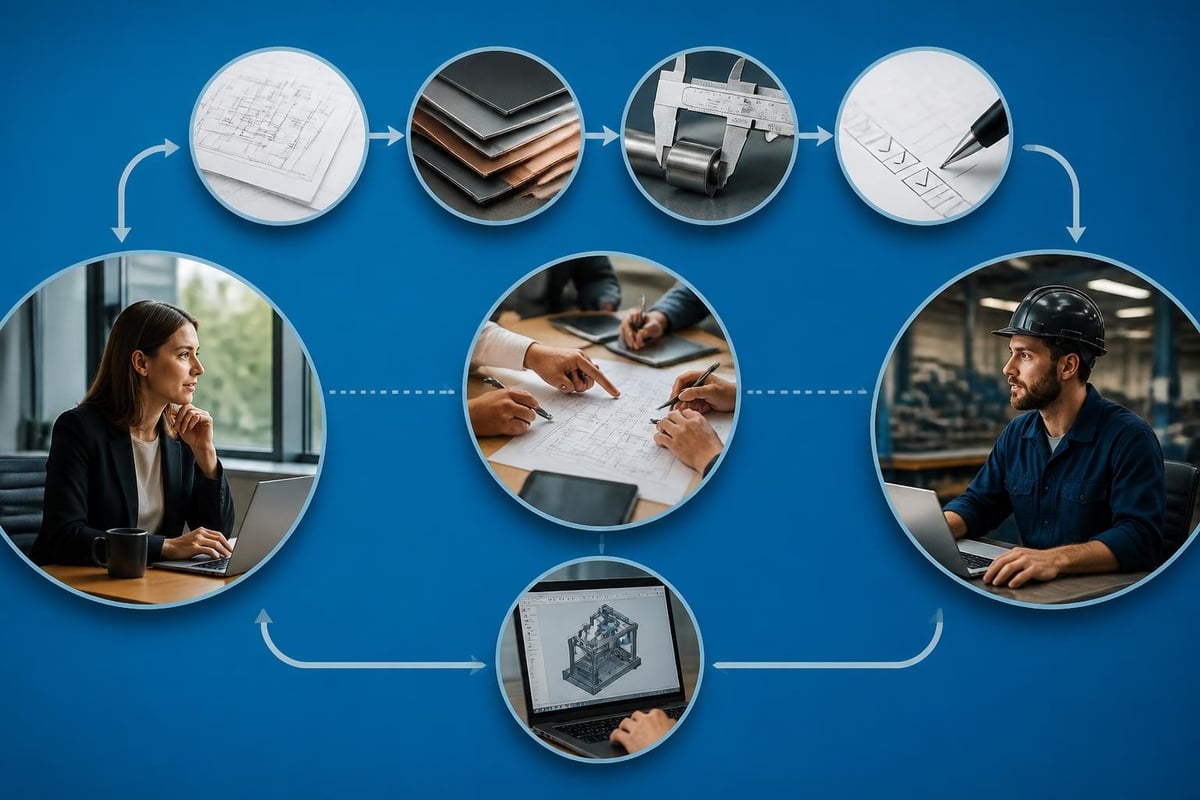
Professional fabricators work from various input formats:
- Engineered drawings with complete dimensions and tolerances
- Sketches and concepts requiring design development
- Sample parts for reverse engineering and reproduction
- Performance specifications where design is fabricator's responsibility
The ASME codes and standards portal provides essential references for pressure equipment, structural components, and other regulated fabrications. Fabricators familiar with relevant codes prevent compliance issues before production begins.
Material Selection Guidance
Experienced fabricators advise on material choices considering:
- Mechanical properties matching load and stress requirements
- Corrosion resistance appropriate to operating environment
- Weldability and formability affecting manufacturing feasibility
- Availability and cost balancing performance with budget
- Regulatory compliance for specialized applications
Carbon steel remains the workhorse for structural fabrication, while stainless steel addresses corrosive environments. Aluminum offers weight savings where strength-to-weight ratio matters. Exotic alloys solve extreme temperature or chemical exposure challenges.
Tolerance and Quality Expectations
Different applications demand varying precision levels. Structural steel typically follows commercial tolerances, while custom metal machining achieves tolerances measured in thousandths of an inch. Clearly communicate expectations regarding:
- Dimensional accuracy requirements
- Surface finish specifications
- Weld quality standards and inspection methods
- Acceptance criteria for visual appearance
- Documentation and certification needs
Cost Considerations and Value Assessment
Custom fabrication pricing reflects multiple variables including material costs, labor complexity, and project volume. Understanding pricing structures helps evaluate quotes and identify genuine value.
Pricing Models and Quote Components
Fabricators typically structure pricing around these elements:
| Cost Component | Typical Approach | Variables Affecting Price |
|---|---|---|
| Materials | Cost-plus markup | Market pricing, quantity, grade |
| Labor | Hourly rates or fixed bid | Complexity, volume, timeline |
| Equipment Use | Included in labor or separate | Specialized processes, setup time |
| Engineering/Design | Separate fee or bundled | Drawing complexity, revisions |
| Finishing | Per-piece or area-based | Coating type, preparation required |
When comparing quotes for custom fabrication near me, ensure all bidders include identical scope elements. The lowest price often excludes critical services that competitors include.
Hidden Costs and Timeline Impact
Rushed timelines increase costs through overtime labor and expedited material procurement. Inadequate initial specifications trigger change orders that compound expenses. Poor quality results in rework, delays, and potential field failures far exceeding original fabrication costs.
Investing in thorough planning, complete documentation, and qualified fabricators typically costs less than recovering from shortcuts. Businesses operating across manufacturing shops throughout the Western region recognize that reliability and quality deliver better long-term value than minimum bid acceptance.
Volume Discounts and Ongoing Relationships
Single-piece custom fabrication carries higher per-unit costs than production runs. When requirements permit, combining similar components or scheduling multiple projects together reduces setup time and material waste.
Long-term partnerships often yield preferential pricing, priority scheduling, and streamlined communication. Fabricators familiar with your standards, preferences, and typical needs work more efficiently on subsequent projects.
Quality Assurance and Inspection Protocols
Professional fabricators implement systematic quality controls ensuring delivered work meets specifications and performs reliably throughout its service life.
In-Process Quality Checkpoints
Quality assurance begins before fabrication starts:
- Material verification confirms correct alloy and grade receipt
- Dimensional inspection validates cut parts before assembly
- Fit-up checks ensure proper alignment before welding
- Welding procedure qualification proves process capability
- Final inspection verifies completed assemblies against drawings
Shops serving regulated industries maintain quality documentation satisfying customer and regulatory requirements. This traceability becomes critical when welding businesses support oil and gas, pressure vessel, or structural applications where failures risk safety.
Non-Destructive Testing Methods
Complex or critical fabrications require verification beyond visual inspection:
- Radiographic testing (RT) reveals internal weld defects
- Ultrasonic testing (UT) detects subsurface discontinuities
- Magnetic particle testing (MT) identifies surface cracks in ferrous metals
- Liquid penetrant testing (PT) shows surface-breaking defects
- Visual testing (VT) remains the primary inspection method
Specify required testing methods during project planning. NDT adds cost and time but prevents catastrophic failures in critical applications.
Certification and Documentation Packages
Many applications demand material certifications, weld procedure specifications, welder qualifications, and inspection reports. Federal contracting work particularly requires comprehensive documentation as outlined in SBA contracting guidance.
Discuss documentation requirements early. Retroactive certification often proves impossible, while advance planning incorporates appropriate controls throughout fabrication.
Modern Technology in Custom Fabrication
The fabrication industry continuously adopts advanced technologies improving precision, efficiency, and capability. When searching for custom fabrication near me, understanding technological capabilities helps identify forward-thinking partners.
Digital Manufacturing Integration
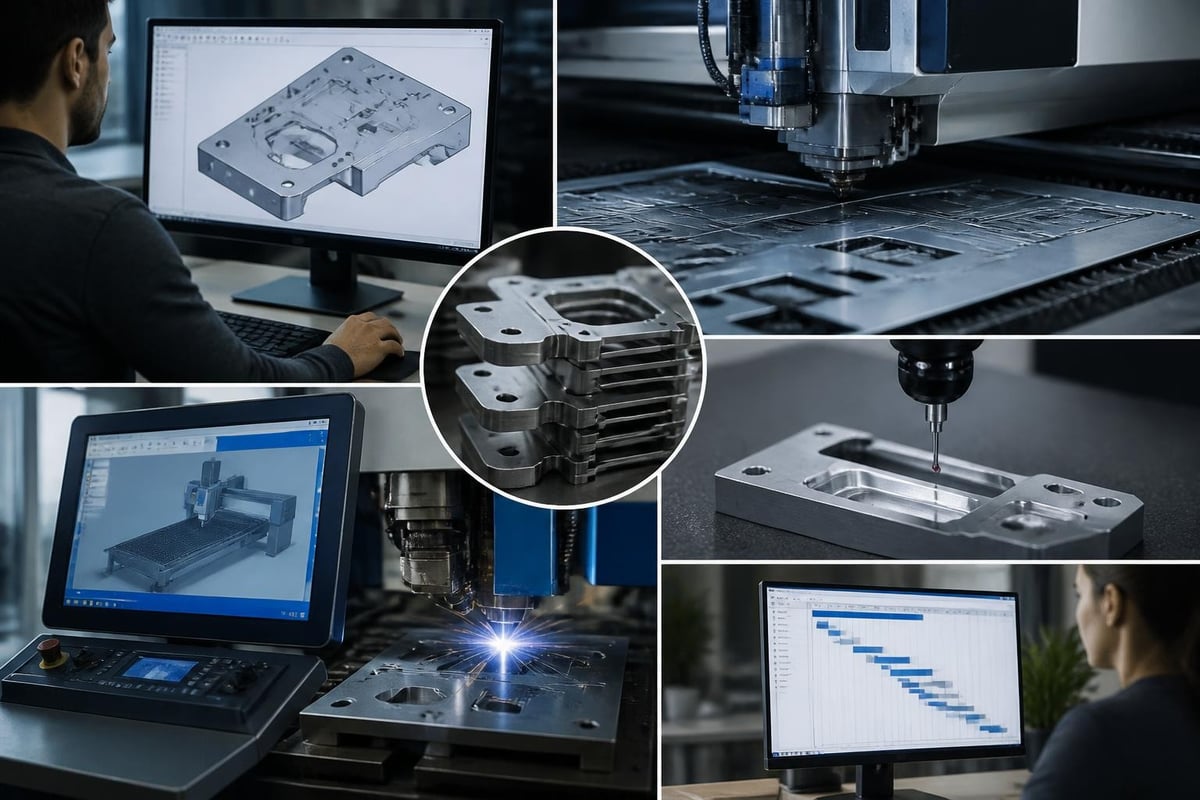
Contemporary fabricators leverage digital tools throughout project lifecycles:
- CAD/CAM software optimizes cutting paths and material utilization
- 3D modeling visualizes complex assemblies before production
- Nesting software minimizes material waste on cutting tables
- ERP systems track projects, materials, and scheduling
IndustryWeek’s manufacturing technology coverage explores how digital transformation impacts custom manufacturing, including artificial intelligence applications in quality control and process optimization.
Advanced Manufacturing Processes
Beyond traditional methods, innovative fabricators offer emerging capabilities:
- Waterjet cutting for materials sensitive to heat-affected zones
- Robotic welding ensuring consistent quality on production runs
- Laser cutting delivering exceptional edge quality and tight nesting
- Additive manufacturing creating complex geometries impossible with conventional methods
- Automated bending maintaining repeatable accuracy across production quantities
The ASME advanced manufacturing standards address how traditional codes apply to modern processes, guiding fabricators implementing new technologies.
Companies providing waterjet cutting services alongside conventional capabilities offer versatility addressing diverse material and precision requirements.
Supply Chain and Sourcing Advantages
Local fabricators often maintain relationships with regional material suppliers, enabling faster procurement and competitive pricing. The NIST Manufacturing Extension Partnership helps manufacturers identify and qualify local suppliers, strengthening regional supply chains.
Domestic fabrication reduces international shipping costs, tariff exposure, and intellectual property risks compared to offshore alternatives. For time-sensitive projects, local sourcing eliminates weeks of transit time.
Field Services and On-Site Capabilities
Many fabrication needs arise in operational facilities where equipment cannot be removed for shop work. Custom fabrication near me gains additional value when providers offer comprehensive field services.
Mobile Welding and Repair
Field mechanic services bring fabrication capabilities directly to client sites, enabling:
- Emergency repairs minimizing production downtime
- Large assembly welding where size prevents shop fabrication
- Modification and retrofitting of installed equipment
- Pipeline and structural welding at construction sites
- Preventive maintenance extending equipment service life
Operations in remote locations particularly value fabricators offering responsive field fabrication capabilities reducing equipment transportation and facility downtime.
Equipment and Personnel Deployment
Field fabrication requires specialized equipment, safety protocols, and experienced personnel. Evaluate providers based on:
| Field Capability | Importance | Considerations |
|---|---|---|
| Mobile welding units | Essential | Process variety, power requirements |
| Portable machining equipment | High for precision work | Capacity range, accuracy |
| Safety certifications | Critical | OSHA compliance, confined space |
| Emergency response | Variable by industry | Availability, response time |
| Regional coverage | Depends on footprint | Travel time, service area |
Companies supporting oilfield maintenance and heavy industrial operations maintain field-ready teams and equipment addressing urgent needs across wide geographic areas.
Industry-Specific Fabrication Expertise
Different industrial sectors present unique fabrication challenges requiring specialized knowledge, equipment, and experience. Selecting custom fabrication near me partners with relevant industry expertise prevents costly learning curves.
Oil and Gas Sector Requirements
Energy industry fabrication demands rigorous quality standards, specific material grades, and comprehensive documentation. Certified API 1104 pipeline welding contractors meet exacting standards for pipeline construction and repair.
Projects include process skids, separator vessels, pipeline assemblies, and support structures. Fabricators serving this sector understand explosion-proof requirements, hazardous area classifications, and industry-specific inspection protocols.
Heavy Equipment and Earthmoving
Construction and mining equipment experiences extreme loading, abrasion, and impact forces. Heavy-duty welding services for earthmoving equipment address bucket repairs, frame reinforcement, and structural modifications.
Fabricators experienced with heavy equipment understand material hardness requirements, fatigue loading considerations, and field repair constraints. Downtime costs in these industries justify premium fabrication quality extending service intervals.
Manufacturing and Production Equipment
Custom fabrication supports manufacturing operations through:
- Conveyor systems and material handling equipment
- Machine guards and safety enclosures
- Process equipment frames and supports
- Tooling and fixtures for production
- Facility modifications and expansions
Fabricators serving metal fabrication industries understand production environment demands including cleanability, accessibility for maintenance, and integration with existing systems.
Building Effective Fabricator Relationships
Successful partnerships with custom fabrication near me providers extend beyond individual projects. Cultivating productive working relationships delivers compounding benefits over time.
Communication Best Practices
Clear, consistent communication prevents misunderstandings and enables proactive problem-solving:
- Designate single points of contact reducing conflicting information
- Schedule regular progress updates on complex or long-duration projects
- Document changes formally through written change orders
- Share relevant context about intended use and operating conditions
- Provide feedback on delivered work to guide continuous improvement
Shop welders and field personnel benefit from understanding application context, enabling suggestions that improve designs or prevent problems.
Collaborative Problem Solving
Experienced fabricators offer value beyond executing drawings. Their manufacturing expertise often identifies design improvements, cost reductions, or performance enhancements. Encourage input during planning phases rather than demanding strict drawing adherence when better solutions exist.
Value engineering discussions balance cost, schedule, and performance. Fabricators familiar with your priorities make appropriate trade-off recommendations.
Performance Metrics and Continuous Improvement
Track fabricator performance across multiple dimensions:
- On-time delivery percentage and schedule reliability
- Quality metrics including rework rates and defect frequency
- Responsiveness to inquiries, quotes, and urgent requests
- Cost competitiveness relative to specifications and value delivered
- Safety performance particularly for field service providers
Share performance data with fabrication partners. Professional shops use customer feedback driving internal improvement initiatives.
Strategic Sourcing and Procurement
Organizations with ongoing fabrication needs benefit from strategic approaches to supplier selection and relationship management rather than project-by-project transactional purchasing.
Supplier Qualification Processes
Formal qualification ensures potential partners meet minimum standards before project assignment:
- Financial stability review confirming business viability
- Facility audits verifying claimed capabilities
- Reference checks with similar clients in comparable industries
- Sample project evaluation assessing quality and communication
- Insurance and bonding verification protecting against liability
Industrial businesses often maintain approved vendor lists, pre-qualifying fabricators for streamlined procurement when needs arise.
Strategic Partnership Development
Rather than maintaining dozens of casual vendor relationships, consider developing deeper partnerships with select fabricators aligned with your requirements. Benefits include:
| Partnership Aspect | Advantages | Implementation Approach |
|---|---|---|
| Preferred pricing | Reduced costs through volume commitment | Annual agreements with minimum spend |
| Priority scheduling | Faster turnaround during peak demands | Capacity reservations, planning visibility |
| Process integration | Streamlined ordering and communication | EDI connections, shared systems |
| Joint improvement | Collaborative cost and quality initiatives | Regular business reviews, problem-solving |
| Risk sharing | Mutual commitment to success | Long-term contracts, performance incentives |
Geographic and Capacity Diversification
While local custom fabrication near me offers proximity advantages, strategic sourcing considers backup capacity and geographic diversity. Single-source dependence creates vulnerability to capacity constraints, disasters, or business disruptions.
Maintain relationships with qualified alternates in different regions. This approach provides options when primary suppliers face capacity limitations or when projects occur outside normal service areas.
Finding the right custom fabrication partner requires evaluating technical capabilities, quality systems, industry experience, and cultural fit alongside geographic proximity. Whether you need emergency field repairs, precision machined components, or complete turnkey fabrication projects, choosing qualified local providers delivers responsive service and collaborative problem-solving that distant suppliers cannot match. LTJ Industrial Services brings comprehensive shop and field fabrication capabilities to commercial and industrial clients throughout the Western United States, combining certified welding, precision machining, and experienced project management to deliver quality metalwork solutions when and where you need them.