
Modern manufacturing demands precision, consistency, and efficiency at every stage of production. CNC machining services have become the backbone of industrial manufacturing, enabling companies across sectors like aggregate processing, oil and gas, and recycling to produce complex parts with exceptional accuracy. These computer-controlled processes transform raw materials into finished components that meet exact specifications, reducing human error while maximizing production capabilities. For businesses throughout the Western United States requiring reliable machining solutions, understanding the capabilities and applications of CNC technology can significantly impact operational success.
Understanding CNC Machining Technology and Capabilities
Computer Numerical Control (CNC) machining represents a revolutionary approach to manufacturing that uses programmed computer commands to control machine tools. Unlike manual machining, where operators directly manipulate cutting tools, CNC systems follow pre-programmed sequences to execute complex cutting operations with remarkable precision.
The technology operates by converting digital design files into a series of coordinates that guide the machine's movements. Software translates CAD (Computer-Aided Design) models into G-code, the programming language that CNC machines understand. This automated approach enables manufacturers to produce identical parts repeatedly, maintaining tolerances as tight as ±0.001 inches or better.
Core CNC Machining Processes
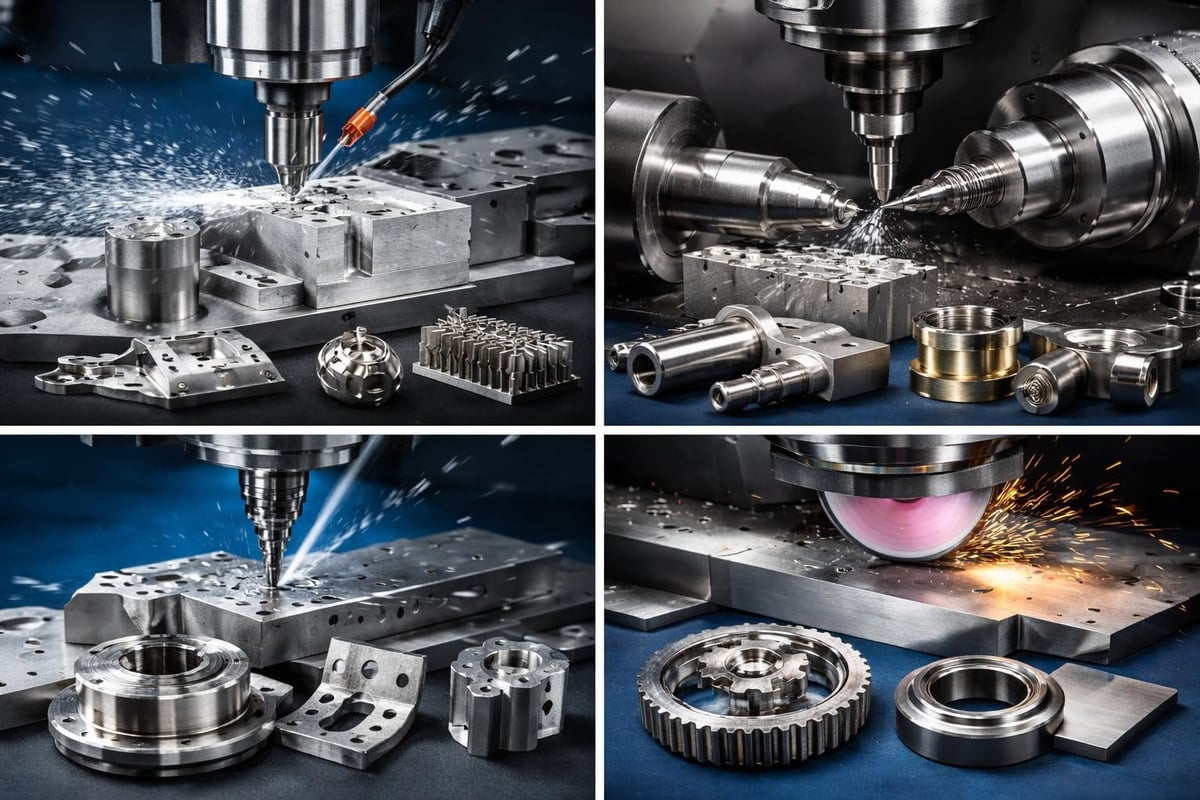
Several distinct machining processes fall under the CNC umbrella, each suited for specific applications:
- Milling: Rotating cutting tools remove material from stationary workpieces, creating features like slots, holes, and complex surface contours
- Turning: Workpieces rotate while stationary cutting tools shape cylindrical parts such as shafts, bushings, and threaded components
- Drilling: Specialized operations create precise holes with specific diameters and depths
- Grinding: Abrasive wheels achieve ultra-fine surface finishes and extremely tight tolerances
The choice between these processes depends on part geometry, material properties, production volume, and required tolerances. Many machining projects incorporate multiple processes to achieve the desired result.
Material Versatility in CNC Machining Applications
CNC machining services accommodate an extensive range of materials, making them invaluable for diverse industrial sectors. Metals represent the most common category, with aluminum, steel, stainless steel, brass, copper, and titanium frequently processed for various applications.
Aluminum alloys offer excellent machinability combined with favorable strength-to-weight ratios, making them ideal for components in aggregate equipment and material handling systems. Steel grades provide superior strength and durability for heavy-duty industrial applications, while stainless steel delivers corrosion resistance essential for oil and gas equipment exposed to harsh environments.
| Material Category | Common Grades | Typical Applications | Key Advantages |
|---|---|---|---|
| Aluminum | 6061, 7075, 2024 | Housings, brackets, frames | Lightweight, corrosion-resistant |
| Carbon Steel | 1018, 1045, 4140 | Gears, shafts, structural components | High strength, cost-effective |
| Stainless Steel | 304, 316, 17-4 PH | Valves, fittings, pumps | Corrosion-resistant, durable |
| Brass | C360, C260 | Bushings, connectors, fittings | Excellent machinability, corrosion-resistant |
Beyond metals, modern CNC equipment processes engineering plastics like PEEK, Delrin, and nylon for applications requiring low friction, electrical insulation, or chemical resistance. This material flexibility allows machining and fabrication providers to deliver comprehensive solutions across industries.
Quality Control and Precision Standards
Achieving consistent quality in CNC machining requires rigorous quality control protocols throughout the production process. Professional machining services implement multiple verification stages to ensure parts meet specifications before delivery.
Inspection procedures typically begin with first-article inspection, where the initial part from a production run undergoes comprehensive measurement to verify all dimensions, tolerances, and features match engineering drawings. Coordinate Measuring Machines (CMMs) provide three-dimensional verification with micron-level accuracy, confirming that complex geometries meet design intent.
Statistical Process Control Methods
In-process monitoring tracks critical dimensions during production runs, detecting drift or variation before defects occur. Operators measure key features at predetermined intervals, plotting results on control charts that reveal trends requiring correction.
Final inspection validates completed parts against all specifications. Depending on part complexity and customer requirements, this may include dimensional verification, surface finish measurement, material certification, and functional testing.
For industries with stringent quality requirements like aerospace and medical devices, quality management standards provide frameworks for systematic quality assurance. While not all industrial applications demand aerospace-level certification, the principles of documented processes, traceability, and continuous improvement benefit any manufacturing operation.
Advantages of Professional CNC Machining Services
Partnering with experienced cnc machining services providers delivers multiple operational benefits beyond simply producing parts. The most significant advantage lies in precision and repeatability that manual processes cannot match. Once a program is validated, CNC machines execute it identically across thousands of parts, eliminating variation caused by operator fatigue or technique differences.
Complex geometries that would challenge or exceed manual machining capabilities become routine with CNC technology. Multi-axis machines simultaneously move cutting tools in multiple directions, creating intricate three-dimensional shapes, compound angles, and organic contours that traditional methods struggle to produce.
Production efficiency improves dramatically through automation. After initial setup, CNC machines operate with minimal supervision, running during nights and weekends to maximize output. This continuous operation capability significantly reduces lead times for production quantities.
Material waste decreases through optimized toolpaths and nesting strategies. CNC machining services utilize sophisticated CAM software to minimize scrap material, reducing raw material costs while supporting sustainability objectives.
Industry Applications Across Commercial Sectors
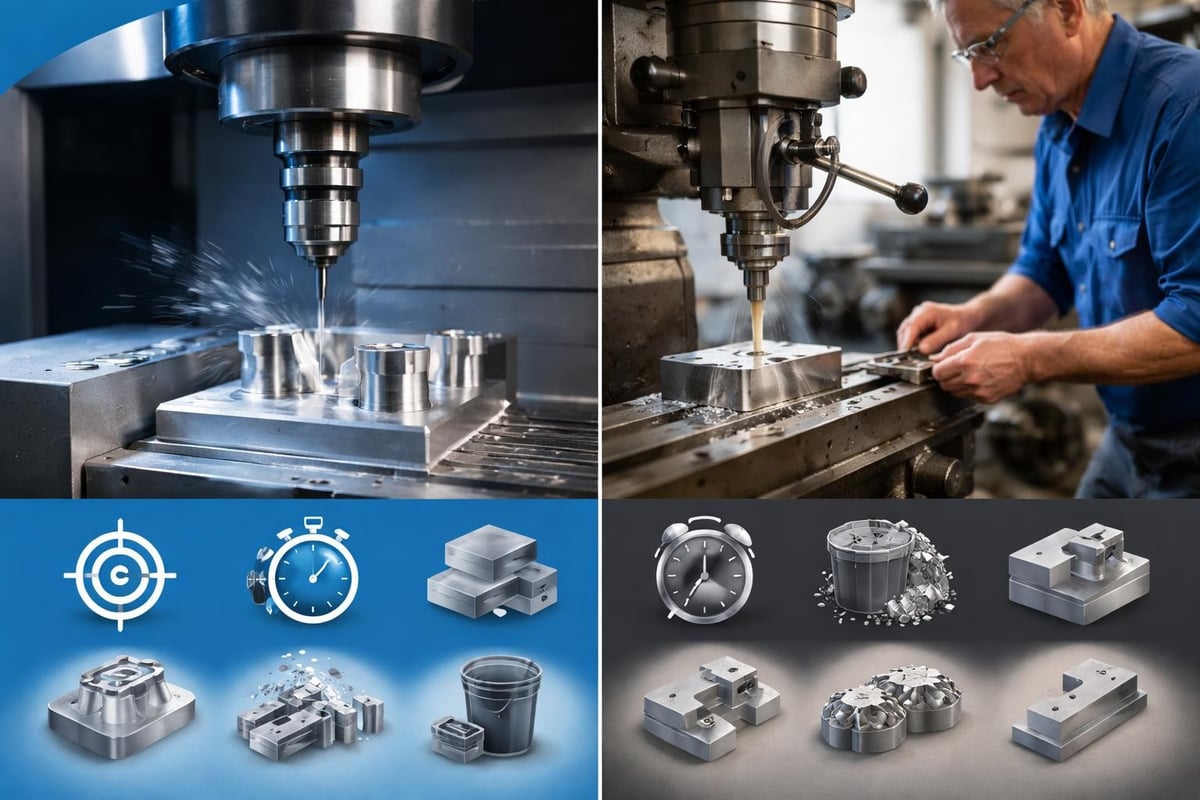
CNC machining serves virtually every industrial sector, with applications ranging from replacement parts to custom components for specialized equipment. The aggregate and mining industries rely on precisely machined wear parts, crusher components, and conveyor system elements that withstand abrasive materials and harsh operating conditions.
Oil and gas operations require machined components for drilling equipment, pumps, valves, and wellhead assemblies where failure can result in costly downtime or safety hazards. The precision achievable through manufacturing and machining processes ensures proper fit and function in these critical applications.
Recycling and Material Processing Equipment
Recycling facilities process diverse materials under demanding conditions, requiring robust machinery components:
- Custom shredder blades machined to exact specifications for optimal cutting performance
- Bearing housings and shaft components that maintain alignment under heavy loads
- Hydraulic cylinder components requiring precise bore diameters and surface finishes
- Conveyor system parts including sprockets, shafts, and mounting brackets
The recycling sector benefits from CNC machining's ability to produce replacement parts matching original equipment specifications, extending machinery life while maintaining operational efficiency.
Design Considerations for CNC Machined Parts
Effective part design maximizes CNC machining advantages while minimizing production challenges. Engineers and designers should consider several factors during the design phase to optimize manufacturability and cost-effectiveness.
Wall thickness affects both machining time and part strength. Thin walls require careful tooling strategies to prevent deflection or vibration during cutting, while excessively thick sections increase material costs and cycle times without corresponding benefits. Uniform wall thickness generally machines more efficiently than highly variable sections.
Corner radii improve both machinability and part strength. Sharp internal corners require small-diameter end mills that cut slowly and wear quickly. Specifying reasonable radii reduces machining time and tool costs while eliminating stress concentration points that can initiate cracks under load.
Tolerance specifications should reflect functional requirements rather than arbitrary precision. Tighter tolerances increase machining time, inspection requirements, and costs. Key design and engineering considerations include specifying tight tolerances only where necessary for fit, function, or performance.
Thread specifications require attention to depth and engagement length. Standard thread forms machine more easily and cost-effectively than custom profiles. Blind holes should provide adequate clearance beyond the threaded portion for tool run-out.
Selecting the Right CNC Machining Partner
Choosing a machining services provider significantly impacts project success, affecting quality, lead times, and total cost. Several evaluation criteria help identify capable partners aligned with your operational requirements.
Equipment capabilities determine the size, complexity, and materials a shop can handle. Multi-axis CNC mills offer greater flexibility for complex geometries, while specialized equipment like Swiss-type lathes excel at small-diameter turned parts. Understanding your current and future machining needs guides equipment requirement assessment.
Technical expertise separates competent shops from exceptional ones. Experienced machinists and programmers optimize processes, recommend design improvements, and troubleshoot challenges that less-skilled teams might struggle with. Choosing the right CNC machining services requires evaluating the team's knowledge base alongside their equipment.
| Selection Criteria | What to Evaluate | Why It Matters |
|---|---|---|
| Equipment Range | Machine types, capacities, capabilities | Determines part size and complexity limits |
| Quality Systems | Inspection equipment, certifications, procedures | Ensures consistent part quality |
| Lead Times | Production scheduling, capacity availability | Affects project timelines and responsiveness |
| Geographic Location | Proximity to your facilities | Impacts shipping costs and communication |
| Industry Experience | Relevant sector knowledge | Provides application-specific insights |
Geographic considerations matter more than many businesses realize. Local or regional providers offer advantages in communication, site visits, and shipping logistics. For operations throughout Colorado and the Western United States, partnering with industrial manufacturing specialists familiar with regional industries and challenges provides operational benefits.
Integration with Welding and Fabrication Services
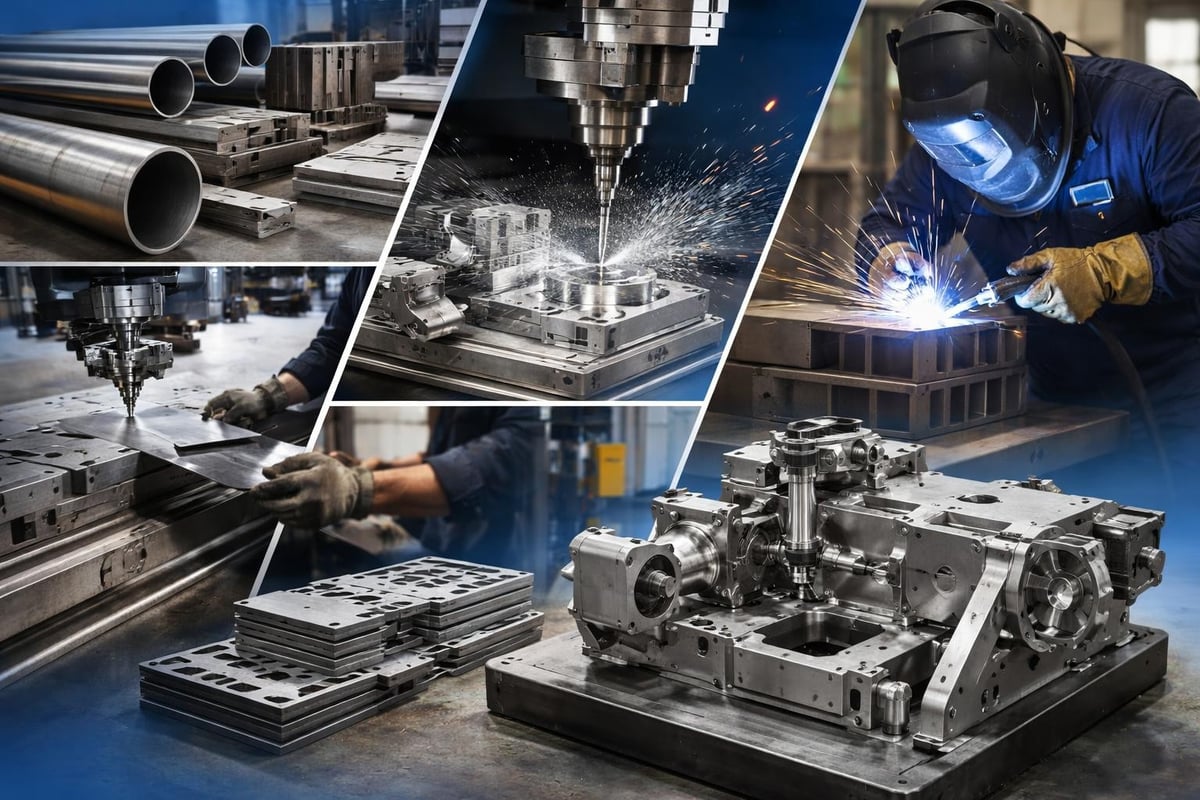
CNC machining rarely exists in isolation within industrial manufacturing operations. Most complex assemblies require integration between machined components, fabricated structures, and welded assemblies. Providers offering comprehensive capabilities deliver significant advantages over coordinating multiple specialized vendors.
Machining and welding and fabrication services under one roof streamline project management, reduce coordination requirements, and improve assembly fit. When the same team machines mounting surfaces and fabricates the structural frame, dimensional consistency improves because everyone works from unified specifications and quality standards.
Custom fabrication projects often require machined components integrated into welded assemblies. Mounting plates may need precisely located holes, hydraulic manifolds require machined ports and threaded connections, and structural frames might incorporate machined bearing surfaces. Coordinating these operations through a single provider eliminates handoff delays and miscommunication.
Field service capabilities complement shop-based machining for maintenance and repair applications. When equipment failures occur at remote sites, having access to both field machining and shop capabilities provides flexibility to address problems through the most efficient approach.
Software and Programming in Modern CNC Operations
Behind every CNC machining operation lies sophisticated software that translates design intent into machine movements. CAM (Computer-Aided Manufacturing) software generates the toolpaths that control cutting operations, optimizing efficiency while maintaining quality standards.
Programs like Mastercam dominate the industry, offering comprehensive toolpath generation for milling, turning, and multi-axis operations. These systems simulate the entire machining process virtually, identifying potential collisions, verifying surface finishes, and optimizing cycle times before the first chip flies.
Simulation software such as NCSIMUL provides additional verification layers, catching programming errors that could damage expensive workpieces or machinery. By virtually machining parts before production begins, programmers refine processes and prevent costly mistakes.
Post-processing converts generic toolpaths into machine-specific G-code that accounts for each CNC machine's unique characteristics and control system requirements. Properly configured post-processors ensure programs execute correctly across different equipment brands and models.
Cost Factors in CNC Machining Projects
Understanding cost drivers in cnc machining services helps businesses make informed decisions about part design, material selection, and order quantities. Several factors influence final pricing beyond simple hourly machine rates.
Setup time represents a significant fixed cost for each production run. This includes securing the workpiece, installing cutting tools, loading the program, and machining the first piece for inspection. For small quantities, setup costs may exceed actual machining time, making prototype and low-volume orders relatively expensive per part.
Material costs vary widely based on alloy selection, market conditions, and raw stock dimensions. Standard sizes and common alloys cost less than exotic materials or unusual stock configurations requiring special ordering.
Production quantity dramatically affects per-piece costs through economies of scale. The same part might cost $500 as a single prototype but only $50 each in quantities of 100 because setup costs distribute across more parts.
- Tooling expenses increase for parts requiring specialized cutters or frequent tool changes
- Tolerance requirements affect inspection time and may necessitate premium tooling
- Surface finish specifications influence cutting parameters and cycle times
- Secondary operations like heat treating, plating, or anodizing add processing steps
Balancing these factors requires understanding your actual requirements. Specifying capabilities beyond functional needs increases costs without corresponding value. Conversely, inadequate specifications may produce parts that fail in service, creating far greater expenses through downtime and replacement.
Prototyping and Production Runs
CNC machining accommodates both prototyping and production manufacturing, though strategies differ significantly between these applications. Prototype development prioritizes speed and flexibility, allowing design validation and functional testing before committing to production tooling.
Rapid prototyping through CNC machining produces functional parts in days rather than the weeks or months required for casting or molding tooling. This acceleration compresses development cycles, enabling faster time-to-market for new products or equipment modifications.
Design iteration becomes practical when machining prototypes. Engineers can test a concept, identify improvements, revise the design, and machine updated versions without significant financial commitment. This iterative refinement produces better final designs than attempting to perfect parts theoretically.
Production runs benefit from programming optimization and fixturing development informed by prototype experience. Lessons learned during initial machining inform process improvements that reduce cycle times and costs for volume orders. Manufacturing services providers apply this knowledge to deliver efficient production operations.
Bridge production fills the gap between prototypes and full-scale manufacturing. When you need 25 to 500 parts before investing in dedicated tooling, CNC machining provides cost-effective solutions that traditional production methods cannot match.
Maintenance and Repair Applications
Beyond producing new components, cnc machining services play critical roles in maintenance and repair operations across industrial facilities. Equipment breakdowns require rapid response to minimize downtime costs, and machining capabilities enable customized solutions when replacement parts prove unavailable or cost-prohibitive.
Obsolete equipment presents particular challenges when original manufacturers no longer support older models. Machining replacement components from engineering drawings or reverse-engineered measurements extends machinery life while maintaining production capabilities.
Reverse engineering combines precise measurement with CAD modeling to recreate parts without original drawings. Coordinate measuring machines capture three-dimensional geometry, allowing programmers to generate toolpaths matching the original component's specifications.
Emergency repairs benefit from flexible machining capabilities that adapt to unique situations. When standard parts fail, custom fabrication services can design and machine improved versions addressing root cause failure mechanisms while maintaining interchangeability with existing systems.
Field machining extends these capabilities to equipment too large or complex to transport. Portable machining equipment brings precision capabilities directly to the worksite, performing operations like flange facing, bore welding preparation, and shaft repair without facility disassembly.
Environmental and Safety Considerations
Modern CNC machining operations incorporate environmental responsibility and workplace safety into standard practices. Metalworking fluids require proper handling, recycling, and disposal to minimize environmental impact while protecting worker health.
Coolant management systems filter and recirculate cutting fluids, extending useful life while maintaining lubrication and cooling properties. Proper fluid maintenance prevents bacterial growth, reduces misting and vapor exposure, and improves machining performance.
Chip collection and recycling recover valuable metal scrap while maintaining clean work areas. Automated chip conveyors transport metal turnings to collection points, where they're sorted by alloy for recycling. This practice recovers material value while supporting sustainability objectives.
Machine enclosures contain chips, fluids, and noise within the work envelope, protecting operators and maintaining cleaner shop environments. Modern CNC equipment integrates safety interlocks preventing operation with doors open, guards removed, or other unsafe conditions.
Proper ventilation systems exhaust metalworking mists and fumes, protecting respiratory health. Industrial air filtration removes fine particulates before recirculating conditioned air, reducing heating and cooling costs while maintaining air quality standards.
Future Trends in CNC Machining Technology
The machining industry continues evolving through technological advancement, automation integration, and digital connectivity. Understanding emerging trends helps businesses prepare for future manufacturing capabilities and competitive landscapes.
Automation integration extends beyond individual machines to encompass entire production cells. Robotic part loading and unloading enables lights-out manufacturing where equipment operates overnight without human supervision. Automated inspection systems verify dimensions immediately after machining, providing real-time quality feedback.
Digital twin technology creates virtual replicas of physical machines and processes, enabling simulation, optimization, and predictive maintenance. By monitoring actual machine performance and comparing it against the digital model, operators identify inefficiencies and predict component failures before they cause downtime.
Additive manufacturing increasingly complements subtractive CNC processes through hybrid machines combining metal 3D printing with traditional machining. This approach builds near-net shapes additively, then machines critical surfaces to final dimensions, combining the benefits of both technologies.
Advanced materials continue expanding machining applications into new sectors. Composites, ceramics, and exotic alloys require specialized tooling and cutting strategies that push equipment capabilities while opening new market opportunities.
Precision machining capabilities form essential elements of modern industrial manufacturing, delivering the accuracy, consistency, and flexibility that diverse sectors require. Whether you need replacement components for existing equipment, custom parts for specialized applications, or comprehensive manufacturing solutions combining machining with fabrication and welding, selecting experienced partners ensures project success. LTJ Industrial Services provides complete shop and field capabilities throughout the Western United States, delivering the integrated machining, welding, and fabrication expertise that commercial and industrial operations depend on for reliable, high-quality results.