
Manufacturing facilities across the Western United States depend on sophisticated equipment to maintain competitive operations in 2026. An industrial welding machine serves as the cornerstone of metal fabrication, enabling businesses in aggregate processing, oil and gas extraction, and recycling operations to produce durable joints and structures. These machines have evolved significantly beyond simple arc welders, incorporating advanced controls, automation capabilities, and precision monitoring systems that meet the demanding requirements of modern industrial applications. Understanding the capabilities, selection criteria, and operational considerations surrounding industrial welding equipment empowers manufacturers to make informed investments that directly impact production quality and efficiency.
Understanding Industrial Welding Machine Categories
The landscape of industrial welding equipment encompasses several distinct categories, each engineered for specific applications and material requirements. Manufacturers must recognize these differences to match equipment capabilities with production demands.
Stick Welding Systems for Field Applications
Shielded metal arc welding (SMAW) machines remain essential for industrial operations requiring portability and versatility. An industrial welding machine designed for stick welding delivers consistent performance in outdoor environments where wind and weather conditions challenge more sophisticated processes. These systems excel in construction, pipeline work, and maintenance operations throughout Colorado and neighboring states.
Field technicians appreciate stick welding equipment for its simplicity and tolerance of less-than-ideal conditions. The machines handle thick materials effectively, making them indispensable for structural steel fabrication and repair work in remote locations where advanced infrastructure may be unavailable.
MIG Welding Equipment for Production Environments
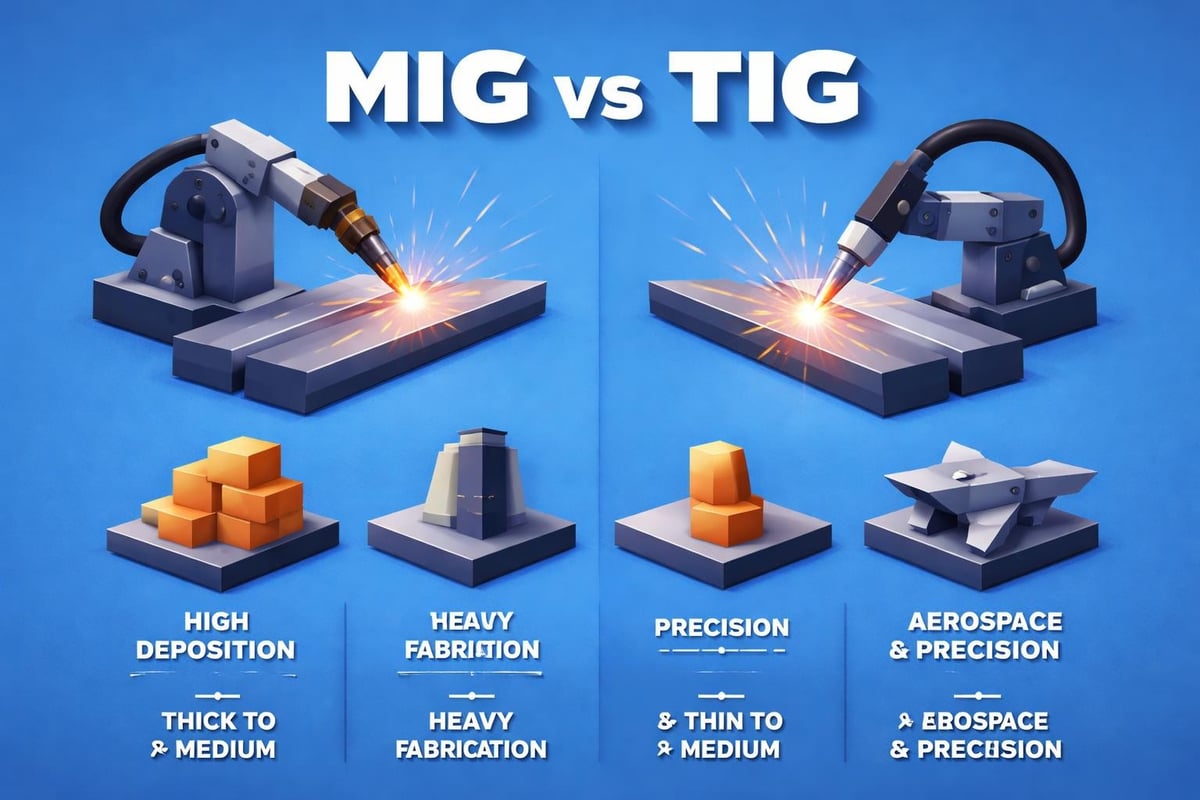
Gas metal arc welding (GMAW) systems dominate high-volume manufacturing settings due to their speed and efficiency. Modern MIG equipment features wire feeders, digital controls, and programmable parameters that ensure repeatability across thousands of welds.
Production facilities processing aluminum, stainless steel, and mild steel benefit from the continuous wire feed mechanism that eliminates frequent stops for electrode changes. The American Welding Society establishes standards that guide proper MIG welding procedures and operator qualifications, ensuring consistent quality across industries.
Key advantages include:
- High deposition rates reducing cycle times
- Minimal post-weld cleanup requirements
- Excellent control for thin-gauge materials
- Single-pass capability on many joint configurations
- Reduced operator fatigue during extended production runs
TIG Welding Machines for Precision Work
Gas tungsten arc welding (GTAW) equipment delivers the precision necessary for critical applications in pressure vessel fabrication, pharmaceutical processing equipment, and aerospace components. An industrial welding machine configured for TIG welding provides unmatched control over heat input and filler metal deposition.
| Feature | MIG Welding | TIG Welding | Stick Welding |
|---|---|---|---|
| Deposition Rate | High | Low to Medium | Medium |
| Material Range | Wide | Very Wide | Wide |
| Operator Skill Required | Moderate | High | Moderate |
| Portability | Limited | Moderate | Excellent |
| Wind Sensitivity | High | Very High | Low |
| Thin Material Capability | Excellent | Superior | Poor |
Companies specializing in ASME code welding services for pressure piping rely heavily on TIG equipment to meet stringent quality requirements and pass rigorous inspections.
Selection Criteria for Industrial Applications
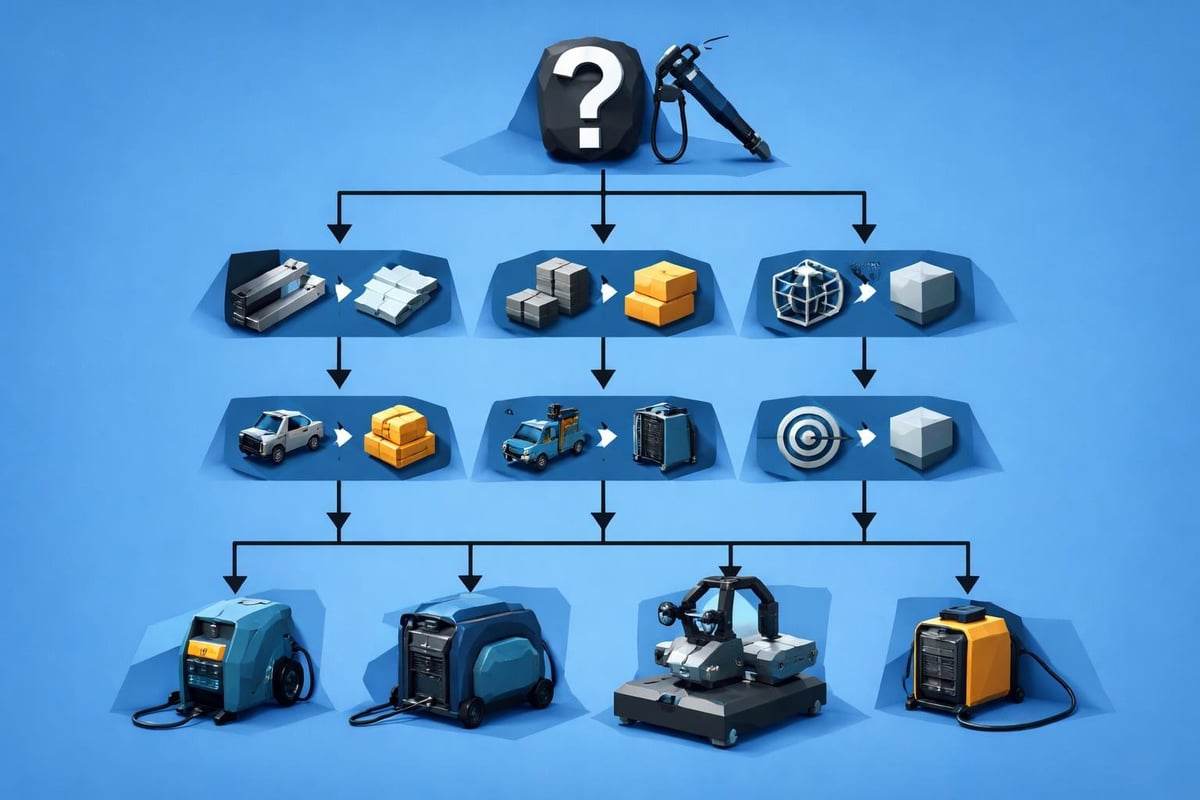
Choosing appropriate welding equipment requires careful analysis of operational requirements, material specifications, and production volume expectations. Manufacturing decision-makers must evaluate multiple factors simultaneously to identify optimal solutions.
Power Source Considerations
The electrical infrastructure at your facility dictates available options. Single-phase machines suit smaller shops and mobile operations, while three-phase industrial welding machine models deliver higher duty cycles and support continuous production demands.
Transformer-based systems offer reliability and simplicity, though they lack the precision of inverter technology. Modern inverter-based equipment provides exact current control, reduced weight, and improved energy efficiency-critical factors for operations managing substantial electricity costs.
Duty cycle ratings deserve particular attention:
- Calculate your actual welding time per 10-minute period
- Compare this percentage against manufacturer specifications
- Add 20-30% margin for unexpected production increases
- Verify thermal management capabilities for your environment
- Consider peak demand periods and seasonal variations
Material Compatibility Requirements
Different base metals and alloy compositions demand specific welding processes and machine capabilities. Steel fabrication represents the majority of industrial welding, but aluminum, stainless steel, and exotic alloys each present unique challenges.
Facilities working with dissimilar metals require equipment offering multiple process capabilities or dedicated machines for specialized materials. The investment in process-specific equipment often proves more economical than attempting to use general-purpose machines for applications beyond their optimal range.
Sensors and monitoring systems enhance quality control, as explored in research on sensors for arc welding, which details how modern equipment tracks parameters in real-time to ensure specification compliance.
Integration with Existing Operations
An industrial welding machine must complement current workflows rather than disrupting established processes. Evaluate how new equipment interfaces with material handling systems, fixturing, and quality inspection procedures already in place.
Companies offering manufacturing and machining services benefit from equipment that shares similar control architectures, simplifying operator training and reducing the learning curve when transitioning between machines.
Advanced Features Transforming Industrial Welding
Technology integration has revolutionized welding equipment capabilities since 2020, with manufacturers incorporating digital controls, data logging, and automation features that were previously available only on robotics systems.
Digital Control Systems
Contemporary industrial welding machine models feature touchscreen interfaces displaying real-time parameters, stored welding procedures, and diagnostic information. These systems eliminate the guesswork associated with manual adjustment, allowing operators to recall proven settings instantly.
Programmable weld sequences enable consistent results across multiple operators and shifts. Quality assurance teams can download weld data for traceability documentation, essential for industries with strict regulatory oversight such as pressure vessel manufacturing and structural steel fabrication.
Monitoring and Quality Assurance Technology
Machine condition monitoring represents a growing priority as facilities seek to prevent unexpected downtime. Research into welding machine condition monitoring systems demonstrates how ultrasonic sensing and vibration analysis predict maintenance needs before failures occur.
Modern monitoring capabilities include:
- Real-time voltage and amperage tracking
- Arc stability analysis and deviation alerts
- Wire feed speed verification systems
- Shielding gas flow rate monitoring
- Consumable usage tracking for inventory management
Integration with manufacturing execution systems (MES) enables predictive maintenance scheduling based on actual machine usage rather than arbitrary time intervals, reducing maintenance costs while improving equipment availability.
Automation and Robotic Integration
While manual welding remains essential for many applications, automated systems deliver consistency impossible to achieve through human operation alone. Companies evaluating robotics certification standards recognize the importance of proper training and standardization in automated welding operations.
Collaborative robots (cobots) working alongside human welders represent an emerging trend in industrial fabrication. These systems handle repetitive tasks while operators focus on complex joints requiring judgment and adaptability. Recent research into cobot welding synchronization highlights the importance of precise coordination between automated and manual processes.
Maintenance Strategies for Optimal Performance
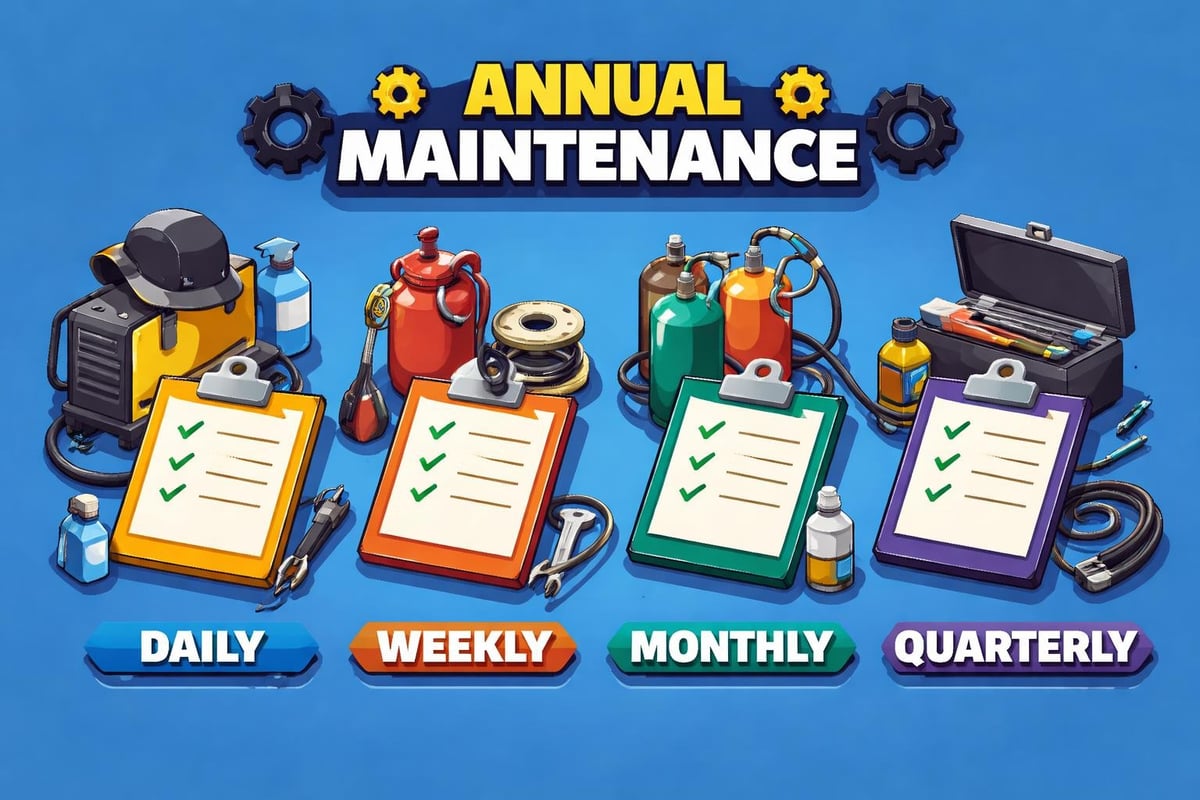
Equipment longevity and consistent weld quality depend directly on preventive maintenance programs tailored to each machine type and utilization pattern. Facilities that implement structured maintenance protocols report significantly lower total cost of ownership compared to those adopting reactive approaches.
Daily Inspection Procedures
Operators should perform brief checks before beginning each shift, identifying potential issues before they affect production quality. These inspections take five to ten minutes but prevent hours of troubleshooting and rework.
Examine wire feed systems for smooth operation, inspect contact tips for wear, verify shielding gas flow rates, and confirm ground connections maintain low resistance. Clean spatter from nozzles and diffusers to prevent gas flow disruption that compromises weld integrity.
Scheduled Component Replacement
Consumable components wear predictably based on arc-on time and amperage levels. Establishing replacement intervals based on actual usage data rather than manufacturer recommendations alone optimizes both quality and cost.
| Component | Replacement Interval | Failure Indicators |
|---|---|---|
| Contact Tips | 2-8 hours arc time | Erratic wire feed, excessive spatter |
| Nozzles | 20-40 hours | Visible damage, irregular gas coverage |
| Liners | 200-500 hours | Increased wire resistance, feeding issues |
| Drive Rolls | 1000-2000 hours | Wire deformation, inconsistent feed |
| Torch Consumables | Per manufacturer spec | Performance degradation |
Facilities offering custom welding services across multiple industries maintain comprehensive consumable inventories to minimize downtime when replacements become necessary.
Power Source Calibration
An industrial welding machine requires periodic calibration to ensure output parameters match control settings. Voltage and amperage drift over time due to component aging, environmental factors, and accumulated operating hours.
Annual calibration by qualified technicians verifies machine performance against manufacturer specifications. This investment proves particularly critical for operations subject to quality management system requirements or industry-specific certifications.
Operational Efficiency Optimization
Maximizing return on welding equipment investment extends beyond initial selection and maintenance into daily operational practices that influence productivity, quality, and safety outcomes.
Operator Training and Certification
Equipment capabilities mean little without skilled personnel operating them effectively. Comprehensive training programs covering machine operation, troubleshooting, and quality recognition ensure operators extract maximum performance from available equipment.
Organizations employing skilled welders invest continuously in certification programs, advanced technique training, and cross-process skill development that enhances workforce flexibility.
Effective training programs address:
- Process theory and metallurgical fundamentals
- Equipment-specific controls and capabilities
- Troubleshooting common issues independently
- Quality recognition and defect prevention
- Safety protocols and hazard awareness
- Documentation and traceability requirements
Process Parameter Documentation
Successful industrial operations maintain detailed records of welding procedures, machine settings, and quality outcomes. This documentation enables rapid setup for repeat jobs, facilitates troubleshooting when issues arise, and supports continuous improvement initiatives.
Digital systems simplify this documentation burden while improving accessibility. Operators scan job numbers to retrieve proven parameters rather than searching through paper files or relying on memory, reducing setup time and minimizing trial-and-error adjustments.
Energy Management Strategies
Welding equipment represents substantial electrical demand, particularly in facilities operating multiple machines simultaneously. Understanding demand profiles and implementing strategic scheduling reduces utility costs without sacrificing production capacity.
Modern inverter-based machines offer superior energy efficiency compared to older transformer designs, often justifying replacement based solely on reduced operating costs over the equipment lifecycle. Calculate actual consumption patterns to identify opportunities for load shifting or equipment upgrades that improve your facility's energy footprint.
Industry-Specific Applications and Requirements
Different industrial sectors impose unique demands on welding equipment based on material specifications, quality standards, and operational environments. Understanding these sector-specific requirements guides appropriate equipment selection and configuration.
Oil and Gas Sector Demands
Pipeline construction, processing facility maintenance, and drilling equipment fabrication require welding equipment capable of meeting stringent quality standards while operating in challenging environments. An industrial welding machine deployed in oil and gas fabrication applications must deliver consistent performance despite temperature extremes, remote locations, and demanding inspection requirements.
API 1104 and ASME Section IX specifications govern most oil and gas welding, requiring precise parameter control and comprehensive documentation. Equipment selection prioritizes reliability, portability for field work, and the ability to maintain stable arcs in adverse conditions.
Aggregate and Mining Equipment Repair
Heavy equipment operating in quarries and processing plants subjects components to extreme abrasion, impact, and fatigue loading. Welding equipment supporting these industries must handle thick-section repairs, build-up applications, and dissimilar metal joining.
High-deposition processes minimize equipment downtime during repairs, making duty cycle capacity and amperage range critical selection factors. Facilities serving aggregate operations maintain diverse equipment inventories spanning portable stick welders for field repairs to high-capacity MIG systems for shop rebuilds.
Recycling Industry Applications
Material processing equipment in recycling facilities encounters continuous wear from abrasive feedstock and repetitive cycling. Welding equipment supports both maintenance repairs and new equipment fabrication, requiring versatility across material types and joint configurations.
Companies providing services to recycling operations benefit from equipment offering multiple process capabilities, enabling quick transitions between carbon steel repairs, stainless steel food-grade applications, and aluminum component fabrication without changing machines.
Quality Control and Inspection Integration
Weld quality determines structural integrity, operational safety, and regulatory compliance across industrial applications. Modern welding operations integrate quality control throughout the production process rather than relying solely on final inspection.
In-Process Monitoring Systems
Advanced industrial welding machine models incorporate sensors tracking critical parameters throughout each weld cycle. Research into deep learning-based quality prediction demonstrates how artificial intelligence analyzes these parameter streams to identify developing quality issues before defects occur.
Real-time monitoring detects arc instability, voltage fluctuations, and travel speed variations that indicate potential defects. Immediate operator alerts enable corrective action before significant rework accumulates, reducing scrap rates and improving first-pass quality metrics.
Non-Destructive Testing Compatibility
Welding procedures must account for subsequent inspection requirements, particularly in code-driven applications. Equipment selection considers how process characteristics affect inspectability through radiography, ultrasonic testing, magnetic particle examination, and visual inspection methods.
Certain weld profiles or slag characteristics interfere with automated inspection systems, necessitating process adjustments or alternative techniques. Coordination between welding engineering and quality assurance teams during equipment specification prevents costly incompatibilities discovered during production ramp-up.
Emerging Technologies Shaping Future Developments
The welding equipment landscape continues evolving as manufacturers incorporate new technologies addressing productivity, quality, and operator assistance. Staying informed about these developments helps facilities plan strategic equipment investments aligned with industry trajectories.
Artificial Intelligence Integration
Machine learning algorithms analyze vast datasets from production welding, identifying subtle correlations between parameters and quality outcomes invisible to human observation. These systems recommend optimized settings for new applications and adjust parameters automatically to compensate for changing conditions.
AI-assisted systems reduce the skill gap between novice and experienced operators, enabling consistent quality earlier in the training cycle. While not replacing fundamental welding knowledge, these technologies augment human capabilities and accelerate competency development.
Augmented Reality Assistance
Wearable displays overlay digital information onto the physical workspace, guiding operators through complex procedures and providing real-time parameter feedback without diverting attention from the weld pool. These systems prove particularly valuable for low-volume, high-mix operations where operators transition frequently between different procedures.
Training applications using augmented reality enable skill development without consuming production equipment time or welding consumables, reducing training costs while improving knowledge retention through interactive learning experiences.
Enhanced Portability Solutions
Battery-powered industrial welding machine options expand capabilities for truly remote operations where generator access proves impractical. Lithium battery technology delivers sufficient capacity for full-day field operations while maintaining output quality equivalent to conventional power sources.
Weight reduction through advanced materials and compact inverter designs enables single-person transport of equipment previously requiring two operators or mechanical assistance. This improved portability enhances service responsiveness and reduces mobilization costs for field operations.
Cost Analysis and Return on Investment
Welding equipment represents substantial capital investment requiring thorough financial analysis balancing acquisition costs against operational benefits, productivity improvements, and quality enhancements delivered over the equipment lifecycle.
Total Cost of Ownership Calculation
Purchase price constitutes only one component of true equipment costs. Comprehensive analysis includes energy consumption, consumable usage, maintenance requirements, and operator efficiency factors that vary significantly between equipment options.
Consider these cost elements:
- Initial capital outlay including ancillary equipment
- Installation and facility modification expenses
- Energy consumption at projected utilization rates
- Consumable costs scaled to production volume
- Scheduled maintenance and component replacement
- Operator training and certification programs
- Documentation and quality system integration
Facilities may discover that higher-priced equipment delivers lower total cost through reduced consumable usage, improved energy efficiency, or decreased rework rates offsetting the premium initial investment.
Productivity Impact Assessment
Equipment capabilities directly influence throughput rates, with faster travel speeds, higher deposition rates, and reduced setup times accumulating substantial productivity advantages over thousands of welds annually. Quantifying these improvements in monetary terms supports investment justification and prioritization.
Compare actual production times using current equipment against manufacturer specifications for proposed alternatives. Include setup time reduction, decreased rework probability, and improved first-pass quality rates when calculating productivity gains. Document assumptions thoroughly to enable post-implementation validation and continuous improvement.
Quality Cost Reduction
Defect prevention delivers greater value than defect detection, making equipment investments that improve process control financially attractive even at premium pricing. Calculate current quality costs including inspection labor, consumable usage for repair welds, scrap material, and schedule delays attributable to rework.
Equipment featuring enhanced monitoring, automated parameter control, and operator assistance reduces these quality costs substantially. Companies operating under quality management systems recognize that consistent process control simplifies certification maintenance and reduces audit findings requiring corrective action.
Industrial welding equipment selection, operation, and maintenance directly impact manufacturing competitiveness across the Western United States. Whether you're upgrading existing capabilities, expanding production capacity, or establishing new fabrication operations, matching equipment specifications to application requirements ensures optimal performance and return on investment. LTJ Industrial Services brings decades of expertise in welding, fabrication, and machining to help businesses throughout Colorado and surrounding states achieve their manufacturing objectives with precision and reliability. Contact LTJ Industrial Services today to discuss how our comprehensive capabilities can support your next project.