
D1.1 welding refers to work performed under the AWS D1.1 Structural Welding Code – Steel, the standard that governs how carbon and low-alloy structural steel is welded, inspected and accepted in buildings, bridges, frames and heavy equipment. AWS describes D1.1 as covering welding procedure and welder qualification, fabrication, inspection, and acceptance criteria for structural steel. For operations and maintenance managers, it is the document that defines what a qualified weld looks like and what a qualified welder must prove before touching your steel.
This guide walks through the code from the basics to practical use: what it covers, how its clauses are organized, what qualification involves, how preheat and inspection work, and how the 2025 edition changes the picture.
What Is the Code for Structural Welding?
The primary code for structural steel welding in the United States is AWS D1.1, published by the American Welding Society and used alongside AISC structural steel specifications. It applies to structural steel within the scope the code defines, including its material thickness and yield strength limits.
Different codes cover different work. Pipelines commonly fall under API 1104 and pressure vessels under ASME codes, while thin sheet steel is covered by AWS D1.3. D1.1 is the correct governing document when the weld joins structural members: building frames, equipment supports, crane runways, conveyor structures, trestles, platforms and similar load-carrying assemblies.
Contract documents typically name the code and the edition. If your specification says "welded per AWS D1.1," the fabricator is bound by the edition cited, which makes it worth confirming before work begins.
How Is the Code Organized?
The code is organized into numbered clauses that follow the life of a weld, from design through acceptance. Knowing the layout saves time when you review a fabricator's documentation or an inspection report.
- General requirements: scope, definitions and the responsibilities of the engineer, contractor and inspector.
- Design of welded connections: joint types, effective weld size, stress limits and fatigue provisions for cyclically loaded structures.
- Prequalification: the combinations of joint geometry, process, base metal and filler metal that may be used without testing.
- Qualification: the tests required for procedures that fall outside prequalification, and for personnel.
- Fabrication: base metal preparation, assembly, preheat, interpass temperature, weld profiles and repairs.
- Inspection: qualifications for inspectors, visual criteria, nondestructive testing methods and acceptance limits.
- Stud welding and strengthening or repair of existing structures: specialized provisions that matter for maintenance work on aging equipment.
For maintenance managers, the repair and strengthening clause deserves attention. Much of the work on mining, aggregate and recycling equipment is modification of existing steel rather than new construction, and the code treats that situation separately from new fabrication.
What Does a Welding Procedure Specification Do Under D1.1?
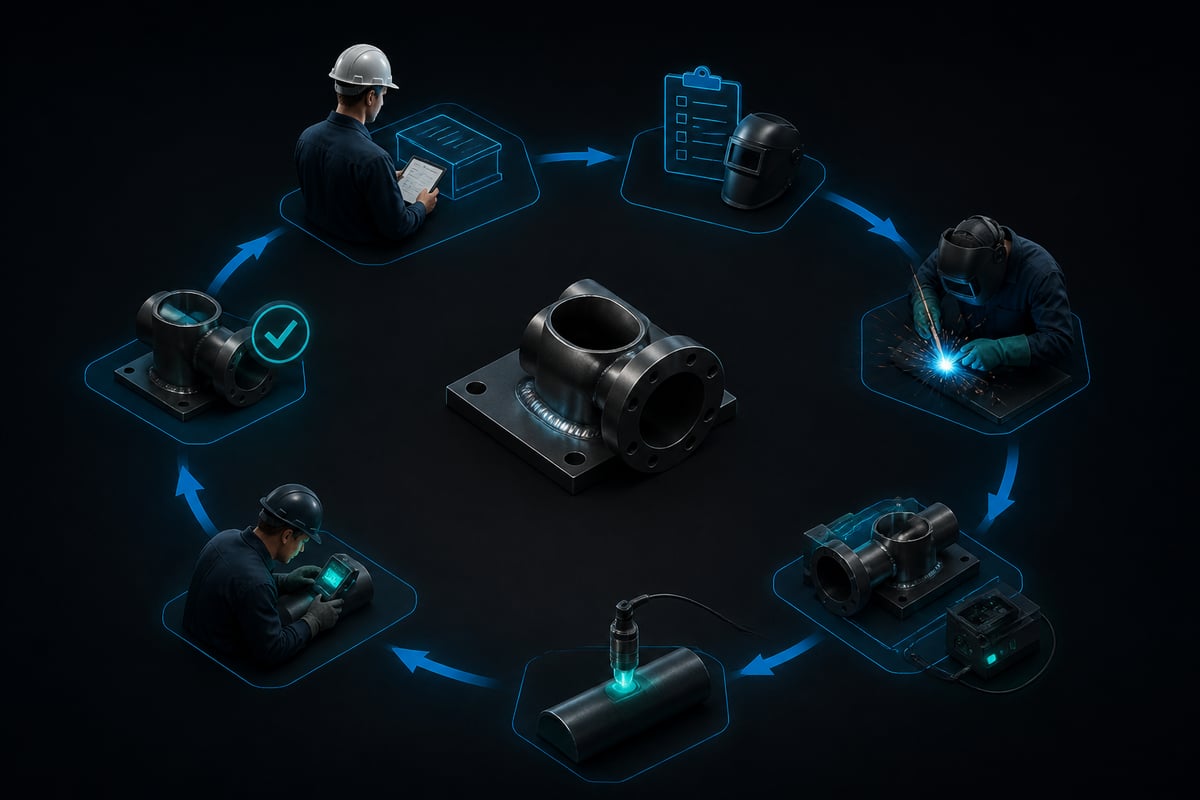
A welding procedure specification, or WPS, is the written recipe a welder follows, and D1.1 requires one for every production weld. It lists the process, filler metal, joint design, position, voltage and amperage ranges, travel speed, preheat and interpass temperature.
There are two routes to a valid WPS. A prequalified WPS stays within the variables the code has already accepted, so no testing is needed. A qualified WPS is supported by a procedure qualification record, or PQR, which documents an actual test weld.
Prequalification is the faster path, but it comes with limits. Only certain processes qualify, including shielded metal arc welding (SMAW), submerged arc welding (SAW), gas metal arc welding and flux cored arc welding (FCAW). Processes outside that list, such as gas tungsten arc welding, need a tested procedure. For a deeper look at how these documents work, LTJ Industrial Services explains the WPS welding procedure specification in plain terms.
What Is the Thickness Range for Welder Qualification?
Welder qualification thickness ranges depend on the thickness of the test plate, and the qualified range is generally a window around that test thickness rather than a single value. The code ties the qualified range to the plate thickness welded in the test, the position and the process.
A few common reference points from the code's qualification tables:
The qualified range is set by the code's qualification tables, which tie it to the test plate thickness, position, process and test type. Verify the specific ranges against the edition your contract cites. The practical point is that a welder qualified on a thin test plate is not automatically approved for heavy sections.
Qualification also covers position. Flat, horizontal, vertical and overhead each have their own designations, and a welder qualified in a more difficult position is generally qualified for easier ones. Overhead and vertical tests are among the hardest to pass, which is why they show up so often in training and certification demonstrations.
How Do You Qualify a Welder to D1.1?
A welder qualifies by completing a test weld under a specific WPS and passing visual inspection plus a bend test or radiographic examination. The work is then recorded in a welder performance qualification record, or WPQR.
The steps are straightforward:
- The welder receives a WPS that matches the process, position and material for the test.
- The test plate is prepared and fitted to the joint geometry on the WPS.
- The welder deposits the weld within the stated parameters.
- A qualified inspector examines the finished weld visually.
- Bend specimens are cut and tested, or the weld is radiographed, depending on the test type.
- Passing results are recorded, and the welder is qualified for the corresponding range.
Welding machine operators and tack welders have their own qualification requirements. Qualification can lapse when a welder has not used a process for an extended period, and the code's continuity rules determine when requalification is required. Your fabrication partner should be able to show current continuity records on request, so ask for them before awarding work.
Why Does Preheat Matter So Much?
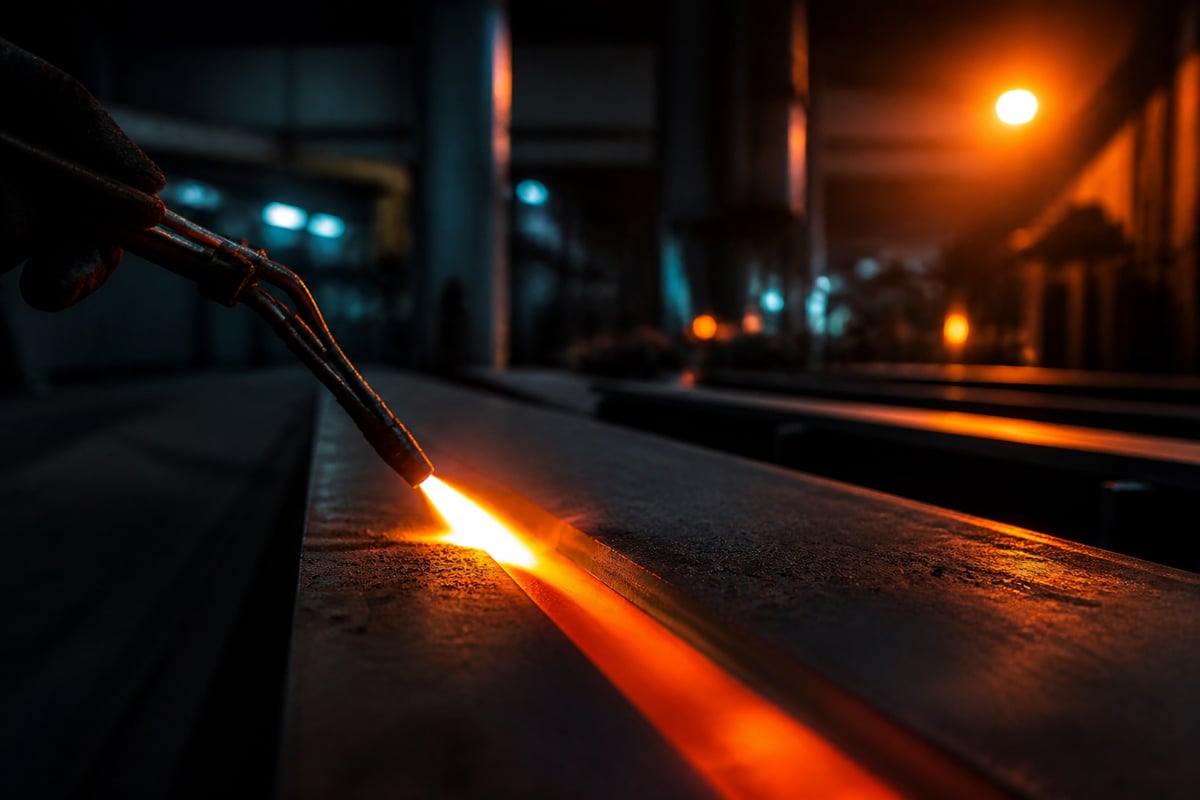
Preheat matters because it slows cooling, which reduces the risk of hydrogen-assisted cracking in the heat-affected zone. Thicker sections, higher carbon content and higher restraint all raise that risk.
D1.1 sets minimum preheat and interpass temperatures by base metal category, process and thickness. Thick, highly restrained joints on equipment frames can crack hours after welding if preheat is skipped, and the defect may not show until the structure is in service.
Practical preheat control involves:
- Measuring temperature with contact pyrometers or temperature indicating crayons at the correct distance from the joint.
- Holding the minimum interpass temperature throughout the weld, not just at the start.
- Using low-hydrogen filler metals and storing them in rod ovens or sealed containers.
- Avoiding moisture, oil and mill scale in the joint area.
Cold-weather field work raises these demands. A welder repairing steel in Colorado winter conditions cannot rely on ambient temperature, and a shop that does field repairs should plan for heat sources and wind protection. The trade-offs between settings are covered in more depth in this comparison of field welding versus shop welding.
How Are Structural Welds Inspected and Accepted?
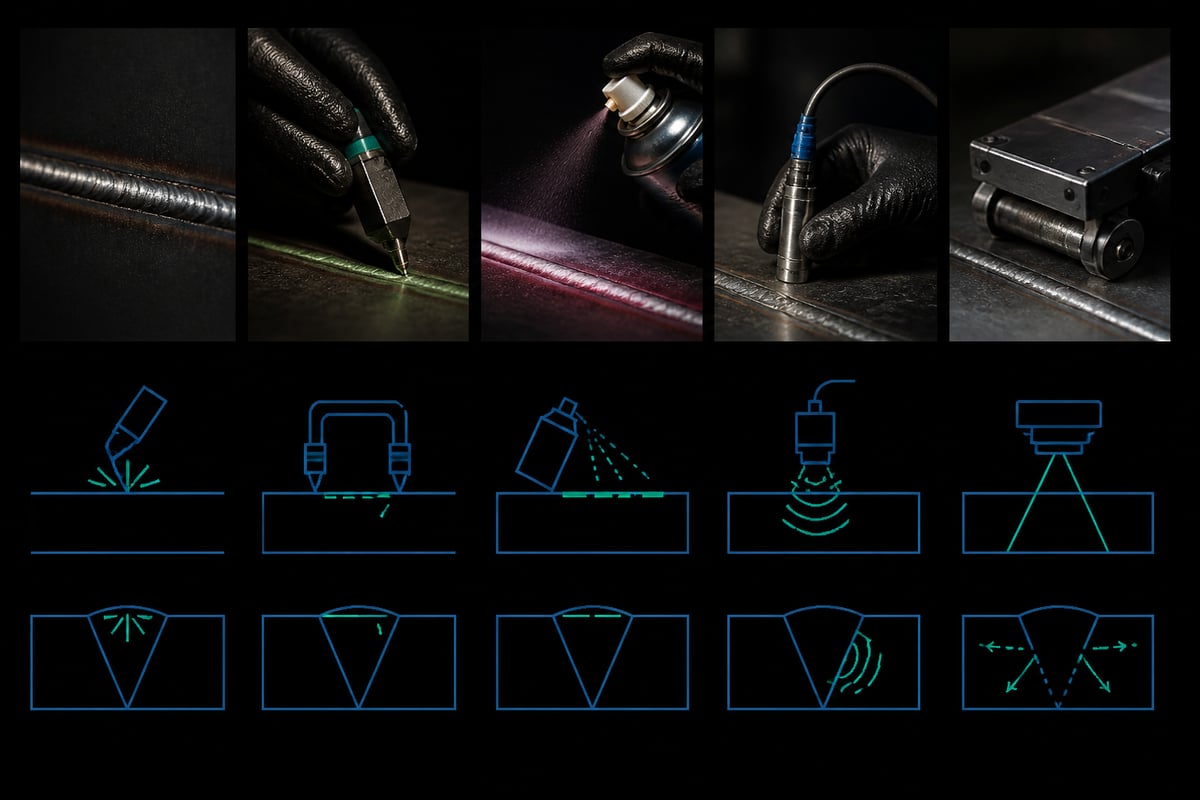
Welds are inspected visually first, and volumetric or surface methods are added when the contract or code requires them. Visual inspection checks for cracks, undercut, porosity, incomplete fusion, profile and size against the code's acceptance criteria.
Nondestructive testing options include:
- Magnetic particle testing (MT): finds surface and near-surface flaws in ferromagnetic steel.
- Dye penetrant testing (PT): finds surface-breaking flaws on any material.
- Ultrasonic testing (UT): detects internal flaws such as lack of fusion and cracks.
- Radiographic testing (RT): produces an image of internal weld quality.
Cyclically loaded structures, such as crane supports and equipment subject to vibration, carry stricter acceptance limits than statically loaded ones. The inspection plan should match the loading condition. AWS also offers a D1.1 endorsement for certified welding inspectors, which gives you a way to verify that the person signing off on your welds knows this specific code.
What Changed in the 2025 Edition of D1.1?
The 2025 edition updates materials, procedures, fabrication and inspection provisions, and its most visible change is a new prequalified base metal. AWS announced the 2025 edition with a summary of changes across these areas, and ANSI’s summary of the 2020 to 2025 differences covers design, inspection and testing updates.
The new base metal is A913 Grade 80, with a minimum yield strength of 80 ksi and tensile strength of 95 ksi, according to AWS Welding Digest. The same article notes that prequalified welding of this grade limits electrodes to a diffusible hydrogen content of 4 mL/100 g (H4) or less.
The 2025 code also added preheat Category F for A913 Grade 70. Per the same AWS source, sections up to 2½ inches thick need no preheat, while sections thicker than 2½ inches require 150°F preheat.
For a managed project, three questions follow from any edition change:
- Which edition does the contract cite, and has it been updated?
- Do existing WPSs and welder qualifications still conform?
- Do filler metal and storage practices meet new hydrogen limits where they apply?
How Do D1.1 Requirements Apply to Equipment Repair in Heavy Industry?
D1.1 requirements apply to repair whenever the repaired component is structural steel, so crusher frames, conveyor supports, hopper structures, drilling rig substructures and recycling line framing generally fall under the code if your specification invokes it. Repairs also introduce problems that new fabrication does not: unknown base metal chemistry, contamination from oil or process material, cracks that must be fully removed before rewelding, and stress locked into restrained joints.
A sound repair approach follows a sequence:
- Identify the base metal, using mill certificates or testing when records are missing.
- Locate and remove the defect fully, confirming removal with magnetic particle or penetrant testing.
- Select a WPS suited to the material and joint, with preheat sized to the section.
- Weld with qualified personnel and control interpass temperature.
- Inspect, document and release the equipment.
In remote Western operations, downtime costs more than the repair itself, which is why the ability to work in the shop or on site matters. LTJ Industrial Services supports customers both in the shop and on site to help minimize downtime, and its welding services are offered in both settings. For oil and gas customers, the company also publishes information on oil and gas welding services. When structural work needs certified hands, certified welding from LTJ covers structural fabrication, equipment repair and custom metal projects in shop or on site.
What Should You Ask a Fabricator Before Awarding D1.1 Work?
Ask for evidence rather than assurances, because D1.1 compliance lives in documents. A capable fabricator can produce these items without delay:
- Written WPSs for the joints in your scope, with supporting PQRs where the procedures are not prequalified.
- Current welder qualification records and continuity logs.
- The edition of the code they work to and how they track edition changes.
- Filler metal control practices, including low-hydrogen storage.
- Inspection and NDT capability, in-house or through a named third party.
- Traceability for base metal and a plan for repairs and rejected welds.
Clear communication matters as much as paperwork. A fabricator who follows through on every project and explains what the code requires saves you from surprises at inspection. Reviewing welding specifications before kickoff helps both sides agree on code edition, joint details and acceptance criteria.
FAQ
What is a D1.5 welding certification?
AWS D1.5 is the Bridge Welding Code, a companion to D1.1 written for highway bridges. It applies stricter rules for fracture-critical members, procedure qualification and inspection than D1.1 does. A welder certified to D1.5 has been tested under bridge-specific requirements, not building and equipment structural steel rules.
What are the different classes of welding?
Welding is commonly grouped by process: arc welding (SMAW, GMAW, FCAW, SAW, GTAW), gas welding, resistance welding and solid-state methods. D1.1 prequalifies four arc processes: SMAW, SAW, GMAW and FCAW. Welds are also classified by joint type (groove, fillet, plug and slot) and by position (flat, horizontal, vertical and overhead).
Does a welder need a separate certification for each code?
Yes, qualification is generally code-specific, so a welder qualified under D1.1 is not automatically qualified for API 1104 pipeline work or ASME pressure vessels. Each code has its own tests, positions and records. Verify that the welder's credentials match the code named in your contract.
Start by pulling the code edition, joint details and acceptance criteria from your next structural job and checking them against your fabricator's current WPSs and welder records. If you need a partner that works in the shop and in the field with welders certified to AWS D1.1 and other codes, the team at LTJ Industrial Services can review your scope and plan the work. See their welding services for what they handle, then Request a Quote from LTJ Industrial Services to get your fabrication, repair or machining project moving.