
In industrial fabrication and manufacturing, consistent weld quality isn't negotiable. The wps welding procedure specification serves as the blueprint that ensures every weld meets engineered standards, code requirements, and performance expectations. For companies serving sectors like oil and gas, aggregate processing, and heavy industrial manufacturing throughout the Western United States, a properly documented and qualified WPS represents the foundation of quality assurance, regulatory compliance, and operational safety.
Understanding the WPS Welding Procedure Specification Framework
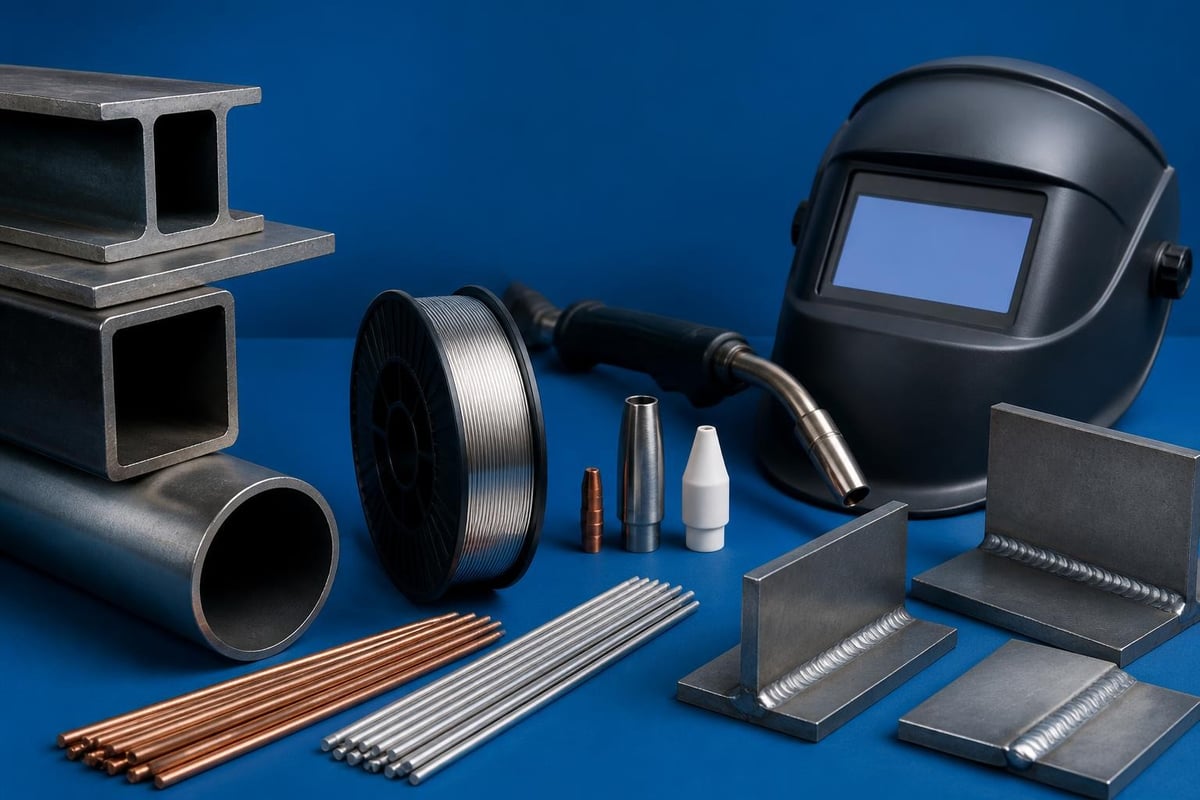
A wps welding procedure specification is a formal written document that provides detailed instructions for producing acceptable welds. This specification outlines every critical parameter a welder must follow, including base metal specifications, filler metal selection, welding process, joint preparation, preheat requirements, electrical characteristics, and post-weld heat treatment when applicable.
The American Welding Society (AWS) and ASME Boiler and Pressure Vessel Code establish the recognized frameworks for WPS development and qualification. These standards ensure that welding procedures produce sound, reliable joints that meet structural and pressure-containing requirements across diverse applications.
Essential Components of Every WPS Document
Every comprehensive wps welding procedure specification must address specific essential variables that directly affect weld quality and performance. These variables fall into several categories that govern mechanical properties, metallurgical integrity, and structural soundness.
Base Metal Information:
- Material specification and grade
- Thickness range qualified
- P-Number or material grouping
- Chemical composition considerations
Filler Metal Specifications:
- AWS classification
- F-Number grouping
- Diameter and form (wire, rod, electrode)
- Trade name and manufacturer
Welding Process Details:
- Process type (SMAW, GMAW, FCAW, GTAW, SAW)
- Manual, semi-automatic, or automatic application
- Single or multiple process combinations
- Welding position(s) qualified
The electrical characteristics section specifies amperage ranges, voltage parameters, and polarity requirements that ensure proper heat input and fusion. Travel speed, either specified directly or controlled through heat input calculations, governs the thermal cycle experienced by the base metal and weld zone.
Procedure Qualification Records and WPS Support Documentation
A wps welding procedure specification cannot stand alone without proper qualification. The Procedure Qualification Record (PQR) provides documented evidence that welds produced under the WPS meet required mechanical properties, soundness criteria, and code requirements through actual testing.
| WPS Element | PQR Requirement | Testing Verification |
|---|---|---|
| Base Metal Thickness | Qualified thickness range tested | Coupon dimensional records |
| Filler Metal | Actual classification used | Heat number traceability |
| Heat Input | Actual values recorded | Voltage/amperage measurements |
| Preheat Temperature | Actual temperature achieved | Temperature measurement logs |
| Mechanical Properties | Tensile, bend, impact results | Laboratory test reports |
| Visual Quality | Surface condition, profile | Inspector examination records |
The ASME PQR format guidance provides standardized documentation templates that capture all essential qualification data. This systematic approach ensures that reviewing engineers, inspectors, and quality personnel can verify procedure qualification without ambiguity.
Documentation Requirements for Code Compliance
Industrial projects governed by ASME Section IX, AWS D1.1, or other welding codes require meticulous documentation linking each WPS to its supporting PQR evidence. For businesses operating across multiple jurisdictions and serving diverse industries, maintaining organized, accessible procedure libraries becomes critical.
The qualification testing phase validates that the specified parameters produce acceptable mechanical properties. Tensile tests verify strength requirements, guided bend tests demonstrate ductility and soundness, and impact tests (when required) confirm adequate toughness at service temperatures. Radiographic or ultrasonic examination may supplement mechanical testing for critical applications.
Prequalified Procedures and Standard Welding Procedure Specifications
Not every wps welding procedure specification requires unique qualification testing. The AWS publishes Standard Welding Procedure Specifications that provide prequalified procedures for common welding applications, reducing qualification costs while maintaining quality assurance.
These standardized procedures, developed through extensive industry collaboration and testing, address typical joint configurations and material combinations encountered in structural fabrication. Companies can adopt these specifications directly when project conditions match the SWPS scope and limitations.
Advantages of SWPS Implementation:
- Immediate procedure availability without qualification testing
- Reduced engineering and testing costs
- Industry-validated parameter ranges
- Simplified documentation for routine work
- Consistent approach across multiple fabricators
Limitations to Consider:
- Restricted to specific material and thickness combinations
- May not address specialty alloys or unique applications
- Limited process and position combinations
- Cannot be modified without requalification
The AWS published SWPS examples demonstrate the comprehensive detail provided in these standardized documents, including tables, diagrams, and parameter ranges that guide welders through compliant execution.
For organizations like LTJ Industrial Services working across oil and gas, aggregate, and recycling industries, maintaining both custom-qualified procedures and prequalified SWPS libraries provides flexibility to address diverse customer requirements efficiently.
Critical Parameters: Preheat and Interpass Temperature Control
Temperature control represents one of the most critical aspects of any wps welding procedure specification, particularly when working with thick sections, high-strength steels, or materials prone to cracking. Preheat and interpass temperature requirements directly influence weld metal cooling rates, hydrogen diffusion, and residual stress development.
Understanding why preheating is performed helps welders and supervisors appreciate the metallurgical rationale behind temperature specifications rather than viewing them as arbitrary requirements. Proper preheat reduces hardness in the heat-affected zone, allows hydrogen to diffuse from the weld area, and decreases thermal gradients that cause cracking.
Factors Determining Temperature Requirements
Multiple metallurgical and geometric factors influence the preheat and interpass temperatures specified in a wps welding procedure specification. Carbon equivalent, material thickness, restraint level, hydrogen potential in the consumables, and ambient temperature all contribute to cracking susceptibility.
The factors affecting preheat and interpass temperatures include chemical composition effects on hardenability, section thickness impact on cooling rates, and joint geometry influences on restraint. These variables interact in complex ways that experienced welding engineers must balance when developing procedures.
Temperature Control Methods:
- Measure base metal temperature before welding begins
- Apply heat using torches, blankets, or induction methods
- Verify temperature using calibrated instruments
- Monitor continuously during welding operations
- Document actual temperatures achieved
- Maintain minimum temperatures between passes
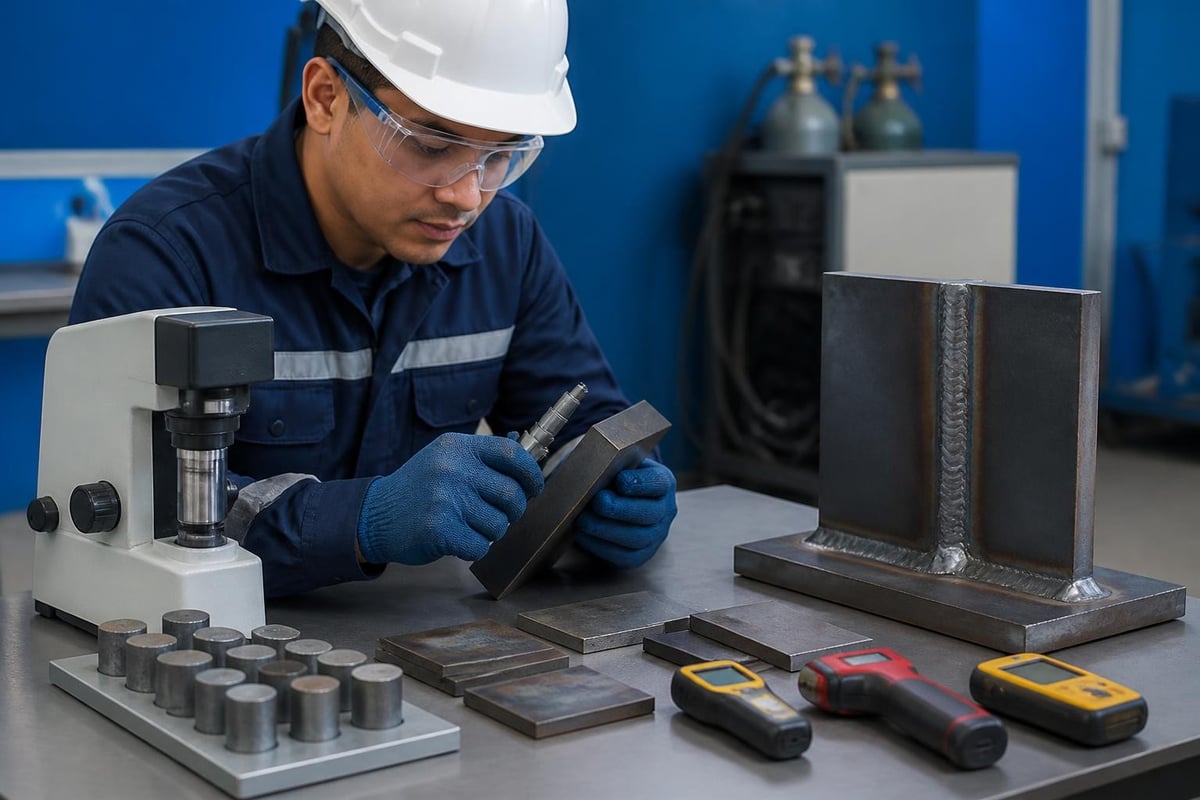
| Material Type | Typical Preheat Range | Interpass Maximum | Control Method |
|---|---|---|---|
| Carbon Steel (low C) | 50-200°F | 500-550°F | Thermocouple/crayon |
| Low Alloy Steel | 200-400°F | 500-600°F | Thermocouple required |
| High Strength Steel | 250-450°F | 450-500°F | Continuous monitoring |
| Stainless Steel | None-200°F | 350°F | Temperature crayons |
Exceeding maximum interpass temperatures can degrade mechanical properties, particularly impact toughness and tensile strength. The wps welding procedure specification must clearly state both minimum and maximum values, along with approved measurement methods and documentation requirements.
Joint Design and Welding Technique Specifications
The geometric configuration of welded joints directly affects procedure qualification scope and performance. A wps welding procedure specification must detail joint preparation requirements, included angles, root openings, backing specifications, and assembly tolerances that ensure proper fit-up and fusion.
Groove Preparation Standards
V-groove, bevel groove, J-groove, and U-groove configurations each present different accessibility, fusion, and distortion characteristics. The procedure specification identifies which preparation methods qualify, acceptable tolerance ranges, and inspection criteria for fit-up verification before welding begins.
Root opening dimensions control penetration and fusion at the joint root. Too narrow, and incomplete fusion results; too wide, and burn-through or excessive reinforcement occurs. The WPS specifies nominal dimensions with acceptable tolerance ranges, typically plus or minus 1/16 inch for most structural applications.
Progressive Joint Preparation Requirements:
- Edge preparation method (machining, thermal cutting, grinding)
- Groove angle and land dimension
- Root face thickness when applicable
- Root opening at assembly
- Backing material specification (if used)
- Tack weld procedure reference
- Cleaning requirements before welding
Welding technique variables including stringer versus weave beads, electrode manipulation patterns, and pause/restart procedures affect heat input distribution and weld bead geometry. While these elements may seem less critical than chemical or thermal parameters, they significantly influence final weld quality and consistency.
Position Qualification and Range of Approval
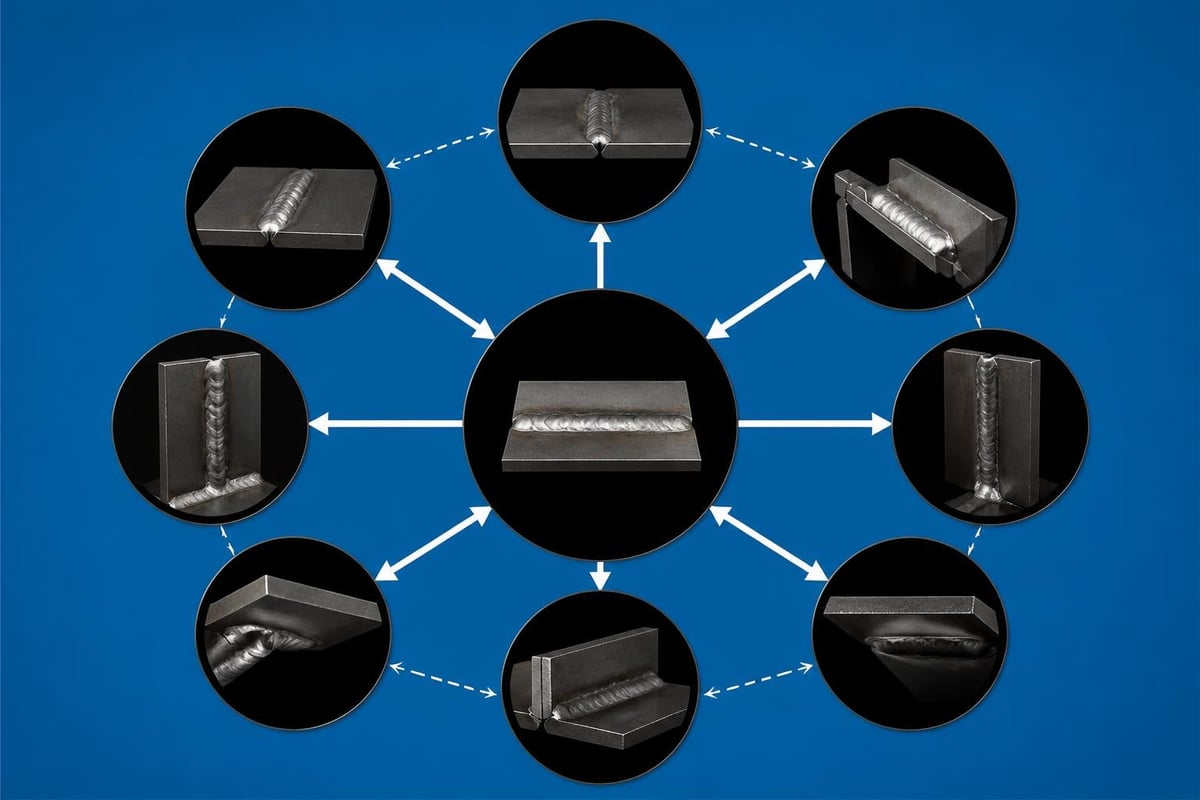
Every wps welding procedure specification carries position qualifications that limit where and how it can be applied. The four primary welding positions-flat, horizontal, vertical, and overhead-present different heat control, puddle management, and access challenges that affect procedure suitability.
Qualification in one position does not automatically approve use in others. A procedure qualified in the flat position (1G for groove welds, 1F for fillet welds) qualifies only for flat applications unless additional testing demonstrates capability in other positions. Companies requiring positional flexibility must qualify procedures across all anticipated orientations.
The progression from easier to more difficult positions reflects increased skill requirements and quality control challenges:
- Flat (1G/1F): Gravity assists puddle control, easiest position
- Horizontal (2G/2F): Side-to-side control required, moderate difficulty
- Vertical (3G/3F): Upward or downward progression, increased skill demand
- Overhead (4G/4F): Gravity opposition, most challenging execution
For field welding operations throughout the Western United States where equipment positioning options are limited, having procedures qualified in all positions ensures maximum operational flexibility. The investment in comprehensive qualification testing pays dividends in reduced project delays and rework.
WPS Review, Approval, and Technical Compliance Verification
Before implementation, every wps welding procedure specification requires thorough technical review by qualified welding engineers or designated representatives. This review process verifies code compliance, confirms supporting PQR adequacy, and ensures practical applicability to intended applications.
The inspection and engineering perspective on welding procedures emphasizes systematic verification steps that prevent costly errors and non-conformances. Reviewers must confirm that essential variables fall within qualified ranges, supplementary variables are appropriately specified, and non-essential variables provide adequate guidance without over-constraining welders.
Multi-Level Review Protocol
Engineering Review Focus:
- Code requirement compliance verification
- Essential variable range confirmation
- PQR support documentation adequacy
- Material compatibility assessment
- Heat input calculation validation
Quality Assurance Review Focus:
- Documentation completeness and clarity
- Traceability to supporting qualification records
- Inspection and acceptance criteria definition
- Welder qualification requirements
- Record retention and retrieval procedures
Production Review Focus:
- Practical applicability to shop or field conditions
- Consumable availability and procurement
- Equipment capability and availability
- Productivity and cost implications
- Training and supervision requirements
Organizations serving regulated industries must also consider client-specific requirements, owner approval processes, and authorized inspector review cycles. Building these approval pathways into procedure development timelines prevents project delays and ensures regulatory acceptance.
Real-World WPS Application in Industrial Fabrication
Theoretical understanding of wps welding procedure specification principles becomes valuable only through practical application in fabrication environments. For companies providing comprehensive services across recycling equipment repair, aggregate processing machinery, and oil field infrastructure, procedure selection and execution directly impact project success.
Consider a typical scenario: fabricating a structural platform for aggregate processing equipment requires joining ASTM A36 plate to wide-flange beams using fillet welds in multiple positions. The AWS D1.1 structural welding code governs this work, requiring either prequalified joint details or specific procedure qualification.
| Application Requirement | WPS Specification Response | Qualification Basis |
|---|---|---|
| Base metal: A36 plate and W-shapes | P-No. 1, Group 1 materials | Prequalified per AWS D1.1 |
| Fillet welds, 5/16" leg size | Minimum preheat 50°F if T>3/4" | Table 3.2 preheat requirements |
| All-position capability required | FCAW-G process, E71T-1 wire | PQR qualified 3F and 4F positions |
| Wind and weather exposure | Impact testing not required | Fracture-critical exemption |
The example WPS documentation from public works projects demonstrates the level of detail and organization required for code compliance and inspector acceptance. Clear, unambiguous specifications eliminate confusion during execution and provide objective criteria for quality verification.
Managing WPS Libraries for Multi-Sector Operations
Companies like LTJ Industrial Services serving diverse industries from oil and gas to recycling face the challenge of maintaining comprehensive procedure libraries that address varying material specifications, code requirements, and client preferences. Effective WPS management systems enable rapid procedure retrieval, revision control, and qualification status tracking.
Modern fabrication operations benefit from digital procedure management systems that provide:
- Searchable databases by material, process, and position
- Automated essential variable range checking
- Revision history and approval tracking
- Linked PQR documentation access
- Welder qualification cross-reference
- Client-specific procedure identification
Physical or digital organization alone proves insufficient without robust change control procedures. When process improvements, consumable changes, or code updates necessitate WPS revision, documented engineering evaluation and requalification assessment must occur before implementation.
WPS Revision Triggers:
- Changes to essential variables requiring requalification
- Supplementary variable modifications affecting quality
- Non-essential variable updates for clarity or efficiency
- Code or standard revisions affecting compliance
- Client specification requirement changes
- Consumable manufacturer product updates
The documentation burden increases proportionally with service diversity, but systematic approach to procedure development, qualification, and management transforms this requirement from administrative overhead into competitive advantage. Companies with mature WPS systems respond faster to bid opportunities, execute work more efficiently, and demonstrate quality system maturity that sophisticated clients value.
Welder Performance Qualification and WPS Execution
A thoroughly developed and properly qualified wps welding procedure specification delivers value only when executed by qualified welders. Welder performance qualification, though distinct from procedure qualification, directly links to WPS implementation through the essential variable concept.
When a welder qualifies following a specific WPS, that qualification confirms competency within the essential variable ranges of that procedure. Changes to process, position, base metal group, or filler metal classification may invalidate existing welder qualifications, requiring requalification before production welding begins.
Performance qualification testing mimics actual production conditions as closely as possible. Test assemblies use materials, joint configurations, and welding processes identical or similar to anticipated work. Destructive testing or radiographic examination verifies that the welder can consistently produce code-quality work following the specified procedure.
Continuous Competency Verification
Initial qualification represents only the starting point. Maintaining welder performance requires ongoing verification through production work monitoring, periodic requalification intervals (typically six months for many codes), and process-specific continuity requirements.
Quality control personnel monitor production welds for compliance with WPS requirements including:
- Proper consumable selection and storage
- Correct amperage, voltage, and travel speed
- Appropriate interpass temperature control
- Specified cleaning between passes
- Acceptable bead placement and tie-in
- Required inspection and documentation
This oversight ensures that shop and field installations across the Western United States meet the same quality standards regardless of location, crew composition, or schedule pressure. Systematic quality assurance transforms written specifications into consistent physical performance.
Understanding and implementing proper wps welding procedure specification practices ensures that every weld meets engineered requirements while satisfying code compliance and customer expectations. Whether you're operating in oil and gas infrastructure, aggregate processing, recycling operations, or general industrial manufacturing, qualified welding procedures form the foundation of quality and reliability. LTJ Industrial Services brings extensive welding engineering expertise, comprehensive procedure libraries, and qualified craftsmen to deliver fabrication and repair solutions throughout the Western United States, helping your operation maintain productivity while meeting the highest quality standards.