The aws d1 1 structural welding code steel serves as the definitive standard governing structural welding across North America, establishing critical requirements for industrial fabrication operations. For manufacturers in the oil and gas, aggregate, and recycling sectors, understanding this code determines the quality, safety, and compliance of every welded steel structure. This comprehensive standard addresses everything from welder qualification to joint design, making it essential knowledge for fabrication shops serving heavy industrial applications throughout the Western United States.
Understanding the AWS D1.1 Structural Welding Code Framework
The American Welding Society publishes the aws d1 1 structural welding code steel as a consensus standard that bridges engineering design, fabrication practice, and quality assurance. This code applies to carbon and low-alloy structural steels used in buildings, bridges, tanks, towers, and other structural applications where weld integrity directly impacts structural performance.
Code Organization and Scope
The standard divides into clearly defined sections that address distinct aspects of structural welding:
- General requirements and base metal specifications
- Design of welded connections and acceptance criteria
- Prequalification of welding procedure specifications (WPS)
- Qualification procedures for welders and welding operators
- Fabrication requirements and workmanship standards
- Inspection protocols and nondestructive testing methods
- Stud welding applications and requirements
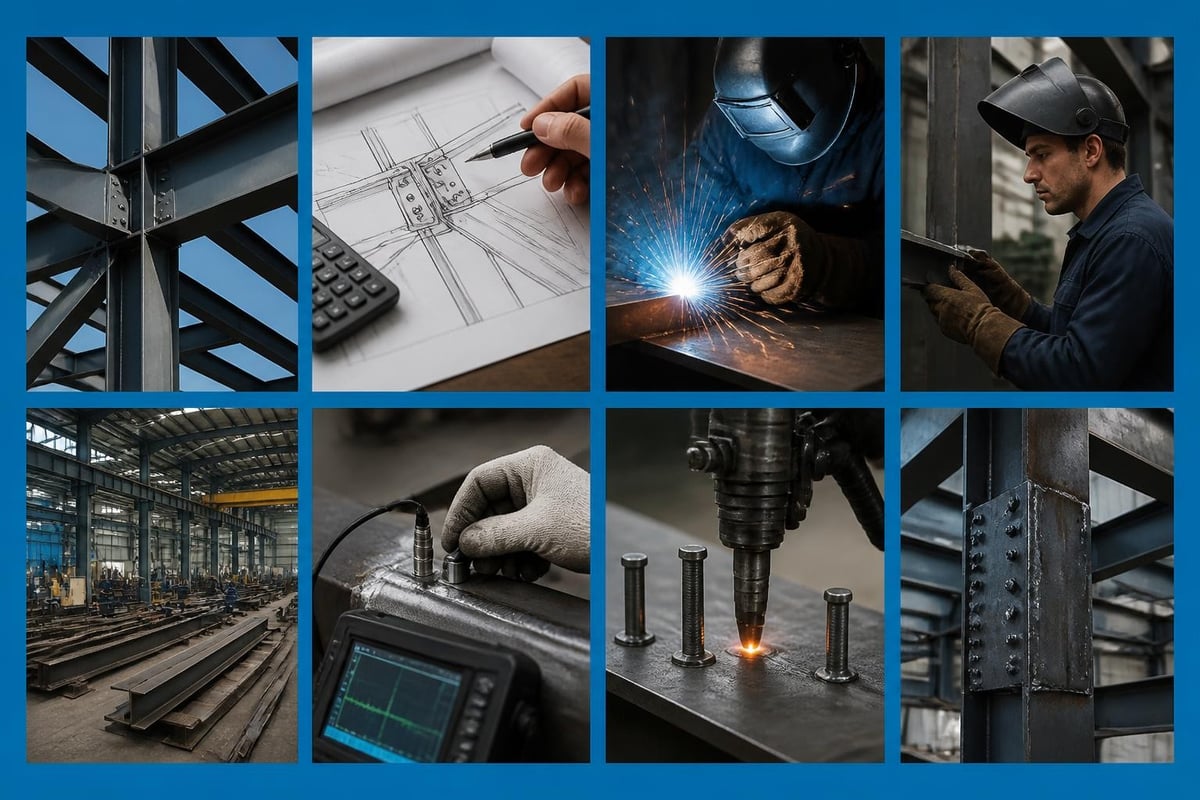
Each section builds upon the others to create a comprehensive framework. The published AWS D1.1/D1.1M:2020 document provides detailed tables, figures, and technical specifications that fabrication shops reference daily for welding operations.
Base Metal Requirements and Material Compatibility
The aws d1 1 structural welding code steel specifies approved base metals through ASTM designations and mechanical property requirements. Understanding these specifications ensures proper material selection for structural applications.
| Base Metal Group | Typical ASTM Grades | Minimum Yield Strength | Primary Applications |
|---|---|---|---|
| Group I | A36, A53 Grade B | 36 ksi | General structural, frames, supports |
| Group II | A572 Grade 50, A588 | 50 ksi | High-strength structural, bridges |
| Group III | A514, A517 | 90-100 ksi | Critical heavy equipment, pressure applications |
Material compatibility directly impacts filler metal selection and welding procedure development. Shops specializing in steel materials fabrication must maintain current knowledge of approved base metal specifications to ensure code compliance.
Prequalified Welding Procedure Specifications
One of the most valuable features within the aws d1 1 structural welding code steel is the prequalified WPS framework. This provision allows fabricators to use specific joint configurations, welding processes, and parameters without conducting formal qualification testing, significantly reducing development costs.
Conditions for Prequalification
Prequalified status applies only when all specified conditions are met:
- Approved welding processes: SMAW, SAW, GMAW, FCAW, and GTAW
- Joint design compliance: Exact adherence to prescribed joint geometries
- Base metal limitations: Materials within Group I, II, or III classifications
- Thickness ranges: Within specified limits for each process and position
- Filler metal matching: AWS A5 series consumables matched to base metal
- Preheat and interpass temperatures: Minimum values maintained per code tables
The AWS filler metals and fluxes specifications provide detailed consumable requirements that align with D1.1 prequalification criteria. Fabrication shops must document adherence to these conditions through detailed WPS documentation.
Essential Variables and Parameter Control
When developing procedures under the aws d1 1 structural welding code steel, fabricators must control essential variables that affect mechanical properties and weld soundness.
Process Parameters:
- Current type and polarity
- Amperage ranges (minimum and maximum)
- Voltage ranges
- Travel speed limitations
- Electrode or wire diameter
- Shielding gas composition and flow rate
Joint Configuration:
- Groove angle and root opening
- Root face dimension
- Joint preparation method
- Backing material type and removal
Changes to essential variables require requalification unless the modification falls within permitted tolerances. This rigorous control ensures consistent weld quality across production runs, critical for industrial sectors like oil and gas where certified pressure vessel welding demands absolute reliability.
Welder and Welding Operator Qualification
The aws d1 1 structural welding code steel establishes comprehensive qualification requirements that verify individual welder competency. These requirements protect structural integrity by ensuring only properly skilled personnel perform code work.
Qualification Test Requirements
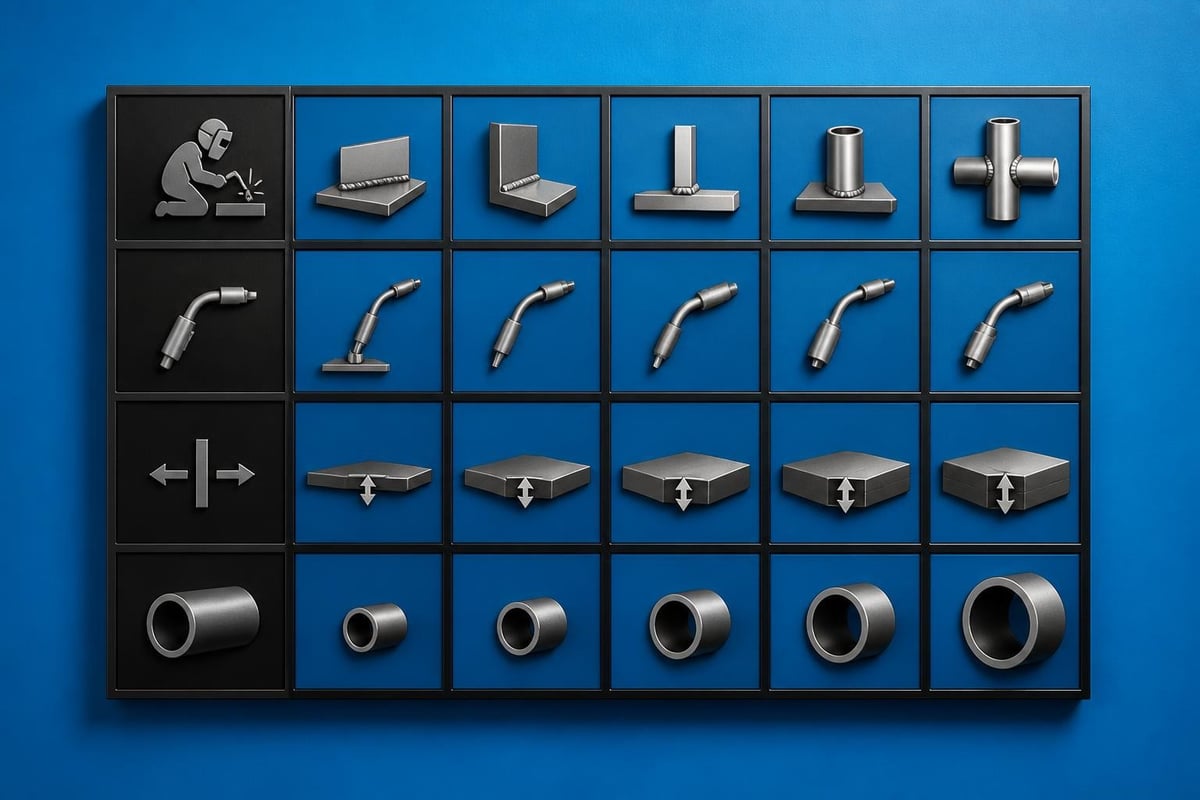
Welders must demonstrate proficiency through performance testing that mirrors actual production conditions:
| Test Variable | Qualification Range | Requalification Triggers |
|---|---|---|
| Position | Specific (1G, 2G, 3G, 4G) or All-Position (6G) | Position change outside qualified range |
| Process | Single process qualified | Change to different welding process |
| Filler Metal | F-number group | Change to different F-number group |
| Base Metal Thickness | Unlimited or limited range | Thickness exceeding qualified range |
| Diameter (pipe) | Specific size ranges | Diameter outside qualified range |
Visual examination and destructive testing verify weld quality. Test assemblies undergo bend tests that demonstrate ductility and soundness, with strict acceptance criteria for cracks, incomplete fusion, or slag inclusions.
Maintaining Qualification Records
Fabrication shops must maintain detailed welder qualification records including test results, procedure references, and continuity documentation. The code requires welders to remain active in qualified processes, with requalification mandated after extended periods of inactivity.
Federal projects often incorporate additional documentation requirements, as outlined in whole-of-government UFGS specifications that reference AWS D1.1 compliance for structural welding contracts.
Fabrication Requirements and Workmanship Standards
Beyond procedure and welder qualification, the aws d1 1 structural welding code steel prescribes detailed fabrication requirements that govern production welding operations. These standards ensure consistent quality from initial fit-up through final inspection.
Preheat and Interpass Temperature Control
Thermal management prevents hydrogen-induced cracking and ensures proper metallurgical properties:
- Group I steels: Minimum preheat requirements based on thickness and ambient temperature
- Group II and III steels: Higher preheat temperatures required due to increased carbon equivalents
- Interpass maximums: Control to prevent grain growth and property degradation
Temperature verification using calibrated instruments must occur immediately before welding begins. For field operations across Colorado and the Western United States, environmental conditions significantly impact thermal management strategies.
Joint Preparation and Fit-Up Tolerances
Precise joint preparation directly affects weld quality and code compliance. The aws d1 1 structural welding code steel specifies maximum deviations from nominal dimensions:
- Root opening tolerances: ±1/16 inch typical
- Groove angle variations: Limited to prevent incomplete fusion
- Alignment: Maximum offset based on thickness
- Root face dimensions: Critical for penetration control
Shops offering comprehensive machining and manufacturing capabilities can achieve superior fit-up through precision equipment, reducing rework and improving production efficiency.
Inspection and Quality Assurance Protocols
The code establishes multi-tier inspection requirements ensuring weld quality meets structural performance demands. These protocols range from mandatory visual examination to sophisticated nondestructive testing methods.
Visual Inspection Acceptance Criteria
All welds undergo visual inspection regardless of additional NDT requirements. Acceptance criteria vary by application:
Statically Loaded Structures (Table 6.1):
- No cracks permitted
- Fusion complete to root
- Undercut limitations: 1/32 inch maximum depth
- Porosity restrictions by size and distribution
Cyclically Loaded Structures (Table 6.2):
- More stringent requirements for fatigue-critical applications
- Surface profile specifications
- Reinforcement limitations to reduce stress concentrations
Tubular Connections (Table 6.3):
- Specialized criteria for HSS and pipe joints
- Profile requirements at toes and transitions
Nondestructive Testing Implementation
Beyond visual inspection, the aws d1 1 structural welding code steel requires NDT for specific applications and provides acceptance criteria for various methods:
| NDT Method | Primary Application | Acceptance Standard |
|---|---|---|
| Ultrasonic Testing (UT) | Thick sections, complete joint penetration | Reflector size and distribution limits |
| Magnetic Particle Testing (MT) | Surface and near-surface discontinuities | Relevant indication classification |
| Radiographic Testing (RT) | Internal discontinuity detection | Film density and discontinuity severity |
| Penetrant Testing (PT) | Nonmagnetic materials, surface flaws | Linear and rounded indication criteria |
Recent research documented in peer-reviewed welding journals continues to refine understanding of welded joint behavior and optimal inspection strategies under AWS D1.1 guidance.
Industry-Specific Applications and Compliance
The aws d1 1 structural welding code steel extends across diverse industrial sectors, each with unique application challenges and regulatory contexts. Understanding sector-specific requirements ensures appropriate code implementation.
Bridge and Infrastructure Applications
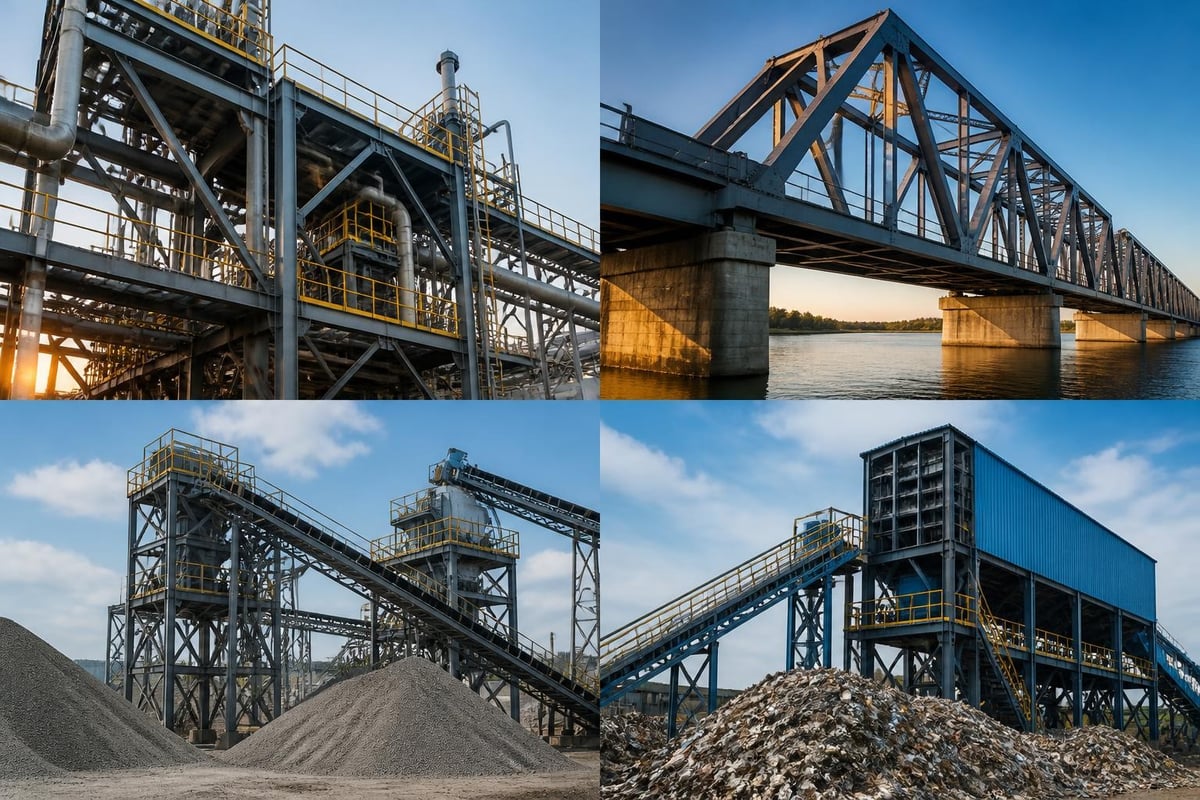
Transportation infrastructure represents a primary application area where AWS D1.1 interfaces with AASHTO specifications. The FHWA Bridge Welding Reference Manual details how AWS D1.1 requirements integrate with federal bridge construction standards, addressing topics like fracture-critical members and fatigue design.
Bridge fabrication demands:
- Enhanced material toughness requirements
- Strict heat input control for thick sections
- Comprehensive NDT coverage on primary members
- Special provisions for weathering steel applications
Oil and Gas Sector Requirements
For fabricators serving the oil and gas industry throughout the Western United States, the aws d1 1 structural welding code steel applies to structural supports, pipe racks, and processing equipment foundations. These applications often combine D1.1 requirements with additional owner specifications addressing:
Environmental exposure considerations: Corrosion protection and coating compatibility with welding procedures create unique challenges requiring coordination between welding operations and protective coating application.
Seismic design integration: Structural connections in seismically active regions must satisfy both AWS D1.1 workmanship standards and ductility requirements from building codes, demanding careful procedure development.
Aggregate and Recycling Equipment
Structural frames supporting crushing equipment, conveyors, and material handling systems in aggregate and recycling operations face severe service conditions. The code's fatigue provisions become particularly relevant for components experiencing cyclic loading from vibrating equipment.
Fabricators must consider:
- Impact loading from material handling operations
- Vibration transmission through welded connections
- Access limitations for inspection and maintenance
- Field repair procedures maintaining code compliance
Code Comparison and International Standards Context
Understanding how the aws d1 1 structural welding code steel relates to other standards helps fabricators serving diverse markets and international clients. The TWI standards comparison analysis provides valuable perspective on global welding code frameworks.
AWS D1.1 vs. ISO 3834 Quality Requirements
While AWS D1.1 focuses on technical welding requirements, ISO 3834 addresses comprehensive quality management systems for welding fabrication. Many international clients require both:
- AWS D1.1: Procedure qualification, welder certification, acceptance criteria
- ISO 3834: Personnel responsibilities, equipment calibration, subcontractor control, document management
Fabrication shops pursuing international work often implement integrated systems satisfying both frameworks simultaneously.
Relationship to ASME Section IX
ASME Section IX governs pressure vessel and piping welding procedure and welder qualification. Key differences from the aws d1 1 structural welding code steel include:
- Qualification approach: ASME uses broader essential variables; AWS D1.1 offers prequalified procedures
- Test requirements: Different test specimen configurations and acceptance criteria
- Application scope: ASME for pressure containment; AWS D1.1 for structural loading
- Position designations: Different nomenclature systems
Shops performing both structural and pressure vessel work must maintain separate qualification programs unless procedures satisfy the more restrictive standard requirements.
Maintaining Compliance in Production Environments
Successful implementation of the aws d1 1 structural welding code steel requires systematic approaches integrating procedural controls, personnel training, and documentation management throughout fabrication operations.
Documentation and Traceability Systems
Complete documentation enables verification of code compliance and provides defensible quality records:
Required documentation packages:
- Welding procedure specifications (WPS) with supporting PQR when required
- Welder qualification test records and continuity logs
- Material test reports certifying base metal and filler metal compliance
- Preheat and interpass temperature records
- Inspection reports documenting visual and NDT results
- Nonconformance reports and corrective action documentation
Digital systems increasingly replace paper-based approaches, improving accessibility and reducing administrative burden. However, the code remains neutral regarding documentation format, requiring only that records demonstrate compliance.
Training and Competency Development
Beyond formal welder qualification, ongoing training maintains workforce competency as code editions update and fabrication challenges evolve:
- Code updates: AWS D1.1 publishes new editions on regular cycles, introducing refined requirements
- Process training: New welding technologies and consumables require procedure updates
- Inspector certification: Certified Welding Inspectors (CWI) provide qualified inspection services
- Supervision qualifications: Code work requires oversight by qualified supervisory personnel
Organizations like LTJ Industrial Services invest in continuous workforce development to maintain code expertise across evolving industrial requirements.
Common Compliance Challenges and Solutions
Fabricators implementing the aws d1 1 structural welding code steel encounter recurring challenges that require proactive management:
| Challenge | Impact | Solution Approach |
|---|---|---|
| Ambient temperature effects | Preheat compliance in cold environments | Heated enclosures, increased preheat margins |
| Base metal variability | Chemistry affecting weldability | Enhanced material testing, procedure verification |
| Production pressure | Shortcuts compromising quality | Management commitment, adequate scheduling |
| Inspector availability | Delays awaiting inspection | Qualified in-house inspection personnel |
Successful fabricators build compliance into standard operating procedures rather than treating it as an additional requirement. This integration improves efficiency while ensuring consistent code conformance.
Emerging Technologies and Code Evolution
The aws d1 1 structural welding code steel continues evolving to address new welding technologies, materials, and application demands. Recent editions have incorporated provisions for hybrid welding processes, alternative base materials, and improved fatigue design methods.
Advanced Welding Process Integration
Modern fabrication increasingly employs processes beyond traditional SMAW and FCAW:
Laser-hybrid welding: Combining laser and arc processes achieves deeper penetration with reduced heat input, though code provisions continue developing for these technologies.
Robotic automation: Automated welding offers superior consistency, but requires demonstration that mechanized processes satisfy code requirements including welder or welding operator qualification provisions.
Friction stir welding: Solid-state joining shows promise for specific applications, though widespread code acceptance awaits additional research and standardization.
Digital Quality Management and Industry 4.0
Data-driven approaches transform compliance documentation and quality assurance:
- Real-time welding parameter monitoring verifies WPS compliance
- Digital weld maps track individual welds through fabrication and inspection
- Predictive analytics identify process variations before nonconformance occurs
- Blockchain technologies enable immutable quality record systems
These technologies enhance rather than replace fundamental code requirements, providing tools for more reliable compliance demonstration.
Understanding and implementing the aws d1 1 structural welding code steel requirements ensures structural integrity across industrial fabrication applications while satisfying regulatory and contractual obligations. Proper base metal selection, procedure development, welder qualification, and inspection execution create the foundation for code-compliant production welding. When your operations demand expert fabrication with rigorous attention to welding standards, LTJ Industrial Services brings decades of experience serving the oil and gas, aggregate, and recycling industries throughout the Western United States with comprehensive welding, machining, and fabrication capabilities backed by thorough understanding of structural welding code requirements.
{
“@context”: “https://schema.org”,
“@type”: “FAQPage”,
“mainEntity”: [
{
“@type”: “Question”,
“name”: “What is AWS D1.1 structural welding code steel?”,
“acceptedAnswer”: {
“@type”: “Answer”,
“text”: “AWS D1.1 is the American Welding Society’s Structural Welding Code for Steel, which establishes requirements for welding carbon and low-alloy structural steels in buildings, bridges, and other structures. It covers welding procedure specifications, welder qualification, fabrication requirements, inspection criteria, and acceptance standards to ensure structural integrity and safety.”
}
},
{
“@type”: “Question”,
“name”: “What are prequalified welding procedures in AWS D1.1?”,
“acceptedAnswer”: {
“@type”: “Answer”,
“text”: “Prequalified welding procedures are WPS that meet specific conditions outlined in AWS D1.1 and can be used without formal qualification testing. They require approved welding processes (SMAW, GMAW, FCAW, SAW, GTAW), prescribed joint designs, qualified base metals, specific thickness ranges, proper filler metal matching, and minimum preheat temperatures. This provision reduces development costs while maintaining quality standards.”
}
},
{
“@type”: “Question”,
“name”: “How do welders become qualified under AWS D1.1?”,
“acceptedAnswer”: {
“@type”: “Answer”,
“text”: “Welders qualify under AWS D1.1 by completing performance tests that demonstrate proficiency in specific positions, processes, base metal thicknesses, and filler metals. Test assemblies undergo visual examination and destructive testing including bend tests. Qualification records must be maintained, and welders must remain active in qualified processes to maintain their certification status.”
}
},
{
“@type”: “Question”,
“name”: “What inspection methods does AWS D1.1 require?”,
“acceptedAnswer”: {
“@type”: “Answer”,
“text”: “AWS D1.1 requires visual inspection for all welds, with specific acceptance criteria for cracks, porosity, undercut, and fusion. Additional nondestructive testing (NDT) methods include ultrasonic testing for thick sections, magnetic particle testing for surface discontinuities, radiographic testing for internal defects, and penetrant testing for nonmagnetic materials. The specific NDT requirements depend on joint type, loading conditions, and application criticality.”
}
},
{
“@type”: “Question”,
“name”: “What base metals are approved under AWS D1.1?”,
“acceptedAnswer”: {
“@type”: “Answer”,
“text”: “AWS D1.1 approves carbon and low-alloy structural steels organized into groups based on mechanical properties and chemistry. Group I includes A36 and A53 Grade B steels with 36 ksi minimum yield. Group II covers high-strength steels like A572 Grade 50 and A588 with 50 ksi yield. Group III encompasses quenched and tempered steels like A514 and A517 with 90-100 ksi yield strength. Proper group identification is essential for filler metal selection and procedure development.”
}
},
{
“@type”: “Question”,
“name”: “How does AWS D1.1 differ from ASME Section IX?”,
“acceptedAnswer”: {
“@type”: “Answer”,
“text”: “AWS D1.1 governs structural welding for buildings, bridges, and frameworks, while ASME Section IX covers pressure vessels and piping. AWS D1.1 offers prequalified procedures and has specific essential variables for structural applications. ASME Section IX uses broader essential variable ranges and different test specimen configurations. The codes have different acceptance criteria, position designation systems, and qualification approaches. Shops performing both types of work must maintain separate qualification programs.”
}
},
{
“@type”: “Question”,
“name”: “What are preheat requirements in AWS D1.1?”,
“acceptedAnswer”: {
“@type”: “Answer”,
“text”: “Preheat requirements in AWS D1.1 prevent hydrogen-induced cracking and ensure proper metallurgical properties. Minimum preheat temperatures are determined by base metal group, thickness, and ambient conditions. Group I steels require lower preheat, while Group II and III steels demand higher temperatures due to increased carbon equivalents. Interpass maximum temperatures control grain growth. Temperature must be verified using calibrated instruments immediately before welding, with special considerations for field welding in cold climates.”
}
},
{
“@type”: “Question”,
“name”: “What documentation is required for AWS D1.1 compliance?”,
“acceptedAnswer”: {
“@type”: “Answer”,
“text”: “AWS D1.1 compliance requires comprehensive documentation including welding procedure specifications (WPS) with supporting procedure qualification records (PQR) when not using prequalified procedures, welder qualification test records and continuity documentation, material test reports for base and filler metals, preheat and interpass temperature records, visual and NDT inspection reports, and nonconformance reports with corrective actions. This documentation provides traceability and demonstrates code compliance throughout fabrication.”
}
},
{
“@type”: “Question”,
“name”: “Can LTJ Industrial Services help with AWS D1.1 compliant welding projects?”,
“acceptedAnswer”: {
“@type”: “Answer”,
“text”: “Yes, LTJ Industrial Services specializes in AWS D1.1 compliant structural welding for the oil and gas, aggregate, and recycling industries throughout the Western United States. Based in Rifle, Colorado, they provide comprehensive welding fabrication services including procedure development, qualified welders, proper documentation, and inspection services. Their expertise in structural steel welding ensures code compliance for both shop and field applications across commercial and industrial manufacturing sectors.”
}
},
{
“@type”: “Question”,
“name”: “Why should I hire professionals for AWS D1.1 structural welding?”,
“acceptedAnswer”: {
“@type”: “Answer”,
“text”: “Professional fabricators like LTJ Industrial Services ensure AWS D1.1 compliance through qualified welders, documented procedures, proper equipment, and certified inspection personnel. They maintain current knowledge of code requirements, possess experience with diverse industrial applications, and provide defensible quality documentation. Professional services reduce risk of weld failures, project delays, and regulatory violations while ensuring structural integrity for critical applications in demanding industrial environments.”
}
}
]
}
{
“@context”: “https://schema.org”,
“@type”: “Article”,
“headline”: “AWS D1.1 Structural Welding Code Steel: Complete Guide”,
“description”: “Master AWS D1.1 structural welding code steel requirements for industrial fabrication. Expert guide covering standards, compliance, and WPS.”,
“image”: “https://ltjindustrial.com/featured-image.jpg”,
“author”: {
“@type”: “Organization”,
“name”: “LTJ Industrial Services”
},
“publisher”: {
“@type”: “Organization”,
“name”: “LTJ Industrial Services”,
“logo”: {
“@type”: “ImageObject”,
“url”: “https://ltjindustrial.com/logo.png”
}
},
“datePublished”: “2026-11-05”,
“dateModified”: “2026-11-05”,
“mainEntityOfPage”: {
“@type”: “WebPage”,
“@id”: “https://ltjindustrial.com”
},
“keywords”: “AWS D1.1, structural welding code, steel welding, welding procedure specification, welder qualification, industrial fabrication, structural steel, welding inspection”,
“articleSection”: “Welding and Fabrication”,
“about”: [
{
“@type”: “Thing”,
“name”: “AWS D1.1 Structural Welding Code”
},
{
“@type”: “Thing”,
“name”: “Steel Fabrication”
},
{
“@type”: “Thing”,
“name”: “Welder Qualification”
}
]
}