
Machining manufacturing represents the backbone of industrial production across commercial sectors, from oil and gas to aggregate processing and recycling operations. This subtractive manufacturing process transforms raw materials into precision components through controlled material removal, utilizing advanced CNC technology, cutting tools, and rigorous quality standards. For businesses throughout the Western United States, understanding machining capabilities and technological advancements has become essential for maintaining competitive advantages in 2026. The integration of digital controls, automated monitoring systems, and traditional craftsmanship continues to shape how manufacturers approach complex fabrication challenges while meeting demanding tolerances and production schedules.
Understanding Machining Manufacturing Fundamentals
Machining manufacturing encompasses various subtractive processes where material is systematically removed from workpieces to achieve desired dimensions and surface finishes. Unlike additive manufacturing that builds components layer by layer, machining starts with solid stock material and uses cutting tools to carve out the final shape. This fundamental approach has evolved significantly with computer numerical control (CNC) technology transforming traditional manual operations into highly automated precision processes.
The core machining operations include turning, milling, drilling, grinding, and boring. Each process serves specific purposes within manufacturing workflows. Turning operations rotate the workpiece against a stationary cutting tool, ideal for cylindrical parts and shafts. Milling uses rotating multi-point cutters to remove material from stationary workpieces, creating complex geometries and flat surfaces. Drilling creates holes through rotational cutting action, while grinding achieves ultra-fine surface finishes through abrasive wheels.
Key Machining Process Categories
Different manufacturing scenarios demand specific machining approaches:
- Conventional machining: Traditional processes using standard cutting tools and manual or semi-automated controls
- CNC machining: Computer-controlled operations offering repeatable precision and complex geometries
- Precision machining: Ultra-tight tolerance work requiring specialized equipment and environmental controls
- Production machining: High-volume operations optimized for efficiency and consistency
- Custom machining: One-off or small-batch work addressing unique specifications
Material selection significantly impacts machining strategies. Metals like aluminum, steel, stainless steel, and titanium each present distinct cutting characteristics, tool wear patterns, and thermal considerations. Understanding these material behaviors helps manufacturers optimize tooling choices, cutting parameters, and coolant applications.
Advanced Technology in Modern Machining Operations
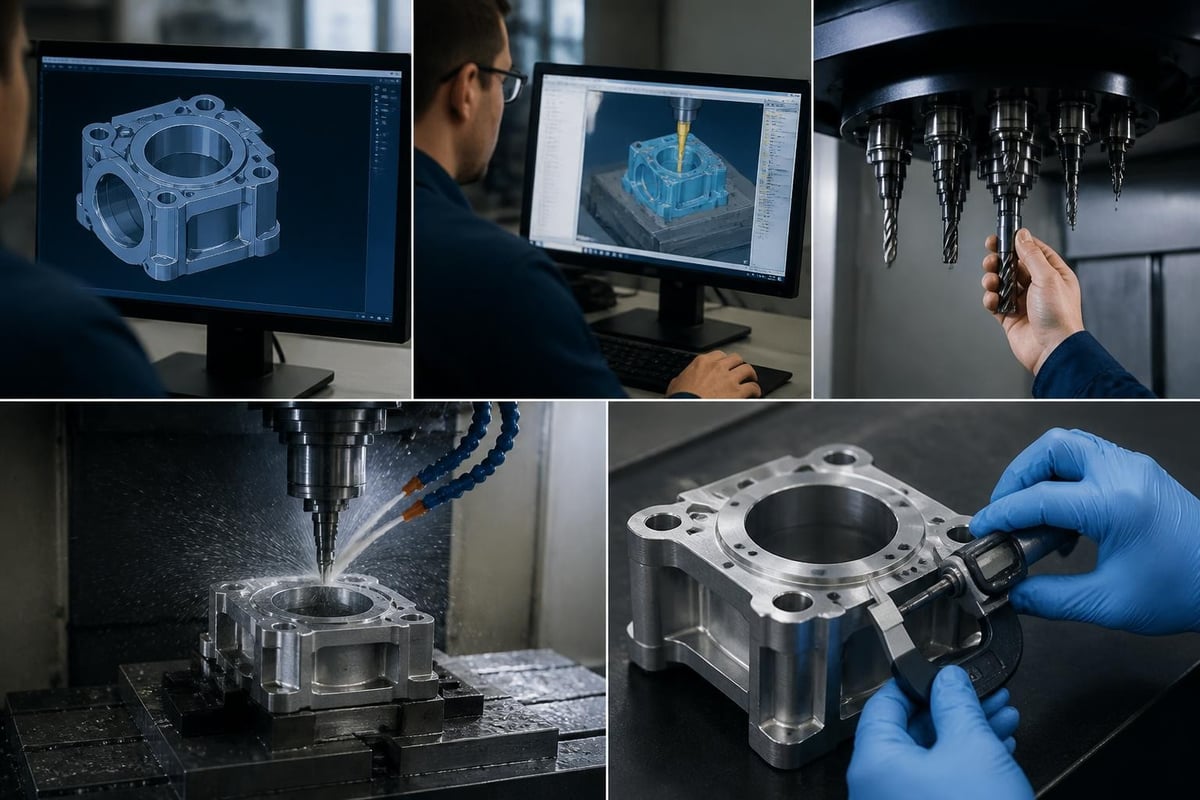
The machining manufacturing landscape has transformed dramatically with technological integration. CNC systems now incorporate adaptive controls that adjust cutting parameters in real-time based on sensor feedback. This dynamic response capability minimizes tool wear, prevents workpiece damage, and maintains consistent quality across production runs. Manufacturing automation and data analytics have become standard considerations rather than optional upgrades for competitive operations.
Multi-axis machining centers represent another technological leap forward. Traditional three-axis machines move tools along X, Y, and Z coordinates, but modern five-axis systems add rotational movements around two additional axes. This expanded capability allows manufacturers to machine complex geometries in single setups, reducing handling time, improving accuracy, and enabling previously impossible part designs. The investment in multi-axis equipment pays dividends through reduced cycle times and enhanced geometric capabilities.
Tool monitoring systems have emerged as critical components in maintaining process reliability. These systems track cutting forces, vibration patterns, acoustic emissions, and power consumption to detect tool wear or breakage before quality issues arise. Research in tool condition monitoring demonstrates how predictive maintenance strategies reduce scrap rates and unplanned downtime while extending tool life through optimized replacement scheduling.
Integration of Measurement and Inspection
Quality assurance has evolved beyond post-process inspection. Modern machining facilities integrate measurement directly into production workflows:
| Measurement Technology | Application | Primary Benefit |
|---|---|---|
| Coordinate Measuring Machines (CMM) | Complex geometry verification | High accuracy dimensional analysis |
| In-process probing | Real-time dimension checking | Immediate correction capability |
| Laser scanning | Surface profiling and reverse engineering | Non-contact measurement |
| Vision systems | Automated feature detection | Rapid inspection cycles |
Coordinate Measuring Machines integrated with machine tools enable closed-loop quality control where measurement data directly informs machining parameters. This feedback mechanism catches dimensional drift before parts move outside tolerance bands, dramatically reducing scrap rates in critical applications.
Machining Manufacturing for Industrial Applications
Industrial sectors place unique demands on machining capabilities. Oil and gas applications often require components that withstand extreme pressures, corrosive environments, and temperature fluctuations. Machining manufacturing for these sectors emphasizes material traceability, non-destructive testing, and adherence to strict industry specifications. Valve bodies, pump housings, and connector assemblies demand both precision and durability under harsh operating conditions.
The aggregate and recycling industries present different challenges. Equipment components experience severe abrasion from rock, concrete, and metal processing. Machining operations for these sectors often involve hardened steel alloys, wear-resistant coatings, and robust geometries designed for extended service life. Industrial machinery refurbishment and maintenance frequently requires custom machining to restore worn components or manufacture obsolete parts no longer available from original equipment manufacturers.
Field Machining Capabilities
Not all machining happens in climate-controlled shops. Field machining brings precision equipment to operational sites where:
- Large assemblies cannot be transported to traditional machine shops
- Downtime costs justify on-site repairs
- Environmental conditions require immediate component replacement
- Installation machining ensures proper fit-up during assembly
Portable boring bars, line boring equipment, and mobile milling machines enable skilled technicians to perform critical machining operations without facility disassembly. This capability proves invaluable for power generation facilities, mining operations, and processing plants where equipment removal creates cascading production impacts.
Optimizing Machining Processes for Quality and Efficiency
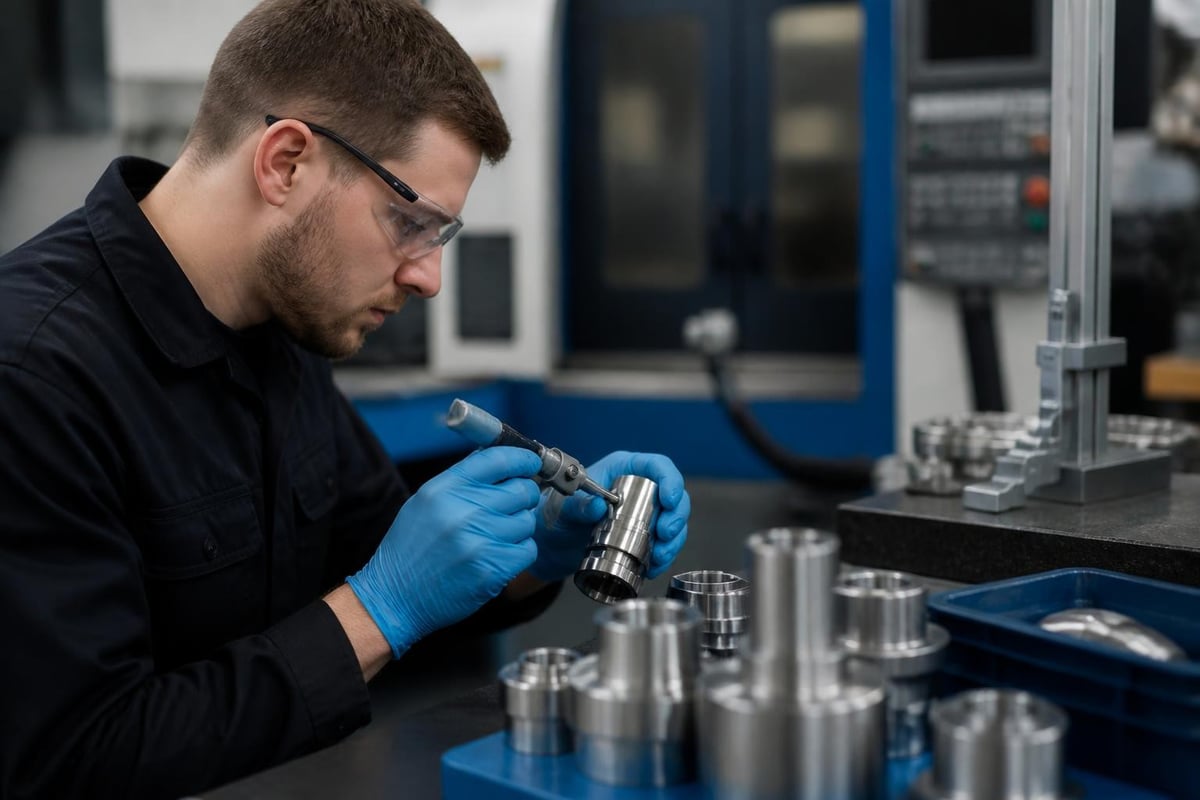
Achieving consistent quality in machining manufacturing requires systematic process control. Cutting parameters like spindle speed, feed rate, and depth of cut must balance productivity against tool life and surface finish requirements. Too aggressive and tools fail prematurely while generating excessive heat. Too conservative and cycle times become uneconomical. Finding the optimal parameter window demands understanding of material properties, tooling capabilities, and machine rigidity.
Coolant management plays a crucial yet often underestimated role in machining success. Proper coolant delivery prevents thermal distortion, extends tool life, and evacuates chips from the cutting zone. Different applications require specific coolant types, from straight oils for heavy cutting to synthetic emulsions for high-speed operations. Coolant concentration, pressure, and delivery angle all influence results. Growth strategy firms specializing in manufacturing often identify coolant optimization as a quick-win opportunity for improving both quality and profitability.
Fixture design directly impacts achievable tolerances and repeatability. Robust workholding prevents movement during cutting forces while ensuring consistent part positioning across production runs. Modular fixturing systems offer flexibility for varied part geometries, while dedicated fixtures optimize specific high-volume applications. The investment in proper workholding infrastructure pays returns through reduced setup time, improved accuracy, and decreased scrap rates.
Tooling Strategy and Management
Strategic tooling decisions influence both immediate machining results and long-term operational costs:
- Tool selection: Match insert geometry, coating, and substrate to specific materials and operations
- Tool life optimization: Monitor wear patterns and establish data-driven replacement intervals
- Inventory management: Balance tool availability against carrying costs and storage requirements
- Supplier partnerships: Develop relationships with tooling manufacturers for technical support and custom solutions
- Reconditioning programs: Implement regrinding services for expensive tools when economically viable
Modern tool management systems track individual tool usage, predict remaining life, and automatically schedule replacements. This proactive approach prevents unexpected failures during production runs while maximizing the useful life of expensive cutting tools.
Emerging Trends Shaping Machining Manufacturing
Artificial intelligence and machine learning are beginning to transform how manufacturers approach process optimization. Deep learning systems for machining error prediction demonstrate remarkable accuracy in forecasting dimensional variations before they occur. These AI-powered systems analyze vast datasets from sensors, historical production records, and simulation models to identify subtle patterns that human operators might miss. The technology remains in early adoption phases but shows tremendous promise for reducing trial-and-error in process development.
Hybrid manufacturing combines additive and subtractive processes within single platforms. Components begin with additive manufacturing to create near-net shapes, then undergo precision machining for critical dimensions and surface finishes. This integrated approach optimizes material usage, reduces machining time on complex geometries, and enables design features impossible through either method alone. Industries like aerospace and medical devices have embraced hybrid manufacturing for high-value, low-volume applications.
Digital twin technology creates virtual replicas of physical machining processes. Engineers simulate cutting operations, predict tool wear, and optimize parameters in digital environments before committing to actual production. These simulations account for machine dynamics, thermal effects, and material behavior to provide realistic previews of machining outcomes. The ability to test multiple scenarios virtually reduces development time and minimizes costly physical trials.
Workforce Development and Skills Evolution
The machining manufacturing workforce continues evolving as technology advances. Traditional machinists with manual skills remain valuable, but employers increasingly seek technicians who combine mechanical aptitude with programming capabilities, data interpretation skills, and systems thinking. Professional welding and machining services require teams that bridge traditional craftsmanship with modern technological literacy.
Technical education programs are adapting curricula to address these changing requirements. Students learn CAD/CAM software alongside conventional machining techniques. Apprenticeship programs blend classroom instruction with hands-on experience under skilled mentors. The shortage of qualified machinists in 2026 creates opportunities for individuals willing to invest in developing comprehensive skillsets that span traditional and digital manufacturing domains.
Quality Standards and Industry Certifications
Machining manufacturing for regulated industries demands documented quality management systems. ISO 9001 certification provides foundational quality frameworks applicable across sectors. More specialized standards like AS9100 for aerospace or API specifications for oil and gas impose additional requirements specific to those industries. Maintaining these certifications requires rigorous documentation, regular audits, and continuous improvement initiatives.
Measurement uncertainty analysis has become increasingly important as tolerance requirements tighten. Understanding the limitations of measurement equipment, environmental factors, and operator technique helps manufacturers make informed accept/reject decisions. The National Institute of Standards and Technology provides guidance on measurement best practices and traceability requirements that ensure dimensional claims meet industry standards.
Material traceability represents another critical quality component. Many applications require documented proof that materials meet specified chemistry, heat treatment, and mechanical property requirements. Certificate management systems track material certifications from suppliers through production processes to final delivery, creating audit trails that satisfy customer and regulatory requirements.
Material Considerations in Machining Manufacturing
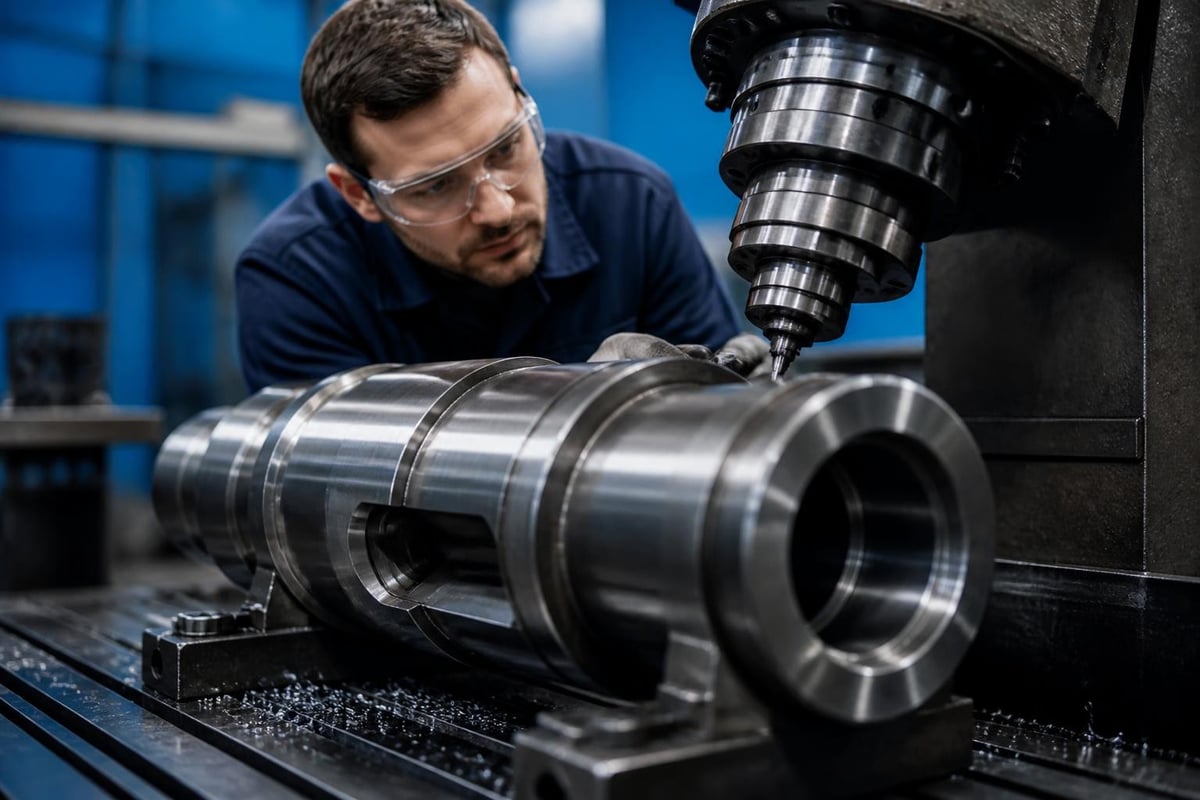
Different materials present unique machining challenges that influence process planning and equipment selection. Aluminum alloys machine readily with high cutting speeds and produce excellent surface finishes, making them ideal for aerospace and automotive components. Their low density and good strength-to-weight ratios offset slightly higher material costs in many applications.
Carbon and alloy steels dominate structural and mechanical component manufacturing. These materials offer excellent strength, weldability, and machinability across various grades. Heat treatment options enable manufacturers to optimize hardness, toughness, and wear resistance for specific service conditions. Machining parameters vary significantly between annealed and hardened states.
Stainless steel grades serve applications requiring corrosion resistance, but their work-hardening tendency and lower thermal conductivity create machining challenges. Sharp tools, positive rake angles, and adequate coolant delivery become essential for achieving acceptable tool life and surface quality. Specialized tooling grades designed specifically for stainless steel applications often justify their premium costs through improved productivity.
Exotic Materials and Special Considerations
High-performance applications sometimes demand materials with exceptional properties:
- Titanium alloys: Superior strength-to-weight ratio but poor thermal conductivity causes heat concentration at cutting edges
- Inconel and superalloys: Extreme temperature resistance matched with challenging machinability requiring ceramic or CBN tooling
- Hardened tool steels: Abrasive materials demanding specialized grinding or hard milling techniques
- Plastics and composites: Different cutting mechanics requiring adjusted tool geometries and speeds
Many industrial manufacturers work with tire manufacturers and equipment suppliers that specify components in various materials based on application demands. Understanding material-specific machining requirements enables accurate quoting and realistic delivery commitments.
Process Planning and Job Shop Management
Effective machining manufacturing requires thorough process planning that considers part geometry, material properties, available equipment, and quality requirements. Process planners analyze drawings to determine optimal machining sequences, fixturing approaches, and tooling requirements. Decision-making support systems help planners evaluate multiple manufacturing strategies and select approaches that balance quality, cost, and delivery requirements.
Production scheduling in job shops presents complex challenges with multiple jobs competing for limited machine capacity. Advanced scheduling software accounts for due dates, setup times, machine capabilities, and tooling availability to generate optimized production sequences. Real-time adjustments become necessary as rush jobs arrive, equipment breaks down, or quality issues require rework.
Job tracking systems provide visibility into work-in-process status, enabling accurate delivery estimates and proactive customer communication. These systems capture actual versus estimated times for continuous improvement initiatives. Data analytics reveal bottlenecks, recurring quality issues, and opportunities for process optimization that might otherwise remain hidden in day-to-day operations.
| Planning Element | Key Considerations | Impact on Success |
|---|---|---|
| Routing development | Machine selection, operation sequence | Efficiency and cost control |
| Tooling specification | Insert grades, holder systems, auxiliary tools | Quality and tool life |
| Fixture design | Workholding method, locating scheme | Accuracy and setup time |
| Quality planning | Inspection points, measurement methods | Defect prevention |
| Documentation | Work instructions, setup sheets, inspection plans | Consistency and traceability |
Environmental and Safety Considerations
Modern machining manufacturing operates under increasing environmental scrutiny. Coolant disposal, metal chip recycling, and energy consumption all factor into sustainable operations. Closed-loop coolant systems with filtration and treatment capabilities minimize waste generation while reducing fresh coolant purchases. Metal chips represent valuable recyclable materials when properly segregated by alloy type. Many manufacturers have transformed scrap management from cost centers into revenue sources through systematic recycling programs.
Machine guarding, lockout/tagout procedures, and personal protective equipment requirements protect workers from rotating equipment, flying chips, and sharp edges. Comprehensive safety programs address not just compliance but cultivate safety cultures where workers actively identify and mitigate hazards. Industry publications like The NTMA Record regularly feature best practices for maintaining safe machining environments while meeting production demands.
Noise control has evolved from optional consideration to regulatory requirement in many jurisdictions. Enclosed machining centers reduce sound levels, while strategic equipment placement and acoustic treatments further minimize worker exposure. Hearing conservation programs complement engineering controls to protect long-term employee health.
Machining manufacturing continues evolving as technological advances merge with traditional craftsmanship to deliver precision components for demanding industrial applications. Success requires balancing quality, efficiency, and adaptability while maintaining rigorous standards across diverse materials and specifications. Whether you need precision machining, custom fabrication, or field services for oil and gas, aggregate, or recycling operations throughout the Western United States, LTJ Industrial Services brings comprehensive capabilities and experienced teams to help your business maintain competitive advantages and meet production goals.